Chest Freezer Ice Bath: Costs, Risks and Practical Alternatives
A chest freezer ice bath can look like a cheaper alternative to a dedicated cold plunge, but it converts a food-storage appliance into something it was not designed for. Sealing seams, adding a controller and unplugging before entry do not establish that the liner, structure or electrical setup is suitable for bathing.
Pricing chiller plunges and wincing? Here’s the straight version of the DIY route: real costs, conversion steps, and the non-negotiable safety rules.
Quick note: some links in this post are affiliate links. If you buy through them, Sunrise & Vitalize may earn a small commission at no extra cost to you. It helps keep the site running.
QUICK SNAPSHOT
- Main trade-off: lower upfront cost comes with appliance, electrical and hygiene risks.
- Typical all-in DIY cost: roughly $550–$1,100 at time of writing (freezer, sealant, temperature controller, GFCI protection, optional filter pump)
- Preparation time: sealant curing and testing can take several days; neither establishes that the appliance is suitable for bathing.
- Non-negotiables: disconnect the freezer and every connected powered device, including pumps, before entry. A controller and GFCI protection do not make the conversion suitable for bathing.
- Biggest trade-off: no warranty, no built-in filtration, and water quality is entirely on you
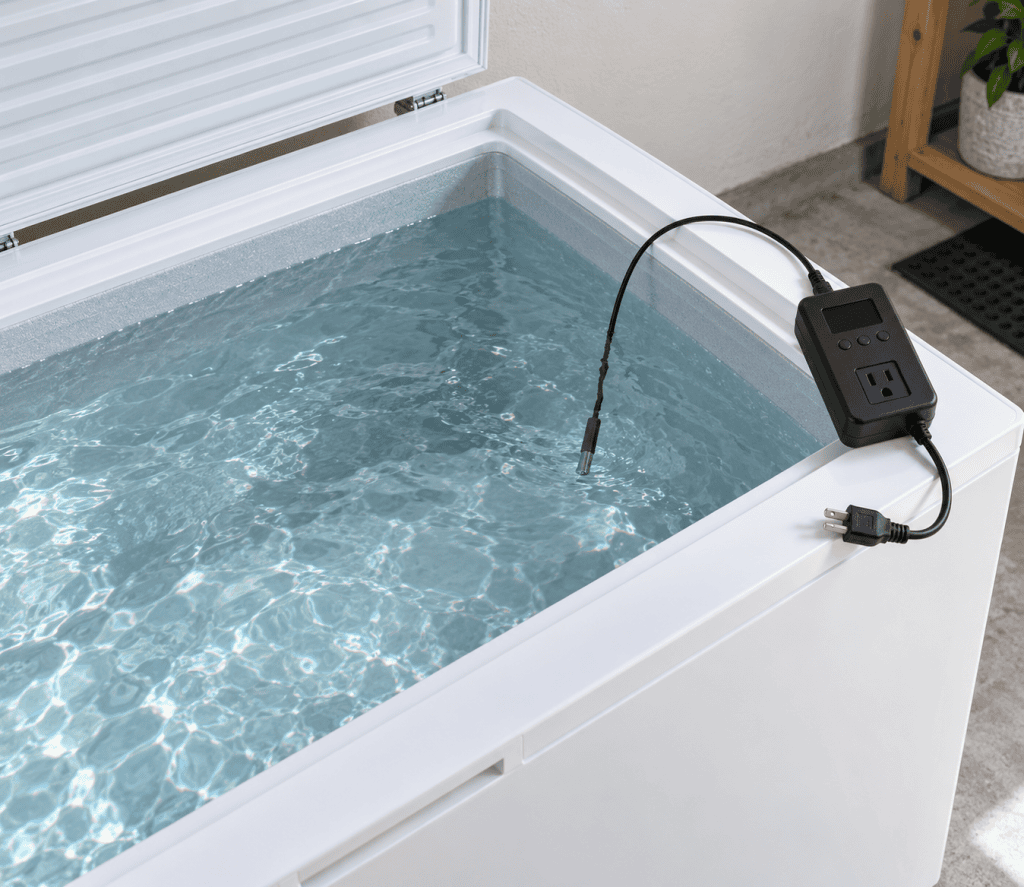
TABLE OF CONTENTS
- How a Chest Freezer Ice Bath Actually Works
- The Real Cost of a Chest Freezer Ice Bath
- The 7 Critical Checks Before Converting
- The build itself isn’t complicated. Where conversions fail is in skipped steps, usually the boring ones.
- The 7 Critical Checks Before Converting
- Keeping the Water Clean Without a Built-In Filter
- Pros and Cons: The Honest Trade-Offs
- How It Compares to a Chiller Plunge and an Ice-Filled Tub
- Helpful Gear
- FAQ
- Final Verdict
How a Chest Freezer Ice Bath Actually Works
A chest freezer is an insulated box with cooling coils built into its walls. Fill it with water and switch it on, and those walls pull heat straight out of the water.
The catch is the freezer’s own thermostat. It targets around 0°F, so a chest freezer ice bath left alone keeps cooling until the water freezes solid. Expanding ice can crack the liner and finish the unit.
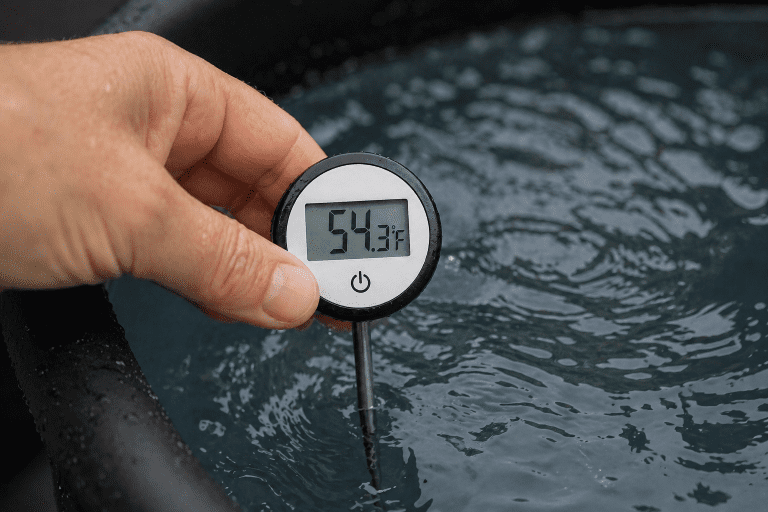
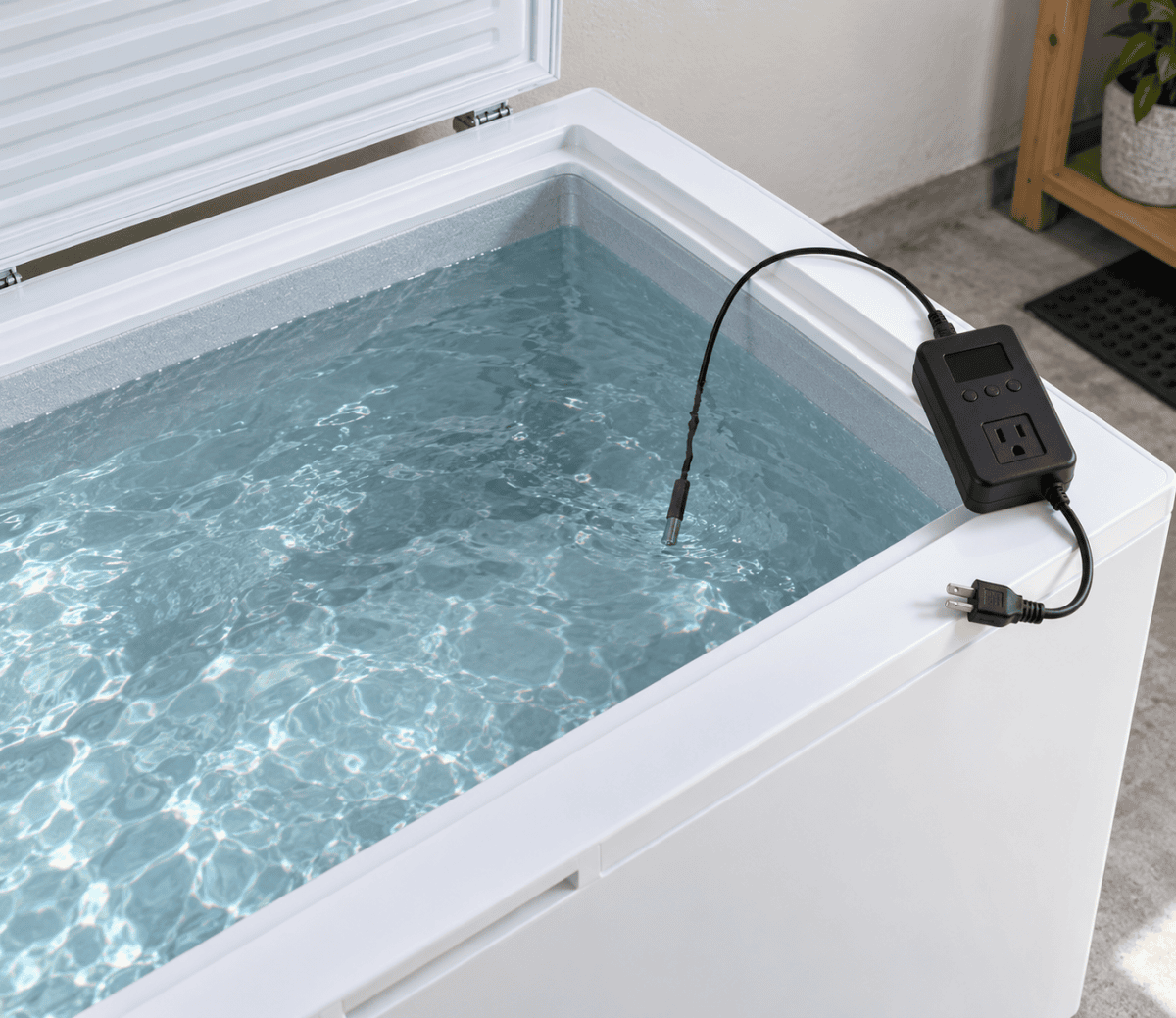
That’s why every working build runs through an external plug-in temperature controller. The freezer plugs into the controller, a waterproof probe sits in the water, and power cuts at your set point.
Most users settle somewhere between roughly 45°F and 59°F. Healthline’s overview of cold water therapy describes ice bath water in the 50–59°F range and stresses keeping immersion brief. Safe Ice Bath Temperature Guide: What Actually Works goes deeper on choosing a starting set point.
One detail worth understanding before you buy: because the coils sit in the walls, the coldest water hugs the sides. A thin sheet of ice often forms there first, while the middle stays warmer.
That means probe placement changes the temperature you actually sit in. Clip the probe mid-depth, away from the walls, and your chest freezer ice bath display will match what you feel.
Still water adds a second quirk. Without circulation, a thin layer of skin-warmed water surrounds you, so the plunge can feel milder than the reading. Shift your arms, or add a small pump, and the cold bites noticeably harder.
I take a cold shower daily, and a full plunge is a completely different level — the two aren’t comparable. That gap is the reason people go to the effort of building one. Cold Plunge vs Cold Shower: Which Is Better for Your Recovery? explains why the full immersion lands so differently.
Still weighing formats? The Real Best Home Ice Bath Setup Options (What Actually Works) compares the freezer route with tubs, barrels, and inflatables.
Can you turn a chest freezer into an ice bath?
Some DIY builders convert chest freezers, but a controller and sealed seams do not make a food-storage appliance a manufacturer-approved bathing vessel. Suitability depends on the specific appliance, materials, installation and electrical arrangements.
The Real Cost of a Chest Freezer Ice Bath
Here’s roughly where the money goes at time of writing. Prices move with sales and seasons, so treat these as approximate ranges, not quotes.
- Chest freezer (14–15 cu ft is the common adult size): roughly $450–$800
- 100% silicone sealant: roughly $10–$25
- Plug-in digital temperature controller: roughly $30–$60
- Portable GFCI adapter or GFCI outlet: roughly $15–$40
- Optional filter pump and sanitizer: roughly $50–$150
Put together, a chest freezer ice bath typically lands between $550 and $1,100 all-in. Dedicated chiller plunges commonly start around $3,000 and can run well past $8,000, so the gap is hard to ignore. What Is the Real Cost of Home Ice Bath Systems in 2026? breaks down what those higher prices actually buy.
Running costs are modest but not zero. Builder reports commonly land around $10–$30 a month. A garage in July works the compressor far harder than a cool basement in March.
Warranty is the cost that’s easy to miss. Filling a freezer with water sits well outside normal use, so assume the warranty ends when conversion starts. If the compressor dies in year two, a chest freezer ice bath becomes a full replacement bill.
How much does a chest freezer ice bath cost to run?
Roughly $10–$30 a month in most US homes, based on builder reports at time of writing. The biggest variables are your target temperature, the room’s ambient temperature, and how well the lid seals between sessions. An insulating cover on the water surface can trim that figure further.
The 7 Critical Checks Before Converting
Before considering a conversion, review the appliance, materials, electrical setup, water treatment and access risks. These checks do not prove that a freezer is suitable for bathing.
Step 1 — Size it properly. A 14–15 cubic foot freezer fits most adults, while users over roughly 6’1″ often need 20 or more. At 80–100 gallons, the water alone weighs roughly 650–850 lb. Ice Plunge Space Requirements: What You Actually Need Before You Buy covers floor load and clearance in detail.
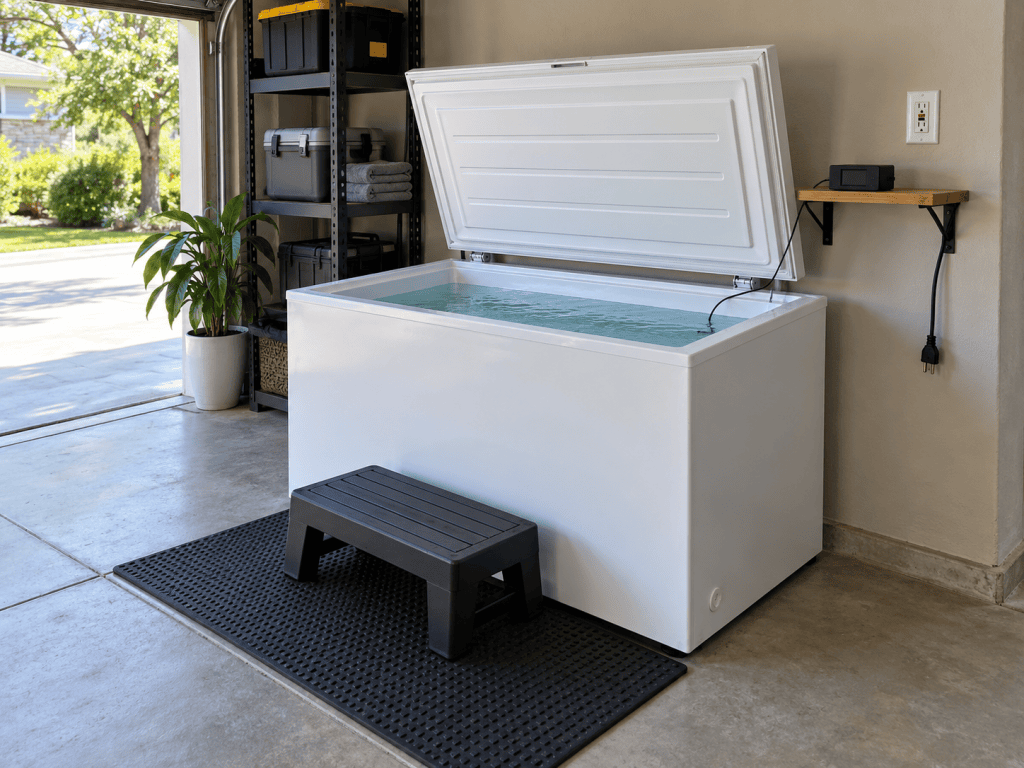
Step 2 — Pick the spot first. A full chest freezer ice bath is effectively immovable, so start on a level, solid floor. Leave airflow room around the condenser and keep it out of direct rain. “Garage-ready” models cope better if the space swings hot or cold.
Step 3 – Check material compatibility. “100% silicone” alone does not establish suitability for continuous immersion. Check the sealant manufacturer’s instructions for immersion use, liner compatibility and full curing time. Sealing seams does not establish that the freezer can safely hold bathing water and a person.
Step 4 — Leak test unplugged. Fill it and leave it switched off for two to three days, checking every seam and underneath. Water that slips behind the liner soaks into insulation where you can’t see it. A leak test may reveal leaks, but it does not prove structural suitability or predict the appliance’s lifespan.
Step 5 — Get the electrics right. Use a GFCI outlet or portable GFCI adapter, which is designed to trip at leaks around 5 milliamps. Keep cords off wet floors and skip daisy-chained extension leads. Hot Tub Electrical Requirements: What Every Homeowner Must Know Before They Buy explains why GFCI is the baseline wherever water meets power.
Step 6 — Check controller suitability. Any controller must be rated for the freezer’s compressor load and used according to its instructions, including any compressor restart delay. A temperature differential alone does not prevent damaging short cycling.
Step 7 — Disconnect every powered device before entry. This includes the freezer and any pump or other connected equipment. Keep plugs and connections dry and away from the water. Disconnection does not resolve structural, sanitation or access risks.
Hypothermia can develop in any water below 70°F. The CDC’s page on cold-related illness notes immersion hypothermia comes on much faster than in cold air. Learn the early signs in Signs of Hypothermia in Ice Baths: The Honest Safety Guide You Actually Need.
A water-filled box with a heavy lid is a real drowning risk for children and pets. Keep it latched or locked between sessions, and have someone nearby for your first plunges; Is Solo Ice Bathing Safe? An Honest Look at the Risks explains why.
Keeping the Water Clean Without a Built-In Filter
Chiller plunges usually include filtration. A chest freezer ice bath has none, so hair, skin cells, and sweat stay in until you remove them.
Clear water can still contain germs. Rinsing before entry and filtering debris help, but filtration does not replace disinfection. Any sanitizer must suit the intended use and materials, with label-directed dosing and appropriate water testing.
To drain, use the freezer’s base drain plug if it has one, or a submersible utility pump. Wipe the walls down before refilling, because film builds up where the ice sheet forms.
Check the silicone every few months, because seams are the likeliest failure point on a chest freezer ice bath. Small cracks are easy to reseal; soaked insulation isn’t. If ice keeps building thickly on the walls, raise your set point a few degrees.
How often should you change the water in a chest freezer ice bath?
There is no universal safe water-change interval for a converted freezer. Follow a suitable treatment plan with label-directed sanitizer dosing, water testing and material compatibility checks. Without such a plan, avoid storing and reusing bathing water; clarity alone does not establish safety.
Pros and Cons: The Honest Trade-Offs
Pros
- Holds a steady temperature daily with no ice runs
- Far cheaper upfront than chiller plunges
- Well insulated, so it holds cold efficiently between sessions
- Lid keeps debris out and doubles as a cover
Cons
- Seam failures happen out of sight: water behind the liner soaks the insulation, and the first clue is often rust under the unit or a compressor that suddenly runs nonstop
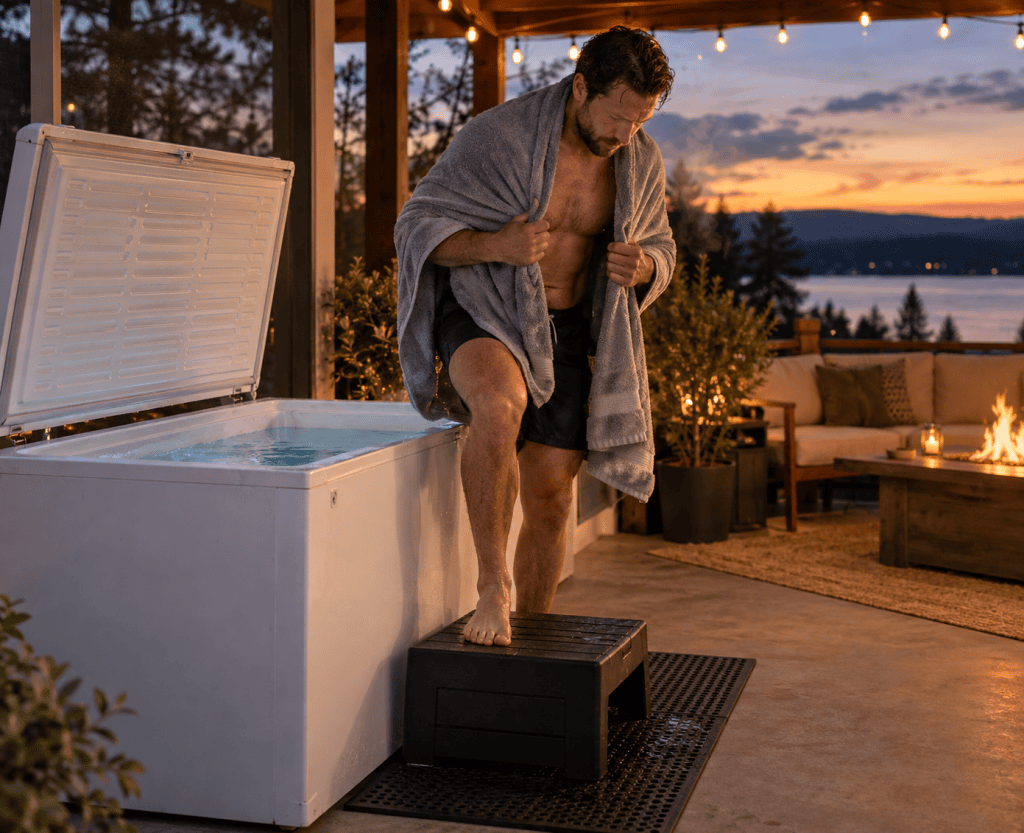
- Rim heights of roughly 33–36 inches make climbing out on cold, stiff legs awkward without a step and a grab point
- No warranty once converted
- No filtration unless you add it
- Disconnecting the freezer and every connected powered device, including pumps, before each session is a routine you can’t skip.
The first con matters most. A chest freezer ice bath lives or dies on how carefully those seams were sealed and tested.
How It Compares to a Chiller Plunge and an Ice-Filled Tub
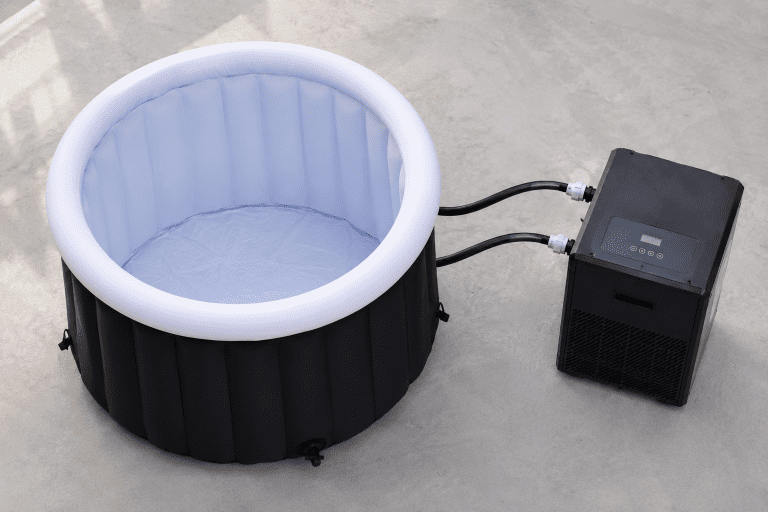
A purpose-built chiller plunge may include filtration and warranty coverage, depending on the model. Follow the specific system’s electrical and occupancy instructions. Are Ice Bath Chiller Systems Worth It looks at whether the extra spend pays off for regular users.
At the other end, a tub of bagged ice costs little upfront but typically needs 40–80 lb of ice per session. At roughly $10–$20 a session, that adds up faster than most people expect if you plunge several times a week.
For a direct look at portable versus powered cooling, Inflatable vs Chiller Ice Bath: Which System Actually Delivers? compares both. A chest freezer ice bath sits between them: steady cold like a chiller, a price closer to the budget end.
| Factor | Chest Freezer Conversion | Chiller Plunge | Tub + Bagged Ice |
|---|---|---|---|
| Upfront cost | Freezer, controls and conversion materials; check current prices | Varies by tub, chiller and included equipment | Tub purchase plus ongoing ice costs |
| Temperature control | External controller; suitability depends on equipment | Model-dependent temperature control | No automatic control; temperature changes |
| Filtration | Only if separately added | Included on some systems | Usually none |
| Warranty | Conversion may invalidate coverage; check terms | Check manufacturer’s coverage | Check tub warranty |
| Before entry | Disconnect freezer and all connected powered equipment; check temperature | Check temperature; follow manufacturer’s occupancy instructions | Check temperature and stable access |
| Noise | Compressor noise while cooling | Fan and pump noise while running | No cooling equipment noise |
| Entry and exit | High rim; appliance not designed for bathing access | Depends on tub design | Depends on tub height |
| Water hygiene | Requires a suitable treatment plan; filtering alone is insufficient | Follow system’s treatment and testing instructions | Use fresh water or a suitable treatment plan |
Helpful Gear
- Digital temperature controller – a plug-in thermostat for controlling cooling temperature. It does not make a converted chest freezer safe for bathing
- Floating pool thermometer – provides a separate water-temperature reading to cross-check the controller.
FAQ
Is a chest freezer ice bath worth it if I only plunge two or three times a week?
Whether a chest freezer ice bath is worthwhile depends on purchase cost, maintenance, replacement risk and how often you use it. Compare those costs and practical risks with a non-powered tub and a purpose-built plunge before deciding.
Is it safe to stay plugged in if I have GFCI protection?
No. Disconnect the freezer and every connected powered device, including pumps, before entry. GFCI protection does not establish that a converted freezer is suitable for bathing, and disconnection does not remove structural, hygiene or access risks.
Will a chest freezer ice bath damage my floor?
It can if the floor is weak or the unit leaks. A full setup commonly weighs well over 800 lb, so a concrete slab is the safest base. A rubber mat underneath helps catch drips.
Simple rule: if the freezer or any connected powered device is plugged in, nobody gets in.
SUMMARY SNAPSHOT
- A chest freezer is a food-storage appliance, not a purpose-built bathing vessel.
- A controller, sealed seams and GFCI protection do not establish suitability for bathing.
- Disconnect the freezer and every connected powered device before entry.
- Reused water requires a suitable treatment and testing plan; clarity alone does not establish safety.
- Compare total costs, maintenance and warranty terms with a purpose-built plunge or non-powered tub.
Final Verdict
A chest freezer ice bath may appear cheaper than a dedicated plunge, but the savings come with unresolved questions about structural suitability, electrical safety, water treatment and warranty coverage.
A controller and sealed seams do not establish that a converted freezer is suitable for bathing. A purpose-built plunge or a non-powered tub is the more straightforward choice for most readers.
Keep exploring: Wondering how a budget setup holds up over time? Are Inflatable Ice Baths Durable? covers what wears out first. Before your first session, Who Should Avoid Ice Baths? A Straight Answer Before You Get In is worth a read, and How Long Is Too Long? Finding Your Safe Ice Plunge Duration] helps you set sensible time limits.