Inflatable vs Chiller Ice Bath: Which System Actually Delivers?
When you’re comparing inflatable vs chiller ice bath options, the price gap is obvious immediately — but the performance gap takes longer to understand, and that’s where most people make the wrong call. One system gives you cold water. The other maintains it. That difference matters more than the spec sheets suggest.
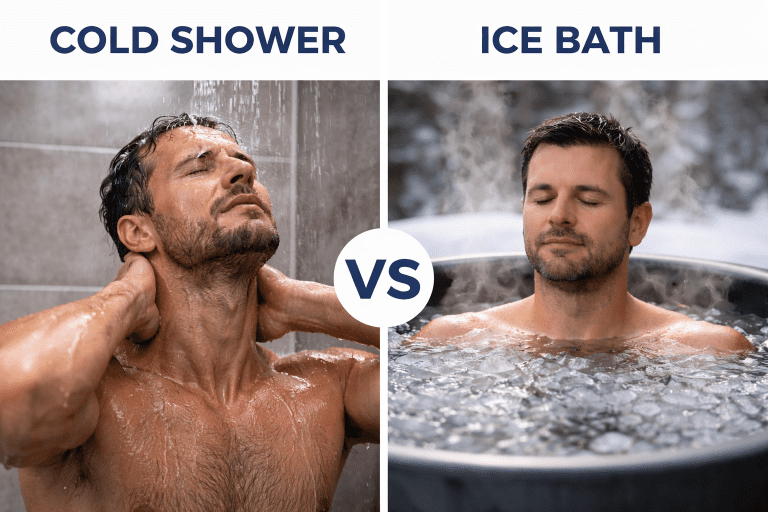
Cold showers are a daily habit for a lot of people, but a full plunge is a completely different level — not comparable in terms of stimulus or what you feel afterwards. So the system you choose to deliver that experience is worth getting right.
Affiliate disclosure: Some links on this page are affiliate links. If you buy through them, I may earn a small commission at no extra cost to you. I only link to product types I’d genuinely recommend.
Quick Snapshot
- Inflatables: typically $100–$400, no electricity required, portable and simple to set up
- Chiller systems: typically $1,500–$5,000+, active cooling, holds target temperature throughout the session
- Inflatables rely on ice or cold tap water — temperature drifts without continuous input
- Chiller units plug into a standard outlet; some higher-spec models need a dedicated circuit
- Maintenance is lower on inflatables (drain, dry, store) but more hands-on per session
- Best for most beginners: inflatable; best for serious or frequent users: chiller
- Running costs for chillers: typically $30–$80/month depending on unit efficiency and climate
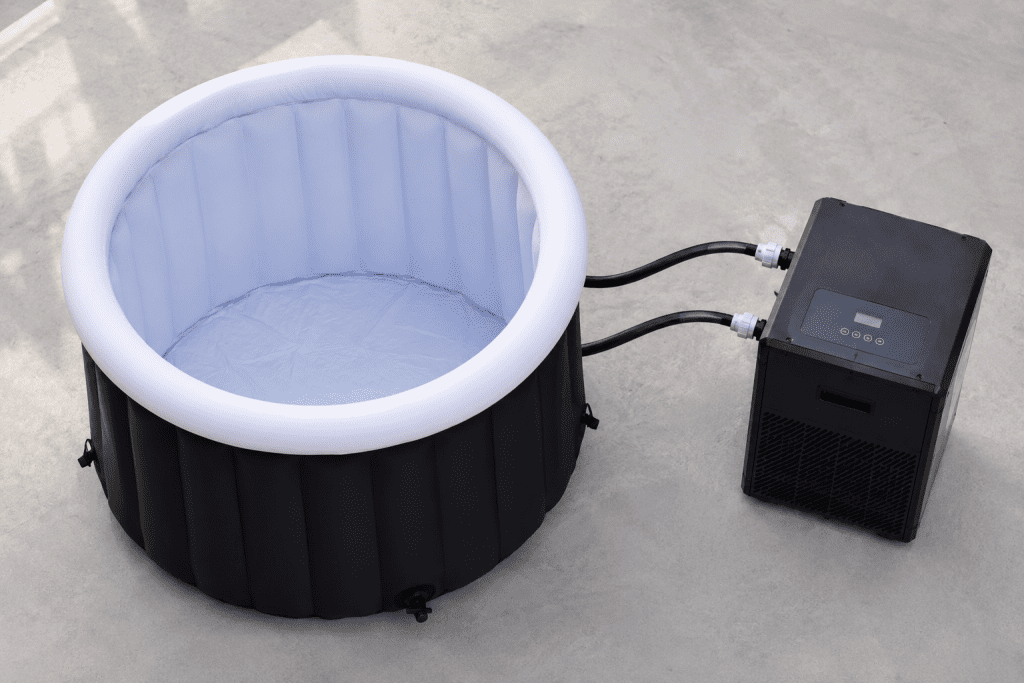
Table of Contents
- What the Two Systems Actually Are
- What Inflatable vs Chiller Ice Bath Systems Actually Cost
- Setup and Installation Reality
- Maintenance: What Ongoing Ownership Looks Like
- Pros and Cons of Each System
- Head-to-Head Comparison
- Comparison Table
- Helpful Gear
- FAQ
- Final Verdict
What the Two Systems Actually Are
An inflatable ice bath is exactly what it sounds like — an insulated or basic inflatable tub you fill with cold water, usually topped up with ice from bags or a chest. No motor, no electrical components, no active cooling. You control the temperature by how much ice you add and how fast it melts.
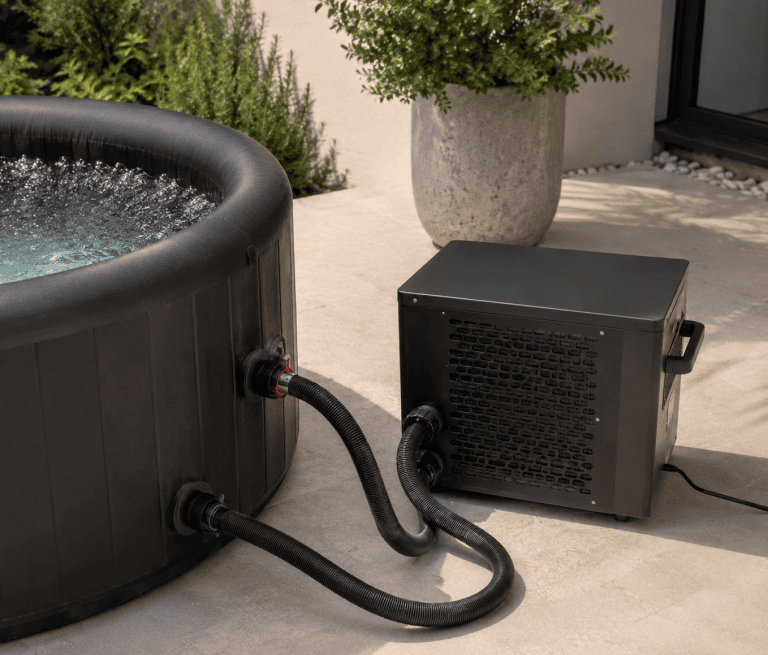
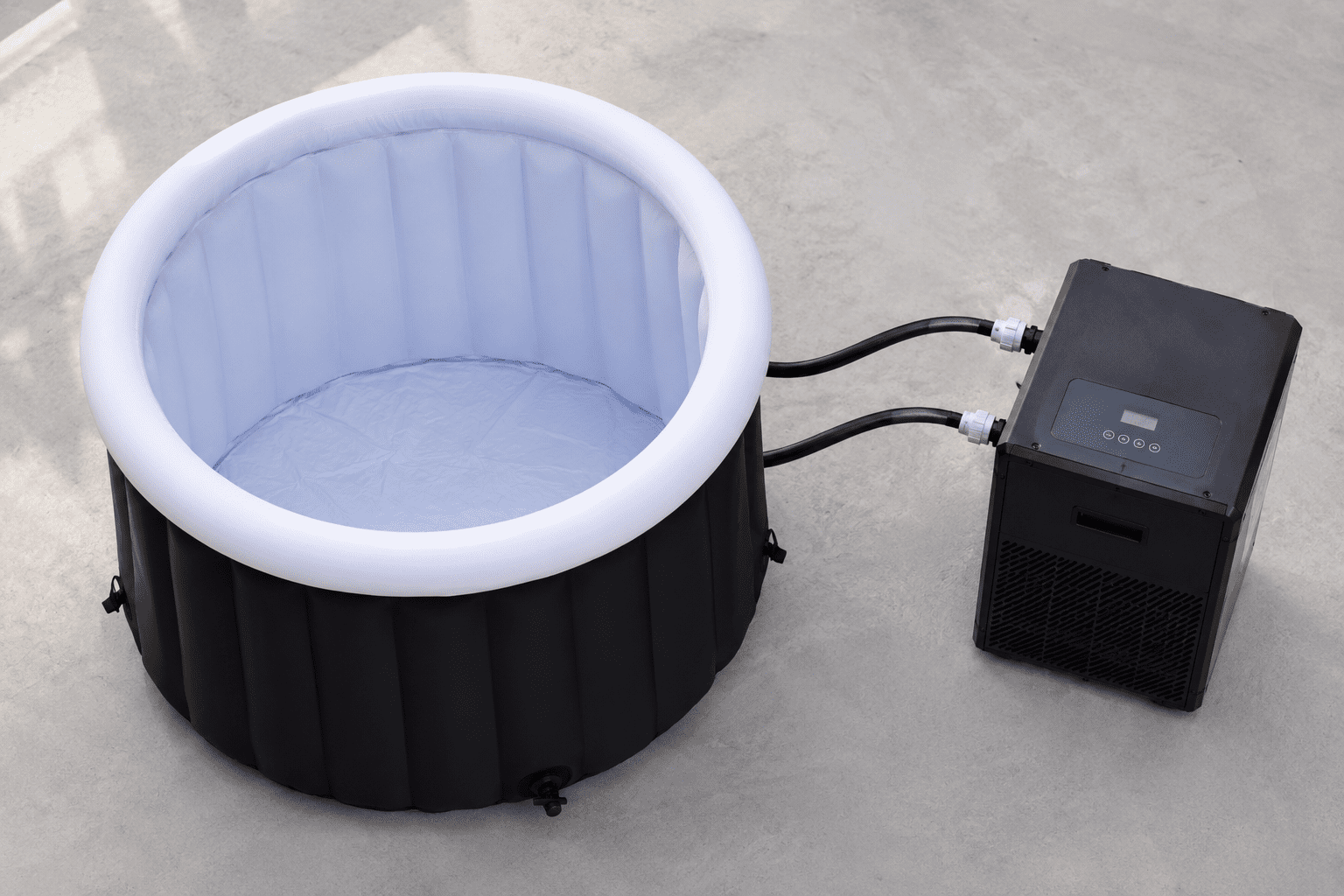
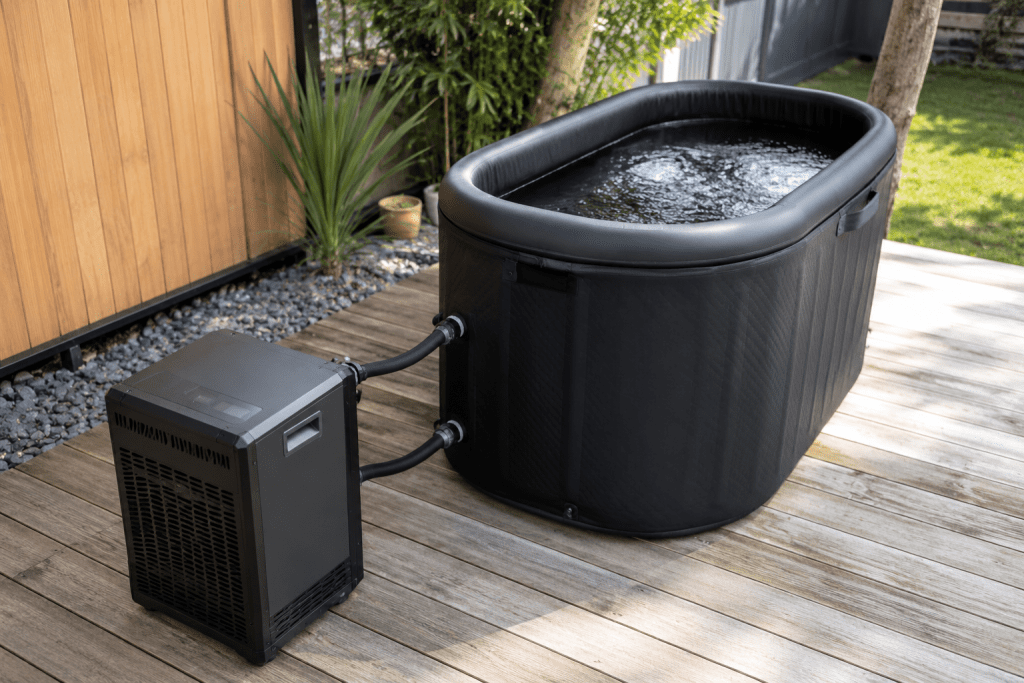
A chiller system is a refrigeration unit — essentially a compact chiller that circulates water through the tub and maintains a set temperature. You dial in your target (typically 50–59°F / 10–15°C), and the unit holds it. No ice needed after the initial cool-down period.
The distinction sounds simple. The practical difference is larger than it appears.
What exactly is a chiller ice bath?
A chiller ice bath combines an insulated tub with an active refrigeration unit that continuously circulates and cools water to a set temperature. Unlike ice-based systems, the water temperature holds steady throughout a session without any manual input once the unit is running.
What Inflatable vs Chiller Ice Bath Systems Actually Cost
The inflatable vs chiller ice bath entry point is very different for each system and both come with costs beyond the purchase price that most buying guides underplay.
A decent inflatable ice bath runs $100–$400 at time of writing. Budget options exist below $100, but insulation quality drops significantly, and you’ll spend more on ice per session to compensate. Premium inflatables with better insulation and drainage sit in the $250–$400 range and are genuinely worth the extra spend if you’re using the setup more than a couple of times a week.
Ice costs are the hidden running expense most people don’t factor in. A standard 20-minute session in an inflatable typically requires 20–40 lbs of ice to get the water cold enough and keep it there — depending on ambient temperature, starting tap water temperature, and your tub size. At $0.20–$0.30 per pound for bagged ice, that’s $4–$12 per session. Regular users will find this adds up quickly, and it’s one of the core reasons serious users eventually move toward chillers. Understanding inflatable vs chiller ice bath running costs across a full year often changes the calculation entirely.
Chiller systems start around $1,500 for entry-level units and scale up to $5,000+ for premium configurations with precise temperature control, filtration, and app connectivity. Mid-range units in the $2,500–$3,500 range hit a useful sweet spot — solid temperature control, manageable running costs, no need for dedicated electrical work in most homes.
Monthly electricity running costs for chillers typically land between $30–$80 depending on the unit’s efficiency rating, your local electricity rate, and how often you plunge. In warmer climates, the chiller works harder and costs more to run. In cooler environments, the ambient temperature does some of the work.
Setup and Installation Reality
Inflatables win on setup time without competition. Most take under 15 minutes — inflate, position, connect a garden hose, fill, add ice. No tools, no electrician, no permanent installation. You can set one up in a garage, on a patio, or even indoors with proper drainage access. This is a real advantage, particularly for renters or people who want flexibility.
The catch is prep time per session. Every time you use an inflatable, you’re managing ice logistics — buying, storing, adding at the right point in the fill process, then draining or refreshing the water. That friction is low per session but compounds across months of use.
Chiller systems require more upfront setup. The unit needs to be positioned close to the tub (most hoses run 6–10 feet), plugged into a standard 15–20 amp outlet, and given time to cool the water before your first session — typically 2–4 hours for an initial cool-down on a full tub. After that, maintaining temperature between sessions is efficient since you’re not recooling from scratch each time. The inflatable vs chiller ice bath setup difference comes down to one thing: prep time per session versus upfront installation time.
Electrical requirements are worth checking before purchase. Most residential chiller units run on standard 110V/120V outlets, but some higher-output models require 220V or a dedicated circuit. Confirm your setup before buying, not after. If you’re unsure about your home’s electrical capacity, it’s worth reviewing guidance on electrical requirements for home appliances before committing to a specific unit.
The inflatable vs chiller ice bath decision often comes down to this installation question: do you want maximum flexibility with manual effort per session, or upfront setup with almost no effort once it’s running?
Maintenance: What Ongoing Ownership Looks Like
Inflatable maintenance is session-based rather than ongoing. After each use, the standard approach is to drain completely, wipe down the interior, and leave it to dry before the next session. If you’re using it daily, most people cycle the water every 2–3 days and add a small amount of non-chlorine sanitiser to manage bacteria growth between changes.
Without filtration, water quality in inflatables degrades faster than in chiller systems. Stagnant cold water in a warm environment is a bacteria-friendly environment. This is the maintenance reality most product listings don’t lead with. Water quality is where the inflatable vs chiller ice bath difference becomes most visible day-to-day.
Chiller systems include filtration as standard on most models — often UV or ozone-based — which means water stays cleaner for longer and can be changed less frequently (typically every 2–4 weeks rather than every few days). The chiller itself requires occasional filter cleaning and periodic servicing if needed, but day-to-day maintenance is minimal once the system is dialled in.
Water chemistry still applies to chiller systems. Chlorine or bromine at low levels is recommended to keep the water clean between changes — the same principles that apply to any standing body of water. The CDC guidance on home pool and hot tub water treatment gives a useful baseline for thinking about sanitisation frequency, even though it’s written for pools.
Pros and Cons of Each System
Inflatable
Pros: Low upfront cost. No electrical setup. Portable — move it, store it, take it with you. Simple to clean. Works anywhere with a water source.
Cons: Ice costs accumulate fast with regular use. Temperature drifts during sessions without topping up ice. Water volume is usually smaller, which means your body heat warms the water noticeably within 5–6 minutes in warm conditions — the cold stimulus weakens mid-session in a way that doesn’t happen with active cooling. More manual effort per session. Less durable over time than a rigid system.
Chiller
Pros: Consistent temperature throughout every session. No ice logistics. Filtration system reduces manual maintenance. Holds temperature between sessions — your plunge is ready when you are. Better long-term value for frequent users once the upfront cost is recovered.
Cons: High upfront investment. Requires reliable electrical access. Takes up permanent space. The chiller unit adds ambient noise during operation — worth knowing if it’s near a bedroom or shared space. Repairs are more complex and costly than patching an inflatable. Not portable. The inflatable vs chiller ice bath noise comparison is worth noting — chillers run a compressor hum similar to a refrigerator.
Head-to-Head Comparison
The core performance difference between inflatable vs chiller ice bath systems comes down to temperature consistency and session quality.
An inflatable gives you a cold stimulus that starts at whatever temperature your ice mix achieves — typically 45–55°F if you add enough ice before getting in. From that point, the water warms. Your body is a significant heat source in a relatively small volume of water. In an ambient temperature of 70°F or above, a well-iced inflatable will warm by 5–8°F over a 10–15 minute session. That’s still cold. But it’s a decreasing stimulus rather than a stable one.
A chiller holds its set temperature for the entire session. If you dial in 50°F, you stay at 50°F for minute one and minute fifteen. That consistency changes the experience — the body doesn’t get the partial reprieve that comes from warming water, and the physiological response is more controlled and repeatable.
For cold exposure protocols that specify temperature ranges — particularly those building tolerance progressively — a chiller is the tool that actually allows you to track and replicate the stimulus session to session. An inflatable is harder to standardise, though it can still deliver a strong and useful cold experience. As with sauna and heat work, which I’ve covered in Best Sauna Heaters, the ability to control the stimulus is what separates casual use from structured practice.
The recovery application also differs. Post-workout cold exposure within a specific temperature window — often cited as 50–59°F — is easier to hit consistently with a chiller. With an inflatable, you’re approximating.
Comparison Table
| Factor | Inflatable | Chiller System |
|---|---|---|
| Upfront cost | $100–$400 | $1,500–$5,000+ |
| Running cost (monthly) | $20–$50 (ice) | $30–$80 (electricity) |
| Temperature control | Manual, drifts during session | Active, holds target throughout |
| Setup time (first use) | 15 minutes | 2–4 hours (initial cool-down) |
| Portability | High | Low |
| Water quality management | Manual, every 2–3 days | Filtered, every 2–4 weeks |
| Session feel | Stimulus weakens as water warms | Consistent cold throughout |
| Noise during use | Silent | Compressor hum (similar to fridge) |
| Space required | Flexible | Permanent footprint |
| Long-term value (daily use) | Diminishing due to ice costs | Improves as upfront cost amortises |
Helpful Gear
- Insulated ice bath cover — keeps water temperature stable between sessions and reduces debris; works for both inflatables and rigid tubs
- Digital thermometer for water — lets you track actual water temperature per session rather than estimating from ice volume; useful for both system types
FAQ
Is an inflatable ice bath worth buying if I plan to plunge three or more times a week?
At three or more sessions per week, ice costs will likely run you $50–$150/month depending on how much ice you need per session and local pricing. Over 12 months that’s $600–$1,800 in ice alone — not counting the tub cost. That figure puts entry-level chiller systems in a different light. The inflatable is genuinely worth it at lower frequency or for testing whether cold plunging is something you’ll stick with. For regular committed use, the economics and experience quality of a chiller become harder to ignore.
Will I actually use a chiller system regularly, or will it sit idle?
This is the right question to ask before spending $2,000+. The honest answer: a chiller that’s set up, filled, and maintaining temperature requires almost no friction to use — it’s ready when you are. That low friction matters for consistency. An inflatable that requires an ice run, a 20-minute setup, and a drain-and-dry after each session has enough friction that many people gradually use it less. Readiness removes excuses. If cold plunging already has a place in your routine via cold showers or occasional ice baths, a chiller is more likely to sustain the habit than an inflatable is.
What temperature should I aim for with either system?
Most cold exposure protocols work in the 50–59°F (10–15°C) range. Below 50°F is not necessary for the physiological benefits most people are seeking and increases risk of cold shock if you’re not experienced. With an inflatable, hitting the lower end of that range requires significant ice and maintaining it through a session is difficult in warm weather. A chiller can be dialled to any point in that range and hold it precisely. See [Ice Plunge Safety] for more on cold exposure thresholds and session duration guidelines.
Simple rule: If you’re testing cold plunging or plunging occasionally, start with an inflatable. If it’s a genuine regular practice, a chiller pays back the upfront cost in experience quality and convenience within a year of consistent use.
Summary Snapshot
This inflatable vs chiller ice bath summary covers the core decision factors.
| Inflatable | Chiller | |
|---|---|---|
| Best for | Beginners, occasional use, budget-conscious | Regular use, serious protocols, long-term value |
| Biggest advantage | Portability and low entry cost | Consistent temperature and convenience |
| Biggest limitation | Temperature drift, ice logistics | Upfront cost, permanent setup |
| Realistic total year-1 cost | $200–$800 | $1,800–$5,500 |

Final Verdict
The inflatable vs chiller ice bath choice is genuinely not a close call once you know how often you’ll actually plunge. For occasional or trial use — say, once or twice a week — an inflatable is the sensible starting point. Low cost, no commitment, easy to try and easy to move on from if it doesn’t stick.
For anyone using cold exposure as a regular recovery or wellness tool, the inflatable vs chiller ice bath decision points toward a chiller system as the better long term answer. The experience is meaningfully different — consistent temperature holds the stimulus where an inflatable’s temperature drift starts to let the session wind down before you’re done. That distinction matters more the more seriously you take the practice.
Cold plunging at full intensity — not a cold shower, a proper plunge — produces a response and an aftermath that’s hard to replicate any other way. The system that delivers that consistently, without ice runs or temperature guesswork, removes the one remaining barrier to making it habitual. That’s what a chiller actually does beyond the spec comparison.
Related Ice Plunge Reading
Understanding cold exposure safely is as important as choosing the right equipment. Ice Plunge Safety covers the temperature thresholds, session durations, and warning signs that apply regardless of which system you use. If you’re also exploring heat contrast as part of your routine — alternating cold exposure with sauna sessions — Best Sauna Heaters covers the heat side of that equation in detail.