
Are Inflatable Ice Baths Durable?
Are inflatable ice baths durable enough to survive regular use? That’s the question most people ask right after they’ve already bought one — usually the week it arrives.
Fair question. You’re filling a vinyl or PVC vessel with freezing water multiple times a week and expecting it to hold up for more than a season.
Yes—an inflatable ice bath can hold up to regular use, but durability varies by construction, seam quality, setup and care. There isn’t a reliable lifespan that applies to every model. Check the manufacturer’s care instructions, repair options and warranty before buying.
As an Amazon Associate, Sunrise & Vitalize earns from qualifying purchases. If you buy through an affiliate link, we may earn a small commission at no extra cost to you.
Quick Snapshot
- Construction and care matter more than a promised number of years.
- Protect the tub from sharp surfaces, prolonged direct sunlight and conditions outside its stated operating limits.
- Small punctures may be repairable; separating seams need manufacturer advice.
- Compare tub-only prices separately from packages that include a chiller.
- Are Inflatable Ice Baths Durable? What Actually Determines It
- The Real Cost Picture
- Installation Friction Nobody Mentions
- Maintenance That Actually Extends Lifespan
- Pros and Cons
- Inflatable vs. Hard-Shell: A Fair Comparison
- Helpful Gear
- FAQ
Are Inflatable Ice Baths Durable? What Actually Determines It
Material quality is the starting point, but it’s not the whole story. Most inflatable ice baths use multi-layer PVC or reinforced vinyl, and the thicker the gauge, the more likely they are to hold up over repeated fill-and-drain cycles.
Prolonged sunlight, abrasion, incorrect inflation and poor storage can all contribute to damage. Their importance varies by model, so UV resistance alone doesn’t tell you how long a tub will last.
So, are inflatable ice baths durable long-term?
They can be, but a lightweight tub with an inflatable rim and a reinforced drop-stitch tub are different constructions. Check the seams, base protection, inflation instructions and availability of replacement parts rather than relying on a general lifespan estimate.
A warranty is worth checking, too. Look at what it covers and whether attempted repairs affect that coverage. A warranty period is not a prediction of how long the tub will last.
The Real Cost Picture
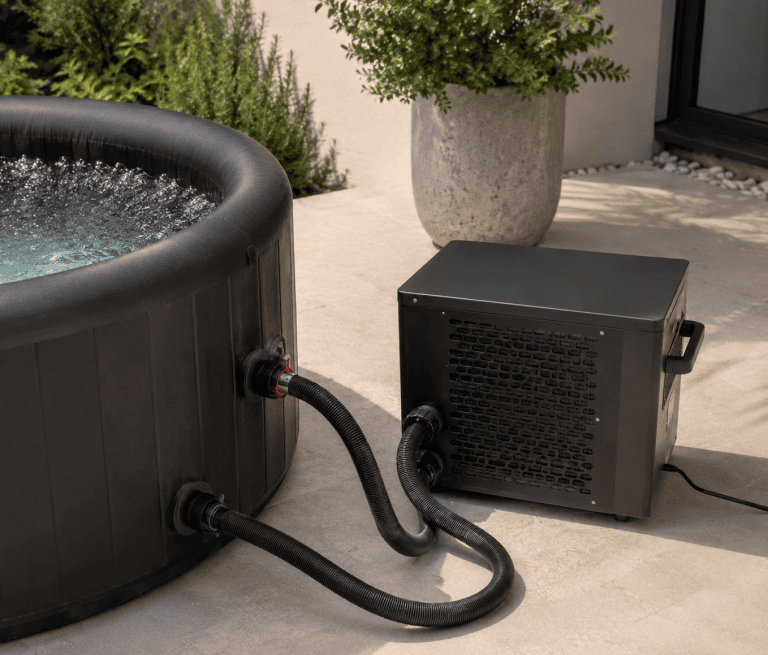
An inflatable tub generally costs less upfront than a complete cold-plunge system, but compare like with like. A tub-only price doesn’t include a chiller, and some inflatable tubs can connect to one.
Will I actually save money going inflatable, or will I just replace it sooner?
That depends on the model, its care requirements and how often you use it. Include ice, cleaning supplies and possible repairs in your budget. Check the warranty and whether replacement valves or other parts are available.
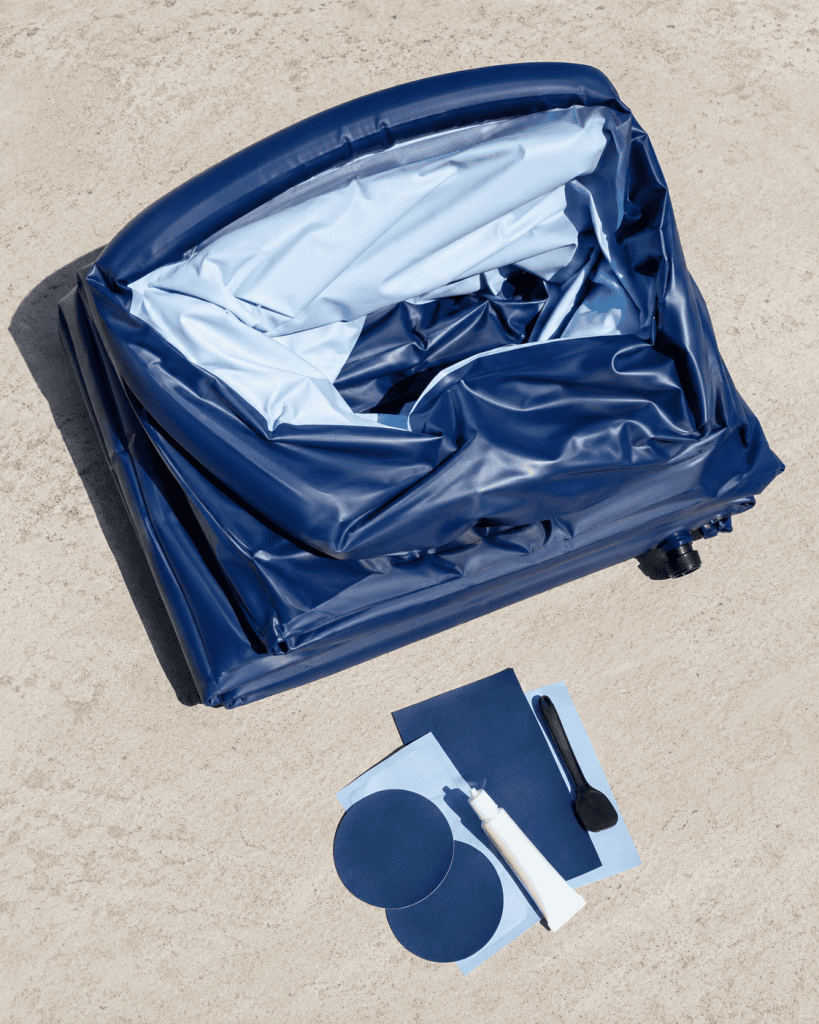
Small punctures may be repairable with a compatible patch kit. Separating seams need manufacturer advice, and adhesive curing time can be much longer than the time spent applying the patch.
For the cooling and running-cost differences, see our Inflatable vs Chiller Ice Bath comparison.
Installation Friction Nobody Mentions
Setup is usually quick with the right pump. The extra work comes from draining, cleaning, drying and storing the tub between uses.
Before folding the tub for storage, drain it and let it dry fully. Trapped moisture between folds can encourage mildew and unpleasant odors.
Maintenance That Actually Extends Lifespan
Follow the cleaning, inflation and storage instructions for your specific tub. When packing it away, drain it and let it dry fully before folding to avoid trapping moisture.
Check the base, seams, valves and inflatable sections regularly. If you notice a leak, stop using the tub and identify its source before attempting a repair. Contact the manufacturer about seam separation or a possible warranty claim.
Use a smooth, suitable base and protect the tub from prolonged direct sunlight. Keep inflation pressure and water temperature within the manufacturer’s limits, and follow its instructions for freezing weather.
If water stays in the tub between sessions, follow the manufacturer’s water-care instructions. A cover helps keep debris out but does not sanitize the water.
Check warranty exclusions before making repairs. For example, The Cold Pod’s warranty excludes damage caused by improper maintenance or unauthorized repairs.
Pros and Cons
Pros:
- Significantly cheaper upfront than hard-shell or plumbed systems
- Portable — can be deflated and stored or moved between locations
- Quick setup with no permanent installation required
Cons:
- Needs protection from abrasion, prolonged sunlight and unsuitable storage conditions.
- Cleaning, drying and checking for leaks require regular attention.
- Seam or valve damage may need manufacturer support rather than a simple patch.
Inflatable vs. Hard-Shell: A Fair Comparison
| Factor | Inflatable | Hard-shell |
|---|---|---|
| Purchase comparison | Separate tub-only and chiller-package prices | Separate tub-only and chiller-package prices |
| Durability | Depends on fabric, seams, inflation and care | Depends on shell construction, fittings and care |
| Storage | Many models deflate or fold | Usually needs a fixed storage space |
| Repair considerations | Patch compatibility, valves and seam support | Shell, drain and fitting repair options |
| Firmness during use | Varies; reinforced designs can be quite rigid | Generally rigid |

Helpful Gear
- PVC/vinyl puncture repair kit – May repair small punctures in compatible material. Check your tub manufacturer’s instructions and allow the adhesive to cure fully before refilling.
- ice bath thermometer – Useful for tracking water temperature consistently across sessions without guesswork.
FAQ
Are inflatable ice baths durable enough to be worth the money, or am I overthinking it?Yes, provided the construction and care requirements suit your setup. Check the warranty, repair support and storage instructions rather than expecting every inflatable to last the same number of years.
Will I actually use an inflatable tub long-term or will it end up deflated in the garage?
That’s a fair worry, since a lot of home wellness gear ends up unused after the first month. The tubs that get used consistently tend to be the ones kept somewhere easy to set up quickly, not tucked away requiring effort each time.
How do I know if a leak is worth patching or if it’s time to replace the tub?
A small puncture away from a seam may be repairable using the manufacturer’s recommended method. For separating seams, repeated leaks or deteriorating material, contact the manufacturer before patching. Follow the full curing time before refilling or using the tub.
Simple rule: follow the manufacturer’s care instructions—dry it before storage, protect it from prolonged sunlight and check for damage.
- There is no dependable lifespan figure for every inflatable ice bath.
- Construction, setup, sunlight exposure and storage all affect durability.
- Small punctures may be repairable; seam failures need manufacturer advice.
- Compare warranty coverage and repair support alongside the purchase price.

Final Verdict
Are inflatable ice baths durable? They can be durable enough for regular home use, but construction and care matter. Choose a model suited to your setup, follow its operating limits and check the warranty and repair support. Covering it helps, but doesn’t guarantee a particular lifespan.


![blood pressure and cold plunges]](https://sunriseandvitalize.com/wp-content/uploads/2026/05/vidar-nordli-mathisen-0fN21zv8yYo-unsplash-768x448.jpg)