
Ideal Ice Bath Duration: How Long Should You Actually Stay In?
Ideal ice bath duration is one of the most Googled questions in the cold plunge world right now — and for good reason. Most people step into freezing water with zero idea whether they should stay in for two minutes or twenty, and that uncertainty can either make the experience feel pointless or, worse, push someone past a safe limit.
Here’s the honest truth: there is no single magic number that applies to every body. But there is a well-researched range, and understanding the logic behind it will help you find your own sweet spot faster than trial and error alone.
Quick note: some links in this post are affiliate links. If you buy something through them, we may earn a small commission at no extra cost to you. We only ever recommend gear we’d actually use.
Quick Snapshot
- Beginners should aim for 1–3 minutes and build from there
- The research-backed target range for most people is 5–15 minutes per session
- Water temperature of 50–59°F (10–15°C) is the most effective zone for recovery
- Accumulating around 11–15 minutes of cold immersion across a full week hits an effective dose for benefits like improved metabolism and recovery
- Longer is not always better — frequency tends to beat duration for long-term gains
- Always exit if you feel numbness, tingling, or uncontrollable shivering

Table of Contents
- What Is ideal Ice Bath Duration, Really?
- The Cost Reality of Cold Plunging
- Installation and Setup Friction
- Maintenance: Keeping Your Plunge Clean
- Pros and Cons of Different Duration Approaches
- Beginner vs. Experienced: A Duration Comparison
- Helpful Gear for Better Sessions
- FAQs
- Final Verdict
What ideal Ice Bath Duration Actually Means
When people talk about ideal ice bath duration, they usually mean the total time from the moment their body is submerged to the moment they climb out. Simple enough. But the more nuanced question is: what are you trying to get out of it, and what does your body actually need to respond?
The physiology here is worth understanding even briefly. When you submerge in cold water, your blood vessels constrict almost immediately — a process called vasoconstriction — which reduces local inflammation and shunts blood toward your core organs. Your heart rate spikes, your breathing quickens, and your nervous system fires into high alert. Within the first couple of minutes, that initial shock response usually begins to settle. This is where most of the benefit actually begins. The first sixty seconds is just your body catching up to reality.
At the very most, experienced practitioners can stay in for up to 15 minutes — but the key is paying close attention to signs of discomfort like excessive shivering, numbness, or tingling sensations. Those signals are your body’s way of telling you it’s had enough.
What is the ideal ice bath duration for beginners? For those just starting out, a duration of just one minute is recommended, with gradual increases toward 10–15 minutes as the body adapts. Starting short and building consistency matters far more than jumping straight to longer sessions. Your body needs time to learn how to handle the cold efficiently.
The broader window that most wellness researchers and sports medicine professionals land on is 5 to 15 minutes per session, at a water temperature of 50–59°F (10–15°C). That range is wide enough to accommodate different fitness levels and goals while staying well within established safety margins.
The Cost Reality of Cold Plunging
You don’t need a $3,000 cold plunge tub to practice effective cold water immersion. A basic DIY setup — a chest freezer or a stock tank from a farm supply store packed with ice from a gas station — can absolutely do the job, especially when you’re still finding your ideal ice bath duration and figuring out whether this practice is going to stick.
That said, if you’re serious about maintaining consistent water temperatures and spending time (rather than money) on the practice itself, a dedicated cold plunge unit with a built-in chiller is a meaningful quality-of-life upgrade. Entry-level chiller tubs from brands like Ice Barrel or Plunge start in the $700–$1,500 range. Higher-end filtered, temperature-controlled units can run $3,000–$5,000 or more.
For most people starting out, the best investment isn’t the equipment — it’s the habit. A bag of ice costs a few dollars. The discipline to get in, stay in for your target duration, and do it three times a week is what actually produces results.
Installation and Setup Friction
One of the great advantages of cold plunging compared to something like a home sauna is the relatively low barrier to setup. You don’t need a dedicated room, a 240V electrical circuit, or permits for a basic DIY cold plunge setup. A chest freezer placed in a garage, a stock tank on a covered patio, or even a cold shower can get you started today.
For permanent or semi-permanent outdoor cold plunge installations, especially those involving electric chiller systems, you may need to involve a licensed electrician. Chiller-based cold plunge systems involve electrical components that require proper circuit considerations and if your unit is running near water outdoors, local building regulations may apply. Check with your municipality before any hardwired outdoor installation.
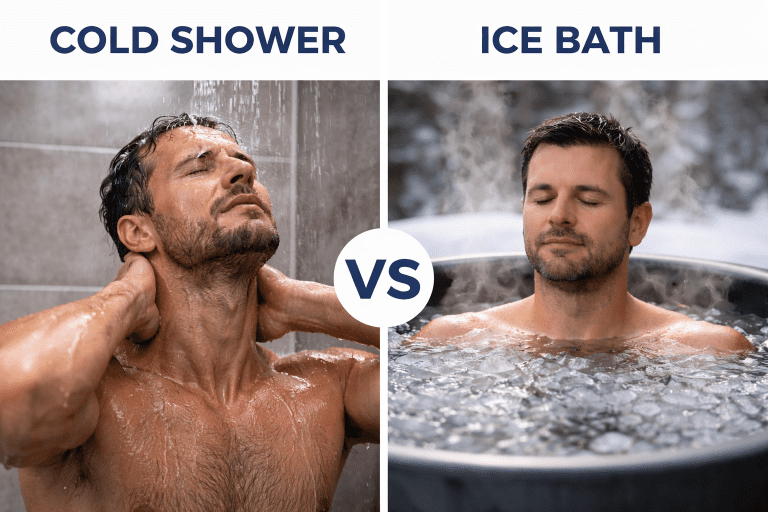
If you’re using a traditional cold shower as your entry point — which is a genuinely effective way to begin — there is zero installation friction. The entire “setup” is turning the knob to cold and getting in.
Maintenance: Keeping Your Cold Plunge Clean
This is the part most people underestimate when they start calculating their ideal ice bath duration — the actual upkeep of the water you’re sitting in.
If you’re doing DIY ice baths in a stock tank or basic tub, you’ll need to drain and refill regularly, ideally every few days if you’re plunging daily. Stagnant water at cold temperatures doesn’t freeze solid, but it can still harbor bacteria over time.
For cold plunge tubs with built-in filtration, the maintenance schedule is typically more forgiving — weekly chemical checks, monthly filter rinses, and quarterly deep cleans. Most manufacturers recommend keeping pH levels between 7.2 and 7.8 and using a bromine- or chlorine-based sanitizer in very small amounts to keep the water safe.
The CDC maintains clear guidance on residential water treatment that applies here too, particularly around disinfectant levels and water chemistry for cold immersion systems. Following those standards protects your skin and lungs, especially if you’re submerging your neck and face.
Pros and Cons of Duration-Based Approaches
Short sessions (1–5 minutes):
The case for shorter sessions is stronger than most beginners expect. Three five-minute ice baths a week or five three-minute sessions can fulfill the minimum effective dose for cold exposure benefits. Short sessions are more sustainable, easier to fit into a morning routine, and significantly lower risk for newcomers. The downside is that you may not get the full depth of the parasympathetic nervous system relaxation response that tends to kick in after the initial two to three minutes.
Medium sessions (6–12 minutes):
This is the sweet spot for most experienced plungers. You get well past the initial cold shock phase, the nervous system starts to settle, and the recovery benefits — particularly for muscle soreness and inflammation — are well-supported by research. The tradeoff is that you need to be paying attention to your body throughout, especially in the colder end of the temperature range.
Longer sessions (13–20 minutes):
Safety in cold therapy is paramount, with a maximum recommended ice bath duration of 15 minutes to prevent hypothermia.Some experienced practitioners push to 20 minutes at warmer water temperatures, but beyond 15 minutes there is genuinely diminishing return. The risk curve starts to climb faster than the benefit curve.
Beginner vs. Experienced: Ideal ice bath Duration Comparison
One of the most helpful frameworks for thinking about ideal ice bath duration comes from looking at how goals and experience levels change the equation.
| Experience Level | Target Duration | Water Temp | Weekly Sessions |
|---|---|---|---|
| Absolute Beginner | 1–2 minutes | 59–65°F (15–18°C) | 1–2x |
| Intermediate | 3–8 minutes | 50–59°F (10–15°C) | 2–3x |
| Experienced | 8–15 minutes | 45–55°F (7–13°C) | 3–4x |
| Advanced | Up to 15 minutes | 39–50°F (4–10°C) | 3–5x |
The weekly dose metric is worth flagging here. Neuroscientist and Stanford professor Andrew Huberman recommends spending a total of 11 minutes per week in an ice bath — not necessarily in a single session, but spread across multiple sessions for practicality. This weekly target is one of the most practical and actionable guidelines in the cold exposure world right now.
What’s worth noting is that temperature and time interact with each other. Colder water at 39°F demands shorter sessions than water at 55°F. Don’t try to hit a 10-minute target if your tub is significantly colder than the range you’ve adapted to — the math doesn’t work in your favor.
Does staying in longer mean more benefits? Not linearly. Research indicates that multiple short cold immersions per week outperform a single long immersion for ongoing recovery and health gains — in other words, frequency tends to beat duration. Pushing past 15 minutes adds risk without proportional reward for most people.
Helpful Gear for Better Sessions
A few well-reviewed pieces of gear can meaningfully improve your cold plunge experience and help you stay in for your target duration more comfortably.
Cold plunge thermometer — A simple waterproof floating thermometer is essential for knowing your actual water temperature, not just guessing.
Neoprene gloves — Cold extremities are one of the main reasons people bail early. A pair of 3mm neoprene water gloves lets you stay in longer without losing feeling in your fingers.
XUKER Neoprene Water Socks 3mm -keep your feet protected and allow you to stay in longer without losing sensation in your toes — a simple upgrade that makes a real difference in colder temperatures.
FAQs
How long should a beginner stay in an ice bath? It’s generally recommended to stay in longer each time until your ice baths last between three and ten minutes — starting from whatever duration you can manage safely on your first session.If one minute is all you can do, that’s a completely legitimate starting point. The goal is consistency over time, not heroism on day one.
Can you stay in an ice bath too long? Yes. Excessive cold exposure can lead to discomfort, injury, or even hypothermia which entirely defeats the purpose. The signs to watch for are uncontrollable shivering, numbness in hands or feet, pale skin, or mental confusion. Any of those means it’s time to get out immediately. According to the CDC, hypothermia can develop faster in water than in air at the same temperature, so treat those warning signs seriously.
Does ideal ice bath duration matter more than water temperature? They’re both important, but they interact. The recommended duration range is between two to ten minutes, with beginners best starting on the lower end — and exposure time must be adjusted based on water temperature, with a general weekly goal of 11 minutes spread across multiple sessions. Colder water requires shorter sessions. Warmer water in the low-to-mid 50s gives you more time to accumulate the same effective dose safely.
The Simple Rule
If you can only remember one thing: aim for 11 minutes of total cold exposure across your week, split into two to four sessions, at water temperatures between 50–59°F. That’s it. Everything else is fine-tuning.
Summary Snapshot
- Beginner target: 1–3 minutes per session
- Intermediate target: 5–10 minutes per session
- Maximum recommended: 15 minutes at any experience level
- Weekly dose goal: 11–15 minutes total across multiple sessions
- Water temperature: 50–59°F (10–15°C) for most people
- Exit immediately if you feel numbness, tingling, or confusion
- Frequency matters more than single-session duration for long-term results
Final Verdict
There is genuine science behind ideal ice bath duration, and it lands in a more practical place than most people expect. You don’t need to torture yourself for twenty minutes. You don’t need to go colder than your body can safely handle. What you do need is consistency — a few sessions a week, in that 50–59°F window, for somewhere between five and fifteen minutes depending on where you are in your cold exposure journey.
Start shorter than you think you need to. Build week by week. Track your total weekly minutes rather than obsessing over any single session. And listen to your body — it’s a much better guide than a timer once you know the basic framework.
The cold plunge world has a tendency to make this feel more extreme than it needs to be. The reality is that even modest, consistent exposure produces real physiological and psychological benefits. The best duration is the one you’ll actually show up for.
If you’re building a contrast therapy routine around your cold plunge, how often should you cold plunge covers the frequency side of the equation.