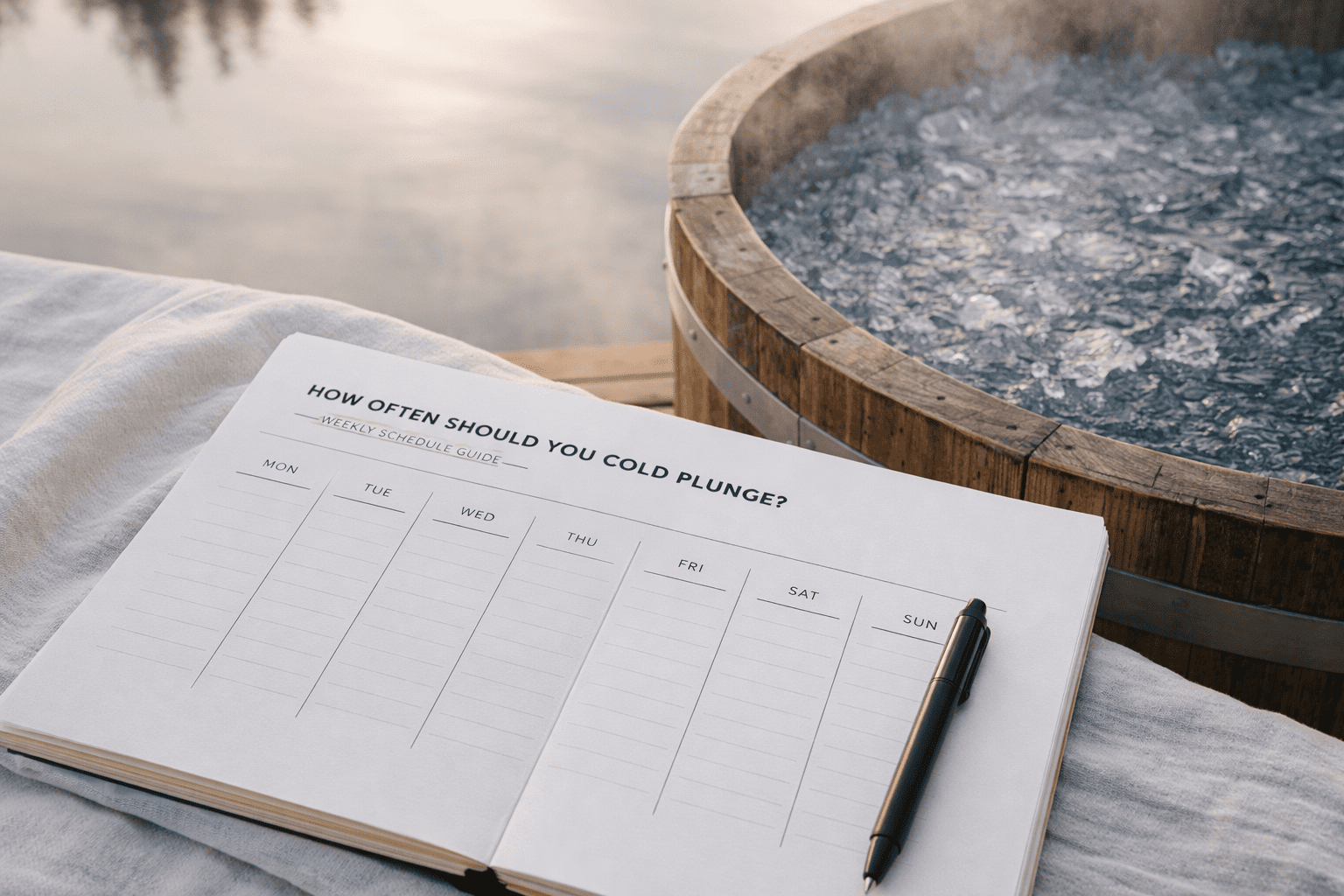
How Often Should You Cold Plunge? What Actually Works
How often you cold plunge matters more than most people realize — too little and you’re leaving serious benefits on the table, too much and you may be working against your own recovery.
The sweet spot for most people is 3 to 4 times per week, though beginners should start with 2 sessions and advanced users can go daily if they’re listening to their body closely. Frequency depends on your goals, your fitness level, and how well you’re recovering between sessions.
It’s one of those questions that sounds simple until you start digging — and then you realize there’s actually a lot of nuance depending on what you’re trying to get out of it.
Quick note: Some of the links in this post are affiliate links, which means I may earn a small commission at no extra cost to you. I only link to gear I’d genuinely recommend.
⚡ Quick Snapshot
- Beginners: 2x per week to start
- Intermediate: 3–4x per week is the evidence-backed sweet spot
- Advanced/Athletic recovery: Up to daily, with caution
- Session length: 2–10 minutes depending on temperature
- Best timing: Morning for energy/mood; post-workout for recovery
- Rest days matter: Cold plunging every day isn’t always better
- Goal-specific: Frequency shifts based on whether you’re after mental clarity, fat loss, or athletic recovery
Table of Contents
- The Core Answer: Cold Plunge Frequency by Goal
- What the Research Actually Says
- The Real Cost of Going Too Often (or Not Enough)
- Setup & Logistics: Fitting Cold Plunges Into Your Week
- Maintenance & Consistency Over Time
- Pros and Cons of Daily Cold Plunging
- How Cold Plunge Frequency Compares to Other Recovery Methods
- Frequency Comparison Table
- Helpful Gear for Your Cold Plunge Routine
- FAQ
- Final Verdict
1. The Core Answer: Cold Plunge Frequency by Goal
There’s no single right answer to how often you should cold plunge — because it depends entirely on why you’re doing it.
Here’s the honest breakdown by goal:
For mental clarity and mood: 3–4 times per week is plenty. Cold exposure triggers a significant release of norepinephrine (up to 300% in some studies), which sharpens focus and lifts mood. You don’t need to do this daily to feel the effects — in fact, spacing sessions out can keep the mental reset feeling potent rather than routine.
For athletic recovery: 2–3 times per week, ideally on high-intensity training days. There’s growing evidence that cold water immersion post-exercise helps reduce delayed onset muscle soreness (DOMS) — but there’s also evidence that doing it immediately after strength training may blunt some hypertrophy adaptations. Timing matters here.
For fat loss and metabolic benefits: 3–5 times per week. Cold exposure activates brown adipose tissue (BAT), which burns calories to generate heat. More frequent exposure appears to increase the density and activity of brown fat over time — but the evidence here is still evolving. For a closer look at how significant this effect really is, our Does Cold Exposure Boost Metabolism? article breaks down brown fat, thermogenesis and the limits of the calorie-burning claims.
For stress resilience and mindset training: Daily is fine for most people, provided sessions are short (2–4 minutes) and you’re not running a caloric deficit or in a highly stressed state already. Deliberate discomfort tolerance is trainable, and consistency is the mechanism.
For general wellness: 2–3x per week is a completely sustainable and effective cadence that most people can maintain long-term without burnout or overload.
2. What the Research Actually Says
How many times per week should you cold plunge for health benefits? Research on cold -water frequency and mental health suggests that 3–4 cold water immersion sessions per week is sufficient to trigger meaningful physiological adaptation. Benefits include reduced inflammation markers, improved parasympathetic nervous system activity, and elevated mood-regulating neurochemicals. Daily exposure isn’t harmful for most healthy adults, but 3–4 sessions appear to hit the point of diminishing returns in a favorable way.
The most-cited research protocols (including work popularized by neuroscientist Andrew Huberman and sports science researchers) tend to cluster around 11 minutes total per week, split across multiple sessions of 2–4 minutes each. That’s roughly three solid sessions per week.
What’s important to understand is that consistency over weeks and months matters far more than whether you plunge every single day. A person who cold plunges reliably 3 days a week for six months will likely see far more benefit than someone who does it daily for three weeks and burns out.
The body adapts to cold exposure over time. Your initial gasping response softens, your cardiovascular system becomes more efficient at vasoconstriction and dilation, and the mental discomfort decreases. This is adaptation — it’s working. But it also means you need to remain somewhat consistent or the adaptations fade.
3. The Real Cost of Going Too Often (or Not Enough)
Cost of going too often:
Daily cold plunging sounds impressive, and for some people it genuinely works well. But there are real tradeoffs to know:
- Blunted muscle growth: If your goal is hypertrophy, cold immersion immediately post-strength training has been shown in some studies to reduce long-term muscle gains by interfering with inflammatory signaling that triggers protein synthesis. If you’re serious about building muscle, limit cold plunging to non-strength-training days or wait 4–6 hours after lifting.
- Hormetic stress accumulates: Cold exposure is a hormetic stressor — meaning small doses create adaptation, but too much becomes net negative. If you’re already sleep-deprived, highly stressed, or in a caloric deficit, daily plunging may add to your total stress load rather than help it.
- Diminishing mental novelty: Part of the psychological power of cold plunging comes from the voluntary discomfort. If it becomes routine and easy, you lose some of the mindset benefit. Keeping it challenging — through duration, temperature, or frequency — is worth considering.
Cost of going too infrequently:
Once a week is better than nothing, but you’re unlikely to build meaningful cold adaptation with just one session per week. The cardiovascular and neurochemical benefits tend to require more regular stimulus. Think of it like exercise — one workout a week maintains a baseline but doesn’t move the needle.
4. Setup & Logistics: Fitting Cold Plunges Into Your Week
One of the underrated barriers to consistent cold plunging is just the practical friction of doing it. If your setup requires 20 minutes of prep, you’re going to skip it.
Morning plunges are the most popular for a reason — cortisol is naturally elevated in the morning, and cold exposure amplifies alertness and focus in a way that stacks well with the natural cortisol peak. A 3–5 minute plunge before coffee is a genuinely effective routine for many people.
Post-workout plunges work well for recovery-focused users, with the muscle-building caveat noted above. If you train in the evening, an after-workout plunge can also help with sleep by dropping core body temperature.
What doesn’t work: Trying to squeeze in a cold plunge during high-stress windows (right before an important meeting, when you’re already exhausted, or in the middle of a packed schedule) leads to skipped sessions. Schedule it like an appointment or it won’t happen.
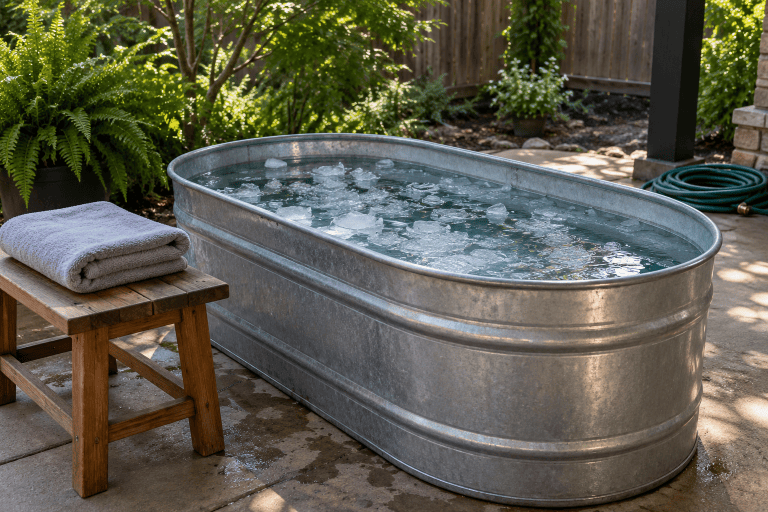
If you’re using a dedicated cold plunge tub at home, this becomes significantly easier. You’re not filling a bathtub with bags of ice — you’re stepping into a pre-chilled vessel that’s ready when you are. That friction reduction is one of the biggest underrated arguments for investing in dedicated cold plunge equipment.
5. Maintenance & Consistency Over Time
Cold plunging is one of the few health habits where the psychological component may matter as much as the physiological one. The discipline of doing something hard regularly — especially something your brain actively resists — builds a kind of mental callus that transfers to other areas of life.
Maintaining a consistent schedule requires:
Tracking your sessions: Even simple logging (dates, duration, temperature, how you felt) helps you see patterns and stay accountable.
Adjusting with the seasons: Cold plunging is easier when ambient temperature makes it feel more appealing. In summer, you may need to actively lower water temp to get the same effect. In winter, some people find it psychologically harder to get in even though the benefits are identical. Know your seasonal patterns.
Periodizing your frequency: Just like strength training, it’s reasonable to have higher-volume cold plunge weeks and deload weeks. If you’ve been doing 5 sessions a week and feel fatigued or dreading sessions, dial back to 2–3 for a week. This is normal and smart, not weakness.
6. Pros and Cons of Daily Cold Plunging
Pros:
- Builds strong habit reinforcement — same time, same trigger, same ritual
- Maximizes cold adaptation over time (lower resting heart rate, better vasoconstriction response)
- Consistent norepinephrine and dopamine elevation
- Strong psychological benefits from daily voluntary discomfort practice
Cons:
- May blunt muscle hypertrophy if done post-strength training
- Risk of adding excessive hormetic stress on already-taxed days
- Harder to sustain long-term — burnout and compliance issues are real
- Diminishing novelty may reduce the mindset training benefit
The honest verdict on daily plunging: It’s not harmful for most healthy people, but it’s also not categorically better than 3–4x per week. Consistency at a sustainable frequency beats ambitious frequency that collapses after three weeks.
7. How Cold Plunge Frequency Compares to Other Recovery Methods
Does cold plunging work better than sauna for recovery frequency? Cold plunging and sauna use different physiological pathways — cold contracts blood vessels while heat dilates them. Both are effective, but they aren’t directly interchangeable. Most serious wellness users combine both (contrast therapy), alternating hot and cold. For pure recovery, sauna has stronger cardiovascular evidence at lower frequencies (2–3x per week). Cold plunging has an edge for acute inflammation reduction and mental activation. Used together, the effects appear synergistic.
Cold plunging at 3–4x per week stacks well with:
- Sauna 2–3x per week (on the same or alternating days)
- Strength training 3–4x per week (with strategic timing as noted)
- Sleep and nutrition optimization as the non-negotiable foundation
8. Frequency Comparison Table
| User Type | Recommended Frequency | Session Length | Best Timing | Notes |
|---|---|---|---|---|
| Complete Beginner | 2x per week | 1–3 min | Morning | Build tolerance first |
| General Wellness | 3x per week | 3–5 min | Morning or post-workout | Sustainable long-term |
| Athletic Recovery | 2–3x per week | 5–10 min | Post-training (not after lifting) | Avoid post-strength |
| Mental Clarity Focus | 3–4x per week | 2–5 min | Morning, fasted | Stack with breathwork |
| Advanced/Habitual | 5–7x per week | 2–5 min | Morning | Monitor for diminishing returns |
| Contrast Therapy User | 3–4x per week | Cold 3–5 min | Alternating with sauna | Hot/cold cycling protocol |
9. Helpful Gear for Your Cold Plunge Routine
Getting your setup right reduces friction and makes consistency far more likely. Here are a few pieces of gear worth having:
Waterproof Digital Thermometer — Knowing your exact water temperature removes guesswork. Cold plunging at 50°F versus 59°F is a meaningfully different experience, and having a thermometer lets you track your cold adaptation over time.
Cold Plunge Robe or Changing Poncho — Getting warm efficiently after a plunge matters for recovery. A thick, absorbent robe waiting for you makes the post-plunge transition smoother and keeps you from standing around shivering while you search for a towel.
10. FAQ
How long should a cold plunge session last? For most people, 2–5 minutes per session is the effective range. Beginners should start at 1–2 minutes and work up. Water temperature matters significantly — at 50°F, 2–3 minutes delivers a substantial physiological stimulus. At 60°F, you may want 5–8 minutes. Most research protocols use water between 50–59°F for optimal effect. Longer is not always better, especially early on.
Can you cold plunge every day safely? Yes, for most healthy adults, daily cold plunging is safe. The main caveats are: avoid plunging immediately after strength training if muscle building is a goal, monitor your overall stress load, and don’t plunge if you have cardiovascular conditions without medical clearance. Havard health recommends consulting a doctor before starting cold immersion therapy if you have heart disease, high blood pressure, or circulatory conditions.
Does cold plunge frequency need to change in winter vs summer? Your frequency can stay the same year-round, but you may need to adjust water temperature to maintain the same stimulus. In summer, tap water may be too warm to deliver a proper cold shock, so you’ll need to add ice or use a dedicated cold plunge unit with a chiller. In winter, tap water may be cold enough to shorten your effective session length. Track temperature, not just duration.
The simple rule: Start at 2 sessions per week, build to 3–4 as it becomes manageable, and only go daily if you’re genuinely enjoying it and recovering well — not as punishment or bragging rights.
Summary Snapshot
- Optimal frequency for most people: 3–4x per week
- Beginners: Start at 2x and build gradually
- Daily plunging: Fine for healthy adults, but not categorically superior
- Session length sweet spot: 2–5 minutes at 50–59°F
- Avoid cold plunging immediately post-strength training if hypertrophy is a priority
- Consistency over months beats intensity over weeks
- Pair with sauna for maximum contrast therapy benefits
Final Verdict
How often should you cold plunge? The honest, research-backed answer is 3–4 times per week for most people — enough to build real adaptation and deliver consistent mental and physical benefits, without tipping into overload or diminishing returns.
Daily plunging isn’t wrong if you genuinely enjoy it and your body handles it well. But 3–4 solid, intentional sessions per week — done consistently for months — will almost certainly outperform ambitious daily habits that fade within a few weeks.
Start conservatively. Track how you feel. Adjust based on your goals, your recovery, and honestly, how much you’re dreading it versus looking forward to it. Cold plunging should be challenging, but it shouldn’t feel like a chore you resent.
If you’re ready to build a real cold plunge setup at home that makes consistent practice easy, check out our curated picks:
If you combine cold plunging with heat therapy, our sauna guides cover session frequency, timing, and protocols from the other direction.
For contrast therapy using steam, our steam room guides are a natural companion to your cold plunge routine, with simple guidance on how to pair heat and cold safely.