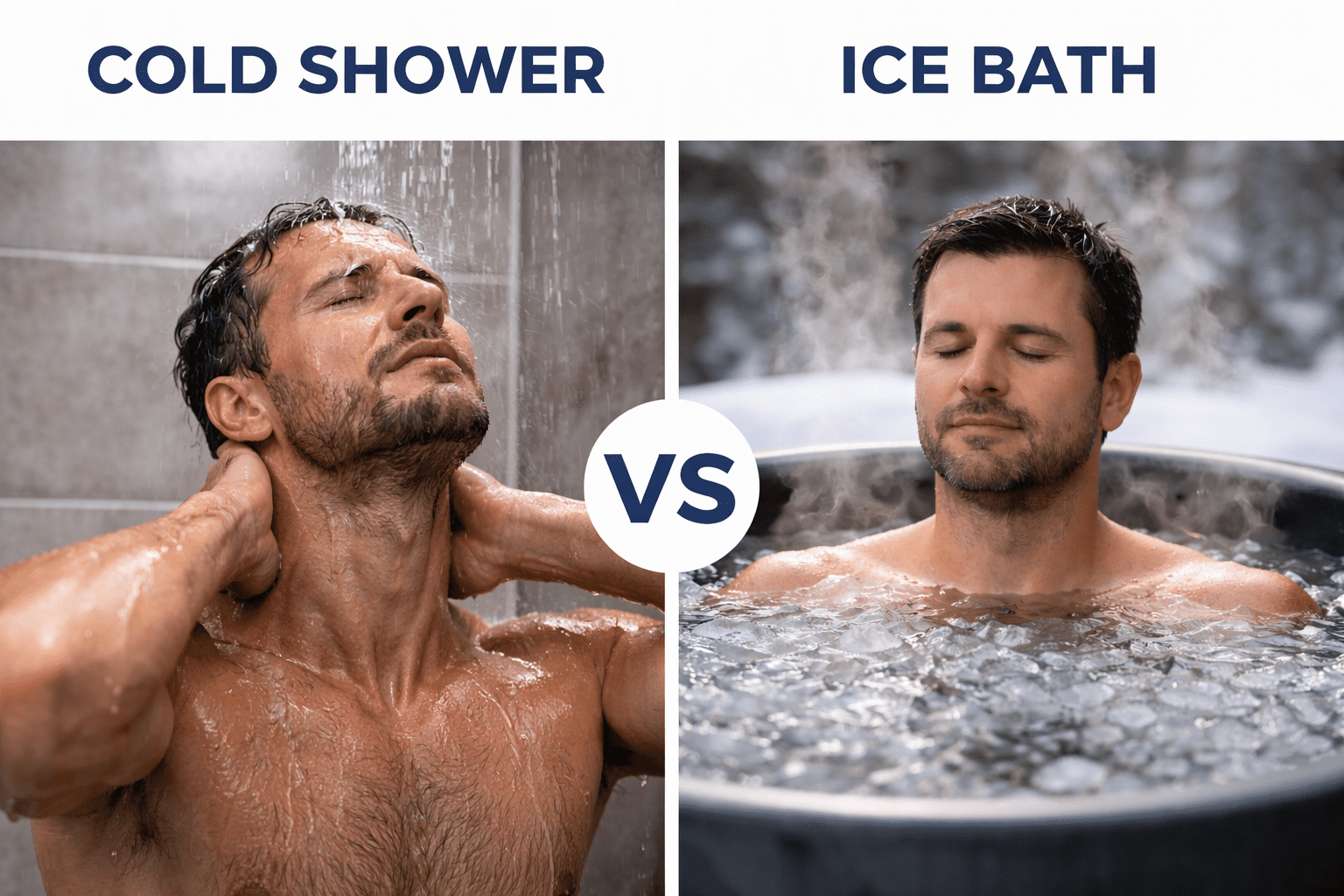
Cold Plunge vs Cold Shower: Which Is Better for Your Recovery?
Cold plunge vs cold shower is one of the most searched debates in the recovery world right now — and honestly, it’s a fair fight. Both involve cold water. Both make you question your life choices in the moment. But they’re not the same experience, and they don’t deliver the same results.
If you’re trying to decide where to put your time, money, or discomfort, this breakdown will give you a straight answer.
Quick heads up: Some links in this post are affiliate links. If you buy through them, we earn a small commission at no extra cost to you. We only recommend gear we’d actually use.
Quick Snapshot
- Cold plunges = full-body immersion, deeper physiological response
- Cold showers = accessible, free, lower intensity
- Cold plunges win on recovery depth and hormonal response
- Cold showers win on cost and daily convenience
- Best outcome: use both strategically, not interchangeably
Table of Contents
- What’s the actual difference?
- What cold exposure really does to your body
- Cost reality: cold plunge vs cold shower
- Installation and setup friction
- Maintenance: what you’re signing up for
- Pros and cons
- Head-to-head comparison
- Comparison table
- Helpful gear
- FAQ
- Final verdict
What’s the Actual Difference Between a Cold Plunge vs Cold Shower?
The core difference is immersion versus exposure. A cold shower hits part of your body at a time. A cold plunge surrounds your entire body simultaneously — and your nervous system knows the difference.
Water also conducts heat away from your body roughly 25 times faster than air. That means even a moderately cold plunge at 55°F pulls heat from your core far more aggressively than a cold shower set to its lowest setting. The physiological response isn’t just bigger — it’s a different category of stimulus.
This matters because most of the research on cold water therapy and recovery is based on full-body immersion, not shower exposure.
What Cold Exposure Really Does to Your Body
Cold water immersion triggers an immediate vasoconstriction response — blood vessels near the skin tighten, pushing blood toward your organs. When you get out, vasodilation kicks in and that blood flushes back through your muscles. That cycle is part of what makes cold plunges effective for post-workout inflammation and soreness.
Your body also releases norepinephrine in significant quantities during cold immersion. According to Healthline’s reviewed overview on cold plunge benefits, this response supports improved circulation, reduced inflammation, and mood elevation — effects that have a measurable basis in how your nervous system reacts to the cold stress .
Cold showers produce some of these effects, but at a lower intensity and shorter duration of stimulus. You’re not wrong to use them. You’re just getting a lighter dose.If you’re unsure how long to stay in, our How Long You Should Cold Plunge guide breaks down the research-backed range.
Does a cold shower give the same benefits as a cold plunge? Not exactly. Cold showers provide mild cold exposure and can improve alertness and mood. But cold plunges deliver a significantly stronger physiological response due to full-body immersion and faster heat loss. For serious recovery or hormonal benefits, the cold plunge vs cold shower gap is meaningful.
Cost Reality: Cold Plunge vs Cold Shower
Cold showers cost nothing. If you already have a functioning shower, your investment is zero. You might run slightly more cold water, but the cost difference is negligible.
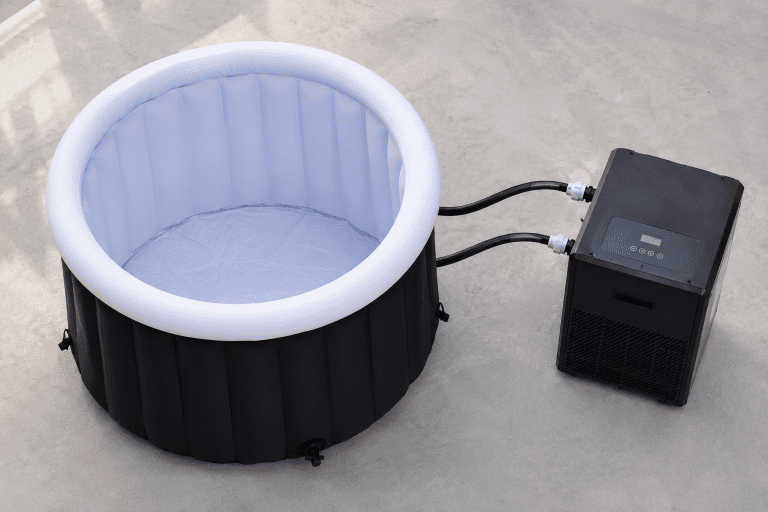
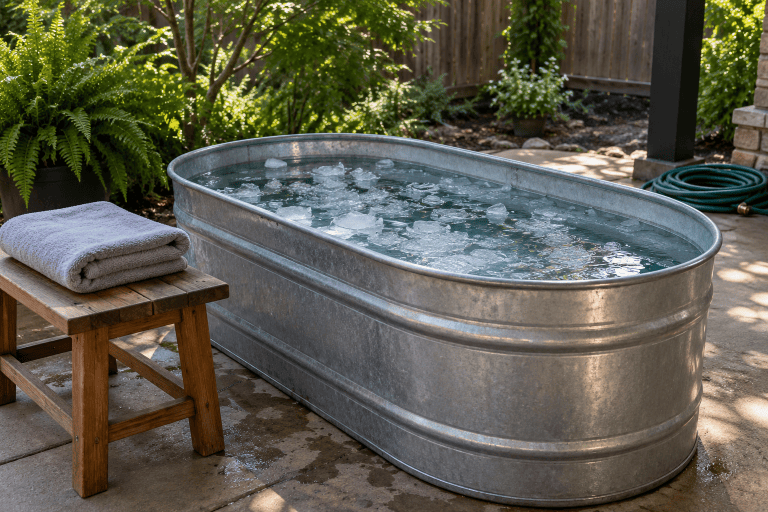
Cold plunges are a different story. Entry-level options like stock tanks or basic chest freezer conversions run $200–$600. Mid-range dedicated cold plunge tubs with built-in chillers sit in the $1,500–$4,000 range. High-end recovery units from brands like Plunge or Ice Barrel can push $5,000+.
The question isn’t which is cheaper. The question is whether the upgrade in stimulus justifies the spend for your goals.
Installation and Setup Friction
Cold showers require no installation. Turn the tap. Done.
Cold plunges require more thought. A basic stock tank or barrel plunge needs a fill source, a drain plan, and a safe outdoor space. Chest freezer conversions need a 120V outlet and a basic filtration mod. Dedicated chiller units often need a 240V outlet and may trigger local permit requirements depending on how and where they’re installed.
If you’re looking at a permanent backyard setup, check your local municipality’s guidelines. USA.gov covers home improvement permit requirements across different states. It’s worth a 10-minute review before you commit to anything permanent.
Maintenance: What You’re Signing Up For
A cold shower requires zero maintenance. The plumbing handles itself.
A cold plunge — especially a filled tub — requires ongoing water management. Without proper care, standing cold water becomes a hygiene problem fast.
At minimum, you’ll need to monitor pH and sanitizer levels if you’re keeping water between sessions. Most plunge users change water weekly for open tubs, or use a filtration and UV sanitization system for chiller setups.
The cold plunge vs cold shower maintenance gap is real and worth factoring into your decision, especially if consistency matters to you.
Pros and Cons
Cold Plunge
Pros: Stronger physiological response, deeper recovery effect, full-body immersion, better norepinephrine release, more directly linked to research outcomes
Cons: Upfront cost, setup required, ongoing maintenance, space needed, takes more commitment to use daily
Cold Shower
Pros: Zero cost, no setup, no maintenance, available daily, good for habit building and mental resilience
Cons: Lower intensity, partial body exposure, less research support for serious recovery, harder to control temperature precisely
Head-to-Head Comparison: Cold Plunge vs Cold Shower
The cold plunge vs cold shower decision usually comes down to what you’re trying to accomplish. If your goal is daily mental sharpness and a low-barrier habit, cold showers are genuinely useful. If your goal is muscle recovery, inflammation management, or maximizing the hormonal response from cold exposure, a cold plunge is the more effective tool.
Most serious recovery athletes use both — cold showers for daily wake-up and habit maintenance, cold plunges for post-training recovery sessions two to four times per week.
How cold does a cold plunge need to be compared to a cold shower? Most cold showers max out around 50–60°F depending on your home’s water supply. Cold plunge targets typically sit between 45°F and 59°F for recovery benefits. The plunge allows you to hold a specific controlled temperature, which showers can’t reliably do.
Comparison Table
| Factor | Cold Plunge | Cold Shower |
|---|---|---|
| Cost | $200–$5,000+ | Free |
| Installation | Required | None |
| Maintenance | Weekly | None |
| Temperature control | Precise | Variable |
| Full-body immersion | Yes | Partial |
| Recovery depth | High | Moderate |
| Daily convenience | Moderate | High |
| Research backing | Strong | Limited |
| Space required | Yes | No |

Helpful Gear
Whether you’re starting with showers or jumping straight to a plunge setup, these tools help you get more from cold exposure.
Waterproof Digital Thermometer A must-have for monitoring your plunge temperature accurately.
Quick-Dry Towel Getting dry and warm fast after a plunge matters more than people expect. A thick quick-dry towel or robe makes the post-plunge transition much smoother.
Waterproof Timer Tracking your immersion time without a phone nearby keeps your sessions safe and consistent. Look for a basic waterproof countdown timer rated for at least 3ATM.
FAQ
Is a cold plunge better than a cold shower for muscle recovery? Yes, for most recovery applications. Full-body immersion creates a stronger vasoconstriction and anti-inflammatory response than partial cold shower exposure. If you’re recovering from training, the cold plunge vs cold shower difference is worth the extra investment.
How long should you stay in a cold plunge vs a cold shower? Cold shower cold exposure: 30 seconds to 3 minutes is typical. Cold plunge sessions: 2–10 minutes depending on water temperature and your experience level. Always start shorter and build up — never push through numbness or shivering you can’t control.
Can cold showers replace cold plunges entirely? For habit building and daily mental alertness, cold showers work well. For the deeper physiological response tied to serious recovery or hormonal benefit research, cold plunges are more effective. The cold plunge vs cold shower gap matters most when recovery quality is your primary goal.
The simple rule: If you want a free daily habit, start with cold showers. If you want real recovery results, a cold plunge is the upgrade worth making.
Summary Snapshot
- Cold plunge vs cold shower isn’t really a tie — plunges win on recovery depth
- Cold showers win on cost and daily convenience
- Full immersion triggers a stronger physiological response every time
- Both have a place in a smart cold exposure routine
- Your budget and goals determine which to prioritize

Final Verdict
The cold plunge vs cold shower debate has a clear answer for most people: cold showers are a great starting point and a useful daily tool, but they don’t replace what a proper cold plunge delivers. The immersion depth, the temperature precision, and the full-body nervous system stimulus are simply different in kind, not just degree.
If budget is tight, cold showers are not a waste of time. Build the habit. Get comfortable with the cold. Then when you’re ready to level up, a cold plunge setup will give you results that showers simply can’t match.