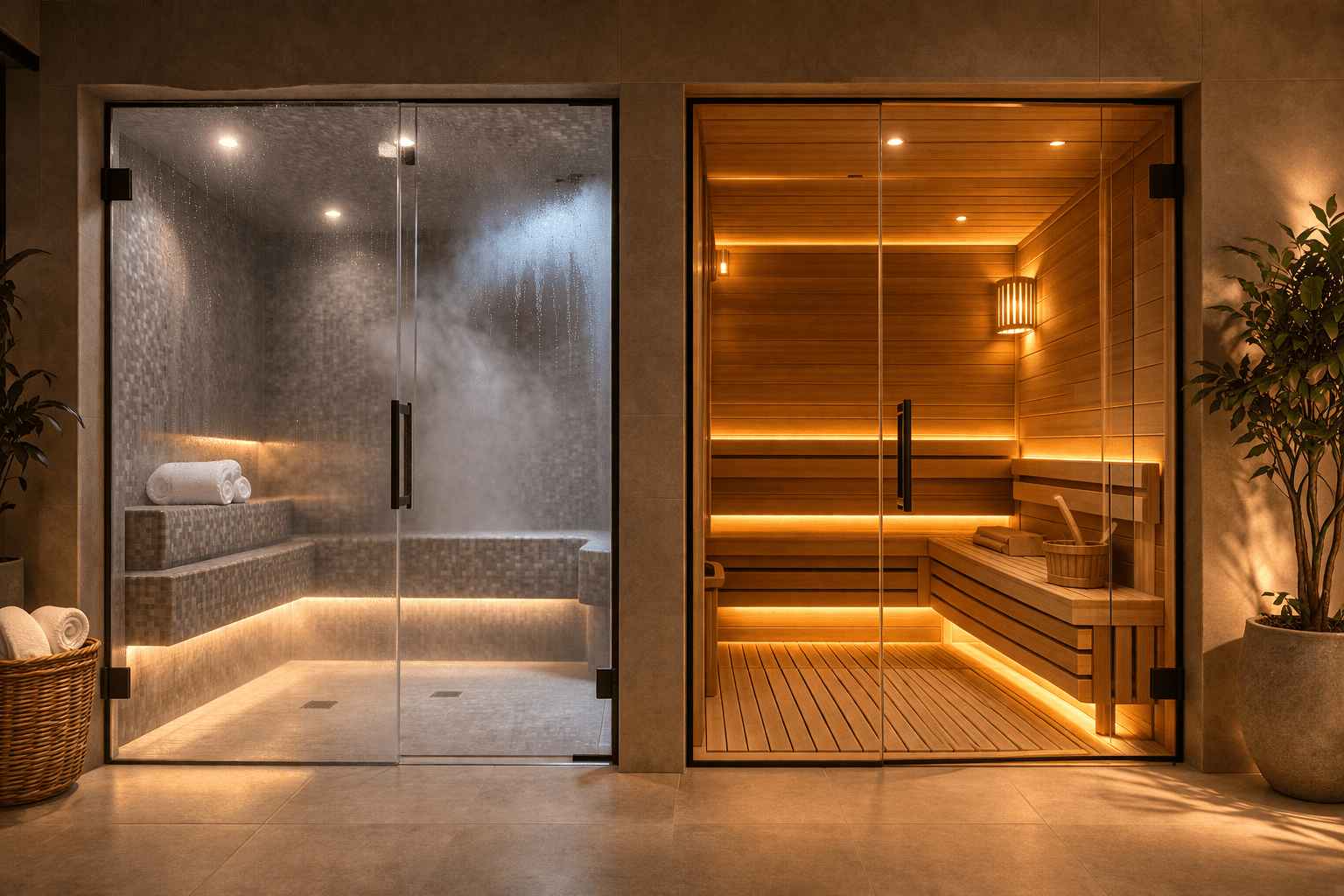
Steam vs Dry Heat Benefits: Which One Is Actually Better for You
Steam vs dry heat benefits is a question that comes up constantly in wellness circles — and for good reason.
Most people assume steam vs dry heat benefits are basically the same thing. They’re not. The experience, the physiology, and the results are genuinely different depending on which one your body needs.
Quick heads up: Some links in this post are affiliate links. If you buy through them, I may earn a small commission at no extra cost to you. I only mention gear I’d actually use.
Quick Snapshot
- Steam rooms use moist heat (100% humidity) at 110–120°F
- Dry saunas use low humidity heat at 160–200°F
- Both improve circulation, but through slightly different pathways
- Steam may edge ahead for respiratory and skin benefits
- Dry heat may be better for deeper muscle recovery and cardiovascular stress
- Neither is universally superior — your goals determine the winner
Table of Contents
- The Real Cost Difference
- What’s Actually Happening Inside Each Environment
- Installation: Which One Is More of a Headache?
- Maintenance Reality Check
- Steam vs Dry Heat Benefits — Pros and Cons
- Head-to-Head Comparison
- Comparison Table
- Helpful Gear
- FAQ
- Final Verdict
What’s Actually Happening Inside Each Environment
Steam rooms and dry saunas both use heat-but steam vs dry heat benefits diverge completely from that point.
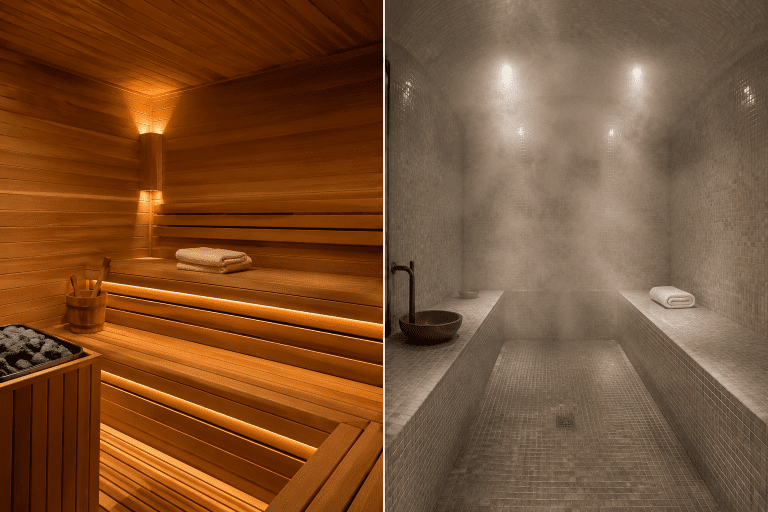
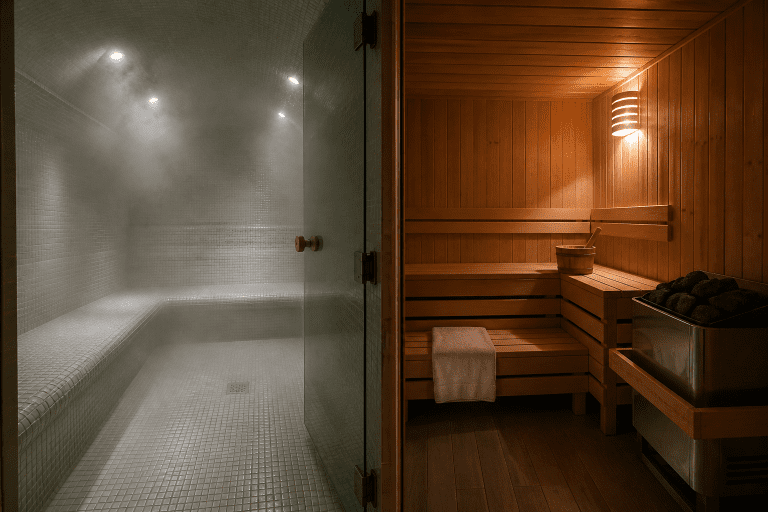
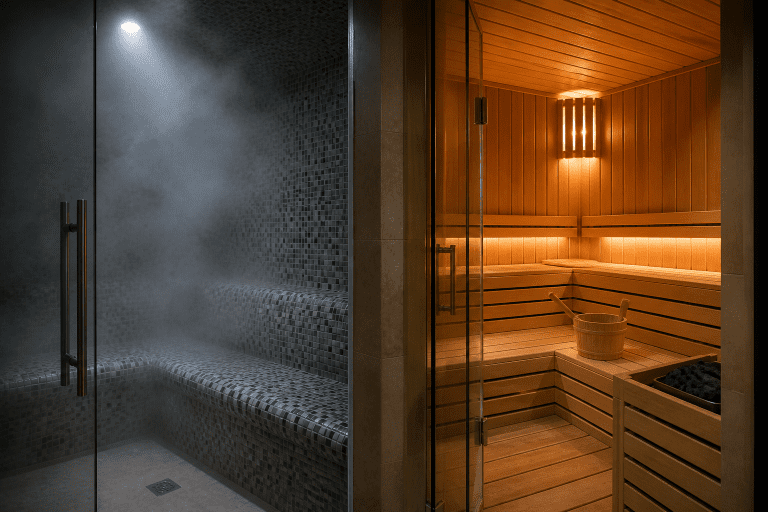
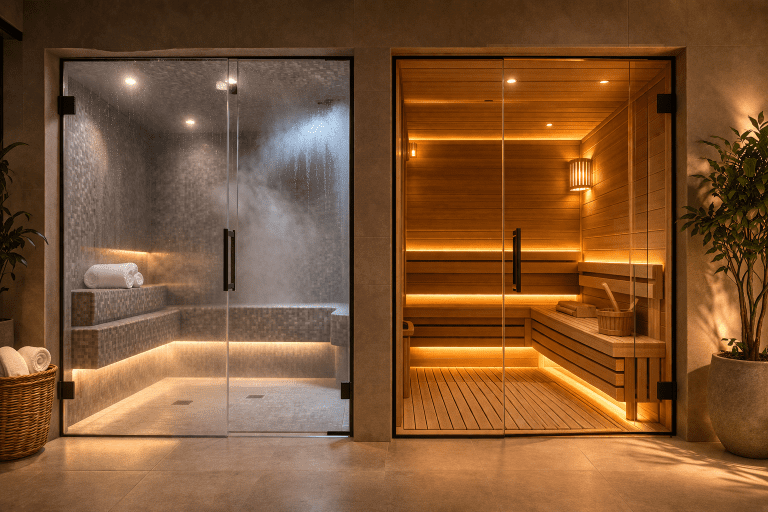
A steam room operates at 100 percent humidity. The air is saturated with moisture, which means your sweat can’t evaporate efficiently. Your body stays hotter, your pores open wider, and the moist air enters your respiratory tract with every breath.
A traditional dry sauna runs at 160°F to 200°F with humidity as low as five to twenty percent. The heat is more intense in temperature, but because your sweat evaporates, the perceived experience feels different — drier, sharper, more penetrating.
What does steam do to your body specifically? Steam heat raises your core temperature gradually through moist convection. This triggers vasodilation, increases circulation, and opens the airways. According to Healthline’s medically reviewed overview of steam room benefits, regular steam sessions have been linked to improved circulation, reduced muscle soreness, and lower levels of post-exercise inflammation. The moist environment also softens mucus in the respiratory system, which is why many people use steam when congested.,If you want the full breakdown of what steam does to your skin our steam room health benefits guide covers it in depth.
Dry saunas drive body temperature higher and faster. The cardiovascular response is more pronounced. Heart rate climbs. Blood vessels dilate. The experience mimics mild aerobic exercise at the circulatory level.
Both trigger similar hormonal responses — cortisol management, endorphin release, and some evidence for growth hormone stimulation after repeated sessions. The mechanisms just get there differently.
The Real Cost Difference
This is where the steam vs dry heat benefits conversation gets more practical.
A home steam generator starts around $400 for a basic unit and scales to $1,500 or more for larger enclosures. The steam room enclosure itself — if you’re building from scratch — adds $2,000 to $8,000 depending on tile, waterproofing, and size.
Home saunas range from $1,500 for a prefab two-person indoor barrel unit to $10,000+ for a custom outdoor cabin build. Infrared versions often land in the $1,800 to $4,000 range for quality home use.
Running costs are roughly comparable. Both typically require a 240V dedicated circuit. Steam generators tend to run at four to seven kilowatts. Traditional saunas range from four to nine kilowatts depending on size. Expect to add $30 to $80 per month to your electricity bill depending on frequency of use.
Neither option is cheap to run, but neither is outrageous if you’re replacing a gym membership or regular spa visits.
Installation: Which One Is More of a Headache?
Steam rooms require more work. Full stop.
A steam room needs complete waterproofing — floor, walls, ceiling. The ceiling must be sloped so condensation drains instead of dripping. You’ll need a steam-rated enclosure, proper ventilation to prevent mold, and a drain in the floor. Most quality installs require a licensed contractor.
A dry sauna is more forgiving. Prefab indoor saunas can be assembled by two people in a few hours with basic tools. The main installation requirements are a dedicated electrical circuit and adequate ventilation. Outdoor models need a proper foundation but don’t require waterproofed walls.
Both may require permits depending on your municipality. According to USA.gov’s home improvement guidance, any structural addition or significant electrical work typically requires a permit — so check with your local building department before either project starts.
If you’re renting or want zero renovation, a prefab dry sauna wins on simplicity every time.
Maintenance Reality Check
Steam rooms need regular attention. Mold is the enemy.
You’ll need to wipe down the enclosure after every session, descale the steam generator every one to three months depending on your water hardness, and inspect grout lines and seals regularly. Neglect the maintenance and you’ll be dealing with mold remediation, which is expensive and unpleasant.
Dry saunas are significantly lower maintenance. Wipe down the benches after use. Air the sauna out. Clean the floor occasionally. Replace heating elements every five to ten years. That’s mostly it.
If you travel frequently or have stretches where the sauna won’t be used, the dry option is far more forgiving. A steam room left sitting unused with trapped moisture is a problem waiting to happen.
Steam vs Dry Heat Benefits — Pros and Cons
Steam Room
Pros: Respiratory support, skin hydration, moist heat more tolerable for beginners, effective at lower temperatures, excellent post-workout recovery for joints
Cons: Higher installation complexity, mold risk, regular descaling, less penetrating heat for deep muscle work
Dry Sauna
Pros: Higher heat for deeper cardiovascular response, simpler installation, lower maintenance burden, proven long-term research base, more widely available in prefab form
Cons: Drier air can irritate sinuses, more intense experience may be harder for beginners to tolerate, typically higher upfront equipment cost for quality units
Head-to-Head Comparison
The steam vs dry heat benefits debate doesn’t have a universal winner. It comes down to what you’re actually trying to achieve.
For respiratory health and skin, steam wins. The moist air directly supports airway function and opens pores more effectively than dry heat. People dealing with sinus issues, asthma, or skin conditions like eczema often report better results from steam.
For cardiovascular conditioning and research backing, dry heat edges ahead. The high temperatures of a traditional sauna produce a more pronounced heart rate response, and the body of long-term research — particularly from Finnish studies — is stronger for dry sauna use.
For muscle recovery, it’s close. Moist heat penetrates joints and connective tissue well. Dry heat drives deeper tissue temperature increases. Many athletes use both on rotation, which is a legitimate approach if you have access to both.
For practical home use, dry saunas win on installation simplicity and maintenance. Steam rooms are a commitment. If you’re not prepared to waterproof properly and clean regularly, you’ll regret it.
Comparison Table
| Factor | Steam Room | Dry Sauna |
|---|---|---|
| Temperature | 110–120°F | 160–200°F |
| Humidity | ~100% | 5–20% |
| Respiratory benefit | Strong | Moderate |
| Skin hydration | Strong | Moderate |
| Cardiovascular response | Moderate | Strong |
| Deep muscle recovery | Good | Excellent |
| Installation complexity | High | Low–Medium |
| Maintenance burden | High | Low |
| Entry cost (home) | $2,400–$9,500 | $1,500–$10,000+ |
| Long-term research depth | Moderate | Extensive |

Helpful Gear
If you’re starting to build a home heat therapy routine, a few accessories make the experience noticeably better.
Sauna thermometer and hygrometer combo — Knowing your actual temperature and humidity makes a real difference in tracking your sessions safely.
Steam room eucalyptus oil — A few drops added to your steam generator’s aromatherapy tray amplifies the respiratory benefits significantly. Look for 100% pure formulas with high review volume.
Sauna bench cushion — For dry sessions, a non-slip wooden or foam bench cushion protects against hot wood on longer sessions. Look for Amazon’s Choice options rated 4.3 or higher.
FAQ
Is steam or dry heat better for weight loss? Neither produces meaningful fat loss on its own. Both cause temporary water weight loss through sweating, but this returns once you rehydrate. The benefits of steam vs dry heat for body composition are indirect — better recovery means more consistent training, and more training produces results over time.
How long should you stay in a steam room vs a dry sauna? For steam rooms, ten to twenty minutes per session is generally recommended. Dry saunas can range from ten to thirty minutes depending on heat tolerance and experience. New users should start at the lower end regardless of which environment they choose, and always exit if you feel dizzy or lightheaded.
Can you use steam and dry heat on the same day? Yes, and many wellness facilities offer both for exactly this reason. A dry sauna session followed by a cool shower followed by a shorter steam room session is a popular protocol. Allow your body temperature to normalize between environments, stay well hydrated, and don’t push past your comfort level.
One Simple Rule
If your primary goal is breathing easier and skin clarity, lean steam. If your primary goal is cardiovascular conditioning and deep recovery, lean dry. If you want both — build the one you’ll actually maintain.
Summary Snapshot
- Steam vs dry heat benefits are real — they just work through different mechanisms
- Steam wins on respiratory support, skin hydration, and beginner comfort
- Dry heat wins on cardiovascular intensity, maintenance simplicity, and research depth
- Steam rooms cost more to install and require more upkeep
- Both require dedicated electrical circuits and careful usage habits
- Your goals, not trends, should drive the decision

Final Verdict
Steam vs dry heat benefits is genuinely one of the more nuanced comparisons in home wellness — because both work, both have real science behind them, and both deliver if you use them consistently.
Steam rooms are the better call if you deal with respiratory issues, want a gentler heat entry point, or prioritize skin benefits. Dry saunas are the better call if you want the most research-backed cardiovascular response, easier home installation, and lower ongoing maintenance.
The honest answer on steam vs dry heat benefits is that the best one is the one you’ll actually use regularly. Either way, you’re making a serious investment in recovery and long-term health — and that’s never a bad move.