
What Is the Real Cost of Home Ice Bath Systems in 2026?
The cost of home ice bath systems depends on the tub, cooling equipment and ongoing upkeep. Basic tubs can cost under $200, while chiller-equipped setups range from budget packages to systems costing several thousand dollars. Compare what each price includes: a tub alone, a standalone chiller and a complete package are different purchases.
Most people researching this expect a single number. There isn’t one. What you’re actually pricing is a system made of three separate cost layers: the tub itself, the chilling method, and ongoing upkeep. Skipping any one of those layers when budgeting is how people end up surprised six months in.
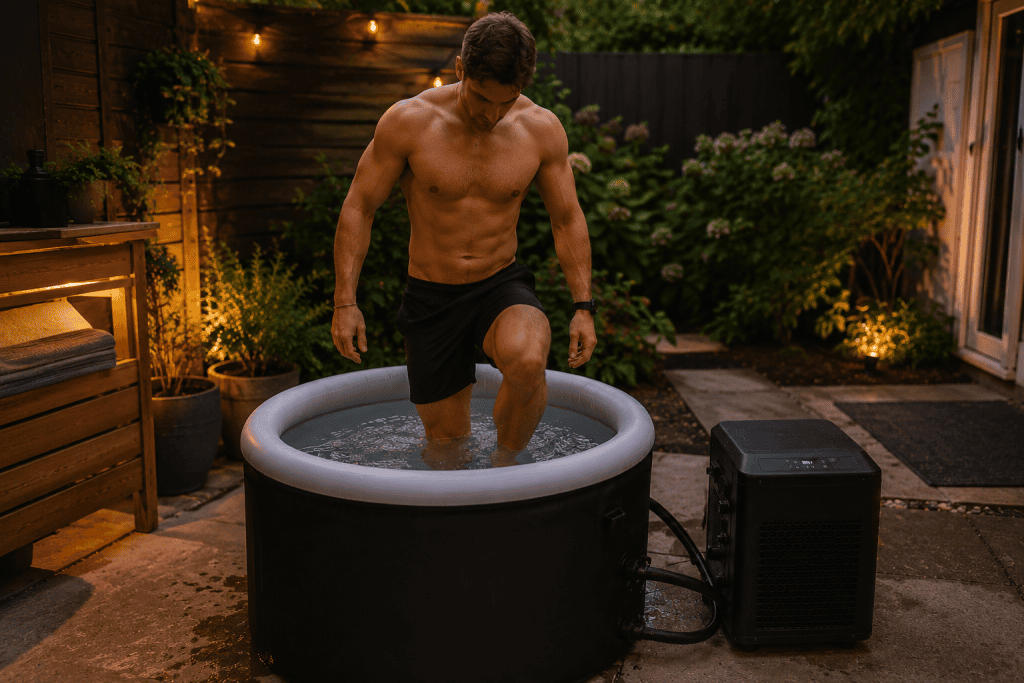
A chiller removes the need to prepare ice before each session, but that convenience comes with purchase, electricity and maintenance costs. Whether it saves money depends on what you would otherwise spend on ice.
As an Amazon Associate, Sunrise & Vitalize earns from qualifying purchases. If you buy through an affiliate link, we may earn a small commission at no extra cost to you.
Quick Snapshot
Basic tub: some options cost under $200 before ice and accessories.
Chiller setup: compare complete package prices with standalone equipment prices.
Running costs: include ice or electricity, water, treatment products and filters.
Setup: allow for filling, initial cooling and any required site or electrical work.
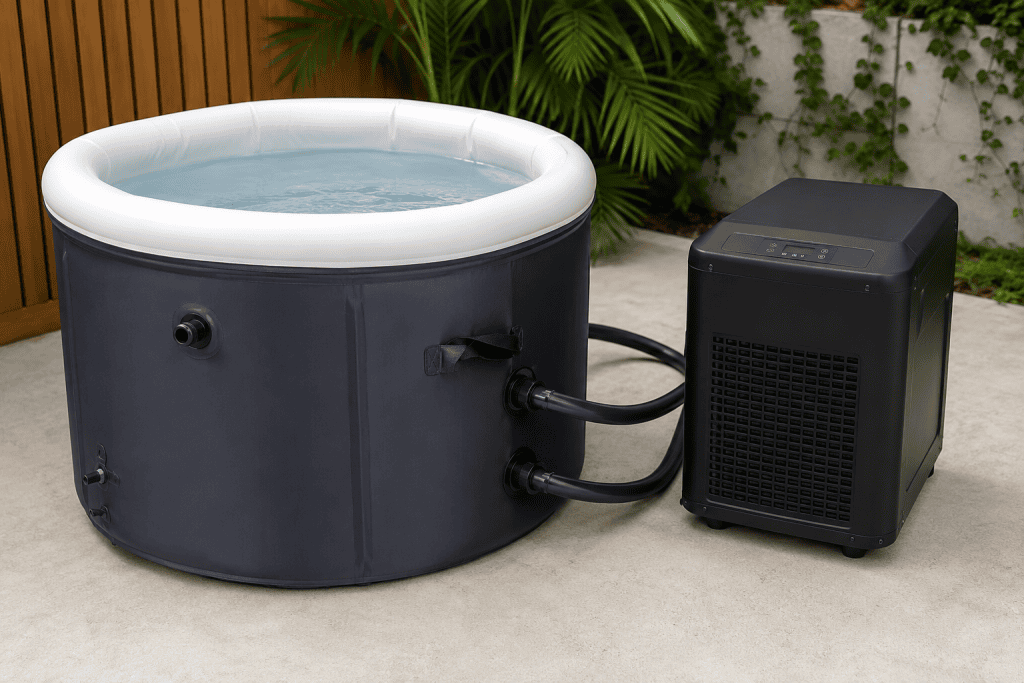
Table of Contents
- What Does the Cost of Home Ice Bath Systems Actually Include?
- Real Cost Breakdown: Tub, Chiller and Running Costs
- The Honest Installation Challenges Nobody Prices In
- What Ongoing Maintenance Actually Costs You
- Pros and Cons of Investing in a Home Ice Bath
- Ice vs Chiller: Comparing Total Costs
- Helpful Gear
- FAQ
- Final Verdict
What Does the Cost of Home Ice Bath Systems Actually Include?
When people ask about the cost of home ice bath systems, they’re usually picturing the tub itself. That’s only one piece of it. The full picture includes the vessel, the cooling method, a cover to retain temperature between sessions, and the electricity or ice-buying habit that keeps the whole thing usable week to week.
A cover does not disinfect the water. For an untreated setup, empty, clean and dry the tub after each use; follow the manufacturer’s water-care instructions for systems that retain treated water.
Frequency affects the cost of home ice bath systems, but it does not create a universal break-even point. Calculate your ice spending per session and compare it with the additional purchase and operating costs of a chiller. An inflatable tub can also be chiller-compatible: tub construction and cooling method are separate choices.
Real Cost Breakdown: Tub, Chiller and Running Costs
Compare like-for-like prices when budgeting for the cost of home ice bath systems. As examples checked in October 2026, The Pod Company listed its Standard IcePod without a chiller at $99 and its IcePod Pro with Standard Chiller at $728. Plunge listed its standalone Pro Chiller at $3,490. These examples have different specifications and inclusions; they are not equivalent systems or fixed market limits. Confirm current prices, shipping, tax and compatibility before buying.
Check the selected package on The Pod Company’s product page, including whether the price includes a chiller, cover, pump, hoses and filtration.
Calculate ice costs as bags per session × price per bag × sessions per month. For example, two $5 bags across eight monthly sessions cost $80. This is an illustration, not a typical spending figure.
Calculate electricity as daily kWh × your electricity rate × days of use. For illustration, 3 kWh daily at $0.20/kWh costs $18 over 30 days. Actual consumption depends on the equipment, insulation, weather and temperature setting.
The Honest Installation Challenges Nobody Prices In
Both setups need a level surface capable of supporting the filled tub, safe access and a suitable drainage plan. Indoors, account for splashes, leaks and moisture as well as floor loading.
For a chiller, check tub compatibility, hose fittings, airflow clearance, outdoor-use restrictions and electrical requirements. Follow the model’s grounding, GFCI and circuit instructions. An electrician is needed if the existing supply is unsuitable; new electrical work is not automatically required for every installation.
Check operating noise before choosing a location near bedrooms or shared spaces. Allow additional time for filling and initial cooling: assembly time is not the same as time until the water is ready.
What Ongoing Maintenance Actually Costs You
Both setups need cleaning and a water-care routine appropriate to their equipment. Follow the manufacturer’s instructions for testing, treatment, filter care and water changes. Cold water and filtration alone do not disinfect the water.
Budget separately for treatment products, replacement filters, refill water and any servicing. Costs depend on the system and usage; there is no reliable universal $10–$25 monthly allowance. Check warranty coverage, replacement-part prices and service access before buying.
Pros and Cons of Investing in a Home Ice Bath
Pros: Ice-cooled setups avoid the purchase cost of a chiller. Chiller-equipped setups reduce ice preparation and provide temperature control within their operating limits. Some inflatable tubs support either cooling method.
Cons: Ice requires preparation and repeat purchases unless you make it yourself. Chillers add electricity use, noise and equipment maintenance. Outdoor use depends on the model’s weather and operating-temperature limits; freezing conditions may require winterization.
Ice vs Chiller: Comparing Total Costs
Compare the cost of home ice bath systems over the same period, using your expected session frequency. Include the tub and accessories on both sides, then add ice purchases or chiller electricity, filters and servicing.
Cooler weather may reduce cooling demand, but freezing conditions can damage equipment. Follow the manufacturer’s winter-use instructions rather than assuming an outdoor system can operate year-round.
| Cost or consideration | Tub cooled with ice | Tub with compatible chiller |
|---|---|---|
| Upfront spending | Tub, cover and initial ice | Tub, chiller and required connections |
| Recurring cooling cost | Ice purchases or ice-making costs | Electricity |
| Other upkeep | Water, cleaning and treatment | Water, cleaning, treatment and filters |
| Electrical work | None for a basic tub without powered equipment | Depends on equipment and existing supply |
| Preparation | Add ice and measure temperature | Initial cooling, then temperature maintenance |
| Noise | No chiller noise | Pump and compressor noise varies |
| Tub construction | Inflatable or rigid | Compatible inflatable or rigid |
| Financial break-even | Depends on actual ice spending | Depends on extra purchase and operating costs |
Helpful Gear
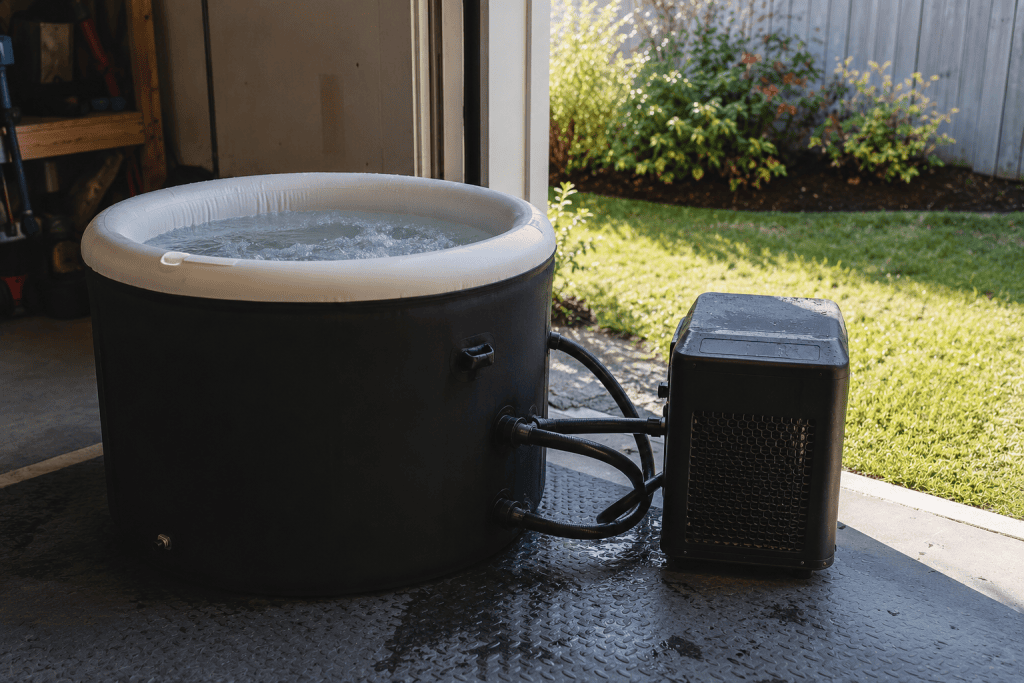
- Insulated cover for a 100-gallon Rubbermaid stock tank — This linked cover is designed for a specific tank shape and size. Check compatibility with your exact tub; it is not a universal inflatable-tub cover.
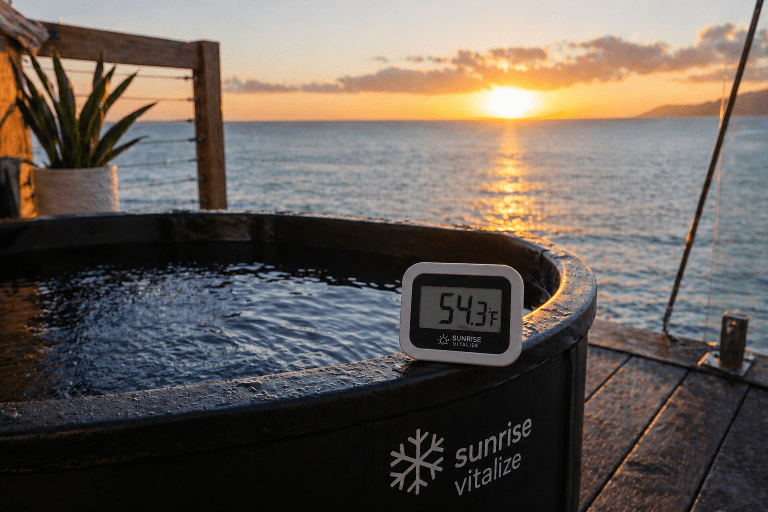
- Digital pool/spa thermometer – Lets you track water temperature accurately instead of guessing.
- Ouster cold-plunge water treatment — The linked product is a cleaner, clarifier and water softener. Do not assume it replaces a disinfectant or the manufacturer’s full water-care routine. Check compatibility and follow the label.
FAQ
Is it worth buying a chiller if I only plunge twice a week? Compare your annual ice spending with the complete chiller setup and operating costs. Twice-weekly use alone does not establish which is cheaper. Convenience may still justify a chiller even without financial savings.
How long does a basic inflatable ice bath setup last?
Lifespan depends on construction, exposure, storage and care. Check the warranty and repair options rather than assuming every inflatable will last a particular number of years.
Does a chiller really pay for itself?
Sometimes, but it is not guaranteed. Divide the extra upfront cost by the monthly saving after electricity and maintenance. For illustration, $1,200 extra upfront divided by $40 monthly savings gives 30 months. If there is no monthly saving, there is no financial payback.
Taken together, budgeting for a full year rather than just the upfront number gives a far clearer picture than any single price tag.
Summary Snapshot
- Ice cooling usually requires less equipment upfront.
- Chillers trade a larger initial purchase for convenience and temperature control.
- Include water care, accessories and any electrical work in both budgets.
- Calculate savings from your own usage rather than assuming a fixed payback period.
Final Verdict
The cost of home ice bath systems is best compared as a first-year budget: equipment, installation, cooling and upkeep. Ice may suit occasional use, while a chiller can make regular use more convenient. Neither option is automatically cheapest for everyone.
For the convenience-versus-investment decision, see Are Ice Bath Chiller Systems Worth It?. For another example of calculating equipment electricity costs, see How Much Does It Cost to Run an Electric Sauna Heater?.
![blood pressure and cold plunges]](https://sunriseandvitalize.com/wp-content/uploads/2026/05/vidar-nordli-mathisen-0fN21zv8yYo-unsplash-768x448.jpg)