Who Should Avoid Ice Baths? A Straight Answer Before You Get In
Who should avoid ice baths is honestly one of the most underwritten questions in cold exposure content — and it matters more than almost anything else in this space.
Most articles rush past it. A quick disclaimer, maybe a line about “consulting your doctor,” and then straight into the benefits. That’s not good enough. Cold water immersion is genuinely powerful — but it’s also a real physiological shock. Some people need to sit this one out entirely.
Quick note: some links in this post are affiliate links. If you buy through them, I may earn a small commission at no extra cost to you. I only mention products I’d actually use.
Quick Snapshot
- Ice baths trigger an intense cardiovascular response — heart rate and blood pressure spike immediately
- People with heart conditions, uncontrolled hypertension, or Raynaud’s disease carry real risk
- Pregnancy requires medical guidance before deliberate cold-water immersion, while open wounds and recent surgery are reasons to hold off until healed or medically cleared.
- Medication that affects circulation or temperature regulation changes the risk profile significantly
- Being young and healthy doesn’t guarantee safety — individual response varies more than most people expect
- When in doubt, start with cold showers and work toward immersion gradually

Table of Contents
- What Actually Happens to Your Body in an Ice Bath
- Heart Conditions and Cardiovascular Risk
- High Blood Pressure and Hypertension
- Raynaud’s Disease and Cold Sensitivity Disorders
- Pregnancy
- Open Wounds, Skin Conditions, and Recent Surgery
- Medications That Change Your Risk Profile
- Age Considerations — Young, Old, and Everyone Between
- The Mental Health Angle Nobody Talks About
- Pros and Cons of Ice Baths for the Right Person
- Ice Bath vs Cold Shower — Which Is Safer for Borderline Cases?
- Comparison Table
- Helpful Gear
- FAQ
- Final Verdict
What Actually Happens to Your Body in an Ice Bath
Understanding who should avoid ice baths starts with understanding what cold water immersion actually does. The moment your body hits water below around 59°F (15°C), your nervous system fires hard. Blood vessels constrict, heart rate spikes, breathing shallows fast, and your body redirects blood away from the extremities to protect core temperature.
This is called the cold shock response. It peaks in the first 30 to 90 seconds and it’s where most of the risk lives. For a healthy person, the body manages this well. For someone with an underlying condition, that same response can become dangerous.
Cold shock happens on entry; hypothermia is a separate risk as body temperature falls. Learn the signs of hypothermia in ice baths so you know when to get out and seek help.
I’ve done cold showers every day for years, but a full ice plunge is a completely different level — genuinely not comparable in terms of what it does to your system. That distinction matters when you’re evaluating whether you should be doing this at all.
Heart Conditions and Cardiovascular Risk
This is the clearest case. People with any existing heart condition — arrhythmia, coronary artery disease, heart failure, or a history of heart attack — need to treat ice baths with serious caution. The cold shock response creates an immediate demand on the heart. Blood pressure jumps, the heart rate surges, and the workload increases sharply.
Who should avoid ice baths with no ambiguity: anyone with an unstable or unmanaged heart condition. Even people with well-managed conditions should only consider cold immersion under medical guidance — not as a self-directed wellness experiment.
The cardiovascular response isn’t a scare tactic. It’s documented physiology. Healthline’s overview of cold plunge risks covers the cardiovascular mechanism clearly, and it’s worth reading before anyone with a heart history makes a decision here.
High Blood Pressure and Hypertension
Hypertension complicates things in a way that a lot of cold exposure content glosses over. Blood pressure rises sharply during cold immersion — that’s normal and temporary for most people. For someone already running high baseline pressure, that spike reaches a different ceiling.
Who should avoid ice baths in this category: anyone with uncontrolled or poorly managed hypertension. If your blood pressure is stable and managed with medication, the conversation with your doctor becomes more nuanced — but it’s still a conversation worth having explicitly, not a risk to assume away.
For a deeper look at this specific risk, see our Blood Pressure and Cold Plunges guide.
Raynaud’s Disease and Cold Sensitivity Disorders
Raynaud’s is a condition where blood vessels overreact to cold — typically in the fingers and toes — causing pain, numbness, and colour changes. Because cold temperatures are a common trigger, deliberately immersing yourself in ice-cold water could provoke symptoms.
If you have Raynaud’s, speak with your healthcare professional before considering an ice bath. The same caution applies if you have another condition that significantly affects your circulation or response to cold.
Pregnancy
If you’re pregnant, speak with your doctor or midwife before using an ice bath or starting deliberate cold-water immersion. Pregnancy changes cardiovascular demands, and this isn’t an area where it’s worth relying on general cold-plunge advice. This applies whether you were doing regular plunges before becoming pregnant or not.
Open Wounds, Skin Conditions, and Recent Surgery
Cold water and open skin are not a good combination. Ice baths involve immersion in water that — even in a clean, well-maintained unit — introduces infection risk through any break in the skin. Open wounds, surgical sites, or active skin infections create a direct pathway.
Recent surgery comes with an additional layer: the body’s healing processes and immune response are already occupied. Adding cold shock on top of that isn’t recovery — it’s interference.
Who should avoid ice baths here includes anyone with: active eczema flares with broken skin, psoriasis lesions, fresh surgical wounds, or any open abrasion they’re actively managing. Wait until healed. The plunge will still be there.
Medications That Change Your Risk Profile
Some medications can affect heart rate, blood pressure, circulation, alertness or temperature regulation. If you take medication for a cardiovascular condition or anything else that could affect your response to extreme cold, check with your doctor or pharmacist before using an ice bath.
Age Considerations — Young, Old, and Everyone Between
Older adults face a combination of factors: cardiovascular systems that have less reserve, greater likelihood of existing conditions, and potentially slower recovery from cold shock. None of that makes ice baths impossible — some people use cold immersion well into their 70s. But the risk profile is different, and the approach needs to reflect that.
Who should avoid ice baths on age grounds? No specific age cutoff exists, but older adults with any cardiovascular, circulatory, or metabolic conditions should approach this differently than a healthy 25-year-old. Gradual cold exposure — starting with cool showers and building over months — is a more sensible entry point than jumping straight into full immersion.
Young people aren’t automatically safe either. Children and teenagers have different thermoregulatory systems and should not use ice baths without medical guidance. Healthy adults in their 20s and 30s with no underlying conditions are the lowest-risk group — but individual cold shock response still varies significantly even within that group.
The Mental Health Angle Nobody Talks About
Cold exposure has real mental health benefits for many people — the research on mood, dopamine, and norepinephrine is credible. But who should avoid ice baths also includes people in certain mental health situations that most articles skip entirely.
For people with anxiety disorders, the cold shock response — rapid breathing, heart pounding, a feeling of losing control — can trigger rather than relieve anxiety. The physiological experience of cold shock mimics a panic response closely enough that it can be destabilising rather than therapeutic.
Does cold immersion help or hurt anxiety? It depends on the person. For some, regular cold exposure builds genuine resilience and reduces baseline anxiety over time. For others, especially those with panic disorder or severe anxiety, the cold shock phase can reinforce rather than break the cycle. Starting with very brief cold showers and observing your response is a safer entry point than full immersion.
Pros and Cons of Ice Baths for the Right Person
Pros
- Genuine recovery benefits after intense training
- Mood elevation — the natural high after cold immersion is real and lasts longer than most people expect
- Reduced muscle soreness when timed correctly post-exercise
- Mental resilience built through regular deliberate discomfort
- Improved circulation response over time with consistent use
Cons
- Who should avoid ice baths covers a wider group than most content admits
- The cold shock response carries real cardiovascular risk in the first 60-90 seconds
- Overuse can blunt muscle protein synthesis — timing and frequency matter
- Not a substitute for sleep, nutrition, or actual recovery
- Equipment costs, maintenance, and space requirements are non-trivial for home setups
Ice Bath vs Cold Shower — Which Is Safer for Borderline Cases?
For people in the grey zone — mild hypertension that’s managed, older adults who are otherwise healthy, people newer to cold exposure — the question isn’t usually ice bath or nothing. It’s ice bath or cold shower.
If you’re considering making cold immersion a regular habit, our guide to daily cold plunging safety looks specifically at the risks and practical considerations of plunging every day.
Who should avoid ice baths but might still benefit from cold exposure can often work with cold showers safely. The shock response is significantly milder. You control duration and temperature easily. You can step out immediately. There’s no full-body submersion triggering the same intensity of cardiovascular response.
The difference between a cold shower and a full plunge is not minor — it’s the difference between a manageable stimulus and a genuine physiological shock. I use cold showers daily and have for years. The plunge is an entirely different category of experience. For borderline cases, starting at the shower end and progressing gradually is the more sensible path. If you do move to full immersion, safe ice plunge duration matters just as much as temperature, especially while you’re adapting.
For a closer look at how equipment and setup affect risk, see our Cold Plunge Safety: Ice Bath vs Professional System guide.
Comparison Table
| Condition / situation | Ice bath | Cold shower | Guidance |
|---|---|---|---|
| Unmanaged heart condition | Avoid | Caution | Seek medical guidance |
| Uncontrolled hypertension | Avoid | Caution | Manage blood pressure first |
| Controlled hypertension | Caution | Lower-intensity option | Discuss with your doctor |
| Raynaud’s disease | Caution | Caution | Discuss cold exposure with a healthcare professional |
| Pregnancy | Medical guidance first | Medical guidance first | Speak with your doctor or midwife |
| Open wounds / recent surgery | Avoid | Depends on wound/surgery | Wait until healed or medically cleared |
| Medication affecting cold response | Caution | Caution | Check with doctor or pharmacist |
| Anxiety / panic disorder | Caution | Start gradually | Monitor individual response |
| Healthy adult, no known conditions | Generally lower risk | Generally lower risk | Start gradually |
| Child / teenager | Medical guidance | Medical guidance | Don’t use adult protocols |
Helpful Gear
If you’re cleared for cold exposure and working toward immersion, a few things make the process more manageable.
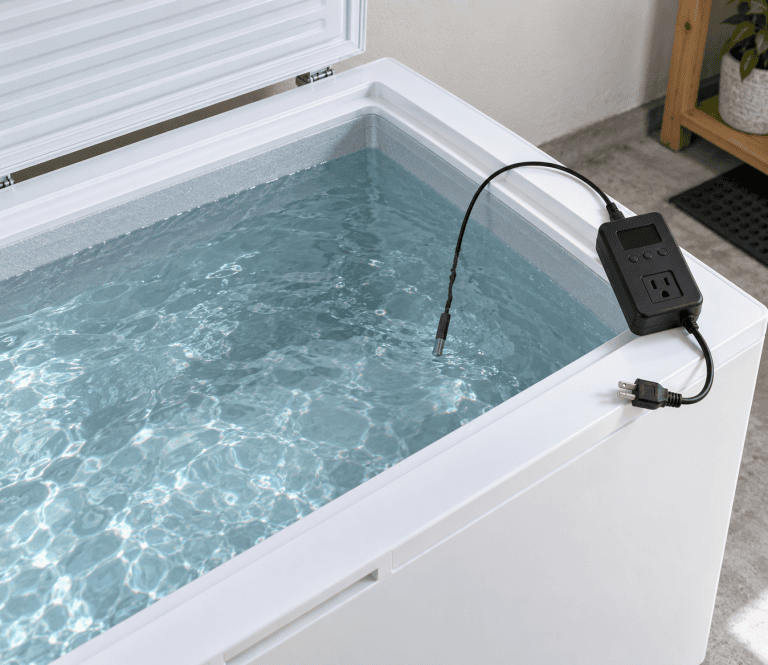
Digital thermometer for water temperature— Knowing your actual water temperature removes guesswork from tracking cold adaptation.
Neoprene gloves— For people building toward full immersion who want to reduce extremity exposure initially — particularly relevant for those with mild cold sensitivity.
Robe or quick-dry towel wrap—A robe or towel can help you dry off and get into warm layers after immersion, especially when plunging outdoors. For more on what to do once you leave the water, see our guide to warming up after an ice plunge
FAQ
Can you do an ice bath with high blood pressure?
Who should avoid ice baths includes anyone with uncontrolled high blood pressure — cold immersion causes an immediate spike in blood pressure that can reach dangerous levels in that group. People with well-managed hypertension may be able to approach cold exposure cautiously, but this requires explicit discussion with a doctor, not a self-directed decision. Starting with brief cool showers and monitoring response is a more appropriate first step than full immersion.
How do you know if an ice bath is safe for you?
Who should avoid ice baths can be partially self-screened: if you have any cardiovascular condition, take medications that affect circulation or temperature regulation, are pregnant, or have active skin conditions, get medical clearance before immersion. If you have no known conditions, the most practical test is progressive cold shower exposure over several weeks — observing how your body responds to cold shock before committing to full immersion.
Is age a reason to avoid ice baths?
Age alone isn’t a hard disqualifier, but older adults carry a statistically higher likelihood of cardiovascular and circulatory conditions that do matter. Who should avoid ice baths in older age groups includes anyone with unmanaged heart, blood pressure, or circulation issues — which becomes more common with age. A healthy, active 65-year-old with no underlying conditions has a different risk profile than a sedentary 65-year-old with hypertension. The individual picture matters more than the number.
One simple rule: if anything on this list applies to you, get medical clearance before immersion — not after.
Summary Snapshot
- Cold water immersion triggers a cardiovascular shock response that is real and immediate
- Heart conditions, uncontrolled hypertension, Raynaud’s disease, and pregnancy can all require additional caution or medical guidance before cold-water immersion.
- Medications affecting circulation or temperature regulation require a review before cold immersion
- Age isn’t a hard cutoff — individual health profile matters more
- Cold showers are a safer entry point for borderline cases
- The benefits of ice baths are real — but they only matter if you’re in the right group to access them safely
![person stepping into a cold plunge tub outdoors on a wooden deck]](https://sunriseandvitalize.com/wp-content/uploads/2026/05/bd712ced-1082-4b32-a10b-b8962f126edc-1024x683.png)
Final Verdict
Who should avoid ice baths covers a wider group than most cold exposure content admits. Heart conditions, uncontrolled hypertension, Raynaud’s disease, pregnancy, active wounds, and certain medication profiles are all real reasons to either hold off entirely or proceed only with medical guidance.
That’s not a reason to dismiss cold immersion. The benefits for the right person are genuine — I’ve felt them. The mood lift after a proper plunge is unlike anything else in a wellness routine, and the sustained feeling after combining it with heat contrast is in a different category from a cold shower alone. But none of that matters if you’re in the wrong group to be using it safely.
Know your health profile. Get clearance if anything above applies to you. And if you’re not there yet, build toward it through cold showers rather than skipping straight to full immersion.



![blood pressure and cold plunges]](https://sunriseandvitalize.com/wp-content/uploads/2026/05/vidar-nordli-mathisen-0fN21zv8yYo-unsplash-768x448.jpg)