Safe Ice Bath Temperature Guide: What Actually Works
Safe ice bath temperature is something a lot of people get completely wrong — and it matters more than most cold plunge content will tell you.
You’ve probably seen the viral videos. Someone dumping a bag of ice into a bathtub, gasping, counting to sixty, done. That’s not a protocol. That’s a dare. Knowing the right temperature range — and why it exists — is what separates a genuinely useful cold plunge practice from something that just looks impressive on camera.
Heads up: some links in this post are affiliate links. If you buy through them, we may earn a small commission at no extra cost to you. We only recommend gear we’d actually use.
Quick Snapshot
- Ideal range: 50°F–59°F (10°C–15°C) for most adults
- Beginner sweet spot: 55°F–59°F
- Advanced users: 50°F–54°F
- Absolute cold limit: avoid sustained immersion below 50°F without experience
- Session length at 55°F: 2–5 minutes is enough
- Never start colder than you can handle — benefit doesn’t scale with suffering
- Water temperature matters more than air temperature when you’re submerged
Getting the safe ice bath temperature right from session one is the single most important variable most guides underplay.
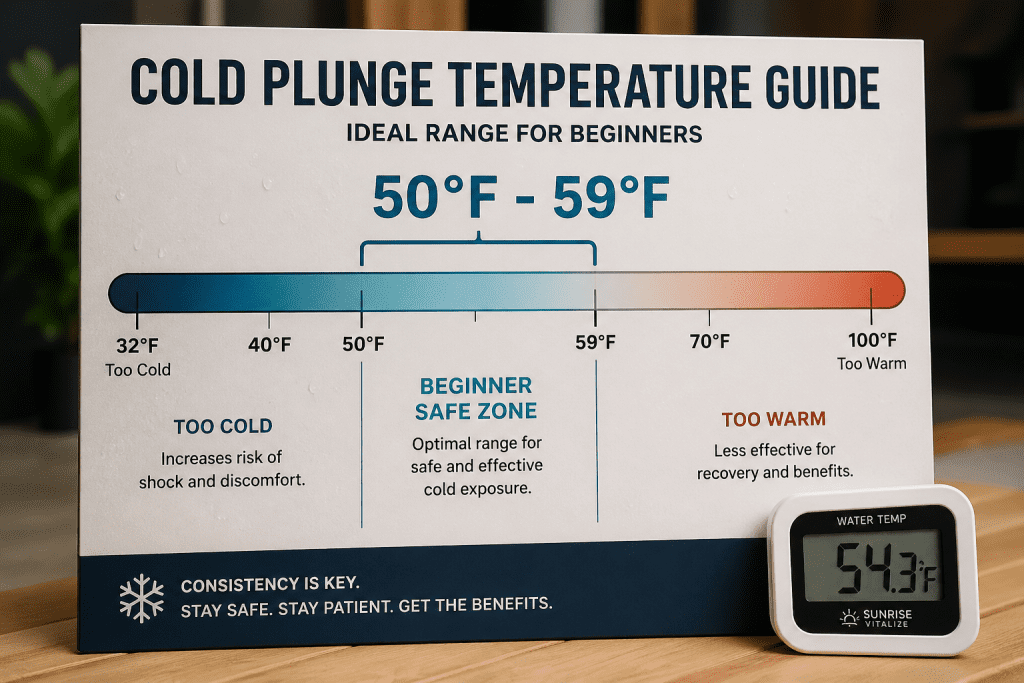
Table of Contents
- What Is the Right Temperature Range?
- What It Actually Costs to Get There
- Setup and Installation Friction
- Maintenance and Water Care
- Pros and Cons
- How It Compares: Bathtub vs. Cold Plunge Tub vs. Chest Freezer
- Comparison Table
- Helpful Gear
- FAQ
- Final Verdict
What Is the Safe Ice Bath Temperature Range
The safe ice bath temperature range sits between 50°F and 59°F for most healthy adults. That’s the zone where you get genuine physiological benefit — vasoconstriction, reduced inflammation, nervous system activation — without pushing into territory that becomes dangerous.
Below 50°F, the risk curve starts climbing. Your body’s heat-loss rate accelerates faster than most people expect, and the margin between “cold therapy” and cold stress narrows considerably. According to the CDC NIOSH, immersion in very cold water can cause cold shock, swimming failure, and hypothermia in a shorter window than most people assume — even in fit, healthy individuals.
Above 59°F, you’re still getting some benefit, but you’re working less hard for it. That’s not necessarily a problem — especially for beginners — but it’s worth knowing where the meaningful threshold sits.
What temperature is actually best for beginners? Most people new to cold plunging do best starting at 55°F–59°F. That range is cold enough to trigger a real physiological response — heart rate spike, controlled breathing, that sharp sense of alertness — without overwhelming your system on the first attempt. Spend two to four weeks in that window before considering going lower.
There’s a tempting logic that colder equals better. It doesn’t. The adaptation happens at a temperature your body finds challenging, not one that shuts it down. Fifty-five degrees is genuinely challenging. You don’t need to go to forty-five to prove anything.
What It Actually Costs to Get There
Knowing the safe ice bath temperature before you spend a dollar on equipment is genuinely useful — because the cost of hitting different temperature ranges varies significantly.
A standard bathtub filled with cold tap water might sit at 60°F–70°F depending on your location and season. In winter, some regions get tap water cold enough to approach the bottom of the useful range. In summer, it’s often not cold enough to do much at all without adding ice.Regardless of setup, a basic thermometer is non-negotiable — you cannot manage safe ice bath temperature by feel alone.
Ice alone — bags from a convenience store or grocery — can drop a full bathtub from 65°F to around 55°F with roughly 40–80 pounds of ice. That costs $10–$20 per session, which adds up fast. A month of daily plunges this way runs $300–$600 in ice costs alone.
A dedicated cold plunge tub with a chiller unit bypasses the ice problem entirely. Entry-level chillers capable of maintaining 50°F–59°F reliably cost $400–$1,200 for the chiller alone, plus the tub. Full setups from reputable brands land between $800 and $4,000+ depending on capacity and cooling power.
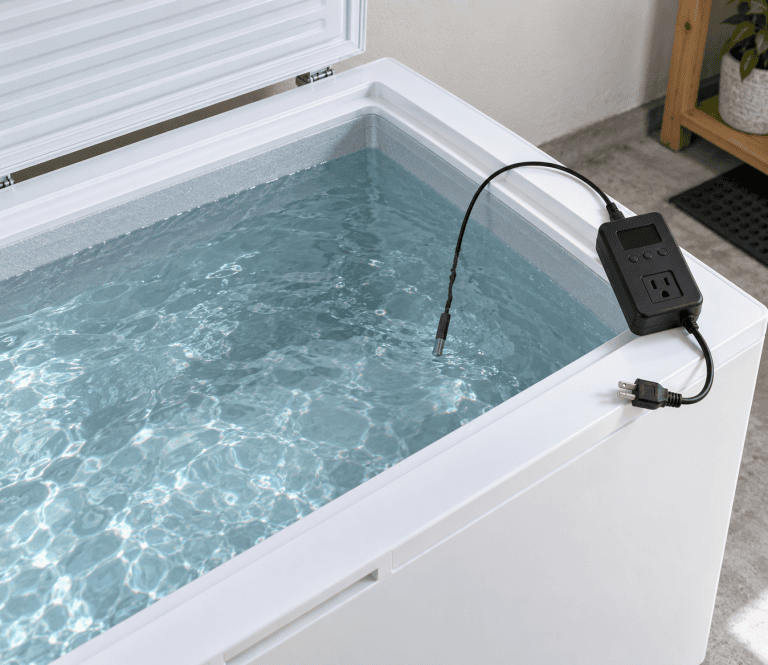
Chest freezer conversions sit in the middle — typically $200–$600 total — and are a legitimate middle-ground option for people who want temperature control without a major spend.
Setup and Installation Friction
A chest freezer conversion lets you dial in a safe ice bath temperature without a major plumbing project, which is why it’s become so popular in the DIY cold plunge community.
The basic setup involves a used or new chest freezer, a digital temperature controller, and a small submersible pump to circulate the water. You set the controller to your target — say 55°F — and the freezer does the rest. Installation is straightforward for anyone comfortable with basic electrical work.
Dedicated cold plunge units with built-in chillers are simpler to install but require more space and, in some cases, a dedicated electrical circuit. Units drawing significant amperage may need a 240V supply. If you’re adding electrical infrastructure, a permit may be required depending on your municipality — the scope of home improvement work that requires permits varies by location, so it’s worth checking with your local authority before starting.
Outdoor setups need weather protection for the chiller unit in freezing climates. The chiller itself isn’t designed to operate in temperatures that could damage its components — always check the manufacturer’s operating range before installing outside.
Does a cold plunge tub require a permit? It depends on what’s involved. A portable tub filled with water generally doesn’t require permitting. If you’re running new electrical circuits, adding plumbing connections, or building a permanent structure to house the unit, permits are likely required. Always check with your local building authority before starting work that involves electrical or structural changes.
Maintenance and Water Care
Keeping your water clean is just as important as hitting the right safe ice bath temperature each session. Cold water doesn’t sanitise itself — bacteria can still grow in water below 60°F, especially with regular skin contact.Water hygiene and safe ice bath temperature work together — neither matters without the other.
For non-circulating setups like basic bathtubs or stock tanks, the simplest approach is draining and refilling regularly — every three to seven days with daily use. Cold water stays cleaner than a hot tub, but it doesn’t stay clean indefinitely.
For chest freezer conversions and dedicated tubs with filtration, a small amount of chlorine or bromine keeps the water balanced between water changes. A basic test strip kit lets you check pH and sanitiser levels in thirty seconds. Target a pH of 7.2–7.6 and maintain chlorine or bromine within manufacturer guidelines.
Ozone systems and UV sterilisers are popular add-ons for cold plunge setups — they reduce how much chemical sanitiser you need without compromising hygiene. Neither replaces water changes entirely, but both meaningfully extend the interval between full drains.
Wipe down the interior walls and cover the tub between sessions. Algae and biofilm build on surfaces as much as in the water itself.
Pros and Cons
Pros of working within the safe ice bath temperature range
Getting the temperature right — 50°F to 59°F — means you’re in the zone where the research actually lives. Reduced post-exercise inflammation, improved mood through norepinephrine release, better stress resilience over time. These are repeatable outcomes from a repeatable protocol.
The mental side is real too. There’s something about willingly stepping into cold water — and staying calm — that seems to carry over into how you handle discomfort elsewhere. Plenty of people describe it as the hardest two minutes of their day, every day, and the most clarifying.
It’s also low-overhead once you have a system. A chest freezer conversion runs on a few dollars of electricity a day. A bag of ice is a few dollars per session at most. Compared to a gym membership or a massage, the cost-per-session math is reasonable.
Cons to be honest about
The setup cost for anything beyond a bathtub-and-ice approach is real. Good chillers aren’t cheap. Chest freezer conversions require time and some mechanical comfort.
Cold plunging isn’t for everyone. People with cardiovascular conditions, Raynaud’s phenomenon, or certain blood pressure issues should talk to a doctor before starting. The initial cold shock response — a sharp gasp, elevated heart rate — is normal but can be distressing if you’re not expecting it. If you experience dizziness, numbness that doesn’t resolve, or unusual heart symptoms, exit immediately.
And honestly, it’s uncomfortable. Every time. The adaptation makes it more manageable, but it doesn’t go away entirely. If you were hoping it gets easy — it gets easier, but not easy.
How It Compares: Setup Types for Reaching the Right Temperature
The method you use to reach your target temperature range shapes the entire experience — cost, convenience, consistency, and how much time you spend managing the system.
A standard bathtub is the lowest-friction entry point but the hardest to control. Water temperature varies with tap supply, and maintaining it through a session requires continuous ice addition. There’s no thermostat, no circulation, and no filtration — you’re working manually every time.
Cold plunge-specific tubs with built-in chillers solve the consistency problem entirely. You set a temperature, and the unit holds it. The tradeoff is upfront cost and the size of the footprint in your space.
Chest freezer conversions thread the needle for a lot of people — controllable temperature, reasonable cost, and enough volume for a comfortable soak. The main limitations are aesthetics (a chest freezer is not a beautiful object) and the DIY nature of setup and maintenance.
Stock tank setups are common in rural areas and for people who want something larger. Paired with a separate chiller, they work well. Without one, you’re back to ice management.
![safe ice bath temperature]](https://sunriseandvitalize.com/wp-content/uploads/2026/04/a530cda1-1f74-49c9-a9bd-cd4280d84977-1024x683.png)
Comparison Table
| Setup Type | Temp Control | Upfront Cost | Ongoing Cost | Maintenance |
|---|---|---|---|---|
| Bathtub + ice | Manual only | $0 | $10–$20/session | Drain after each use |
| Chest freezer conversion | Thermostat | $200–$600 | ~$1–$3/day electric | Weekly water care |
| Dedicated cold plunge tub | Precise digital | $800–$4,000+ | ~$2–$5/day electric | Filter + water balance |
| Stock tank + external chiller | Thermostat | $500–$2,000 | ~$2–$4/day electric | Weekly water care |
Helpful Gear
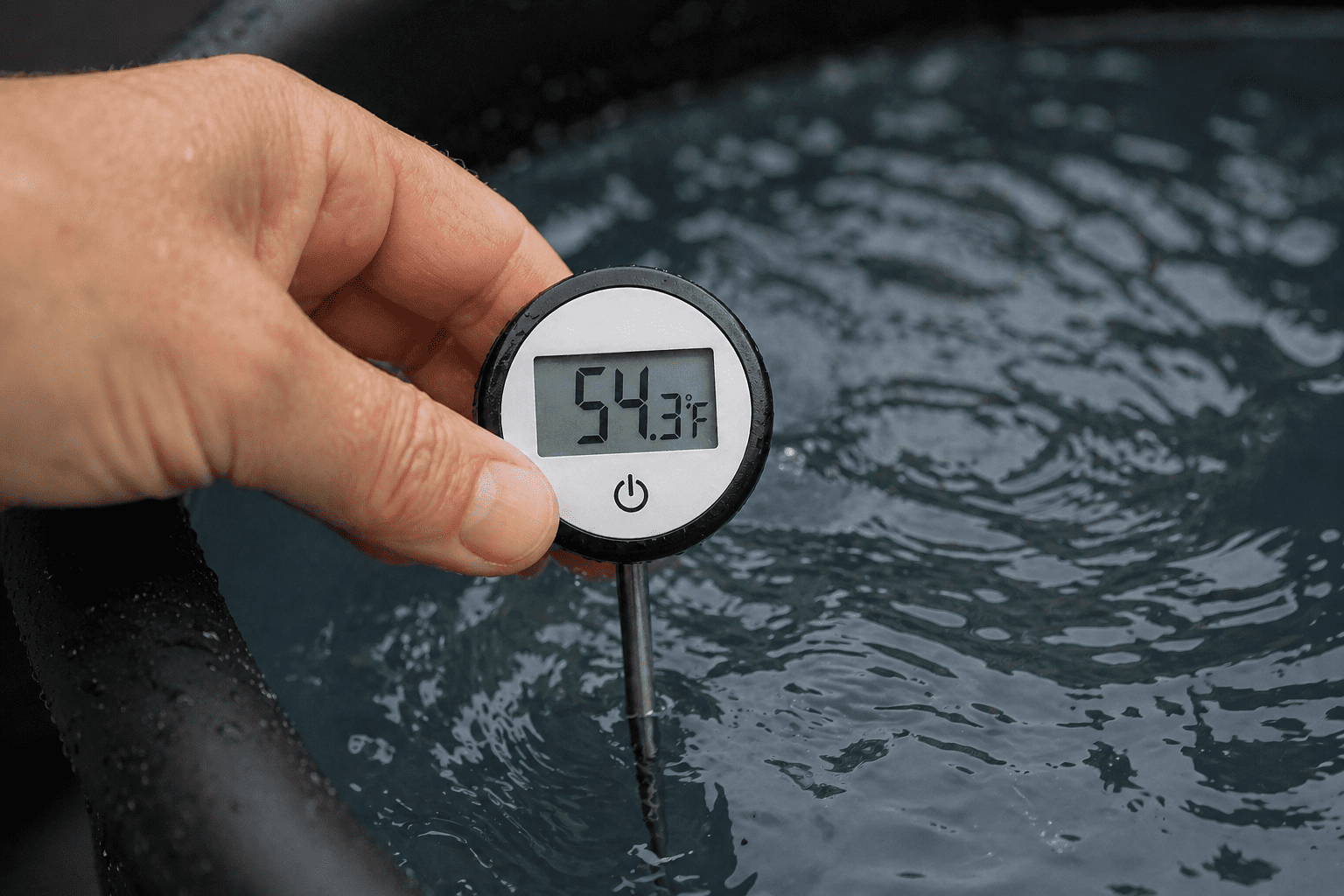
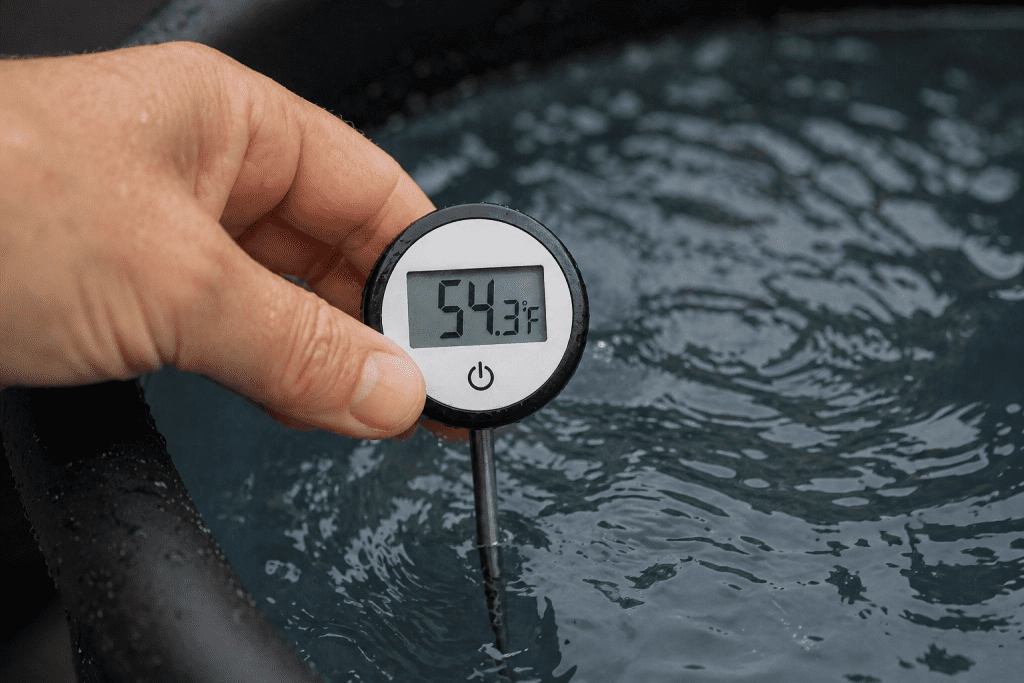
Digital water thermometer A simple probe thermometer takes the guesswork out of hitting your target range. Drop it in before you get in — not after.
FAQ
What is the ideal safe ice bath temperature for recovery? For post-exercise muscle recovery, the research points to 50°F–59°F as the most effective range. Water at 55°F for 10–15 minutes post-workout has been associated with reduced delayed onset muscle soreness (DOMS) and faster perceived recovery. Going colder doesn’t meaningfully improve the outcome and increases the risk of cold stress.
How long should I stay in at 55°F? At 55°F, two to five minutes is sufficient for most people. You don’t need to push past ten minutes to get the benefit — after the initial cold shock response passes and you’ve held a calm breathing pattern for a few minutes, the primary physiological stimulus has already occurred. Longer isn’t better; consistent is better.
Can I use tap water without ice if it’s cold enough? Yes. If your cold tap water runs below 60°F — common in northern states in winter — it’s cold enough to be useful, especially for beginners. Check the temperature with a probe thermometer before assuming. Regional variation is significant. Mountain states and northern climates can produce tap water cold enough for genuine cold therapy without any ice at all during colder months.
If it’s colder than 59°F and you stayed calm and focused the whole time, you did it right.
Summary Snapshot
- Target range: 50°F–59°F
- Beginner entry point: 55°F–59°F
- Advanced: 50°F–54°F
- Session length: 2–5 minutes is enough at any point in this range
- Below 50°F: not recommended without significant experience and supervision
- Ice is the low-cost way in; a chiller is the consistent way in
- Water hygiene matters — sanitise and drain regularly
Final Verdict
Get the safe ice bath temperature dialled in first, and everything else about cold plunge practice gets easier. The range isn’t complicated — 50°F to 59°F, starting toward the warmer end, moving cooler as your tolerance builds.
The method you use to hit that range matters less than the consistency of hitting it. A $3 bag of ice and a bathtub thermometer works. A $3,000 dedicated plunge unit works. What doesn’t work is jumping into water of an unknown temperature and calling it a protocol.
Cold plunging has real, repeatable benefits for recovery, mental resilience, and general wellbeing. Those benefits live inside a temperature range you can actually control. Stay in it.
Dialling in your safe ice bath temperature before worrying about duration, frequency, or equipment is the right order of operations.
If you’re ready to look at equipment that makes temperature control easy from day one, our ice plunge picks are at:
If you’re new to cold plunging and want to understand the risk side before committing to a full setup, Is Cold Plunging Safe for Beginners? covers the foundational safety questions in detail.
![blood pressure and cold plunges]](https://sunriseandvitalize.com/wp-content/uploads/2026/05/vidar-nordli-mathisen-0fN21zv8yYo-unsplash-768x448.jpg)