Heart Risks and Cold Exposure: What Every Cold Plunge User Needs to Know
Heart risks and cold exposure is a topic most cold plunge content skips entirely, or buries in a one-line disclaimer. That’s a problem, because the cardiovascular response to sudden cold immersion is one of the most dramatic things your body does — and for certain people, it can become genuinely dangerous.
I’ve been cold plunging for years. Daily cold showers, regular full immersions. The difference between a shower and a full plunge is not comparable — your body reacts to a full immersion in a way that genuinely shocks you the first time, even if you think you’re prepared.
Affiliate disclosure: Some links in this post are affiliate links. If you buy through them, I earn a small commission at no extra cost to you. I only link to products I’d actually recommend.
Quick Snapshot
- Cold immersion triggers an immediate cardiovascular stress response
- The cold shock response can spike heart rate and blood pressure within seconds
- Risk is highest in the first 30 seconds of immersion
- Pre-existing heart conditions significantly increase risk
- Gradual adaptation reduces but does not eliminate cardiovascular stress
- Medical clearance is strongly recommended for anyone with cardiac history
- Controlled, consistent practice is safer than sporadic high-intensity sessions
Table of Contents
- What Actually Happens to Your Heart in Cold Water
- The Real Cost of Getting This Wrong
- Who Should Not Cold Plunge Without Medical Clearance
- Managing Cold Exposure Safely Over Time
- Honest Pros and Cons
- Cold Shower vs Full Immersion: A Real Comparison
- Comparison Table
- Helpful Gear
- FAQ
- The Simple Rule
- Summary Snapshot
- Final Verdict
What Actually Happens to Your Heart in Cold Water
Heart risks and cold exposure starts with understanding the cold shock response — the involuntary reaction that fires in the first seconds of immersion. Your skin hits cold water and your body immediately gasps, your heart rate spikes, and your blood pressure surges. This is not under your conscious control. It happens before you’ve had a chance to breathe slowly or calm yourself down.
The mechanism is a conflict between two competing reflexes. Cold water on your face and body triggers the diving reflex, which slows your heart. Simultaneously, the cold shock response drives it upward. In healthy people, the result is turbulence — an erratic, fluctuating heart rate during those first 30 seconds. In someone with an underlying cardiac condition, that turbulence can tip into something dangerous.
What is the cold shock response? The cold shock response is an involuntary physiological reaction that occurs in the first 30 seconds of cold water immersion. It causes gasping, hyperventilation, and a rapid spike in heart rate and blood pressure. It cannot be overridden by willpower, though it diminishes with repeated exposure over weeks of consistent practice.
Research on cold stress confirms that the cardiovascular load is highest at the moment of entry, not during the immersion itself. According to the CDC’s guidance on cold-related illness, cold stress can trigger cardiac events in individuals who are already vulnerable — including those who are unaware of an underlying condition. This matters because many people who try cold plunging for the first time are not in poor health by any obvious measure. They feel fine. The risk is hidden.
Blood vessels constrict hard in response to cold. This peripheral vasoconstriction forces your heart to pump harder against greater resistance. For a healthy cardiovascular system, that’s a manageable stress that builds resilience over time. For a compromised one, it’s the exact condition that can precipitate an event.
The Real Cost of Getting This Wrong
Heart risks and cold exposure isn’t a theoretical concern you can file away and ignore. The honest number on cold water drowning deaths attributable to cardiac events — rather than swimming failure — is significant, and most of those deaths happen in the first two minutes of immersion.
The cost of ignoring this isn’t financial. It’s the most serious risk on this entire site. That said, understanding it clearly doesn’t mean cold plunging is off the table for most people. It means approaching it intelligently.
The practical cost of doing this right is a GP appointment before you start if you have any cardiac history, a consistent ramp-up protocol rather than immediate full immersion, and a habit of never plunging alone in the early stages. None of those things are expensive or particularly inconvenient. The alternative is not worth considering.
Who Should Not Cold Plunge Without Medical Clearance
Heart risks and cold exposure creates a specific category of people who need a conversation with a doctor before getting into any cold plunge setup. This isn’t about being overcautious with healthy adults. It’s about being honest about where the real risk sits.
Anyone with a diagnosed heart condition. Arrhythmia, a history of heart attack, heart failure, or valve disease all change the risk profile significantly. Cold immersion may still be possible under supervision — but not without medical sign-off.
People with uncontrolled high blood pressure. The vasoconstriction response in cold water can push blood pressure to acute levels. If yours is already elevated, that spike can be severe.
Anyone on cardiac medication. Beta blockers, calcium channel blockers, and certain antiarrhythmics all interact with the cardiovascular stress of cold immersion in ways that aren’t always predictable without medical guidance.
People with Raynaud’s syndrome or other circulatory conditions. Cold-induced vasoconstriction is already a problem for these individuals outside of a plunge — a full immersion compounds it substantially.
The honest limitation most articles skip: you cannot always self-assess your way out of this. Some cardiac conditions produce no symptoms until stress is applied. A 45-year-old who works out regularly and feels great can still carry an undiagnosed condition that changes everything when cold water is added.
Managing Cold Exposure Safely Over Time
Heart risks and cold exposure diminish — though they don’t disappear — with consistent, gradual adaptation. This is well established. Regular cold exposure trains the cold shock response to reduce in intensity. Your heart rate still rises, your blood pressure still spikes, but to a lesser degree than in an untrained first-timer.
The key word is gradual. Starting with cold showers before moving to full immersion gives your cardiovascular system time to adapt. Even then, a cold shower is genuinely not the same thing as a full plunge — I know that from direct experience. The moment water surrounds your whole body simultaneously, the systemic response is at a different level entirely. Respecting that difference matters.
Session duration also matters. Staying in for two to three minutes rather than pushing ten keeps the cumulative cardiovascular load manageable. Temperature matters too — there’s a meaningful difference between 50°F and 39°F, and beginners have no business starting at the colder end.
If you use cold plunging as part of a heat-and-cold contrast routine — pairing it with sauna, steam, or hot tub — the cardiovascular effects stack. The natural high that comes from that combination is real and lasting, often running for hours after a session. But the physiological demands are also greater. If you’re combining steam room benefits sessions with cold immersion, build each practice independently before combining them.
Honest Pros and Cons
Heart risks and cold exposure is real, but so are the cardiovascular benefits for healthy individuals who approach this correctly. The science on cold adaptation and cardiovascular resilience is genuinely positive — with appropriate caveats.
Pros
- Cold adaptation reduces resting heart rate over time in consistent practitioners
- Improved vascular tone from repeated cold stress is a documented benefit
- Enhanced resilience to cold environments reduces future cold stress risk
- The mood and energy effect post-plunge is immediate and measurable — not a placebo
- For healthy adults, controlled cold exposure is a legitimate cardiovascular training stimulus
Cons
- The cold shock response is involuntary and cannot be fully eliminated
- Risk is highest for individuals who are unaware of underlying conditions
- Sporadic practice (once a month, not consistent) provides less adaptation benefit and maintains higher acute risk
- Cold plunging alone — with no one present — removes a critical safety layer
- No protocol eliminates risk for high-risk cardiac populations
Cold Shower vs Full Immersion: A Real Comparison
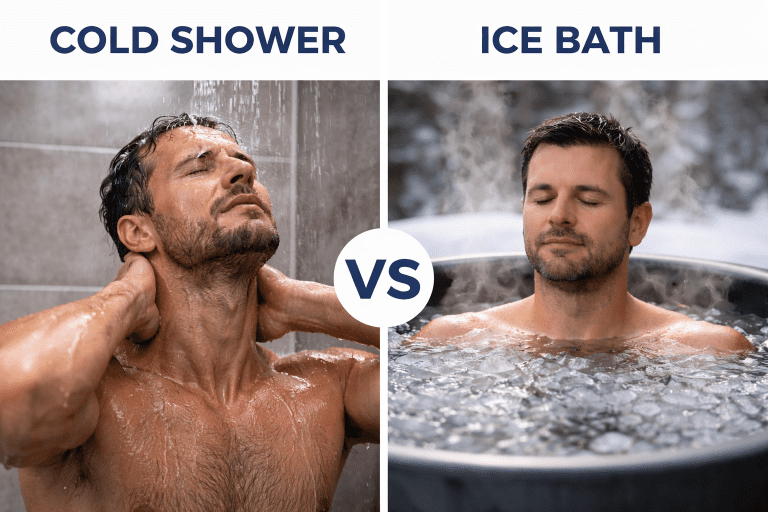
Heart risks and cold exposure behaves differently depending on the method. This is not a small distinction.
A cold shower triggers a partial cold shock response. Water hits exposed skin, your breathing tightens, your heart rate rises. But the systemic response is attenuated because full body immersion isn’t happening simultaneously. The cardiovascular load is real but lower.
Full immersion changes everything. Heart risks and cold exposure peak at the moment of entry precisely because every square centimetre of your skin responds at once. The diving reflex fires. The cold shock response fires. Blood pressure spikes hard. For the first 30 seconds, your cardiovascular system is under the highest acute load it will experience in a normal wellness routine.
That’s also why the full plunge produces an incomparably stronger post-session effect. The physiological turbulence at entry is the mechanism that drives the downstream adaptation and the mood response. The risk and the reward come from the same source.
Comparison Table
| Factor | Cold Shower | Full Cold Plunge |
|---|---|---|
| Cold shock response | Partial | Full |
| Blood pressure spike | Moderate | High (first 30 sec) |
| Heart rate spike | Moderate | Significant |
| Cardiac adaptation over time | Moderate | Strong |
| Risk for cardiac conditions | Lower | Higher |
| Post-session mood effect | Noticeable | Pronounced |
| Safe to do alone | Generally yes | Caution advised early on |
Helpful Gear
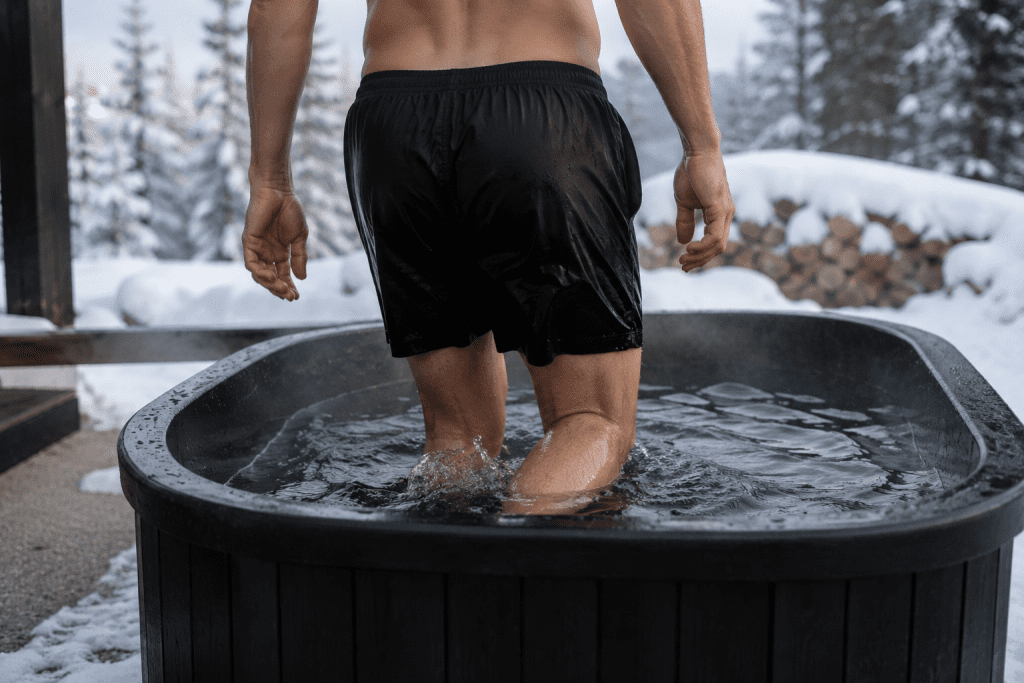
Digital thermometer for water temperature — A thermometer that reads water temperature accurately before and during your session. Knowing your exact temperature matters more than most beginners realise — the difference between 50°F and 39°F is not trivial from a cardiac load perspective.
Waterproof heart rate monitor strap — A chest strap heart rate monitor rated for cold water immersion, designed to track real-time heart rate during cold exposure sessions. Useful for understanding your individual response over time and tracking adaptation progress.
Insulated cold plunge cover — A fitted insulating cover that maintains your target water temperature between sessions, reducing the energy cost of temperature recovery.
FAQ
Is cold plunging dangerous for your heart? For healthy adults without underlying cardiac conditions, controlled cold plunging is not considered dangerous and can provide cardiovascular benefits over time. The risk is concentrated in the cold shock response during the first 30 seconds of immersion, and reduces significantly with regular adaptation. Anyone with a diagnosed heart condition, uncontrolled hypertension, or cardiac medication should get medical clearance before starting.
Can cold exposure cause a heart attack? Heart risks and cold exposure are most serious for individuals with pre-existing cardiac vulnerabilities. In those populations, the acute blood pressure spike and cardiovascular stress of full immersion can trigger events including arrhythmia or, in rare cases, cardiac arrest. In healthy individuals, the mechanism for a cold-induced heart attack is not well established — the concern is primarily for people with undetected or known conditions.
How do you reduce heart risk when cold plunging? Start with cold showers over several weeks before moving to full immersion. Never plunge alone in early sessions. Keep initial immersions short — 60 to 90 seconds — and at moderate temperatures around 50–55°F. Breathe slowly and deliberately before entry. Avoid plunging immediately after intense exercise without a brief cool-down first. And get a medical check if you have any history of cardiac issues.
The Simple Rule
If you have any known or suspected cardiac condition, heart risks and cold exposure is not a topic to self-manage — get clearance from a doctor first, full stop.
Summary Snapshot
- Cold shock response peaks in the first 30 seconds of immersion — this is the highest-risk window
- Healthy adults adapt with consistent practice; sporadic use maintains higher acute risk
- Pre-existing cardiac conditions, hypertension, and certain medications are the real risk factors
- Full immersion carries a higher cardiovascular load than cold showers — they are not equivalent
- Never plunge alone in early sessions; gradual temperature and duration progression matters
- The benefits for healthy, adapted users are real — but they require respect for the risk first
Final Verdict
Heart risks and cold exposure is the subject that the cold plunge industry undersells, partly because it complicates a clean wellness narrative and partly because the absolute risk for healthy adults is genuinely low. Both of those things are true simultaneously.
Heart risks and cold exposure are real and concentrated in a specific population — people with underlying cardiac vulnerabilities, whether diagnosed or not. For everyone else, the science supports cold plunging as a legitimate cardiovascular stress that builds resilience over time, provided the approach is gradual, consistent, and sensible.
The feeling after a proper cold plunge — particularly after a gym session combined with heat — is genuinely unlike anything else in a wellness routine. That effect is worth protecting by doing this right. Getting medical clearance if there’s any doubt, starting gradually, and never treating cold exposure as something casual enough to rush through without thought.
The blogs covering ice plunge safety across our [ice plunge safety series] go deeper on specific protocols for beginners, breathing techniques, and how to build a safe progressive routine from scratch.
If you found this useful, the rest of our ice plunge safety series covers related ground — including cold exposure for recovery and a practical beginner’s guide to ice plunging. For context on heat-based contrast work, the steam room benefits guide covers the heat side of the equation in the same depth.
It should read something like: If you’re new to cold exposure, our beginners guide to ice plunging walks you through exactly how to start safely.