
Does Traditional Sauna Sweating Actually Work? What 10 Years of Regular Use Taught Me
Traditional sauna sweating is one of the most searched topics in the wellness space right now — and also one of the most misunderstood. People want to know if the sweat is real, whether it does anything useful, and whether a traditional sauna produces more of it than an infrared or a steam room. After years of regular use across all four heat modalities, here’s what I’ve actually found.
The short answer is yes — traditional saunas produce serious sweat. The longer answer is more interesting.
This post contains affiliate links. If you buy through them, I may earn a small commission at no extra cost to you. I only recommend products I’d actually use.
Quick Snapshot
- Traditional saunas operate at 150–195°F with low humidity (10–20%), creating intense, dry heat
- Traditional sauna sweating typically begins within 5–10 minutes for most users
- Average sweat loss per session: approximately 0.5–1 litre, though individual variation is wide
- Sessions typically run 15–20 minutes per round, with rest periods in between
- Home traditional sauna installation runs roughly $3,000–$8,000+ depending on size and type
- The sweat produced is genuinely different in texture and feel compared to steam room moisture
- Hydration before and after sessions meaningfully affects both sweat volume and how you feel afterward
Table of Contents
- Why Traditional Sauna Sweating Hits Differently Than Other Heat Methods
- 7 Things That Actually Affect How Much You Sweat in a Sauna
- The Honest Truth About Traditional Sauna Sweating and Weight Loss
- What a Home Traditional Sauna Actually Costs
- Installation — What Nobody Warns You About
- Maintenance Reality
- Pros and Cons
- Traditional Sauna vs Other Heat Methods
- Helpful Gear
- FAQ
- Final Verdict
Why Traditional Sauna Sweating Hits Differently Than Other Heat Methods
The dry heat environment is what separates traditional sauna sweating from every other method. At 150–195°F with humidity sitting at 10–20%, your body is working hard to regulate core temperature through sweat evaporation — which is exactly how the mechanism is supposed to function. In a steam room, ambient moisture is already high, so evaporative cooling is compromised. The steam room still makes you sweat, but it’s a wetter, slower process. What you notice stepping out of a steam room is that your skin feels damp and soft. Stepping out of a traditional sauna feels different — you’re visibly wet, towel-off sweat, and that sweat dries faster because it was produced in dry heat.
That distinction matters for people trying to understand what their body is actually doing in each environment. Traditional sauna sweating places a more direct thermogenic load on the body. Your heart rate climbs — typically reaching 100–150 bpm in longer sessions — and your circulatory system is working to push blood to the skin surface for cooling. The Cleveland Clinic notes that this cardiovascular response is part of why regular sauna use has been associated with meaningful benefits for heart health.
What does traditional sauna sweat actually feel like? It starts as a building warmth across your shoulders and chest, then moves to your forehead, then your whole body becomes a faucet. The sweat is thin and clear. It runs rather than clings.
7 Things That Actually Affect How Much You Sweat in a Sauna
Most articles treat sweat output as a fixed outcome. It isn’t. Traditional sauna sweating varies significantly based on several factors worth understanding before your first session.
1. Temperature and humidity setting. Higher temperature and lower humidity accelerates sweat onset. A 190°F session will produce more sweat output earlier than a 160°F session, all else equal.
2. Hydration going in. Under-hydrated people sweat less and feel worse. You’re not getting more out of a dehydrated session — you’re just limiting your body’s ability to thermoregulate properly.
3. Position in the sauna. Heat rises. Upper bench at 190°F is a meaningfully more intense experience than lower bench at the same thermostat setting. Most beginners sit low by default and wonder why the session feels mild.
4. Whether you’re acclimated. First-time or occasional users typically sweat less efficiently than people who use a traditional sauna regularly. Acclimatisation is real — your body learns to initiate the sweat response earlier and more effectively over time.
5. Löyly — adding water to the rocks. Throwing water on the rocks produces a brief blast of steam that causes an immediate spike in perceived heat. Your body’s sweating response follows almost instantly. It doesn’t change the air temperature much, but it changes what your body reads as heat load. This is why Finnish sauna tradition centres on it.
6. Session structure. Five-minute heat blasts followed by a cold shower, then back in — sometimes five full cycles when the session is going well — produces more cumulative sweat and a noticeably stronger effect than one long continuous sit. The cold between rounds makes the next heat round hit harder. That contrast protocol is where you get the most out of traditional sauna sweating as a practice.A routine I use: 15 minutes in, cold shower for 60–90 seconds, 5 minutes rest, back in — repeat two or three times. Everyone’s different — find what works for you.
7. Body composition and fitness level. Fitter individuals tend to initiate sweating earlier — it’s an adaptation. This doesn’t mean unfit people benefit less, just that the onset timing differs.
The Honest Truth About Traditional Sauna Sweating and Weight Loss
This section needs to exist because the misleading claims around it are everywhere. Traditional sauna sweating does cause temporary weight loss — typically 0.5–1 litre of water weight per session. That weight returns as soon as you rehydrate, which you must do. Anyone presenting sauna-induced weight loss as a meaningful fat loss tool is selling something.
What’s real: the cardiovascular load from a traditional sauna session burns a modest number of additional calories — estimates vary but the range cited in most research sits at roughly 100–300 calories for a 20-minute session, depending on individual factors. That’s not nothing, but it’s also not a workout replacement.
The more honest value of traditional sauna sweating for body composition is indirect. Better recovery means better training. Better sleep — which regular sauna use supports in many users — improves hormonal regulation. Reduced muscle soreness means more consistent training. The benefits compound over time and they’re genuine, but they work through recovery and wellbeing, not direct caloric burning. If you buy a traditional sauna expecting it to do the work of exercise, you’ll be disappointed. If you use it as part of a real wellness routine, it earns its place.
Is the weight you lose in a sauna real? The water weight loss during a sauna session is real but temporary — it returns when you rehydrate. Traditional sauna sweating does not produce meaningful permanent weight reduction on its own.
What a Home Traditional Sauna Actually Costs
A real-cost breakdown matters here because the marketed price and the actual cost of ownership differ significantly.
Entry-level pre-cut home sauna kits start at roughly $1,500–$3,000 for a small 1–2 person unit. These are functional but you’ll notice the difference in wood quality and heater performance. Mid-range units — 2–4 person, solid construction, quality heater — run $3,500–$6,000 before installation. High-end custom-built units or premium Finnish brands start at $8,000 and go considerably higher.
Add installation: if you need a dedicated 240V electrical circuit, budget $300–$600 for the electrical work alone. If you’re building a separate structure or converting an existing room, costs rise further. Running costs vary by heater size (typically 6–9kW for home units) and local electricity rates — roughly $1–$3 per session is a reasonable working estimate in most US markets, though rates vary.
The commonly overlooked cost is accessories: proper sauna benches, a quality sauna heater guard if you have children, sauna mats, ladles, and buckets. None of these are expensive individually, but they add up to $150–$400 for a properly equipped setup.
Installation — What Nobody Warns You About
The gap between “install a sauna” and “install a sauna properly” is where most first-time buyers get surprised.
Permits are the first thing. Depending on your jurisdiction, adding a permanent sauna structure may require a building permit — particularly if it involves electrical work or a new structure. Nolo’s guidance on home improvement permits is worth reading before you commit.
Ventilation is the second. Traditional saunas require adequate ventilation to maintain safe air quality and prevent excessive moisture buildup in adjacent walls and structures. This is almost never mentioned in product listings and is frequently skipped in installation guides.
Wood selection matters more than most buyers realise. Cedar and hemlock are the standard choices for a reason — they resist moisture, don’t splinter, and don’t overheat the way some other woods do. Cheaper builds sometimes use woods that warp or crack under repeated thermal cycling.
The heater choice shapes the entire experience. Electric heaters are the most practical for home installation. Traditional wood-burning heaters exist but come with ventilation and fire safety requirements that eliminate them as practical options for most home installations.
Maintenance Reality
Traditional saunas are genuinely low maintenance compared to hot tubs and steam rooms. No water chemistry. No filters. No chemical balancing.
What you do need to manage: wood care, heater checks, and bench hygiene. Untreated sauna wood should stay untreated on interior surfaces — sealants and varnishes release fumes under heat and are not appropriate for benches or walls inside the sauna. Outside surfaces can be treated.
Sauna mats are not optional. The bench surface in a quality traditional sauna gets hot enough to cause genuine discomfort through thin clothing — something you find out the first time you sit down without proper protection. A sauna mat is a $15–$30 fix for a real problem.
Clean benches with a mild, unscented cleaner after sessions. The heater rocks need occasional inspection — cracked or degraded rocks should be replaced. Kiuas stones (the traditional choice) last 3–5 years under regular use before they start to crumble.
Pros and Cons
Pros
- Intense dry heat produces the most genuine sweat output of any home heat method
- Low maintenance compared to steam rooms and hot tubs
- No water chemistry or filtration required
- Long session history — Finnish sauna tradition is centuries old and well-understood
- Strong evidence base for cardiovascular and recovery benefits
- Pairs exceptionally well with cold exposure between rounds
Cons
- Upfront cost is significant — quality units start at $3,500+ before installation
- Requires a dedicated 240V electrical circuit in most cases
- Heat up time: 30–45 minutes to reach target temperature
- The industry consistently undersells the intensity for new users — 190°F is not a relaxing warm room. First sessions at full temperature are genuinely uncomfortable, and most guides skip this entirely. Starting at 150°F and building up over several sessions is a more honest onboarding approach.
Traditional Sauna vs Other Heat Methods
| Feature | Traditional Sauna | Infrared Sauna | Steam Room |
|---|---|---|---|
| Operating temperature | 150–195°F | 120–140°F | 100–115°F |
| Humidity | 10–20% | <10% | 95–100% |
| Sweat onset | 5–10 minutes | 10–20 minutes | 5–15 minutes |
| Post-session feeling | Purged, clear-headed | Gentler, relaxed | Energised, skin soft |
| Sweat texture | Dry, runs off skin | Dry, moderate volume | Mixed with ambient moisture |
| Maintenance complexity | Low | Low | High |
| Wood smell during session | Strong, distinctive | Minimal | None |
| Best for | High-output sweating, recovery, cardiovascular load | Gentler sessions, joint comfort | Skin, respiratory, gentler heat |
The “post-session feeling” row is the one that matters most and gets ignored in most comparison tables. Traditional sauna sweating produces what long-term users often describe as a purging sensation — genuine heat fatigue followed by a clear, alert state. Infrared produces something milder. The steam room, in my experience, produces something closer to energised than cleared. These are real distinctions that affect which product actually fits a given person’s use case.
As covered in Infrared vs Traditional Sauna guide, the debate between these two formats often comes down to temperature tolerance and intended use — and both have legitimate places in a wellness routine.
Helpful Gear
- Sauna mat — Protects your skin from hot bench surfaces and is the single most practical accessory for any traditional sauna session.
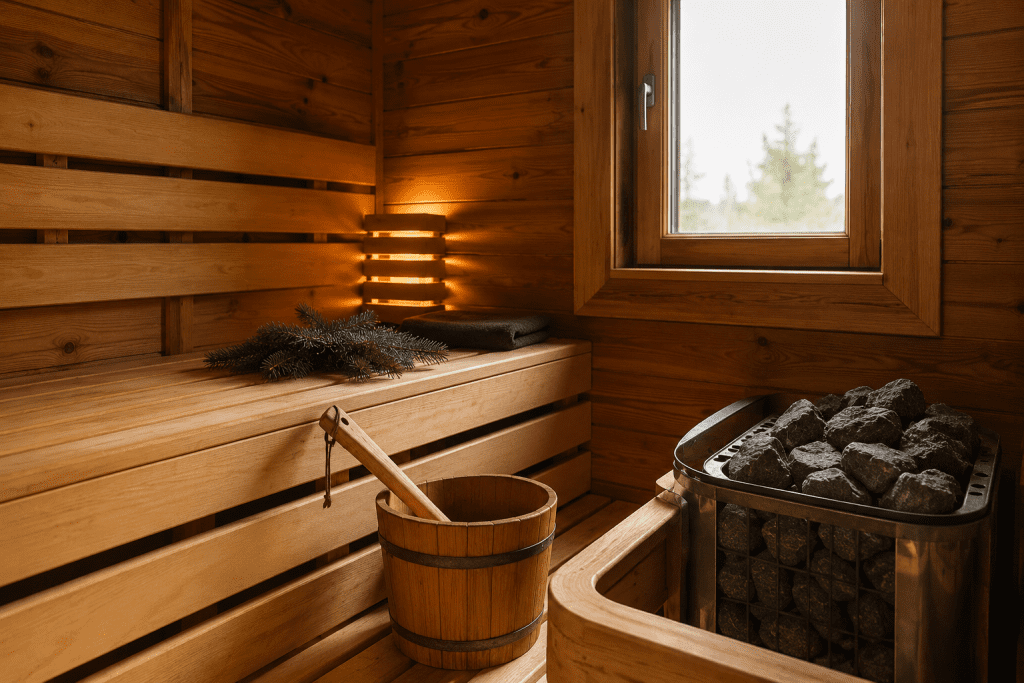
- Sauna ladle and bucket set — Needed for löyly — adding water to the rocks. The experience without one is genuinely incomplete. Wooden sets are traditional and handle heat correctly.
- Sauna thermometer and hygrometer — Lets you actually read what’s happening in your sauna rather than guessing. Useful during the acclimatisation period and for dialling in temperature preference.
FAQ
Is traditional sauna sweating actually doing anything, or is it just heat exposure?
It’s both, and the distinction matters. The sweat itself is a mechanism, not the benefit — your body is sweating to regulate temperature, and the cardiovascular and circulatory response to that thermal load is where the benefit comes from. Traditional sauna sweating drives heart rate up meaningfully, increases peripheral circulation, and — over consistent use — appears to support cardiovascular health. The sweat is evidence the process is working, not the outcome itself.
Will I actually use a home sauna regularly, or will it end up unused?
This is the objection most people don’t ask honestly enough before spending $4,000+. The honest answer: people who treat a sauna as part of a routine use it; people who treat it as a novelty don’t. If you already have a gym routine, recovery-focused habits, or existing use of heat modalities elsewhere, a home sauna has a strong chance of becoming a genuine part of your week. If you’re hoping the purchase creates the habit, that’s a riskier bet with expensive consequences.
How long does it take to feel the benefits of regular traditional sauna sweating?
Most users report noticeable recovery benefits within the first 2–3 weeks of consistent use. Skin and sleep improvements typically appear within 4–6 weeks. The circulatory and cardiovascular adaptation takes longer and is less immediately perceptible — it’s the kind of improvement that shows up in how you feel during training, not a single day-after result.
What’s the right way to structure a traditional sauna session for maximum benefit?
Start at a lower temperature if you’re new — 150–160°F rather than maxing the heater. Stay for 10–15 minutes, exit, cool down (cold shower or simply rest in cool air), and re-enter if you feel ready. Two rounds is a sensible baseline. Experienced users often go 3–5 rounds. Drink water before, between, and after. Don’t eat heavily beforehand.
Simple Rule
Traditional sauna sweating is a genuine physiological process with real documented benefits — but it earns those benefits through consistency, not occasional use.
Summary Snapshot
Traditional sauna sweating produces the most intense, dry sweat output of any home heat method. The mechanism is thermogenic — your body works to regulate core temperature, driving heart rate up and circulatory response along with it. The benefits are real, documented, and compound with consistent use. The cost is significant upfront (typically $3,500–$8,000+ installed), the maintenance is genuinely low, and the experience — particularly with cold contrast between rounds — is one of the most effective recovery tools available for home use. Go in with realistic expectations about the intensity and the time investment, and this equipment delivers.

Final Verdict
Traditional sauna sweating is not a gimmick and it’s not a weight-loss tool. It’s a recovery, circulation, and wellbeing practice with a serious evidence base and a long history of genuine use. The traditional format — high dry heat, low humidity, real rocks, löyly — produces a more intense and physiologically demanding session than infrared or steam alternatives. That intensity is the point.
If you’re comparing formats, the core question is tolerance and intention. Traditional sauna sweating is for people who want the full experience — the heat load, the sweat volume, the post-session clarity. Infrared suits those who want milder temperature entry points. Steam suits those who prioritise skin and respiratory effects. None of them is wrong. They’re different tools.
For someone willing to commit to consistent use, a home traditional sauna is one of the highest-return wellness investments available. The upfront cost is real. The ongoing cost is low. And traditional sauna sweating, used regularly as part of a broader recovery routine, produces the kind of results that become visible to people who weren’t even looking for them.
Cluster Block
If you’re exploring the traditional sauna format further, the comparison between heat options is worth understanding before you buy — as covered in Infrared vs Traditional Sauna, the performance differences between traditional and infrared formats are more significant than most product pages let on. And if you’re weighing whether sauna or steam room suits your routine better, Steam vs Sauna covers the practical differences from someone who uses both regularly.