Are Barrel Saunas Efficient in Winter? An Honest Look at Real-World Performance
A barrel sauna in winter is one of those combinations that sounds almost too good — stepping into deep, rolling heat while snow sits on the roof outside. But efficiency in cold weather is a real question worth answering properly, not just with enthusiasm. How much extra energy does it use? How fast does it heat up when it’s 15°F outside? Does the round shape actually help, or is that marketing? This post goes through all of it.
And honestly — once you’ve actually done the heat-then-cold contrast on a freezing morning, it’s hard to go back to any other routine.
Heads up: This post contains affiliate links. If you buy through them, I may earn a small commission at no extra cost to you. I only link to product types I’d genuinely recommend.
Quick Snapshot
- Barrel saunas heat faster in winter than most rectangular outdoor saunas due to the curved interior reducing dead air volume
- Cold weather increases energy consumption — expect 15–30% more running cost in deep winter
- Proper wood species, door seals, and insulation are the real efficiency variables
- Heating to temperature takes 30–60 minutes depending on ambient temp and heater size
- Year-round use is where barrel saunas earn their reputation — winter is actually when they shine
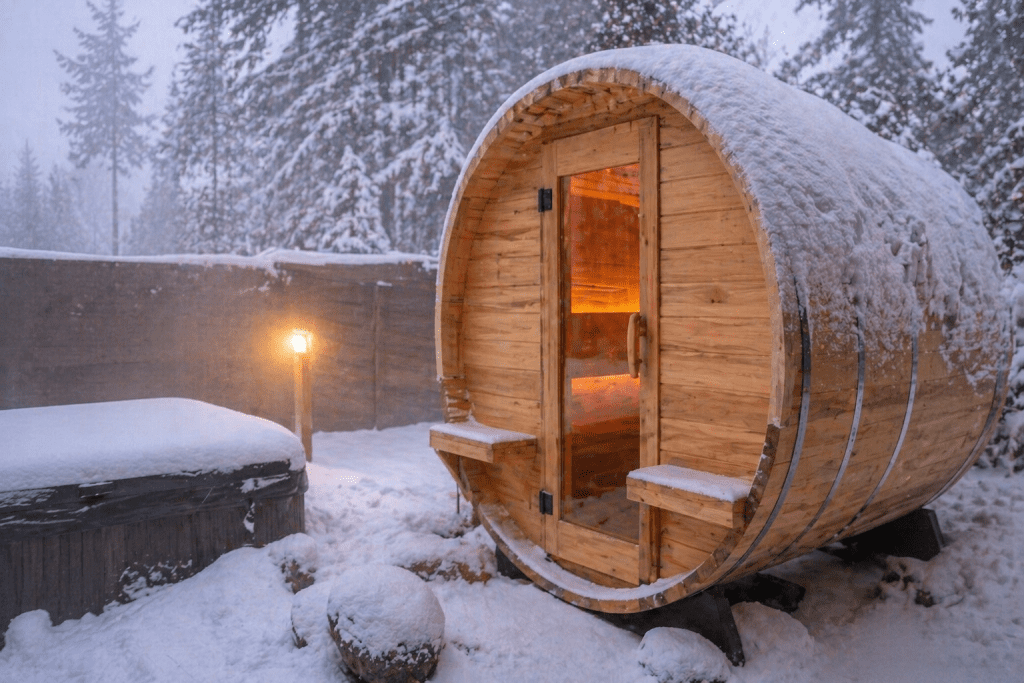
Table of Contents
- Why the barrel shape matters for heat efficiency
- How cold weather actually affects performance
- The honest cost reality in winter months
- Installation in winter — what changes
- Maintenance through the cold season
- Pros and cons
- How barrel saunas compare to other outdoor options in winter
- Comparison table
- Helpful gear
- FAQ
- Final verdict
Why the Barrel Shape Actually Matters for Heat Efficiency
The design of a barrel sauna in winter is genuinely relevant — not just aesthetic. The curved ceiling means hot air doesn’t pool at a flat apex and stall. It circulates down the walls continuously, keeping the entire interior at a more even temperature than a standard square or rectangular box. Less dead air volume means your heater isn’t working to warm space that never reaches you.
This is the core efficiency advantage. A rectangular outdoor sauna with the same cubic footage takes longer to heat and loses more heat through corners and flat wall joins. The round cross-section of a barrel has a lower surface-area-to-volume ratio, which is a real thermal advantage in cold conditions. It’s not the only factor — insulation quality and wood species matter more than people realise — but the shape genuinely contributes.
Does the barrel shape make a measurable difference in winter? Yes. The reduced dead air volume means a barrel sauna heats more evenly and reaches target temperature faster than a same-size rectangular outdoor sauna. That difference is more pronounced in winter when ambient temperatures are well below zero, because the heater has less thermal resistance to overcome inside the unit.
How Cold Weather Actually Affects Performance
Using a barrel sauna in winter is a different experience from summer use — and mostly in the right direction. The contrast between what’s outside and what’s inside becomes more intense. That sensation of sitting in deep heat while cold air is pressing against the outer shell is something you don’t get in July.
But performance isn’t just about sensation. Cold ambient air affects heat-up time, holding temperature, and how often the heater cycles. At 30°F outside, a well-insulated barrel with a properly sized heater still reaches 170–185°F in under an hour. At 10°F or below, that window extends. Door seals matter enormously here — a poor door seal bleeds heat constantly and your heater works overtime just to compensate.
The wood species is underrated in most discussions. Cedar and Nordic spruce — the most common barrel sauna materials — handle freeze-thaw cycles well and maintain their insulating properties year-round. Cheaper softwoods warp, which breaks door seals and creates gaps. That’s where real efficiency loss happens in winter, and it’s rarely mentioned in buying guides.
The Honest Cost Reality: What Winter Running Actually Costs
A barrel sauna in winter costs more to run than in summer — that’s unavoidable and worth stating clearly. The heater works harder and cycles more often to maintain temperature against cold ambient air. For a typical 6kW electric heater running at roughly $0.13 per kWh (US average), a 1.5-hour session costs around $1.20 in mild weather. In deep winter with sustained sub-freezing temps, that can push toward $1.80–$2.20 per session depending on your local electricity rate.
According to Cleveland Clinic, regular sauna use has documented cardiovascular and recovery benefits — so for most people the cost per session is still reasonable relative to what they’re getting from it. The real cost variable is how often the heater runs between sessions if you’re leaving it plugged in during cold weather. Heating on demand rather than keeping it warm continuously is the better approach for most home users in winter.
Wood-burning heaters have a different cost profile — cord wood is often cheaper per BTU than electricity in rural areas, and they produce a different quality of heat. For a barrel sauna in winter in a cold climate, a wood-burning option is worth considering if you have wood access and don’t mind the 45-minute startup routine.
How much more does a barrel sauna cost to run in winter? Expect roughly 15–30% higher energy costs per session in deep winter compared to mild-weather use, depending on ambient temperature, heater type, and how well the unit is sealed. A 6kW electric heater running for 1.5 hours in winter conditions typically costs between $1.50 and $2.20 at average US electricity rates.
Installation Friction in Winter — What Actually Changes
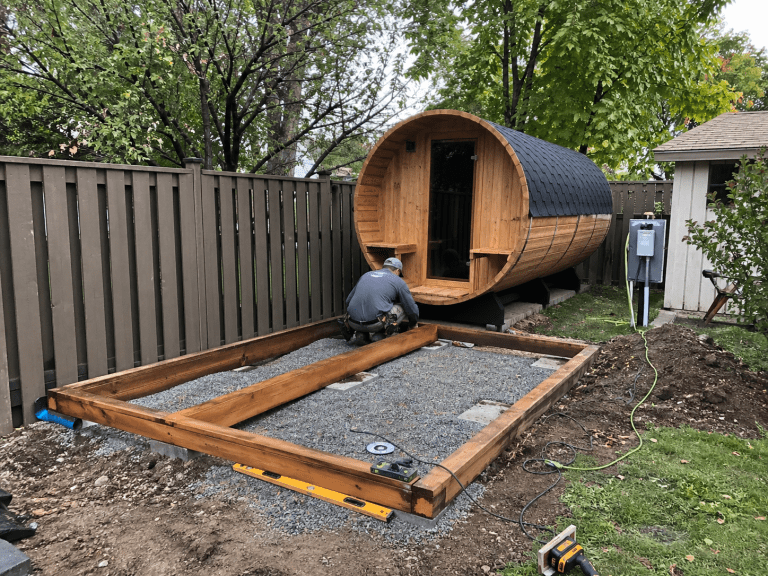
Installing a barrel sauna in winter introduces real complications. Ground freezing is the primary one. Barrels sit on base rails or treated timber cradles — these need to be level on stable ground. If the ground isn’t frozen solid when you place it, there’s no issue. If it is, you’re either waiting for a thaw or using a gravel or paver base that distributes weight and handles frost heave.
Electrical connection for electric heaters is the other major variable. Running conduit in frozen ground requires either pre-planned trenching before winter or surface-run conduit, which has its own requirements. Nolo’s guidance on home improvement permits is worth checking before any electrical work — permits for sauna installations vary by state but often apply when adding a dedicated circuit. The link is in the verified library if you need to check it.
A barrel sauna in winter can absolutely be installed with proper planning. Many owners install in autumn specifically so the unit is ready for peak cold-weather use. The barrel itself arrives in sections — assembly is straightforward and doesn’t require ground work beyond levelling and anchoring.
Maintenance Through the Cold Season
Maintaining a barrel sauna in winter is less demanding than people expect, but a few things matter. The primary risk is moisture — not from rain or snow, but from the condensation cycle inside. After each session, leave the door slightly open for 20–30 minutes. This lets the interior dry out and prevents mould at the floor joints where moisture pools after a session.
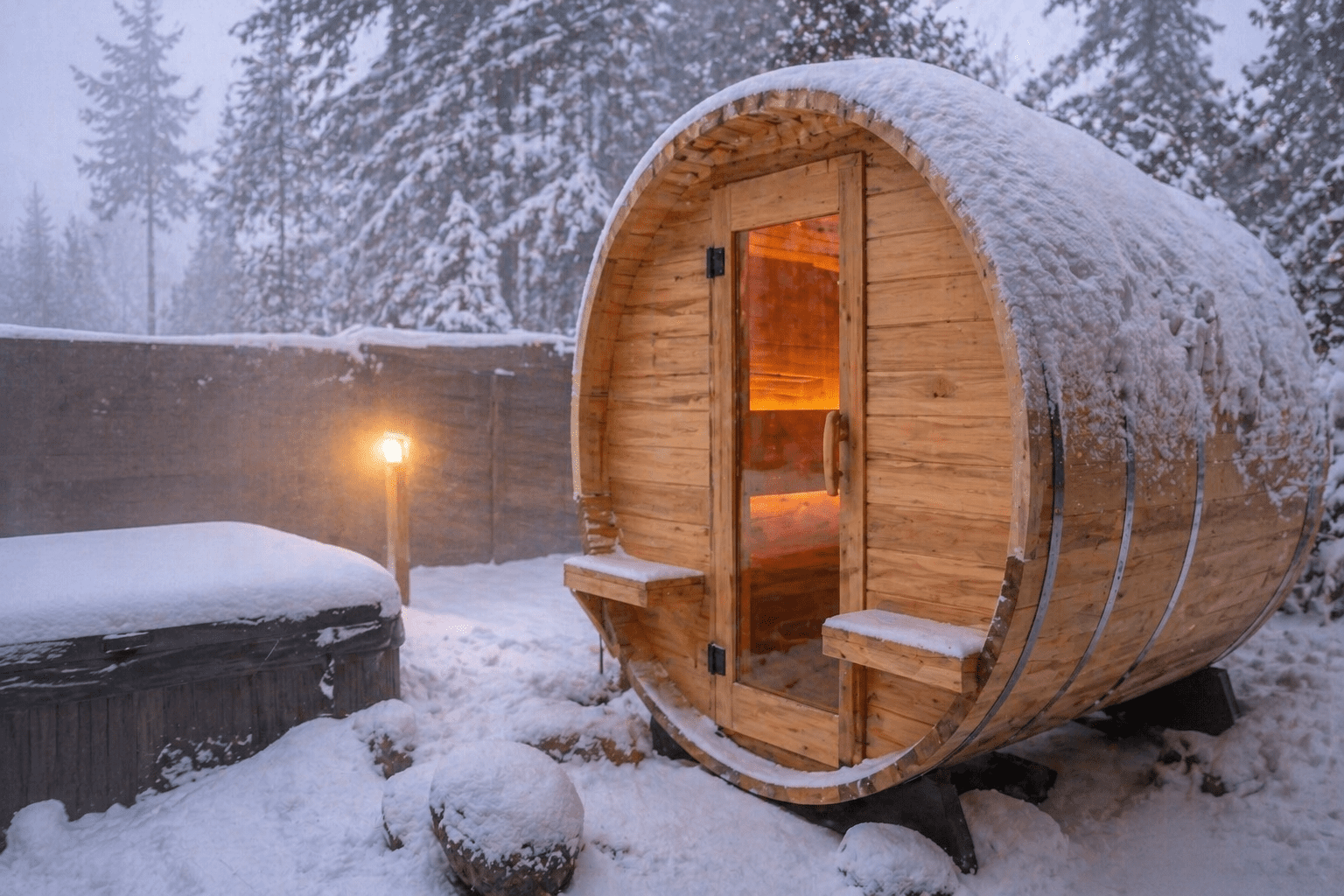
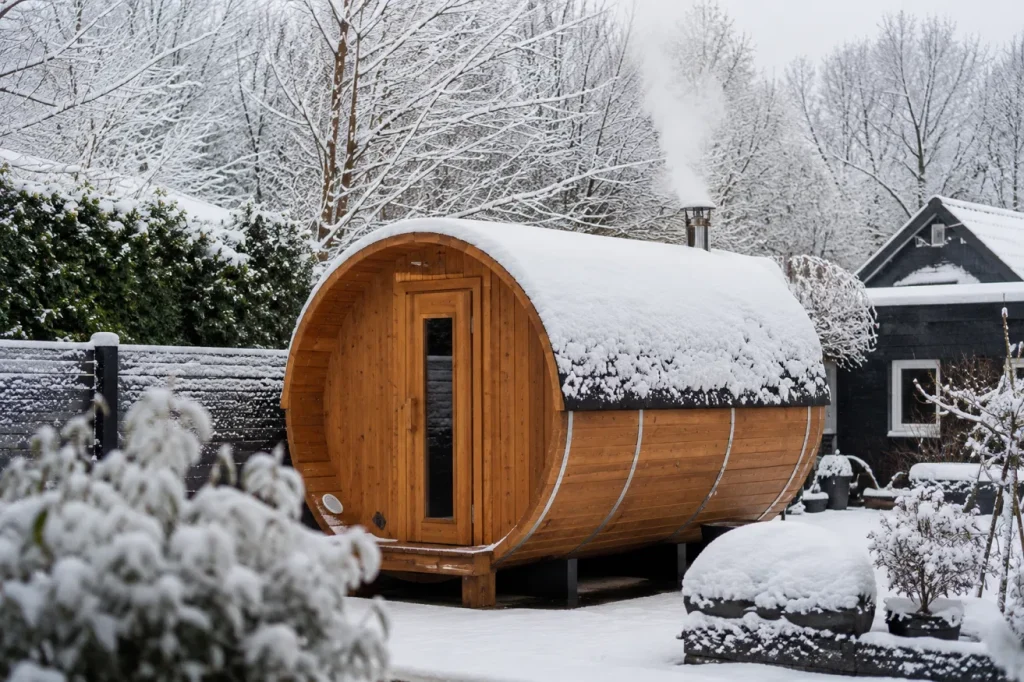
Snow load is a consideration for barrels with a flat-section roof panel on top. Most true barrel designs shed snow naturally due to the curved roof. If your model has any flat section, clear it after heavy snowfall. The structural issue isn’t usually the wood — it’s the cumulative stress on the base rails and cradle joints.
Door maintenance is the most overlooked winter task. The door seal compresses with use and cold temperatures accelerate that process. Check the seal every 4–6 weeks in winter. A degraded seal on a barrel sauna in winter is the single fastest way to lose heat efficiency — far more impactful than heater size or ambient temperature. Replacement seals are inexpensive and a 10-minute fix.
Pros and Cons
Pros
- The barrel shape genuinely improves heat efficiency in cold conditions — lower dead air volume, better circulation
- Cedar and spruce handle freeze-thaw cycles without warping when properly maintained
- Winter is when the contrast experience — intense internal heat, cold air outside — is at its best
- A barrel sauna in winter heats to usable temperature faster than most rectangular outdoor alternatives
- Year-round usability makes the per-session cost reasonable over a full ownership period
Cons
- Running costs increase 15–30% in deep winter — this is real and should be factored into ongoing cost estimates
- Door seal degradation is accelerated by cold — maintenance requirement is higher in winter months
- Installation on frozen ground requires pre-planning or a gravel/paver base solution
- Wood-burning models require a longer startup window in cold weather — not ideal for spontaneous sessions
How Barrel Saunas Compare to Other Outdoor Options in Winter
A barrel sauna in winter outperforms most standard rectangular outdoor saunas on heat-up speed and thermal efficiency. The shape advantage is consistent and measurable. The closest competition comes from heavily insulated cube-style outdoor saunas — these can match or exceed barrel performance if the insulation spec is high enough, but they’re typically more expensive.
Prefab outdoor rooms converted into saunas are the other alternative. They heat more slowly, require better heaters, and often don’t handle freeze-thaw cycles as well as purpose-built barrel units. For pure cold-weather efficiency, a purpose-built barrel with quality wood and proper seals is still the standard outdoor option.
Comparing a barrel sauna in winter to an indoor sauna is a different calculation entirely. Indoor units don’t fight ambient temperature, so running costs are lower and heat-up is faster. But the experience — the contrast, the exposure to cold air between rounds, the outdoor setting in winter — isn’t replicated indoors. That’s not a performance issue; it’s a use case question.
What’s the real advantage of a barrel sauna in winter over rectangular models? The curved interior reduces dead air volume, which means more of the heat your heater produces reaches you rather than pooling above you. In winter conditions, this translates to faster heat-up and more consistent internal temperature — particularly important when ambient temps are well below freezing and every heat loss point matters.
Comparison Table
| Feature | Barrel Sauna | Rectangular Outdoor Sauna | Indoor Sauna |
|---|---|---|---|
| Winter heat-up speed | Fast (30–55 min) | Slower (45–70 min) | Fastest (20–35 min) |
| Cold-weather efficiency | High | Moderate | Very high |
| Running cost in winter | Moderate increase | Higher increase | Minimal increase |
| Freeze-thaw durability | High (cedar/spruce) | Variable | N/A |
| Installation on frozen ground | Moderate challenge | Similar | N/A |
| Contrast experience (heat/cold) | Excellent | Good | Limited |
| Door seal maintenance in winter | Required every 4–6 weeks | Similar | Minimal |
Helpful Gear for Winter Barrel Sauna Use
Outdoor sauna thermometer/hygrometer — A dual-display unit that shows both temperature and humidity inside the barrel. Essential for dialling in the right conditions in winter when heat retention varies more than in summer.
Door weatherstrip seal tape — High-temp silicone or foam tape used to replace or reinforce the door seal on outdoor saunas. A degraded door seal is the top efficiency killer in cold weather.
Sauna bucket and ladle set — Used for water-on-rocks to generate steam during sessions. In winter, the steam effect is more pronounced and the ritual more satisfying.
FAQ
How long does a barrel sauna take to heat up in winter? Most barrel saunas with a properly sized heater (6–9kW for a standard 2-person unit) reach 165–185°F in 30–55 minutes at temperatures above 20°F. Below that, expect the higher end of that window. A wood-burning heater in very cold conditions may take 45–60 minutes before the first rounds are comfortable.
Can you leave a barrel sauna outside all winter without damage? Yes, provided it’s built from cedar or Nordic spruce and the door seals are maintained. These species handle freeze-thaw cycles reliably. The risk points are degraded door seals creating moisture ingress, and any flat roof sections collecting snow load. A purpose-built barrel in good condition with regular seal checks handles full winter exposure without structural issues.
Is a barrel sauna in winter more expensive to run than in summer? Expect 15–30% higher energy costs per session in deep winter, depending on ambient temperature and how well the unit is sealed. That cost increase is real but manageable — and for most users, winter is when they get the most use out of the unit, which spreads the fixed ownership cost further across sessions.
The simple rule: if the door seal is good and the heater is sized correctly, a barrel sauna in winter performs better than most people expect.
Summary Snapshot
- Barrel saunas are genuinely efficient in winter — the curved design is a real thermal advantage, not marketing
- Expect 15–30% higher running costs in deep cold — factor this into annual cost estimates
- Door seal maintenance every 4–6 weeks in winter is the single most impactful upkeep task
- Heat-up time of 30–55 minutes is realistic with a properly sized heater
- Winter is the best time to experience the heat-cold contrast — the experience rewards consistency
Final Verdict
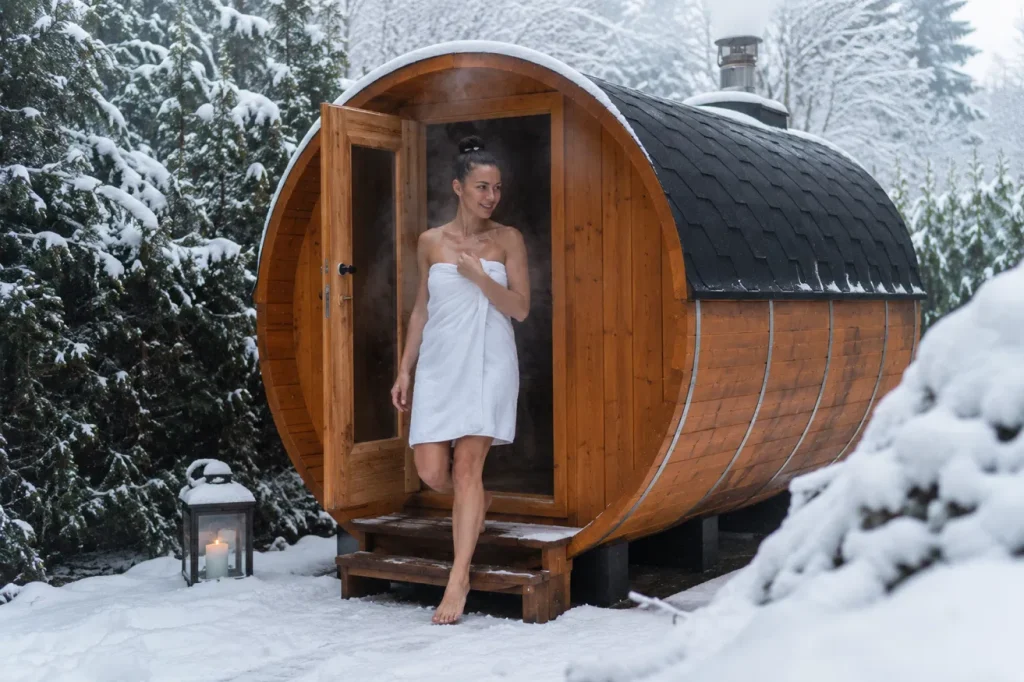
A barrel sauna in winter is not a compromise — it’s one of the best use cases for the format. The shape does what the physics says it should: circulates heat more evenly, reduces dead air volume, and gets to temperature faster than rectangular alternatives. The experience of sitting in deep, rolling heat while the world outside is frozen is something that stays with you. I’ve come out of sessions in cold weather feeling genuinely purged — not just warm, but actually restored in a way that takes the rest of the day in a different direction.
The honest limitations are real too. Running costs go up. Door seals need attention. Installing on frozen ground requires planning. None of these are dealbreakers — they’re just things to account for rather than discover later. If you use a barrel sauna in winter consistently, the results compound. Other people notice before you do.
The combination of a sauna session followed by a cold shower or a plunge in winter is where the real return on investment is. That contrast, done regularly, produces a natural high that carries into the afternoon. If you haven’t tried pairing your barrel sauna with a cold exposure routine, it’s worth exploring — I go deeper on this in Ice plunge benefits.
If you found this useful, the cluster below covers more ground on sauna selection, setup, and what actually changes your results. Related reading: Indoor vs Outdoor Saunas posts and Best Sauna Heaters posts— both sit in the same cluster and fill in the gaps this post leaves open.