Indoor vs Outdoor Sauna: Full Cost & Setup Comparison
The indoor vs outdoor sauna decision is one of the most common questions I get from people who’ve decided they want a home sauna but aren’t sure where to start. Both work. Both produce real results. But they are genuinely different setups with different costs, different installation headaches, and different day-to-day experiences — and most comparison articles gloss over the parts that actually matter.
I’ve used saunas regularly for years. The relaxation combined with that distinct feeling of genuinely purging the day — more intense heat than a steam room, a completely different experience — is something I come back to consistently. This guide is the honest breakdown I wish I’d had before making setup decisions.
Heads up: this post contains affiliate links. If you buy through them, I earn a small commission at no extra cost to you. I only mention products I’d actually use.
Quick Snapshot
- Indoor saunas cost less to install but need structural prep — ventilation, flooring, dedicated circuits
- Outdoor saunas cost more upfront but often require fewer modifications to your home
- Running costs are similar — both draw significant electricity
- Permits required in most US states for either
- Climate matters more for outdoor than most guides admit
- Year-round usability is the deciding factor for most buyers
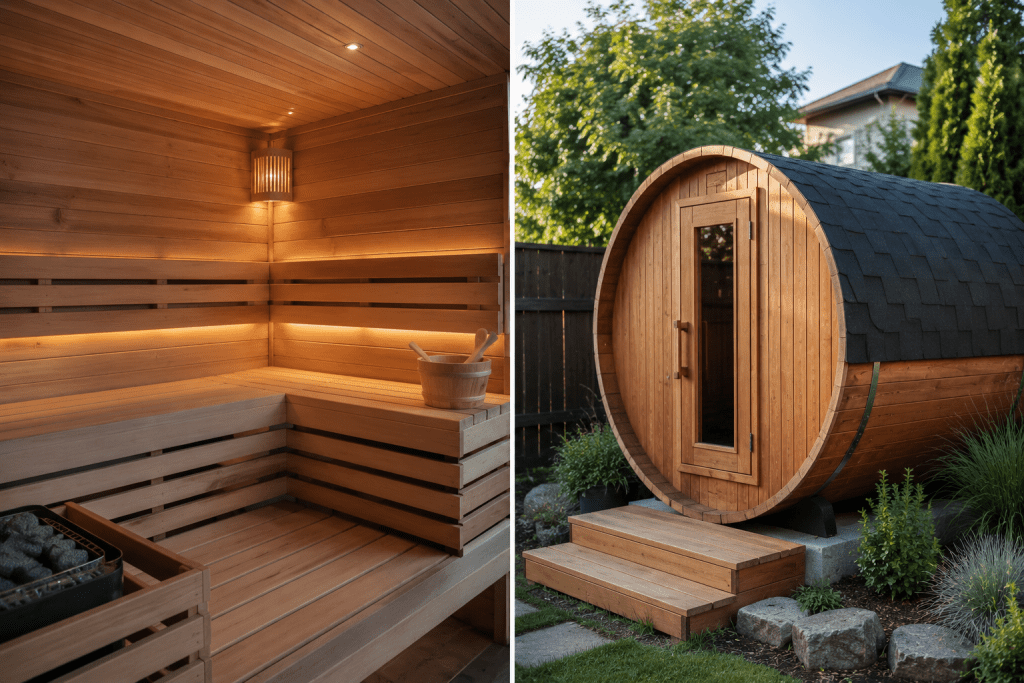
Table of Contents
- What Actually Separates Indoor and Outdoor Saunas
- The Real Costs: What You’ll Actually Pay
- Installation: Where Things Get Complicated
- Maintenance Differences Over Time
- Pros and Cons of Each
- Head-to-Head Comparison
- Helpful Gear
- FAQ
- Final Verdict
What Actually Separates Indoor vs Outdoor Saunas
The indoor vs outdoor sauna distinction isn’t just about location. It’s about construction, exposure, infrastructure, and how the sauna fits into your daily routine.
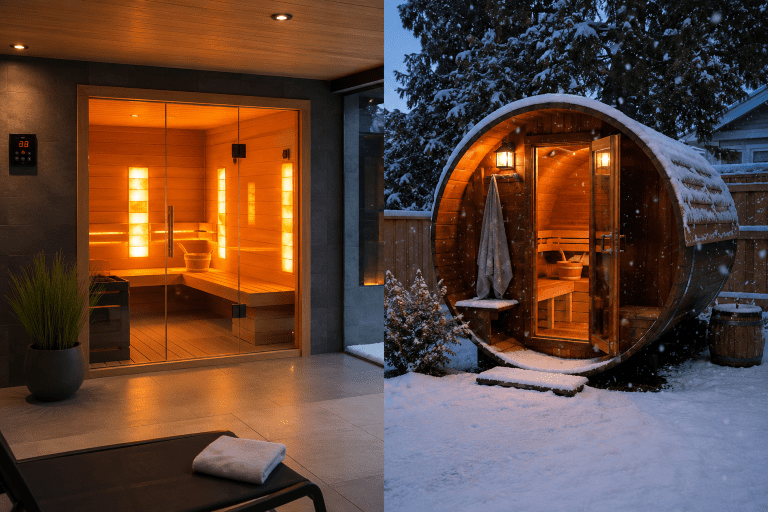
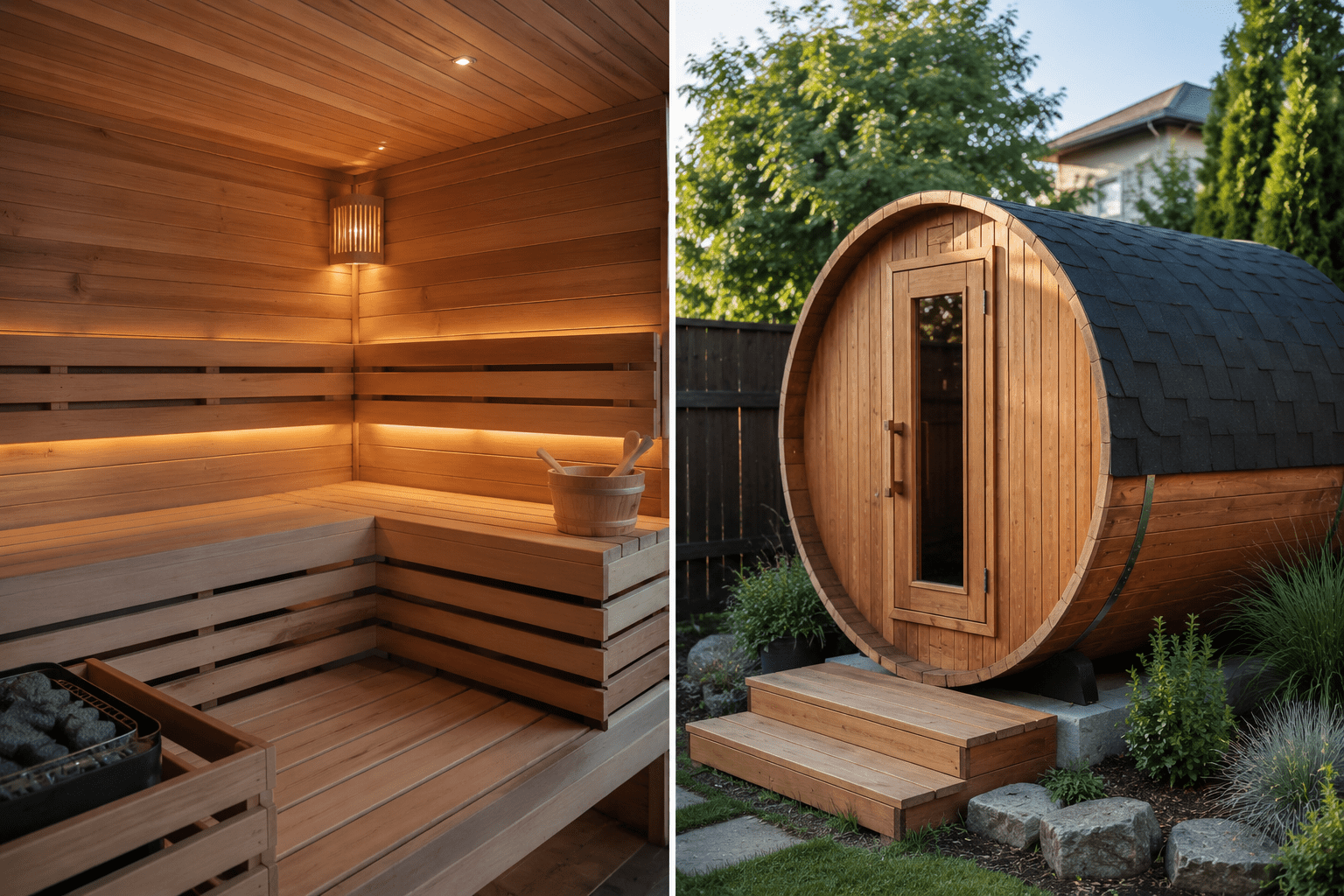
Indoor saunas are typically modular pre-cut or prefab units installed inside an existing room — a basement, spare bedroom, converted bathroom, or garage. The shell is usually hemlock, cedar, or basswood. The heater runs off your home’s electrical supply, and ventilation is managed through the room.
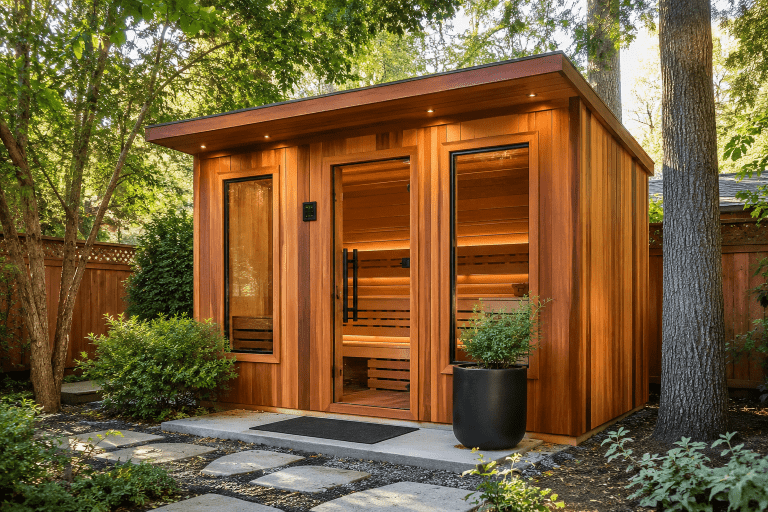
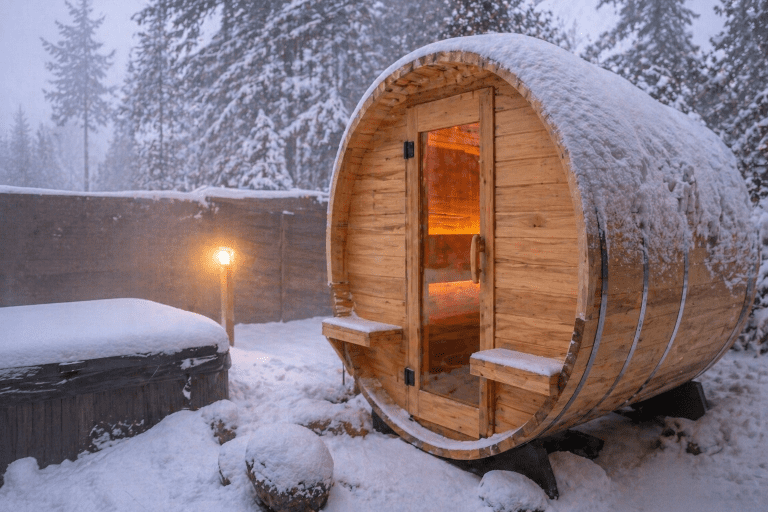
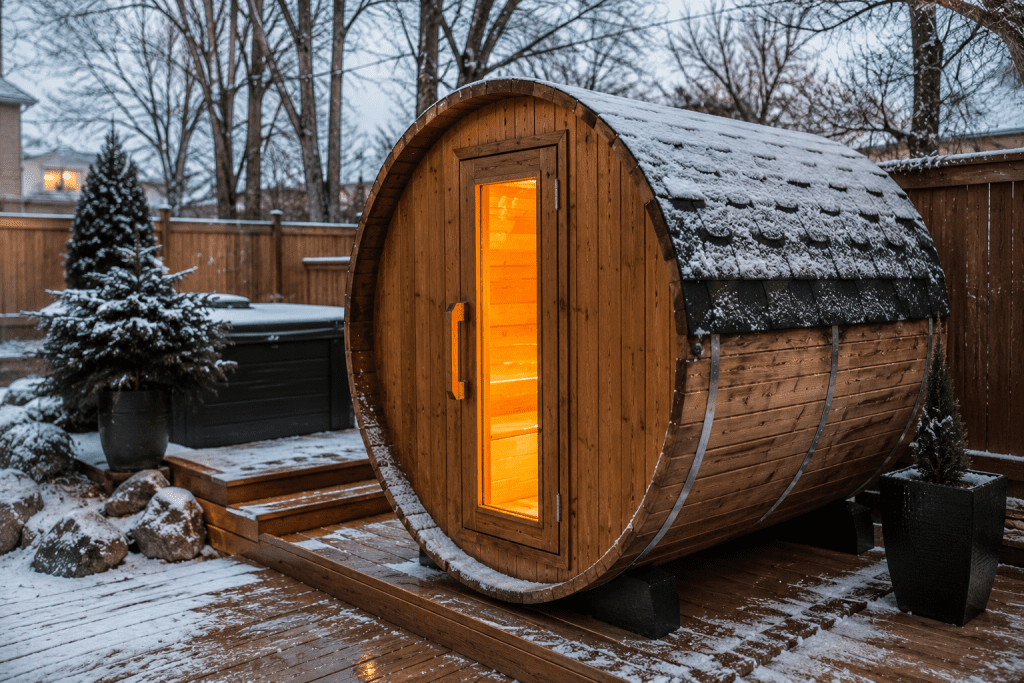
Outdoor saunas are freestanding structures — either prefab barrel designs or full cabin-style builds — installed in a yard or on a deck. They’re exposed to weather, require their own electrical run from the house, and typically need a dedicated foundation or base. The aesthetic is more dramatic. The setup is more involved.
Both will get you to 160–195°F without issue, and both will deliver the same core benefit: sustained dry heat that forces your body to work, relaxes muscle tension, and produces that clean, wrung-out feeling after a good session. The experience inside the box is nearly identical. Everything around the box is where the indoor vs outdoor sauna decision gets made.
What Is a Barrel Sauna? A barrel sauna is a curved outdoor sauna built from stacked horizontal planks in a cylindrical shape. The design naturally circulates hot air efficiently. It’s one of the most popular outdoor formats in the US because it heats quickly and looks good in most yards.
The Real Costs: What You’ll Actually Pay
The indoor vs outdoor sauna price gap is real but more nuanced than most buyers expect.
For an indoor sauna, a quality prefab 2-person unit starts around $2,000–$3,500 for the unit itself. Add $500–$1,500 for installation if you’re hiring out, plus electrical work ($200–$600 for a dedicated 240V circuit if you don’t already have one). If your chosen room needs waterproof flooring, drainage modifications, or ventilation work, add another $300–$1,000. Total realistic budget: $3,000–$6,000 for a solid indoor setup.
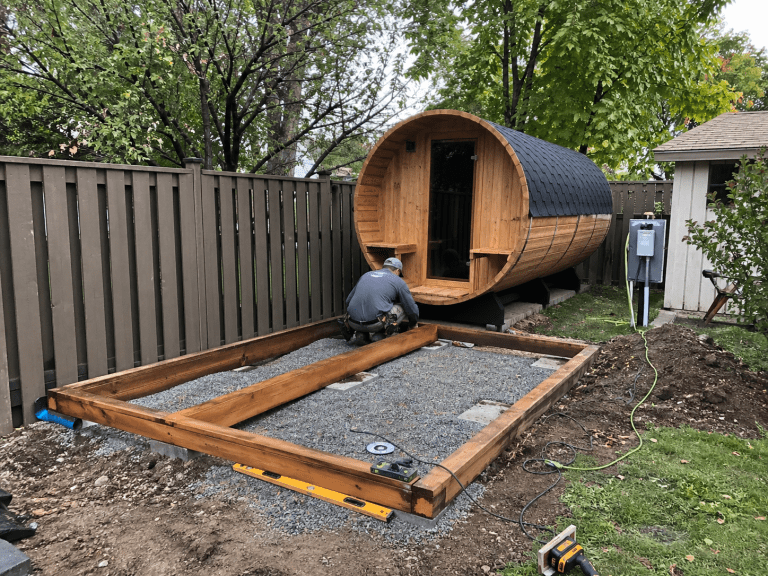
For an outdoor sauna, the unit alone — barrel or cabin style — typically runs $3,000–$8,000+ depending on size and wood quality. Add $800–$2,000 for a concrete pad or compacted gravel base. Electrical trenching from the house to the unit can run $500–$2,500 depending on distance and local labour rates. Permits, where required, add $100–$500. Total realistic budget: $5,000–$13,000+ for a proper outdoor installation.
The Cleveland Clinic notes that regular sauna use is associated with meaningful cardiovascular benefits — which makes the long-term cost-per-use calculation look very different once you factor in consistent weekly sessions over years.
Running costs are roughly comparable. A 6kW heater running 1 hour at the US average electricity rate of around $0.16/kWh costs approximately $0.96 per session. Neither indoor nor outdoor wins significantly here — the heater size is the variable, not the location. If you’re comparing best sauna heaters, a smaller indoor unit may actually cost slightly less per session simply because the space retains heat more efficiently.That running cost parity means the indoor vs outdoor sauna choice rarely comes down to electricity bills.
Installation: Where Things Get Complicated
Installation is where the indoor vs outdoor sauna decision gets genuinely difficult for most buyers.
Indoor installation friction:
The biggest headache with an indoor setup isn’t the sauna itself — it’s what the room needs to accommodate it. Cedar and hemlock handle heat and humidity well, but most residential rooms weren’t designed with sauna use in mind. You’ll need to assess flooring (tile or concrete is ideal; carpet needs to go), ensure the ceiling height clears the unit, and verify your electrical panel has capacity for a dedicated 240V circuit. Ventilation is critical — without adequate airflow, heat and moisture will affect the surrounding room over time, not just the sauna interior. Indoor vs outdoor sauna installation requirements differ significantly.
Many buyers assume a spare bedroom handles this without modification. It often doesn’t.
Outdoor installation friction:
The outdoor path has different friction. Site preparation is the first obstacle — you need a level, solid base before the unit arrives. Compacted gravel works; a concrete pad is better for permanent installs. Electrical trenching is frequently underestimated, both in cost and in timeline — permits for electrical work often add weeks, not days, to the project.
According to Nolo’s home improvement guidance, most US jurisdictions require permits for permanent structures and electrical modifications — which applies to the vast majority of outdoor sauna installs. Skipping the permit on an outdoor structure is a genuine risk if you sell your home later.
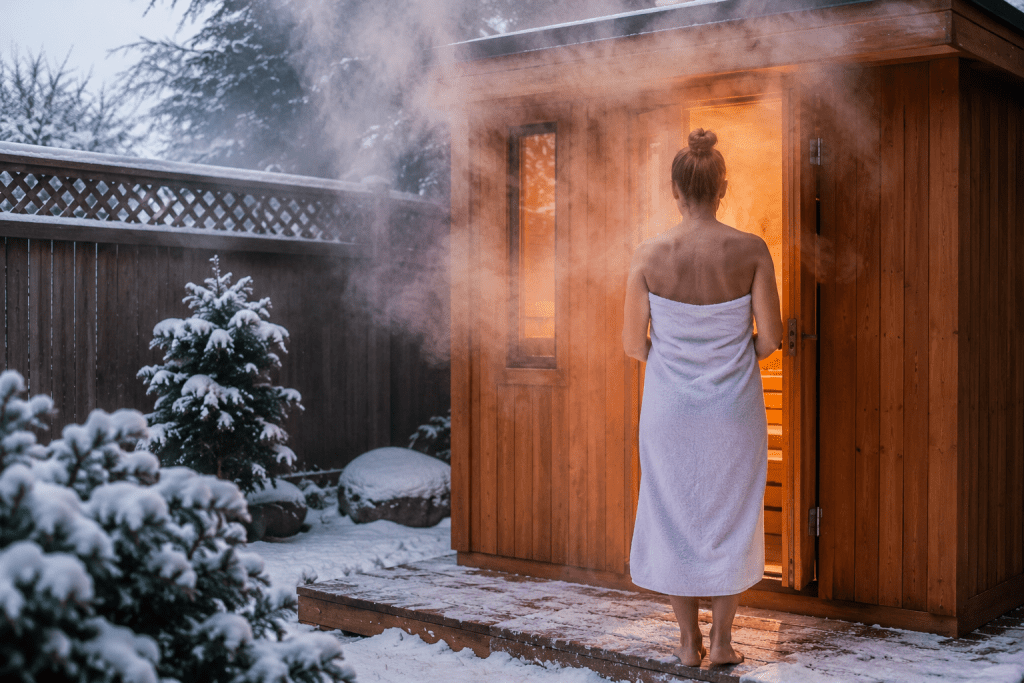
One thing most articles skip: outdoor sauna access in cold weather is uncomfortable in a way that affects usage frequency. Walking from your house to an outdoor unit in January at 6am in Minnesota is a real barrier — wet hair, cold air, the walk back. It sounds trivial. After two winters it shapes whether you actually use the sauna consistently or don’t.
Maintenance Differences Over Time
Maintenance is where the indoor vs outdoor sauna gap widens the most over a five-year horizon.
Indoor units have the advantage here. Sheltered from UV, rain, ice, and temperature swings, the wood stays stable. A quality interior cedar unit with occasional bench sanding and light oiling will look and perform the same in year seven as it did in year one. The main maintenance tasks are cleaning the bench surface, checking the heater stones annually, and ensuring the room ventilation stays clear.
Outdoor units take a beating. Even quality Scandinavian-grade spruce or cedar will grey, crack, and develop surface checks over time if not properly sealed. Most manufacturers recommend exterior treatment every 1–2 years — a half-day job that buyers consistently underestimate. Metal components (hinges, handles, heater fixtures) corrode faster in wet climates. In freeze-thaw regions, the foundation base needs checking each spring.
Consistency of use produces the results that matter — the cardiovascular adaptation, the skin benefits, the post-session clarity. That consistency is easier to maintain with a unit that doesn’t require a quarterly project list just to keep it functional.
Pros and Cons of Each
Indoor Sauna
Pros:
- Lower total install cost
- Easier year-round access
- No weather exposure — lower long-term maintenance
- Integrates with existing home infrastructure (electrical, flooring)
Cons:
- Requires a suitable room — not all homes have one without significant modification
- Smaller units typical — less space for 3+ users
- Ventilation management is the owner’s responsibility
- May affect resale perception depending on buyer (unusual for some markets)
Outdoor Sauna
Pros:
- No home modification required — self-contained unit
- Larger capacities available without room constraints
- Strong aesthetic — adds visible appeal to property in most markets
- Barrel designs heat efficiently, often faster than comparable indoor units
Cons:
- Higher total install cost
- Weather exposure requires ongoing maintenance
- Electrical trenching adds significant cost and time
- Cold-climate access friction affects usage consistency more than buyers expect
Head-to-Head Comparison
The indoor vs outdoor sauna comparison looks different depending on your priority.
What is the main cost difference between indoor and outdoor saunas? Indoor sauna total installs typically run $3,000–$6,000 including unit, electrical, and room prep. Outdoor installs typically run $5,000–$13,000+ including unit, base, and electrical trenching. The gap widens further in longer electrical runs or complex site prep scenarios.
| Factor | Indoor Sauna | Outdoor Sauna |
|---|---|---|
| Unit cost | $2,000–$3,500 | $3,000–$8,000+ |
| Install cost | $700–$2,500 | $1,300–$4,500+ |
| Running cost/hr | Similar | Similar |
| Maintenance | Low | Moderate–High |
| Year-round access | Easy | Climate-dependent |
| Permit required | Often (electrical) | Almost always |
| Space required | Existing room | Yard/deck space |
| Lifespan | 15–25 yrs | 10–20 yrs (with maintenance) |
Helpful Gear
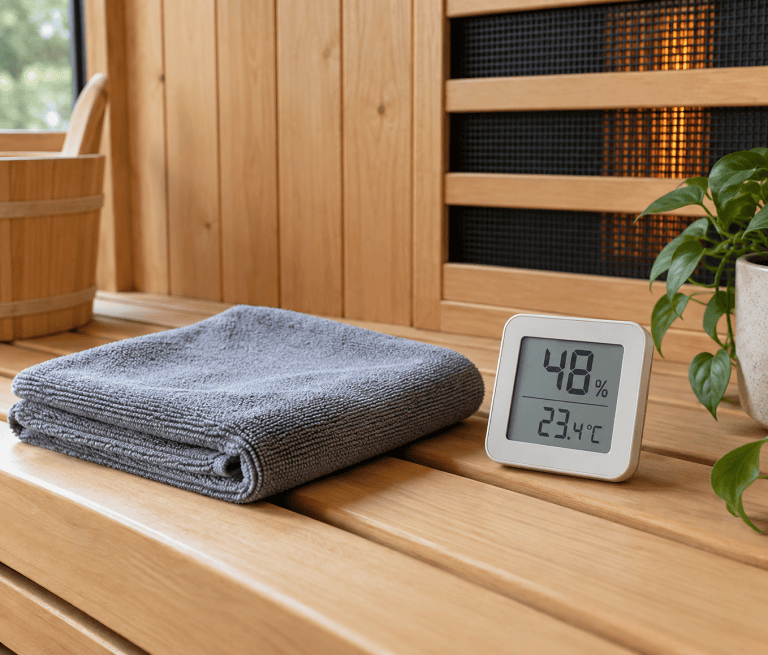
Sauna thermometer and hygrometer combo — A wall-mounted unit that reads both temperature and humidity simultaneously, so you can dial in your session conditions precisely.
Sauna backrest — Red cedar backrests that improve posture and comfort during longer sessions.
Sauna bucket and ladle kit — For traditional löyly (water-on-stones) steam bursts in any electric heater-equipped unit.
FAQ
Which is better for resale value — indoor or outdoor sauna? Outdoor saunas tend to add more visible curb appeal and are increasingly popular in US home listings as a standalone feature. Indoor saunas can be polarising depending on the room used — a converted bedroom reads differently to buyers than a purpose-built basement sauna room. Neither is a guaranteed value-add; local market preferences apply.
Do I need a permit for a home sauna? In most US jurisdictions, yes — particularly for the electrical work (dedicated 240V circuit) and for any permanent outdoor structure. Requirements vary by state and county. Check with your local building department before purchase, not after.
Can I use a sauna daily? Most healthy adults tolerate daily use without issue. Sessions of 15–20 minutes at moderate temperature (160–175°F) are the typical starting point. If you’re new to it, build up gradually. If you have cardiovascular conditions, consult your doctor first.
Simple rule: If you have a suitable room and want lower cost and easier access, go indoor. If you have the yard, the budget, and want a standalone feature that functions independently of your home’s interior, go outdoor.
Summary Snapshot
- Indoor saunas: lower total cost, simpler access, less maintenance
- Outdoor saunas: higher cost, stronger visual impact, more maintenance
- Both require permits in most US states
- Climate and usage habits should drive the decision as much as budget
- Running costs are comparable across both types
Final Verdict
The indoor vs outdoor sauna debate doesn’t have a universal right answer — but it does have a right answer for your specific situation. Budget and access are the two deciding variables for most people. If you’re working with a $4,000–$6,000 total budget, an indoor unit is almost certainly the better use of that money. If you have $8,000–$12,000 available and the yard space, an outdoor cabin or quality barrel sauna delivers something an indoor unit genuinely can’t — a dedicated space that feels separate from your home, which many people find changes how they actually use it.
What matters most is consistent use over time. The relaxation, the cardiovascular adaptation, and the post-session clarity that builds over months of regular sessions — those come from showing up week after week, not from which side of the wall your unit sits on. If a cold-weather walk to an outdoor unit means you skip sessions through January and February, that’s a material factor, not a minor inconvenience. If you’ve read about the hot tub and sauna contrast experience and want to pair heat with a cold plunge setup, check ice plunge benefits— the combination is worth planning around from the start.
For anyone serious about the indoor vs outdoor sauna comparison, the answer is in your specific room availability, realistic budget including electrical and site prep, your local climate, and honest self-assessment of whether cold-weather friction will affect your consistency.