Do Outdoor Saunas Need More Powerful Heaters?
Do outdoor saunas need more powerful heaters? It’s one of the most common questions people ask before buying — and the answer matters more than most guides let on. You can spend a fortune on a beautiful outdoor barrel sauna, get the wrong heater, and end up with a room that never quite gets there.
Here’s the thing: outdoor installations are fundamentally different from indoor ones, and your heater choice needs to reflect that.
Heads up — this post contains affiliate links. If you buy through them, we may earn a small commission at no extra cost to you. We only recommend products we believe are relevant and useful for the topic.
Quick Snapshot
- Outdoor saunas typically need more powerful heaters than equivalent indoor models
- Heat loss through walls, roofs, and ambient temperature gaps is the main reason
- Cold climates demand even more — sometimes significantly
- Heater sizing is based on cubic footage, but outdoor placement changes the math
- Heater size should account for sauna volume, insulation, exposed surfaces and local climate
Table of Contents
- Why Heater Power Matters Outdoors
- Do Outdoor Saunas Need More Powerful Heaters?
- How Heater Sizing Actually Works
- What Outdoor Saunas Cost to Run
- Installation Friction for Outdoor Heaters
- Maintenance for Outdoor Sauna Heaters
- Pros and Cons
- Outdoor vs Indoor Sauna Heaters Compared
- Comparison Table
- Helpful Gear
- FAQ
- Final Verdict
Do Outdoor Saunas Need More Powerful Heaters
Getting heater sizing wrong can mean slower warm-up times, difficulty reaching your target temperature, and a heater working harder than necessary.
Outdoor saunas sit in ambient temperatures that can swing 80°F or more across seasons. Your heater has to compensate for every degree of that gap — and that takes power.
Why Heater Power Matters Outdoors
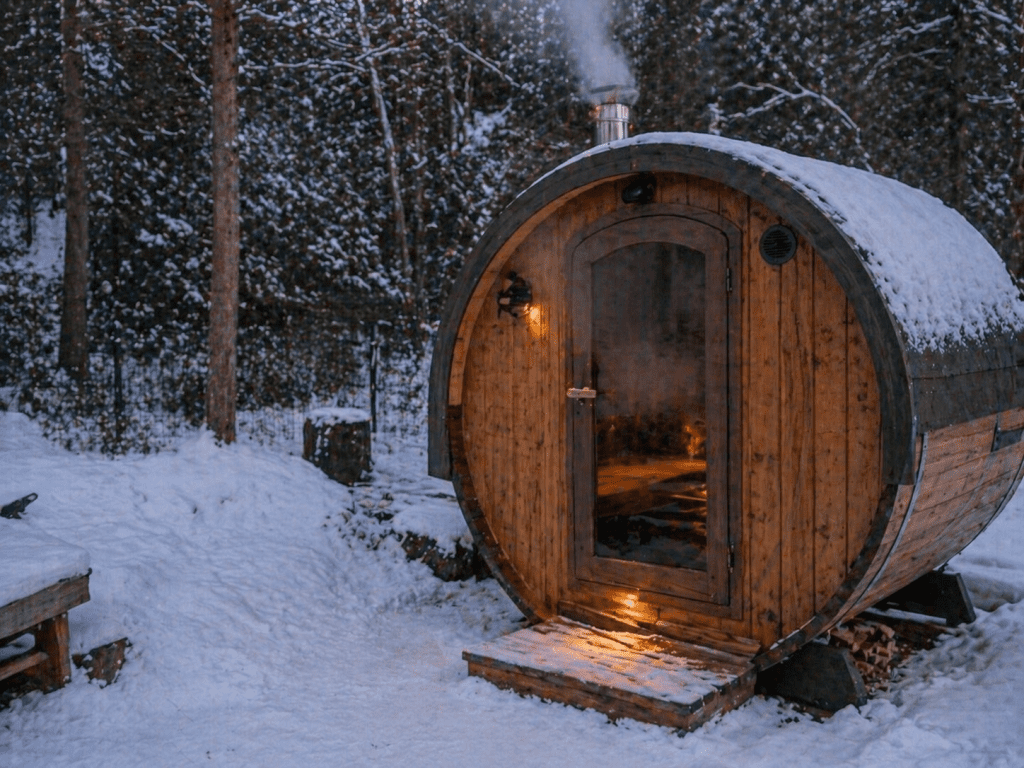
Outdoor saunas can need more heater capacity than comparable indoor saunas, especially in colder climates or where insulation and heat retention are limited. The short answer is that outdoor placement removes the thermal benefit of surrounding conditioned space.
An indoor sauna is surrounded by rooms that are already warm. The heat loss through walls is much lower because the temperature differential between inside the sauna and outside the wall is smaller. An outdoor sauna has none of that buffer.
How Heater Sizing Actually Works
Heater sizing starts with the sauna’s interior volume — length × width × height — but volume alone doesn’t tell the whole story.
Outdoor saunas can lose heat more quickly because of colder ambient temperatures, insulation quality and exposed surfaces. Large glass areas, log walls and other poorly insulated surfaces can also increase the effective volume a heater needs to handle. Harvia notes that sauna volume and construction affect heater power requirements, with surfaces such as glass, brick, concrete and massive logs increasing the calculated heating requirement.
That’s why the safest approach is to calculate your sauna’s size and then follow the specific heater manufacturer’s sizing guidance for the construction and conditions of your sauna. Bigger isn’t automatically better — the goal is a heater correctly matched to the space.
If you’re still deciding between the two setups, our Indoor vs Outdoor Sauna guide compares the main differences before you commit.
What Outdoor Saunas Cost to Run
Running costs are influenced by heater power — higher-powered heaters have a greater maximum electrical draw. A 9 kW heater running on a 240V dedicated circuit will cost noticeably more per session than a 6 kW unit. The running cost gap between a correctly sized unit and an undersized one working flat out is real.
For a rough estimate: a 9 kW heater running for 1 hour at $0.15/kWh costs about $1.35. In colder climates where you’re pre-heating longer, that adds up. Budget accordingly before committing to a larger unit.
Installation Friction for Outdoor Heaters
Outdoor sauna heater installation introduces friction that indoor builds skip entirely .
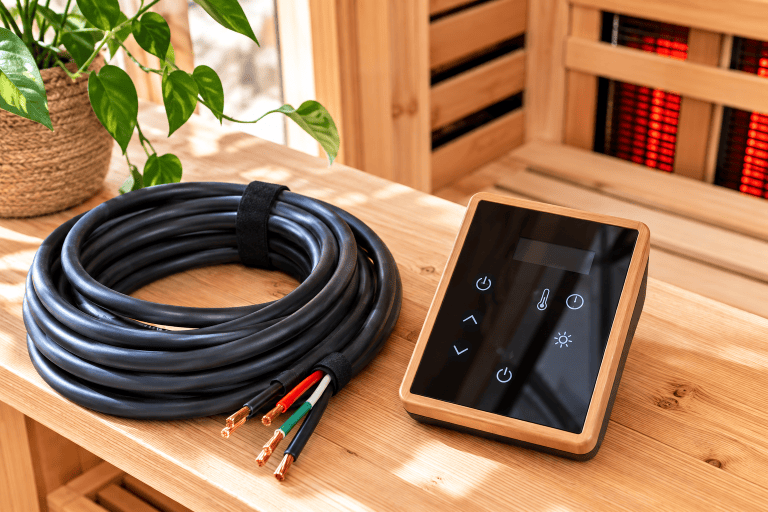
Many residential electric sauna heaters use dedicated 240V circuits, depending on the model and power rating. Outdoor electrical work should follow the heater manufacturer’s requirements and local electrical code, with installation handled by a qualified electrician.
Permits are another factor. Many municipalities require electrical permits for any new 240V outdoor circuit, and some require separate permits for the structure itself. The specifics vary by location — check with your local authority before breaking ground.
Weatherproofing the electrical connection point matters too. Outdoor installations need proper weatherproof junction boxes and conduit rated for direct burial or exterior use. This isn’t where you cut corners.
Maintenance for Outdoor Sauna Heaters
Outdoor heaters face environmental stressors that indoor units never see: humidity cycles, temperature swings, insects, and in some climates, freeze-thaw stress on wiring and connections.
Visually check accessible exterior conduit and the area around the heater for obvious damage, corrosion or moisture. Have electrical connections or faults inspected by a qualified electrician.
The heater element itself — whether electric or wood-fired — needs the same attention as any indoor unit. Keep sauna stones clean and check or rearrange them as recommended by the heater manufacturer. Replace stones that are cracked, crumbling or badly deteriorated rather than relying on a fixed replacement schedule.
Barrel saunas are particularly prone to water pooling near the base. Keep the area drained and ensure the heater enclosure stays dry on the exterior side.
Pros and Cons
Pros of higher-powered outdoor heaters
- Reaches target temperature reliably even in cold weather
- Shorter pre-heat times, less waiting
- Better temperature consistency across the session
Cons
- Higher upfront purchase cost
- Larger 240V draw — higher operating cost per session
- May require electrical panel upgrade if amperage is limited
- Bigger heater takes more interior space in smaller saunas
Outdoor vs Indoor Sauna Heaters Compared
The core difference isn’t brand or build quality — it’s thermal environment. Indoor heaters operate in a stable, buffered environment. Outdoor heaters work against variable, often harsh conditions.
This doesn’t mean outdoor saunas are impractical. Millions of people run them year-round without issues. It means the heater should be matched to the sauna’s actual volume, construction and operating conditions using the manufacturer’s sizing guidance.
One more point worth making: wood-burning heaters are actually a popular outdoor option because they sidestep the electrical infrastructure challenge entirely. They can produce significant heat output without any dedicated circuit. The tradeoff is the effort of sourcing and managing firewood and longer warm-up times.
Comparison Table
| Factor | Indoor Sauna | Outdoor Sauna |
|---|---|---|
| Heater sizing | Based on room volume, construction and exposed surfaces | Same principles, with outdoor temperature and additional heat loss considered |
| Warm-up conditions | Usually benefits from a more stable surrounding temperature | Can take longer to heat in cold weather |
| Insulation | Protected by the surrounding building in many installations | Good insulation and weather sealing are especially important |
| Glass & exposed surfaces | Large glass areas can increase heating requirements | Large glass areas and exposed surfaces can increase heat loss further |
| Electrical installation | Wiring is generally contained within the building | Outdoor runs may require weather-rated equipment, conduit and additional installation work |
| Climate impact | Usually less affected by outdoor temperature changes | Local climate can have a greater effect on warm-up time and heater demand |
| Heater selection | Follow the manufacturer’s sizing guidance | Follow the manufacturer’s sizing guidance for the sauna’s volume, construction and conditions |
| Running costs | Depend on heater size, electricity rate and usage | Depend on the same factors, with longer cold-weather warm-ups potentially increasing energy use |
Helpful Gear
These are products worth looking at if you’re setting up an outdoor sauna.
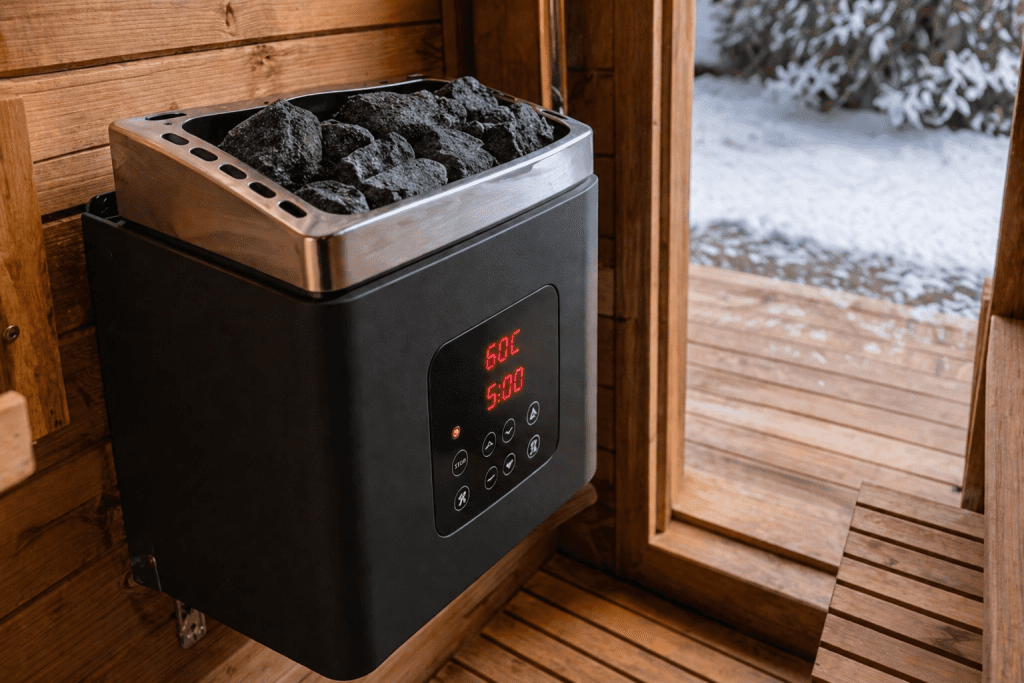
1. VEVOR Electric Sauna Heater
A 6kW electric sauna heater with adjustable temperature controls. Check the manufacturer’s stated room-size range and installation requirements against your specific sauna before buying.
2. Sauna Thermometer and Hygrometer 2-in-1 -Sauna Thermometer & Hygrometer Combo – Precise Temperature & Humidity Gauge
3. Sauna Heater Rocks — Replacement diabase stones designed for sauna heaters. Check the stone size and quantity required by your specific heater manufacturer before buying.
FAQ
How many kW do I need for an outdoor sauna? Start by calculating the sauna’s interior volume, then use the heater manufacturer’s sizing guidance. Insulation, glass or other exposed surfaces, construction type and local climate can all affect the capacity required. Avoid automatically adding a fixed number of kilowatts — the heater should be matched to the specific sauna.
Does an outdoor sauna need a special heater or just a bigger one? You don’t necessarily need a different type of heater — just adequate power for the conditions. That said, outdoor saunas often use wood-burning heaters specifically to avoid complex electrical installation. For electric heaters outdoors, confirm the unit is rated for the humidity and temperature variation it will face.
Do outdoor saunas need more powerful heaters in winter specifically? Cold winter conditions can increase the heating demand on an outdoor sauna. Seasonal variation is real. A heater that performs well in autumn may struggle when ambient temperatures drop significantly in winter. Some outdoor sauna owners size their heater for winter worst-case conditions and accept that it runs more efficiently in milder months.
Simple Rule
For an outdoor sauna, size the heater for the actual room volume, construction, exposed surfaces and local climate. Follow the heater manufacturer’s sizing guidance rather than automatically choosing a larger unit.
Summary Snapshot
- Outdoor saunas can require more heater capacity because of additional heat loss
- Heater sizing should start with room volume and the manufacturer’s guidance
- Insulation, glass, exposed surfaces and local climate can affect heater requirements
- Outdoor electrical installation can be more complex and may require permits
- Wood-burning heaters can be a practical alternative where appropriate
- Correct sizing matters more than simply choosing a larger heater
Final Verdict
Outdoor saunas can require more heater capacity than comparable indoor saunas, particularly in colder climates or where heat loss is greater. But there’s no universal rule to simply add 1–2 kW.
Calculate the sauna’s volume, account for its construction, insulation, glass and local climate, then follow the heater manufacturer’s sizing guidance. The goal isn’t the biggest heater — it’s the correctly sized heater for the space.
If you’re deciding between electric, wood-burning and gas, our outdoor sauna heater comparison explains the practical differences before you buy.
You Might Also Like
- Indoor vs Outdoor Sauna — compare the practical differences before choosing your setup.
- Indoor vs Outdoor Sauna: Cost & Setup — compare installation, setup and cost considerations.
- 6kW vs 8kW Sauna Heater Guide — understand how heater capacity affects different sauna setups.