Ventilation for Indoor Saunas: The Honest Guide Most Owners Skip
Ventilation for indoor saunas is easy to overlook when heater size, wood type and room design get most of the attention. But airflow is an important part of a comfortable, well-designed sauna, helping manage fresh-air supply, heat distribution and moisture.
The right ventilation setup depends on the sauna design, heater type and manufacturer’s requirements. This guide explains the main ventilation approaches, vent placement, installation considerations, maintenance and the differences between passive and mechanical systems.
Affiliate disclosure: Some links in this article are affiliate links. Sunrise & Vitalize may earn a commission from qualifying purchases at no additional cost to you.
Quick Snapshot
- Good ventilation helps keep an indoor sauna comfortable and manage moisture.
- Vent layout depends on the heater type, sauna design and manufacturer’s instructions.
- Both passive and mechanical ventilation can work, depending on the setup.
- Poor airflow can contribute to uneven temperatures and moisture problems.
- Powered fans and structural or electrical alterations may require professional installation.
- Always follow the sauna and heater manufacturer’s ventilation requirements.
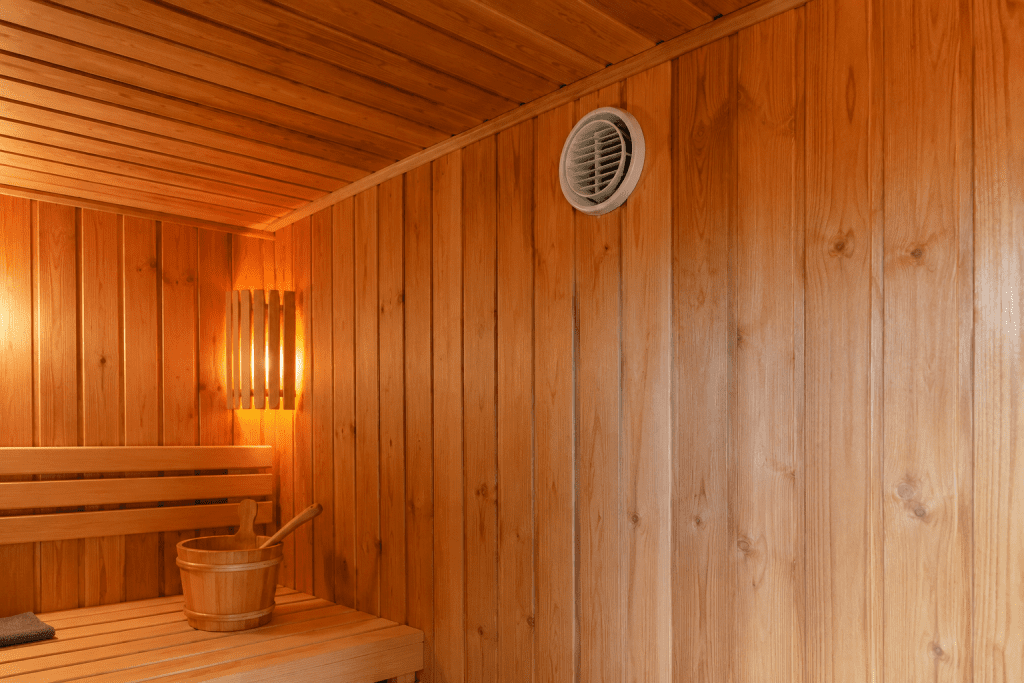
Table of Contents
- Why Ventilation for Indoor Saunas Actually Matters
- How Indoor Sauna Ventilation Systems Work
- The Real Cost of Getting It Right (and Wrong)
- Installation: What’s Straightforward and What Isn’t
- Maintenance You Actually Need to Do
- Pros and Cons
- Passive vs Mechanical Ventilation: 7 Real Differences to Know
- Comparison Table
- Helpful Gear
- FAQ
- Final Verdict
Why Ventilation for Indoor Saunas Actually Matters
Most sauna content focuses on the heater. That’s understandable — the heater is the centrepiece. But the heater only delivers on its promise if the air in the room is actually working with it.
Poor airflow can make a sauna feel stuffy and contribute to uneven heat distribution. Ventilation also helps manage the moisture produced during use, particularly when water is added to sauna stones.
Moisture management matters for the room itself too. Repeated exposure to heat and humidity means the sauna should be designed so moisture can dry effectively between sessions. The correct ventilation arrangement varies by sauna and heater design, so the manufacturer’s installation instructions should be the starting point.
For broader background on sauna use and potential health effects, Healthline provides an overview of current sauna research
How Indoor Sauna Ventilation Systems Work
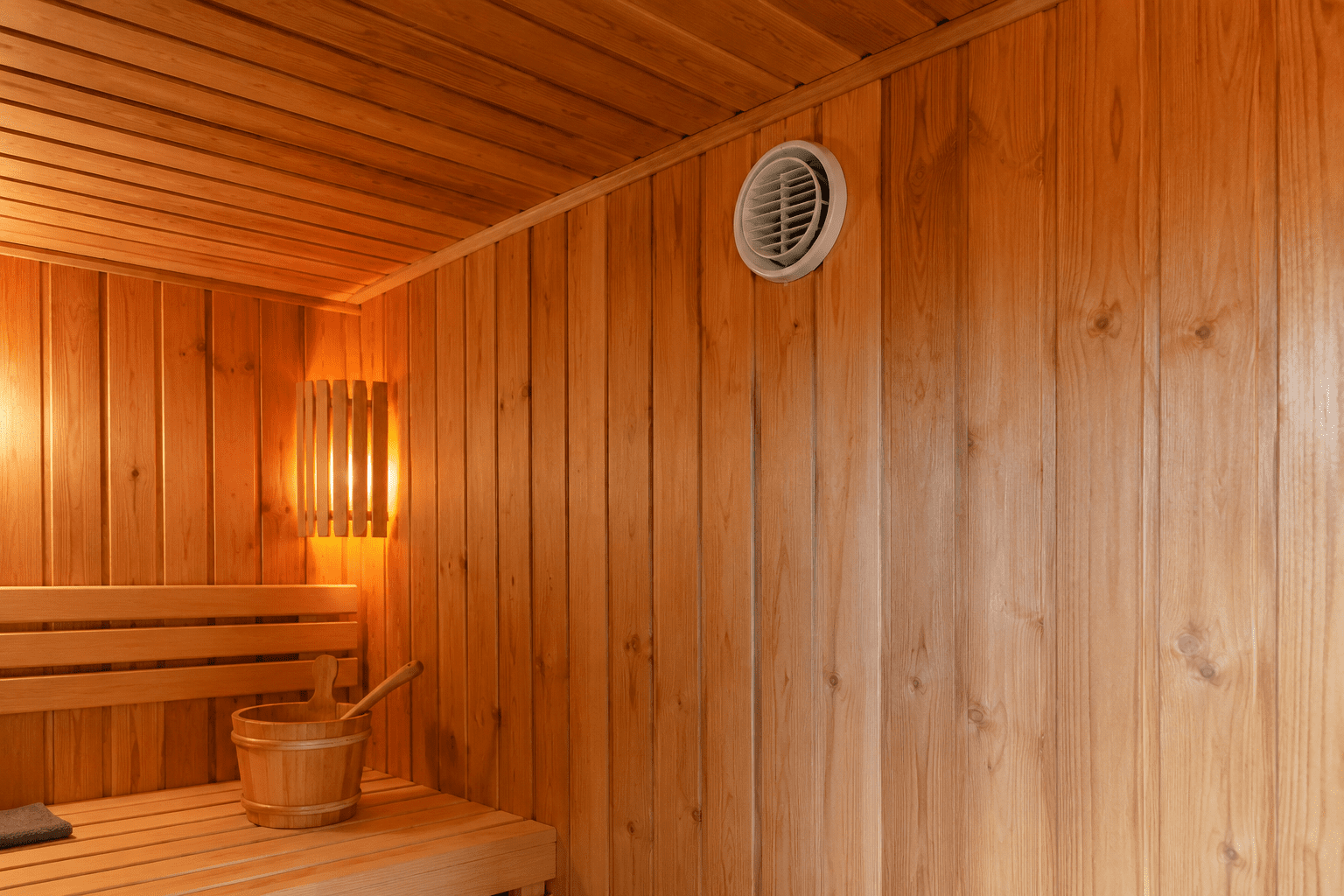
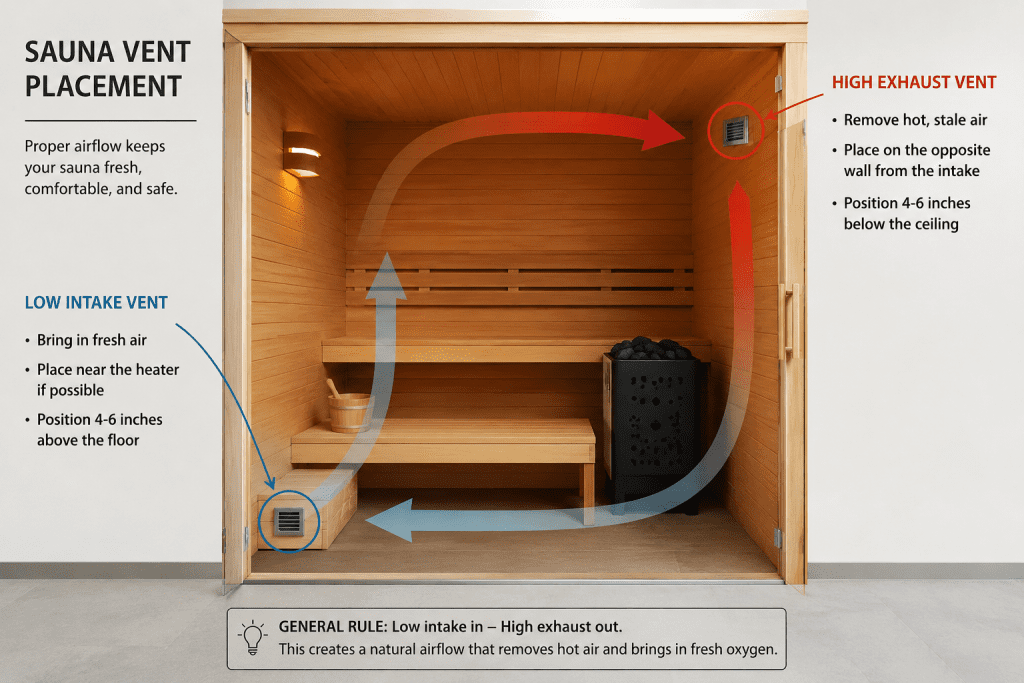
Indoor sauna ventilation works by bringing fresh air into the room and allowing warm, moisture-laden air to leave. The exact vent positions depend on the sauna design, heater type and whether the system uses passive or mechanical ventilation.
Some traditional sauna layouts use an intake near the heater with an exhaust elsewhere in the room, but there is no single vent position that is correct for every sauna. Electric heater manufacturers may specify different intake and exhaust locations to achieve the intended airflow around the heater and benches.Electrical heater installations also need to follow the manufacturer’s wiring requirements, particularly for higher-powered home sauna heaters.
Room size, occupancy and the surrounding space can also affect the ventilation required. Mechanical extraction may be useful or required in some installations, particularly where passive airflow is insufficient.
What’s the correct vent placement for an indoor sauna? Follow the ventilation layout specified by your sauna and heater manufacturer. Their instructions should take priority over generic placement rules because the correct arrangement varies between systems.
What’s the correct vent placement for an indoor sauna? The intake vent should sit 6–8 inches above the floor near the heater. The exhaust vent should be positioned near the ceiling on the opposite wall. This diagonal placement creates natural convective airflow, maintains oxygen levels, and prevents hot, humid air from pooling at ceiling height where it can damage wood over time.
The Real Cost of Getting It Right (and Wrong)
The cost of installing ventilation for indoor saunas correctly is modest in context. Passive vent inserts run $20 to $80 each. A simple inline exhaust fan with a backdraft damper costs $60 to $180. If your installation requires a licensed HVAC contractor for any portion of the ductwork, budget $200 to $600 for that labour depending on your location and complexity.
Total installation cost varies considerably depending on whether the sauna uses simple passive vents or requires ductwork, mechanical extraction or professional labour. A straightforward passive setup can be inexpensive, while modifications to an existing room can increase the cost substantially.
The more important reason to get ventilation right is moisture management. Poor airflow can make it harder for the sauna to dry between uses, potentially contributing to problems with wood finishes and surrounding materials over time.
Ventilation also affects how comfortable the sauna feels in use. A well-designed system should support the heater and room design rather than creating noticeable draughts or uneven temperatures.
Installation: What’s Straightforward and What Isn’t
What a confident DIYer can handle: Cutting vent openings through interior sauna walls, fitting passive vent inserts, positioning and securing an inline fan, and connecting a simple louvred exhaust vent on an exterior-facing wall. These are manageable with standard tools and patience.
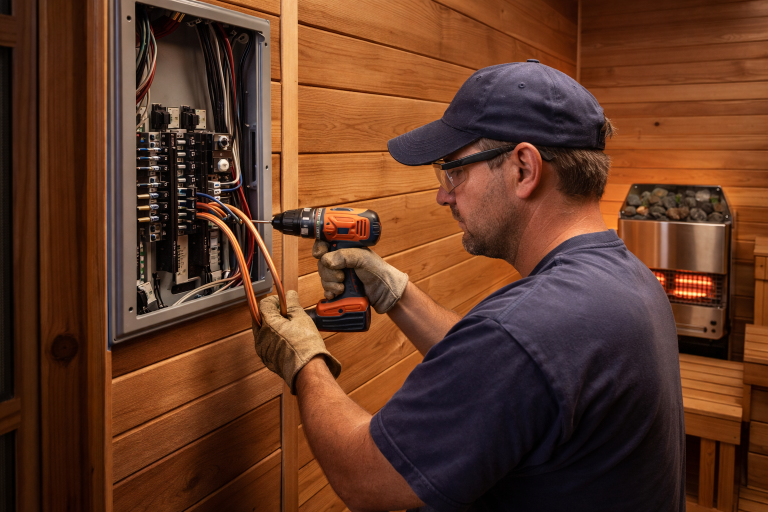
When professional help may be needed: Electrical work for a powered fan, structural alterations, exterior penetrations and changes to existing HVAC systems may require a qualified professional. Permit and code requirements vary by location, so check with your local building department before starting work that affects the structure, electrical system or existing ventilation.
Installing ventilation in a converted basement, spare room or garage can also be more complicated than ventilating a purpose-built sauna. Existing walls, available duct routes and the heater manufacturer’s requirements will determine what layout is practical. If you’re still deciding where to install your sauna, our indoor vs outdoor sauna comparison covers the main differences in space, installation and setup.
Maintenance You Actually Need to Do
Once your ventilation system is in place, maintenance for ventilation for indoor saunas is low-effort but not zero-effort.
Monthly: Check vent covers for dust accumulation and wipe clean. Dust on louvres restricts airflow more than people expect. Check that backdraft dampers on exhaust vents are opening freely and not sticking.
Every 3 months: Inspect the area around exhaust vents for any signs of moisture tracking or discolouration on adjacent wall surfaces. Catch this early. Inspect wood surfaces near the intake vent for any unusual moisture patterns after sessions.
Annually: Remove inline fan covers and clean the fan blade. A clogged fan running at reduced capacity is essentially no fan at all. Check all vent seals.
One easy thing to overlook: Keep the intake and exhaust vents clear of towels, buckets and other items. Even a partially blocked vent can interfere with the airflow the system was designed to provide.
Pros and Cons
Pros of good indoor sauna ventilation:
- Helps provide a supply of fresh air
- Supports more even heat distribution
- Helps manage moisture during and after use
- Helps the sauna dry effectively between sessions
- Can make the room feel more comfortable during use
Cons and practical limitations:
- Ventilation requirements vary between sauna and heater designs
- Mechanical systems add another component that requires maintenance
- Converted rooms can make suitable vent and duct placement more difficult
- Poorly positioned vents can create unwanted draughts or interfere with heat distribution
Passive vs Mechanical Ventilation: 7 Real Differences to Know
This is the core decision for most indoor sauna owners. Passive ventilation relies entirely on convective airflow — heat rises, cool air enters, hot air exits, no moving parts. Mechanical ventilation adds a powered fan to force air exchange at a controlled rate.
The ventilation approach should also work with the heater selected for the room, especially when sizing an electric sauna heater for the available space.
1. Cost: Passive systems are cheaper upfront — two quality vent inserts cost $40 to $160 total. Mechanical systems add $60 to $200 for a fan plus installation.
2. Noise: Passive ventilation for indoor saunas is completely silent. Mechanical fans introduce a low hum — usually 30 to 45 decibels, roughly equivalent to a quiet library.
3. Control: Mechanical systems allow you to dial in the exact air exchange rate. Passive systems depend on temperature differential and can underperform in rooms where the temperature delta isn’t large enough to drive strong convection.
4. Room size and design: Whether passive ventilation is sufficient depends on more than room volume. Heater type, vent layout, occupancy and the manufacturer’s ventilation requirements all matter.
5. Humidity management: Mechanical systems handle humidity more consistently, particularly in humid climates where the air being drawn in is already moisture-laden.
6. Failure modes: Passive systems have no failure modes beyond physical blockage. Mechanical fans can fail, particularly in high-heat environments — choose a fan rated for sauna or high-temperature use specifically.
7. Seasonal performance: Passive ventilation for indoor saunas performs less predictably in winter when intake air is very cold and the convective differential may take longer to establish after startup.
Is passive ventilation enough for a home indoor sauna? It can be, depending on the sauna design and heater requirements. Some installations are designed around passive airflow, while others benefit from or require mechanical ventilation. Follow the ventilation instructions supplied by the sauna and heater manufacturer rather than choosing a system based on room size alone.
Comparison Table
| Feature | Passive Ventilation | Mechanical Ventilation |
|---|---|---|
| Air movement | Natural airflow | Fan-assisted airflow |
| Power required | None for the vents | Requires power for the fan |
| Noise | Silent | Depends on the fan and installation |
| Airflow control | Less direct control | More controllable |
| Maintenance | Clean and inspect vents | Clean and inspect vents, fan and ducting |
| Installation | Usually simpler | Can require ducting and electrical work |
| Best suited to | Saunas designed for passive ventilation | Saunas designed for fan-assisted ventilation |
Helpful Gear
Sauna vent insert kit — A round louvred grille cover with built-in fly-screen mesh, designed to fit a standard 4-inch ventilation opening. Stainless-steel construction for use as a general ventilation component.
Inline duct ventilation fan — A compact 4-inch inline ventilation fan with adjustable speed control, designed to provide controlled airflow through ducting. If using powered ventilation with a sauna, make sure the fan location and installation comply with the sauna and heater manufacturer’s requirements.
Digital hygrometer and thermometer — A compact digital monitor for checking temperature and relative humidity in suitable indoor locations. Check the manufacturer’s operating-temperature limits before using any electronic monitor in or near a sauna.
FAQ
How many vents does an indoor sauna need?
There is no universal number or placement that applies to every indoor sauna. Ventilation requirements vary by sauna design, heater type and whether the system uses passive or mechanical airflow. Follow the ventilation layout specified by the sauna and heater manufacturer.
Can I use a regular bathroom exhaust fan for sauna ventilation?
Don’t assume a standard bathroom exhaust fan is suitable for a sauna installation. Fan location, temperature exposure and moisture conditions all matter. Use ventilation components that are suitable for the intended installation and follow the sauna and heater manufacturer’s requirements
Does ventilation affect sauna temperature?
Yes. Ventilation can influence how heat moves through the sauna, which is why the airflow system should be designed to work with the heater rather than against it. Incorrect vent placement or excessive airflow can contribute to uneven temperatures or unnecessary heat loss. Follow the sauna and heater manufacturer’s ventilation layout to achieve the intended balance between airflow and heat distribution.
The Simple Rule
Treat the sauna and heater manufacturer’s ventilation instructions as the design specification. Vent position, airflow method and whether mechanical assistance is needed can vary between systems, so manufacturer guidance should take priority over generic vent-placement rules.
Summary Snapshot
- Indoor sauna ventilation helps manage fresh-air supply, heat distribution and moisture.
- Vent position and airflow requirements vary by sauna and heater design.
- Passive ventilation can work well in systems designed for natural airflow.
- Mechanical ventilation provides fan-assisted airflow where the installation calls for it.
- Keep vents clear and inspect the ventilation system regularly.
- Follow the sauna and heater manufacturer’s ventilation instructions rather than relying on generic placement rules.

Final Verdict: Ventilation for Indoor Saunas
Ventilation is an important part of a well-designed indoor sauna. It helps manage fresh-air supply, heat distribution and moisture while allowing the room to dry effectively between uses.
The right setup depends on the sauna design, heater and installation. Some systems are designed around passive airflow, while others use mechanical ventilation to provide more controlled air movement.
The key is to follow the ventilation requirements provided by the sauna and heater manufacturer rather than relying on a universal vent layout.
Get the ventilation right during the planning stage and it becomes a straightforward part of the sauna rather than something that needs correcting later.
Related Reading
Planning an indoor sauna involves more than ventilation alone. If you’re still deciding on the overall setup, our Indoor vs Outdoor Sauna guide compares the practical differences between the two options, including installation, space and ongoing considerations.