Indoor vs Outdoor Sauna: Which Is Better for Your Home?
Indoor vs outdoor sauna decisions trip up a lot of people — and honestly, it makes sense. Both setups can deliver serious heat therapy, but they work differently in practice, cost differently, and suit very different homes and lifestyles.
Here’s the thing: the “best” option doesn’t exist in the abstract. It exists for your yard, your budget, and your daily routine.
Quick heads up: This post contains affiliate links. If you buy through them, we may earn a small commission at no extra cost to you. We only recommend products we’d genuinely use.
Quick Snapshot
- Indoor saunas are easier to use year-round and simpler to integrate into existing electrical
- Outdoor saunas offer more space, better aesthetics, and a true retreat feel
- Indoor models typically run $2,000–$8,000 installed; outdoor barrel saunas $3,000–$12,000+
- Both require dedicated electrical circuits — outdoor adds weatherproofing complexity
- Maintenance differs significantly: outdoor units face weather exposure year-round
- The right choice depends on your space, climate, and how often you’ll actually use it
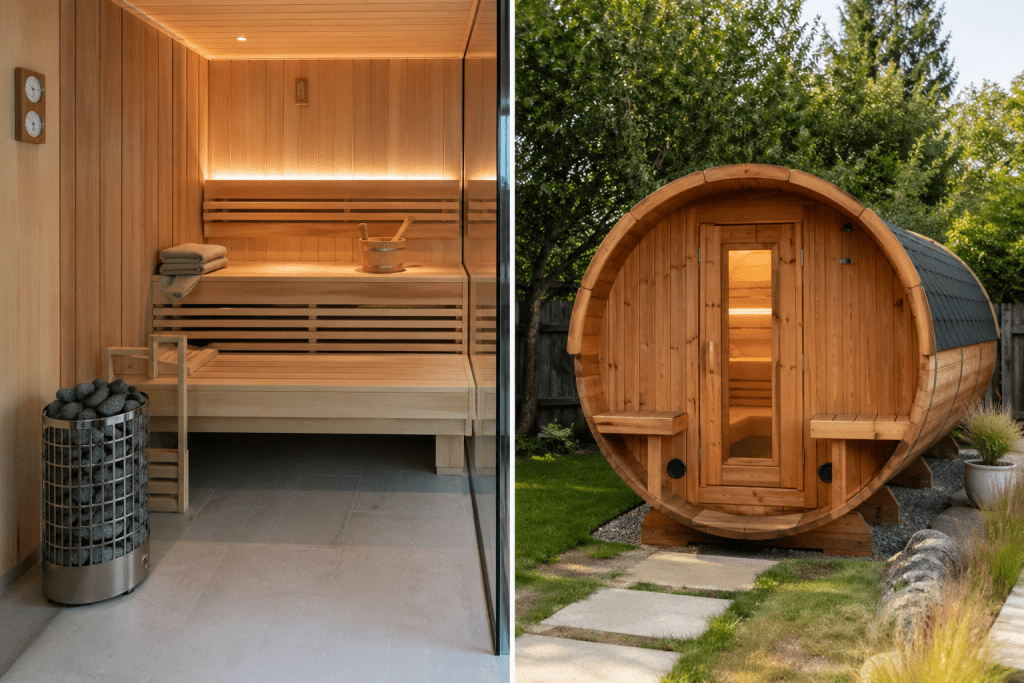
Table of Contents
- What the Indoor vs Outdoor Sauna Debate Is Really About
- Indoor vs Outdoor Sauna: The Core Differences Explained
- What Does Each Option Actually Cost?
- Installation Reality — What Nobody Tells You Upfront
- Maintenance: Which One Is More Work?
- Pros and Cons of Each Setup
- How They Compare Side by Side
- Helpful Gear for Either Setup
- Frequently Asked Questions
- Final Verdict
What the Indoor vs Outdoor Sauna Debate Is Really About
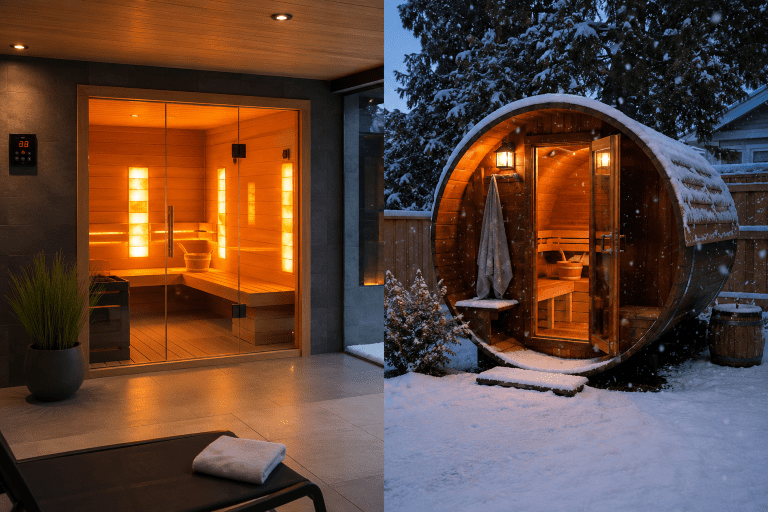
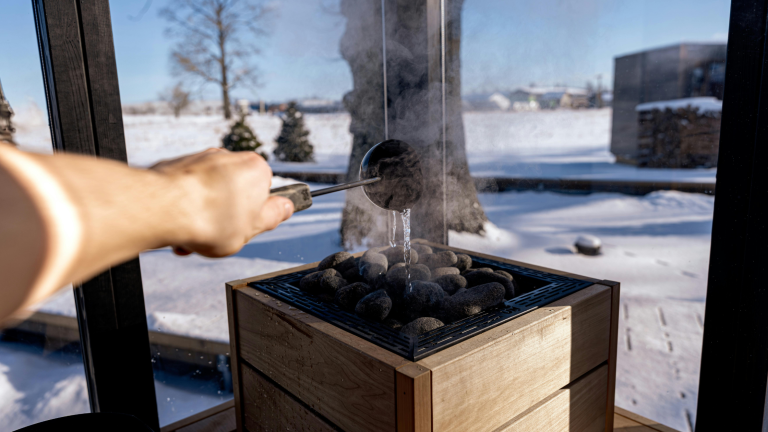
Most people approach this decision thinking about looks. They picture a cedar barrel steaming in a snowy backyard and think that’s the dream. And sometimes it is.
But the real debate is about usability. A beautiful outdoor sauna you only use three times a year because it takes 45 minutes to heat up and it’s raining isn’t serving you. An indoor unit tucked into a spare bathroom corner that you hit four times a week? That’s changing your health.
The indoor vs outdoor sauna decision is ultimately a lifestyle question, not just a design one.
Indoor vs Outdoor Sauna: The Core Differences Explained
Let’s strip it back to what actually separates these two setups.
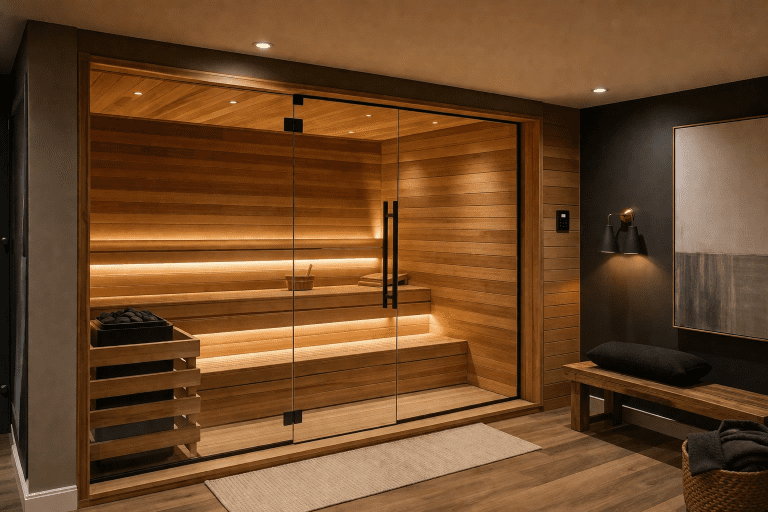
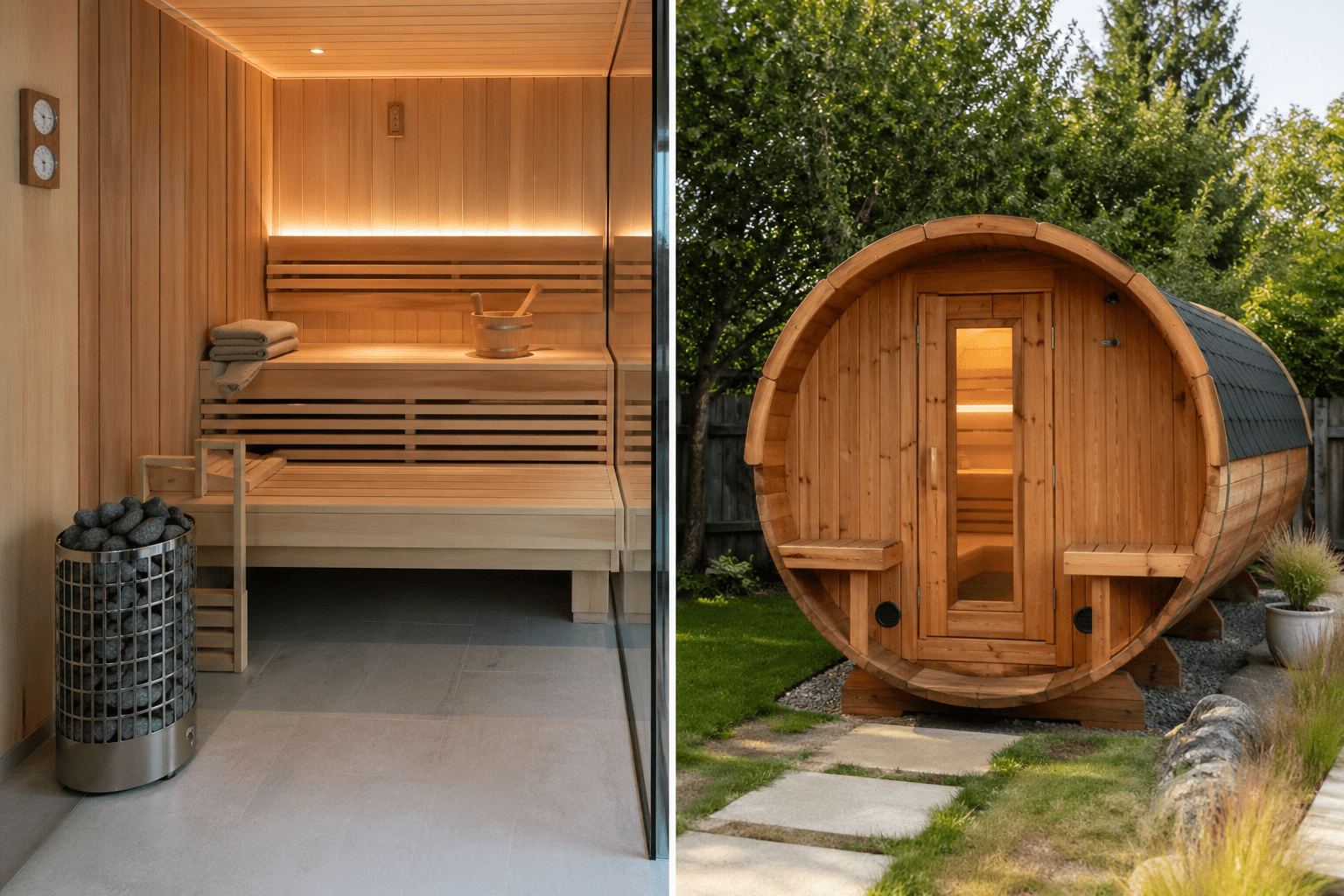
An indoor sauna sits inside your home — often in a bathroom, basement, spare room, or garage. It’s climate-controlled, always accessible, and usually smaller (one to three people). You can step out of it and be in your living room within seconds.
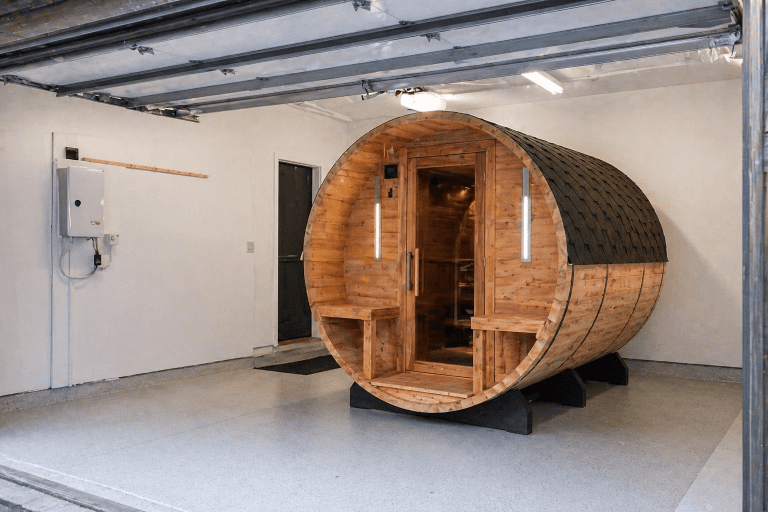
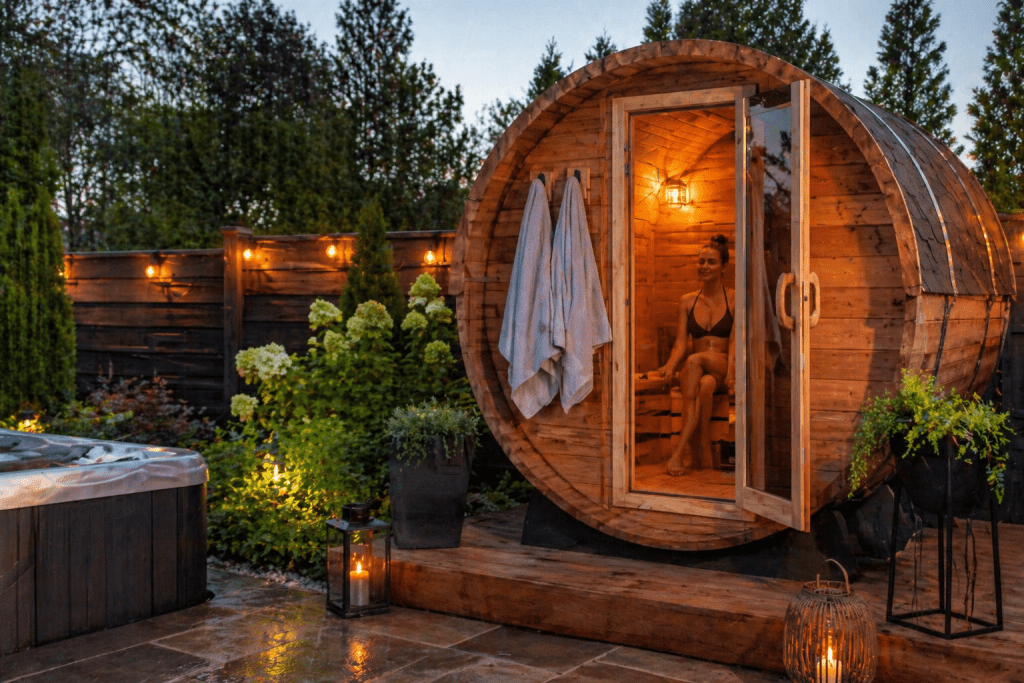
An outdoor sauna lives outside — a dedicated structure, barrel, or prefab cabin in your yard or on a deck. It requires a separate structure, weatherproofing, and a longer heat-up time, but it also gives you a real retreat experience that’s hard to replicate inside.
What’s the main difference between an indoor and outdoor sauna? The core difference is placement and build. Indoor saunas are compact, climate-sheltered, and easier to access daily. Outdoor saunas are standalone structures that take longer to heat but offer more space and a dedicated wellness space away from the main house.
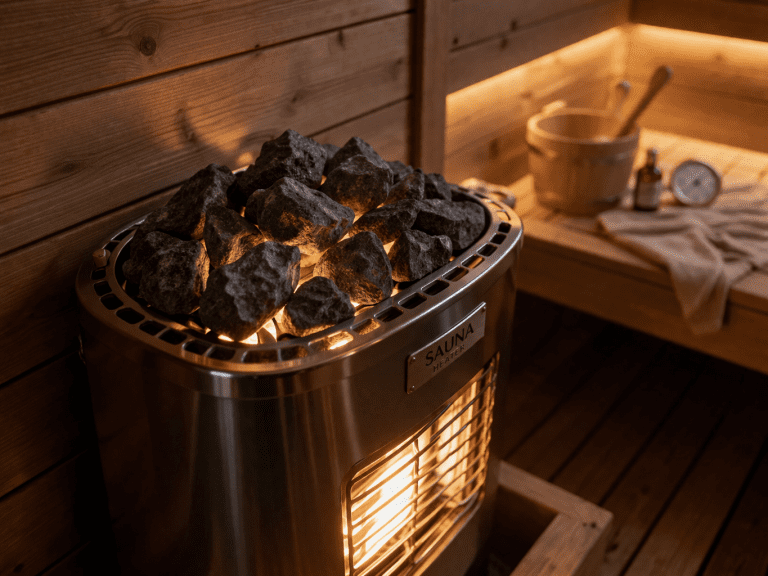
Both can use traditional electric heaters or wood-burning stoves. Both can reach the same therapeutic temperatures (150–195°F). The gap is in how they integrate with your home and how often you’ll realistically use them.
What Does Each Option Actually Cost?
Price is where a lot of people get surprised — usually because they only budget for the unit itself and forget about installation.
Indoor sauna costs:
A basic one-person indoor infrared or traditional unit starts around $1,500–$2,500 for the kit. A proper two-to-three person indoor traditional sauna with professional installation runs $4,000–$8,000 in most US markets. High-end custom indoor builds go well beyond that.
Outdoor sauna costs:
Prefab barrel saunas start around $3,000–$5,000 for the kit alone. Once you factor in a concrete pad or decking, electrical run from the main panel, weatherproofing, and installation labor, most outdoor installations land between $6,000–$12,000. Custom outdoor sauna cabins can hit $20,000+ without blinking.
Running costs:
Both setups draw significant electricity. A standard 6kW electric heater running for one hour costs roughly $0.60–$1.20 depending on your local rate. Outdoor saunas sometimes run slightly longer to reach temperature, especially in cold climates, which nudges the per-session cost up.
The indoor vs outdoor sauna cost gap is real — outdoor tends to run 30–50% more once installation is fully accounted for.
Installation Reality — What Nobody Tells You Upfront
This is the section most people skip, and then regret.
Indoor installation:
Most indoor saunas need a dedicated 240V circuit — the same type your dryer or range uses. If your electrical panel has capacity and the unit is close to the panel, this might cost $300–$600 to add. If you’re running cable across a finished basement or through walls, budget $600–$1,200 for the electrical work alone.
You also need adequate ventilation. Steam and heat need somewhere to go, and a poorly ventilated indoor sauna will eventually cause moisture damage to surrounding walls and flooring.
Outdoor installation:
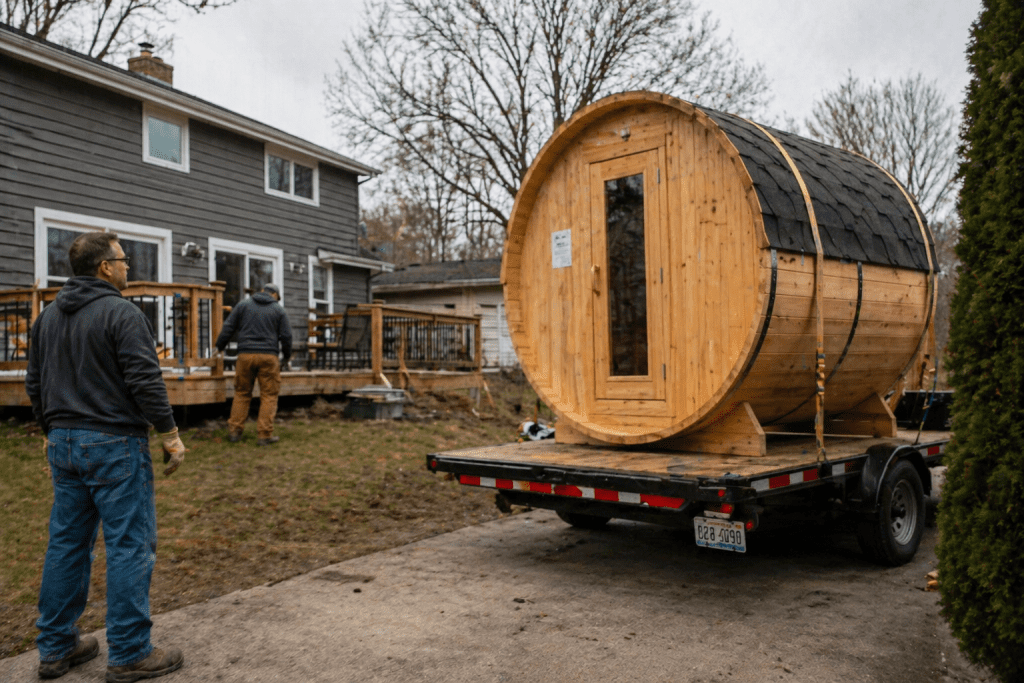
Outdoor setups need everything above, plus more. You’ll need a weatherproof electrical run from your house to the outdoor structure — often underground conduit, which adds cost and requires trenching. The structure itself needs a proper level foundation, and in colder climates, drainage for moisture management is critical.Outdoor conditions can also affect heater sizing. Our outdoor sauna heater sizing guide explains how room volume, construction, exposed surfaces and climate can affect heater requirements.
Most outdoor sauna installations require a permit. According to Nolo’s home improvement permit guide, most jurisdictions require permits for electrical work and new outdoor structures — skipping this step creates problems when you sell your home.
Many homeowners underestimate outdoor installation by $2,000–$4,000 because they focus on the kit price, not the site prep.
Does an outdoor sauna need a permit? In most US jurisdictions, yes. Outdoor saunas are typically classified as accessory structures, and any new electrical work requires a permit regardless of structure type. Check with your local building department before purchasing — some areas also have setback requirements that affect where the unit can be placed.
Maintenance: Which One Is More Work?
This is genuinely underrated in the decision process.
Indoor sauna maintenance:
Indoor units have it easier here. They’re sheltered from UV, rain, freezing temperatures, and pests. You’ll need to wipe down the benches regularly, check that the heater’s heating elements are clear of debris, and ensure ventilation stays open. A solid indoor sauna with reasonable care can last 15–20 years without major intervention.
Outdoor sauna maintenance:
Outdoor saunas earn their aesthetic with extra upkeep. Cedar, spruce, and hemlock weather over time — most outdoor units need re-staining or sealing every two to three years. The roof needs periodic inspection. Any gaps in weatherproofing can let moisture into the wood structure, which leads to rot and mold.
In freezing climates, you also need to manage drainage after each session. Pooled water freezes, expands, and cracks wood joints. This isn’t a dealbreaker — it’s just part of owning an outdoor sauna.
The indoor vs outdoor sauna maintenance gap is significant. Plan for roughly double the upkeep time with an outdoor unit.
Pros and Cons of Each Setup
Indoor Sauna
Pros:
- Year-round use regardless of weather
- Lower installation cost overall
- Faster to heat in most cases
- No exposure to UV or frost
- Steps from your shower and bed
Cons:
- Takes up interior living space
- Smaller capacity — usually 1–3 people max
- Ventilation must be carefully managed
- Less of a “retreat” feeling
- Resale value less clear-cut
Resale is harder to predict than installation cost or maintenance. If that matters to your decision, we’ve looked separately at whether indoor saunas increase home value and what can influence buyer appeal.
Outdoor Sauna
Pros:
- Dedicated wellness space away from the house
- Larger capacity possible
- Better resale appeal in the right markets
- Aesthetic appeal — barrels and cabins look striking
- Wood-burning heater option is more viable
Cons:
- Higher total installation cost
- Weather-dependent usability
- More maintenance required year-round
- Longer heat-up times in cold weather
- Permits and site prep add complexity
How They Compare Side by Side
| Feature | Indoor Sauna | Outdoor Sauna |
|---|---|---|
| Average installed cost | $4,000–$8,000 | $6,000–$12,000 |
| Heat-up time | 20–35 min | 30–50 min |
| Year-round usability | Yes | Weather-dependent |
| Space required | Interior room | Outdoor footprint + clearance |
| Maintenance level | Low | Moderate–High |
| Capacity | 1–3 people typical | 2–6+ people |
| Permit required | Usually just electrical | Usually yes — structure + electrical |
| Aesthetic appeal | Functional | High |
| Resale value impact | Modest | Market-dependent |
| Best climate for | Any | Mild to cold climates |
Which setup actually delivers better health benefits? Neither. The Cleveland Clinic notes that regular heat therapy supports cardiovascular health, stress reduction, and muscle recovery — but those benefits come from consistent use, not from which side of your wall the sauna sits on. The best sauna for your health is the one you’ll actually use regularly. For most people, that means the setup that’s easiest to access.
You can read more about the cardiovascular and recovery case for regular sauna use at the Cleveland Clinic’s sauna benefits page.
If you’re also curious about how the broader cold therapy side of wellness compares, the Ice Plunge Benefits post breaks down where cold exposure adds to — or contrasts with — heat therapy.
Helpful Gear for Either Setup
Whichever route you choose, a few accessories make the experience noticeably better.
Sauna thermometer and hygrometer combo — Knowing your actual temperature and humidity level takes the guesswork out of sessions. A solid combo unit lets you dial in your preferred environment and track it consistently.
Cedar sauna bucket and ladle set — If you’re going traditional, you’ll want a proper bucket and ladle .These are also solid for outdoor sauna owners who want the full experience.
Frequently Asked Questions
Can I install an indoor sauna without a dedicated room? Yes — modular indoor sauna kits are designed to be self-contained and can go in a corner of a basement, spare room, or large bathroom. You don’t need a purpose-built room. You do need adequate clearance on all sides, a 240V outlet nearby, and reasonable ventilation. Many people install them in garages with great results.
How long does an outdoor sauna last in cold climates? A well-built outdoor sauna using quality cedar or Nordic spruce, properly sealed and maintained, should last 15–25 years even in harsh winters. The key variables are drainage management after sessions, annual or biennial re-sealing of exterior wood, and keeping the roof in good condition. Neglected outdoor saunas in freeze-thaw climates can show significant deterioration within five to eight years.
Is an outdoor sauna worth the extra cost? It depends on how often you’ll use it and what you value. If you want a proper retreat space and have the outdoor footprint, outdoor saunas justify the premium for many homeowners. If your primary goal is frequent, low-friction heat sessions, an indoor unit delivers better value for most people. The indoor vs outdoor sauna choice is really a usability-versus-experience tradeoff.
Simple rule: If you’ll use it more than twice a week, prioritize access over aesthetics. If it’s a weekend ritual and you have the space, outdoor is worth every cent.
Summary Snapshot
- Indoor saunas win on usability, access, and lower installation costs
- Outdoor saunas win on space, aesthetics, and the dedicated retreat experience
- Both deliver the same core health benefits — consistency of use is what matters
- Budget realistically: outdoor installs almost always cost more than the kit price suggests
- Maintenance is significantly higher for outdoor units, especially in freeze-thaw climates
- Your climate and how often you’ll use it should drive the final decision
Final Verdict
The indoor vs outdoor sauna debate doesn’t have a universal winner — but it does have a right answer for most individual situations.
If you live somewhere with cold winters, want to sauna four or five times a week, and need to keep costs in check, an indoor unit is almost certainly the better call. You’ll use it more, spend less to install it, and spend less time maintaining it.
If you have the outdoor space, a more moderate climate, and you’re after a genuine retreat — something that feels separate from the house and becomes a lifestyle feature — an outdoor sauna earns its premium.
The worst outcome is spending more than you need to on a setup you use infrequently because it was inconvenient. Match the setup to your actual habits, not your aspirational ones.
Keep Exploring
- Best Sauna Heaters — The right heater changes how your indoor or outdoor sauna feels entirely