Plug and Play vs 240V Hot Tub Installation: Which Setup Is Right for You?
Plug and play vs 240V hot tub installation comes down to your electrical supply, heating needs and setup budget. A 120V model can simplify installation if you already have a suitable circuit. A 240V model generally offers more heating power, which is useful for frequent use and cold-weather soaking. Neither voltage automatically guarantees lower running costs or better build quality.
As an Amazon Associate, Sunrise & Vitalize earns from qualifying purchases. If you buy through an affiliate link, we may earn a small commission at no extra cost to you.
Quick Snapshot
- Plug and play models use 120V power but still need the circuit and GFCI protection specified by their manufacturer.
- An electrician may be needed if your existing outlet or circuit is unsuitable.
- Hardwired 240V models require professional electrical installation.
- Higher heater output generally means faster heating; jet performance depends on the model.
- Installation costs depend on circuit requirements, cable distance, site preparation and local labor.
- Check local permit requirements for either setup.
- Running costs depend on insulation, size, climate, use and electricity rates.
Table of Contents
- What Plug and Play vs 240V Hot Tub Installation Actually Means
- The Real Cost Difference
- Installation Friction: What Nobody Warns You About
- Maintenance Differences Between the Two
- Pros and Cons
- Plug and Play vs 240V Hot Tub Installation: Head-to-Head Comparison
- Comparison Table
- Helpful Gear
- FAQ
- Final Verdict
What Plug and Play vs 240V Hot Tub Installation Actually Means
When people talk about plug and play vs 240V hot tub installation, they’re really talking about two fundamentally different approaches to power delivery.
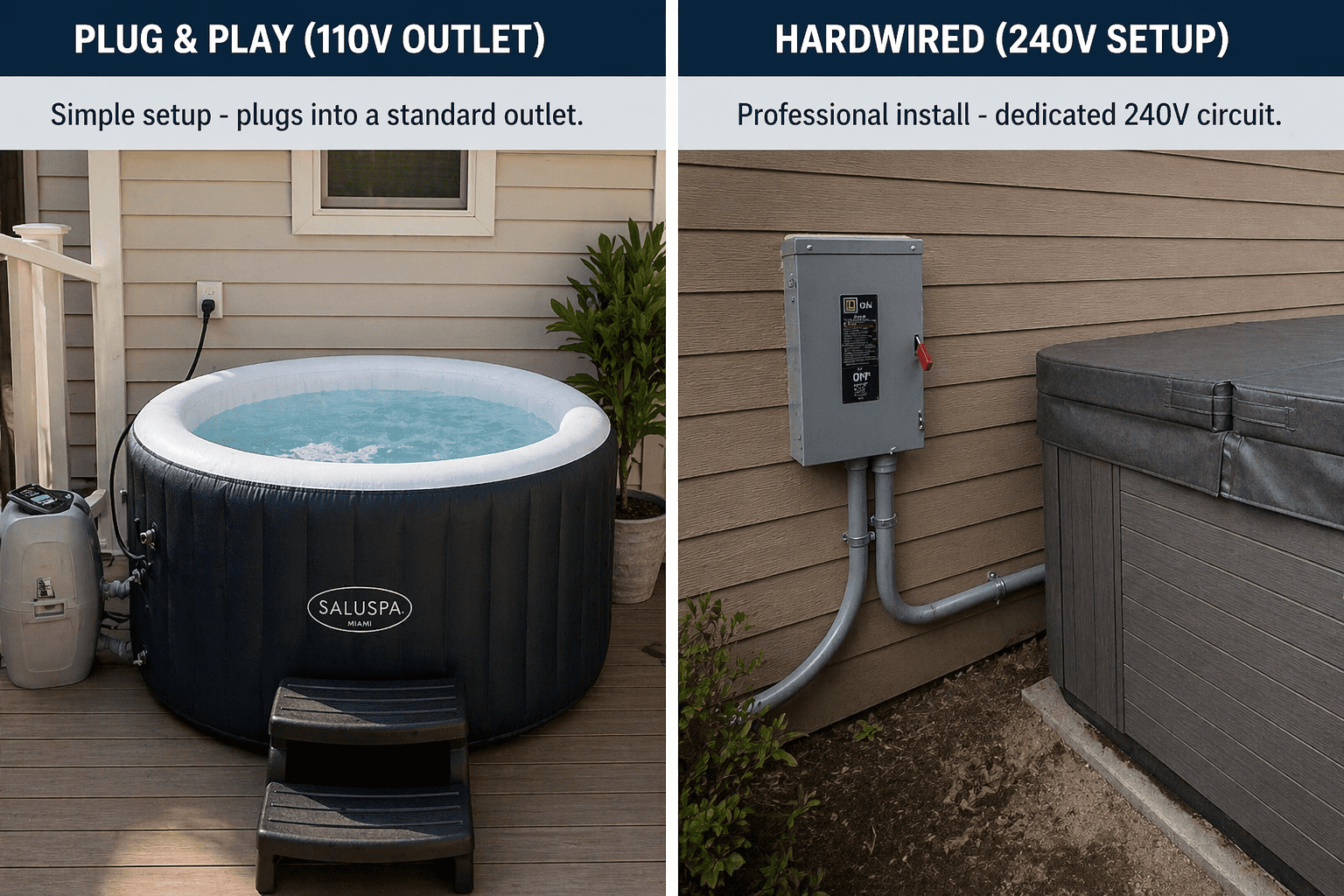
A plug and play hot tub connects to a suitable 120V outlet. That does not mean any household socket will do: follow the manufacturer’s requirements for circuit capacity, grounding and GFCI protection. Some models require a dedicated circuit, so electrical work may still be necessary.
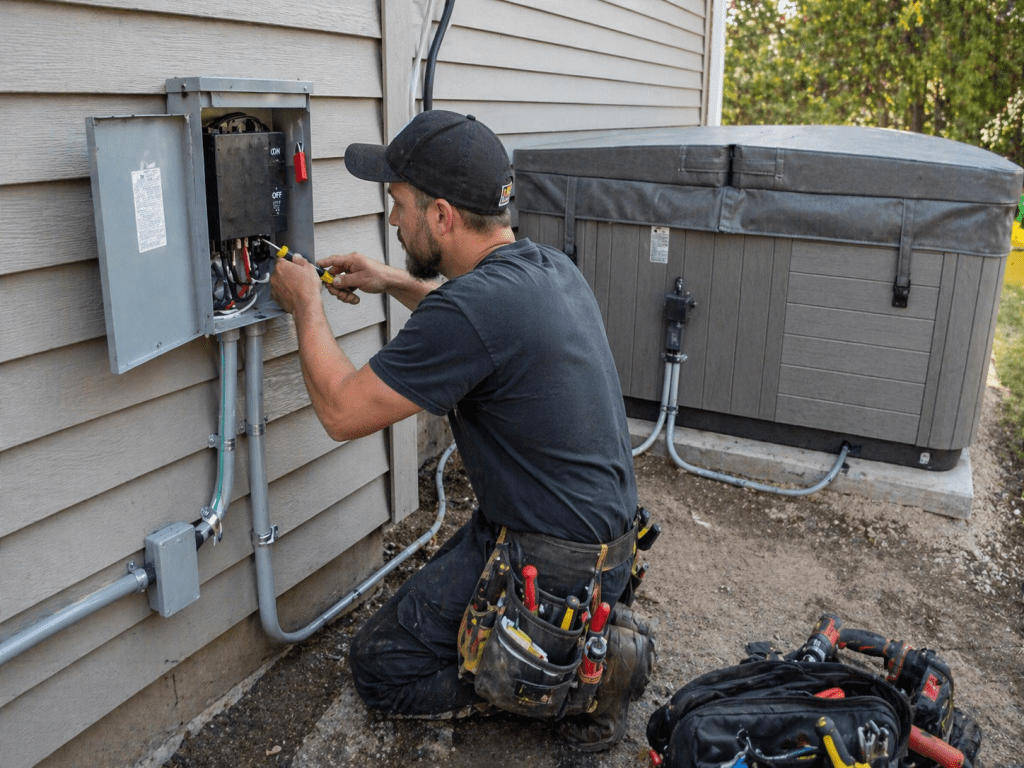
A hardwired 240V hot tub needs a dedicated supply installed by a qualified electrician, with protection and disconnect arrangements appropriate to the model and local code.
The main advantage of 240V is greater available heating power. Switching a convertible tub to 240V does not automatically increase jet pressure; compare pump specifications separately.
What does plug and play mean for a hot tub? It means the tub uses a plug-in electrical connection rather than a hardwired supply. Installation is simpler when a suitable circuit already exists.
The Real Cost Difference
Sticker price is only part of the story when comparing plug and play vs 240V hot tub installation costs.
Plug and play models often have a lower purchase price, but compare actual models rather than treating voltage as a price category. Inflatable, entry-level hard-shell and premium tubs have very different prices and construction.
For either setup, budget for delivery, a suitable foundation, access and any required electrical work. A plug-in tub only avoids new electrical installation costs when an appropriate circuit already exists. For 240V, request an itemized quote covering wiring, protection, permits and any trenching or panel work.
A more powerful heater can heat water faster, but faster heating does not automatically mean a lower electricity bill. Insulation, cover fit, water volume, climate, temperature settings and usage all affect consumption.
Compare model-specific energy information using your local electricity rate. There is no reliable universal monthly-cost difference or payback period based on voltage alone.
Installation Friction: What Nobody Warns You About
This is where plug and play vs 240V hot tub installation differs most in practice.
Plug and play setup can be straightforward once the site and electrical supply are ready. Use a level foundation suitable for the filled tub’s weight and connect it directly to the manufacturer-approved outlet. Follow the manual’s circuit and GFCI requirements; do not use an extension cord. If the existing supply is unsuitable, arrange electrical work before delivery.
240V installation is a project. You’re looking at hiring a licensed electrician, pulling permits in most jurisdictions, and potentially waiting days or weeks depending on contractor availability and inspection scheduling.
Before ordering either type, ask your local building department which electrical, placement and barrier requirements apply. A plug-in connection does not automatically exempt the installation from permits or inspections. For a hardwired model, have the electrician confirm the required approvals before work begins.
One thing many buyers don’t consider: location matters for both options. For 240V, the closer your panel, the lower the installation cost. For plug and play, the tub must sit within cord reach of an outlet that meets the manufacturer’s circuit and GFCI requirements, with no extension cord.
If you’re deciding where to put your tub, our indoor vs outdoor hot tub installation guide compares the support, access and moisture considerations.
Do you need a permit to install a 240V hot tub? Check with your local building department before installation. A new hardwired circuit commonly requires an electrical permit and inspection, and separate rules may apply to the tub’s location, foundation or safety barriers.
Maintenance Differences Between the Two
Ongoing maintenance in the plug and play vs 240V hot tub installation debate is a category most comparison guides gloss over. It shouldn’t be.
Both setups need regular water testing, sanitizer management, filter care and water changes. For chlorine-treated home hot tubs, CDC recommends at least 3 ppm free chlorine and a pH of 7.0–7.8. Follow your spa and chemical instructions for the appropriate operating range.
Component quality, repair access and warranty coverage depend on the manufacturer and model, rather than voltage alone. Compare those details before buying.
A repeatedly tripping breaker or GFCI needs investigation with either setup. Follow the manual’s troubleshooting instructions, stop using the tub if the fault persists, and contact a qualified technician or electrician rather than repeatedly resetting it.
Pros and Cons
Plug and Play Hot Tub
Pros:
- May avoid new electrical work if a suitable circuit already exists
- Lower upfront cost
- Easy to move if you relocate
- Can suit renters with landlord approval and a suitable site
- Simple connection once the site and circuit are ready; heating takes additional time
Cons:
- Slower to heat (can take 24+ hours in cold weather)
- Running costs vary by model and conditions
- Check pump and jet specifications against your needs
- Lower heater output can limit temperature recovery during cold-weather use
- Limited size and seating options
240V Hot Tub
Pros:
- Generally faster heating; heat retention depends on insulation and cover quality
- More available electrical capacity; pump and jet performance depend on the model
- Better performance year-round
- More size and feature options
Cons:
- Higher upfront cost
- Professional electrical installation required; obtain a local quote
- Permits usually required
- Not renter-friendly
- Less portable if you move
Plug and Play vs 240V Hot Tub Installation: Head-to-Head Comparison
Let’s bring plug and play vs 240V hot tub installation down to the real-world questions most buyers are actually asking.
Performance in cold weather — Higher heater output makes 240V useful for recovering temperature during winter use. A well-insulated 120V model may still suit your climate, but check whether it can heat while the jets run on high. There is no universal 40°F cutoff.
Flexibility and portability — A plug-in connection simplifies disconnection, but moving either tub still requires draining, safe handling and a suitable destination. A hardwired tub can also be relocated with professional electrical disconnection and reconnection.
First-time ownership — If you’ve never owned a hot tub before, plug and play is a lower-stakes entry point. You’ll learn the maintenance routine, figure out how often you actually use it, and make a more informed decision for the next purchase.
Long-term value — Compare purchase price, installation, energy consumption, warranty and repair support. There is no automatic winner after two or three years based on voltage alone.
Comparison Table
| Feature | Plug and Play (120V) | 240V Hardwired |
|---|---|---|
| Electrical setup | Suitable outlet and circuit required | Professional wiring required |
| Installation cost | Site work and possible circuit work | Site work plus electrical installation |
| Tub price | Depends on model and construction | Depends on model and construction |
| Heating | Generally slower | Generally faster |
| Monthly energy cost | Model and conditions determine cost | Model and conditions determine cost |
| Permits | Check local requirements | Check local requirements |
| Jet performance | Check pump specifications | Check pump specifications |
| Heating with high-speed jets | May be restricted; check manual | Often supported; check manual |
| Cold-weather suitability | Check heater output and insulation | Greater heating capacity can help |
| Relocation | Drain, disconnect and move safely | Drain and arrange professional disconnection |
| Electrician needed | If the existing supply is unsuitable | Yes |
Helpful Gear
If you’re moving forward with either setup, a few additions make ownership significantly easier.
Solar digital pool & spa thermometer — A simple tool that saves you from relying purely on the tub’s built-in display. Many owners find the digital readouts slightly off over time.
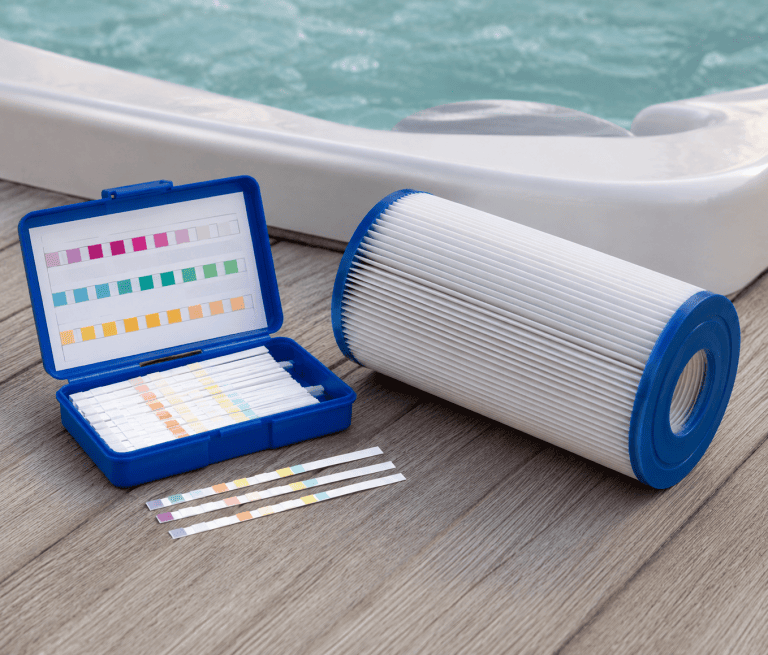
7-way hot tub & spa test strips — Choose strips compatible with your sanitizer. CDC recommends checking chlorine and pH at least twice daily, and more often with heavy use. A DPD kit provides more accurate chlorine testing than strips.
iBirdie outdoor waterproof hot tub cover — Check the listing and dimensions carefully. A fabric weather cover protects the existing insulated cover from exposure; it does not replace an insulated spa cover or a safety cover.
FAQ
Is a plug and play hot tub worth it? For buyers who want a simpler electrical connection and whose site already meets the manufacturer’s requirements, a plug and play hot tub can be a practical choice. Check heating performance, insulation and circuit needs before buying. Renters should obtain landlord approval.
How long does it take to install a 240V hot tub? Wiring time depends on the circuit route and any panel or site work. Permit processing, electrician availability and inspection can add to the schedule. Get a local timeline before arranging delivery.
Can I convert a plug and play hot tub to 240V? Only convert a model explicitly designed and approved by its manufacturer for both supplies. Have a qualified electrician follow the model’s conversion instructions. Do not attempt to convert a 120V-only tub.
Summary Snapshot
- Plug and play simplifies connection when a suitable circuit already exists.
- 240V generally provides greater heating capacity.
- Insulation, climate and usage affect both setups.
- Check manufacturer instructions and local installation requirements.
- Compare complete setup costs and model-specific performance.
Final Verdict
Plug and play vs 240V hot tub installation doesn’t have a universal winner — it has a right answer for your situation.
If you want a simpler connection and have a suitable site and circuit, a plug and play tub may meet your needs. Check its heating limits, insulation and landlord approval where relevant.
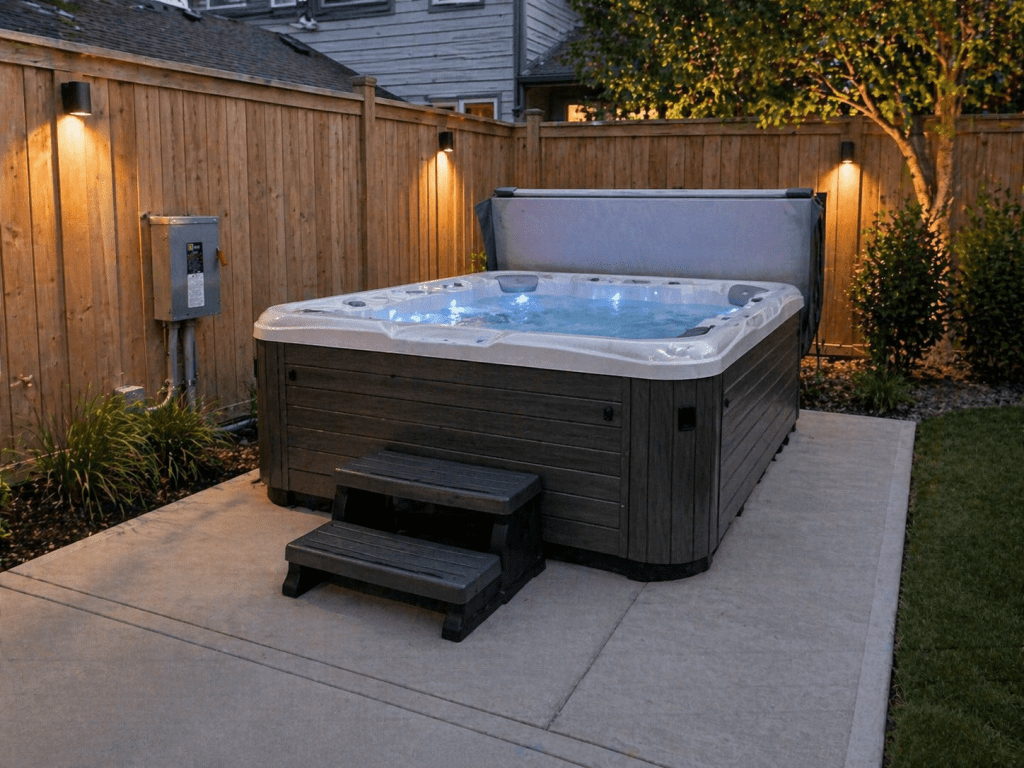
If you expect frequent cold-weather use or want faster temperature recovery, consider a 240V setup. Compare the actual models and get an electrical quote before deciding. Choose it for the performance you need, rather than assuming lower bills, stronger jets or better build quality.
Know your situation. Buy accordingly. And if you’re ready to explore your options, we’ve pulled together our top hot tub picks to make the research easier.
You might also find these helpful:
Installing a hot tub for the first time involves more decisions than just voltage — if you’re still working through the full setup process, our guide to hot tub installation costs and what to expect ,covers the broader picture in detail.
If the performance side of the comparison has you curious about heat therapy in general, our look at steam room health benefits — covers a lot of the same cardiovascular and recovery territory from a different angle.
For buyers also weighing whether an ice plunge might complement their hot tub setup, our overview of ice plunge benefits — is worth a read before you finalize your backyard plan.