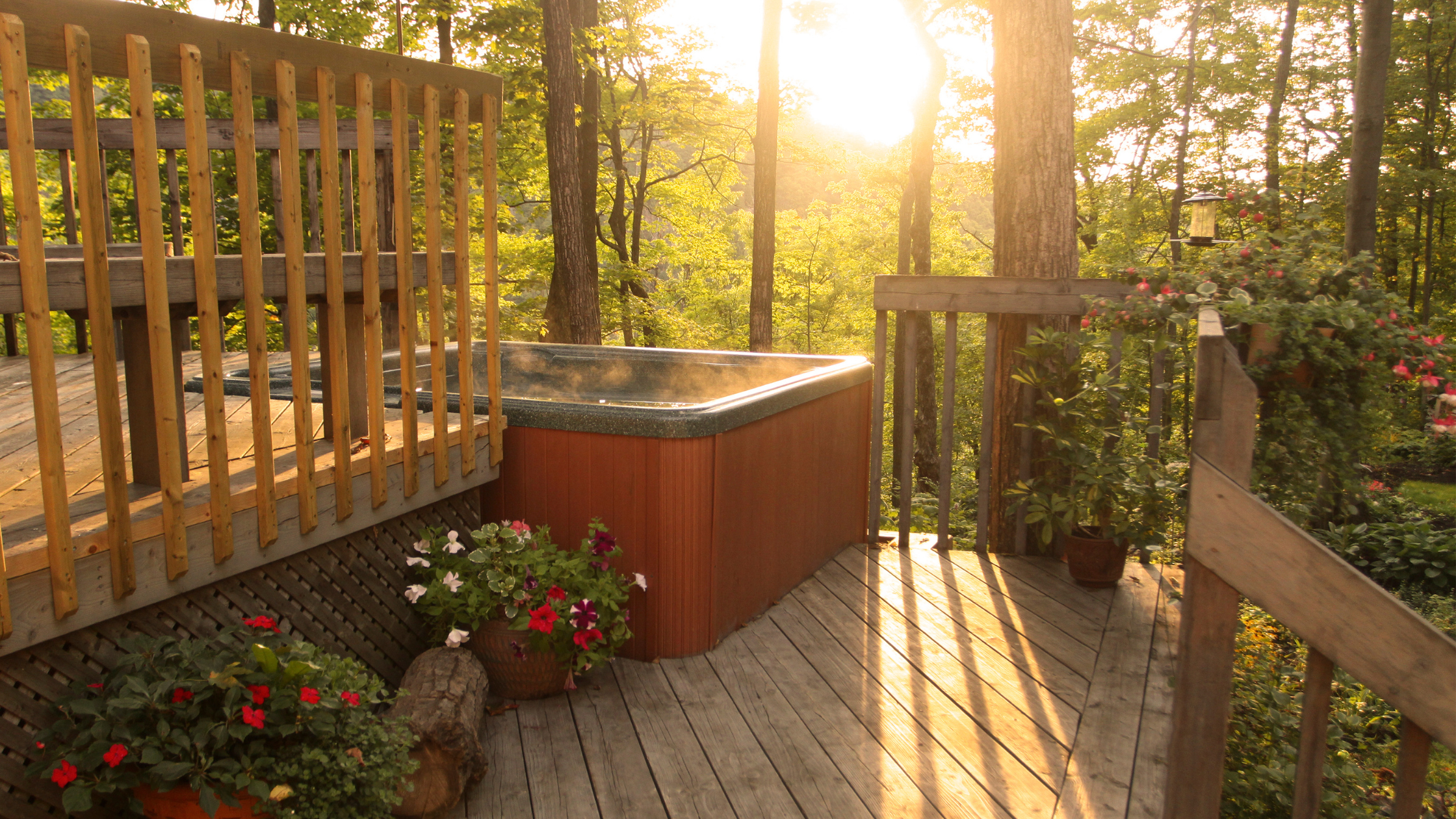
Hot Tub on a Deck: What You Really Need to Know Before You Install
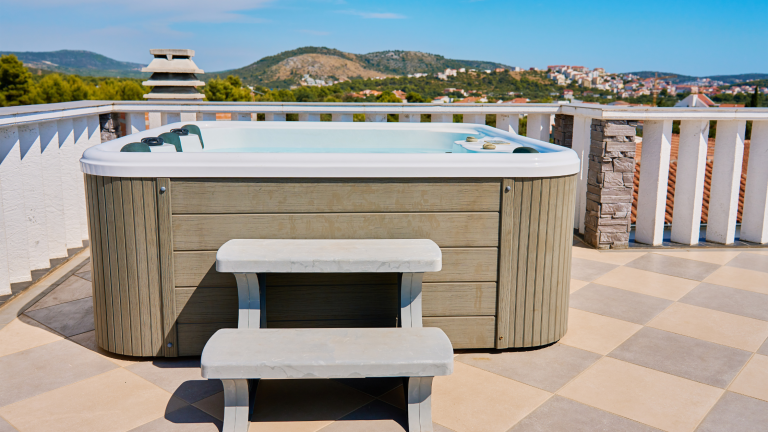
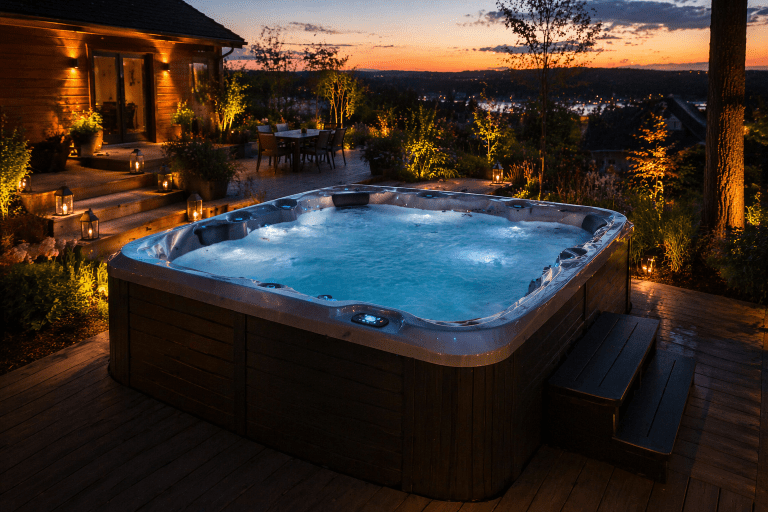
Hot tub on a deck — it sounds like the ultimate backyard upgrade, and honestly, it is. There’s something about soaking outside, elevated above the yard, that just hits different. But before you start imagining the steam and the string lights, there’s a real conversation to have about weight, structure, permits, and what it actually costs to get this done safely.
This isn’t meant to scare you off the idea. Plenty of homeowners pull this off beautifully. It just takes more planning than most people expect — and a few hard truths up front will save you a lot of headaches (and money) down the road.
Quick note: This post contains affiliate links. If you click through and buy something, we may earn a small commission at no extra cost to you. We only recommend gear we’d actually use.
Quick Snapshot
- Most standard decks are NOT built to hold a hot tub without modifications
- A filled hot tub can weigh 3,000–6,000+ lbs depending on size
- An existing deck should be assessed for the specific hot tub; reinforcement and permits may be required, while permanently installed tubs typically require professional electrical work.
- Low-profile decks (under 30″) are much easier (and cheaper) to reinforce than elevated ones
- Budget $1,000–$5,000+ for deck reinforcement alone, on top of the hot tub cost
- Ground-level placement next to a deck is often the smarter move
Table of Contents
- Can You Actually Put a Hot Tub on a Deck?
- The Weight Problem (It’s Bigger Than You Think)
- What Deck Reinforcement Actually Costs
- Permits, Electrical, and the Approval Friction
- Ongoing Maintenance When Your Tub Is on a Deck
- Pros and Cons of Deck vs. Ground Installation
- Deck-Mounted vs. Ground-Level: A Direct Comparison
- Helpful Gear for Hot Tub Owners
- Frequently Asked Questions
- Final Verdict
Can You Actually Put a Hot Tub on a Deck?
Yes — but whether your deck can safely support a hot tub depends on the specific tub and the structure of the deck.
Here’s the core issue: residential decks built under IRC-based prescriptive guidance are commonly designed around a 40 pounds-per-square-foot live load, plus the structure’s dead load. A filled hot tub is different because thousands of pounds can be concentrated within a relatively small footprint. That concentrated load isn’t covered by the standard prescriptive deck guidance, so you can’t determine whether an existing deck is suitable simply by comparing the tub’s average weight per square foot with the deck’s normal live-load rating.
Can my existing deck hold a hot tub? Possibly, but it needs to be assessed for the specific tub and deck. The tub’s filled weight, dimensions and support points all matter, along with the joists, beams, posts, connections and footings carrying that load to the ground. For an existing deck, have a qualified structural professional or your local building authority confirm what is required before installation.
The good news: this is solvable. The not-as-good news: it requires a structural plan, probably a permit, and usually a licensed contractor. Per Fine Homebuilding’s coverage of IRC requirements, a hot tub on a deck needs an engineered load path that accounts for the entire structure from the tub all the way down to the footings in the ground — not just the surface decking.Fine Homebuiding’sIRC coverage
The most important first step is knowing what your deck was built for. If it’s a newer deck built with a hot tub in mind, you might be in good shape. If it’s a 15-year-old pressure-treated deck that was built for summer barbecues, you’ll almost certainly need reinforcement.
The Weight Problem (It’s Bigger Than You Think)
Let’s put some real numbers on this.
An empty hot tub typically weighs 400–900 lbs. Add water — most 6-person tubs hold 350–500 gallons, and water weighs 8.3 lbs per gallon — and you’re already at 3,300–5,000 lbs before a single person gets in. Add three or four adults and you can top 5,500–6,500 lbs for a mid-to-large tub.
That weight doesn’t distribute evenly. It concentrates at the tub’s support points, which creates what engineers call point loads — isolated stress concentrations on specific joists and beams. This is where older decks fail, not always catastrophically, but through gradual deflection and joint fatigue.
Supporting a hot tub may require changes to the joists, beams, posts, connections or footings beneath the tub. The exact reinforcement can’t be determined from a single pounds-per-square-foot rule because it depends on the tub and the existing deck structure.
Depending on the design, that may include:
- Doubling or tripling joists under the hot tub footprint
- Adding a beam directly beneath the tub’s location
- Installing properly sized concrete footings that extend below the frost line
- Ensuring the ledger connection to the house is adequate for the added load
For low-profile decks (under 30″ off the ground), this is very manageable work. For elevated decks — second-story setups, hillside installations — it gets significantly more complex and expensive.
What Deck Reinforcement Actually Costs
This is where people get surprised. The hot tub itself is budgeted for. The installation costs are not.
Deck reinforcement for a hot tub runs anywhere from $500–$1,500 for a simple low-deck reinforcement with added joists and a new concrete footing. For elevated decks or cases where significant structural work is needed, costs can run $3,000–$6,000 or more, especially if the original footings need to be replaced or if permit-required inspections are involved.
Then there’s the electrical work. Hot tubs require a dedicated 240V GFCI-protected circuit run by a licensed electrician. That’s typically $500–$1,500 depending on how far the panel is from the tub location and local labor rates.
Permit requirements vary by location. Where a permit is required, fees may be around $100–$500 depending on the jurisdiction and scope of the work. Check with your local building authority before installation.
Here’s a rough combined cost picture for putting a hot tub on an existing deck:
| Work Item | Estimated Cost |
|---|---|
| Structural assessment (engineer) | $300–$800 |
| Deck reinforcement (low deck) | $500–$1,500 |
| Deck reinforcement (elevated deck) | $2,000–$6,000 |
| Electrical (240V circuit) | $500–$1,500 |
| Permits | $100–$500 |
| Hot tub delivery/crane if needed | $200–$800 |
That’s before the tub itself. Most homeowners budget $500–$2,000 for installation work and end up spending two to three times that.Deck reinforcement is only one part of the overall project budget. For the complete picture, our Hot Tub Installation Cost in 2026 guide breaks down foundation, delivery, electrical, permit, and other installation costs.
Permits, Electrical, and the Approval Friction
Do you need a permit to put a hot tub on a deck? Often, but the exact requirements depend on your state and local building authority. Structural modifications, electrical work, and the installation itself may trigger separate permit or inspection requirements. Because a hot tub creates concentrated loads that fall outside standard prescriptive residential deck guidance, your building department may also require structural calculations, plans, or input from a qualified design professional. Check with your local authority before starting work.
Let’s be honest about the friction involved here, because it’s real.
Depending on the project and local requirements, the permit process may involve structural plans or calculations, electrical documentation, inspections, or review by a design professional. The process and timeline vary significantly between jurisdictions, so check locally before budgeting around a specific approval time.
The electrical side also needs to be planned around the code adopted in your area. Permanently installed hot tubs typically require GFCI protection and a maintenance disconnect that is readily accessible and within sight of the tub, with minimum separation requirements from the water. Exact wiring, disconnect, receptacle, bonding, and equipment-clearance requirements depend on the installation and the electrical code adopted locally, so this is work to plan with a licensed electrician and your local inspector.
Placement near windows and other glazing also deserves attention. Residential building codes can require safety glazing where glass is close to a hot tub and low enough to present an impact hazard. If the planned tub location is close to windows or glazed doors, check the applicable requirements before installation rather than assuming the existing glass is suitable.
If you’re building a new deck specifically for the hot tub, all of this is manageable because you’re designing around it from day one. If you’re retrofitting an existing deck, budget extra time and money for surprises.
Maintenance When Your Tub Is on a Deck
A hot tub on a deck adds one ongoing challenge that people on ground-level installations don’t face: water drainage and wood protection.
Hot tubs splash. People get in and out. Water spills during chemical treatments. Over time, chronic moisture exposure will accelerate the degradation of wood decking — especially if water pools under the tub rather than draining freely. Good drainage around the hot tub helps prevent water from pooling against the decking and surrounding structure.
Sealing and staining the deck every 1–2 years becomes even more important when a hot tub is involved. Areas directly around the tub take the most abuse. Some homeowners install composite decking around the tub area specifically for its moisture resistance, even if the rest of the deck is natural wood.
The other deck-specific maintenance item is periodic inspection of the structural members beneath the tub. Especially in climates with freeze-thaw cycles, the joists and beams under a heavy, moisture-prone area need to be checked annually for any signs of rot, fastener corrosion, or deflection.
Pros and Cons of Deck vs. Ground Installation
Pros of deck placement:
- Elevated views and a more social, lounge-like atmosphere
- Easier entry and exit if the deck is at a comfortable height
- Keeps the tub integrated with your outdoor living space
- Can look genuinely stunning when done right
Cons of deck placement:
- Significant structural modification almost always required
- Permit and engineering process adds cost and time
- Elevated decks especially add complexity and expense
- Ongoing moisture management for the deck structure
- More complex electrically
- Craning the tub into position may be required if access is limited
Pros of ground-level (adjacent to deck):
- No structural reinforcement required for the deck
- Easier to access for maintenance
- Often faster and cheaper overall
- Concrete pad is a simple, permanent foundation
- Can still be beautifully integrated with deck via steps
If ground-level placement looks like the better option, our Hot Tub Foundation Requirements guide explains the base options and what needs to be prepared before installation.
Cons of ground-level placement:
- Requires excavation and a concrete pad ($500–$1,500)
- Lower sightlines and slightly less architectural drama
Deck-Mounted vs. Ground-Level: A Direct Comparison
| Factor | Hot Tub on Deck | Ground-Level Installation |
|---|---|---|
| Structural requirements | Significant reinforcement may be needed | Suitable base/foundation required |
| Permit complexity | Often higher due to structural work | Usually simpler structurally |
| Cost premium | Depends on reinforcement required | Depends on foundation required |
| Aesthetics | Elevated, integrated look | Can integrate beside the deck |
| Maintenance | Higher deck moisture management | Foundation generally easier to access |
| Elevation access | Better for some deck heights | Usually requires steps |
| Timeline | May be longer due to structural review | Often simpler |
| Best for | Decks designed or verified for the tub | Retrofitting beside an existing deck |
Helpful Gear for Hot Tub Owners
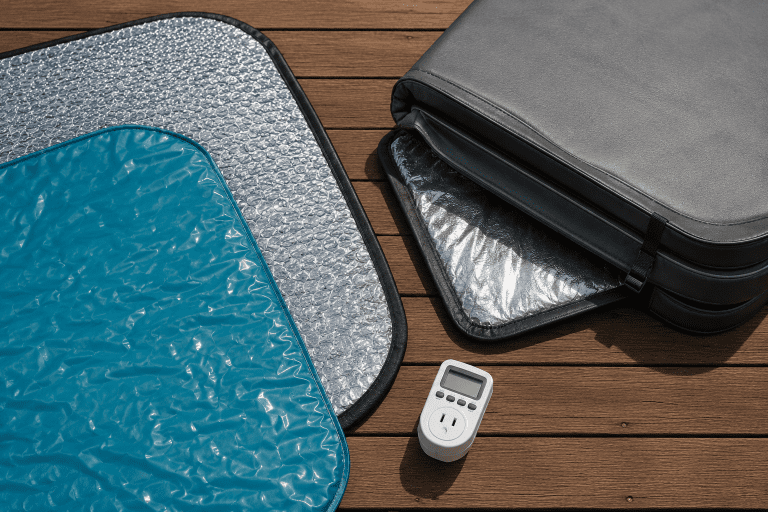
Whether your tub ends up on the deck or beside it, a few accessories make a real difference in day-to-day usability and upkeep.
Hot Tub Cover Lifter — A good cover lifter is one of those things you don’t know you need until you’re wrestling a waterlogged cover by yourself at 9pm. Look for a hydraulic or spring-assisted model rated for covers up to 120 lbs .
Floating Spa Thermometer — Simple, essential, and shockingly useful for dialing in your temperature and monitoring chemical effectiveness.
Non-Slip Spa Steps — Especially important for deck-mounted tubs where entry height may be awkward. Textured, weather-resistant steps with handrail options are the ones to prioritize .
Frequently Asked Questions
How much does it cost to put a hot tub on a deck? Budget for the hot tub itself plus $1,500–$3,000 in installation work for a straightforward low-deck reinforcement, electrical hookup, and permits. Elevated decks and complex structural situations can push total installation costs to $5,000–$8,000 before the tub price. Getting a structural assessment early is the best way to avoid budget surprises.
Does a deck need to be reinforced for a hot tub?
It depends on the specific hot tub and the existing deck structure. A filled hot tub can place thousands of pounds of concentrated load on a relatively small area, so an existing deck should be assessed for the tub’s filled weight, dimensions and support points. Reinforcement may be required depending on the joists, beams, posts, connections and footings.
Can you put an inflatable hot tub on a deck? Inflatable hot tubs are lighter than many hard-shell models, but once filled with water and people they can still place a substantial concentrated load on a deck. Check the manufacturer’s filled weight and dimensions, and have the existing deck assessed before installation rather than assuming it can safely support the tub.
Summary Snapshot
- A hot tub can be installed on a deck, but the deck must be assessed for the specific tub and its filled weight
- Existing decks may require reinforcement to the joists, beams, posts, connections or footings
- Structural, electrical, delivery and permit costs vary considerably depending on the installation
- Permit, plan and inspection requirements vary by jurisdiction
- Elevated decks can involve more complex structural work than low-profile decks
- Ground-level installation beside the deck can be a simpler alternative
- Deck installations require good drainage and ongoing moisture management
Final Verdict
Putting a hot tub on a deck is one of the most rewarding backyard projects you can do — when it’s done right. The elevated position, the integration with your outdoor living space, the aesthetic payoff — it’s real and it’s worth it for the right setup.
But it’s not a shortcut project. Between the structural requirements, the permit process, the electrical work, and the moisture management that follows, it demands genuine planning, a realistic budget, and a willingness to work with professionals rather than around them.
The homeowners who end up happiest with this project are the ones who either built their deck specifically to accommodate the tub from day one, or the ones who did a proper structural assessment early, understood what the reinforcement would cost, and made an informed decision. The ones who regret it? Usually tried to move fast and skipped steps.
If you’re starting from scratch, design your deck around the hot tub, not the other way around. If you’re retrofitting, get an engineer to walk through the existing structure before you commit to anything. And if your deck is elevated enough that the structural work starts running toward the high end of that cost range — seriously consider whether a beautifully integrated ground-level installation beside the deck might give you 90% of the aesthetic at 50% of the hassle.
Either way, when you’re ready to pick the actual tub, browse our curated picks:
Before the build starts, make sure your permit situation is squared away. Our hot tub permit guide explains exactly what triggers a requirement — especially for deck installations.
Once the structure is confirmed, the next step is planning the electrical side. Hot tub electrical requirements breaks down what a 240V run involves and how to budget for it properly.