Saltwater vs Chlorine Hot Tub Maintenance: The Honest Comparison
Saltwater vs chlorine hot tub maintenance comes down to how chlorine reaches the water. With manual care, you add an approved sanitizer yourself. With saltwater, a generator makes chlorine from dissolved salt. Saltwater can reduce routine dosing, but both approaches still require testing, balanced water and filter care.
The practical question is whether that automation is worth the equipment and replacement costs for your particular tub. A salt system is a convenience feature, not a chemical-free or maintenance-free option.
As an Amazon Associate, Sunrise & Vitalize earns from qualifying purchases. If you buy through an affiliate link, we may earn a small commission at no extra cost to you.
Quick Snapshot
- Both use chlorine: saltwater generates it through electrolysis.
- Main maintenance difference: manual dosing versus adjusting a chlorine generator.
- Testing still matters: automatic generation does not prove the water has enough sanitizer.
- Costs are system-specific: include equipment, installation and replacement cells or cartridges.
- Compatibility comes first: get approval for your exact hot tub and salt system before buying.

Table of Contents
- How Each System Works
- The Real Cost Difference
- What Conversion Involves
- Weekly Maintenance Reality
- Pros and Cons
- Head-to-Head Comparison
- Helpful Gear
- FAQ
- Final Verdict
How Each System Works
In a manually dosed chlorine tub, you add a sanitizer approved by the spa manufacturer, following the product label. Test results and use determine when more is needed. A fixed dosing schedule cannot account for every tub, water condition or group of bathers.
A saltwater system uses an electrolytic cell to turn dissolved salt into chlorine. You set or adjust its output to meet demand. That can reduce the amount of chlorine you add by hand, although supplemental chlorine may still be needed under the system’s instructions.
Neither method guarantees comfortable water if the chemistry is out of balance. Saltwater still contains chlorine, so do not choose it expecting a chlorine-free soak or a guaranteed solution to skin and eye irritation. Stinging eyes are a reason to stop and check the water, not a reliable way to measure sanitizer.
The Real Cost Difference
Manual chlorine care avoids buying a chlorine generator. Saltwater adds equipment costs and, depending on the approved installation, may also involve labor and extra startup supplies. There is no single conversion price that fits factory-integrated systems and aftermarket equipment alike.
Before buying, ask for an itemized quote covering:
- The complete compatible system, rather than just a replacement cell.
- Installation and any required electrical or plumbing work.
- Salt, testing supplies and any required water treatment.
- The replacement cell or cartridge price and expected replacement interval.
- Any ongoing service requirements.
Replacement intervals can make a substantial difference. The Hot Spring FreshWater Salt System owner’s manual, for example, specifies cartridge replacement after approximately four months of operation. At that interval, allow for about three cartridges per year of continuous operation. That is an example for this system, not a lifespan to apply to every salt generator.
Both methods still require testing supplies, balancing products and filter care. Saltwater does not automatically become cheaper because you buy less bottled sanitizer. Compare the annual replacement-part allowance with your actual manual-chlorine spending before assuming a payback.
For the generator’s electricity cost, use its average power in kilowatts multiplied by operating hours and your electricity rate. A household electricity price alone cannot tell you what a particular cell will cost to run.
What Conversion Actually Involves
Start with your spa manufacturer or authorized dealer. Ask whether your exact model and model year support the proposed salt system, what installation involves, and whether it affects warranty coverage. A product described as a hot tub salt generator is not automatically suitable for every spa.
Installation depends on the system design. Some compatible spas have provisions for an integrated system; other approved products use a different installation method. Follow the equipment instructions rather than assuming every conversion needs inline plumbing or a modification to the shell.
Also check the system’s salt, calcium hardness and water-balance requirements. For example, the FreshWater manual warns that excessive salt and chlorine can contribute to equipment corrosion. Compatibility and correct water care matter more than the promise of an easy retrofit.
Weekly Maintenance Reality
The main saving is less routine manual dosing. It is not a reliable promise of a particular number of minutes saved each week. Testing, adjustments, filter care and occasional troubleshooting still take time with either method.
CDC home pool and hot tub guidance recommends testing chlorine and pH at least twice daily, and more often during heavy use. Check before bathing, too. CDC recommends at least 3 ppm chlorine in hot tubs and pH of 7.0–7.8; follow applicable product and spa instructions, including upper sanitizer limits.
For manual care, add approved sanitizer when the test results call for it. For saltwater, check that chlorine output is meeting demand and follow the instructions for output adjustments or supplemental dosing. A running generator does not confirm an adequate chlorine residual.
Use the manufacturer’s schedule for alkalinity, hardness, salt checks, cell inspection and filter cleaning. The FreshWater manual also recommends testing and balancing before each use. Its periodic system reminders do not replace those checks.
If a reading is outside the required range, correct it and retest before getting in. For choosing testing equipment, see the hot tub water testing kit guide.
Pros and Cons
Manual chlorine advantages: no salt generator to purchase or replace, and direct control over each dose. It suits owners who are comfortable testing and adding the approved sanitizer as needed.
Manual chlorine drawbacks: someone must keep up with dosing as demand changes. A familiar routine can still need adjustment after heavier use.
Saltwater advantages: automatic chlorine generation can reduce routine manual additions. For a compatible tub, that convenience may justify the extra equipment.
Saltwater drawbacks: equipment and replacement costs, model-dependent compatibility, and another system to monitor. Water testing and balancing remain part of ownership.
Saltwater vs Chlorine Hot Tub Maintenance: Head-to-Head
| Factor | Manual chlorine | Saltwater chlorine generation |
|---|---|---|
| Chlorine delivery | Added by hand | Generated from dissolved salt |
| Upfront equipment | No salt generator required | Compatible equipment and possible installation |
| Routine work | Test, balance and dose | Test, balance and adjust output |
| Recurring supplies | Sanitizer and other water-care products | Replacement cell/cartridge and water-care products |
| Skin and eye comfort | Depends on water conditions and individual response | Still contains chlorine; comfort is not guaranteed |
| Compatibility | Use manufacturer-approved sanitizer | Confirm support for the exact system |
| If testing gets skipped | Water condition is unverified | Automation does not verify safe water |
Helpful Gear
Choose water-care products that your spa and salt-system manufacturers permit. These tools can help with either routine:
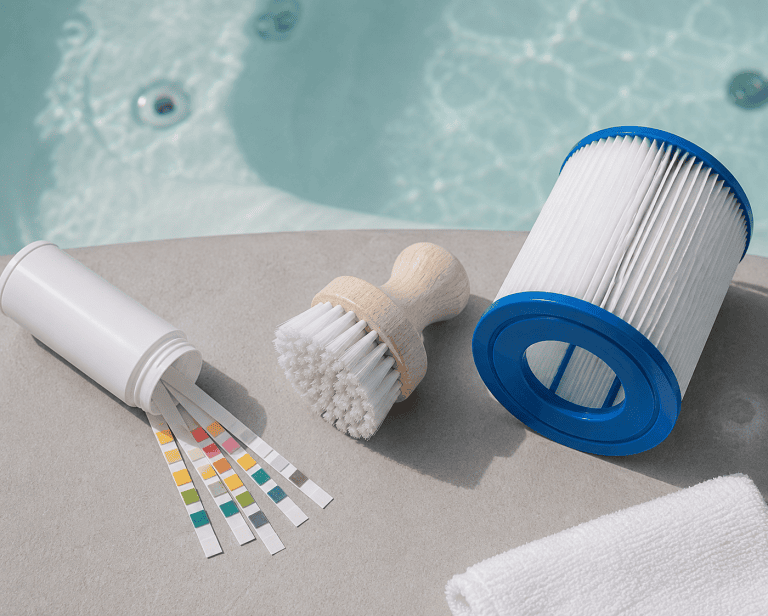
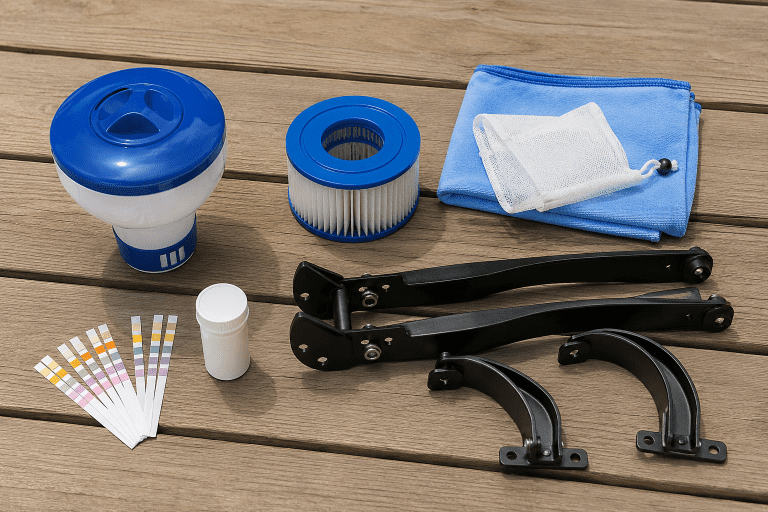
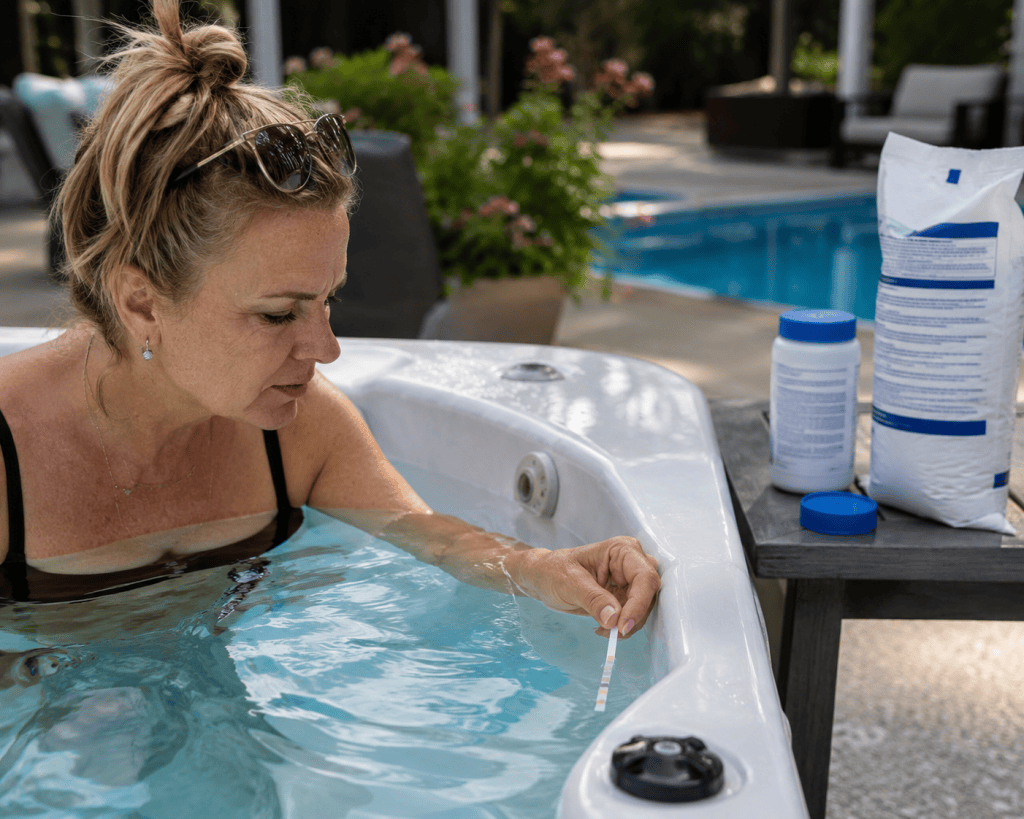
- Spa water test strips — a convenient way to check the parameters listed on the pack. CDC notes that DPD testing is more accurate than strips. Salt concentration requires a suitable salt test; ordinary chlorine strips do not necessarily measure it.
- Non-chlorine spa oxidizer — an optional product for oxidizing contaminants when approved for your system. It does not replace chlorine sanitizer. Follow the label for dosing, testing and re-entry.
- Spa filter cleaner spray — for cleaning compatible filter cartridges according to the cleaner and filter instructions. It does not replace scheduled filter care or water testing.
FAQ
Is a saltwater hot tub chlorine-free?
No. Its cell produces chlorine from salt. You are changing how chlorine is supplied, not removing it from the water.
Can I skip testing if the generator is working?
No. Chlorine demand changes, and a generator can be operating without producing enough chlorine for current conditions. Check the water and correct unsuitable readings before bathing.
Is conversion worthwhile if I use the tub twice a week?
It may be worthwhile for convenience, but light use does not guarantee financial savings. Compare the equipment quote and replacement schedule with your current costs. Choose based on the work it removes from your routine, rather than assuming it pays for itself.
Will saltwater stop stinging eyes or dry skin?
That is not guaranteed. Saltwater still contains chlorine, and comfort depends on water conditions and individual response. Do not treat a salt conversion as a substitute for checking sanitizer and pH.
Summary Snapshot
- Both methods sanitize with chlorine.
- Saltwater can reduce manual dosing but does not remove testing or balancing.
- Get a model-specific equipment quote and replacement schedule.
- Confirm conversion approval before buying.
- Choose for practical convenience and total cost, not a promise of chemical-free water.

Final Verdict
Choose manual chlorine if you are comfortable dosing from test results and want to avoid salt-generator costs. Consider saltwater if your tub supports it and automatic chlorine generation is worth the equipment and replacement costs to you. Either way, regular testing, balanced water and filter care determine whether the routine works.
Keep sanitizer choices separate from energy upgrades. For ways to address heat loss and running costs, see hot tub energy-saving accessories.