Steam Generator Water Supply Requirements: The Honest Installation Guide
Steam generator water supply requirements catch more people off guard than almost any other part of a steam room build — not because they’re complicated, but because most buyers assume any water line nearby will do the job.
Affiliate disclosure: Sunrise & Vitalize participates in the Amazon Associates program. Some links below are affiliate links, which means we may earn a small commission if you buy through them, at no extra cost to you.
Quick Snapshot
- Water connection and pressure: Check your generator’s installation manual; inlet size and recommended pressure vary by model.
- Added plumbing cost if no line is nearby: typically $300–$800
- Straightforward tap-in install time: 2–4 hours
- Hard water: Check the manufacturer’s water-quality guidance before choosing a filter or other treatment.

Table of Contents
- Understanding the Requirements
- The Real Cost
- Installation Friction Points
- Ongoing Maintenance
- Pros and Cons
- Direct-Plumbed vs Manual-Fill Comparison
- Helpful Gear
- FAQ
- Final Verdict
Understanding Steam Generator Water Supply Requirements
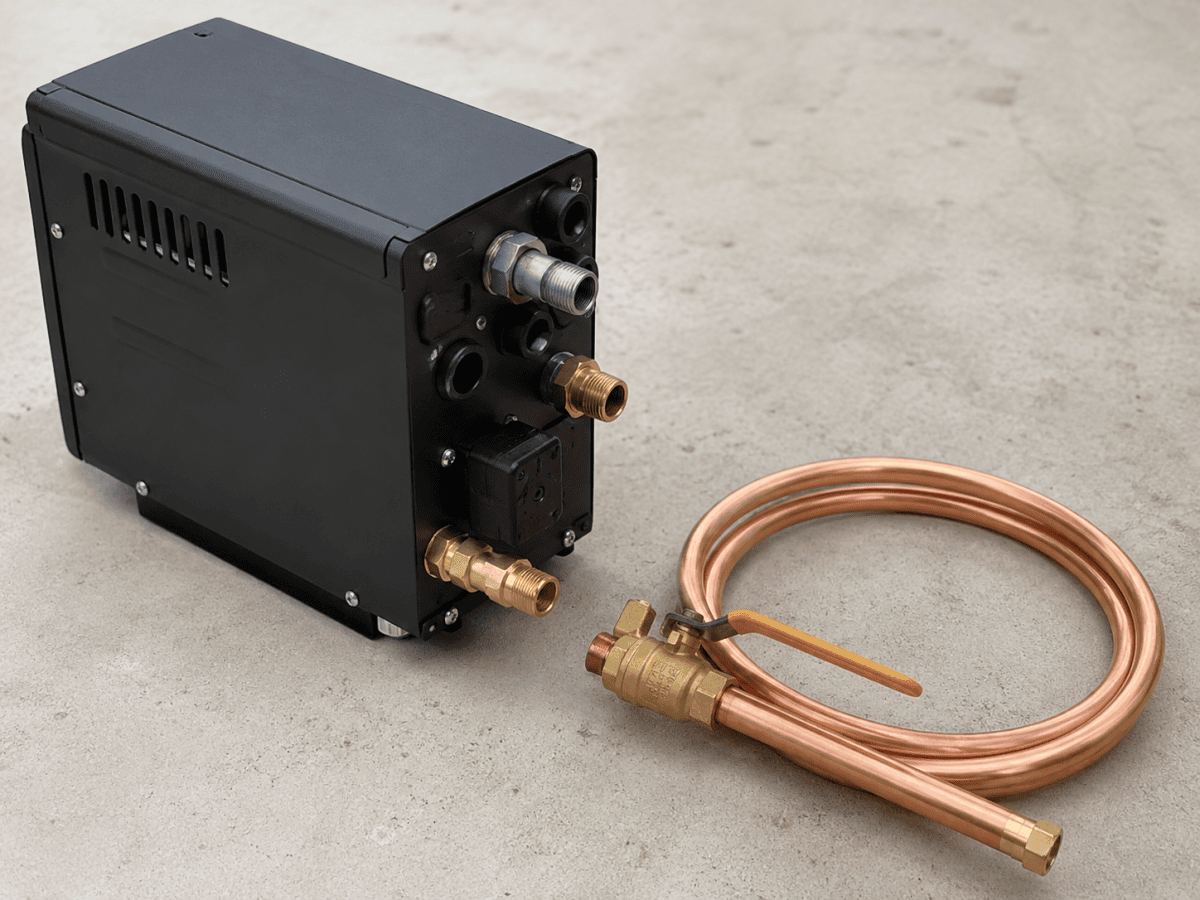
A permanently installed steam generator needs a cold water supply, but the connection size and recommended pressure depend on the model. Check the manufacturer’s installation manual before your plumber runs the line. This avoids having to alter the plumbing on installation day.
Ask the plumber to confirm the required inlet fitting, suitable pipe or connector, water pressure and location of an accessible shut-off valve for your chosen generator. Don’t assume a 1/2-inch line or a 20–30 PSI minimum applies to every unit.
Have your plumber check the water pressure against your chosen generator’s manual before connecting it. They should also confirm whether local code requires a backflow preventer and flush the supply line before making the final connection.
Local plumbing codes also come into play here, and they vary more than most buyers expect. Some jurisdictions require an inspector to sign off on any new dedicated appliance line before it’s connected, which can add a few days to the timeline if it isn’t scheduled in advance. Asking your installer whether your area requires this step is a five-minute conversation that saves a much longer delay later.
Water is only one part of the setup; check the steam generator electrical requirements for your chosen unit before booking the installation.
The Real Cost of Meeting Water Supply Requirements
If a suitable supply line is already near the generator, your plumber may only need to add the fittings and accessible shut-off valve required by the installation manual. Running a new line costs more, especially when the route through walls or floors is difficult. Get a plumbing quote for your specific layout rather than relying on a standard price range.
Costs shift with local labor rates and how far the line has to travel, so treat any number here as a starting point for a conversation with your plumber, not a fixed quote. According to Nolo’s home improvement permit guide, plumbing work tied to a new fixture often requires a permit depending on your local jurisdiction, which is worth factoring into the timeline before you book an installer. That’s the range worth budgeting for when you’re pricing out steam generator water supply requirements, rather than assuming the unit’s sticker price is the whole project.
5 Installation Mistakes That Break Water Supply Requirements
Meeting steam generator water supply requirements sounds simple until one of these five things gets missed.
Assuming any existing line will work is the first one. A line feeding a nearby sink often can’t sustain the flow rate a steam generator needs once it’s also supplying other fixtures.
Skipping the pressure test is the second. Homes with low static pressure, often true at the top of multi-story houses, can fall below the minimum before the generator ever fires up.
Using the wrong pipe or connector is the third mistake. Follow the generator’s installation manual and local plumbing code, because permitted supply-line materials vary by model.
Forgetting a dedicated shut-off valve is the fourth. Without one, any service call means shutting off water to the whole house.
Ignoring water quality is the fifth mistake. Hard water can cause mineral buildup inside a steam generator. Check your water hardness and the manufacturer’s treatment guidance before installation; the right filter or treatment depends on the model and local water supply.
Ongoing Maintenance for Steam Generator Water Lines
Meeting steam generator water supply requirements at installation is only half the job. The line and the filter both need occasional attention afterward. A scale filter cartridge typically needs replacing every 6–12 months depending on local water hardness, and the shut-off valve is worth exercising a few times a year so it doesn’t seize up.
How often should you check a steam generator’s water line? A quick visual check every few months is usually enough. Look for mineral buildup near fittings, listen for unusual valve noise, and confirm the shut-off still turns freely. Staying on top of this is a small part of meeting steam generator water supply requirements long after installation day is done.
Cleaning procedures vary by generator. Check the manufacturer’s instructions for flushing, descaling and water treatment. Don’t add a descaling solution unless the manual specifically tells you to.
Pros and Cons of Meeting Steam Generator Water Supply Requirements Properly
Getting steam generator water supply requirements right up front comes with real trade-offs worth weighing.
Pros:
- Fewer service calls once the plumbing is done correctly the first time
- Consistent steam output instead of pressure-related cycling issues
- Longer boiler element lifespan with proper filtration
Cons:
- Upfront plumbing cost is often quoted separately from the unit price, which catches buyers off guard when the two numbers land on different invoices
- Retrofitting a filter or line after installation is more disruptive than doing it up front
- Permit requirements add lead time in some jurisdictions
Direct-Plumbed vs Manual-Fill: Which Actually Meets Water Supply Requirements Better?
Not every steam generator setup uses a permanent plumbed connection. Manual-fill and tank-based units sidestep some steam generator water supply requirements entirely by trading convenience for a hands-on refill routine.
| Factor | Direct-Plumbed | Manual-Fill / Tank |
|---|---|---|
| Setup complexity | Higher — needs dedicated line | Lower — no plumbing required |
| Daily convenience | Fill-and-forget | Refill before each session |
| Noise during operation | Quiet, consistent fill cycle | Occasional audible refill pump |
| Long-term maintenance | Filter + valve checks | Tank cleaning, no line to maintain |
Neither option is objectively better. A direct-plumbed unit suits anyone who wants a fully automated session with zero prep, while a manual-fill model suits renters or anyone unwilling to touch existing plumbing at all. The trade-off is convenience against setup complexity, and it’s worth deciding which one matters more before you shop by price alone.

Helpful Gear
These are installation components to discuss with your plumber. The right specifications depend on your generator’s manual and your home’s water supply.
- Pressure regulator, if specified – Have your plumber check the supply pressure and choose a suitable regulator only if the installation requires one.
- Water treatment approved for your generator – Check your water hardness and the manufacturer’s guidance. A basic sediment filter does not remove the dissolved minerals that cause scale.
- Accessible shut-off valve – Your plumber can choose the correct valve and fittings so the generator’s water supply can be turned off for servicing.
FAQ
Do all steam generators need a dedicated water line?
Most permanently plumbed units need a dedicated water line, though manual-fill and tank-based models don’t require one at all. Check your specific unit’s installation manual before assuming either way.
What water pressure does a steam generator need?
The required water pressure depends on the model. Check its installation manual and have your plumber test the supply pressure before installation.
Is it worth meeting water supply requirements properly if I only use my steam room a couple of times a week?
Meeting steam generator water supply requirements once, correctly, beats troubleshooting fill errors every few weeks. The plumbing work is a one-time cost, while skipping it risks recurring fill errors or early element failure regardless of how often the unit runs. Light use doesn’t reduce the importance of correct pressure and filtration.The required water pressure depends on the generator model. Check its installation manual and have your plumber test the supply pressure before installation.
Can you install a steam generator without a plumber?
It’s possible with a manual-fill or tank-based unit, but a direct-plumbed system involving a new dedicated line, shut-off valve, and possible permit sign-off is generally a job for a licensed plumber rather than a DIY weekend project.
If you can’t confirm your water line size and pressure before installation day, it’s worth pushing the date back rather than finding out mid-install.
Summary Snapshot
- Water supply: Check your specific generator’s manual for the required inlet size, water pressure and permitted plumbing materials.
- Budget $300–$800 for new plumbing work if no suitable line exists nearby
- Water quality: Check your generator’s approved treatment options if you have hard water.
- Manual-fill units sidestep most plumbing requirements entirely
Final Verdict
Steam generator water supply requirements aren’t complicated on paper, but they’re exactly the kind of detail that gets skipped when someone’s focused on picking the unit itself. Confirm your line size, pressure, and filtration needs before installation day, and the rest of the process tends to go smoothly. The plumbing side of a steam generator install rarely gets the same attention as the unit itself, but it’s the part that determines whether the system runs quietly for years or starts throwing fill errors within the first twelve months.
For more on choosing the right unit size in the first place, How to Choose a Steam Generator: A Real Sizing & Installation Guide walks through that decision in more detail, and if you’re comparing plumbing needs across categories, Hot Tub Plumbing Requirements Explained: What You Need Before You Install covers a similar set of considerations for hot tub owners.