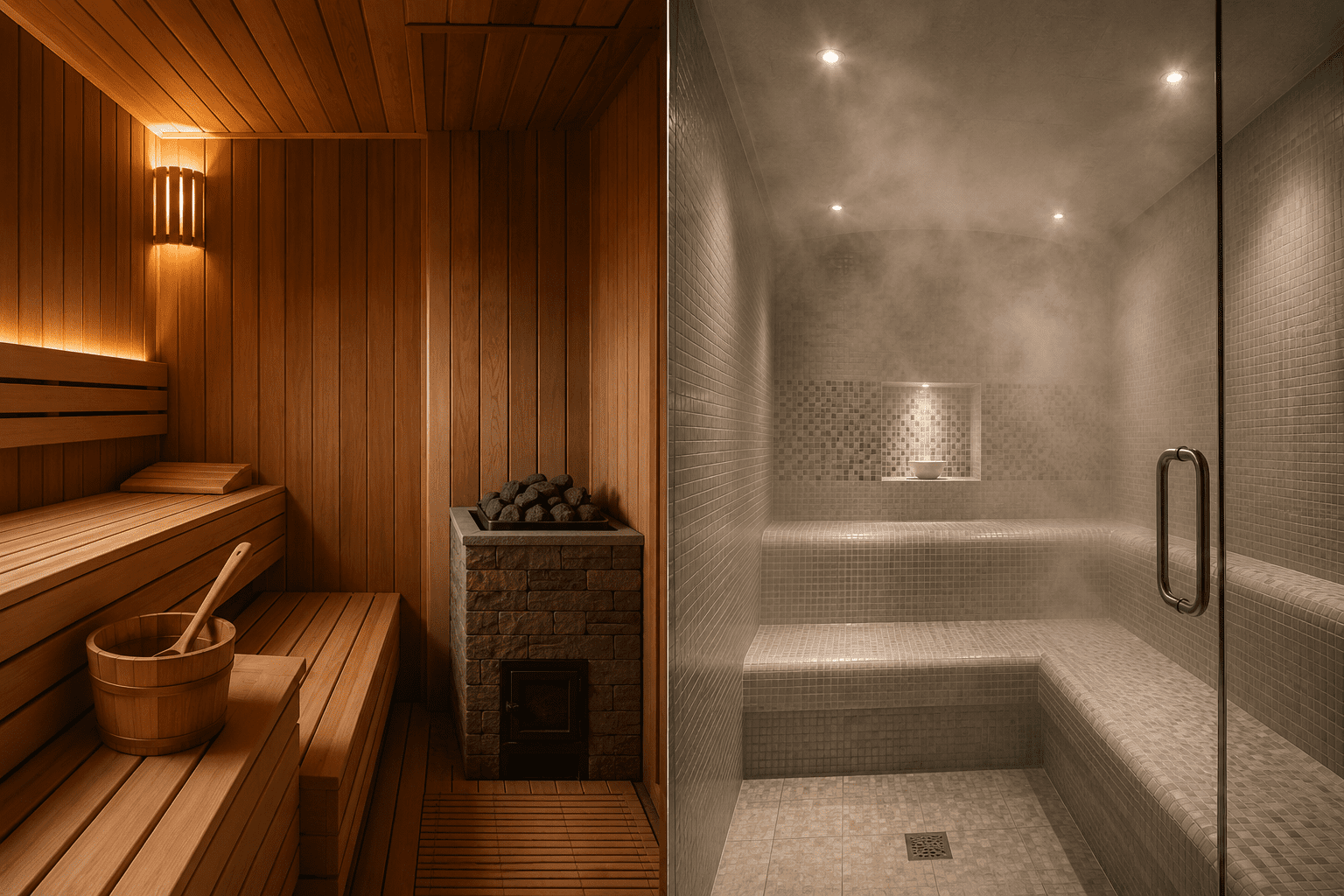
Steam Room vs Sauna Heat Up Time: Which One Is Actually Ready Faster?
If steam room vs sauna heat up time is the question you’re trying to answer before committing to one, the short answer is: a steam room wins on paper but the sauna wins in practice — and understanding why that gap exists tells you a lot about which one actually fits your routine.
I’ve used both regularly for years. The difference in how they heat up isn’t just a spec sheet number — it changes how you schedule sessions, whether you can squeeze one in on a busy day, and how frustrated you’ll be when you’re standing there in a towel waiting.
Quick note: this post contains affiliate links. If you buy through them, I earn a small commission at no cost to you. I only recommend gear I’d actually use.
Quick Snapshot
- Steam generators reach operating temperature in 10–20 minutes; traditional saunas take 30–45 minutes
- Infrared saunas close the gap — some are session-ready in 10–15 minutes
- Steam room perceived heat lags behind the generator ready light by several minutes due to tile wall saturation
- Running a traditional sauna costs roughly $1–3 per session in electricity
- Heat-up time affects daily usability more than most buyers realise
- Both options are viable for home installation; steam rooms require waterproofing investment upfront
Table of Contents
- How Each System Actually Generates Heat
- Real Heat-Up Times: The Honest Numbers
- Why the Steam Room Feels Slower Than It Is
- Cost Reality: What Running Costs Look Like
- Installation Friction: What Slows You Down Before the First Session
- Maintenance and What It Does to Your Schedule
- Pros and Cons
- Head-to-Head Comparison
- Comparison Table
- Helpful Gear
- FAQ
- Final Verdict
How Each System Actually Generates Heat
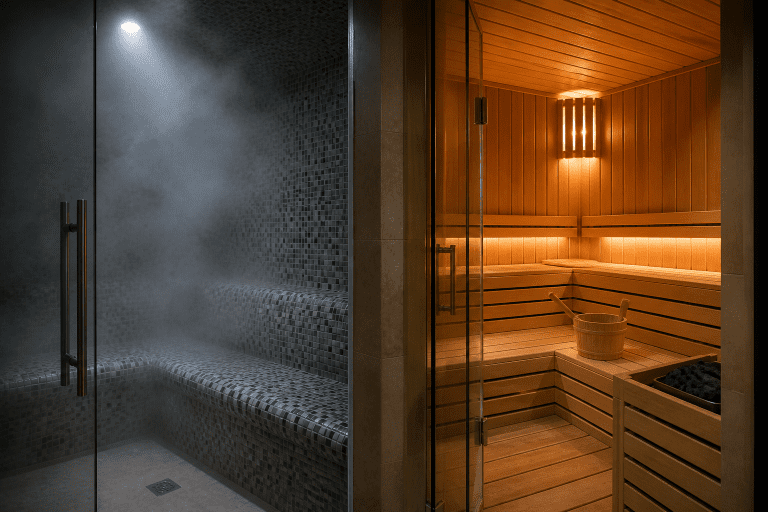
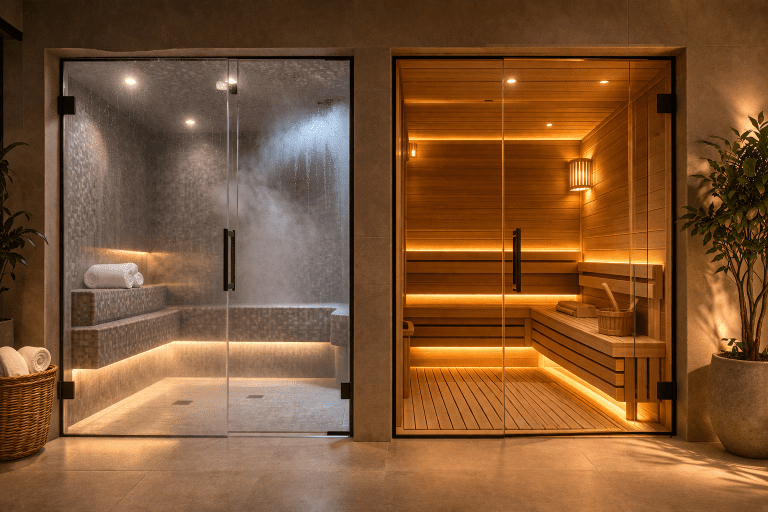
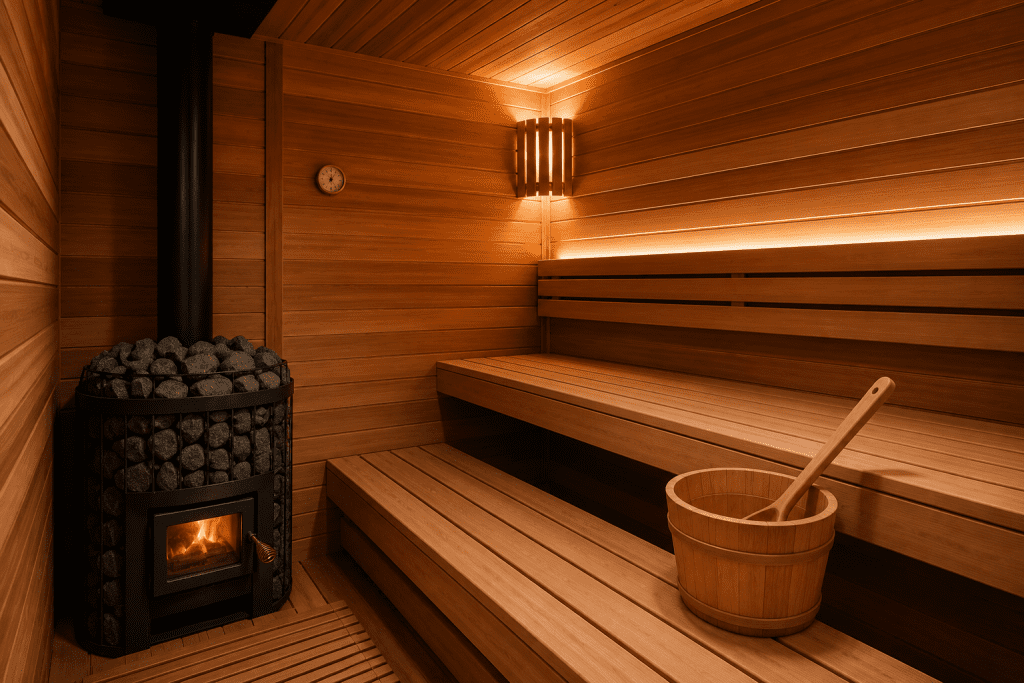
A traditional sauna heats the air by warming a mass of rocks — either electrically or with wood. The rocks store thermal energy and release it slowly and steadily. That thermal mass is what makes a sauna feel so enveloping once it’s up to temperature, but it’s also why the process takes time. You’re not just heating air — you’re heating stone, wood panelling, and the entire structure.
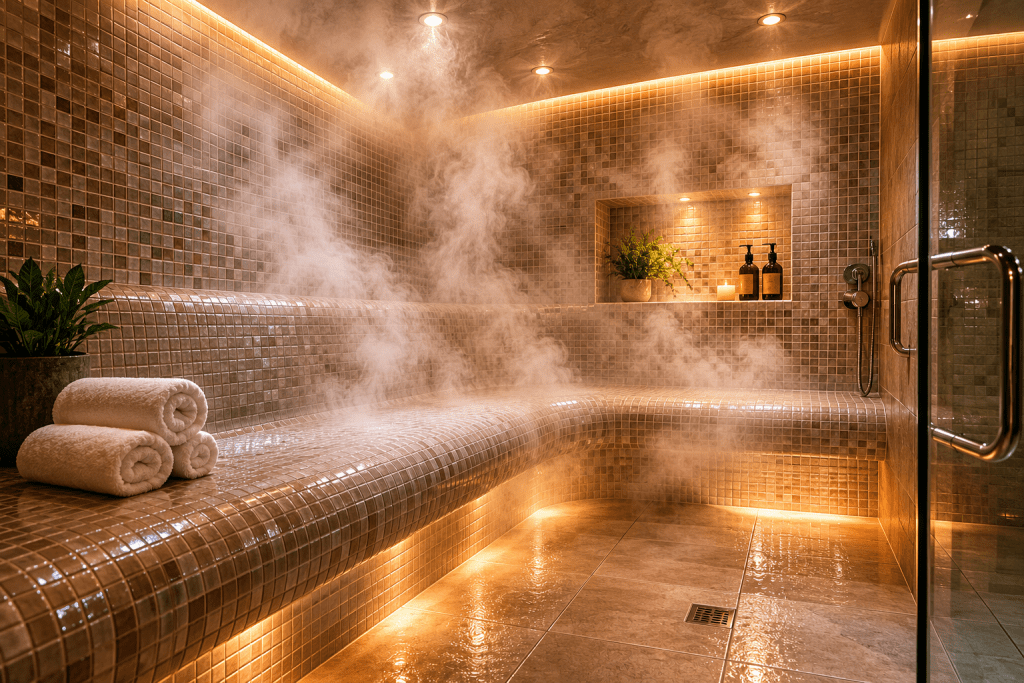
A steam room works differently. A generator heats water until it produces steam, which then fills the enclosed space. Because you’re working with a sealed, often tiled enclosure and a direct steam source, the active heat arrives faster — but the experience of that heat depends on more than just the generator output.
Infrared saunas bypass the rock-heating process entirely. They use infrared panels that heat your body directly rather than the air around you. This changes the steam room vs sauna heat up time equation significantly, which is worth factoring in if you’re comparing all three options.
Real Heat-Up Times: The Honest Numbers
Traditional sauna: 30–45 minutes to reach 160–195°F. Some larger units take closer to 60 minutes in colder climates or poorly insulated spaces. This is the longest heat-up window in the category.
Steam room: Generator active in 10–20 minutes. Most residential units are producing usable steam well within that window. On paper, this looks like a clear win for the steam room.
Infrared sauna: 10–15 minutes to reach functional operating temperature, typically 120–140°F. Lower target temperature means faster arrival, and you don’t need the structure itself to heat up.
So if you’re asking about steam room vs sauna heat up time purely on numbers, steam and infrared are in the same bracket, with traditional sauna sitting noticeably behind. But those numbers only tell part of the story.
Why the Steam Room Feels Slower Than It Is
Here’s the observation that almost never appears in comparison articles: a steam room’s generator light goes green before the room actually feels ready.
The generator is working. Steam is entering the space. But if the enclosure uses tile walls — which most do — those walls need to absorb enough moisture and heat before they start radiating warmth back at you. In the first few minutes after the generator is nominally ready, the room still feels like warm damp air, not heat. It doesn’t genuinely land until the tile has had enough time to saturate.
This gap between generator-ready and session-ready is something you only pick up after enough sessions. It’s usually 3–5 extra minutes beyond what the indicator suggests. Not a dealbreaker, but worth knowing so you’re not walking in early and wondering if something’s wrong.
A traditional sauna doesn’t have this ambiguity. The rocks either hold heat or they don’t. Once the thermometer reads what you want it to read, the session is ready. There’s no secondary saturation phase.
This is one reason why, in practice, the steam room vs sauna heat up time gap narrows somewhat — even though the raw numbers favour steam.
Cost Reality: What Running Costs Look Like
Running a traditional sauna costs roughly $1–3 per session in electricity, depending on unit size, local rates, and how long the pre-heat runs. A 6kW heater running for 45 minutes of pre-heat plus a 30-minute session adds up to about 1–1.5 kWh consumed in heat-up alone. According to the Cleveland Clinic, regular sauna use has real cardiovascular benefits — but those benefits only accumulate if you’re actually using the thing consistently, which means that 45-minute heat-up window either fits your schedule or it doesn’t.costs vary by region — UK and European users will typically pay more.
Steam generators are typically smaller in wattage — residential units run 2–11kW — and because the heat-up phase is shorter, the electricity cost per session can be lower. Expect $0.50–2.00 per session for most home setups.
Infrared saunas are the most efficient on running costs, often under $0.50 per session. The lower operating temperature and faster heat-up combine to keep electricity draw modest.
Steam room vs sauna heat up time has a direct translation into monthly running costs, especially if you’re using either system daily. A traditional sauna user running 30 sessions a month will pay meaningfully more in pre-heat electricity than a steam or infrared user.
Installation Friction: What Slows You Down Before the First Session
Both options require electrical work. A traditional sauna heater typically needs a 240V dedicated circuit — the same category as a dryer or electric oven. If your panel doesn’t have spare capacity, you’re adding an electrician visit before you even start thinking about the sauna itself.
Steam rooms add a layer: waterproofing. The enclosure needs to handle sustained moisture without deterioration, which means proper membrane installation beneath the tile, appropriate grout, and a ceiling slope to prevent condensation drips. Done correctly this is a one-time investment. Done incorrectly it’s an expensive remediation job inside two years.
Infrared saunas sidestep most of this. Many plug into standard 120V outlets, arrive as pre-built units, and require no special room preparation. The steam room vs sauna heat up time advantage becomes even more relevant here — not just per session, but in terms of how long before your first session at all.
Permits vary by municipality. If you’re breaking walls or running new electrical, check with your local authority before starting — the requirements differ significantly by location.
Maintenance and What It Does to Your Schedule
When weighing steam room vs sauna heat up time, maintenance overhead is part of the real equation — a traditional sauna is low maintenance. Wipe down the bench, occasional light sanding if the wood darkens, replace rocks every few years. The sauna mat — which isn’t an optional luxury, it’s the difference between a relaxing session and spending the rest of the day thinking about your backside given how hot that bench surface gets — needs regular washing.
Steam rooms require more active maintenance. The generator needs descaling on a regular schedule, typically every 3–6 months depending on water hardness. Hard water areas accelerate mineral buildup and will shorten generator life if you skip it. The enclosure itself needs wiping down after sessions to prevent mould — the same moisture that makes steam rooms feel so good creates ideal conditions for growth if the room isn’t dried out.
This maintenance overhead is worth factoring into the real cost of ownership, especially if the steam room vs sauna heat up time comparison is partly about convenience. A faster heat-up helps — but a generator that needs descaling you keep postponing adds friction back in.
Honest Pros and Cons
Traditional Sauna
Pros: Proven heat delivery, simple maintenance, long equipment lifespan, no moisture management required, intense dry heat that infrared and steam don’t replicate.
Cons: 30–45 minute heat-up is the longest in the category — if your schedule runs tight, this genuinely prevents sessions. The con most articles skip: sauna users often skip sessions mid-week not because they’re not motivated but because the heat-up window kills the decision at 6pm on a Tuesday. The heat-up time is a real behavioural barrier, not just a minor inconvenience.
Steam Room
Pros: Faster heat-up in raw terms, skin and respiratory benefits from humidity, lower wattage in most residential generators.
Cons: Perceived readiness lags behind actual generator readiness due to tile saturation. Higher installation cost due to waterproofing requirements. Regular generator descaling is non-negotiable in hard water areas — skip it and you’ll be replacing the generator prematurely.
Infrared Sauna
Pros: Fastest usable heat-up, lowest running costs, simplest installation, no structural modification required for most units.
Cons: The experience is fundamentally different from traditional sauna — lower ambient temperature, no steam, no rock-pouring ritual. Some users find it less satisfying as a session. It solves the steam room vs sauna heat up time problem but at the cost of the traditional experience.
Head-to-Head Comparison
When you’re comparing steam room vs sauna heat up time as a daily-use decision, the 20–30 minute gap between a traditional sauna and a steam room or infrared unit is meaningful. That gap is the difference between being able to use the equipment after work and it sitting idle most of the week.
I’ve done sessions where the approach was five-minute heat blasts — sauna or steam — then cold shower between rounds, sometimes running five full cycles when the session is going well. The cold between rounds makes the next heat round hit harder. In that kind of protocol, heat-up speed matters before the first round — but once you’re in, the gap is irrelevant.
For people who want a single long session, traditional sauna is worth the wait. For people who want short, sharp daily sessions, steam or infrared removes the friction that kills consistency.
Comparison Table
| Feature | Traditional Sauna | Steam Room | Infrared Sauna |
|---|---|---|---|
| Heat-up time | 30–45 min | 10–20 min | 10–15 min |
| Session-ready (perceived) | Matches thermometer | 3–5 min lag beyond generator light | Matches panel reading |
| Operating temperature | 160–195°F | 110–120°F | 120–140°F |
| Running cost per session | $1–3 | $0.50–2 | Under $0.50 |
| Installation complexity | Medium | High (waterproofing required) | Low |
| Maintenance frequency | Low | Medium–High | Low |
| Post-session skin feel | Dry, tight initially | Hydrated, soft | Dry, moderate |
| Smell during session | Wood and heat | Neutral to mineral | No distinctive smell |
The post-session skin feel row is one the spec sheets never include. Steam room users consistently notice softer skin compared to sauna users — the humidity does something measurably different, and it’s one of the reasons the steam room remains a personal favourite despite the longer setup requirements.
Helpful Gear
If you’re setting up either option at home, a few additions make a real difference:
Sauna thermometer and hygrometer combo — Knowing actual temperature and humidity in real time removes the guesswork about when the session is genuinely ready. Traditional sauna especially benefits from this given the heat-up window.
Steam generator descaling solution — Hard water deposits are the primary cause of premature generator failure in residential steam rooms. Using a purpose-made solution on schedule is significantly cheaper than early replacement.
FAQ
Does the steam room vs sauna heat up time difference actually matter for daily use? It matters more than most buyers expect. A 30–45 minute heat-up on a traditional sauna means committing to that wait every session. On a busy evening, that window alone prevents the session. Steam and infrared remove that friction, which has a real effect on how often you actually use the equipment. Consistency is the variable that produces results — anything that improves consistency is worth weighing carefully.
Is it worth buying a traditional sauna if I’ll only use it twice a week? Yes, with one condition: the 30–45 minute heat-up must fit your schedule twice a week without feeling like a commitment. If those two sessions happen on relaxed mornings or weekends, the heat-up is irrelevant. If you’re squeezing sessions into weekday evenings, you may find the infrared or steam option gets used more often simply because the barrier is lower.
Do steam rooms and saunas produce the same health benefits? Both produce cardiovascular and relaxation benefits, but the mechanisms differ. Steam operates at lower dry-bulb temperature with high humidity; traditional sauna operates at high dry-bulb temperature with low humidity. The experience, the recovery feel, and the skin effect are all different. Neither is a direct substitute for the other — they’re genuinely different tools.
How do I know when a steam room is truly ready versus when the generator light just turns on? Spend the first five minutes after the light goes green outside the room. By the time you enter, the tile walls will have absorbed enough heat to radiate properly. The session will feel significantly better than walking in the moment the generator signals ready.
The simple rule: if heat-up speed is your primary concern, steam or infrared wins. If experience depth is your primary concern, traditional sauna wins. Most people optimise for the wrong variable when buying.
Summary Snapshot
- Steam generators: ready in 10–20 minutes; perceived session-ready lags 3–5 minutes beyond that
- Traditional sauna: 30–45 minutes — worth every minute once up to temperature
- Infrared sauna: 10–15 minutes, lowest running cost, simplest installation
- Running cost gap: traditional sauna roughly $1–3/session vs under $0.50 for infrared
- Steam room installation costs more upfront due to waterproofing requirements
- Heat-up time has a direct effect on how often you’ll actually use what you buy
Final Verdict
The steam room vs sauna heat up time gap is real — roughly 15–25 minutes depending on which sauna type you’re comparing against. But the more important question is what that gap does to your usage pattern over months. A faster heat-up means lower friction, which means more consistent sessions, which means the equipment pays for itself in actual use rather than sitting idle.
If you’re choosing for daily use with limited time windows, steam or infrared is the pragmatic answer. If you want the most complete heat experience and your schedule can absorb the pre-heat, traditional sauna is the one you’ll look forward to. Both are legitimate depending on what your routine actually looks like.
The steam room vs sauna heat up time question is worth asking early — before you’ve committed to installation — because your honest answer to “will I actually use this on a Tuesday evening with 90 minutes available” tells you more than any spec comparison will.
For more on steam room equipment and setup, if you’re also exploring the broader benefits behind why these sessions are worth the wait, the Steam Room Health Benefits post covers what the research and real use actually show. If you’re weighing heat methods across categories, the Best Sauna Heaters guide covers the hardware side of traditional sauna in detail.