Hot Tub Plumbing Requirements Explained: What You Need Before You Install
Hot tub plumbing requirements are the part of the installation process most people completely ignore — until something goes wrong.
And that’s usually an expensive mistake.
Quick heads up: Some links in this post are affiliate links. If you buy through them, I may earn a small commission at no extra cost to you. I only recommend gear I’d actually use.
Quick Snapshot
- Hot tub plumbing involves supply lines, drain lines, jet plumbing, and equipment connections
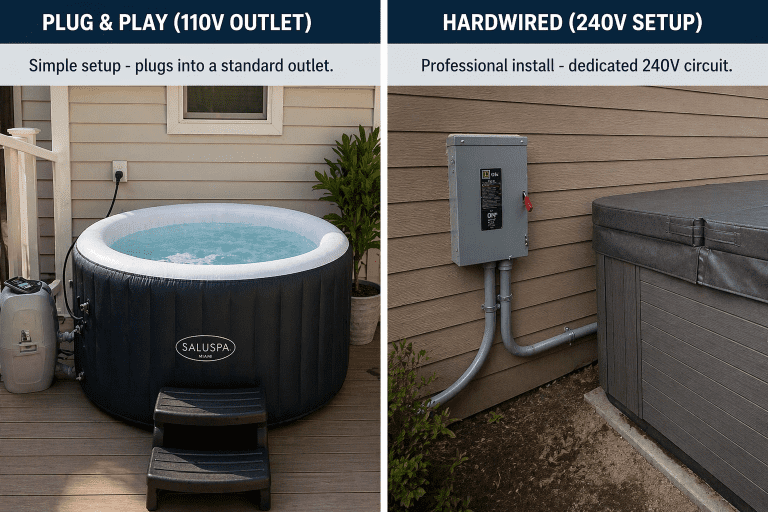
- Most installs need a dedicated 240V electrical line AND proper water drainage
- Permits are legally required in most US states for permanent hot tub installations
- Poor plumbing planning causes leaks, pressure issues, and voided warranties
- Budget $500–$2,500 for professional plumbing work depending on complexity
- DIY is possible for experienced homeowners but not recommended for buried lines
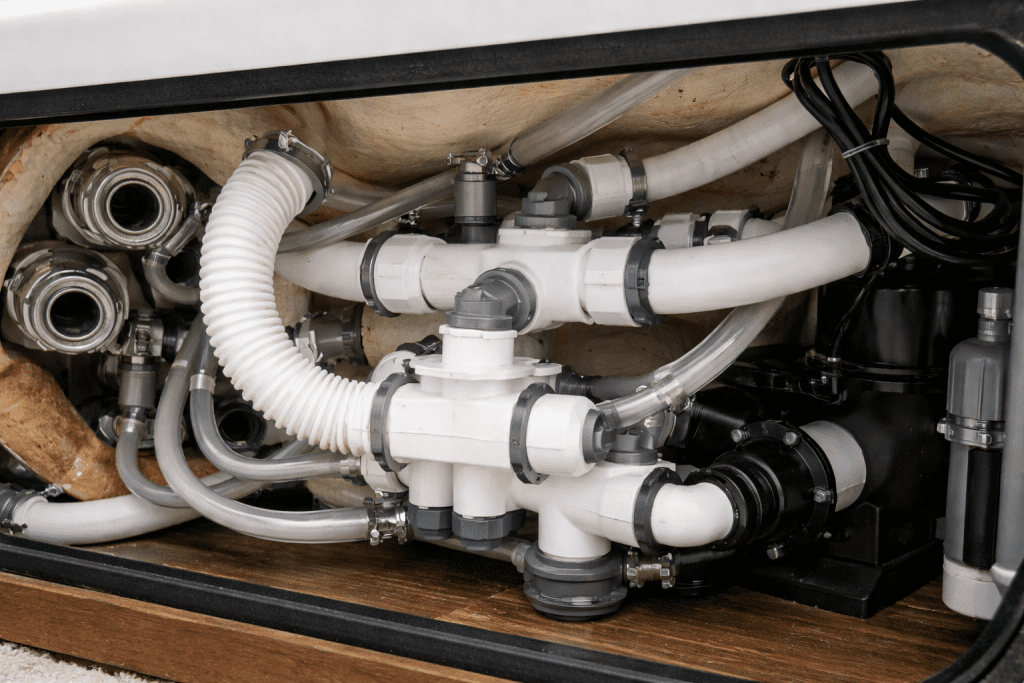
Table of Contents
- What Hot Tub Plumbing Requirements Actually Cover
- The Real Cost of Hot Tub Plumbing Work
- Installation Friction: What Makes This Harder Than It Looks
- Maintenance You’ll Need to Keep Up With
- Pros and Cons of Different Plumbing Approaches
- Hot Tub Plumbing Requirements vs. Pool Plumbing: How They Compare
- Comparison Table
- Helpful Gear for Hot Tub Owners
- FAQ
- Final Verdict
What Hot Tub Plumbing Requirements Actually Cover
Hot tub plumbing requirements are broader than most people expect. It’s not just about where the water goes in and out.
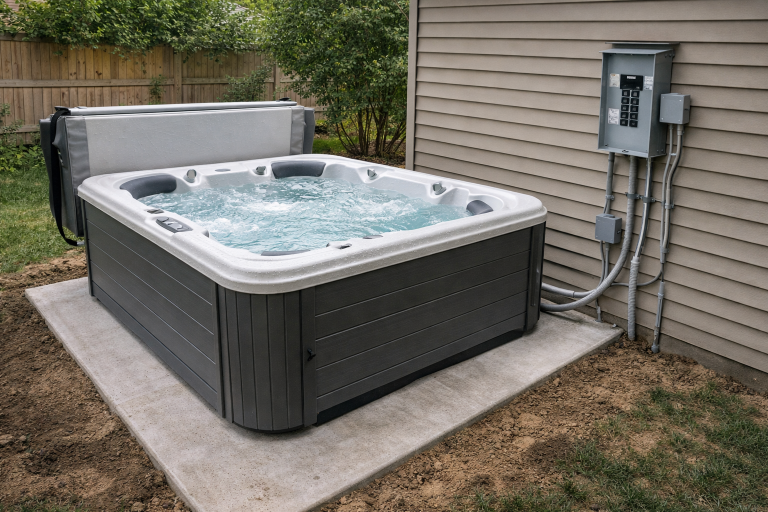
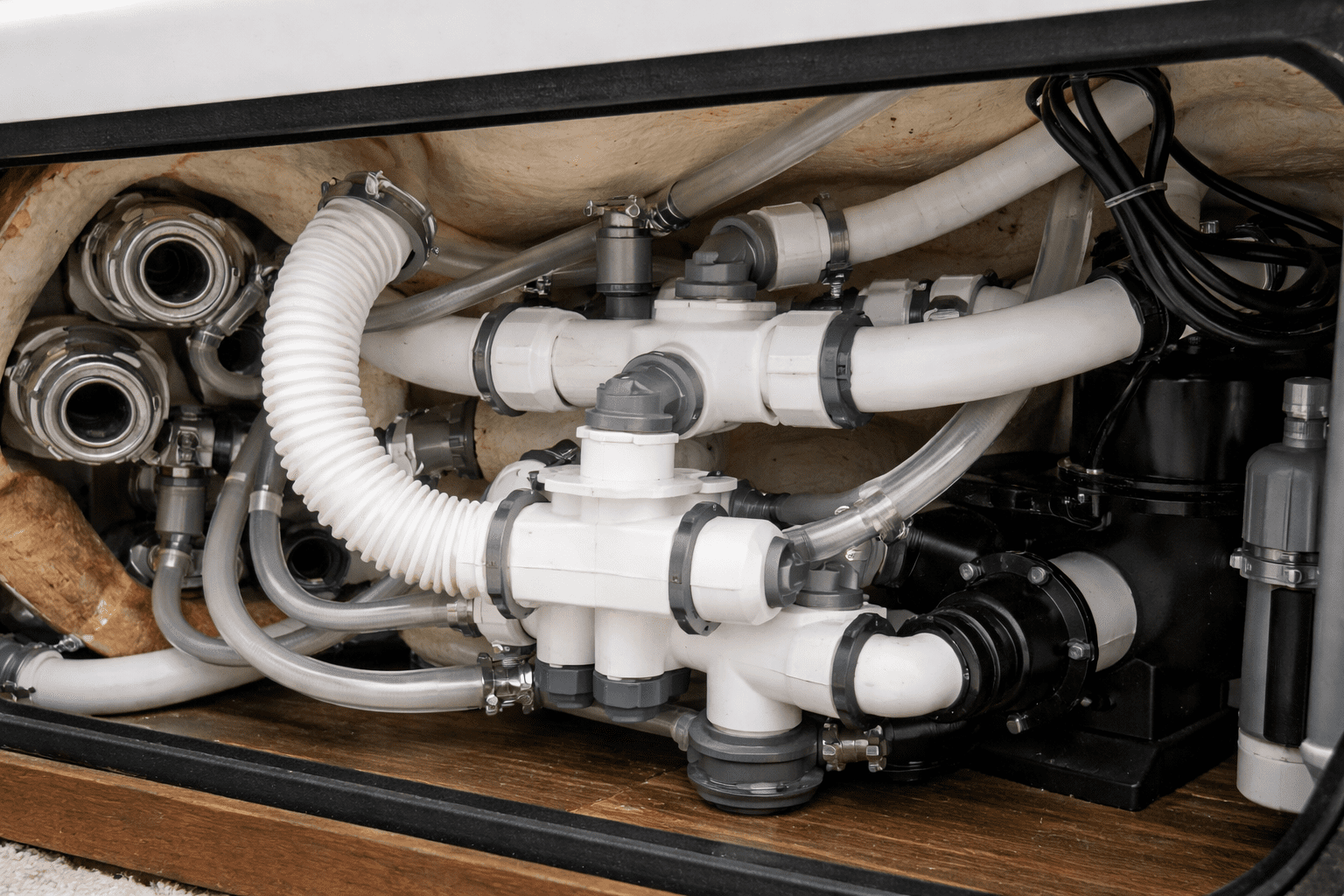
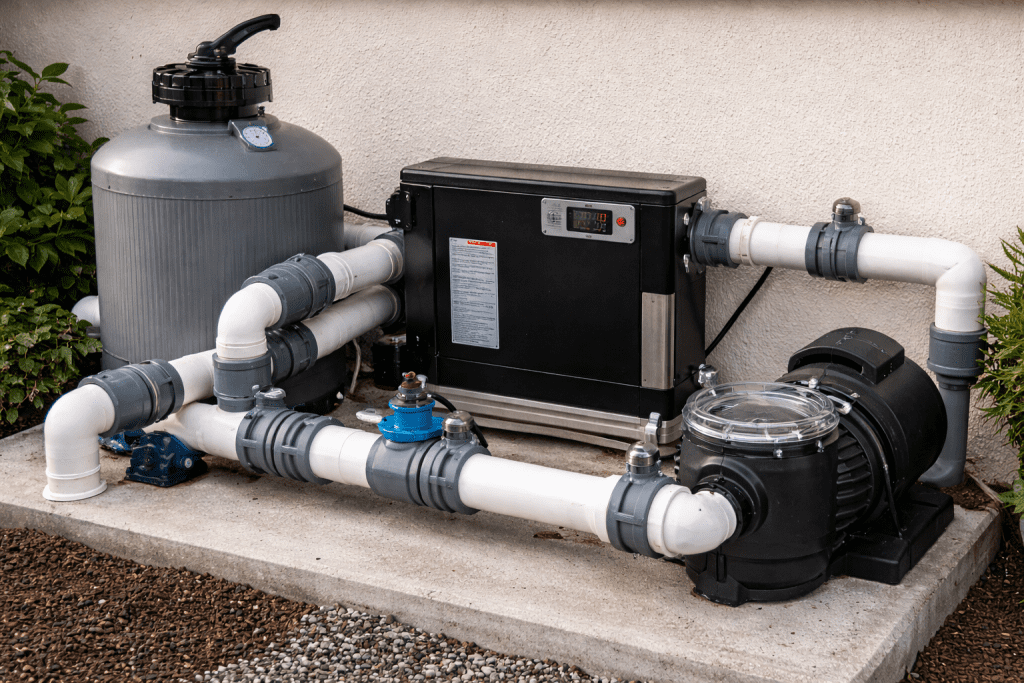
A standard hot tub plumbing setup includes four main components. You’ve got your water supply connection, your drain line, your jet plumbing, and the equipment pad connections that link the pump and heater into the circuit.
What exactly do hot tub plumbing requirements involve?
Hot tub plumbing requirements cover the full water circulation system — including inlet and outlet lines, jet manifolds, air venturi lines, equipment connections, and drainage. Most residential installs also require a bonding jumper to meet NEC electrical code, which technically sits at the intersection of plumbing and electrical work.
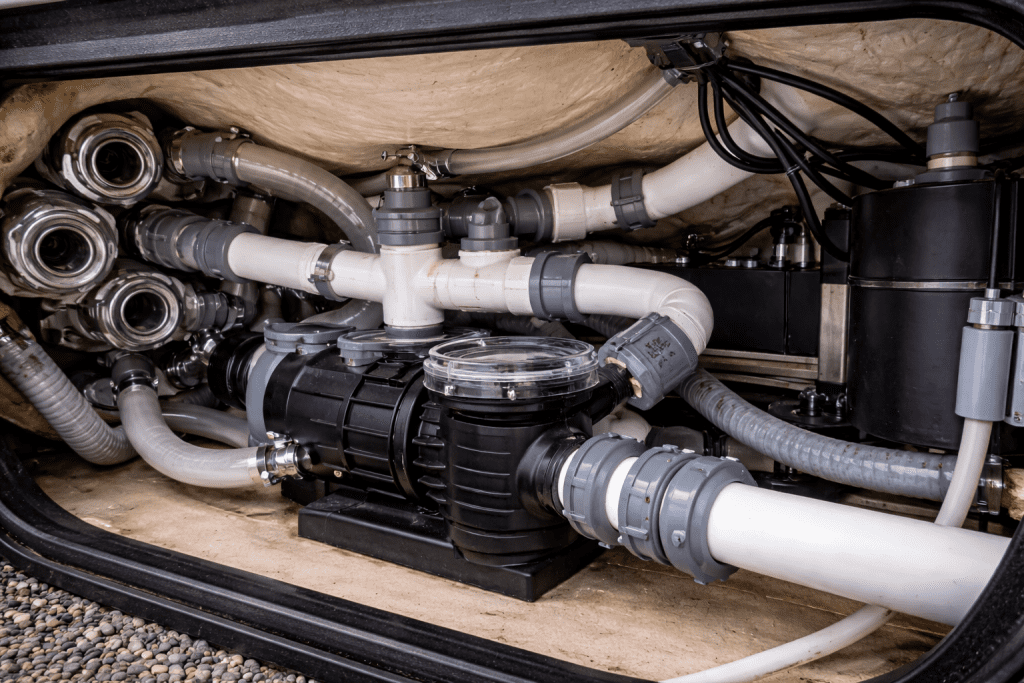
The jet plumbing is where most homeowners underestimate complexity. Each jet is fed from a manifold, and that manifold connects back to the pump. On a tub with 20–40 jets, that’s a serious web of PVC or flex tubing running inside the cabinet.
Supply water is usually simpler. Most hot tubs connect to a standard garden hose bib for filling and rely on the internal heating system from there. Some higher-end installations include a direct waterline connection with a shutoff valve, which makes refills hands-free.
Drain lines matter more than people think. Without a proper drainage plan, you’re draining 250–500 gallons of water onto your lawn, driveway, or into a storm drain — all of which can create problems depending on your local code.
The Real Cost of Hot Tub Plumbing Work
Let’s talk numbers, because hot tub plumbing requirements come with a real price tag attached.
For a basic portable hot tub sitting on a patio slab, plumbing costs are minimal. You’re filling with a garden hose and draining to a nearby cleanout or yard. That setup costs almost nothing beyond the tub itself.
Once you move into permanent or semi-permanent installs, costs rise fast. A plumber running a dedicated drain line from your equipment pad to a sewer cleanout can run $300–$800 depending on distance and local labor rates.
If your installation involves trenching — burying supply or drain lines underground — add $500–$1,500 on top of that. Trenching is charged by the linear foot, and permits to break ground add another layer of cost.
For in-ground or fully custom hot tub builds, total plumbing costs can reach $2,500–$5,000+. That’s before the electrical work, the shell, or the equipment.
The permit fee itself is often overlooked. According to Nolo, home improvement permits typically cost $50–$500 depending on your municipality and the scope of work involved — and skipping the permit creates serious liability if you sell the home or file an insurance claim .
Installation Friction: What Makes This Harder Than It Looks
Hot tub plumbing requirements create friction at almost every stage of the install process.
The first problem is access. Portable hot tubs have all their plumbing tucked inside a foam-insulated cabinet. If a fitting fails or a jet line cracks, getting to the source of the leak is genuinely difficult. Some repairs require cutting access panels or partially disassembling the cabinet.
The second friction point is slope and drainage. Any drain line needs to slope away from the tub at a minimum gradient — usually ¼ inch per foot. Get it wrong and you end up with standing water in your plumbing, which accelerates algae growth and fitting corrosion.
Third: PVC vs flex tubing decisions. Most hot tub manufacturers use flexible PVC inside the cabinet because it tolerates vibration and tight routing. Rigid PVC is more common for longer outdoor runs. Mixing the two incorrectly creates stress points where leaks develop over time.
Finally, local code variations create real headaches. Hot tub plumbing requirements aren’t standardized nationwide. What’s acceptable in one county may require a licensed plumber in the next. Always check with your local building department before starting work.
Maintenance You’ll Need to Keep Up With
Good plumbing setup is the foundation — but maintenance keeps hot tub plumbing requirements from becoming hot tub plumbing problems.
The biggest maintenance task is an annual line flush. Biofilm builds up inside jet lines and manifolds over time. A line flush product (added to the water before draining) breaks up that buildup and carries it out. Skipping this step leads to contaminated water even when your chemical levels look fine.
Check your unions and fittings twice a year. Unions — those easy-disconnect fittings near your pump and heater — are designed to be hand-tightened but they do loosen. A quick inspection and tighten takes five minutes and prevents slow leaks from developing.
Watch for calcium scaling on jet faces and inside plumbing. Hard water deposits narrow the internal diameter of fittings over time. If your jet pressure drops without an obvious cause, scale buildup inside the lines is usually the culprit. A plumbing descaler treatment handles this well.
Drain and refill every 3–4 months. Fresh water resets the chemistry balance and flushes residual buildup from the entire plumbing circuit. It’s the single most underrated maintenance habit among hot tub owners.
Pros and Cons of Different Plumbing Approaches
DIY Plumbing
Pro: Saves $500–$1,500 in labor costs on a basic install. Accessible for homeowners with PVC experience.
Con: Mistakes are expensive. A misaligned fitting or improper drain slope can cause leaks inside a foam-insulated cabinet — which means pulling the tub apart to fix it.
Hiring a Licensed Plumber
Pro: Correct first time. Work is typically covered by a labor warranty and meets local code by default.
Con: Adds cost upfront. Scheduling delays can push your install back weeks during busy seasons.
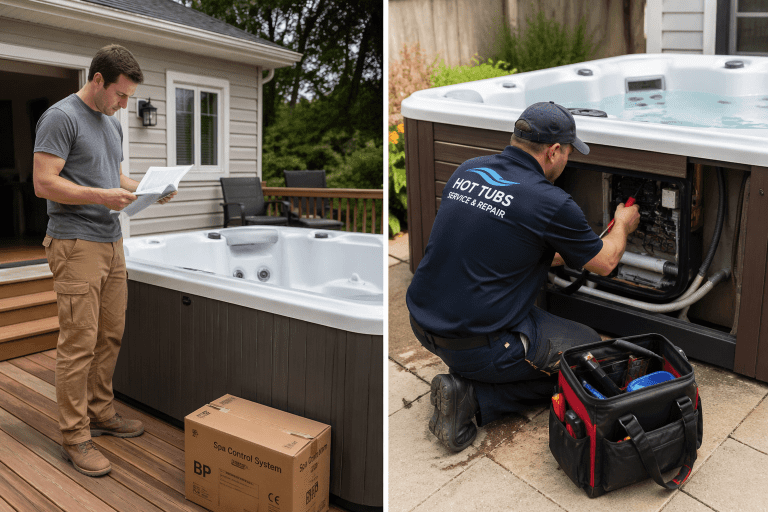
Using the Hot Tub Dealer’s Install Team
Pro: They know the specific tub’s plumbing layout. Dealer installs often preserve the manufacturer warranty.
Con: More expensive than an independent plumber in most cases. Availability varies by location.
Hot Tub Plumbing Requirements vs. Pool Plumbing: How They Compare
If you’re coming from a pool background, don’t assume pool plumbing experience transfers directly.
Hot tub plumbing requirements involve smaller diameter lines — typically ¾” to 2″ — versus the 2″–4″ main lines common in residential pools. The operating pressures are also different. Hot tub jet systems run at higher pressure over shorter distances, which changes fitting selection and glue requirements.
Pool systems are designed for continuous circulation at lower pressure. Hot tub systems cycle between high-pressure jet mode and low-pressure filtration mode, which creates different stress patterns on the plumbing.
Sealing methods matter here too. Pool plumbing commonly uses standard PVC cement. Hot tub plumbing requires fittings rated for hot water — sustained temperatures of 100–104°F break down standard PVC cement over time if the wrong grade is used.
The bonding requirement is another difference. Hot tubs require a bonding grid connecting all metallic components — including plumbing fittings — to meet NEC code. Most pool installs also require bonding, but the specifics differ by installation type.
Comparison Table
| Feature | Hot Tub Plumbing | Pool Plumbing |
|---|---|---|
| Line diameter | ¾”–2″ | 2″–4″ |
| Operating pressure | Higher (jet mode) | Lower (circulation) |
| Water temperature | 100–104°F sustained | Ambient to ~85°F |
| Bonding required | Yes (NEC) | Yes (varies) |
| DIY difficulty | Moderate–High | Moderate |
| Permit typically required | Yes | Yes |
| Avg plumbing cost | $300–$2,500 | $1,000–$5,000+ |
Helpful Gear for Hot Tub Owners
These are the products worth having before your install is complete.
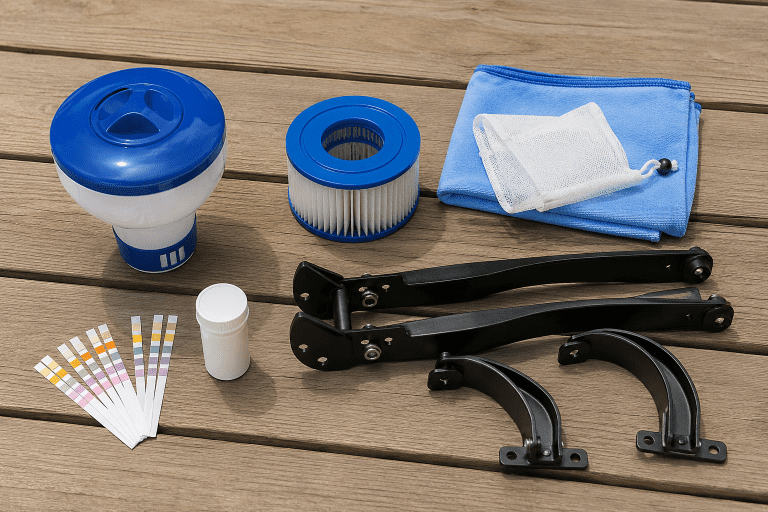
Spa Line Flush & Purge Product Before your first fill and before every drain, a line flush product clears biofilm from the internal plumbing circuit — it’s cheap insurance against contamination issues down the road.
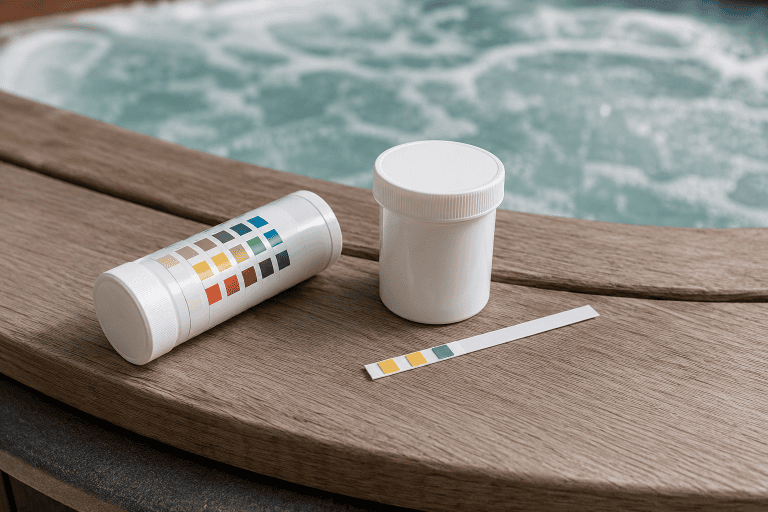
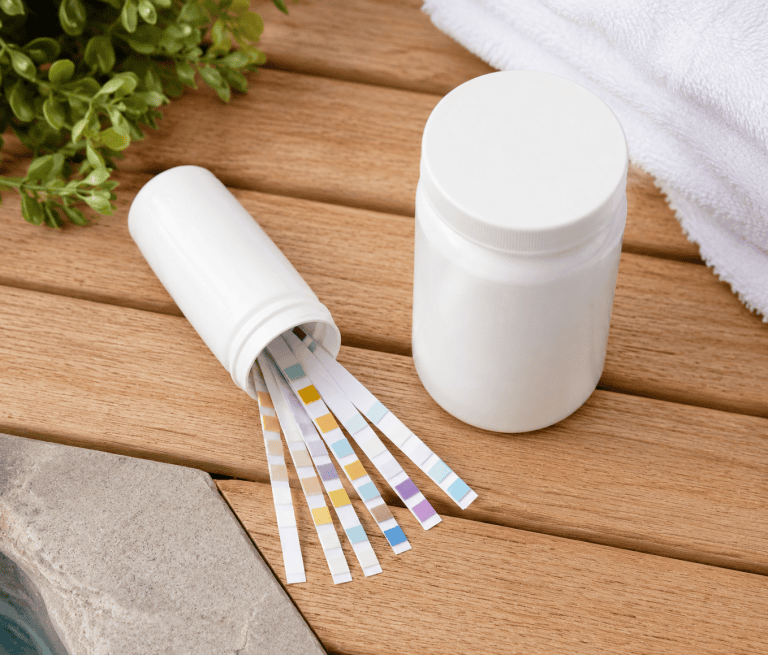
EasyTest7 Way Pool Test Strips Accurate water chemistry is the single best thing you can do to protect your plumbing long-term. Digital testers are faster and more accurate than test strips for pH, chlorine, and alkalinity.
FAQ
Do hot tubs require a dedicated drain line?
Not always — but it depends on your location and setup. Many portable hot tub owners drain onto their lawn or into a yard drain without issue. Permanent installations in most municipalities require a direct connection to the sanitary sewer or a dedicated outdoor drain. Always confirm with your local building department before assuming a garden drain is acceptable.
Can I install hot tub plumbing myself without a permit?
You can physically do the work, but skipping the permit creates real legal and financial risk. Unpermitted installations can affect your homeowner’s insurance coverage and create disclosure obligations if you sell the home. In many jurisdictions, the permit is also what triggers the inspection that confirms your plumbing meets minimum safety standards.
How long does hot tub plumbing typically last?
Well-installed hot tub plumbing — using hot-water-rated fittings and proper PVC cement — can last 15–20 years without major issues. The most common failure points are unions near the equipment pad and jet body gaskets inside the shell. Both are serviceable without replacing full plumbing runs.
The simple rule: Get the plumbing done right once, and your hot tub rewards you for years. Cut corners on hot tub plumbing requirements, and you’ll be pulling panels looking for leaks within a season.
Summary Snapshot
- Hot tub plumbing requirements cover supply, drain, jet, and equipment connections
- Costs range from near-zero for basic portable installs to $2,500+ for permanent builds
- Permits are legally required in most US states — skip them at your own risk
- DIY is feasible for experienced homeowners; licensed plumbers are the safer call
- Annual line flushes and fitting checks keep the system running long-term
- Pool plumbing experience doesn’t fully transfer — different pressures, temps, and fittings
Final Verdict
Hot tub plumbing requirements aren’t the most exciting part of the ownership journey — but they’re the part that determines whether your tub is a long-term asset or a recurring headache.
The fundamentals aren’t complicated. Understand your drain situation before you buy. Budget for professional plumbing if you’re doing a permanent install. Pull the permit. Use hot-water-rated materials throughout. And build the maintenance habits that keep everything running cleanly.
Get those pieces right and the plumbing fades into the background exactly where it belongs — quietly doing its job while you actually enjoy the tub.
If you’re still in the shopping phase and haven’t locked in a model yet, our curated picks are a solid starting point.
Planning the full installation? Our earlier posts in this cluster break down the parts of the process that trip people up most.
If you found this guide useful, our piece on hot tub installation tips covers the broader setup process from site prep through final fill — a natural next read once your plumbing plan is locked in.
For a different angle on recovery and wellness at home, it’s worth understanding how contrast therapy works — pairing your hot tub with cold exposure is one of the most effective routines you can build.