Common Hot Tub Installation Mistakes (And How to Avoid Every One)
Common hot tub installation mistakes are more widespread than most buyers realize — and they can cost you thousands before you ever get to relax.
You’d be surprised how many people get this wrong. The hot tub arrives, excitement takes over, and suddenly corners get cut that take months to fix.
Heads up: Some links in this post are affiliate links. If you buy through them, we may earn a small commission at no extra cost to you. We only recommend gear we’d actually use.
Quick Snapshot
- Skipping permits is the most expensive mistake homeowners make
- Undersized electrical supply causes repeated breaker trips and voided warranties
- Poor pad placement leads to structural problems within 12 months
- Inadequate drainage planning turns backyards into bogs
- Ignoring access space makes future servicing a nightmare
- Overfilling before chemical balancing causes water chemistry chaos
- Choosing the wrong cover leads to heat loss and high running costs
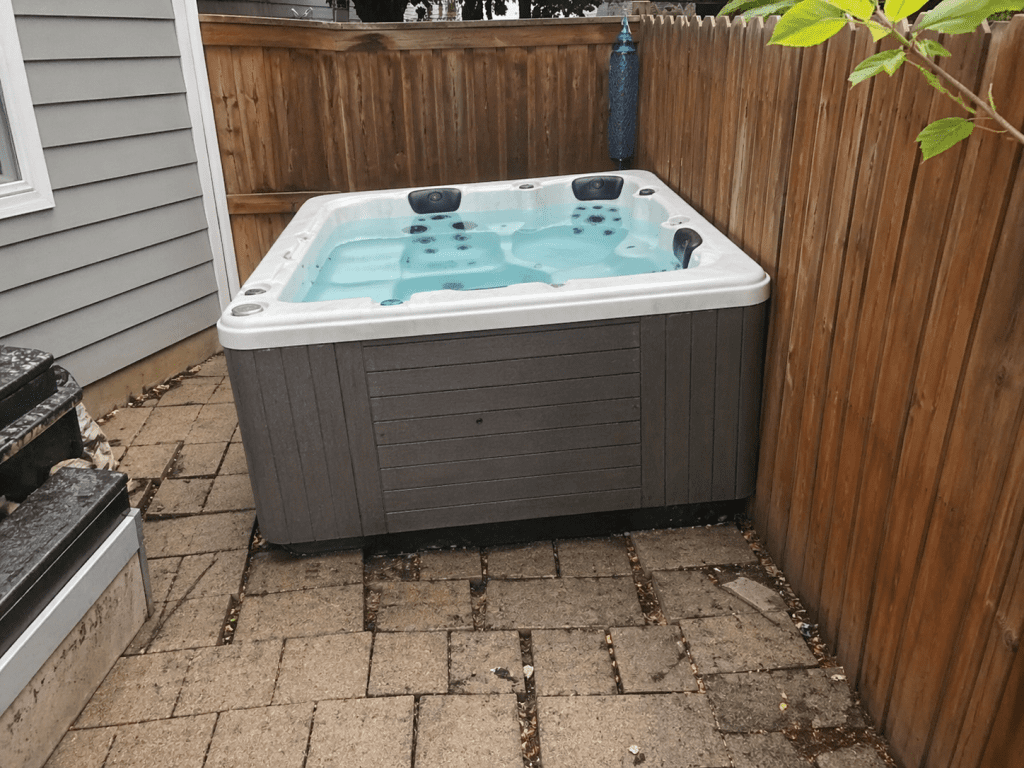
Table of Contents
- What Makes Hot Tub Installation Go Wrong
- The Permit Problem Nobody Talks About
- Common Hot Tub Installation Mistakes With Electrical Setup
- Getting the Pad and Placement Wrong
- Drainage and Water Management Errors
- Maintenance Access — The Overlooked Factor
- Water Chemistry Mistakes on First Fill
- Pros and Cons of DIY vs Professional Installation
- Hot Tub Installation: DIY vs Pro Comparison
- Helpful Gear for a Smoother Setup
- FAQ
- Final Verdict
Most common hot tub installation mistakes
Most common hot tub installation mistakes don’t happen because people are careless. They happen because the process looks simpler than it is.
A hot tub is a heavy, water-filled appliance that needs serious electrical supply, a structurally sound base, proper drainage, and ongoing access for maintenance. Miss any of those, and you’re creating problems that compound over time.
The good news? Every mistake on this list is completely avoidable. You just need to know what to look for before the tub arrives.
The Permit Problem Nobody Talks About
Skipping permits ranks as one of the most damaging common hot tub installation mistakes homeowners make.
It feels like bureaucratic overhead. It isn’t.
Most jurisdictions in the US require permits for hot tub electrical connections and, in many cases, for the structural pad work. According to Nolo’s guide on when homeowners must obtain permits , unpermitted work can create serious complications when you sell your home — and insurers can deny claims if an incident is linked to work done without approval.
The permit process also triggers inspections. Those inspections catch wiring errors and load problems before they become house fires.
Budget $100–$500 for permits depending on your location. It’s the cheapest protection you’ll ever buy.
Common Hot Tub Installation Mistakes With Electrical Setup
Electrical errors are both the most dangerous and the most common hot tub installation mistakes on this list.
Hot tubs typically require a dedicated 240V, 50–60 amp GFCI-protected circuit. Homeowners frequently try to share circuits, use undersized wiring, or skip the GFCI breaker entirely.
What happens if you wire a hot tub incorrectly? Incorrect wiring causes repeated breaker trips, motor burnout, and in serious cases, electrocution risk near water. Most manufacturer warranties are immediately voided by non-compliant electrical installations. Always hire a licensed electrician for this step — no exceptions.
The disconnect box must be installed within sight of the tub but at least 5 feet away. Local codes vary, so verify your specific requirements before any work begins.
Never run extension cords to a hot tub. Never share the circuit with other high-draw appliances. Those two rules alone eliminate most of the electrical errors we see.
Getting the Pad and Placement Wrong
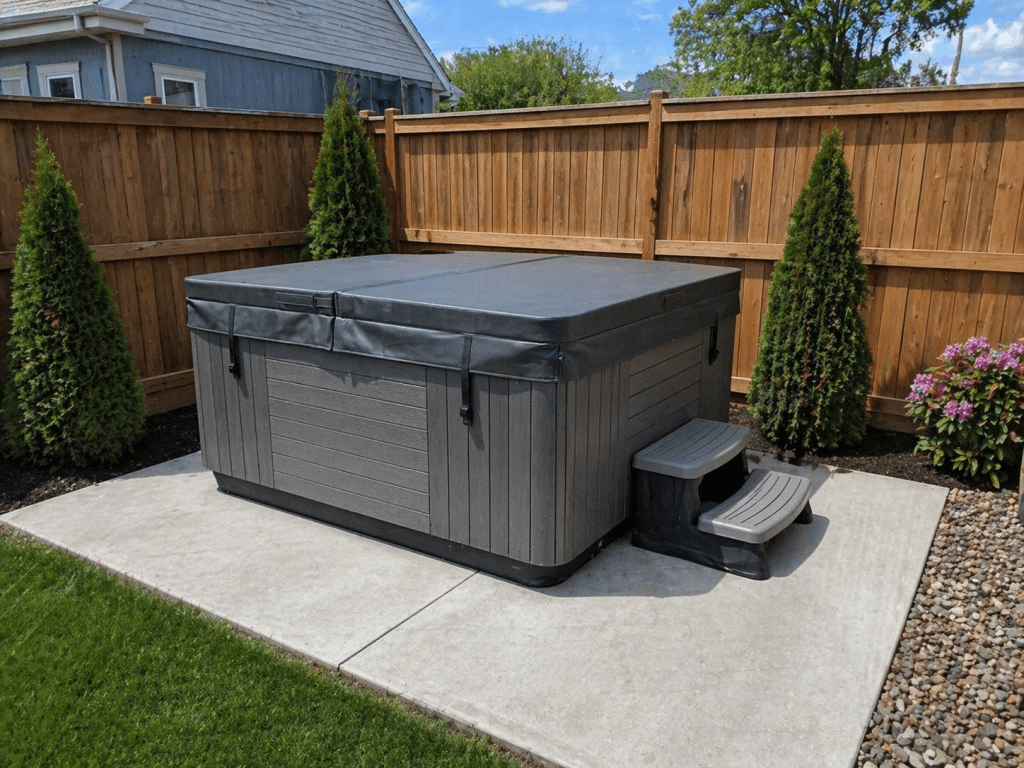
The base is everything. A hot tub filled with water can weigh 3,000–5,000 lbs depending on size. That weight needs to sit on something engineered to handle it.
One of the most repeated common hot tub installation mistakes is placing a tub on an existing deck without calculating load capacity, or pouring a concrete pad that’s too thin to handle frost heave.
Standard concrete pads should be a minimum of 4 inches thick — 6 inches if you’re in a freeze-thaw climate. Reinforced rebar matters. So does proper curing time — rushing a pour and loading it within 48 hours causes cracking that starts small and gets catastrophic.
What surface is best for a hot tub installation? Reinforced concrete is the most reliable base for a permanent hot tub installation. It distributes weight evenly, resists frost movement when properly designed, and lasts decades with minimal maintenance. Composite decking can work but requires engineering assessment first.
Placement also matters for sun exposure, wind buffering, and privacy. These feel like aesthetic choices, but wind exposure directly affects heating costs and cover wear. Spending 30 minutes thinking through placement before delivery saves years of regret.
Drainage and Water Management Errors
You will drain your hot tub. Multiple times per year. Where does that water go?
This is one of the common hot tub installation mistakes that catches people completely off guard. A 400-gallon tub draining onto unprepared ground floods garden beds, undermines nearby foundations, and turns lawn areas into standing water zones.
Plan drainage before the tub arrives. Options include routing to a drain line, sloping the pad away from structures so water disperses naturally, or connecting to a dry well system.
Check local regulations on hot tub drainage — some municipalities have rules about discharging chlorinated water. This isn’t common, but it’s worth a 10-minute call to your local water authority.
Also check gutter and downspout positions near the planned tub location. The last thing you want is roof runoff pooling around your equipment area.
Maintenance Access — The Overlooked Factor
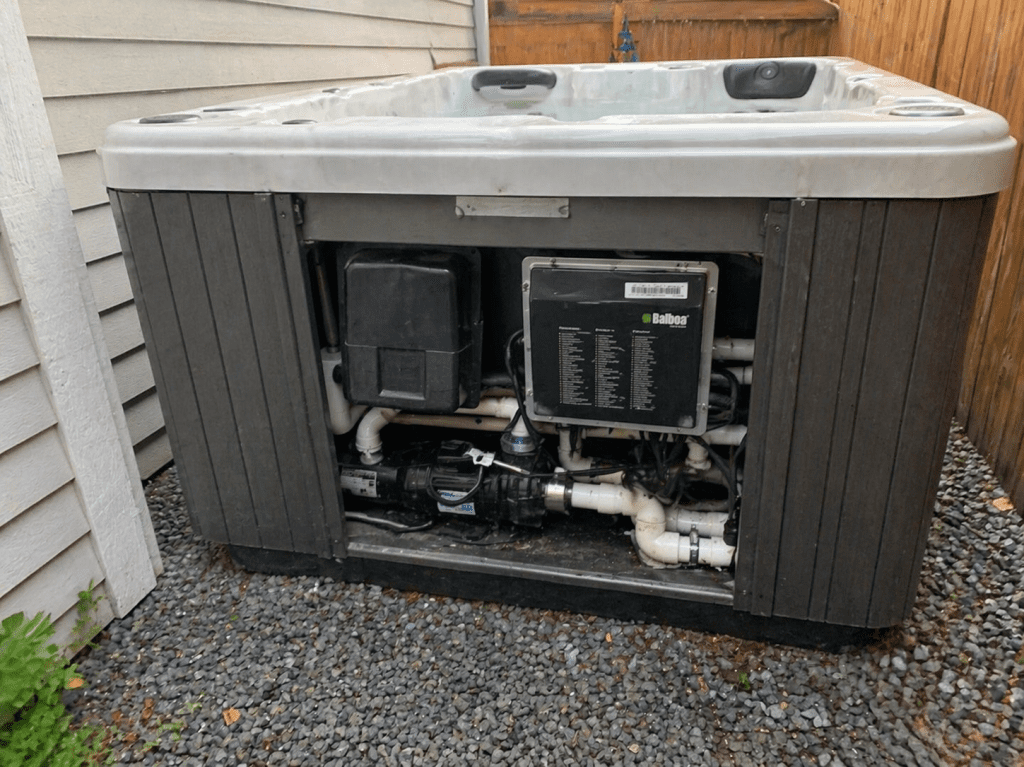
Every hot tub needs periodic access to its equipment compartment — the pump, heater, and plumbing all need servicing.
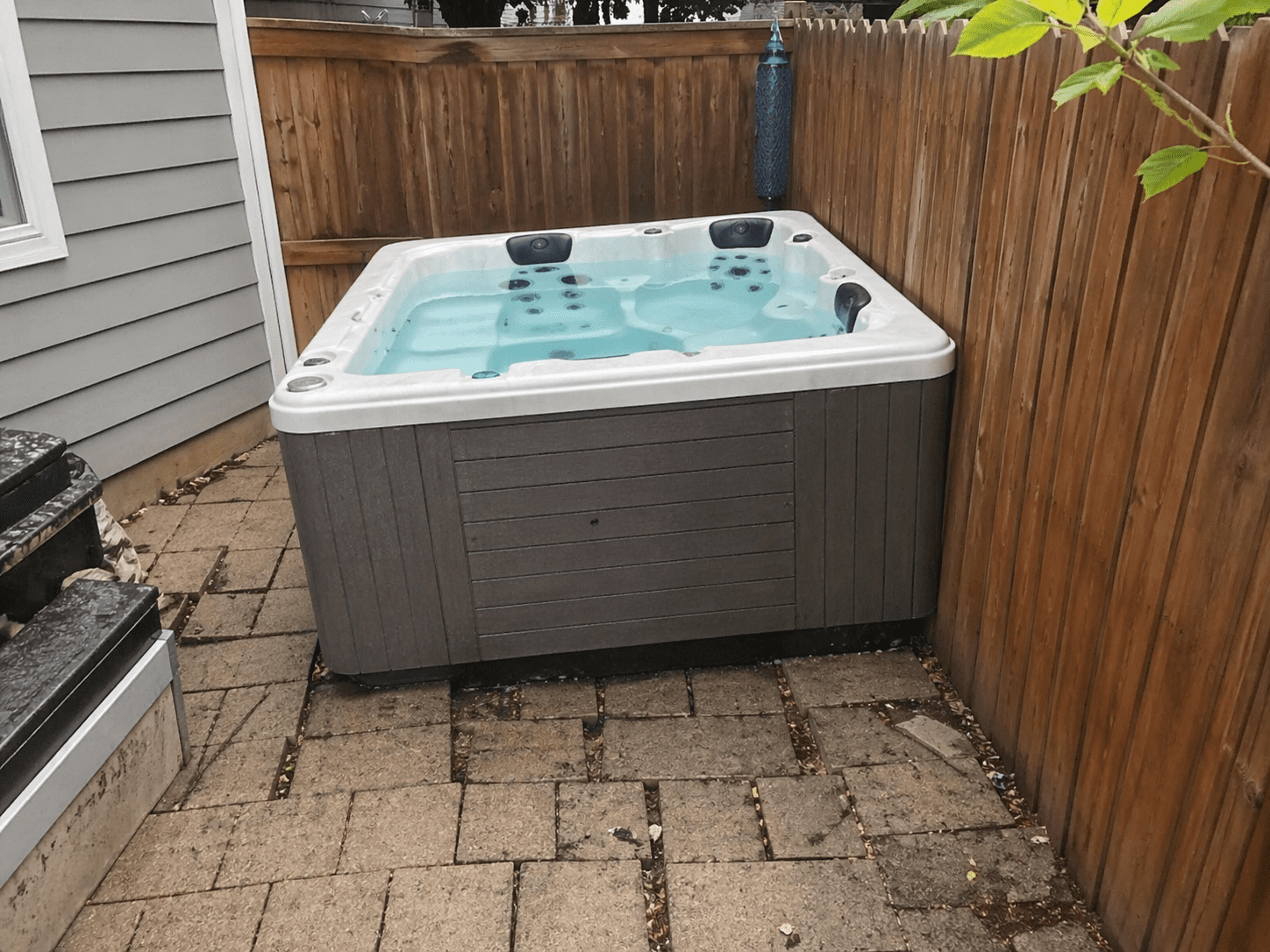
One of the quieter common hot tub installation mistakes is positioning the tub so close to a fence, wall, or structure that access panels become unusable. Technicians need 24–36 inches of clear working space on at least one side.
Check where your specific model’s access panels are located before you finalize placement. Manufacturers publish this in installation guides — read yours before delivery day.
Decking built around a tub looks beautiful. It also frequently blocks access points that need to stay reachable. If you’re decking around the tub, plan removable sections from the start. Retrofitting access later is expensive and disruptive.
Water Chemistry Mistakes on First Fill
The first fill sets the tone for your water for months. Getting it wrong is one of the more frustrating common hot tub installation mistakes because the effects linger.
Fresh tap water needs balancing before you heat and circulate it. Fill, then test for pH, alkalinity, and hardness before adding sanitizer. The order matters.
What chemicals do you add first when filling a hot tub? Start with a metal sequestrant if your water supply has high iron or copper levels. Then balance total alkalinity to 80–120 ppm, followed by pH to 7.2–7.8, then calcium hardness to 150–250 ppm. Add sanitizer last. Reversing this order makes balancing significantly harder and wastes chemicals.
Running the jets on poorly balanced water causes foaming, scale buildup on the shell, and damage to the circulation system. The CDC recommends maintaining proper disinfectant levels in residential hot tubs to prevent bacterial growth — including the bacteria responsible for hot tub rash and more serious infections.
Invest in a quality test kit before your first fill. Test strips give approximate readings — a liquid reagent kit or digital tester gives you data you can actually act on.
Pros and Cons of DIY vs Professional Installation
DIY Installation
Pros:
- Lower upfront labor costs
- Flexibility on timeline
- Sense of ownership over the project
Cons:
- High risk of electrical errors
- Permit and code knowledge required
- Mistakes are expensive to correct
- Warranty implications if wiring is non-compliant
Professional Installation
Pros:
- Code-compliant electrical from day one
- Permit coordination often handled
- Manufacturer warranty protected
- Faster completion
Cons:
- Higher upfront cost ($300–$1,000+ depending on scope)
- Scheduling coordination required
For most homeowners, professional electrical installation combined with owner-managed chemical setup is the sweet spot.
Hot Tub Installation: DIY vs Pro Comparison
| Factor | DIY | Professional |
|---|---|---|
| Electrical setup | High risk | Code compliant |
| Permit handling | Owner responsibility | Often managed |
| Warranty protection | Risk of voiding | Protected |
| Upfront cost | Lower | $300–$1,000+ |
| Speed | Variable | Faster |
| Risk of mistakes | Higher | Lower |
| Best for | Experienced owners | Most homeowners |
Helpful Gear for a Smoother Setup
This product wiil help you sidestep common hot tub installation mistakes during the setup and early maintenance phase.
Taylor K-1001 Basic residential Pool and Spa Test Kit — This is the go-to liquid reagent kit for accurate water chemistry readings, and it gives you far more reliable data than strips during that critical first-fill balancing phase.
FAQ
Do you need a permit to install a hot tub in the US? In most US jurisdictions, yes. Hot tub electrical connections typically require a permit, and the structural pad work may also need approval depending on local codes. Requirements vary by state and municipality, so contact your local building department before work begins. Installing without a permit can affect home resale and insurance claims.
How long does hot tub installation take? A straightforward installation — concrete pad poured and cured, electrical run by a licensed electrician, delivery and placement — typically takes 1–3 weeks from start to first soak. The longest variable is concrete curing time and electrician scheduling. Rushing either creates problems.
What is the most common hot tub installation mistake? Skipping or underestimating the electrical requirements is the most common and most dangerous mistake. A hot tub needs a dedicated GFCI-protected 240V circuit. Sharing circuits, using undersized wiring, or omitting the GFCI breaker creates safety hazards and voids manufacturer warranties immediately.
The simple rule: plan the infrastructure before you plan the fun.
Summary Snapshot
- Permits protect you legally and financially — never skip them
- Electrical setup requires a dedicated 240V GFCI-protected circuit, always installed by a licensed electrician
- Pads need to be 4–6 inches of reinforced concrete, fully cured before loading
- Plan drainage before delivery, not after
- Keep 24–36 inches of maintenance access clear on at least one side
- Balance water chemistry in the right order before heating
- Common hot tub installation mistakes are entirely avoidable with preparation
Final Verdict
Common hot tub installation mistakes share one root cause: underestimating how much infrastructure a hot tub actually needs.
This isn’t a plug-and-play appliance. It’s a permanent fixture with serious electrical, structural, drainage, and chemical requirements. Get those right and you’ll have a backyard setup that runs reliably for 10–15 years. Get them wrong and the cost of corrections will dampen the enjoyment fast.
The checklist isn’t long. Permits, dedicated electrical circuit, proper pad, planned drainage, maintenance access, and correct first-fill chemistry. Work through those six areas before delivery day and you’re in good shape.
Keep Exploring
If you’re weighing up broader installation decisions, our earlier posts in the Hot Tub Installation cluster cover everything from planning timelines to cost breakdowns .
For readers also exploring heat therapy options beyond the tub, Steam Room Health Benefits — covers how steam rooms compare for recovery and relaxation.