Hot Tub Lighting Options That Actually Transform Your Soak
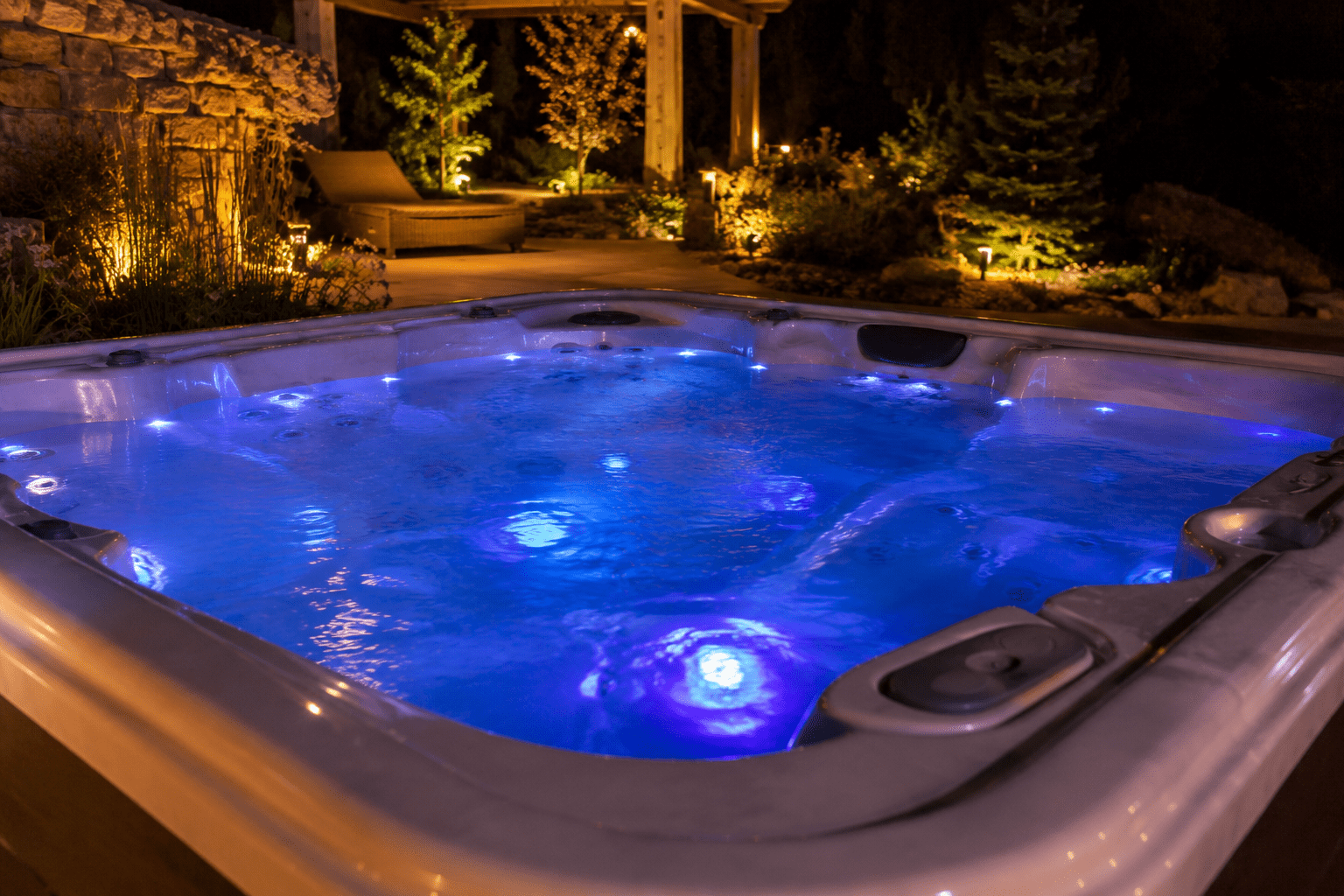
Hot tub lighting options are one of those upgrades most people don’t think about until they use someone else’s setup at night — and then immediately want it for themselves. The difference between a plain tub and a properly lit one after dark is genuinely striking. It shifts the entire mood, not just the aesthetic. And once you’ve soaked in a tub with good lighting running, going back feels like watching a film with the lights left on.
This isn’t a luxury category. It’s a practical one. Here’s what’s actually worth your money and what isn’t.
Heads up — this post contains affiliate links. If you buy through them, I may earn a small commission at no extra cost to you. I only recommend products I’d use myself.
Quick Snapshot
- Hot tub lighting options range from simple floating LEDs to full built-in RGB systems
- Budget options start around $20–$40; integrated systems run $150–$500+
- Most aftermarket lights require zero hardwiring — they clip, suction, or float
- Color-changing RGB lights are the most popular choice for good reason
- Waterproofing rating (IP68) is the non-negotiable spec to check before buying
- Maintenance is minimal if you buy the right rating from the start
- Installation ranges from plug-and-play to professional electrical work
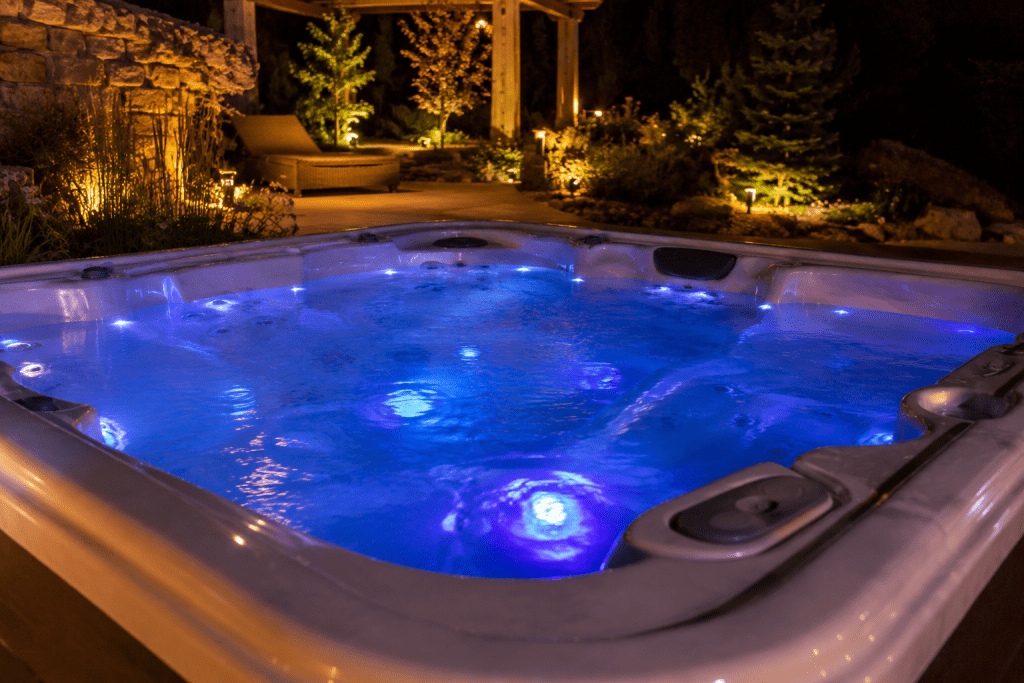
Table of Contents
- What Hot Tub Lighting Actually Does
- The Real Cost of Hot Tub Lighting
- Installation — How Hard Is It Really?
- Maintenance Reality
- Honest Pros and Cons
- Lighting Types Compared
- Comparison Table
- Helpful Gear
- FAQ
- Final Verdict
What Hot Tub Lighting Actually Does
Hot tub lighting options do more than make your tub look good in photos. The right setup changes how long you actually stay in the water. Ambiance is underrated — when the environment feels intentional, you relax more deeply. That’s not marketing language, that’s just how it works in practice.
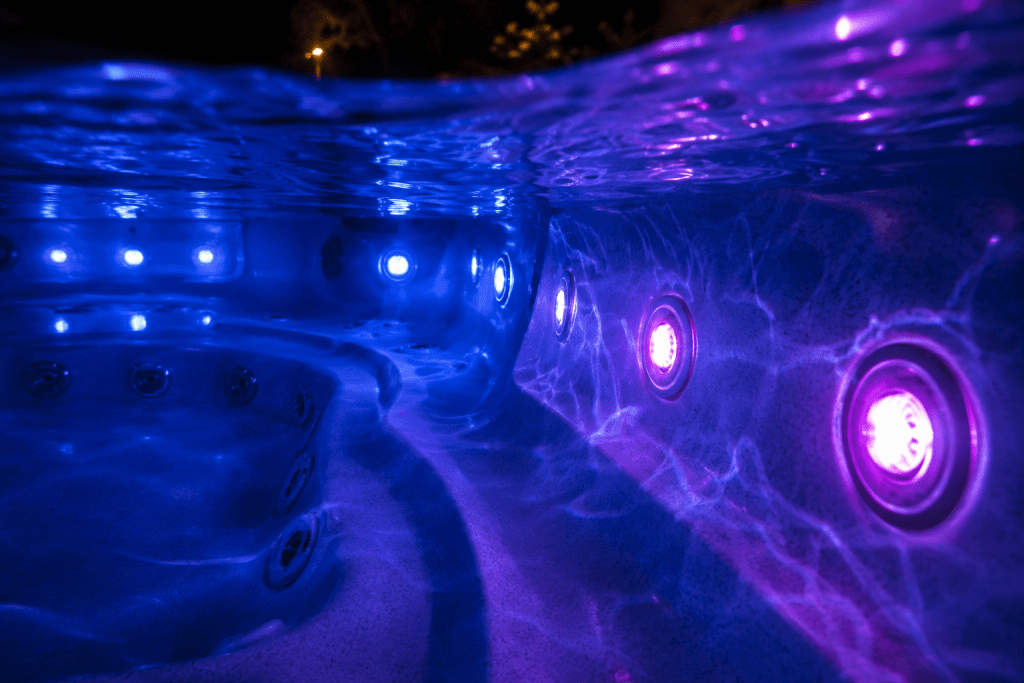
The most common types are underwater LED strip lights, floating orbs, spotlights mounted on the cabinet exterior, and full integrated RGB systems. Each sits at a different price point and requires a different level of commitment. Most people start with floating or suction-mounted LEDs and eventually move to something more permanent once they’ve confirmed they use the tub regularly enough to justify it.
What’s the difference between integrated and aftermarket hot tub lighting? Integrated lighting is built into the tub shell or jets and controlled via a topside panel. Aftermarket options — LEDs, floating lights, suction-cup spotlights — add on without touching the tub’s wiring. Aftermarket is cheaper and easier to install; integrated looks cleaner and is more durable long-term.
One thing I’d add from real use: the jets on a hot tub do most of their best work on your legs and lower back if you position yourself correctly, and good lighting actually changes how much attention you pay to that positioning. You settle in more deliberately when the environment feels right. It sounds small. It isn’t.
The Real Cost of Hot Tub Lighting — 5 Price Points Explained
Hot tub lighting options span a wide range, and knowing which tier makes sense for your situation saves you from over- or under-spending. Here’s how the market actually breaks down.
Entry level ($20–$50): Floating LED orbs and suction-cup underwater lights. Battery or USB powered. No installation. Fine for occasional use, but battery life is usually 6–10 hours and the light output is modest.
Mid-range ($50–$150): Solar-powered or rechargeable LED strips. Better brightness. Some include app or remote control for color changes. Still plug-and-play in most cases. This is where hot tub lighting options start to feel genuinely useful rather than novelty.
Premium aftermarket ($150–$300): Submersible LED systems with dedicated transformers. Hardwired to a low-voltage circuit. Much brighter, more durable, and designed for permanent installation. Requires some basic electrical work but not necessarily a licensed electrician for low-voltage setups.
Integrated systems ($300–$500+): Factory or retrofit integrated RGB lighting tied to the tub’s existing control system. Cleanest look. Highest cost. Usually requires a professional if retrofitting to an older tub.
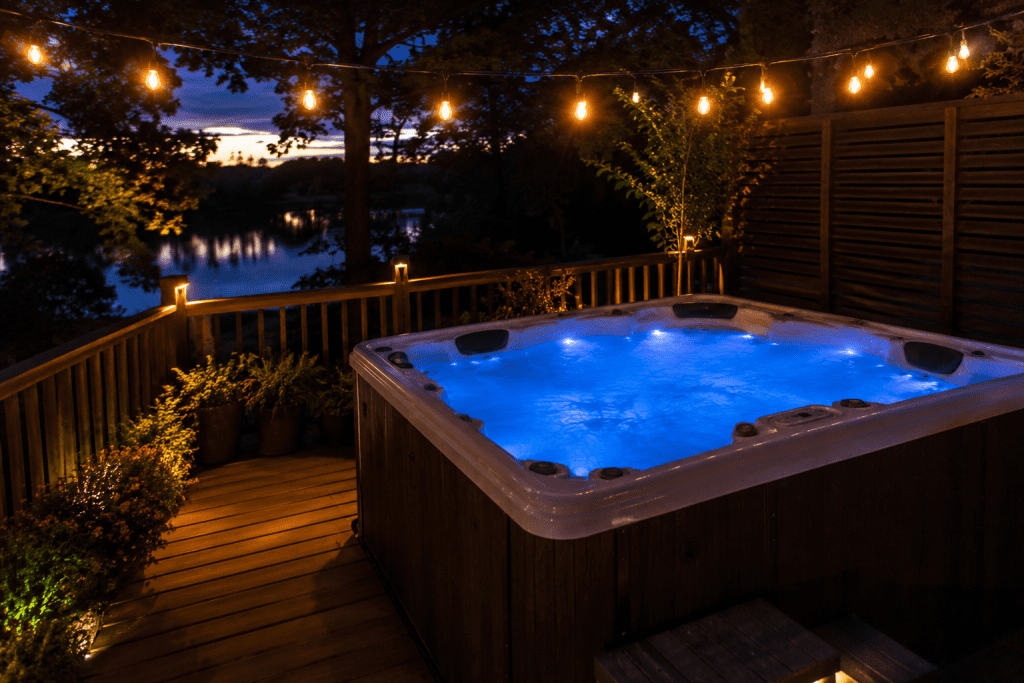
Full landscape/cabinet lighting (variable): External spotlights, deck lighting, and perimeter LEDs that frame the tub area. These aren’t in-tub products, but they’re part of the hot tub lighting options conversation because they dramatically change the overall environment. Costs depend on scope.
Worth noting: LED lighting draws very little power compared to the tub’s heater and pumps. The U.S. Department of Energy notes that electric resistance heating and high-draw appliances dominate home energy bills — so your lighting addition won’t meaningfully affect running costs. The tub itself is the cost. The lights are rounding error.
Installation Friction — What Nobody Tells You
This is where a lot of people get confused. Hot tub lighting options sit in a few different installation categories, and the wrong assumption leads to a project that stalls.
Floating and suction-mount lights: zero installation. Drop them in, turn them on. Done. These are the path of least resistance.
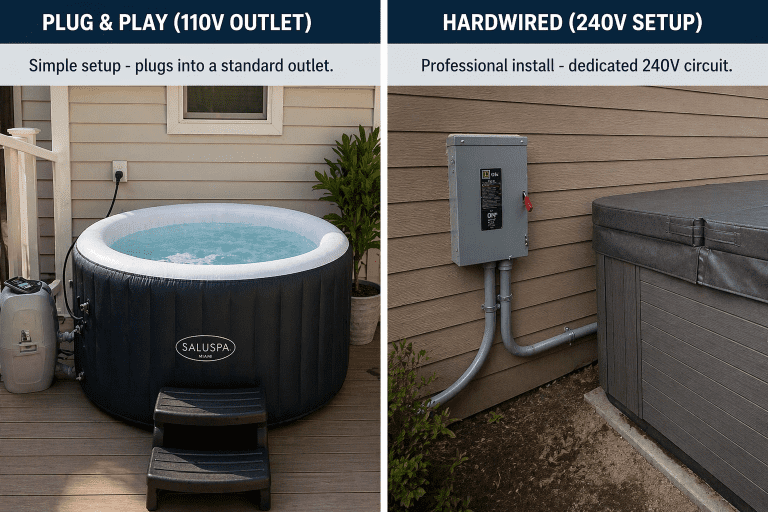
Submersible LED strips and spotlight units: typically suction or bracket mount. Most are self-contained. Some require a low-voltage transformer plugged into a standard outdoor outlet. As long as you have a GFCI outlet within reach, no electrician needed.
Integrated retrofit systems: this is where you need to be honest with yourself. If your tub has existing lighting ports or conduit, retrofitting is manageable. If not, you’re running new wiring, which in most states triggers permit requirements. The Nolo permit guide is worth reading if you’re in this territory:
Hot tub lighting options that require permits are rarer than you’d think — most aftermarket products are specifically designed to avoid that complexity. But it’s worth knowing before you buy. The honest limitation most guides skip: waterproof ratings vary wildly between budget products, and IP67 versus IP68 is a real difference when a product is permanently submerged.
Maintenance — The Honest Version
Hot tub lighting options require almost no maintenance if you buy correctly rated products to begin with. The failure point is almost always a product rated for splash-resistance that ends up fully submerged.
For floating and clip-on LEDs: rinse when you clean the tub. Check contacts periodically for corrosion, especially in areas with hard water. Replace batteries or recharge as needed.
For submersible or integrated LEDs: these are largely maintenance-free. The LED bulbs themselves last tens of thousands of hours. What you’re maintaining is the seal and the connection points. Inspect every few months. If you use the tub regularly and keep your water chemistry balanced — which you should be doing anyway — hot tub lighting options in this category rarely give problems.
One thing worth knowing: chlorine and bromine levels that are consistently high can degrade cheaper seals over time. This is an argument for buying IP68-rated products, not skimping on water chemistry.
Honest Pros and Cons
Pros
- Dramatically improves evening use experience
- Aftermarket hot tub lighting options require no professional installation in most cases
- RGB color-changing LEDs are inexpensive relative to the impact they have
- Minimal running cost — LED draw is negligible compared to the tub itself
- Wide range of price points means options exist for every budget
Cons
- Budget options often have lower IP ratings than advertised
- Permanent integrated lighting requires professional installation for most homeowners
- Battery-powered floaters need regular recharging or replacement
- Some color-changing systems have app connectivity that’s frustratingly unreliable
- Aesthetic preferences are personal — what looks great to one person looks garish to another
Lighting Types Compared — Which One Actually Suits You
Comparing hot tub lighting options isn’t just about price. It’s about how you actually use the tub, how technically inclined you are, and what outcome you want.
If you want something tonight: floating LED orbs or a suction-cup submersible set. Buy it, drop it in, done.
If you want something that looks genuinely premium without a major project: a low-voltage submersible LED strip system with a transformer. Takes an afternoon. No permit. Looks like it was designed for the tub.
If you’re building or renovating and want integrated lighting from the start: this is the time to do it. Hot tub lighting options integrated during installation or cabinet build are dramatically cheaper than retrofitting later.
If ambiance is the goal and you want layered lighting: combine underwater color-changing LEDs with perimeter cabinet lighting and maybe a waterproof string light canopy overhead. This is the setup that turns a hot tub into an experience. I’d done this kind of layering after seeing how much the environment changed things — it reminded me of how a decent setup around a sauna matters just as much as the unit itself, which I covered in detail in Indoor vs Outdoor Saunas.
What’s the best affordable hot tub lighting option? For most people, a submersible RGB LED strip or a set of color-changing floating orbs hits the sweet spot. Expect to spend $30–$80, get IP68 waterproofing, and look for remote or app control. This gives you the visual impact without any installation complexity.
If you want to go deeper on what accessories actually move the needle on a hot tub setup, the Best Hot Tub Accessories post covers the full picture including covers, steps, and water treatment essentials.
Comparison Table
| Type | Price Range | Installation | Durability | Best For |
|---|---|---|---|---|
| Floating LED orbs | $20–$50 | None | Moderate | Occasional use, renters |
| Suction-cup spotlights | $25–$60 | None | Moderate | Quick upgrade |
| Submersible LED strips | $50–$150 | Low-voltage plug | High | Regular users wanting a clean look |
| Integrated RGB system | $200–$500+ | Professional | Very high | New installs, permanent setups |
| Cabinet/exterior lighting | $50–$300+ | Varies | High | Full ambiance layering |
Helpful Gear
Submersible LED light strip set — A waterproof LED strip designed for underwater use in hot tubs and pools, typically including a transformer, suction-cup mounts, and a remote or app controller for color and brightness.
Floating color-changing LED orbs — Rechargeable, waterproof spheres that float freely in the tub and cycle through colors or hold a fixed tone. Great for zero-installation ambiance.
Outdoor waterproof string lights — Weatherproof LED string lights designed for outdoor use that can be hung above or around the tub area to create layered overhead.
FAQ
Do hot tub lighting options require an electrician to install? Most aftermarket options do not. Floating LEDs, suction-cup submersibles, and low-voltage LED strip systems are all designed for self-installation. You’ll need a GFCI-protected outdoor outlet nearby for transformer-based systems. Integrated lighting that ties into your tub’s control panel or requires new circuit wiring is the exception — that typically needs a licensed electrician and may require a permit depending on your state.
What waterproofing rating do I need for hot tub lights? IP68 is the standard to look for in any light that will be fully or partially submerged. IP67 is splash-resistant but not designed for continuous submersion. Hot tub lighting options marketed as “waterproof” without an IP rating are a red flag — that term alone has no standardised meaning. IP68 means the product has been tested for continuous immersion beyond one meter, which is what you actually need.
Will hot tub lighting options raise my electricity bill? Meaningfully, no. LED lighting draws a fraction of a watt to a few watts depending on the type. Your hot tub’s heater and circulation pump are the real draw — LED lighting adds almost nothing. The running cost conversation for hot tubs is about heat retention, insulation, and pump efficiency, not lighting.
Simple rule: If it’s going in the water, it needs an IP68 rating. Everything else is preference.
Summary Snapshot
- Hot tub lighting options range from $20 floating LEDs to $500+ integrated systems
- IP68 waterproofing is non-negotiable for any submerged product
- Most options are self-install — no electrician required
- RGB color-changing LEDs offer the best impact per dollar
- Layering underwater, cabinet, and overhead lighting creates the best overall environment
- LED running costs are negligible — the tub’s heater dominates energy use
Final Verdict
Hot tub lighting options are one of the few accessories that deliver an immediately noticeable return. It’s not a performance upgrade — the jets don’t work better, the water doesn’t stay hotter. But the experience changes in a way that’s hard to describe until you’ve sat in a well-lit tub after dark. It becomes genuinely restorative in a different way. The combination of heat, jets, and the right environment is something you feel, not just see.
The most practical path for most people: start with a quality submersible LED strip set at the $50–$100 mark and see how much you actually use the tub at night. If you’re in there three times a week once the lights are running — which is what tends to happen — then invest in something more permanent. Hot tub lighting options in the integrated tier make more sense once you’ve confirmed the usage pattern justifies the spend.
That natural high that comes from a proper hot tub session — especially when paired with a cold contrast afterward — is real and lasts for hours. The right lighting doesn’t manufacture that feeling, but it removes everything that breaks it.