Hot Tub Installation Cost in 2026: What You’ll Really Pay
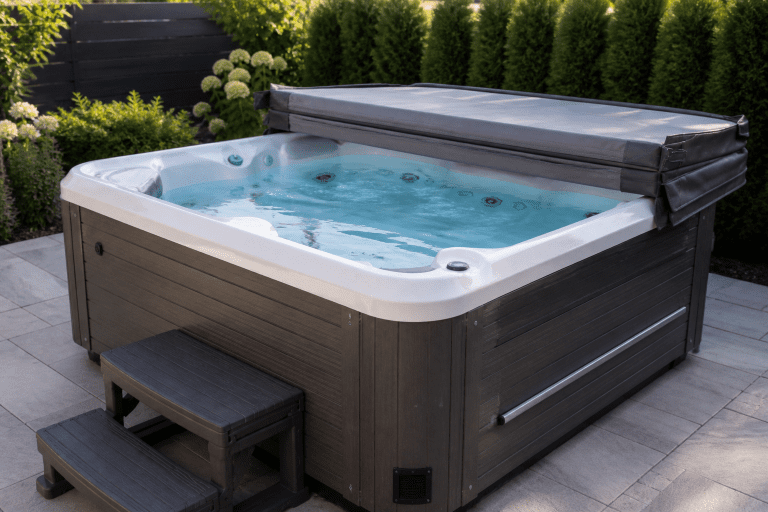
The hot tub installation cost in 2026 runs the full spectrum — from a few hundred dollars if your setup is simple, to well over $10,000 if you’re working with an electrical upgrade, a custom pad, and permits. Most people shopping for a hot tub fixate on the sticker price of the unit itself and treat installation as an afterthought. That’s how people end up shocked by the final invoice.
I want to walk you through what installation actually involves, what drives the price up (or keeps it down), and how to think about the full cost of ownership before you commit. This isn’t a scare piece — hot tubs are genuinely worth it for a lot of people. But going in with clear expectations makes the whole experience better.
Disclosure: Sunrise & Vitalize participates in the Amazon Associates program and other affiliate partnerships. Some links in this post may earn us a small commission at no extra cost to you. We recommend products based on features, value, suitability, and our research.
Quick Snapshot: Hot Tub Installation Cost in 2026
- Total installed cost (unit + installation): $5,000–$35,000 for most homeowners
- Installation alone (labor, electrical, pad): $1,000–$10,000+
- Electrical upgrade (if needed): $1,000–$4,000 extra
- Concrete pad or decking: $800–$6,000 depending on size and material
- Permits: $50–$500 depending on your municipality
- Ongoing monthly costs: $50–$150 in utilities and chemicals
- Budget 20–30% above the tub’s price for total installation costs
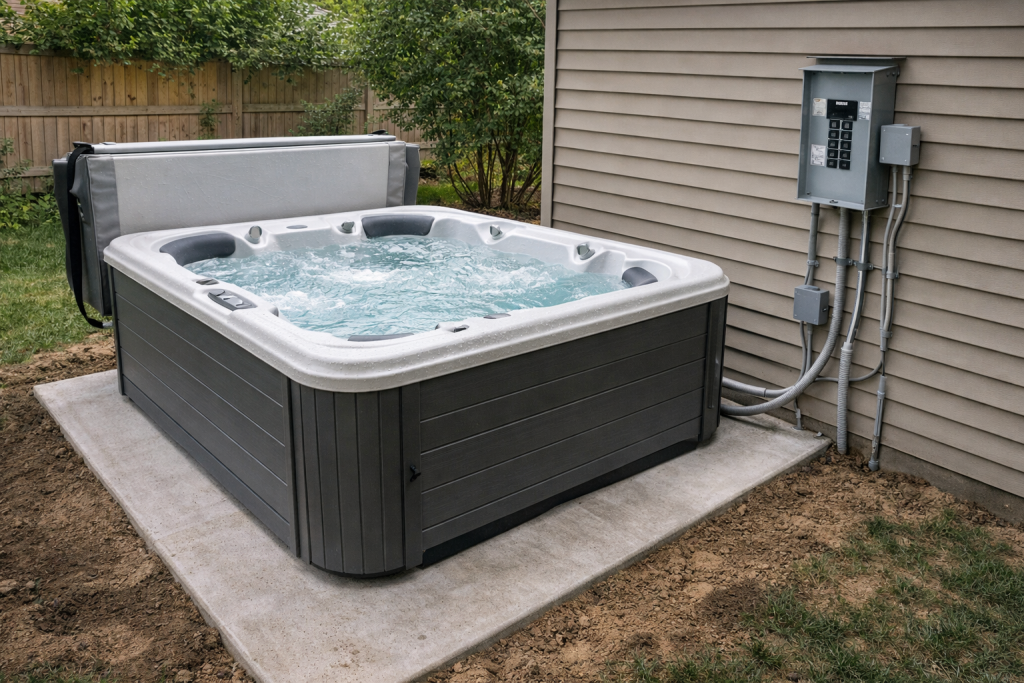
Table of Contents
- What “Installation” Actually Covers
- The Cost Reality: Real Numbers, Real Context
- Installation Friction: What Slows Things Down and Costs More
- Maintenance Costs: The Part That Never Stops
- Pros and Cons of Hot Tub Ownership
- How Hot Tubs Compare to Other Wellness Installs
- Helpful Gear
- FAQ
- Final Verdict
What “Installation” Actually Covers
When people ask about hot tub installation cost, they usually mean labor for setting the tub in place. In reality, hot tub installation is three or four distinct projects rolled into one, and each one has its own contractor, timeline, and price tag.
The Foundation
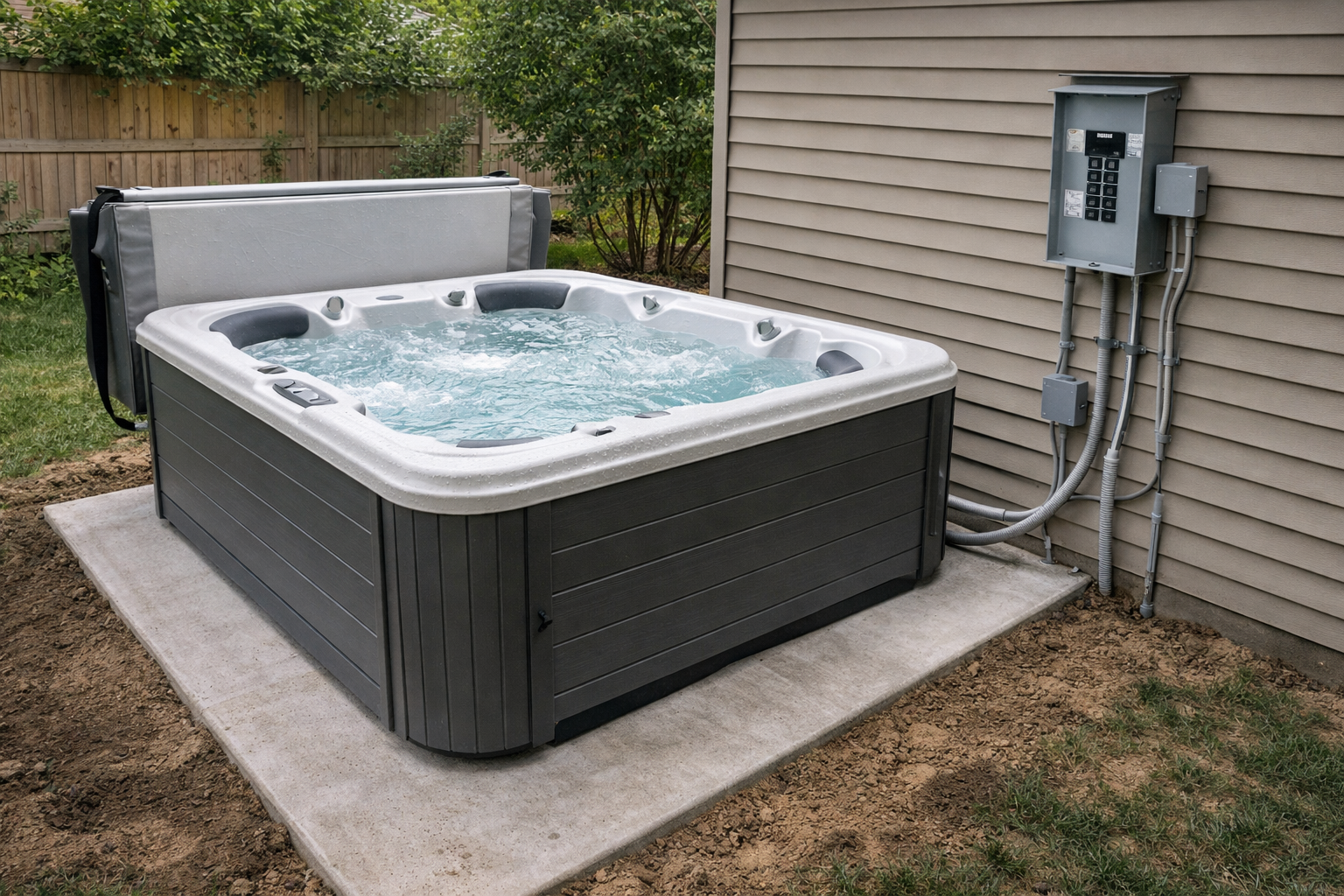
Hot tub installation cost starts with the foundation. A filled hot tub can weigh several thousand pounds, so the base needs to be level, stable, and capable of supporting the fully loaded weight. Depending on the model and site, suitable options may include a properly constructed concrete slab, reinforced deck, engineered spa pad, or prepared gravel base. Always check the hot tub manufacturer’s foundation requirements and local building rules before choosing the base.
The Electrical Run
. Most full-size hot tubs require a dedicated 240V/50A or 240V/60A circuit, GFCI-protected, installed by a licensed electrician and inspected before the tub can be energized. If your panel is close to the installation site and has capacity, this might cost $500–$1,000. If you need a panel upgrade, a long conduit run, or trenching through landscaping, you’re looking at $2,000–$4,000 or more.
Plug-and-play 110V hot tubs are the exception — they require only a standard outdoor outlet — but they typically max out at 4–5 seats and heat slowly. They’re worth considering for entry-level buyers or smaller spaces.
Delivery and Crane Work
Hot tubs arrive on a flatbed truck. Getting the unit from the driveway to your backyard install location is the first logistical challenge. If there’s a clear, wide path: no problem, a team of delivery workers handles it. If the path requires removing fence panels, navigating tight spaces, or lifting over a wall — that may require a crane. Crane rentals typically run $500–$1,500 for a half-day, sometimes more in urban areas.
Permits
Permit requirements vary by location and by the work involved. Electrical work, structural changes, new foundations, barriers, or decking may require permits or inspections depending on local rules. Check with your local building authority before work begins and include any permit fees in your installation budget.
How much does it cost to install a hot tub in 2026?
The average hot tub installation cost in 2026 — including the unit, electrical work, pad, and labor — ranges from $5,000 to $35,000 for most homeowners. Budget an additional 20–30% on top of the hot tub’s purchase price to cover installation. Entry-level 110V plug-and-play models can be installed for as little as $500–$2,000 extra, while premium 240V installations with custom decking often exceed $10,000 in installation costs alone.
The Cost Reality: Real Numbers, Real Context
Here’s the breakdown most people need before they even walk into a showroom. These numbers reflect 2026 pricing across the continental United States, with regional variation noted where it matters.
| Cost Component | Low End | Typical | High End |
|---|---|---|---|
| Hot tub unit (entry level) | $2,500 | $4,500 | $7,000 |
| Hot tub unit (mid-range) | $6,000 | $9,000 | $13,000 |
| Hot tub unit (premium) | $13,000 | $18,000 | $30,000+ |
| Electrical (simple run) | $400 | $800 | $1,500 |
| Electrical (panel upgrade needed) | $1,200 | $2,500 | $4,500 |
| Concrete pad (basic) | $600 | $1,200 | $2,500 |
| Custom decking or surround | $1,500 | $4,000 | $8,000+ |
| Delivery and placement | $150 | $350 | $800 |
| Crane (if needed) | $500 | $900 | $1,800 |
| Permits | $50 | $200 | $500 |
| First-year startup chemicals | $150 | $300 | $500 |
The takeaway: if someone quotes you “just the tub price,” you’re probably not seeing the full picture. A $7,000 hot tub can easily become a $12,000–$14,000 project once you add all the ancillary costs. This isn’t a trap — it’s just how physical installations work, and knowing this up front makes you a much smarter buyer.
Regional variation affects hot tub installation cost significantly. Labor in California, New York, and the Pacific Northwest runs 30–50% higher than the Midwest or Southeast. If you’re in a rural area, contractors may charge travel fees as well.
What is the most expensive part of installing a hot tub?
For most homeowners, the electrical work is the biggest variable cost in hot tub installation. A simple 240V circuit run to a nearby location may cost $400–$1,500. However, if your electrical panel lacks capacity and needs an upgrade, or if the installation site is far from the panel, electrical costs alone can reach $3,000–$4,500. Custom decking and concrete work are a close second for premium builds.
Installation Friction: What Slows Things Down and Costs More
Beyond the direct costs, there are friction points that homeowners consistently underestimate. These aren’t just money issues — they affect the timeline and the stress level of the whole project.
Access and Site Logistics
The most common delay nobody plans for: the hot tub arrives and the path to the backyard won’t accommodate it. Fully assembled hot tubs don’t fit through standard 36-inch fence gates. If your yard is fenced with no wide access point, you’re either paying for a crane lift over the fence or removing and rehanging fence panels. Either solution adds cost and time.
Soil and Grade Issues
Sloped backyards require leveling and sometimes retaining structures before a pad can be poured. A simple 5-degree slope can turn a $1,000 pad into a $3,000 grading-and-pad project. Have a contractor walk your site before you buy the tub.
HOA and Local Code
Homeowners associations can require approval for hot tub placement, screening requirements (like fencing or landscaping), and aesthetic standards. Some municipalities require safety barriers — usually a 4-foot fence with a self-latching gate — around any spa or hot tub, particularly if children could access the yard. Check your local regulations before you finalize placement.
Contractor Availability
In many markets , licenced electricians book out 4-8 weeks -another hidden factor that affects your total hot tub installation cost timeline. especially in spring and summer. If you’re hoping to get in the water fast, buy in fall or winter when installer schedules are looser — and often when retailers run their best promotions
Maintenance Costs
Installation is a one-time event, but hot tub installation cost doesn’t stop there — maintenance is permanent.
The part that never stops
This is the cost category that surprises people most in year two, once the novelty has worn off and the reality of ownership has settled in.
Monthly Utility Costs
Electricity is one of the main ongoing costs of hot tub ownership. What you actually pay depends on local electricity rates, climate, water temperature, usage, insulation quality, tub size, and how effectively the cover retains heat. A well-insulated hot tub with a good-fitting cover will generally be cheaper to keep warm than a poorly insulated model, so energy efficiency is worth considering alongside the purchase price.
Other Ongoing Costs
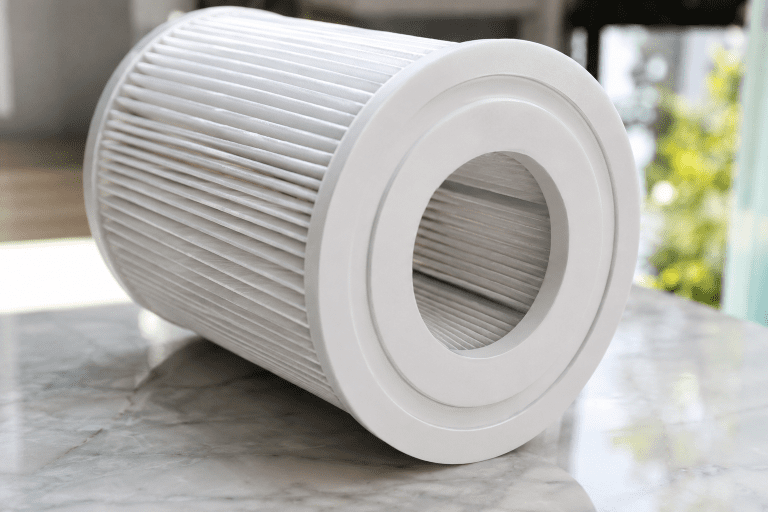
Electricity isn’t the only expense after installation. You’ll also need to budget for water-care chemicals, filter cleaning and replacement, periodic water changes, and eventually items such as a replacement cover or servicing.
Rather than treating those costs as part of installation, we’ve broken them down separately in our Hot Tub Maintenance Cost: The Honest Yearly Breakdown guide.
Pros and Cons of Hot Tub Ownership
Pros
- Daily access to hydrotherapy and relaxation
- Social and family gathering space
- Research-backed benefits for muscle recovery and sleep quality
- Potential home value increase (location-dependent)
- Year-round use in most climates
- Cheaper than a gym membership over time for those who use it regularly
Cons
- Significant upfront cost including installation
- Ongoing utility and chemical expenses
- Regular maintenance commitment
- Takes up permanent yard space
- Can be liabilities if not properly secured (children, guests)
- Resale value benefit is not guaranteed in all markets
How Hot Tubs Compare to Other Wellness Installs
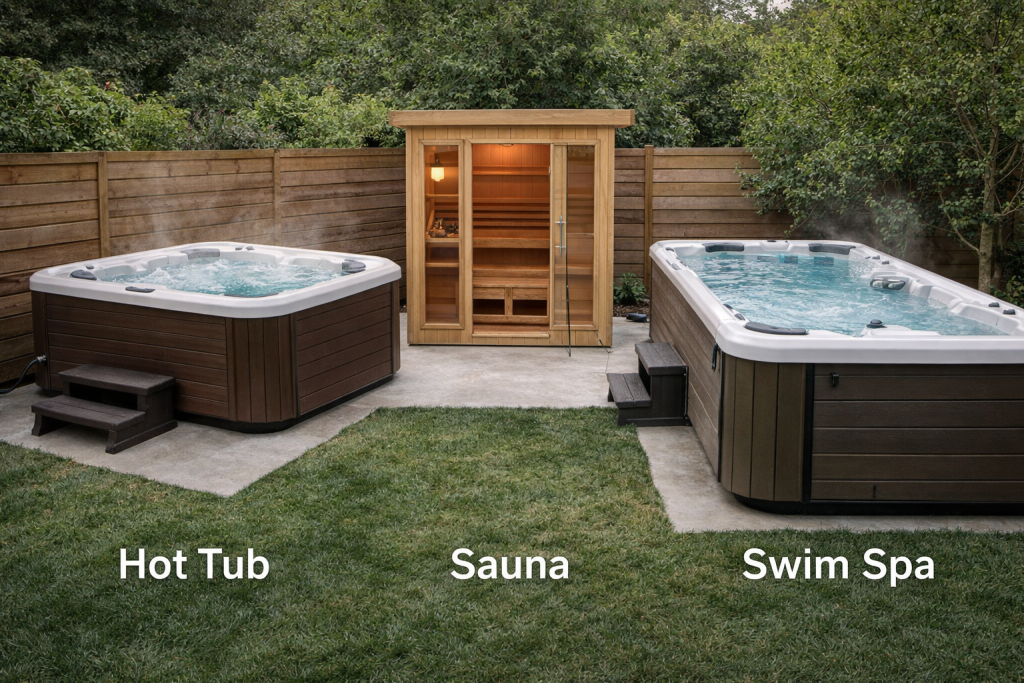
If you’re weighing a hot tub against other backyard or wellness investments, it helps to see the full landscape side by side. The hot tub installation cost in 2026 holds up well when you compare it to alternatives like swim spas, saunas, and steam rooms.
| Option | Install Cost Range | Monthly Ongoing | Best For |
|---|---|---|---|
| Hot Tub (standard) | $1,000–$10,000 | $50–$150 | Relaxation, social use, hydrotherapy |
| Swim Spa | $3,000–$15,000 | $80–$200 | Exercise + relaxation combined |
| Outdoor Barrel Sauna | $1,500–$8,000 | $20–$60 | Dry heat, relaxation, recovery |
| Indoor Steam Room | $2,500–$12,000 | $30–$80 | Humid heat and relaxation |
| Plug-and-Play Tub (110V) | $500–$2,000 | $40–$100 | Entry-level, renters, small spaces |
The hot tub is the most socially versatile option on this list. Saunas are excellent for solo or small-group wellness sessions and have a lower ongoing cost profile, but they don’t offer the same ambient social appeal as a bubbling outdoor tub on a cool evening. Read our post about outdoor sauna installation costs and what affects price.
Helpful Gear Worth Having Before You Fill Up
Hot Test Strips(7-1) Weekly water testing is non-negotiable. A good strip kit tests pH, chlorine/bromine, alkalinity, hardness, and cyanuric acid in one dip.
Floating Thermometer Digital readouts on hot tubs drift over time. An independent floating thermometer verifies your actual water temp, which matters for safe soaking
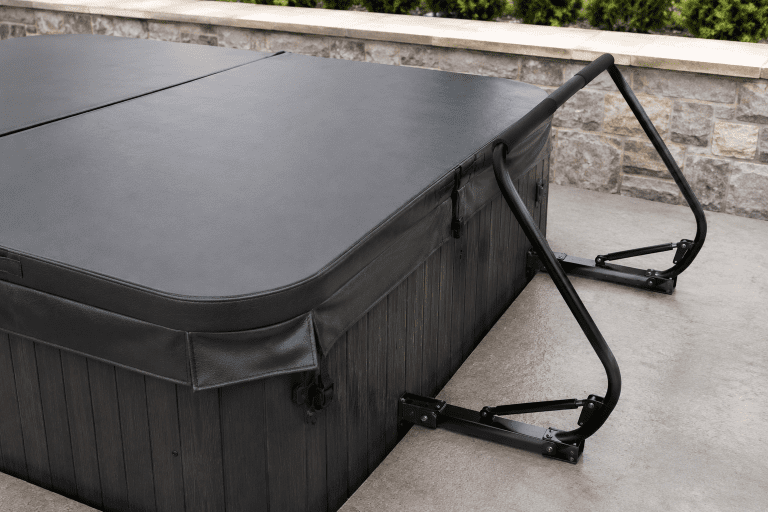
Cover lifter For Hot Tubs One of the most universally praised hot tub accessories. Makes solo use far more practical and reduces wear on the cover from awkward lifting
Frequently Asked Questions
Can I install a hot tub myself to save money?
You can handle some elements yourself — surface prep, pad framing assistance, landscaping around the tub — but the electrical work should always be done by a licensed electrician. Running a 240V circuit without a permit or inspection creates fire and shock hazards, voids warranties, and can cause serious problems when selling your home. The savings aren’t worth the risk.
How long does hot tub installation take from purchase to first soak?
From the day you order a hot tub to your first soak, plan for 4–10 weeks in most cases. Manufacturing or delivery lead times run 2–6 weeks for many brands. Electrical and pad work adds 1–3 weeks depending on contractor availability. Permitting can add another week or two in some municipalities. Rush scenarios are possible but usually cost more.
Does a hot tub increase home value?
It depends heavily on your market and buyer pool. In warm climates or areas where outdoor living is prized, a well-maintained hot tub can add modest value. In colder markets or among buyers who see it as a maintenance liability, it may be neutral or slightly negative. Most real estate agents advise not installing a hot tub primarily for resale value — install it because you’ll use and enjoy it.
Simple rule: Budget the tub price plus 25% to cover hot tub installation cost in full, and you’ll be close to reality in most markets.
Summary: Hot Tub Installation Cost in 2026
- Full installed cost for most buyers: $5,000–$35,000 all-in
- Electrical work is the biggest variable — get a quote before you commit to a site
- Concrete pad or solid base is non-negotiable for safety and longevity
- Plug-and-play 110V tubs are the most affordable entry point
- Monthly costs of $75–$150 are the realistic ongoing commitment
- Permits matter — don’t skip them
- Buy in fall or winter for better contractor availability and dealer promotions
What is the cheapest way to install a hot tub?
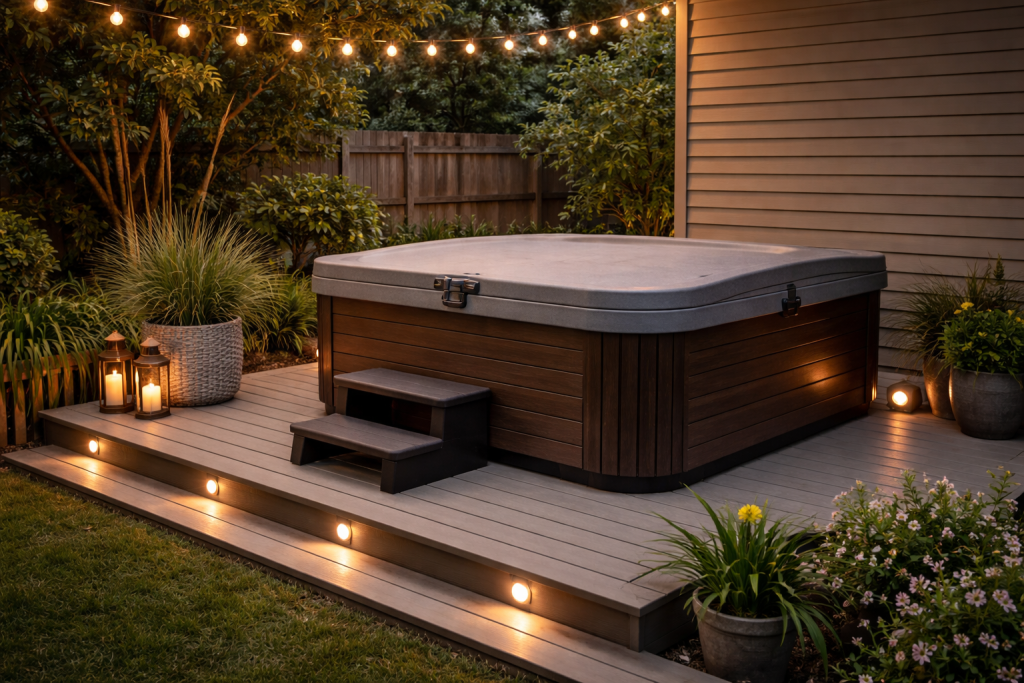
The most affordable hot tub installation approach is a plug-and-play 110V model placed on a precast composite spa pad. These tubs don’t require a new electrical circuit — just an outdoor GFCI outlet — and the pad costs $300–$600 instead of $1,000+ for a poured concrete slab. Total installation costs for this approach often run $500–$1,500 on top of the tub price, making it the most accessible entry point to hot tub ownership.
Final Verdict
Hot tub installation cost in 2026 is real money — but it’s not unpredictable if you do the homework beforehand. The homeowners who feel burned by the experience almost always skipped one of the key steps: getting a site assessment, pricing out the electrical work, or asking the dealer to walk through total project costs. The homeowners who love their tubs prepared for what it actually cost and went in clear-eyed.
If you’re ready to explore hot tub options that fit your budget and your space, we’ve put together our picks below. Every tub on our list has been evaluated for value, build quality, and total cost of ownership — not just the sticker price.
Before finalising your budget, it’s worth understanding what the electrical work actually involves — our guide to hot tub electrical requirements breaks down the 240V circuit costs that catch most buyers off guard. If you’re still deciding on placement, hot tub on a deck covers the structural and cost differences between deck and ground-level installs.