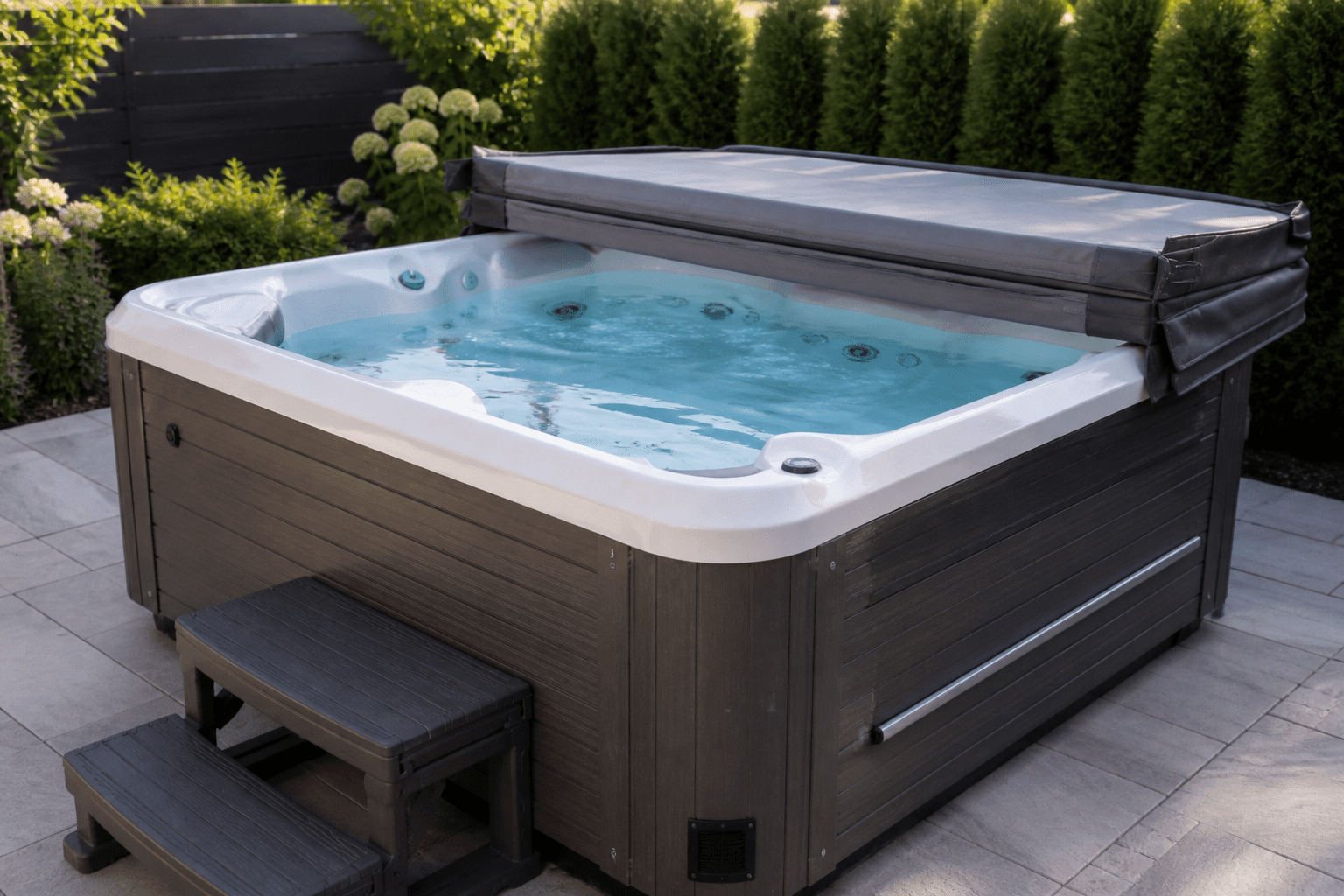
Are Hot Tub Covers Necessary? An Honest Look at What You Actually Need
Hot tub covers are one of those purchases that seem optional right up until you skip one and spend three months dealing with the consequences. If you’ve just bought a hot tub — or you’re thinking about it — the cover question comes up fast. Is it really necessary, or is it one of those upsell items that sounds more important than it is?
The short answer is yes. But let me give you the real version, not the one that just tells you to buy everything.
As an Amazon Associate, Sunrise & Vitalize earns from qualifying purchases. If you buy through an affiliate link, we may earn a small commission at no extra cost to you.
Quick Snapshot
- Hot tub covers retain heat, cut running costs, and protect water quality
- Without one, heat loss is significant — especially overnight
- Safety for kids and pets is a serious, non-negotiable consideration
- Energy savings depend on your climate, cover fit, insulation, and how you use the tub
- Maintenance is easier when the cover does its job properly
- Not all covers are equal — thickness and R-value matter
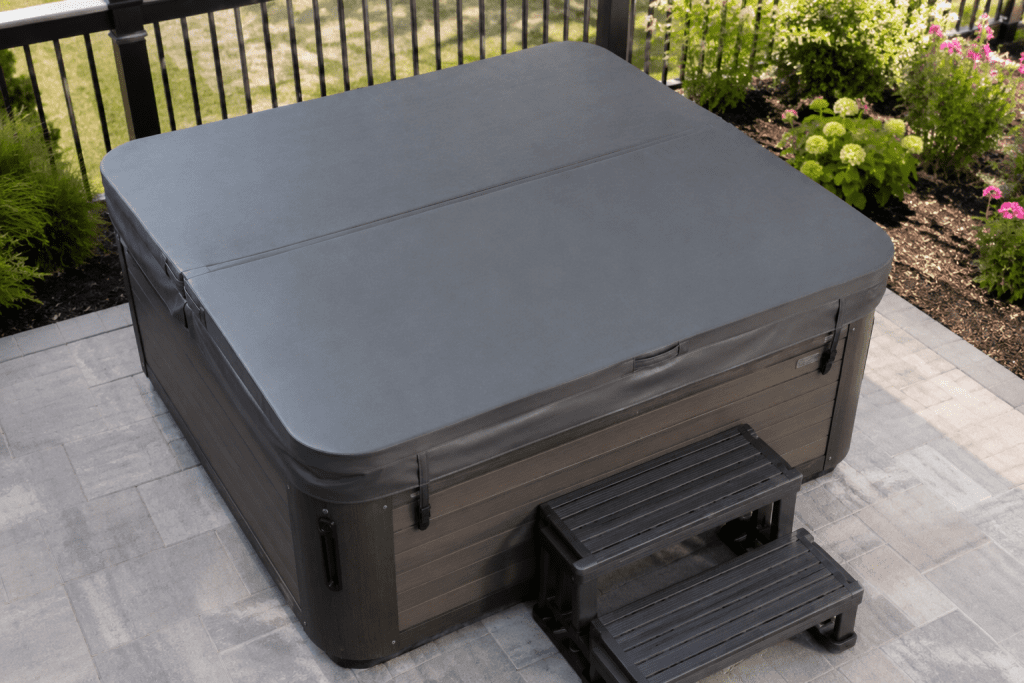
Table of Contents
- What Hot Tub Covers Actually Do
- The Real Cost of Going Without One
- Getting a Cover Fitted — Is It Complicated?
- Keeping Your Cover in Good Shape
- Pros and Cons
- Hard Cover vs Soft Cover — What’s the Difference?
- Comparison Table
- Helpful Gear
- FAQ
- Final Verdict
What Hot Tub Covers Actually Do
Hot tub covers do more than keep debris out — they’re doing three jobs simultaneously. The first is heat retention. A hot tub left uncovered overnight loses temperature fast, and your heater has to work harder and longer to bring it back up. The second is water chemistry. An open tub exposed to sunlight, rain, and airborne debris throws your chemical balance off more quickly, which means more frequent testing and more product. The third is restricting access when the tub is unattended. Locking straps alone do not make a cover a safety cover: check that the complete cover meets ASTM F1346 and secure it according to the manufacturer’s instructions. A cover does not replace adult supervision when children are near the tub.
A cover that fits well and is easy to remove makes everyday use simpler. Keeping debris out and reducing heat loss means less preparation before a soak, although the water still needs regular testing and treatment.
A well-fitting cover helps keep debris out and reduces evaporation. It does not replace water treatment: the CDC recommends regular testing and maintaining appropriate disinfectant and pH levels to reduce the risk of illness.
The Real Cost of Going Without One
This is where hot tub covers stop being a nice-to-have and become a financial argument. Running a hot tub uncovered significantly increases electricity costs. Heat escapes through the water surface continuously, and in cooler months, that loss is substantial. The amount saved depends on the tub, climate, temperature setting, and how well the cover fits and insulates. Over a year, that’s a meaningful amount.
Hot tub covers also reduce water evaporation. Evaporated water has to be topped up, and every time you add fresh water you’re diluting your chemical balance and starting the treatment cycle again. Without a cover, you’re refilling more often, adding more chemicals more frequently, and spending more time managing the water. The cover earns back its cost — it’s not a luxury item.
How much money do hot tub covers actually save? The energy savings from hot tub covers depend on climate, usage pattern, and cover quality, but the principle is consistent: a covered tub maintains target temperature with significantly less heater run time. In colder climates especially, the difference between a covered and uncovered tub on a cold night is dramatic. The cover is the single most cost-effective upgrade you can add.
Getting a Cover Fitted — Is It Actually Complicated?
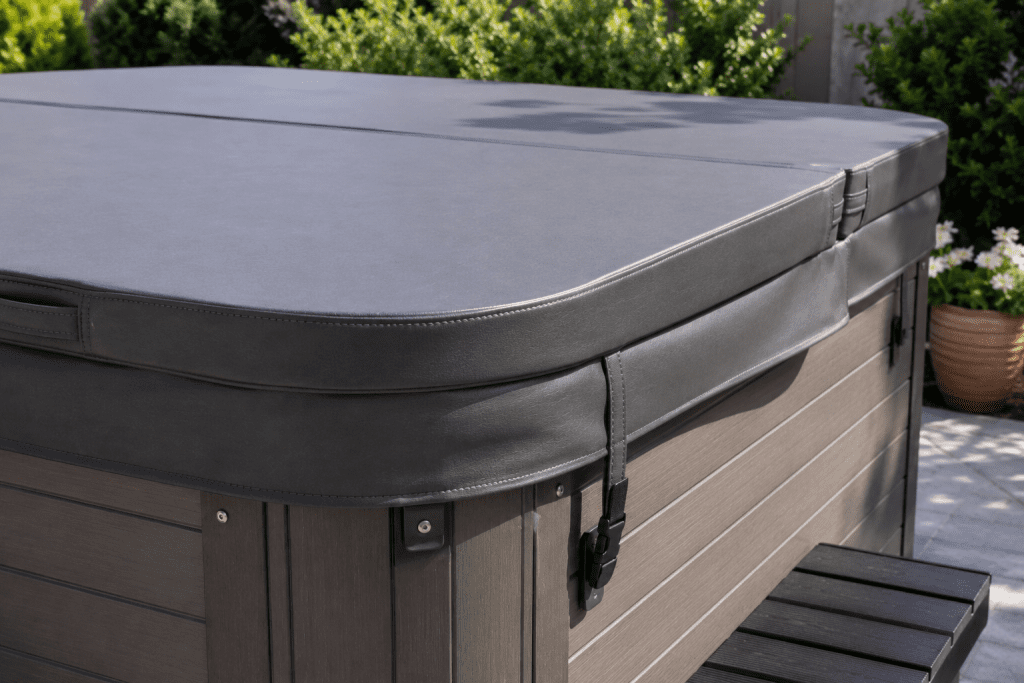
Most hot tub covers are made to fit standard tub dimensions, and many come included or are ordered alongside the tub at purchase. For an exact fit on non-standard shapes, custom covers are available but cost more. Fitting is typically straightforward — covers sit on top of the tub lip and are secured with strap locks or clips on the sides.
The lift mechanism is the part worth thinking about. Heavy-duty foam covers are awkward to lift and set aside on your own, especially if your tub is against a wall or in a tight corner. A cover lifter — a simple hinge-arm mechanism that folds the cover back — removes that friction entirely and is worth factoring in from the start. It’s one of those things that turns a minor daily irritation into a non-issue.
For permits, hot tub covers themselves don’t typically require them, but the installation of the tub structure may — you can check permit requirements at Nolo’s home improvement guide if you’re in the planning stage.
Keeping Your Cover in Good Shape
A neglected cover causes more problems than no cover at all. Foam cores that become waterlogged lose their insulating properties, get extremely heavy, and start harbouring bacteria in the degraded material. Hot tub covers need regular cleaning — the underside especially, since it sits in contact with warm, chemically treated water vapour constantly.
Follow the cover manufacturer’s cleaning instructions, rinse away cleaner residue, and inspect the straps, stitching, and seals regularly. Use a protectant only if it is approved for your cover material. Replace a cover that is damaged, no longer seals properly, or has become waterlogged and difficult to lift safely.
Pros and Cons
Hot tub covers are not a complicated product, but they’re worth understanding clearly before you buy.
The pros are significant. Heat retention is the headline benefit — the tub is always at temperature when you want it. Chemical stability is the quieter benefit that saves real money over time. Safety is non-negotiable for households with children or animals. And the act of removing and replacing the cover as part of your routine signals that the tub is maintained, not neglected — which keeps the whole experience better.
The cons are honest but minor. A high-quality cover adds upfront cost. Lifting a heavy foam cover without a lift mechanism is a daily annoyance. And covers eventually degrade and need replacing — usually every five to seven years for a well-maintained one. That’s not a compelling case against buying one. It’s just the full picture.
Hard Cover vs Soft Cover — Which Type Wins?
A well-fitting insulated cover helps retain heat between uses. When comparing replacements, check compatibility with your tub, insulation, the seal around the edges, and any documented safety certification.
“Soft cover” can mean a thin weather protector or an insulated rolling cover, so the label alone does not tell you how it performs. A weather protector goes over the insulated lid; it does not replace it. Compare the specifications of the actual products rather than assuming every rolling cover provides less insulation.
Comparison Table
| Feature | Insulated hot tub cover | Thin weather protector |
|---|---|---|
| Main purpose | Reduce heat loss between uses | Protect the insulated cover from weather and debris |
| Insulation | Check the model’s specifications and fit | Does not replace an insulated lid |
| Handling | Weight and lifter compatibility vary | Usually lightweight |
| Safety | Check documented ASTM F1346 compliance | Do not treat as a safety barrier |
| Replacement | When damaged, waterlogged or no longer sealing properly | When torn or deteriorated |
| Buying check | Tub dimensions, corner shape, seal and compatibility | Fit over the existing insulated cover |
Helpful Gear
Cover Valet Cover Caddy — An undermount, gas-assisted lifter that helps lift and store your cover without screwing into the spa cabinet or deck. Check spa compatibility and rear clearance before buying.
Cover lock and strap set — Replacement hardware for compatible hot tub covers. Check the strap dimensions and fittings before buying. Adding locks does not turn an ordinary cover into a certified safety cover.
FAQ
Are hot tub covers required by law? Requirements vary by state and local jurisdiction. Ask your local building department which barriers, locks, and safety-cover standards apply to your installation, and whether an approved safety cover can satisfy any barrier requirement. Ordinary locking straps alone do not establish compliance.
How long do hot tub covers last? A quality hard foam cover, properly maintained, typically lasts five to seven years. The failure mode is foam waterlogging — once the core absorbs water, the cover becomes too heavy to lift easily and loses its insulating properties. Routine cleaning and UV treatment extend lifespan significantly.
Can I use my hot tub without a cover? You can, but you’ll see the cost immediately. Heat loss accelerates, chemical stability drops, and debris accumulates in the water. Hot tub covers exist because the economics of running an uncovered tub are genuinely poor — it’s one of the clearest cases in home wellness where the accessory changes the maths entirely.
The simple rule: if you own a hot tub, you need a cover — not eventually, from day one.
Summary Snapshot
- Hot tub covers reduce running costs by retaining heat overnight
- Water chemistry stays stable longer with the tub covered
- Choose a well-fitting insulated cover; a thin weather protector does not replace it
- A cover lifter removes the main friction point of daily use
- Covers need regular maintenance to perform properly
- Safety locking is non-negotiable in households with children
![clean maintained hot tub in outdoor setting with cover partially removed]](https://sunriseandvitalize.com/wp-content/uploads/2026/05/d7d52217-0a0c-4578-98a1-7056f00de788-1024x683.png)
Final Verdict
Hot tub covers are not optional equipment — they’re the difference between a hot tub that runs efficiently and one that costs significantly more to operate while degrading faster. How quickly a cover pays for itself depends on its price and the energy saved. For access protection, choose a cover with documented safety compliance and follow local barrier requirements.
The detail most articles skip: hot tub covers also make you more likely to actually use the tub. When the water is always at temperature, always clean, and the tub takes thirty seconds to uncover and get into — you use it One with a heavy, awkward cover that someone has to wrestle with daily gets used less and less. That erosion in use is the real hidden cost.
If you’re ready to look at tubs with quality covers factored in from the start, the picks below are worth browsing.
For winter protection, Hot Tub Winter Cover explains insulated lids, weather caps, and why a cover alone cannot prevent freezing if heating or circulation fails.