Hot Tub Steps and Handrails: The Honest Guide to Getting Entry Right
Hot tub steps and handrails can seem like minor accessories until you’re stepping out onto a wet surface with nothing secure to hold onto. A good setup makes getting in and out of the spa easier while providing better footing and a stable handhold.
The right choice depends on your hot tub height, surrounding surface, available space, and who will be using it. This guide compares the main types of hot tub steps and handrails, typical costs, installation considerations, maintenance, and the features worth checking before you buy.
Affiliate disclosure: Some links in this article are affiliate links. Sunrise & Vitalize may earn a commission from qualifying purchases at no additional cost to you.
Quick Snapshot
- Hot tub steps and handrails are a safety essential, not a luxury add-on
- Steps come in freestanding, wraparound, and deck-integrated styles
- Handrails attach directly to steps or mount independently to a deck
- Non-slip surfaces and weight capacity are the two specs that matter most
- Budget options start around $80–$150; premium combo units run $250–$500+
- Most setups require no permit; deck-integrated builds may need one
- Maintenance is low — rinse, check bolts, inspect grip surfaces seasonally
Table of Contents
- What Hot Tub Steps and Handrails Actually Do
- The Real Cost Breakdown
- Installation: What to Expect
- Maintenance — Keeping It Safe Over Time
- Pros and Cons
- How the Options Compare
- Comparison Table
- Helpful Gear
- FAQ
- Final Verdict
What Hot Tub Steps and Handrails Actually Do
Hot tub steps and handrails solve a specific physical problem — most hot tubs sit 24 to 36 inches off the ground, and that’s an awkward height for a standard step. Without proper entry equipment, you’re either hoisting yourself over the edge or asking guests to do the same, often on a wet surface, often barefoot.
The category splits into three main approaches. Freestanding steps are the most common — they sit beside the tub independently and can be repositioned as needed. Wraparound steps partially frame the tub cabinet on two sides, which adds stability and a cleaner visual finish. Deck-integrated steps are built directly into a surrounding deck structure and tend to look the most polished, though they require more planning and labour.
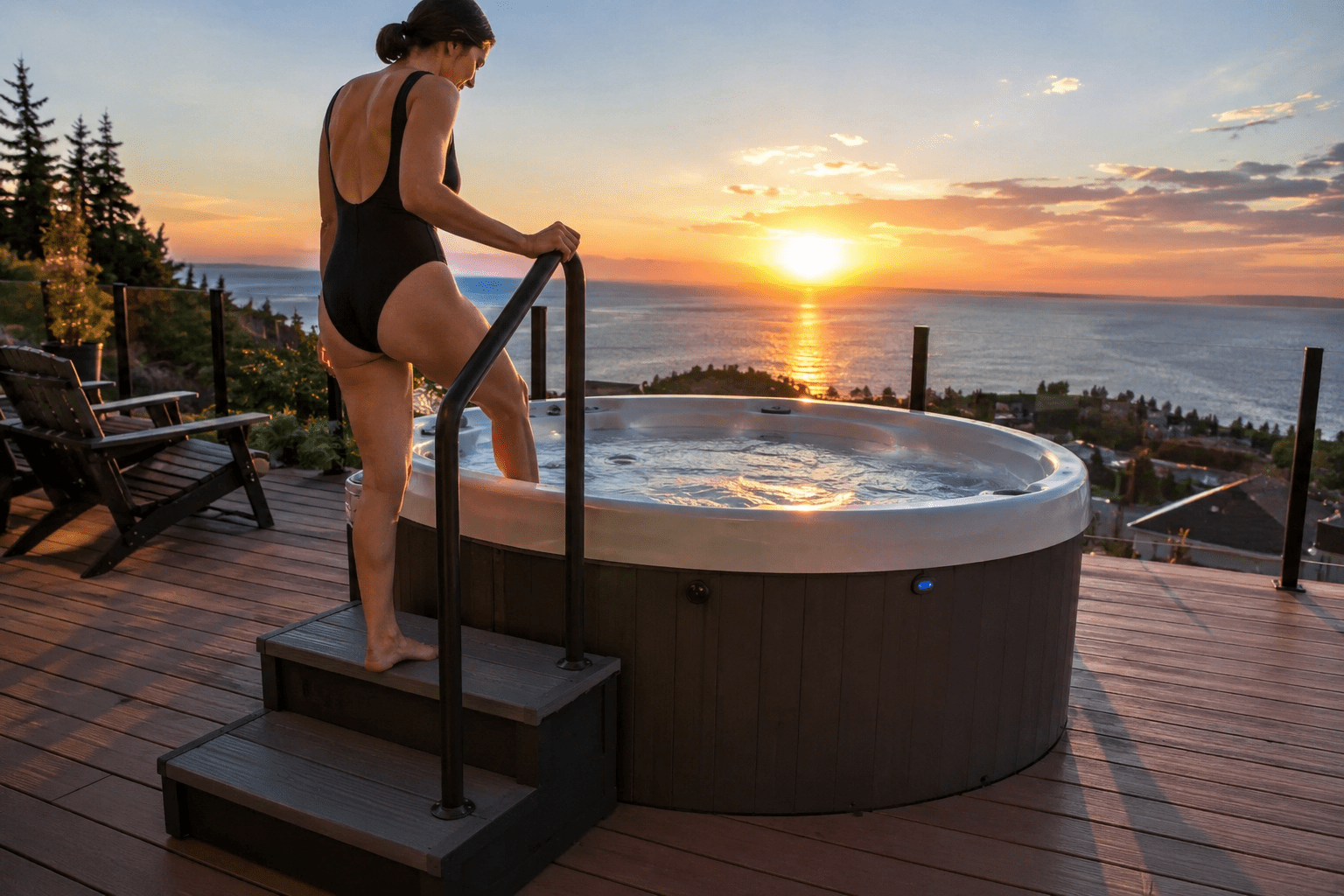
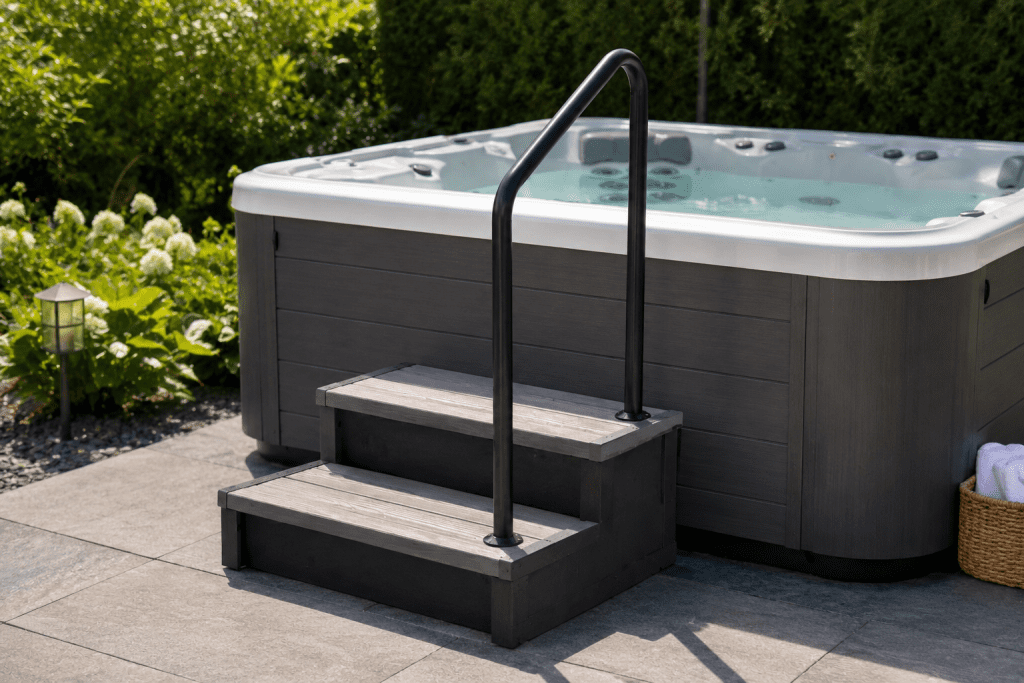
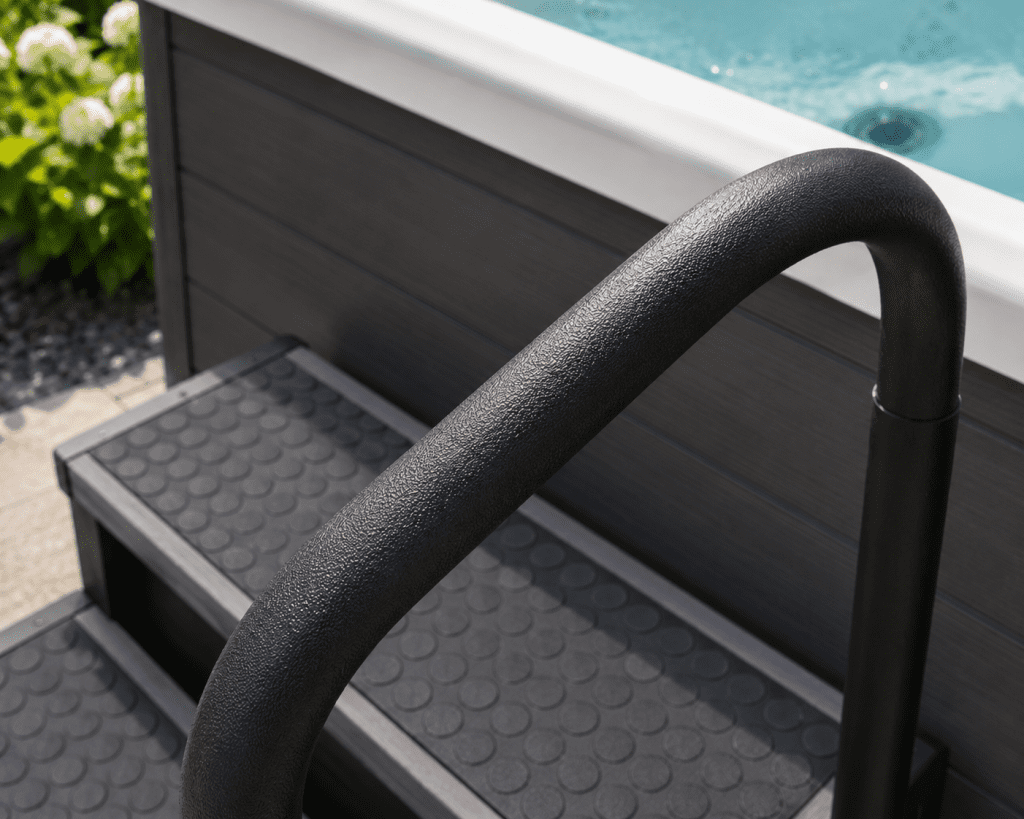
Handrails are sometimes sold as part of a step unit and sometimes sold separately. A standalone handrail can mount to the step frame itself or directly into a deck surface. The best setups for regular users combine both — a solid, non-slip step unit with a fixed handrail at the right height to grab on both entry and exit.
What height should hot tub steps be? Most freestanding hot tub steps are designed for tubs with a rim height of 28 to 36 inches. The step platform should bring you to within 6 to 8 inches of the rim for a comfortable climb. Always measure your tub’s rim height before buying — not all step units are adjustable, and the difference matters more than most listings make clear.
The Real Cost Breakdown
Hot tub steps and handrails range from around $80 on the low end to well over $500 for high-spec combo units with built-in storage. The price gap mostly reflects materials, weight capacity, and whether a handrail is included.
Entry-level freestanding steps in plastic or resin typically run $80–$150. These are functional but flex under heavier users and can move on smooth deck surfaces. Mid-range units in reinforced plastic or powder-coated steel sit in the $150–$300 range and offer noticeably better stability, higher weight ratings, and more consistent non-slip coverage.
Premium units — often teak, synthetic hardwood, or heavy-gauge aluminium — start around $300 and climb past $500 for larger wraparound designs. These tend to be the choice when a hot tub is installed as a permanent outdoor feature, where aesthetics and durability over years of weather exposure are both relevant.
A separate handrail, if not bundled, typically adds $40–$120 depending on material and mounting style. For most people, a bundled step-and-rail unit in the $200–$350 range covers the bases without overspending.Steps and handrails are only one part of the ownership budget.
Our Hot Tub Maintenance Cost guide breaks down the ongoing costs to expect after installation.
Is it worth spending more on hot tub steps and handrails? For occasional use, a solid mid-range unit may be enough. For year-round use, prioritise stable construction, good traction and a secure handrail rather than price alone.
Installation: What to Expect
Freestanding hot tub steps and handrails are generally straightforward to install, with many units simply positioned beside the spa or assembled using the supplied mounting hardware. Always follow the manufacturer’s instructions, particularly for handrails that need to be fixed securely.
Deck-integrated steps or handrails are different because they become part of the surrounding structure. Local building requirements can apply to structural deck work, so check with your local building department before modifying or adding to an existing deck.
For freestanding setups, the main friction isn’t installation — it’s positioning. Most tubs have a control panel, jets, and a filter cover on specific sides. Your step needs to sit on a side that doesn’t block access to those. It sounds obvious until you’ve already placed everything and realised the filter lid is directly under your step platform.If you’re still planning the wider setup, our Hot Tub Installation Timeline explains the main stages from site preparation through to filling and startup.
Non-slip mat placement matters too. Even purpose-built hot tub steps and handrails can become slippery in wet conditions if the textured surface wears down. Many manufacturers recommend adding a separate rubber mat on the top step platform, which is a small but meaningful upgrade for year-round outdoor use.
Maintenance — Keeping It Safe Over Time
Hot tub steps and handrails are low-maintenance relative to the tub itself, but they do need attention. The main failure points are grip surface degradation, bolt loosening from seasonal expansion and contraction, and UV-related material breakdown in outdoor setups.
A rinse-down every few weeks prevents calcium deposits, algae, and general grime from making non-slip surfaces slick. Once a season — spring and autumn are the natural points — check every bolt connection on both the step frame and any rail mounting hardware.
Teak and hardwood steps need more specific care — For wooden or composite steps, follow the manufacturer’s care instructions, as maintenance requirements vary by material and finish. Synthetic resin and plastic units are more forgiving but should be inspected for stress fractures, especially at corners and around mounting holes, where material fatigue tends to start.
For anyone using a hot tub frequently and pairing it with cold contrast — moving between the tub and a cold shower or plunge setup — the steps take on extra wear from repeated wet/dry cycling. That’s exactly when grip surface condition deserves a closer look.
Pros and Cons
Pros
Significantly reduces slip and fall risk on entry and exit. Makes hot tub access easier for older adults, children, and guests who aren’t regular users. Adds a finished look to an otherwise raw tub exterior. Better handrail designs give genuine grip even with wet hands after a long session. Wide range of price points means there’s a workable option at almost any budget.
Cons
Cheap plastic units flex and shift underfoot, which undermines confidence in a situation that’s supposed to be safe. Freestanding steps can move if not secured to the deck, which creates a different kind of risk. Wraparound styles look better but limit access to the tub cabinet for service. Weather exposure degrades all material types over time — outdoor units need regular inspection to stay safe.
How the Options Compare
The core decision with hot tub steps and handrails comes down to three variables: material, whether the handrail is integrated or separate, and freestanding versus deck-attached.
Plastic and resin units are the budget option. They’re light, easy to reposition, and resist corrosion — but they flex under weight and the grip surface on cheaper models is minimal. Steel and aluminium units are heavier, more stable, and better for year-round outdoor use, though powder coating needs checking annually to prevent rust where the finish chips.
Wood and composite options can provide a more furniture-like appearance that suits permanent backyard setups. For a permanent outdoor installation where aesthetics matter, they’re the obvious choice. For a setup that might move or change, they’re harder to justify.
The freestanding versus deck-integrated question comes down to permanence. Freestanding hot tub steps and handrails suit anyone who hasn’t committed to a fixed installation layout. Deck-integrated steps are the right call when the tub has a permanent home and the surrounding structure is already built or being built.
Most people buying hot tub accessories for the first time underestimate how much the handrail matters relative to the steps. Steps get you up; the rail is what stops a misstep from becoming a fall. If you’re setting up a new spa, our Hot Tub Picks page brings together useful accessories and equipment worth considering alongside your steps and handrail.
Comparison Table
| Feature | Budget Plastic/Resin | Steel/Aluminium | Wood/Composite |
|---|---|---|---|
| Typical cost | Lower | Mid-range | Mid–premium |
| Stability | Varies by model | Usually heavier and more stable | Varies by design |
| Handrail options | Available on some models | Common | Available on some models |
| Wet-weather grip | Check tread design | Check tread design | Check surface/tread design |
| Weather care | Generally low | Check coating/fasteners | Usually requires more care |
| Best suited to | Simple setups | Regular outdoor use | Permanent/aesthetic setups |
Always check the manufacturer’s stated weight capacity, dimensions and mounting requirements for the specific steps or handrail you’re considering.
Helpful Gear
Non-slip hot tub step mat — A rubber coin-grip stair mat designed to sit on step treads, adding traction in wet conditions. Weather-resistant and loose-lay — no adhesive needed.
Hot tub Safety Handrail — A freestanding steel grab bar that mounts directly to your tub’s rim, giving you a fixed point to hold as you step in and out. More stable than a step-mounted rail because it anchors independently.
Hot tub step storage box — A two-tier spa step unit with built-in storage for keeping smaller hot tub accessories close by. Its non-skid step surfaces are designed to provide better footing around the spa.
FAQ
Do hot tub steps and handrails fit all tub sizes? Not universally — step height compatibility varies. Most freestanding units are designed for tubs with a rim height between 28 and 36 inches. Measure your tub’s rim before buying. Some step units have adjustable heights, which adds flexibility if you ever move or change tubs.
Are hot tub steps and handrails required by code? In most US residential settings, no specific code mandates steps or rails for a private hot tub. However, if your setup is part of a permitted deck build, local building codes may include guardrail requirements for elevated platforms. Check with your local building department if you’re unsure.
How do I stop freestanding steps from sliding on a smooth deck? The most effective fix is rubber feet or a non-slip mat underneath the step base. Some step units come with these — many don’t. Adding a rubber pad cut to the base footprint of the step unit is a low-cost fix that makes a real difference on composite and tile deck surfaces.
The simple rule: if you wouldn’t step onto a wet surface without something to hold, you need a handrail — not just steps.
Summary Snapshot
- Hot tub steps and handrails range from $80 for basic plastic to $500+ for premium hardwood units
- The handrail matters as much as — possibly more than — the steps themselves
- Freestanding units suit most setups; deck-integrated builds need more planning and possibly a permit
- Maintenance is light: rinse regularly, check bolts seasonally, inspect grip surfaces annually
- Wet hands after a long soak are real — buy a setup with genuine grip, not marketing grip
Final Verdict
Hot tub steps and handrails are the kind of accessory that costs almost nothing relative to the tub itself, but determines whether getting in and out of it is safe every single time. The category is easy to underspend on and easy to get right — the gap between a poor setup and a genuinely good one is maybe $100 to $150.
Buy for the handrail first. The steps matter, but a solid, correctly-positioned grip rail is the piece that protects you when it’s dark, wet, or you’re moving quickly after a long soak. For year-round outdoor use, go mid-range minimum — the weight rating, non-slip surface, and weather resistance on budget plastic units degrade faster than the price difference suggests they should.
For most people, a mid-range step and rail combo in powder-coated steel or reinforced resin, rated to at least 300 lbs, with a proper non-slip surface on both the tread and the top platform, is the right call. Hot tub steps and handrails in this tier last years without drama and do exactly what they need to.
Related reading: Planning the rest of your setup? See our Hot Tub Installation Guide for the wider process, from preparing the site to getting your spa ready for use.