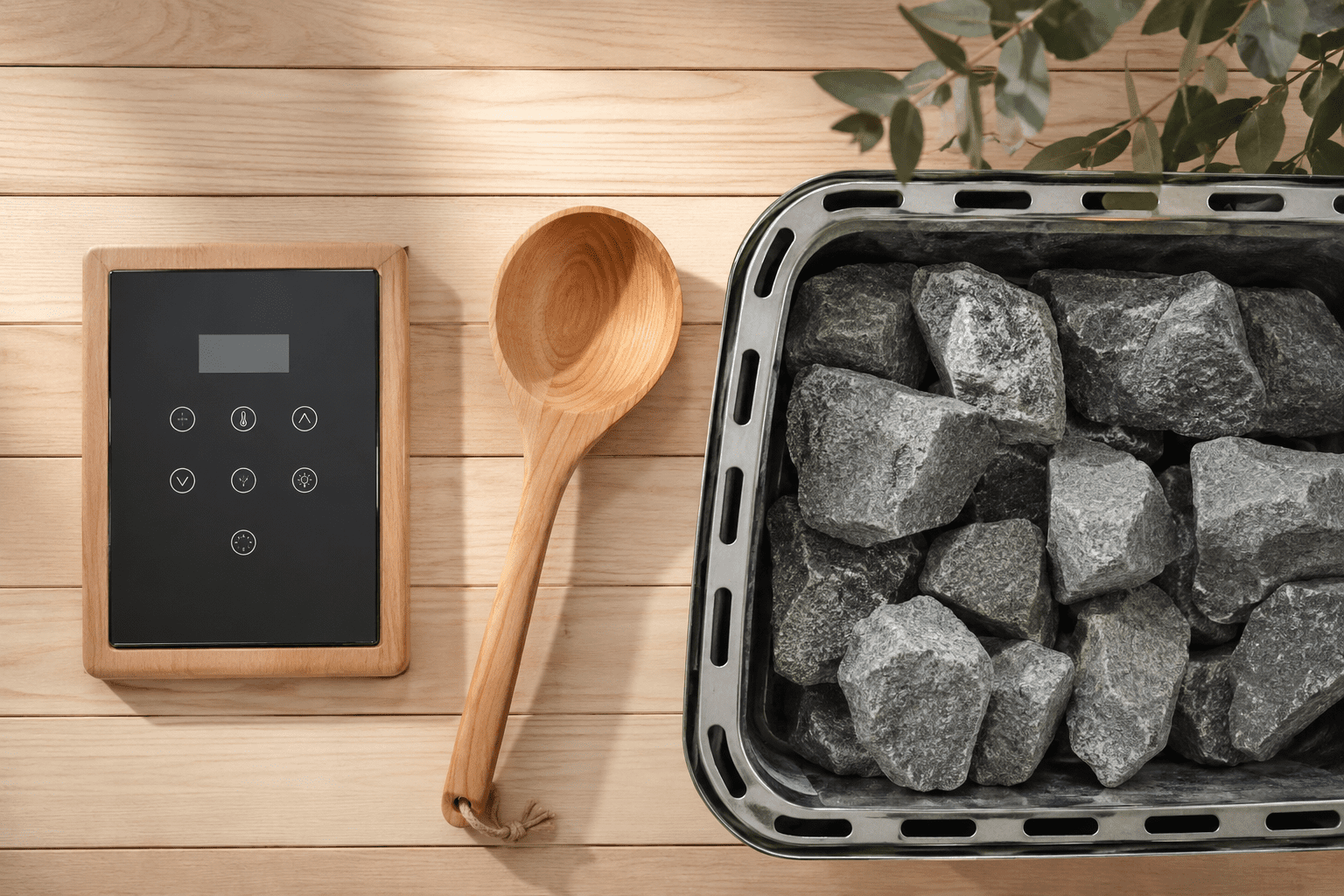
Infrared vs Traditional Sauna: Cost, Heat & Health Breakdown
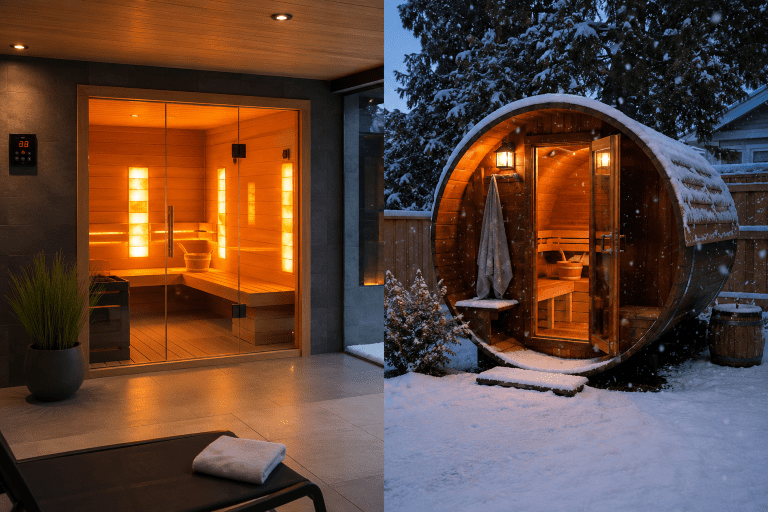
Infrared vs traditional sauna choices come down to the heat experience you prefer, what your home can accommodate and the complete cost of ownership. Traditional saunas heat the room and stones; infrared cabins use radiant emitters to warm surfaces they reach, including your skin, while also warming the cabin air.
Choose traditional if you want hotter room air and the option to add water to approved sauna stones. Consider infrared if you prefer radiant warmth at a lower air temperature. Before buying either, check the specific model’s electrical requirements, clearances and maintenance instructions.
This guide compares the practical buying decisions. Detailed electricity calculations belong in the separate running-cost guide; here, the aim is to help you decide which kind of setup fits your space and routine.
As an Amazon Associate, Sunrise & Vitalize earns from qualifying purchases. If you buy through an affiliate link, we may earn a small commission at no extra cost to you.
Quick Snapshot
- Heat: traditional saunas generally use hotter room air; infrared cabins provide radiant warmth at lower air temperatures.
- Costs: neither type has a guaranteed purchase-price advantage. Compare complete quotes.
- Electrical supply: some infrared cabins use 120V; others need 240V. The model’s instructions decide.
- Maintenance: traditional heaters need stone care; both types need cleaning and may need electrical servicing.
- Safety: lower air temperature does not automatically make longer sessions safe or establish better health results.
Table of Contents
- How the Heat Works
- The Real Cost Breakdown
- Installation Checks Before You Buy
- Maintenance Over Time
- Pros and Cons
- Side-by-Side Comparison
- Helpful Gear
- FAQ
- Final Verdict
How the Heat Works
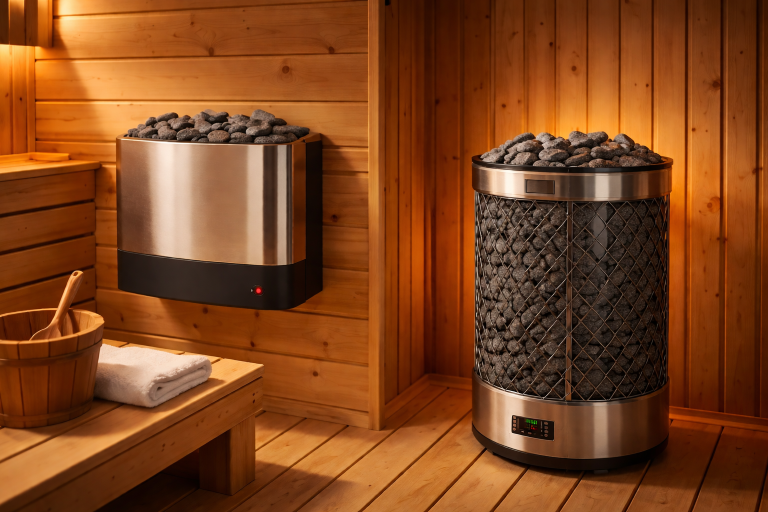
A traditional sauna uses an electric or wood-burning heater to warm the air, stones and surrounding surfaces. Your body receives heat through several routes, including convection and radiation. Where the heater manufacturer permits it, small amounts of water on the hot stones create a burst of steam and change how the heat feels.
Infrared cabins use radiant emitters directed toward the seating area. They can produce a warming effect at lower air temperatures, but they do not leave the air completely unheated. Avoid descriptions that promise heat “through you” or imply the cabin operates without hot surfaces.
Exact operating temperatures depend on the equipment and where they are measured. Compare the stated range for each model you are considering rather than treating one temperature band as a rule for every sauna. More sweat does not establish a better session or a greater health benefit.
The experience is worth trying before a large purchase. If possible, arrange a demonstration of each type. Pay attention to the seating, available space and how the heat feels, rather than choosing from a temperature number alone.
The Real Cost Breakdown
A useful quote separates the cabin or room, heater, controls, delivery, assembly, site preparation and electrical work. Check what is included before comparing prices. A traditional sauna package may exclude its heater or controls; an infrared cabin may still need a new circuit or suitable receptacle.
There is no dependable rule that an equivalent infrared unit costs $200–$600 less to install. Finishes, construction, capacity, access and the existing electrical supply can outweigh any simple difference between heating methods.
For electricity, compare kilowatt-hours used over the complete powered visit, including warm-up and any manufacturer-required drying cycle. Multiply that energy by the usage-based electricity rate on your bill. Rated heater power alone does not show actual consumption because controls may cycle or vary output.
Illustrative example: a visit using 2 kWh at $0.20/kWh costs $0.40. A visit using 6 kWh at the same rate costs $1.20. At 16 visits a month, those examples total $6.40 and $19.20. These are arithmetic examples, not typical bills, product measurements or equivalent heat exposures.
For the assumptions behind a fuller comparison, see Infrared vs Traditional Sauna Running Costs. Keep installation and maintenance separate from electricity so a low energy bill does not hide a higher total purchase cost.
Installation Checks Before You Buy
Check the exact model’s voltage, amperage, receptacle or hardwiring requirements, and whether it needs a dedicated circuit. Do not assume an existing outlet is suitable because the product is described as infrared or plug-and-play.
For example, Clearlight’s electrical requirements list the Sanctuary 2 at 120V/20A and the Sanctuary 3 at 240V/15A. The same manufacturer also lists different requirements for upgraded configurations. These are model examples, not instructions for wiring another sauna.
A qualified electrician should check the installation manual, proposed supply and panel capacity before you order. Get a local quote for any necessary work instead of adding a generic wiring allowance to every project. Traditional electric heaters also have model-specific requirements; a wood-burning installation introduces separate stove, flue and fire-clearance considerations.
Ventilation needs a proper plan, too. A small vent or gap is not a universal specification. Follow the sauna and heater instructions for air supply, exhaust, drying and sensor placement. Harvia’s ventilation guidance distinguishes arrangements for different ventilation methods.
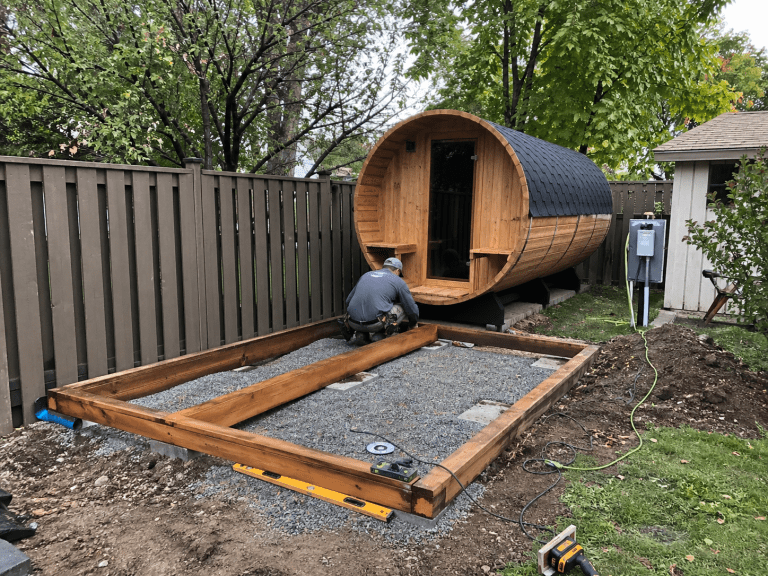
Finally, check the delivery route, assembled dimensions, door swing, heater clearances and required space around the cabin. A sauna that fits on a floor plan may still be difficult to get through a doorway or service after assembly.

Maintenance Over Time
Traditional electric heaters need stone inspection and rearrangement according to their manuals. Harvia’s stone-care guidance recommends rearranging stones at least annually, more often with heavy use, and replacing broken stones. Use the specified stone type, size and arrangement.
Infrared cabins avoid heater-stone maintenance, but emitters, controls and other electrical components can still need service. Neither a five-to-seven-year element lifespan nor a ten-year infrared-panel lifespan is a reliable rule for every product. Ask about parts availability, service access and warranty exclusions, including labor.
Both types need bench and cabin care. Follow the manufacturer’s cleaning instructions, allow the interior to dry as directed and use only approved cleaning products or treatments. A warranty period is not a prediction of how long a component will last.
Pros and Cons
Traditional sauna advantages: hotter room air and the familiar heated-stone experience, including water on stones where the heater permits it. It is the practical choice if that particular heat experience is your priority.
Traditional sauna tradeoffs: room and stone warm-up, stone maintenance and installation requirements that depend on the selected heater and room. Include the whole warm-up period when estimating energy use.
Infrared advantages: radiant warmth at lower air temperatures and no heater stones to maintain. A suitable lower-power cabin can use less electricity per visit, depending on the equipment and how it is operated.
Infrared tradeoffs: no water-on-stones experience, model-specific electrical requirements and potential emitter or control repairs. Lower temperature does not guarantee easier breathing, greater comfort or safe extended sessions.
Side-by-Side Comparison
| Factor | Traditional sauna | Infrared cabin |
|---|---|---|
| Heat experience | Hot room air, stones and heated surfaces | Radiant warmth with lower air temperatures |
| Water on stones | Only where the heater permits | Do not pour water on emitters |
| Purchase and installation | Compare a complete equipment and installation quote | Compare a complete equipment and installation quote |
| Electricity comparison | kWh per complete powered visit | kWh per complete powered visit |
| Warm-up | Depends on the room, heater and starting conditions | Follow the selected cabin’s instructions |
| Electrical supply | Check the selected heater’s requirements | Check the selected cabin’s requirements |
| Maintenance | Cleaning, stones, elements and controls | Cleaning, emitters and controls |
| Health claims | Heat exposure does not guarantee a specific health outcome | Lower air temperature does not prove superior benefits |
Helpful Gear
Start with the equipment the manufacturer recommends. You do not need a specialist accessory for every part of the routine.
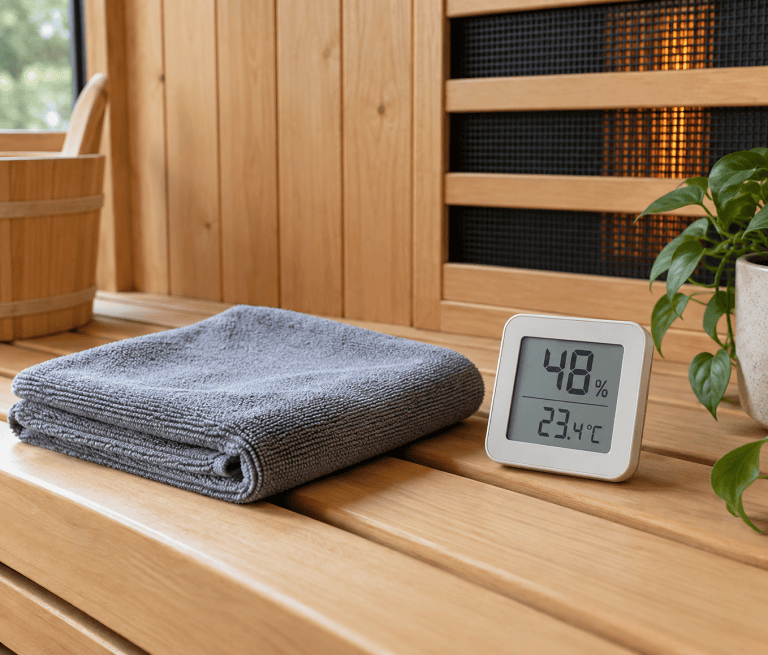
- Sauna thermometer/hygrometer — an additional reference for temperature and humidity, installed according to its instructions. It does not replace the sauna’s controls or safety sensors.
- Bench towel — use a clean towel as permitted by the sauna manufacturer. Keep it away from heaters and infrared emitters; do not drape it over equipment.
FAQ
Does infrared provide the same health benefits as traditional sauna?
Both provide heat exposure, but a different heating method does not establish equivalent medical benefits. Mayo Clinic’s infrared sauna overview describes promising findings while explaining that larger, more rigorous studies are needed. Do not choose either type as a substitute for medical care.
Which type will fit my routine?
Compare the selected model’s warm-up instructions, controls, seating and location. A short preparation routine may suit you better, but neither sauna type guarantees regular use. If possible, try both before committing to a home installation.
Will either type increase my home’s resale value?
Do not assume a resale premium. Buyer preferences, local demand and installation quality vary. Choose a sauna you want to use and can maintain, rather than relying on a promised return when selling.
Can I stay longer because infrared air is cooler?
Not automatically. Follow the equipment instructions and appropriate personal safety advice. Start cautiously and leave if you feel unwell. Harvard’s sauna safety guidance advises avoiding alcohol around sauna use and limiting time in the heat. Ask a clinician before use if a health condition, pregnancy or medication could affect your response.
Can I use the same accessories in both?
Only where the sauna and accessory instructions permit it. A wooden shower mat is not automatically suitable for sitting on a hot bench, and a sauna-blanket liner is not automatically a cabin bench towel. Confirm the intended use and keep fabrics away from heat sources.
Summary Snapshot
- Choose the heat experience you prefer.
- Check model-specific electrical, ventilation and clearance requirements.
- Compare complete installation quotes and electricity per visit.
- Budget for cleaning, maintenance and possible repairs with either type.
- Treat lower air temperature as an experience difference, not proof of better health results or a safe longer session.

Final Verdict
Choose traditional if hotter room air and the approved water-on-stones experience matter most. Consider infrared if you prefer radiant warmth at lower air temperatures. Compare the actual equipment, installation requirements and complete ownership budget before deciding.
If traditional heat is your preference, the sauna heater guides cover the equipment choices in more detail. For either type, make sure the model fits your space and supply before placing an order. The useful comparison is between two real setups you could install and enjoy—not two broad labels with promised savings.