How Long Do Sauna Heaters Last?
Sauna heater lifespan typically ranges from 10 to 20 years, with many well-maintained units lasting even longer. Most homeowners are surprised to learn that a quality sauna heater — whether electric or wood-burning — isn’t something you’ll need to replace every few years.
For most home sauna setups, you can expect a reliable heater to last well over a decade with basic maintenance.
📎 Affiliate Disclosure: This post may contain affiliate links. If you choose to purchase through them, I may earn a small commission at no extra cost to you.
Quick Snapshot
- Most sauna heaters last 10–20 years with regular care
- Electric heaters average 10–15 years; wood-burning models often last 20+ years
- Biggest lifespan killers: water damage, poor ventilation, overloading stones
- Replacement heater cost: typically $300–$2,000+ depending on type and kW
- Signs it’s time to replace: slow heat-up, uneven temps, rust, tripping breakers
- Annual inspection + stone replacement = the single best maintenance habit
Table of Contents
- How Long Do Sauna Heaters Really Last?
- Cost Reality — Repair vs. Replace
- Installation Friction
- Maintenance: What Actually Matters
- Pros & Cons by Heater Type
- Heater Type Comparison
- Helpful Gear to Protect Your Heater
- FAQ
- Final Verdict
How Long Do Sauna Heaters Really Last?
The honest answer a sauna heater lifespan depends on three things: heater type, usage frequency, and how well the unit is maintained. Here’s a realistic breakdown:
Electric Sauna Heaters
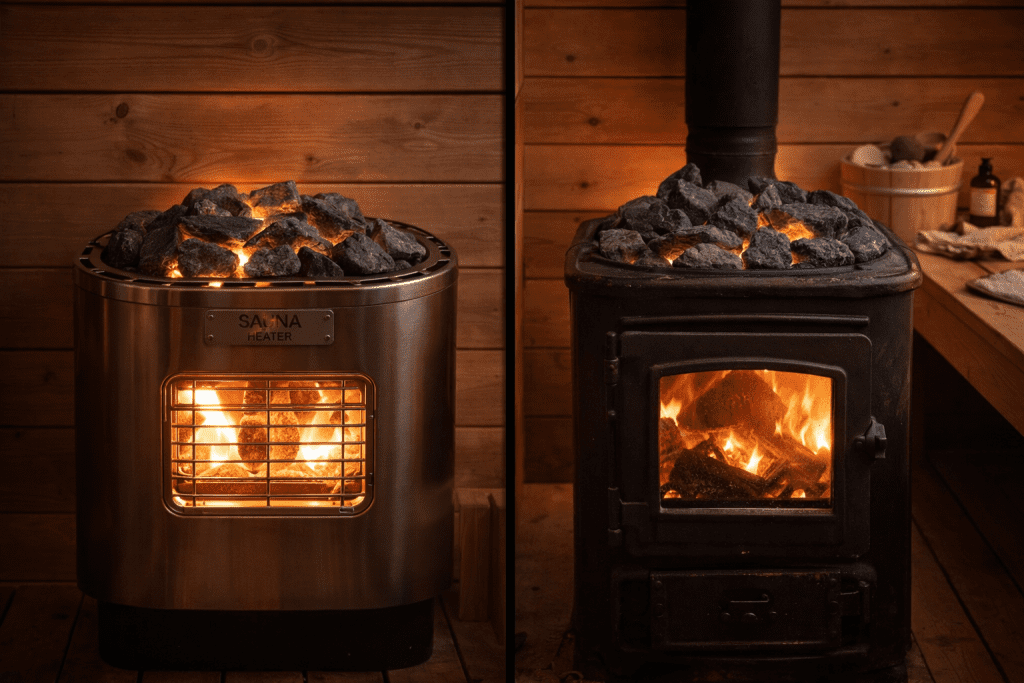
The most common type in American homes, electric heaters (think Harvia, Tylo, Finnleo) typically run strong for 10–15 years under regular use. Some homeowners report 20+ years from well-known brands. The heating elements themselves are usually the first component to go — and in many models, they can be replaced individually rather than replacing the whole unit.
Wood-Burning Sauna Stoves
Cast iron and steel wood-burners are remarkably long-lived. With proper seasoning and cleaning, many survive 20–30 years or more. The caveat is that they require more active attention — ash removal, chimney maintenance, and checking for cracks in the firebox are part of ownership.
Infrared Panels
Infrared heaters operate differently — they warm bodies directly rather than heating the air — and the panels themselves typically last 10–15 years. However, the electronic control boards and emitters can fail earlier, especially in budget-tier models.
What Shortens Lifespan Most
Water splashed directly onto the heating elements (rather than the stones), poor air circulation around the unit, overloading rocks, and infrequent cleaning all accelerate wear. In humid, coastal climates, rust becomes a bigger factor than in dryer inland regions.
Cost Reality — Repair vs. Replace
When a sauna heater lifespan starts shortening the first question is always: repair or replace? Here’s what the numbers typically look like across the US:
- Replacing heating elements (electric): $80–$250 in parts + labor if hired
- New mid-range electric heater (4–8kW): $350–$900 + installation
- Premium electric heater (Harvia, Huum, EOS): $900–$2,500+
- Replacement wood stove: $400–$1,800 depending on brand and BTU rating
- Electrician call-out for wiring check: $100–$250 for the visit alone
The general rule of thumb: if a repair costs more than 50–60% of a new heater’s price, replacement usually makes more financial sense — especially if the unit is already 12+ years old.
One often-overlooked cost: sauna stones. Rocks should be replaced every 3–5 years (or sooner if they crack and crumble). Fresh stones improve heat distribution and protect the elements — a $30–$80 box of replacement stones is one of the cheapest performance upgrades available.
Installation Friction
Replacing a sauna heater isn’t always a straightforward weekend project, and it’s worth knowing what you’re walking into before you order a replacement unit.
Electric Heaters: The Wiring Factor
Most residential electric sauna heaters in the 4–8kW range require a 240V dedicated circuit — the same voltage as a dryer or range. If your existing wiring is already sized correctly, swapping the heater itself is manageable for a confident DIYer. If the new unit draws more power than the old one, you’ll need an electrician to upsize the circuit, which adds $200–$600 to the project.
Sauna Control Compatibility
Many modern heaters use digital controllers, and not all controllers are cross-compatible with all heaters. If you’re replacing a heater but keeping the existing control panel, double-check compatibility before purchasing — this is one of the most common frustrating surprises.
Wood Stove Replacements
Swapping a wood-burning stove involves checking the chimney liner, clearance distances from combustible materials, and in some states, obtaining a permit. It’s less plug-and-play than electric, but also less dependent on electrical infrastructure.
Space Sizing
Heater output (measured in kW) needs to match your sauna’s cubic footage. A heater that’s too small will never get the room to temperature; one that’s too large runs inefficiently and burns through elements faster. A rough rule: 1kW per 50 cubic feet for well-insulated saunas.
Maintenance: What Actually Matters
The good news is that extending sauna heater lifespan maintenance isn’t complicated.Maintenance is simple. The bad news is that most people skip it entirely, then wonder why their heater failed at year 8 instead of year 18. For a complete routine, see our sauna heater maintenance guide for stone care, cleaning, inspections, and ongoing maintenance.
The Annual Checklist
- Remove and inspect sauna stones — discard any that are cracked, powdery, or heavily pitted
- Check all electrical connections for corrosion or loose terminals (turn off power first)
- Wipe down the exterior of the heater with a dry cloth — never wet
- Check that the safety clearance around the heater hasn’t been compromised by new benches, towel hooks, or storage
- Test the thermal safety cutoff by running the unit to full temperature
Water Discipline
Pour water on the stones, not directly onto the heating elements. It sounds obvious, but during a relaxed session it’s easy to miss — and repeated direct water contact is one of the most common causes of premature element failure.
Ventilation
Sauna heaters need airflow around them to operate efficiently and safely. If yours is mounted too close to a wall or bench, or if the sauna lacks proper venting, the heater works harder and runs hotter than designed — both of which age it faster.
Pros & Cons by Heater Type
✅ Electric Heater Pros
- Easy to control with digital timer
- No smoke or fuel to manage
- Wide range of sizes and brands
- Fast heat-up (30–45 min)
- Replaceable elements extend life
❌ Electric Heater Cons
- Requires 240V dedicated circuit
- Higher ongoing electricity costs
- Shorter lifespan than wood stoves
- Control board failures can be costly
✅ Wood-Burning Pros
- 20–30+ year lifespan common
- No electricity required
- Traditional, authentic sauna feel
- Lower long-term running cost
❌ Wood-Burning Cons
- Requires chimney and ventilation
- Longer heat-up time (60–90 min)
- Active management during session
- May need permit for installation
Heater Type Comparison
Not all sauna heaters age the same way. Here’s a side-by-side look at what matters most for long-term ownership in a US residential setting.
| Heater Type | Avg Lifespan | Replacement Cost | DIY-Friendly? | Best For |
|---|---|---|---|---|
| Electric (standard) | 10–15 years | $350–$900 | Partially (wiring may need pro) | Indoor home saunas, frequent use |
| Electric (premium) | 15–20 years | $900–$2,500+ | Partially | Serious enthusiasts, custom builds |
| Wood-burning stove | 20–30+ years | $400–$1,800 | Yes (with chimney work) | Outdoor/cabin saunas, traditionalists |
| Infrared panels | 10–15 years | $500–$2,000+ | Yes (plug-in models) | Lower-heat, wellness-focused use |
Helpful Gear to Protect Your Heater
A few smart additions can meaningfully extend your heater’s life and improve your sessions. These aren’t upsells — just things that actually help:
🪨 Replacement Sauna Stones Fresh volcanic or olivine stones (replaced every 3–5 years) protect your elements and improve heat distribution. One of the most cost-effective maintenance moves you can make. You can browse options on our sauna storefront.
🌡️ Sauna Thermometer + Hygrometer Combo Knowing the real temperature in your sauna — not just trusting the controller — helps you avoid running your heater harder than necessary. A good combo unit costs $20–$50 and pays for itself in peace of mind.
🧤 Heater Guard / Safety Rail Most modern saunas include one, but older builds sometimes don’t. A proper guard prevents accidental contact with the heater and helps ensure correct air clearance — which matters both for safety and for even heat distribution around the unit.
FAQ
Can I replace just the heating elements instead of the whole heater? Often, yes — especially on electric models from established brands like Harvia, Tylo, or EOS. Replacement elements are widely available and typically cost $40–$150 per element. If your heater is less than 12 years old and the casing is in good condition, element replacement is usually the smarter financial move. Check your manufacturer’s model number before ordering, as element sizes vary significantly.
How do I know when my sauna heater lifespan is ending ? The clearest signs are: taking significantly longer to reach temperature, uneven heat distribution across the sauna, visible rust on the body or element housing, the unit repeatedly tripping a breaker, or a burning smell that doesn’t resolve after a clean. Any one of these warrants a closer look; multiple signs together usually means it’s replacement time.
Does leaving a sauna heater on longer extend the session or damage it? Modern sauna heaters have built-in thermal cutoffs that prevent genuine damage from prolonged use. That said, most manufacturers recommend sessions of no more than 1 hour at a time, with a cool-down period before restarting. Running sessions back-to-back without a break does put more heat cycles on the elements over time, which cumulatively shortens lifespan — particularly for mid-range electric models.
Buy once, maintain well, and your sauna heater lifespan will outlast most of the other appliances in your home.
Summary Snapshot
- Electric heaters: 10–15 years (premium: 15–20 years)
- Wood-burning stoves: 20–30+ years with proper care
- Infrared panels: 10–15 years (electronics may fail sooner)
- Replace stones every 3–5 years to protect elements
- Repair if cost is under 50% of a new unit; replace if older or more expensive
- Annual inspection is the single most effective longevity habit
Final Verdict
A well-built sauna heater is one of the more durable appliances you’ll own. Whether you go electric for convenience or wood-burning for longevity and tradition, 10–20 years of reliable performance is a realistic expectation — provided you treat the unit with basic respect.
The real cost of sauna heater ownership isn’t the replacement; it’s the years of missed sessions because maintenance was skipped. Fresh stones, clean elements, and an annual once-over are genuinely all it takes to keep most heaters running at their best.
If you’re in the market for a new heater or want to compare what’s out there, our sauna storefront has a hand-picked selection across all types and budgets