
Is an Infrared Sauna for Small Spaces the Right Fit for Your Home?
If you’ve been looking at an infrared sauna for small spaces and wondering whether it’s genuinely worth it or just a compromise, the honest answer is: it depends on what you’re compromising on. An infrared unit in a tight footprint trades a few things — some of which matter, some of which don’t — but for most people working with a spare bathroom corner, a bedroom alcove, or a basement nook, it’s not a downgrade. It’s a different product designed for a different context.
Most sauna content either assumes you have a dedicated outbuilding or talks about infrared units in abstract terms. Neither helps if you’re working with 4 feet of wall and a low ceiling.
This post contains affiliate links. If you buy through them, I may earn a small commission at no extra cost to you.
Quick Snapshot
- Compact infrared units typically start around $800–$1,500 for single-person models; two-person units run $1,500–$3,000 at time of writing
- Running costs are significantly lower than traditional saunas — typically $0.10–$0.25 per session for a compact unit
- No ventilation requirement, no drainage, no structural modification in most cases
- Minimum floor space: as little as 35–40 square feet for a 1-person unit
- Preheat time: 10–15 minutes versus 30–45 minutes for traditional
- Panel proximity in compact units creates uneven heat distribution — users often rotate mid-session
- Not a replica of a traditional sauna experience — different heat, different feel, legitimate on its own terms
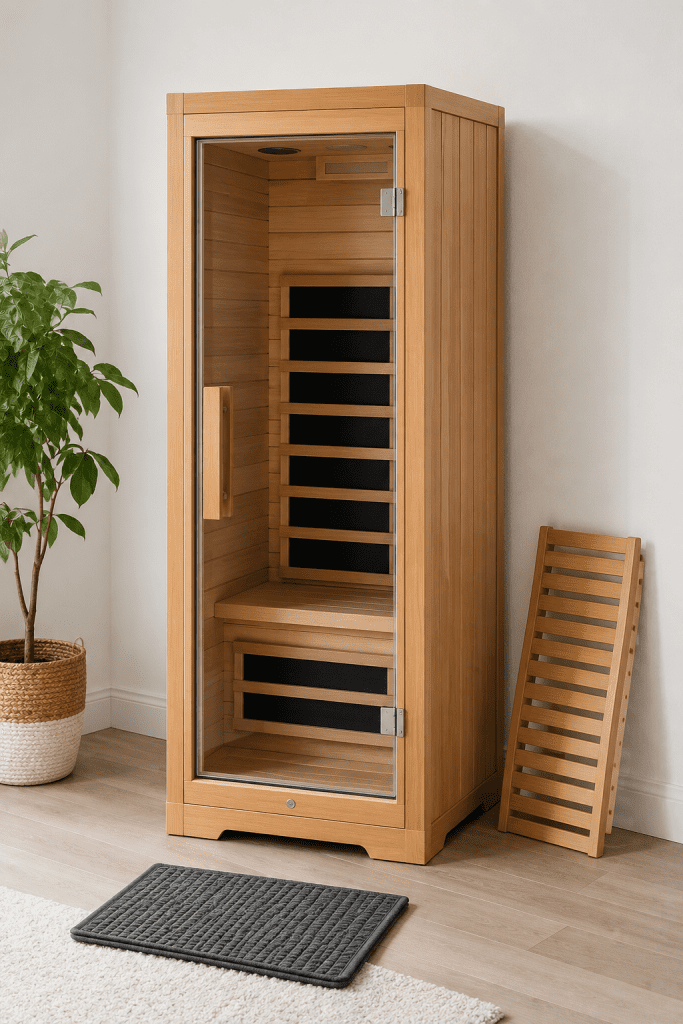
Table of Contents
- Why an Infrared Sauna for Small Spaces Actually Works
- What It Costs — Upfront and Running
- Installation Reality — What You Actually Need
- Maintenance in a Compact Unit
- Honest Pros and Cons
- How It Compares to Other Small-Space Options
- Helpful Gear
- FAQ
- Final Verdict
Why an Infrared Sauna for Small Spaces Actually Works
The reason an infrared sauna for small spaces works where a traditional sauna often doesn’t comes down to how the heat is generated. Traditional saunas heat the air to 160–195°F before the heat transfers to your body. That requires a well-insulated, properly ventilated room large enough to hold that temperature without becoming a fire hazard or an electrical drain. In a small space — especially one that shares a wall with a bedroom or bathroom — that’s a real problem.
Infrared panels work differently. They emit radiant heat that warms your body directly, not the surrounding air. The ambient temperature inside an infrared cabin sits around 120–140°F typically, which is far easier to manage in a smaller enclosed space. According to Healthline, infrared saunas use light to create heat, warming the body directly without needing to superheat the surrounding air — which is exactly why they scale down more cleanly.
What actually happens when the space is small?
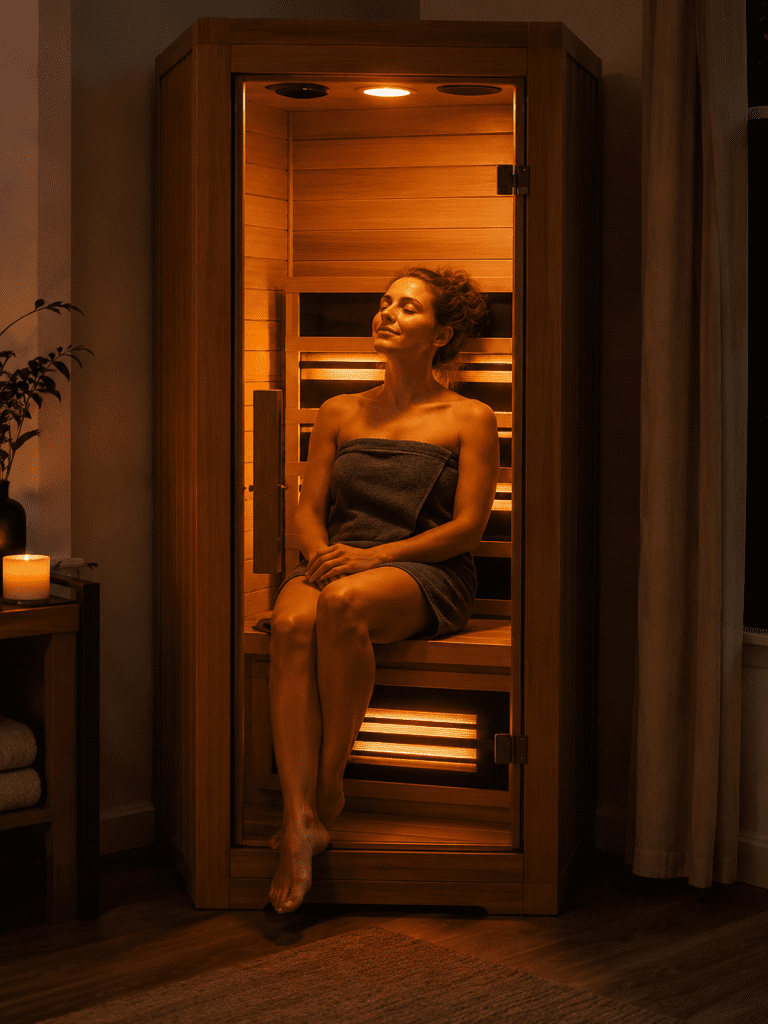
In a compact infrared unit, you’re closer to the panels than you would be in a full-size room. That proximity changes how the heat feels — it’s more directional, almost like sitting near a well-designed radiator rather than being wrapped in ambient warmth. It’s not unpleasant, but it’s a different sensation. Users often rotate or shift position mid-session to even out the exposure, especially in single-person units where the panels may cover one side of the body more than the other if the cabin is narrow.
That detail rarely appears in reviews. Most people assume the experience scales down proportionally. It doesn’t, quite — but it’s still effective, and most people adapt within a few sessions.
The sauna mat point is worth making here too: when you’re sitting close to wooden surfaces in a compact unit, the bench gets hot in a way that catches people off guard, and a sauna mat isn’t optional equipment in that context — it’s the difference between a relaxing session and one you’re still thinking about the next morning.
The SAUNA/HOT BATH heat contrast principle also applies at smaller scale — using the compact infrared sauna for small spaces as part of a heat-cold cycle with a cold shower between rounds works just as well as it would in a larger unit. The small footprint doesn’t change what’s happening physiologically.
What It Costs — Upfront and Running
An infrared sauna for small spaces starts around $800–$1,500 for a quality single-person unit at time of writing. Two-person compact units typically run $1,500–$3,000 depending on panel type and wood quality. The upper end of the market — units with full-spectrum panels, carbon-fibre emitters, and chromotherapy lighting — can reach $4,000–$6,000 even for a small footprint. Most people don’t need that range.
The running cost is where the infrared sauna for small spaces genuinely wins versus traditional. A single-person unit typically draws 1.5–2kW of power. At average US electricity rates (roughly $0.12–$0.16 per kWh as a baseline, though this varies significantly by state), a 45-minute session costs approximately $0.10–$0.25. Daily use for a month comes in at $3–$8 typically — a fraction of what a 4–6kW traditional heater costs to run.
Is the upfront cost worth it for a small-space setup?
If you’re comparing an infrared cabin unit to retrofitting a spare room for a traditional sauna — structural modifications, dedicated ventilation, 240V wiring, fire-rated materials — the infrared unit is cheaper by a wide margin at the entry level. The comparison only shifts if you already have an existing sauna room and are considering a heater upgrade.
One cost most buyers don’t factor in: replacement parts. Carbon infrared panels last longer than ceramic panels typically, but both will eventually need replacement. Quality brands support this; budget units often don’t. Worth checking before you buy.
Installation Reality — What You Actually Need
This is where the infrared sauna for small spaces genuinely separates itself from traditional. A compact cabin unit requires:
- A flat, level surface capable of holding 200–400lbs depending on size
- A standard 120V outlet for most single-person units (some two-person units require 240V — check specs before purchasing)
- Clearance around the unit for air circulation — typically 2–4 inches minimum on sides and rear
- No drainage, no ventilation ducting, no structural penetration in most cases
That list covers the majority of US home installs. A bedroom corner, a basement section, a large bathroom — most of these work without a contractor.
The permit question is worth addressing directly. Most localities do not require a permit for a prefab plug-in infrared cabin. Hardwired units — particularly those requiring 240V circuits — typically do require an electrical permit. If you’re unsure, Nolo’s home improvement permit guide is a useful starting reference, though requirements vary by municipality.
What people underestimate: the assembly time. Most units arrive flat-packed in 3–6 boxes and take 2–4 hours to assemble solo, or 1–2 hours with a second person. The instructions are usually clear but physical — panels are heavy and awkward to position in a tight space. If you’re putting this in a small room, assemble it in the room. Getting a pre-assembled unit through a standard doorway isn’t possible.
Steam Room Health Benefits — For comparison, home steam generators involve plumbing connections and sealed room requirements that make compact infrared installation look straightforward by comparison.
Maintenance in a Compact Unit
Maintenance for an infrared sauna for small spaces is minimal compared to traditional. No water, no stones, no steam — the main tasks are:
Wiping down the interior after sessions with a damp cloth. Sweat accumulates on surfaces and will stain untreated wood if left. This is a five-minute job and skipping it for more than a week or two shows.
Checking the panel connections periodically — particularly in the first few months of ownership. Connectors can loosen during shipping and assembly. A brief visual check every couple of months is enough.
Replacing the cabin filter if your unit has one. Not all do, but many compact units include a basic air filter — check manufacturer guidance for replacement intervals.
The wood will dry out over time. Light sanding followed by food-safe mineral oil restores it well. Avoid varnishes and commercial wood treatments inside the cabin — off-gassing in an enclosed heat environment is not what you want to breathe.
Honest Pros and Cons
Pros of an infrared sauna for small spaces:
The footprint is the obvious one — a 1-person unit genuinely fits in a corner most people would otherwise waste on storage. Lower operating temperature makes it accessible for people who find traditional sauna heat overwhelming. Running costs are low enough that daily use doesn’t produce a meaningful electricity bill. The infrared sauna for small spaces also preheats in 10–15 minutes versus 30–45 for traditional, which matters for weekday use when time is the limiting factor. No structural work for most plug-in units makes it a realistic solo project.
Cons worth knowing:
The directional heat issue in compact units is the one the industry consistently undersells. When you’re sitting 12–18 inches from a panel rather than 3–4 feet, the heat profile is uneven in a way that a spec sheet doesn’t capture. You’ll feel one side of your body heating faster than the other, particularly in the narrower single-person designs. It’s manageable — most people adapt and rotate — but it’s not the same as the even ambient warmth in a properly sized room. If even heat distribution matters to you, a two-person unit gives you enough interior space to sit centred and get more balanced coverage, even if you’re using it solo.
The other con: compact units feel like what they are in terms of atmosphere. There’s no equivalence to the meditative quality of a proper sauna room. For some people that’s irrelevant — they want the physiological effect, not the ritual. For others it matters.
How It Compares to Other Small-Space Options
The two realistic comparisons for a small-space sauna buyer are: a compact infrared cabin unit versus a portable infrared sauna tent, and an infrared cabin unit versus a barrel sauna on a small outdoor footprint.
Infrared cabin vs. sauna tent: Tents cost $150–$400 and use the same radiant heat principle but enclose only your body from the neck down with your head protruding. They work. They’re also awkward to set up, awkward to store, and the experience is nothing like sitting in a cabin. For very tight budgets or temporary use, they’re a valid option. For anyone wanting a permanent small-space solution, the cabin unit is the better investment.
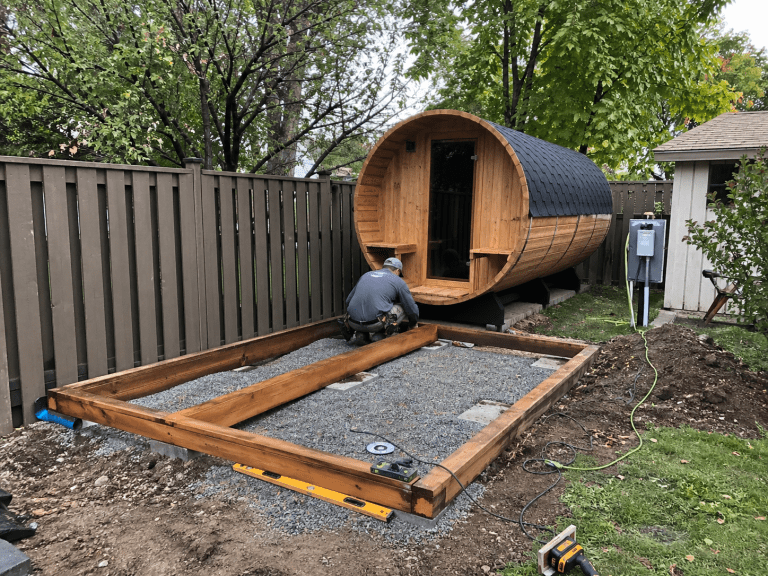
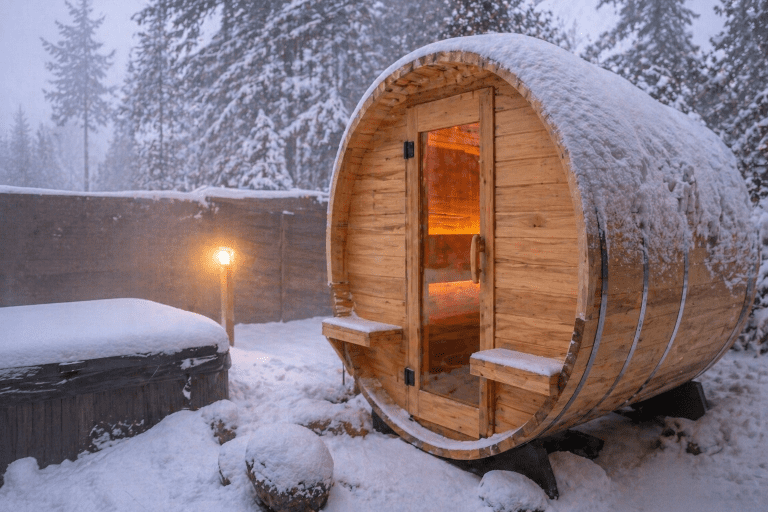
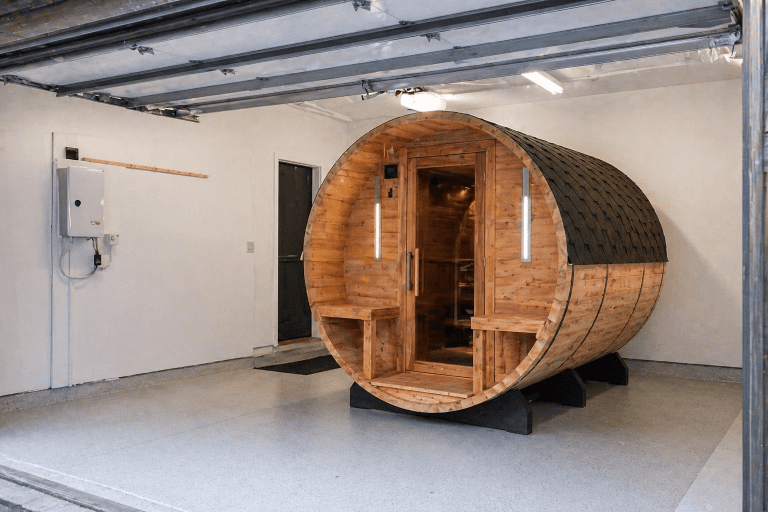
Infrared cabin vs. small outdoor barrel sauna: A barrel sauna on a small deck or backyard can be genuinely space-efficient outdoors. It uses a traditional heater — typically wood-fired or electric — and delivers a different experience entirely. The infrared sauna for small spaces wins on cost, convenience, and year-round indoor accessibility. The barrel sauna wins on heat intensity, atmospheric experience, and resale value to some buyers. They’re not really competing for the same thing.
Comparison Table
| Factor | Infrared Cabin (Small) | Barrel Sauna (Outdoor) | Sauna Tent |
|---|---|---|---|
| Minimum footprint | 35–40 sq ft | 40–60 sq ft outdoor space | 10–15 sq ft (stored) |
| Upfront cost | $800–$3,000 | $2,000–$6,000+ | $150–$400 |
| Running cost/session | $0.10–$0.25 | $0.30–$1.50+ | $0.05–$0.15 |
| Preheat time | 10–15 min | 30–60 min | 10–15 min |
| Heat distribution | Directional — uneven in compact | Even ambient | Directional — body only |
| Post-session feeling | Warm, relaxed, gentle sweat | Intense, purging, high contrast | Mild — less immersive |
| Indoor use | Yes | No | Yes |
| Assembly | 2–4 hours flat-pack | Professional install typically | 10–15 minutes |

Helpful Gear
- Infrared sauna mat — Protects the bench from sweat staining and gives you a cleaner surface contact when sitting close to heated wood.
- Sauna backrest — A shaped wooden backrest keeps you off the rear panel in narrow units, improving comfort and reducing direct contact with the heated surface.
- Digital hygrometer thermometer — Lets you monitor interior temperature and humidity to understand what’s actually happening inside your compact unit versus what the display says.
FAQ
Is an infrared sauna actually effective in a very small unit, or is bigger always better?
Physiologically, a well-built compact infrared sauna for small spaces produces the same core effect — elevated core temperature, sweat response, increased circulation — as a larger unit. The difference is comfort and heat distribution, not effectiveness. If you’re using it for recovery, relaxation, and the documented benefits of regular heat exposure, a single-person unit delivers. If you want the social experience or the atmospheric feel of a full sauna room, a small unit won’t replicate that.
Is it worth buying an infrared sauna for small spaces if I’ll only use it two or three times a week?
Yes, at that frequency. The running cost at 2–3 sessions per week is minimal — typically $2–$4 per month in electricity. The upfront investment amortises quickly against gym membership costs or commercial sauna access. The honest caveat: frequency tends to increase once the unit is in your home and the friction of using it drops to near zero. Two times a week often becomes four. The better question is whether you’ll keep it past the first month, which depends more on placement — if it’s genuinely accessible where you’ve put it, you’ll use it.
Will a compact infrared unit heat my room noticeably?
Marginally. The infrared sauna for small spaces doesn’t superheat surrounding air the way a traditional unit would, but a 1.5–2kW element in a small room will raise ambient temperature slightly over a 45-minute session. In a well-ventilated room this is unnoticeable. In a very small sealed room it’s worth factoring in. It’s not a problem — just something to be aware of if you’re placing it in an already-warm space in summer.
Infrared vs Traditional Sauna— If you’re still deciding between infrared and traditional at a fundamental level, that comparison covers the full picture including heat type differences, cost over time, and who each format suits.
Simple rule: if it fits, plug it in, and use it consistently — the health case for regular heat exposure doesn’t require a full sauna room.
Summary Snapshot
- Infrared sauna for small spaces works because it heats your body directly, not the air — lower ambient temperature, smaller footprint, simpler install
- Single-person units start around $800–$1,500; running cost is typically $0.10–$0.25 per session
- Most plug-in units need only a standard 120V outlet and a flat surface
- Compact panel proximity creates uneven heat — rotate mid-session to compensate
- Maintenance is minimal: wipe-down after each use, periodic panel check
- Not a traditional sauna replica — different experience, legitimate on its own terms
Final Verdict
An infrared sauna for small spaces is a practical, well-priced option for anyone who wants regular heat therapy at home without a dedicated room or significant installation work. It won’t give you a traditional sauna experience — the heat is different, the atmosphere is different, and the compact format has real ergonomic trade-offs you’ll notice in the first few sessions. But if you use it consistently, those trade-offs become familiar and largely irrelevant. The physiology works at any panel-to-body distance.
The directional heat issue in narrow units is the one thing to genuinely research before buying — look for units with full side-panel coverage rather than just front-and-back, and consider sizing up to a two-person cabin even for solo use if budget allows. The extra interior space changes the experience more than most buyers expect.
Cluster Block
The infrared format makes the most sense when you understand how it differs from traditional at a fundamental level — Infrared vs Traditional Sauna breaks down the heat mechanics, cost comparison, and which format suits different users. If you’re earlier in the research process, our Indoor vs Outdoor Saunas covers the broader space-planning question that often comes before the infrared decision , and if steam is still on the table as an option, Sauna vs Steam Room Small Spaces breaks down which build actually makes sense for a tight footprint.”
3 SNIPPET BAIT MICRO-SECTIONS
Does an infrared sauna work in a small space?
Yes. Infrared saunas heat the body directly rather than superheating the surrounding air, which means they operate at lower ambient temperatures — typically 120–140°F — and require significantly less physical space than traditional saunas. A quality single-person unit needs as little as 35–40 square feet of floor space and a standard 120V outlet in most cases.
How much does a small infrared sauna cost to run?
A compact single-person infrared unit typically draws 1.5–2kW and costs approximately $0.10–$0.25 per 45-minute session at average US electricity rates. Daily use for a month typically costs $3–$8, making it one of the more affordable home wellness installations to operate.
What is the minimum room size for an infrared sauna?
Most single-person infrared cabin units have an interior footprint of roughly 3×3 to 3×4 feet. With clearance for air circulation and door swing, a room or dedicated space of approximately 35–50 square feet is sufficient for a permanent installation without feeling cramped when entering and exiting.