Infrared Sauna Safety for Beginners: What to Know Before Your First Session
Infrared sauna safety comes down to a handful of details most first-timers never think to ask about — because on the surface, an infrared sauna feels almost too gentle to worry about. The panels don’t glow, the room doesn’t feel like a blast furnace, and it’s easy to assume there’s nothing to get wrong. That assumption is exactly where the real risk sits.
I’ve used both traditional and infrared setups regularly for years, and the safety picture around infrared genuinely is different from traditional heat — just not in the direction most beginners expect.
Quick note: some links below are affiliate links, meaning I may earn a small commission if you buy through them, at no extra cost to you. I only recommend gear I’d actually use myself.
Quick Snapshot
- Infrared panels typically run at 120–150°F, well below a traditional heater’s 150–195°F range — so classic heat exhaustion isn’t the main concern
- Most beginners should start with 10–15 minute sessions and build toward 20–30 minutes as tolerance increases
- Direct skin contact with an active panel, not the room air, is the real burn risk
- A home infrared cabin typically runs $1,500–$5,000 installed, depending on size and features
Table of Contents
- What Infrared Sauna Safety Actually Means
- The Real Cost of Getting It Right
- Installation Friction Beginners Don’t Expect
- Maintenance That Keeps a Home Unit Safe
- 3 Honest Trade-Offs Before You Buy
- Infrared vs Traditional: The Actual Safety Difference
- Who Should Be More Careful
- Helpful Gear
- FAQ
- Final Verdict
What Infrared Sauna Safety Actually Means
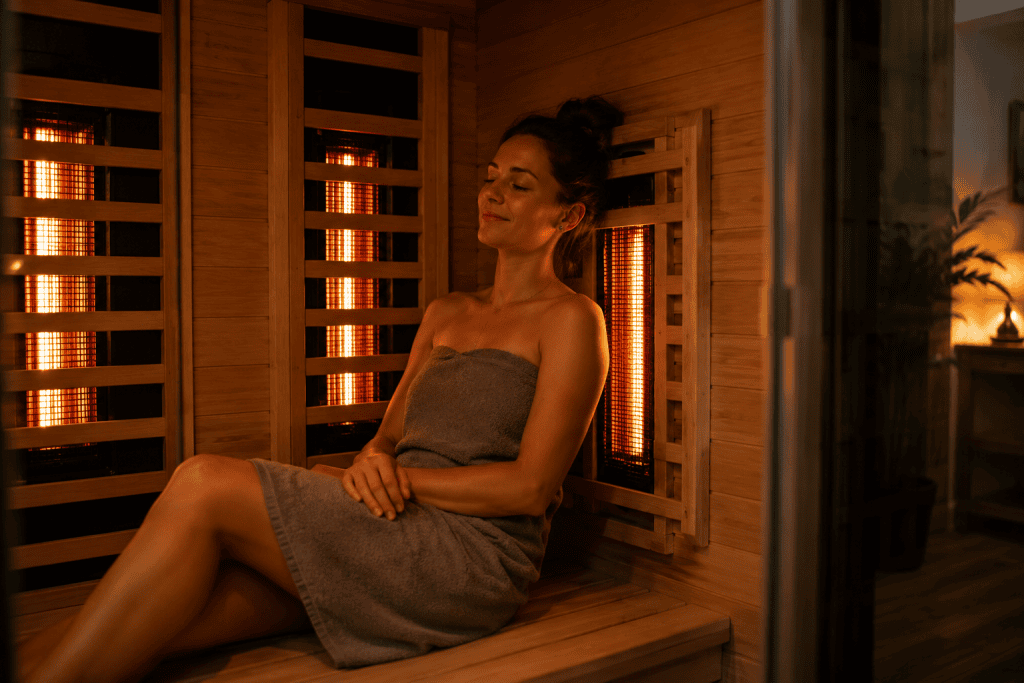
Most guidance stops at “infrared runs cooler, so it’s safer” — technically true, but it skips the part that actually matters. Infrared sauna safety isn’t really about ambient temperature at all. It’s about proximity. Infrared panels heat the body directly through radiant energy, which means the panel surface itself can get considerably hotter than the air around it.
What’s the actual burn risk with an infrared sauna? Direct, sustained skin contact with an active panel — not the room heat itself. According to Mayo Clinic, infrared saunas heat the body directly and operate at lower temperatures than traditional saunas.
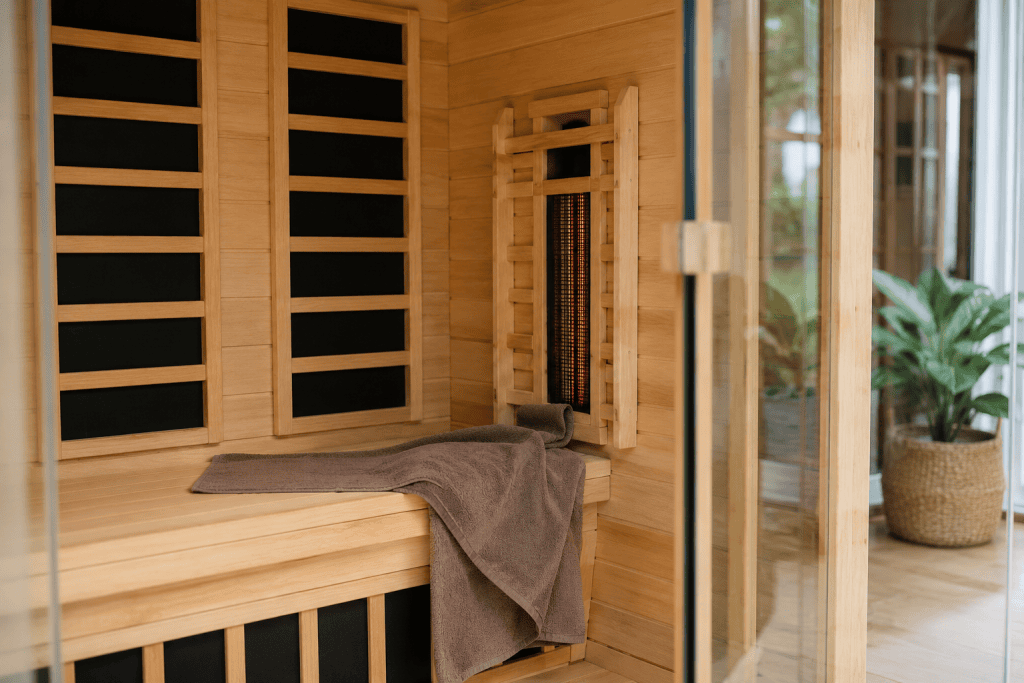
Positioning matters more than people expect. Leaning a bare shoulder or calf directly against a panel for an extended stretch is where beginners actually run into trouble, not from sitting in the room itself. This is the core of infrared sauna safety that most beginner guides skip entirely in favor of generic temperature comparisons.
The Real Cost of Getting It Right
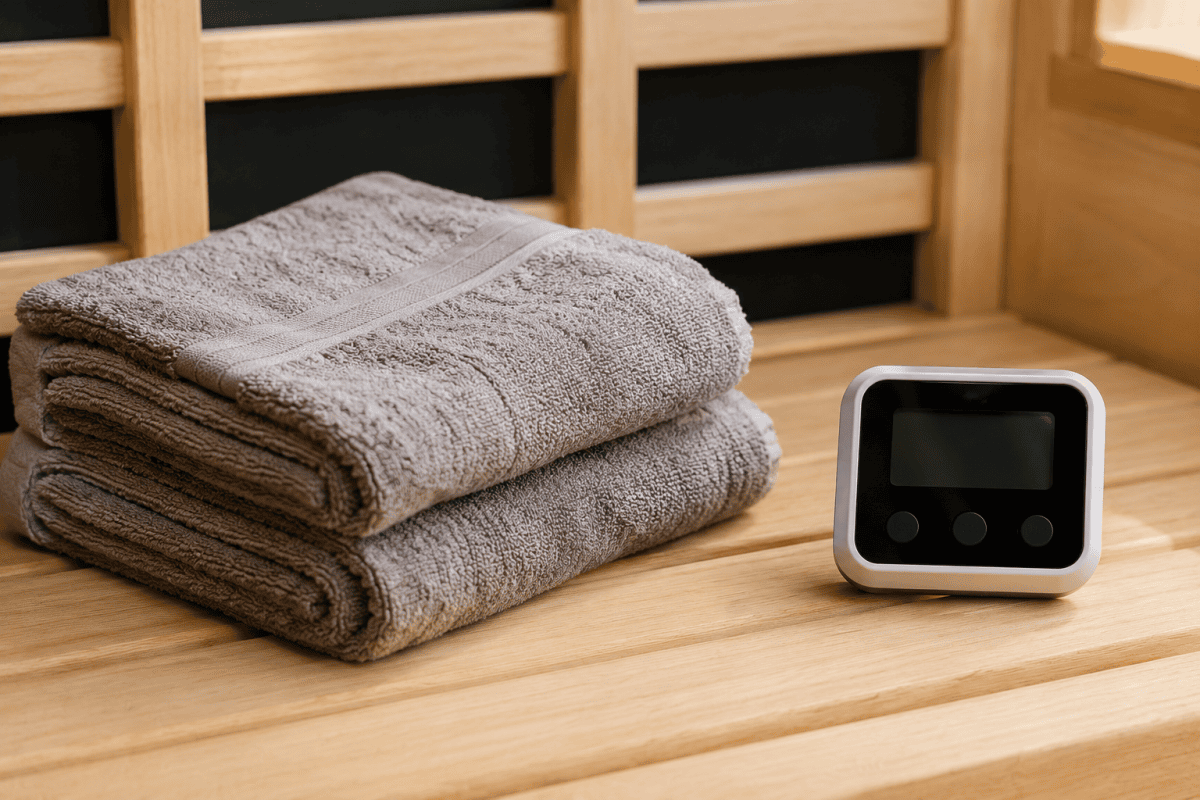
A home infrared cabin typically runs somewhere in the $1,500–$5,000 range depending on size, wood type, and panel count, though pricing shifts with the market and specific model — treat any figure here as a starting point for research, not a locked-in number. Where beginners underspend isn’t the unit itself, it’s the accessories that make sessions safer: a proper timer, a breathable towel barrier between skin and panel, and decent ventilation.
Infrared sauna safety gets cheaper the more you plan for it upfront. Skipping a $15 timer and eyeballing session length is a common way people either cut sessions short out of uncertainty or overstay because the lower heat doesn’t send the same “get out” signal a traditional sauna does. Budgeting for that timer alongside the unit itself is a small line item that does more for infrared sauna safety than almost anything else on this list.
Installation Friction Beginners Don’t Expect
Infrared units are generally more forgiving to install than traditional saunas — many plug into a standard 120V outlet rather than requiring a dedicated 240V circuit, though larger cabins do need it. That said, ventilation still matters for both comfort and safety, and clearance requirements around the panels aren’t always front-of-mind for first-time buyers focused only on square footage.
Getting the room right the first time avoids the more common beginner mistake: cramming a unit into a space so tight that accidental panel contact becomes almost inevitable. Clearance is a genuinely underrated part of infrared sauna safety — a cabin that technically fits a room but leaves no buffer around the panels quietly raises the odds of the exact contact risk covered above.
Maintenance That Keeps a Home Unit Safe
Infrared panels need far less upkeep than a traditional heater — no rocks, no water contact, nothing to descale. If you’re unsure why water needs to stay away from the heating system, see our guide to pouring water on infrared panels and how infrared panels differ from traditional sauna rocks. The main maintenance task relevant to safety is checking panel surfaces and wiring periodically for signs of wear or damage.
Infrared sauna safety over the long term is mostly about not letting small issues — a loose panel cover, a frayed cord — sit unaddressed, since these are the same low-effort checks that keep any home electrical fixture safe. A cracked or peeling panel cover is worth replacing immediately rather than waiting, since it’s one of the few maintenance issues that directly affects the contact risk this whole topic centers on.
3 Honest Trade-Offs Before You Buy
Pros:
- Lower ambient temperature makes longer, more relaxed sessions realistic for people who find traditional heat overwhelming
- Simpler installation and lower running costs in most cases
- Easier to build a consistent daily or near-daily habit without the recovery time a hotter traditional session demands
Cons:
- The gentler feel is genuinely underdiscussed as a risk factor — because it doesn’t feel intense, beginners tend to underestimate how long they’ve actually been sweating, and dehydration creeps up without the obvious heat-stress cues a traditional sauna provides
- Panel proximity requires more conscious positioning than traditional bench seating
- Deep-heat sensation takes longer to build, which can lead new users to assume “nothing’s happening” and stay in far longer than planned
That first con is the one that gets underplayed most. Infrared sauna safety genuinely hinges more on hydration and session-length awareness than on heat tolerance — the thing that feels like the smaller risk on paper is often the one that actually catches people out.
Infrared vs Traditional: The Actual Safety Difference
Having used both regularly for years, the difference in how each type demands attention is real. A traditional sauna bench gets hot enough to burn through thin shorts if you’re not paying attention — a mat isn’t optional luxury there, it’s the difference between a relaxing session and spending the rest of the day thinking about your backside. Infrared benches don’t carry that same ambient risk, but the panels themselves introduce a different, more localized one, which is why infrared sauna safety and traditional sauna safety aren’t really the same conversation wearing different clothes.
How long should a beginner stay in an infrared sauna? Most sources, including Healthline, recommend starting around 10–15 minutes and building tolerance gradually rather than pushing a full 30-minute session on day one.
| Factor | Infrared | Traditional |
|---|---|---|
| Typical operating temperature | 120–150°F | 150–195°F |
| Primary burn risk | Direct panel contact | Ambient bench/surface heat |
| Recovery/social feeling afterward | Calm, gradual | More intense “purged” sensation |
| Beginner session length | 10–15 min to start | 5–10 min to start |
For a fuller side-by-side on cost, heat output, and health claims, Infrared vs Traditional Sauna: Cost, Heat & Health Breakdown covers the broader comparison this article doesn’t fully unpack. Beginners weighing heat tolerance specifically may also find it worth checking Do Infrared Saunas Get as Hot as Traditional Saunas? The Honest Answer useful before deciding which type suits them.
How long should a beginner stay in an infrared sauna? Most sources, including Healthline, recommend starting around 10–15 minutes and building tolerance gradually rather than pushing a full 30-minute session on day one.
Who Should Be More Careful
Anyone with cardiovascular conditions, low blood pressure, or who is pregnant should check with a doctor before starting, the same standard caution that applies to any heat therapy regardless of type. Beyond that, infrared sauna safety deserves extra attention for anyone on medication that affects hydration or temperature regulation, since the lower perceived heat can mask early warning signs that would otherwise prompt someone to step out sooner.
First-timers who’ve never used any form of heat therapy before are also worth calling out specifically — not because infrared is riskier for them, but because they don’t yet have a baseline for how their body responds to sustained heat exposure of any kind. Starting short and building up applies double in that case.
The same “safe for beginners” question comes up in cold exposure too — Is Cold Plunging Safe for Beginners? walks through a similar start-slow approach on the opposite end of the temperature spectrum.
Helpful Gear
- Sauna bench seat cushion — creates a barrier between skin and any warm surface, useful in both infrared and traditional setups
- Sauna thermometer/hygrometer combo — helps confirm actual cabin temperature rather than relying on the unit’s display alone
FAQ
Is infrared sauna use actually risky for a first-timer, or is this overblown? For most healthy adults, no — it’s genuinely one of the gentler heat therapies available. The risk isn’t severity, it’s that the gentle feeling makes it easy to overstay or skip hydration because nothing feels urgent.
Will I actually notice a safety difference as a beginner, or does it not matter which type I start with? It matters mainly for how the risk shows up, not whether risk exists. Traditional heat gives clearer physical warning signs to stop; infrared requires more self-imposed structure, like a timer, since the body doesn’t send the same signal.
Do I need any medical clearance before trying one? Anyone with cardiovascular conditions, low blood pressure, or who is pregnant should check with a doctor first — standard caution that applies to any heat therapy, infrared included.
Simple rule: if you wouldn’t sit that close to a space heater for 20 minutes without checking in on yourself, don’t do it with an infrared panel either.
Summary Snapshot
- Real risk = panel contact, not room heat
- Start at 10–15 minutes, build gradually
- Hydration matters with both infrared and traditional saunas
- A timer is the cheapest safety upgrade available
Final Verdict
Infrared sauna safety isn’t a reason to avoid infrared — if anything, the lower ambient heat makes it one of the more approachable ways to start a heat therapy habit. The real work is building in the structure that traditional saunas hand you automatically through discomfort: a timer, awareness of panel proximity, and enough water to offset a session that doesn’t feel like it’s demanding much of you until afterward.
For more on how infrared compares beyond safety, see Infrared Sauna Electricity Usage: The Real Numbers Before You Buy and Is an Infrared Sauna for Small Spaces the Right Fit for Your Home? if space or running cost is part of your decision too.