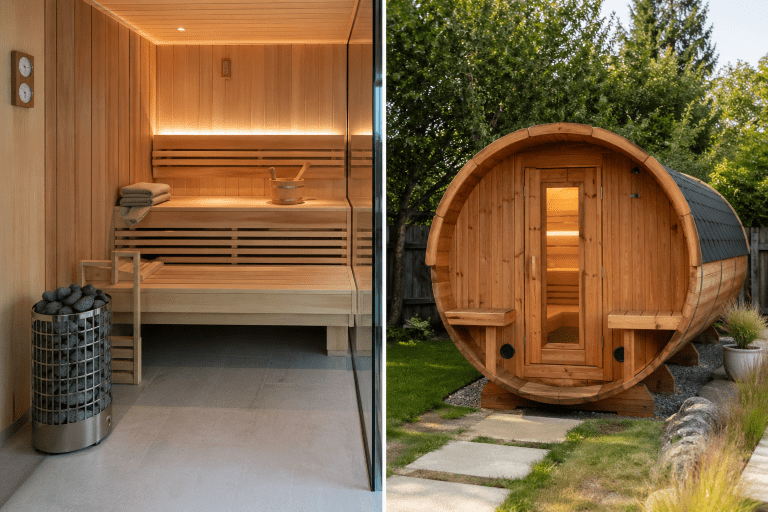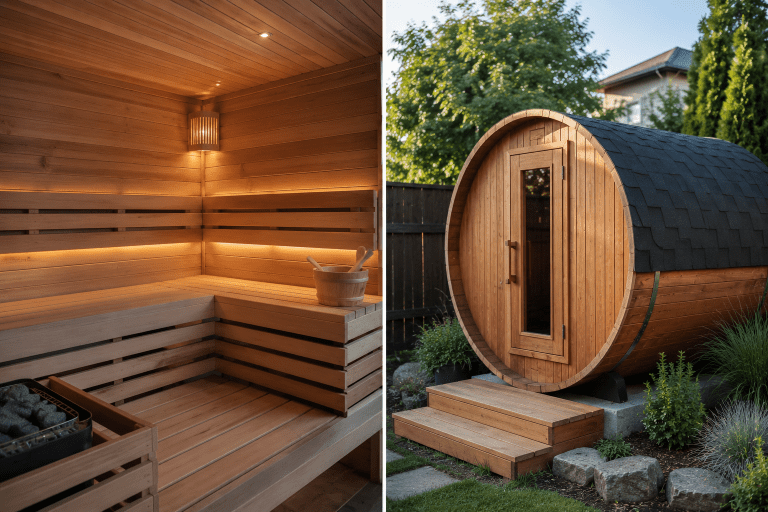
Infrared vs Traditional Sauna Heat Up Time: Which One Warms Up Faster?
Infrared vs traditional sauna heat up time comes down to one blunt fact: infrared units are usually ready in under 20 minutes, while a traditional sauna can take double or triple that before it’s genuinely hot enough to sit in. That gap sounds small on paper. In practice, it changes how often either type actually gets used.
Regular use of both types over the years — sitting through the slow traditional climb plenty of times and the quicker infrared warm-up plenty of others — makes the difference obvious in a way a spec sheet doesn’t. There’s a genuine feeling of purging by the end of a proper traditional session that infrared doesn’t quite replicate, but that only happens after the wait.
If you’ve ever stood by a traditional sauna door checking the thermometer every five minutes wondering if it’s worth getting undressed yet, you already know this isn’t just a numbers question.
This post contains affiliate links. If you buy through them, Sunrise & Vitalize may earn a small commission at no extra cost to you.
Quick Snapshot
- Infrared sauna heat up time: typically 10-20 minutes to usable warmth
- Traditional sauna heat up time: typically 30-45 minutes to full temperature, sometimes longer for larger rooms
- Traditional saunas generally run hotter at peak (170-190°F) than infrared cabins (120-150°F)
- Heater size, insulation quality, and room volume all affect real-world heat up speed more than the brand does
Table of Contents
- What Decides Infrared vs Traditional Sauna Heat Up Time
- 20 Minutes vs 45 Minutes: The Core Gap
- The Cost Reality Behind Faster Heat Up
- Installation Friction That Slows Things Down
- Maintenance Habits That Keep Heat Up Honest
- Pros and Cons of Each Heat Up Style
- Side-by-Side Comparison
- Helpful Gear
- FAQ
- Final Verdict
What Decides Infrared vs Traditional Sauna Heat Up Time
The short answer is that infrared panels heat your body directly, while traditional heaters have to heat the whole room’s air first. That’s the core of why infrared vs traditional sauna heat up time splits the way it does. Infrared elements start radiating warmth toward you almost as soon as they’re switched on, so there’s no need to wait for cubic feet of air to reach a target temperature.
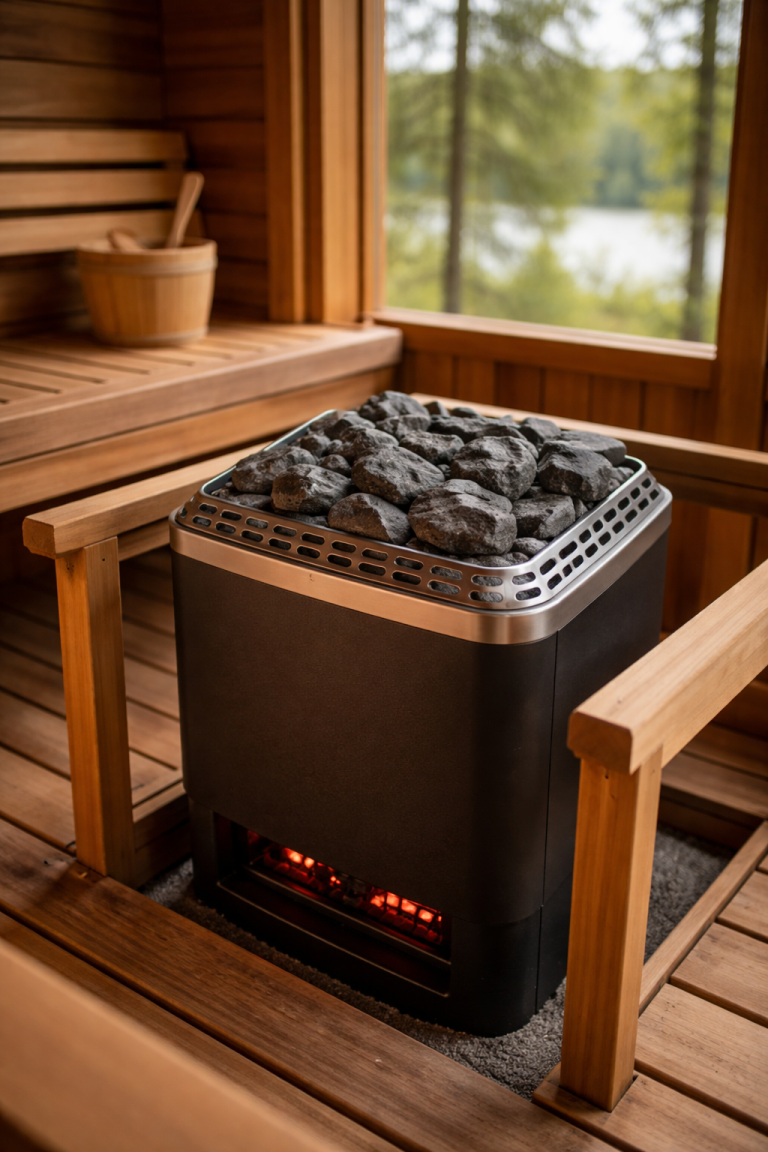
Traditional sauna heat up time depends on how much air and wood mass the heater has to work through before the room stabilizes. A larger cabin, thicker cedar walls, or a smaller heater relative to room size all stretch that wait out further. According to Healthline, most people spend around 15 to 20 minutes in a traditional sauna once it’s hot — and that’s on top of the climb time just to get there.
One thing worth knowing when comparing infrared vs traditional sauna heat up time: the number on the wall thermostat and how hot a traditional sauna actually feels aren’t the same experience. After enough sessions, it becomes clear the room keeps feeling like it’s climbing for several minutes after the display stops moving. Adding water to the rocks — or any sudden increase in heat stimulus — produces an immediate spike in perceived heat that the body reads as a new load, even though the air temperature reading barely shifts. That gap between measured and felt heat is easy to miss if you’ve only ever gone by the number.
How long does it actually take to feel hot, not just read hot? Infrared cabins usually feel warm to the skin within the first 5-10 minutes because the radiant heat hits you directly. Traditional saunas often don’t feel genuinely hot until 10-15 minutes after the thermostat claims target temperature, because the felt heat builds with humidity and stimulus, not just air temperature.
20 Minutes vs 45 Minutes: The Core Gap
Put the two side by side and the numbers are consistent across most home units. Infrared vs traditional sauna heat up time typically runs 10-20 minutes for infrared against 30-45 minutes for traditional — sometimes closer to an hour for larger traditional cabins with underpowered heaters. That’s not a small rounding difference; it’s the difference between squeezing in a session on a weeknight and deciding it’s not worth starting.
A 6kW traditional heater in an undersized room heats faster than an 8kW heater struggling to fill a room that’s too large for it — heater-to-room sizing genuinely matters more than heater wattage alone. Anyone weighing this trade-off is better served checking 6kw vs 8kw Sauna Heater: Critical Sizing Mistakes before assuming a bigger number always means a faster warm-up.
The Cost Reality Behind Faster Heat Up
Faster heat up time isn’t free — it’s a trade-off, not a straight upgrade. Infrared units typically draw less power overall because they run for shorter total session lengths and don’t need to heat as much air mass, but the panels themselves aren’t cheap to replace if one fails. Traditional heaters cost less individually but the longer runtime to reach temperature adds up over regular use, which is part of why infrared vs traditional sauna heat up time factors into the running-cost conversation, not just the wait itself.
Running-cost figures shift with local electricity rates, so treat any dollar estimate as a range rather than a fixed number. The U.S. Energy Information Administration tracks how electricity prices vary by state and season, which is worth checking against your own utility bill before assuming either type will land at a specific monthly figure. For a fuller breakdown of ongoing costs, Infrared vs Traditional Sauna Running Costs: Which Is Actually Cheaper Long Term? covers that in more depth, and Infrared Sauna Electricity Usage: The Real Numbers Before You Buy breaks down the electrical side specifically.
Installation Friction That Slows Things Down
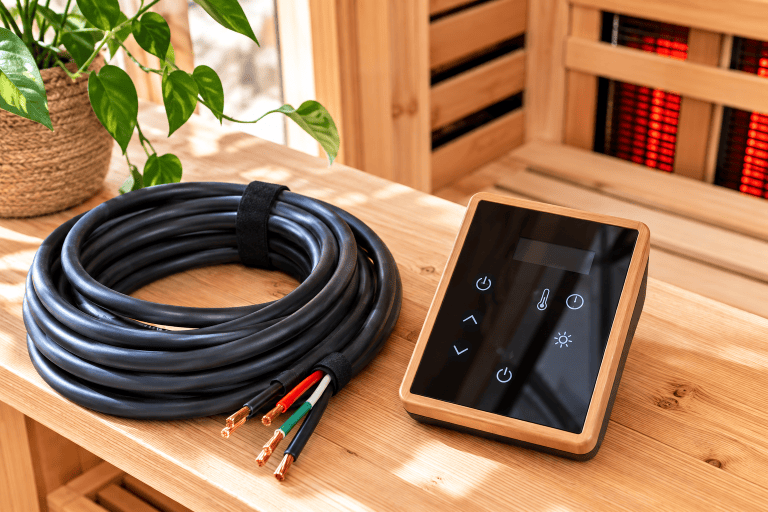
Installation choices affect heat up time just as much as the heater type does. A traditional sauna on a dedicated 240V circuit with a properly sized heater will hit temperature noticeably faster than the same unit wired on a shared or undersized circuit. Do Sauna Heaters Require 240V Wiring? is worth reading before assuming a standard outlet will do — it usually won’t for a full-size traditional heater.
Room insulation is the other variable people underestimate. A poorly sealed traditional sauna loses heat as fast as the heater produces it, which stretches infrared vs traditional sauna heat up time out well past the typical range regardless of heater wattage. Gaps around the door are a common, fixable culprit.
Maintenance Habits That Keep Heat Up Honest
Neither heater type stays at its factory-fresh heat up speed forever without upkeep. Dust buildup on infrared panels reduces radiant output over time, and mineral scale or worn heating elements on a traditional unit slow the climb to temperature. Sauna Heater Maintenance: Essential Checks Owners Must Do lays out the basic checks that keep either system performing close to its original numbers instead of quietly drifting slower month over month.
Does a dirty or old heater actually change heat up time? Yes — a traditional heater with scaled elements or an infrared panel with heavy dust buildup can add several extra minutes to reach the same temperature, even though nothing else about the room has changed. Regular cleaning and occasional element checks keep infrared vs traditional sauna heat up time closer to the manufacturer’s stated range.
Pros and Cons of Each Heat Up Style
Weighing infrared vs traditional sauna heat up time against everything else a sauna offers is really a question of which trade-offs matter most day to day.
Infrared:
- Pro: usable warmth in 10-20 minutes, good for squeezing sessions into a busy evening
- Pro: lower ambient air temperature means longer sessions feel more tolerable for beginners
- Con: the radiant warmth can feel less intense on the skin than a proper heat wave, and that’s a genuine trade-off worth knowing before buying
Traditional:
- Pro: higher peak heat and the option to add steam produce a more intense, immersive session once it’s finally hot
- Pro: the wait itself becomes part of the ritual for people who use it consistently
- Con: 30-45 minutes of warm-up time is a real barrier on weeknights, and it’s the reason a lot of traditional units get used far less often than owners originally planned
Side-by-Side Comparison
Infrared vs traditional sauna heat up time isn’t the only variable worth weighing, but it’s usually the one that decides how often either type actually gets used week to week rather than sitting cold in the corner.
| Factor | Infrared | Traditional |
|---|---|---|
| Typical heat up time | 10-20 minutes | 30-45 minutes |
| Peak temperature | 120-150°F | 170-190°F |
| Room-during-heat-up smell | Faint plastic/electrical warmth, fades quickly | Wood and mineral scent that builds as the heater works, distinct part of the experience |
| Best fit for | Weeknight, shorter sessions | Weekend, ritual-style longer sessions |
Helpful Gear
- Sauna and steam room thermometer/hygrometer combo — lets you actually track heat up progress instead of guessing when it’s ready, useful for either sauna type.
- Silicone door gasket seal strip — cuts heat loss around the door, which noticeably shortens how long a traditional sauna takes to stabilize at temperature.
FAQ
Is a traditional sauna still worth the wait if you only have 30 minutes free? For most people, no — by the time a traditional sauna finishes heating, the session window is already gone. Infrared is the more realistic choice for short, unplanned windows of free time.
Does outdoor placement change how fast a sauna heats up? Yes — cold ambient air slows both types down, but traditional units are affected more because they’re heating a larger volume of air from a colder starting point, which widens the infrared vs traditional sauna heat up time gap outdoors. Which Heats Faster: Indoor or Outdoor Sauna? The Honest Answer covers that specific comparison in more detail.
Will you actually use a traditional sauna regularly, or will the wait mean it collects dust? Worth being honest about before buying. If evening spontaneity matters more than ritual, the 30-45 minute wait is a real behavioral barrier, not just a number on a spec sheet — plenty of traditional units end up under-used for exactly this reason.
Simple rule for infrared vs traditional sauna heat up time: if you need it ready in under 20 minutes on a regular basis, infrared wins; if you’re building a slower weekend ritual and don’t mind the wait, traditional still delivers something infrared doesn’t fully replicate.
Summary Snapshot
- Infrared: 10-20 minutes to usable heat, lower peak temperature, better for short or spontaneous sessions
- Traditional: 30-45 minutes to full heat, higher peak temperature, better suited to planned, longer sessions
- Heater sizing, circuit wiring, insulation, and maintenance all shift these numbers in either direction

Final Verdict
Infrared vs traditional sauna heat up time isn’t really a question of which heater is better — it’s a question of which wait matches how you’ll actually use it. Infrared fits a routine built around convenience and shorter windows of free time. Traditional fits a routine where the wait itself is part of the wind-down, and the higher peak heat at the end is worth the 30-45 minutes it takes to get there.
Anyone still weighing infrared vs traditional sauna heat up time against the bigger picture should also read Infrared vs Traditional Sauna Differences: The Honest Breakdown for the fuller comparison, and Do Infrared Saunas Get as Hot as Traditional Saunas? The Honest Answer for the peak-temperature side of this same question.
Related reading: Steam Room vs Sauna Heat Up Time: Which One Is Actually Ready Faster? Infrared vs Traditional Sauna Running Costs: Which Is Actually Cheaper Long Term?