Infrared Sauna 240V: Do You Actually Need It?
The infrared sauna 240V question trips up more buyers than almost any other spec on the checklist, mostly because the honest answer is “it depends on the unit” rather than a flat yes or no. Cabin size, heater wattage, and how many people plan to use it at once all factor into whether a standard household outlet will cut it, or whether installation day starts with an electrician’s quote.
Having spent time in both infrared and traditional saunas, one thing you notice pretty quickly is that “infrared” doesn’t automatically mean “low power.” Smaller two-person cabins with lower-wattage heaters often run fine on a regular 120V outlet, but anything mid-size or larger with a heater rated above roughly 1,500–2,000 watts usually lands in the same 240V territory a traditional sauna heater would need.
A 240V traditional heater also throws noticeably more ambient heat into the room within the first few minutes than a lower-wattage infrared panel does — a difference anyone who’s used both formats notices almost immediately. One honest limitation worth naming upfront: manufacturer wattage ratings aren’t always front and center on product listings, so it’s a spec worth hunting down before assuming either way about your infrared sauna 240V setup.
If you’re mid-research and just want a straight answer before committing to a spot in the garage or basement, here’s the breakdown.
Quick note: this post contains affiliate links, and Sunrise & Vitalize may earn a small commission if you buy through them, at no extra cost to you.
Quick Snapshot
- Most 2-person infrared cabins under roughly 1,500W run on a standard 120V outlet
- Most 3+ person infrared cabins and virtually all traditional heaters typically need a dedicated 240V circuit
- Running a new 240V circuit typically costs $300–$800 in electrician labor and materials, depending on panel distance
- Higher-wattage infrared units draw closer to traditional sauna power levels than most buyers expect
Table of Contents
- Infrared Sauna 240V Requirements: What Actually Determines It
- 120V vs 240V: The Amperage Breakdown
- The Real Cost of Wiring for 240V
- Installation Friction: Panel Capacity and Permit Questions
- Maintenance Considerations for 240V Sauna Circuits
- Pros and Cons of Needing a Dedicated Circuit
- Infrared vs Traditional: Which Is More Likely to Need 240V?
- Helpful Gear for Managing Your Sauna’s Power Setup
- FAQ
- The Honest Bottom Line
Infrared Sauna 240V Requirements: What Actually Determines It
The single biggest factor in any infrared sauna 240V decision is heater wattage, not the infrared-versus-traditional label itself. A compact two-person cabin with a 1,200–1,500W heater is designed to run on a standard 15- or 20-amp 120V household circuit, the same kind of outlet powering a microwave or space heater. Step up to a three- or four-person cabin, and heater wattage commonly climbs to 2,500–3,000W or higher, which pushes the unit past what a 120V circuit can safely and consistently deliver.
Does a 2-person infrared sauna need 240V? Usually not. Most 2-person cabins pack a heater under 1,500 watts, which comfortably runs off a dedicated 120V/20A circuit already standard in most homes.
This is where the infrared sauna 240V question gets genuinely useful to ask before purchase rather than after delivery. Checking the exact wattage listed in the manufacturer’s spec sheet, not just the marketing copy, tells you which circuit you’re working with well before an electrician needs to get involved. For context on how that wattage translates into actual electricity draw over time, Infrared Sauna Electricity Usage: The Real Numbers Before You Buy breaks down real per-session costs across wattage tiers.
120V vs 240V: The Amperage Breakdown
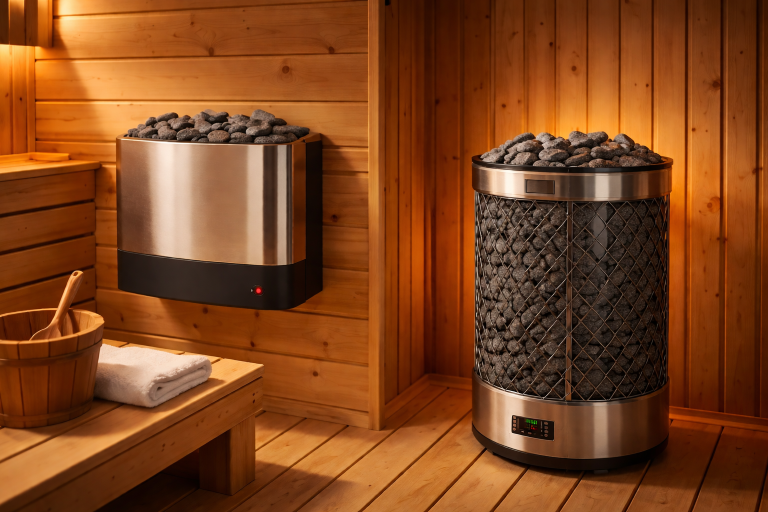
A standard 120V household outlet is typically rated for 15 or 20 amps, giving a maximum continuous draw of roughly 1,440–1,920 watts once electrical code safety margins are factored in. That ceiling is exactly why smaller infrared units are engineered to stay under it, and why anything larger simply can’t run safely on the same outlet. Traditional sauna heaters, by comparison, are almost universally built for 240V circuits rated 30–40 amps, because the heating elements needed to bring a full cabin up to 150–195°F draw far more power than infrared panels ever do.
What amperage does a traditional sauna heater need? Most traditional heaters in the 6kW–8kW range need a 240V circuit rated for 30–40 amps, well beyond what a standard household outlet provides. Do Sauna Heaters Require 240V Wiring? covers the full breaker and wire-gauge picture for traditional units specifically.
None of this is exclusive to traditional heaters, though. Once an infrared cabin’s heater crosses into that same wattage range, it needs the same infrared sauna 240V setup a traditional unit would, breaker size and all.
The Real Cost of Wiring for 240V
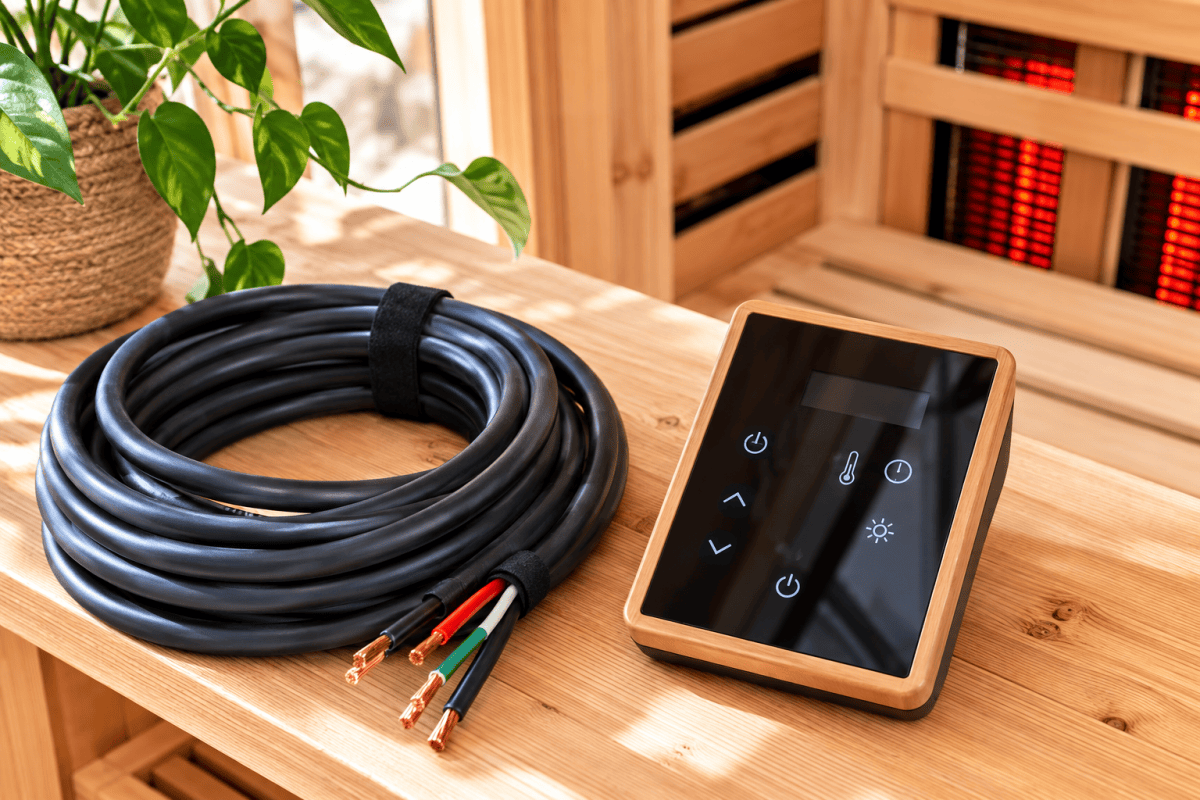
Figuring the real cost of an infrared sauna 240V circuit starts with what’s already in the electrical panel. If there’s open capacity and the run from panel to sauna location is short, typical electrician quotes land in the $300–$500 range for labor and materials. Longer runs, finished walls that need opening, or a panel already near capacity can push the total closer to $700–$800, and in some cases higher if a subpanel or panel upgrade gets added to the job.
How much does running a 240V line to a sauna cost? Electrician labor and materials for a new dedicated circuit typically fall between $300 and $800, depending on distance from the panel and whether a wall needs opening.
According to the U.S. Energy Information Administration ,residential electricity rates vary meaningfully by state and season, which is worth factoring in alongside the one-time wiring cost when weighing long-term running expenses for an infrared sauna 240V setup versus a lower-wattage 120V alternative. Infrared vs Traditional Sauna Running Costs: Which Is Actually Cheaper Long Term? walks through the ongoing cost side in more detail.
Installation Friction: Panel Capacity and Permit Questions
Panel capacity is the detail that trips up the most installations. An older home with a 100-amp panel already running a full kitchen, HVAC, and a couple of dedicated appliance circuits may not have room left for another 30–40 amp draw without an electrician evaluating total load first. This is one of the practical friction points that separates an easy infrared sauna 240V install from one that turns into a bigger electrical project than expected.
Permitting requirements for dedicated circuits vary by city and county, and in many jurisdictions any new 240V circuit requires a permit and inspection regardless of what it’s powering. Nolo’s guide to homeowner permit requirements is a useful starting point for checking local rules before scheduling work.
Hot Tub Electrical Requirements: What Every Homeowner Must Know Before They Buy covers a near-identical panel-capacity conversation for hot tub owners, and the same logic applies directly to sizing an infrared sauna 240V circuit. Can My Electrical Panel Handle a Sauna Heater? is worth a look before scheduling any electrician visit, since panel capacity questions apply across both infrared and traditional heater types.
Maintenance Considerations for 240V Sauna Circuits
Once a dedicated circuit is in place, maintenance is minimal but not zero. GFCI-protected breakers, which most local codes require near any heat or moisture source, should be tested every few months using the built-in test button to confirm they’re tripping correctly. Loose panel connections, though rare, are worth a periodic visual check, especially in the first year after installation when any new wiring settles into regular use.
There’s genuinely little ongoing upkeep specific to an infrared sauna 240V circuit beyond that — most of the maintenance attention on infrared units goes toward the heating panels and cabin wood, not the electrical side.
Pros and Cons of Needing a Dedicated Circuit
Pros:
- Higher-wattage heaters bring a cabin up to temperature faster
- A dedicated circuit means the sauna isn’t sharing power with other household appliances
- Larger cabins with 240V heaters typically accommodate more people comfortably
Cons:
- Upfront electrician cost adds to total setup expense
- Product marketing for infrared units leans heavily on “plug-and-play” language, which is accurate for smaller cabins but easy to misread as a blanket promise — confirming your specific heater’s wattage before assuming it applies is worth the five minutes it takes
- Retrofitting an existing space for a new circuit can mean opening drywall depending on layout
Infrared vs Traditional: Which Is More Likely to Need 240V?
Traditional heaters need 240V power in nearly every case, because of how much wattage it takes to heat an entire cabin’s air rather than just the people inside it. Infrared splits more evenly: smaller units stay on 120V, larger ones cross into infrared sauna 240V territory right alongside traditional heaters. Infrared vs Traditional Sauna Differences: The Honest Breakdown covers the fuller comparison beyond just electrical needs, including heat-up time and the overall in-cabin experience.
The table below breaks down the practical difference between a small 120V infrared setup and anything that crosses into infrared sauna 240V territory, traditional or not.
| Small 120V Infrared (2-person) | Larger Infrared / Traditional (240V) | |
|---|---|---|
| Typical heater wattage | 1,200–1,500W | 2,500W–8,000W+ |
| Circuit needed | Standard 120V/20A | Dedicated 240V, 30–40A |
| Outlet type | Standard household outlet | Hardwired or NEMA locking outlet |
| Wiring cost | $0 (existing outlet) | $300–$800 typical |
| Resale/inspection impact | Rarely flagged during a home inspection | Sometimes noted on inspection reports as an added electrical circuit, which can prompt buyer questions at resale |

Helpful Gear for Managing Your Sauna’s Power Setup
- Digital clamp meter – lets you check actual amperage draw on an existing circuit before assuming it can handle a larger heater.
- Weatherproof in-use outlet cover – relevant for anyone installing an infrared sauna 240V setup in a garage, basement, or outdoor-adjacent space where moisture exposure is a factor.
For anyone comparing specific heater sizes before making a final call, 6kw vs 8kw Sauna Heater: Critical Sizing Mistakes and How Much Does It Cost to Run an Electric Sauna Heater? both dig into the wattage side in more detail.
FAQ
Do all infrared saunas need a 240V outlet? No. Compact two-person infrared cabins with heaters under roughly 1,500 watts typically run on a standard 120V household outlet, while larger cabins needing an infrared sauna 240V setup behave just like a traditional sauna heater electrically.
Is it worth paying an electrician to run a 240V line for a smaller infrared cabin? If the cabin’s heater is genuinely rated under 1,500 watts, running a 240V line isn’t necessary and the extra electrical cost wouldn’t add functional value. It only makes sense once the heater wattage actually requires it — checking the spec sheet first avoids paying for wiring the unit doesn’t need.
Can I just use an extension cord instead of running a new circuit? Extension cords aren’t a safe substitute for a properly sized dedicated circuit, especially for anything approaching 240V power levels. Overloaded or undersized cords are a recognized fire risk, and most manufacturers explicitly warn against using them for sauna heaters of any wattage.
As a simple rule: check the heater’s wattage before you check the outlet.
Summary Snapshot
- Under ~1,500W: standard 120V outlet is typically fine
- 2,500W and up: plan on a dedicated 240V circuit
- Budget $300–$800 for professional wiring if a new circuit is needed
- Always confirm exact wattage against your home’s panel capacity before buying

The Honest Bottom Line
The infrared sauna 240V answer ultimately comes down to a single number most product pages don’t feature prominently: heater wattage. Everything else — cabin size, brand, infrared versus traditional — is really just a proxy for that one figure. Checking it directly, before falling in love with a specific model, is the difference between an install that’s genuinely plug-and-play and one that needs an electrician’s quote before delivery day.
Once wattage is confirmed and the circuit question is settled, the rest of the decision comes down to space, budget, and how the sauna will actually get used week to week.
Still narrowing down wattage and circuit questions? Infrared Sauna Electricity Usage: The Real Numbers Before You Buy breaks down what different heater sizes actually cost to run session by session. If you’re weighing a traditional heater instead, Do Sauna Heaters Require 240V Wiring? covers the breaker and wire-gauge specifics. For a fuller side-by-side beyond electrical needs, Infrared vs Traditional Sauna Differences: The Honest Breakdown is worth a read, and anyone tackling a similar panel-capacity question for a hot tub install can check Hot Tub Electrical Requirements: What Every Homeowner Must Know Before They Buy.