How Often Should You Replace a Hot Tub Filter? An Honest Timeline
Hot tub filter replacement is one of those maintenance tasks that gets lumped in with rinsing and cleaning, when really it’s a separate job on its own separate clock. If you’ve been hosing off your filter every couple of weeks and assuming that counts as “done,” you’re only doing half the job.
Here’s the honest, un-glamorous truth about the topic before we get into the details: filters don’t fail all at once. They degrade slowly, and most people only notice once the water quality or the jet pressure has already dropped off.
A quick affiliate disclosure before we dig in: some of the product links below are affiliate links, which means we may earn a small commission if you buy through them, at no extra cost to you. We only recommend things we’d actually suggest to a friend.
Quick Snapshot
- Typical hot tub filter replacement interval: every 12–24 months for standard cartridge filters, depending on usage and water chemistry
- Rinsing is not the same as replacing — rinse every 1–2 weeks, deep clean monthly, replace annually or biannually
- Realistic cost range: $25–$90 per replacement cartridge, depending on tub size and filter type
- Warning signs it’s time: persistent cloudiness after chemical correction, weaker jet pressure, a musty smell that rinsing doesn’t fix
- Skipping hot tub filter replacement too long strains the pump and can shorten its life
If you’ve used hot tubs regularly, you’ll know how noticeable a difference clear water and strong jet pressure can make to the overall experience.
Table of Contents
- Why Filters Wear Out Even When You Clean Them
- How Often Should You Replace a Hot Tub Filter? A Realistic Timeline
- The Real Cost of Hot Tub Filter Replacement
- Installation Friction: What Actually Trips People Up
- Maintenance Routine That Extends Filter Life
- Pros and Cons of Staying On Top of It
- Cartridge vs Reusable Filters: A Side-by-Side Look
- Helpful Gear
- FAQ
- Final Verdict
Why Filters Wear Out Even When You Clean Them
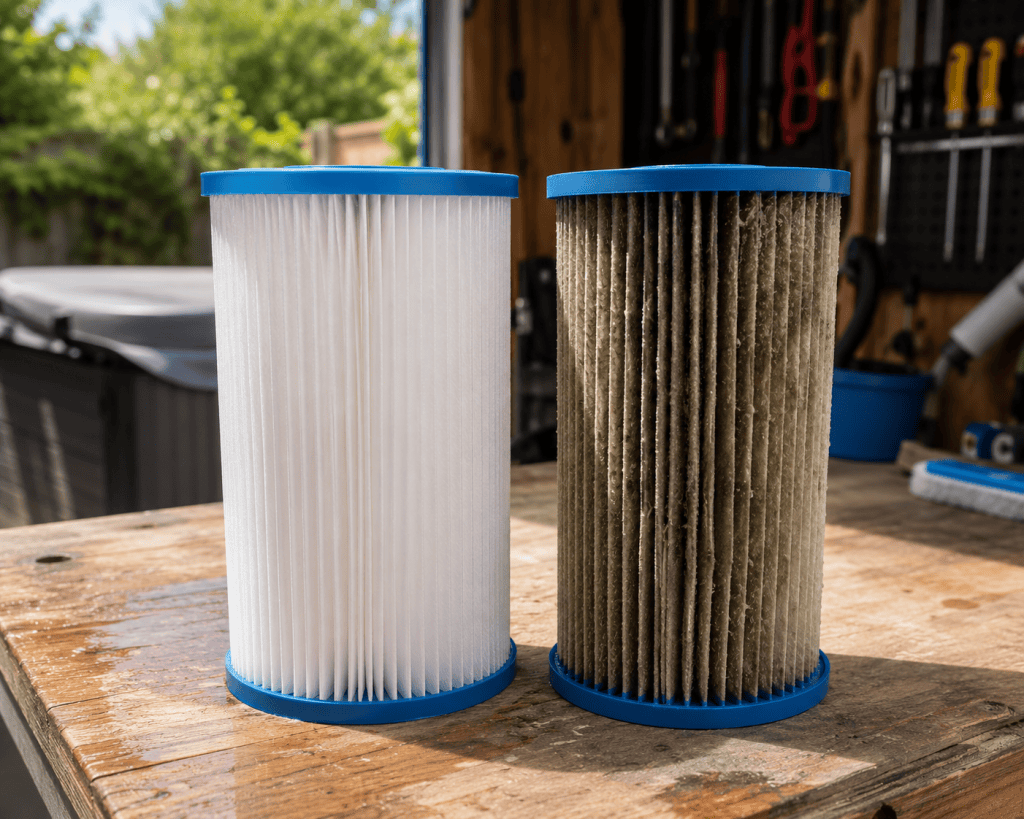
Every gallon of water that moves through your tub passes through the filter media first. Body oils, lotion residue, dead skin cells, hair, dust, and whatever’s blown in from outside all get trapped in the pleats. Rinsing knocks loose surface debris, but oils and fine particulate work their way deeper into the material over time and never fully come back out. Eventually the pleats compress and the material loses its ability to trap anything effectively — that’s the point where hot tub filter replacement, not another cleaning cycle, is the actual fix.
Is a dirty filter the same as a worn-out filter? No. A dirty filter can usually be restored with a proper soak in filter cleaning solution. A worn-out filter has physically degraded material that no cleaning product can reverse, and it needs to be swapped out.
From a user’s perspective, changes in water clarity or jet pressure are easy to notice. Those changes can have several causes, though, so the filter is one of the things worth checking rather than automatically assuming it’s responsible. If the water starts looking cloudy or the jets feel weaker, checking the filter alongside the water chemistry is a sensible place to start.
How Often Should You Replace a Hot Tub Filter? A Realistic Timeline
For a typical residential hot tub used a few times a week, hot tub filter replacement generally falls somewhere between 12 and 24 months. That’s a wide range on purpose — usage frequency, bather load, water chemistry consistency, and filter quality all shift it in either direction.
A tub used daily by a family of four, or one that regularly sees hot tub covers left off in dusty or pollen-heavy conditions, will likely need hot tub filter replacement closer to the 12-month mark. A tub used occasionally by one or two people, with consistent water chemistry, can often stretch closer to 24 months before performance drops off enough to justify swapping the cartridge.
Saltwater systems tend to be a bit gentler on filter media than traditional chlorine systems, which is one more reason the Saltwater vs Chlorine Hot Tub Maintenance comparison matters when you’re planning your overall maintenance calendar, filters included.
How do I know if it’s time for hot tub filter replacement instead of just a deep clean? If a full soak-and-rinse cycle in cleaning solution doesn’t restore water clarity or jet pressure, that’s your answer. Persistent cloudiness after you’ve already balanced the chemistry, a musty smell that won’t rinse out, or visibly frayed or flattened pleats are all signs the material itself is done, not just dirty.
The Real Cost of Hot Tub Filter Replacement
Replacement cartridges typically run $25–$90 depending on your tub’s filter size and whether you’re buying an OEM part or a compatible generic. Most residential tubs use one or two filters, so a full hot tub filter replacement usually lands somewhere between $25 and $180 per swap, once or twice a year.
That’s a modest number next to the broader picture. If you’ve looked at the full Hot Tub Maintenance Cost breakdown, filters are one of the smaller recurring line items compared to chemicals, electricity, and the occasional pump or heater repair — but they’re also one of the easiest to neglect because the cost of skipping them doesn’t show up immediately.
Running a tub on a filter well past its useful life makes the pump work harder to push water through compacted media, which shows up eventually as slightly higher energy draw. It’s not a dramatic cost, but it’s an unnecessary one, and it compounds the same way any inefficient appliance does over a full season of use.
Installation Friction: What Actually Trips People Up
Swapping a filter sounds simple — unscrew the old one, screw in the new one — and mechanically it usually is. Where people actually get tripped up is buying the wrong size or thread pattern, since filter dimensions vary meaningfully between brands and even between models from the same manufacturer.
Another common question is whether hot tub filter replacement needs to coincide with a full water change. It doesn’t — a cartridge can normally be replaced without draining the tub, following the manufacturer’s instructions. But if a scheduled water change is already due, doing both maintenance jobs at the same time can make the routine easier to remember.which lines up naturally with your regular Hot Tub Water Change Frequency schedule anyway.
A less obvious friction point: new cartridges sometimes ship with a light manufacturing residue that can cause foaming if you drop them straight into the water. A quick pre-rinse under a hose before installation avoids that entirely, and it’s a step a lot of first-time buyers skip.
Maintenance Routine That Extends Filter Life
- Rinse the filter with a hose every 1–2 weeks to knock off surface debris before it compacts
- Soak in a dedicated filter cleaning solution monthly to break down oils that a hose rinse can’t touch
- Keep the cover on when the tub isn’t in use to cut down on dust and pollen load
- Stay consistent with your Hot Tub Cleaning Schedule overall — filters last longer in water that’s already well balanced, since they’re not fighting to trap excess organic material caused by imbalanced chemistry
- Rotate between two filters if your tub setup allows it, so one is always drying out fully while the other is in use
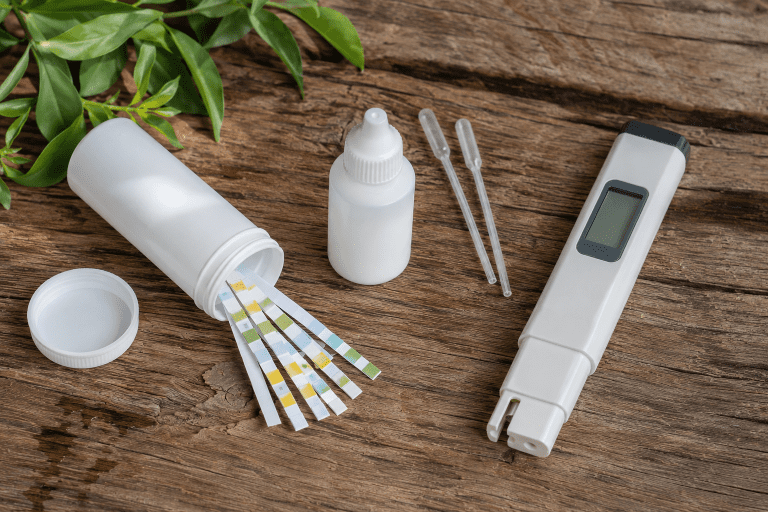
A decent Water Testing Kits Explained makes this easier to stay on top of, since catching chemistry drift early means the filter isn’t working overtime to compensate for water that’s already out of balance. It’s the same logic behind whether Do Spa Filters Actually Improve Water Quality? in the first place — a filter can only do its job properly when the water chemistry around it is already reasonably close to correct, which is one more reason hot tub filter replacement and regular chemistry checks tend to go hand in hand rather than being separate chores.
None of this eliminates the need for eventual hot tub filter replacement — it just buys you closer to 24 months instead of 12, which for most people is worth the small extra effort.
Pros and Cons of Staying On Top of It
Staying disciplined about hot tub filter replacement pays off in ways that aren’t always obvious until you compare a well-maintained system to a neglected one side by side.
Pros:
- Cleaner water with less chemical correction needed day to day
- Stronger, more consistent jet pressure
- Less strain on the pump over the tub’s lifespan
- Fewer surprise costs, since planned hot tub filter replacement is cheaper than emergency pump repair
Cons:
- It’s a maintenance task with no obvious visual reminder — unlike a torn cover or a cracked shell, a tired filter gives you weeks of subtle warning signs before anything looks obviously wrong. It’s worth knowing this upfront, since the slow, gradual nature of the decline is exactly why it’s easy to neglect.
Cartridge vs Reusable Filters: A Side-by-Side Look
| Factor | Standard Cartridge | Reusable/Washable Filter |
|---|---|---|
| Typical lifespan | 12–24 months | Varies by filter type and manufacturer |
| Upfront cost | Lower per unit ($25–$90) | Higher per unit ($60–$150) |
| Maintenance effort | Rinse + occasional soak | More frequent, thorough cleaning required |
| Post-clean feel | Crisp water, noticeably firmer jet pressure right after a swap | Improves after cleaning but rarely feels as sharp as a brand-new cartridge |
| Best for | People who want a simple, predictable routine | People comfortable with more hands-on upkeep |
Helpful Gear
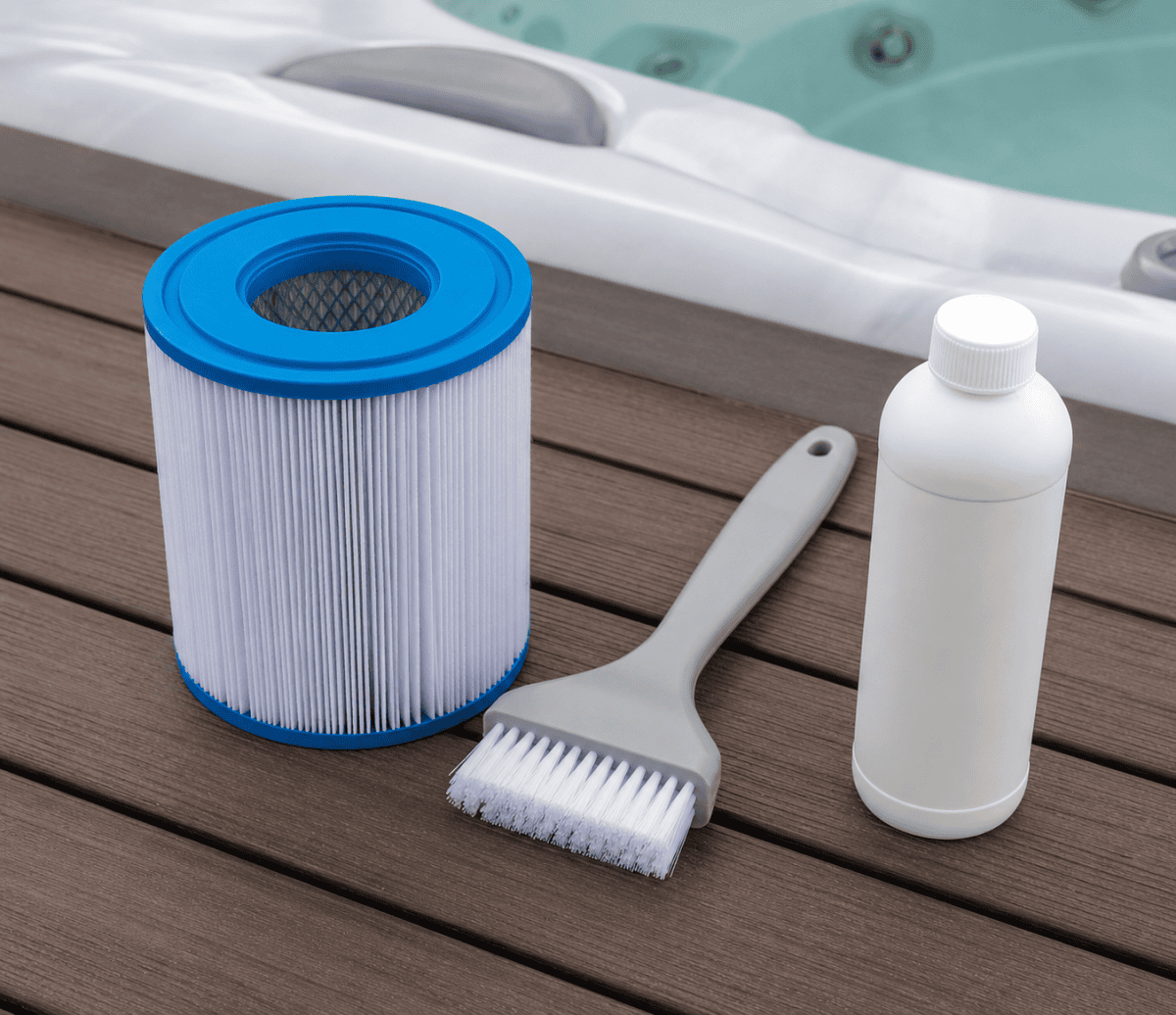
- Hot tub filter cleaning solution – Breaks down trapped oils and lotion residue that a hose rinse alone can’t remove, extending time between full replacements.
- Soft-bristle filter cleaning brush – Gets into the pleats without damaging the material, useful for the monthly deep-clean step.
- Submersible utility pump – Useful when draining the hot tub for a scheduled water change, making the job considerably faster.
FAQ
Will I actually remember to do this or will it just get forgotten? Setting a recurring reminder tied to your water change schedule is the easiest fix — since both tasks often happen together, you’re far less likely to let hot tub filter replacement slip through the cracks. Some people even track hot tub filter replacement dates directly on the same calendar reminder they use for chemical testing, so nothing gets forgotten in isolation.
Can I just keep rinsing my filter instead of replacing it? For a while, yes — but rinsing only removes surface debris. Once the material itself has compacted or degraded, no amount of rinsing restores it, and running a spa on a worn-out filter means bacteria and organic matter have more opportunity to build up in water that isn’t being filtered properly, which is part of what the CDC’s guidance on hot tub hygiene points to when it comes to skin-related issues from poorly maintained spa water.
Is it worth paying more for a premium filter brand? Not always. A well-reviewed generic cartridge that fits your tub correctly performs comparably to name-brand OEM filters for most residential setups — the bigger factor is sticking to a consistent replacement interval, not the brand on the box.
The Simple Rule
If a soak-and-rinse doesn’t restore clarity and pressure, it’s time — don’t wait for the water to look bad before you act.
Summary Snapshot
Hot tub filter replacement isn’t complicated, but it’s easy to underestimate because the warning signs are subtle and gradual rather than sudden. Budget for a swap every 12–24 months, rinse and soak in between, and pair the replacement with your regular water change to keep the whole routine efficient.

Final Verdict
A worn-out filter is one of the cheaper hot tub maintenance problems to prevent. Staying ahead of hot tub filter replacement helps maintain proper water flow and reduces unnecessary strain on the circulation system. Treat it as a calendar task rather than something you wait to be told about by cloudy water.
If you’re planning out your full maintenance calendar, it’s worth reading through the Hot Tub Water Chemistry Basics guide alongside this one — clean, balanced water and a properly maintained filter work together, and neglecting one puts more strain on the other.
If you’re building out a full maintenance routine, it’s also worth reading through Hot Tub Cleaning Schedule for the day-to-day side of things, Hot Tub Maintenance Cost for how filters fit into your overall yearly budget, and Hot Tub Water Change Frequency since replacement so often lines up with a full drain anyway.