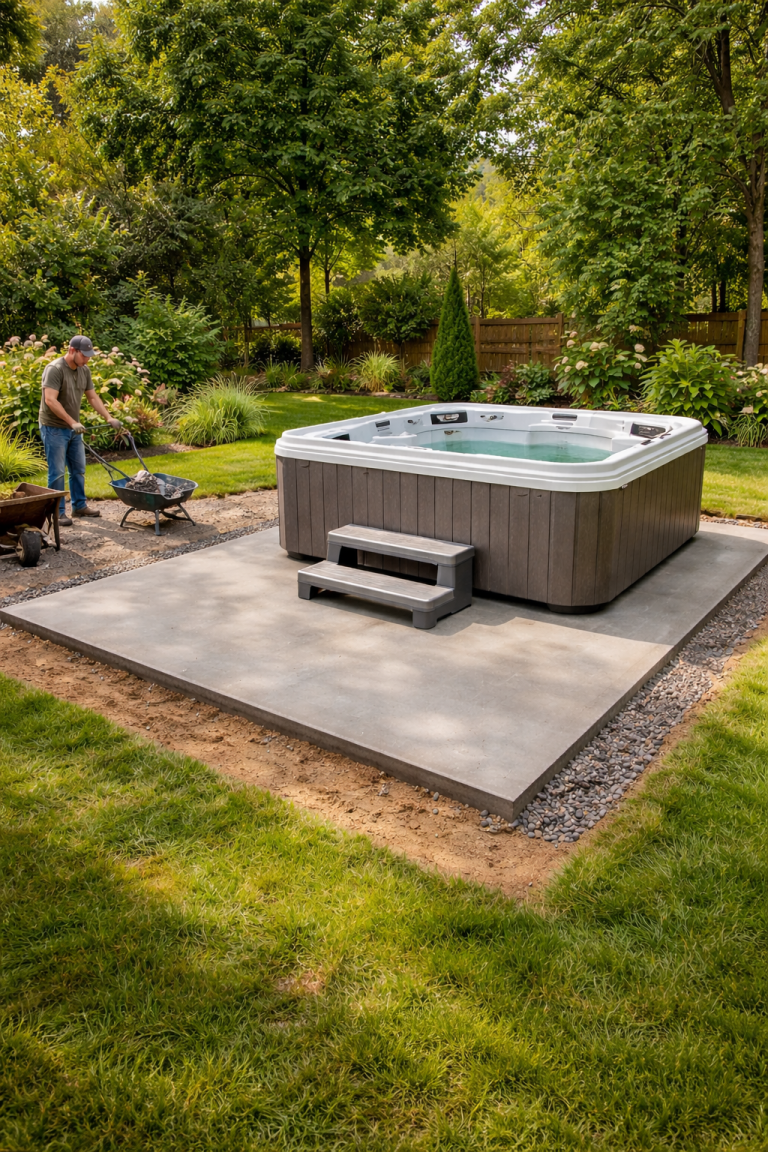

Hot Tub Maintenance Cost: The Honest Yearly Breakdown
Hot tub maintenance cost includes chemicals, testing supplies, filters and occasional replacement parts. Electricity and water add to the ongoing ownership budget, so check what any monthly estimate includes before comparing figures.
Jacuzzi’s maintenance cost guide gives roughly $40–$80 per month as a starting estimate for routine upkeep and running expenses. That equals $480–$960 a year, before major repairs or cover replacement. It is a budgeting guide, not a guaranteed bill: your model, climate, electricity rate and water-care system all matter.
The useful distinction is between what you buy regularly and what you need to save for occasionally. A quiet month with no supply purchases does not mean the tub costs nothing to maintain.
As an Amazon Associate, Sunrise & Vitalize earns from qualifying purchases. If you buy through an affiliate link, we may earn a small commission at no extra cost to you.
Quick Snapshot
- Starting budget: roughly $40–$80/month for routine upkeep and running expenses, with higher costs possible.
- Annual equivalent: $480–$960, plus water, occasional replacements and repairs where these are not already included.
- Separate the costs: water care, electricity, filters, refills and repair savings.
- Testing matters: the CDC recommends checking disinfectant and pH at least twice daily.
- Before buying: price the filters and water-care consumables required by the exact model.
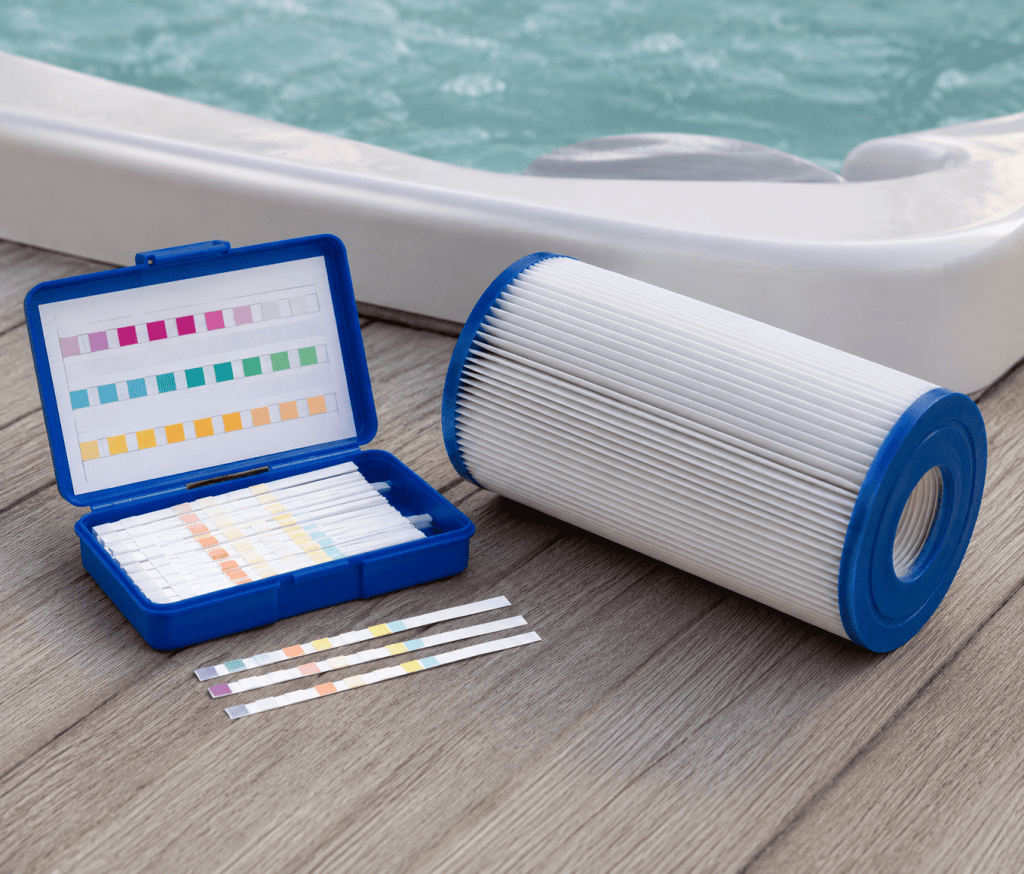
Table of Contents
- What Actually Makes Up Your Hot Tub Maintenance Cost
- How Costs Change by Season
- 5 Costs Worth Budgeting For
- Installation Choices That Affect Long-Term Cost
- Staying on Top of Maintenance Without Overspending
- Pros and Cons of Managing It Yourself
- DIY vs Professional Hot Tub Care
- Helpful Gear
- FAQ
- The Bottom Line
What Actually Makes Up Your Hot Tub Maintenance Cost
A useful budget separates five expenses:
- Water care: sanitizer, balancing chemicals, testing supplies and cleaning products.
- Electricity: heating, circulation and filtration.
- Filters and system consumables: replacement cartridges and any model-specific water-care components.
- Water changes: fresh water, applicable sewer charges, reheating and rebalancing.
- Occasional replacements and repairs: covers, pumps, heaters, seals and service labor.
This prevents a common budgeting mistake: comparing one estimate that includes electricity with another that covers chemicals alone.
A worked yearly budget
Here is an illustrative calculation using assumed spending—not a national average or a quote for a particular tub:
| Expense | Assumed monthly allowance | Annual amount |
|---|---|---|
| Chemicals, testing and cleaning supplies | $25 | $300 |
| Electricity | $40 | $480 |
| Filter replacement savings | $5 | $60 |
| Subtotal | $70 | $840 |
Water and sewer charges, major repairs, professional service and cover replacement are additional in this example. Add any special cartridges or other consumables your system requires.
For filters, calculate the allowance from your actual replacement cost. If a complete set costs $120 and lasts two years under the manufacturer’s instructions, setting aside $5 a month covers that purchase. A tub needing several cartridges or shorter replacement intervals will need a different allowance.
How Costs Change by Season
Cold weather generally increases the energy needed to maintain water temperature. Wind exposure, insulation, cover condition and time spent soaking with the cover open also affect heat loss.
Warmer weather may reduce heating demand, but that does not guarantee a lower total bill. More frequent use can increase water-care needs, while seasonal electricity prices may change.
The U.S. Energy Information Administration explains why electricity prices vary by location and season. Use the rate on your own utility bill when budgeting.
Monthly electricity cost = monthly hot tub electricity use in kWh × your applicable rate per kWh.
For example, an assumed 200 kWh at $0.20/kWh costs $40. The same consumption at $0.30/kWh costs $60. Those are calculation examples, not predictions of your tub’s consumption.
Ask the dealer for energy information for the exact model and the conditions behind the estimate. A heater’s power rating alone does not tell you its monthly consumption because it does not necessarily run continuously.
5 Costs Worth Budgeting For
1. Replacement filters
Filter costs depend on cartridge type, quantity and replacement interval. There is no single schedule that applies to every hot tub.
For example, Hot Spring’s filter guidance distinguishes between conventional cartridges and longer-lasting TRI-X filters. Follow your model’s instructions and replace damaged cartridges sooner when necessary.
Check the price of a complete compatible set before buying the tub. Filters are worth planning for, but they are not automatically the largest expense.
2. Cover replacement
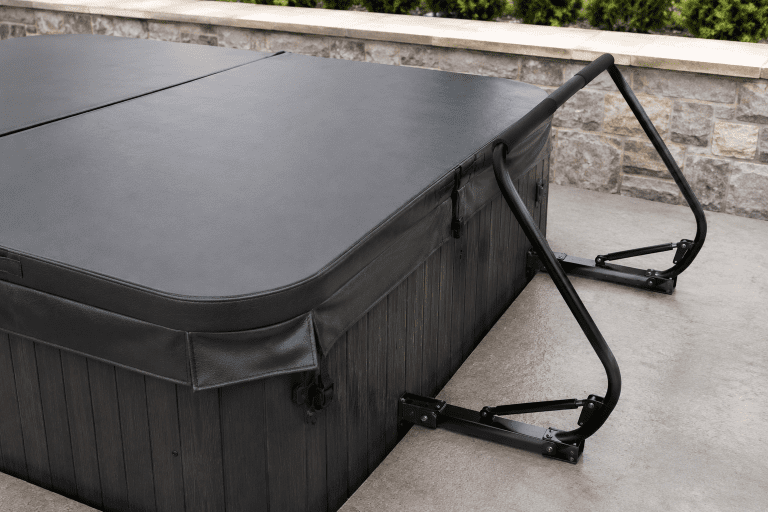
A damaged, poorly fitting or waterlogged cover may need replacing. Inspect its condition rather than assuming every cover will last a fixed number of years.
Get a quote for the correct dimensions and specification. Treat replacement as a separate savings item rather than an ordinary monthly chemical expense.
3. System-specific consumables
Some water-care systems require replacement mineral cartridges, salt-system cartridges, UV lamps or other components.
Check the owner’s manual for replacement intervals and ask what each item currently costs. “Less chemical handling” does not necessarily mean fewer ongoing purchases.
4. Repairs and service visits
Heaters, pumps, seals and controls can need attention, but there is no reliable rule that a heater must fail in year three or four.
Check warranty coverage and exclusions, then ask your local service provider about diagnostic charges, travel fees and labor rates. Keep repair savings separate from routine supplies.
5. Draining and refilling
A water change involves more than the water bill. You also need to account for applicable sewer charges, reheating and the products used to rebalance the refill.
Hot Spring’s maintenance guidance describes three to four months as a common water-change interval while noting that the water-care system and usage can change that schedule. Follow the instructions for your tub rather than treating one interval as universal.
Installation Choices That Affect Long-Term Cost
When comparing hot tubs, look at insulation, cover quality, service access and exposure to prevailing wind. Leave the equipment access space required by the manufacturer; a cramped installation can make future servicing more difficult.
A 240V connection does not, by itself, prove that a hot tub will cost less to run than a plug-and-play model. Compare the complete models, their insulation and their energy information.
For budgeting purposes, keep the purchase and installation bill separate from ongoing maintenance. Combining them makes it harder to see what ownership will cost after the first year.
Staying on Top of Maintenance Without Overspending
Test the water on a consistent schedule and adjust it according to the test results and product directions. Clear water alone does not establish that disinfectant and pH are suitable.
The CDC’s home pool and hot tub testing guidance recommends checking chlorine concentration and pH at least twice per day, and more often with heavier use. It also identifies DPD testing as more accurate than test strips.
Budget time separately for quick water checks, filter cleaning and the longer drain-and-refill jobs. A single “10 minutes a week” estimate can hide those occasional tasks.
To avoid unnecessary spending:
- Buy chemicals for your actual water-care system and follow their labels.
- Check supplies before ordering more.
- Clean and inspect filters according to the manufacturer’s schedule.
- Keep the cover secured when the tub is not in use.
- Investigate leaks, error messages and unusual operation promptly.
- Record purchases so you can replace estimates with your own annual figures.
Pros and Cons of Managing It Yourself
Pros:
- You avoid paying someone else for routine cleaning and water-care visits.
- You can track exactly which products and quantities are being used.
- Regular checks help you notice changes in the tub’s condition.
Cons:
- Testing and routine care remain your responsibility.
- Filter cleaning and water changes take additional time.
- You need to learn your system’s instructions and recognize when professional help is needed.
DIY care is useful for routine tasks. Electrical faults, persistent leaks and equipment problems may still require a qualified professional.
DIY vs Professional Hot Tub Care
Compare the scope of the service, not just the headline monthly price.
| Factor | DIY care | Professional service |
|---|---|---|
| Routine supplies | You buy and manage them | May be included or charged separately |
| Electricity and water | Paid separately | Usually remain your responsibility |
| Cleaning and water changes | You perform them | Check the contract |
| Checks between visits | Your responsibility | Still needed unless specifically covered |
| Repairs and parts | Additional | Often additional |
| Cost comparison | Track your own annual spending | Get a written local quote |
Ask how often the company visits, whether chemicals are included, and what happens if a problem develops between visits. A service plan does not automatically remove the need for owner checks.

Helpful Gear
A short list of compatible supplies is more useful than buying accessories before you know you need them.
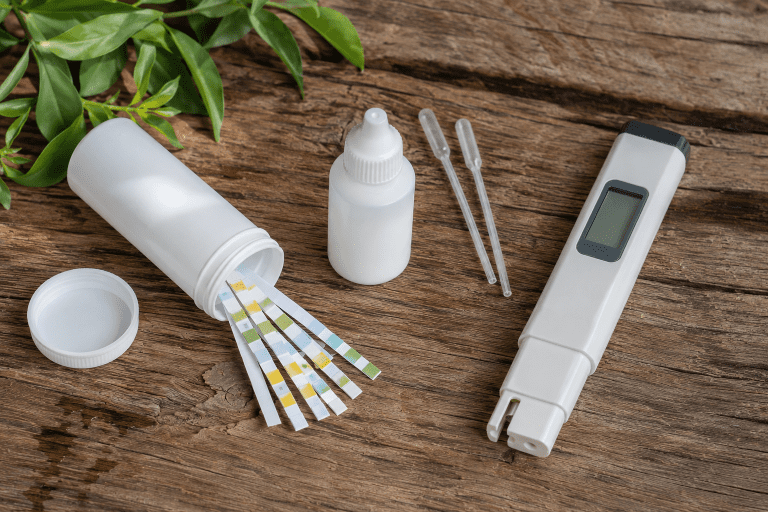
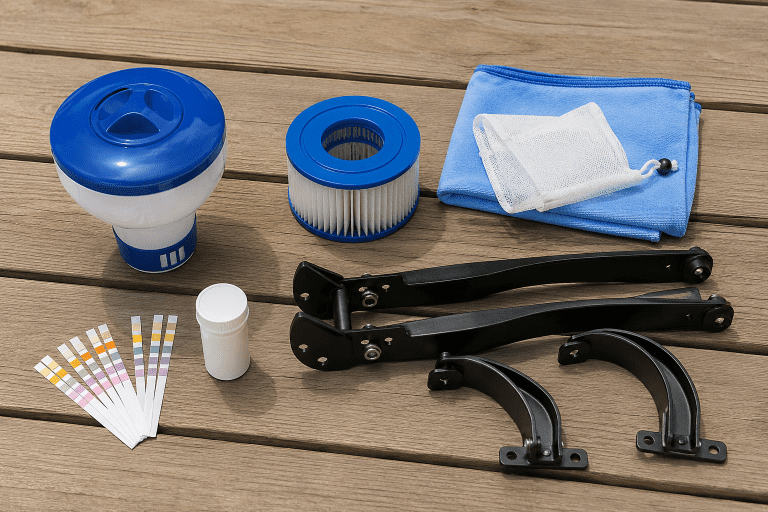
- Water test strips — check that the strips measure the sanitizer and other parameters required by your system. Follow storage and expiry instructions; a suitable DPD kit offers more accurate chlorine testing.
- Replacement filter cartridges — this listing is for specific compatible models, not a universal replacement. Match the part number, dimensions and fittings before ordering.
Store chemicals in their original labeled containers, following each product’s storage instructions. A general organizer does not replace suitable chemical storage.
FAQ
How much does hot tub maintenance cost per month?
Use the starting estimate near the top as a guide, then calculate your own water-care, electricity, filter and refill costs. Add professional service and repair savings separately. A monthly figure is only useful when you know what it includes.
What does the yearly budget need to include?
Multiply regular monthly spending by 12, then add purchases that happen less often: replacement cartridges, a cover when needed, service visits and repairs. Avoid counting an item twice if you have already included a monthly savings allowance for it.
Is a hot tub cheaper to maintain if I use it less?
Lighter use may reduce some chemical demand and contamination, but a filled, heated tub still needs water care, circulation and monitoring. Savings will not necessarily fall in proportion to the number of sessions.
Are filters the biggest hidden cost?
They can be overlooked, especially when a tub needs several cartridges. However, electricity, a replacement cover or a repair may cost more. Price each category rather than assuming one is always the biggest.
Is professional maintenance worth paying for?
That depends on the quoted price, included work and how much routine care you can manage. Compare a written service quote with your own supply costs and available time.
Summary Snapshot
- Separate routine maintenance from electricity, water and occasional repairs.
- Use the worked budget as a calculation example, not a promised bill.
- Price the exact filters and consumables your model requires.
- Test consistently and follow the CDC guidance linked above.
- Review actual spending after a full year to capture seasonal changes.

The Bottom Line
A useful hot tub maintenance budget includes both regular spending and the less frequent purchases that are easy to forget. Start with the model’s water-care requirements, your electricity rate and the cost of compatible filters, then allow separately for refills and repairs.
For the practical routines behind those costs, see our guides to hot tub water chemistry basics, saltwater vs chlorine hot tub maintenance and the hot tub cleaning schedule.