Hot Tub Cleaning Schedule: How Often You Actually Need to Clean It
A realistic hot tub cleaning schedule depends on how often you use your tub, not a fixed number on a calendar. Most owners land somewhere between a quick weekly check and a full drain-and-refill every three to four months.
That’s the short version. The longer version — the one that actually keeps your water safe and your equipment running — depends on a few habits most people don’t think about until something goes wrong.
Affiliate disclosure: Sunrise & Vitalize may earn a small commission on products linked in this post, at no extra cost to you.
Quick Snapshot
- Weekly water testing and light skimming: 10–15 minutes
- Filter rinse: every 1–2 weeks; deep clean every 4–6 weeks
- Full drain and refill: every 3–4 months, or every 1–2 months with heavy use
- Typical monthly chemical cost: roughly $20–$40, depending on usage and tub size
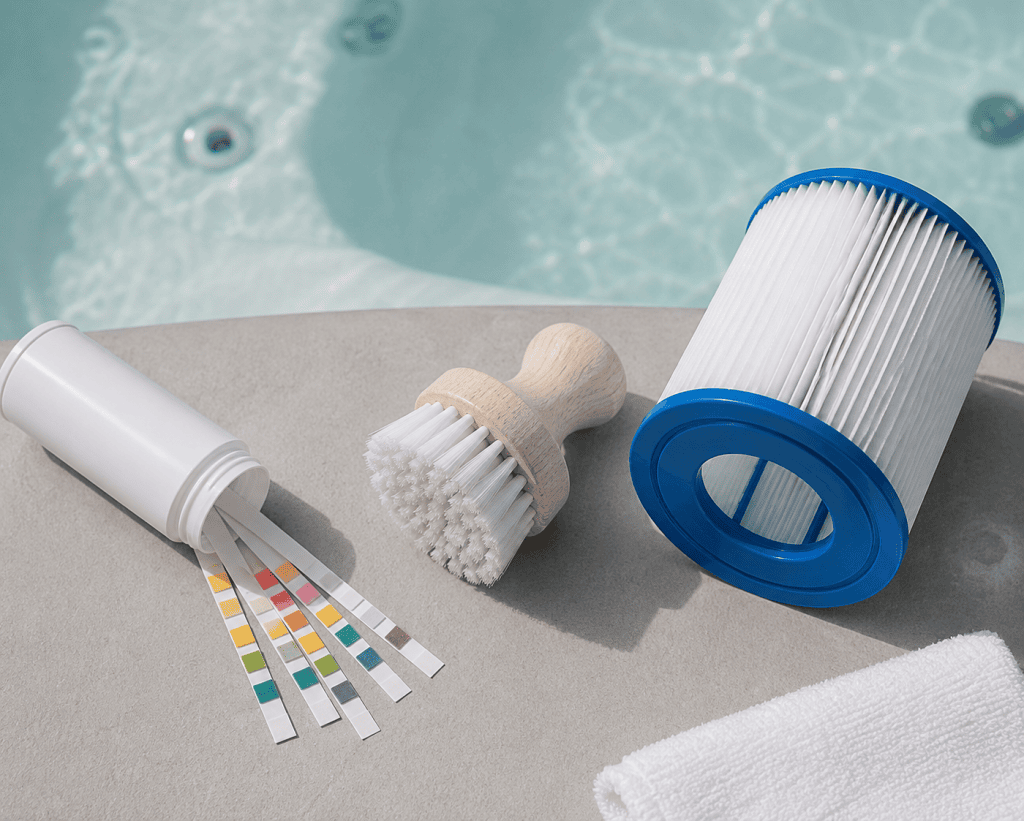
Table of Contents
- Hot Tub Cleaning Schedule: How Often You Actually Need to Clean It
- The True Cost of Staying on Top of It
- Getting a Routine Actually Set Up
- 5 Steps to a Realistic Hot Tub Cleaning Schedule
- Pros and Cons of a Strict Cleaning Schedule
- Cleaning Frequency: Chlorine vs Saltwater vs Bromine
- Helpful Gear
- FAQ
- The Bottom Line
Building a Hot Tub Cleaning Schedule That Actually Works
There isn’t one universal number, because usage changes everything. A tub used by two people twice a week needs a lighter hot tub cleaning schedule than one hosting a family of five every evening.
As a general baseline: test the water two to three times a week, rinse the filter every one to two weeks, and plan a full drain and refill every three to four months. That’s a solid hot tub cleaning schedule for moderate, regular use.
If your tub is getting heavy daily use, tighten the schedule. Drain and refill closer to every four to six weeks, and rinse the filter weekly instead of biweekly. Bather load, not the calendar, is the real driver of a good hot tub cleaning schedule.
Does hot tub size change the cleaning schedule? Not dramatically. Water chemistry breaks down based on how many people use it and how often, not gallon count. A smaller tub with heavy daily use often needs a tighter schedule than a large one used occasionally.
Cloudy water is the sign most people wait for, but it’s a late one. A better early indicator is running a finger along the waterline — if it feels slightly slick rather than smooth, biofilm is forming before the water itself looks anything but clear. Checking this weekly is the single easiest addition to any hot tub cleaning schedule.
The True Cost of Staying on Top of It
Sticking to a hot tub cleaning schedule usually comes down to budget as much as time. Chemicals — chlorine or bromine, pH balancer, shock treatment — typically run $20 to $40 a month for an average residential tub, though heavier use pushes that higher.
Filters aren’t free either. A replacement cartridge generally costs $15 to $30, and most need swapping every 12 to 18 months even with regular rinsing. Skipping filter care doesn’t save money — it just shifts the cost toward a pump repair later.
The full drain-and-refill has a hidden cost too: water itself. Refilling a standard-size tub can use 300 to 500 gallons, which shows up on a water bill even before the new chemical balance is dialed in. Budget is often the real reason owners loosen their hot tub cleaning schedule more than they should.
Getting a Routine Actually Set Up
The friction isn’t the cleaning itself — it’s the first two weeks of building the habit. Most people underestimate how much a hot tub cleaning schedule depends on the filter specifically, because a filter that looks fine can still be quietly clogged with body oils and lotion residue.
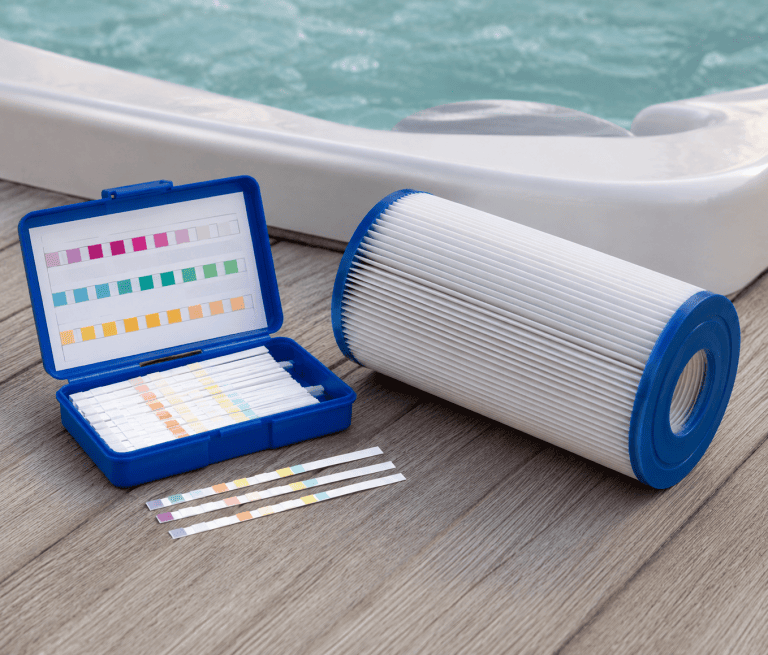
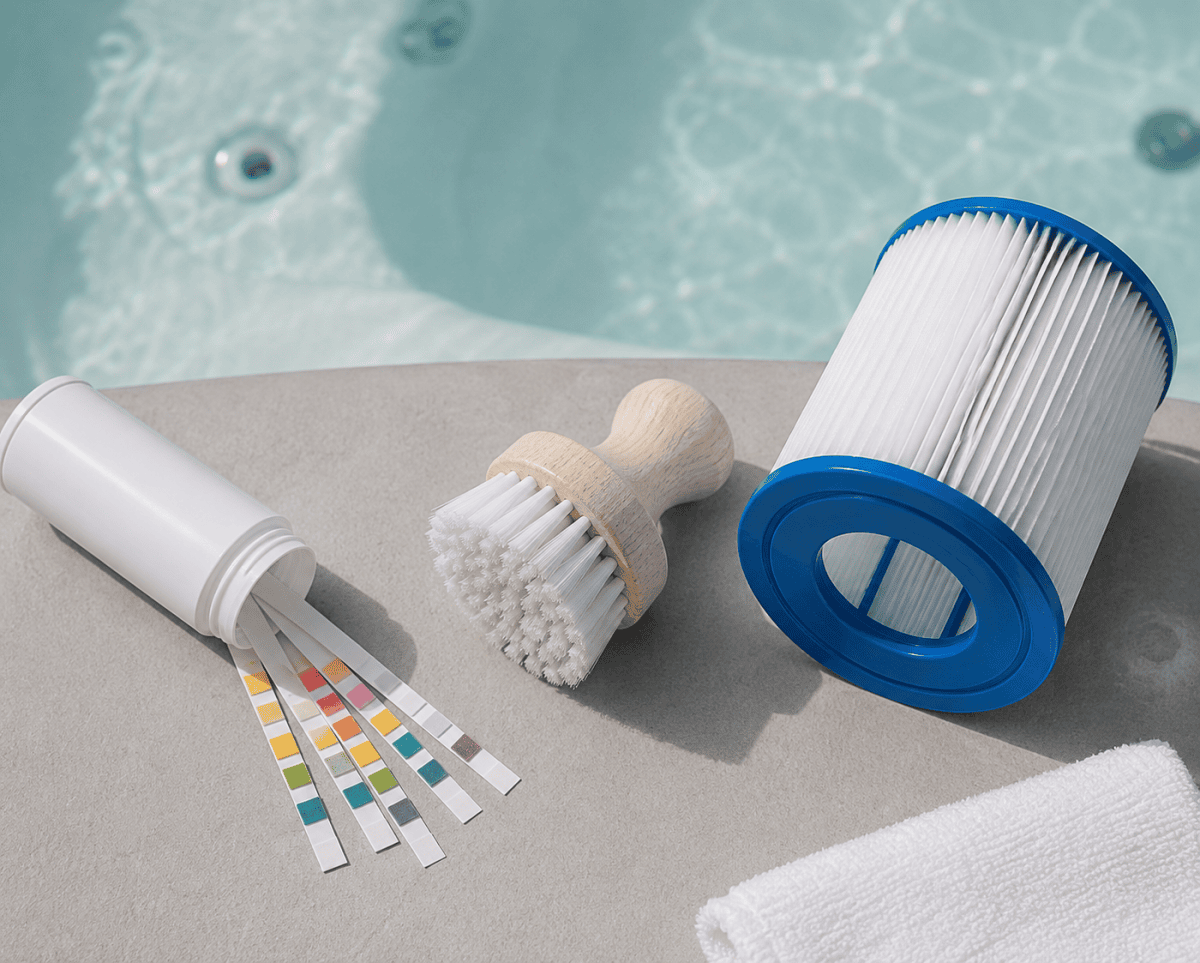
A simple fix: keep test strips and a spare filter within arm’s reach of the tub, not in a cupboard three rooms away. Once the routine is dialed in, a hot tub cleaning schedule stops being something you have to think about — it becomes a fixed weekly habit like taking out the trash.
If you’re also weighing a steam setup alongside the hot tub, water supply planning works differently between the two — covered in more detail in Steam Generator Water Supply Requirements: The Honest Installation Guide, which is worth a look before finalizing either install.
5 Steps to a Realistic Hot Tub Cleaning Schedule
These five steps make up the core of any realistic hot tub cleaning schedule for a tub in regular, moderate use.
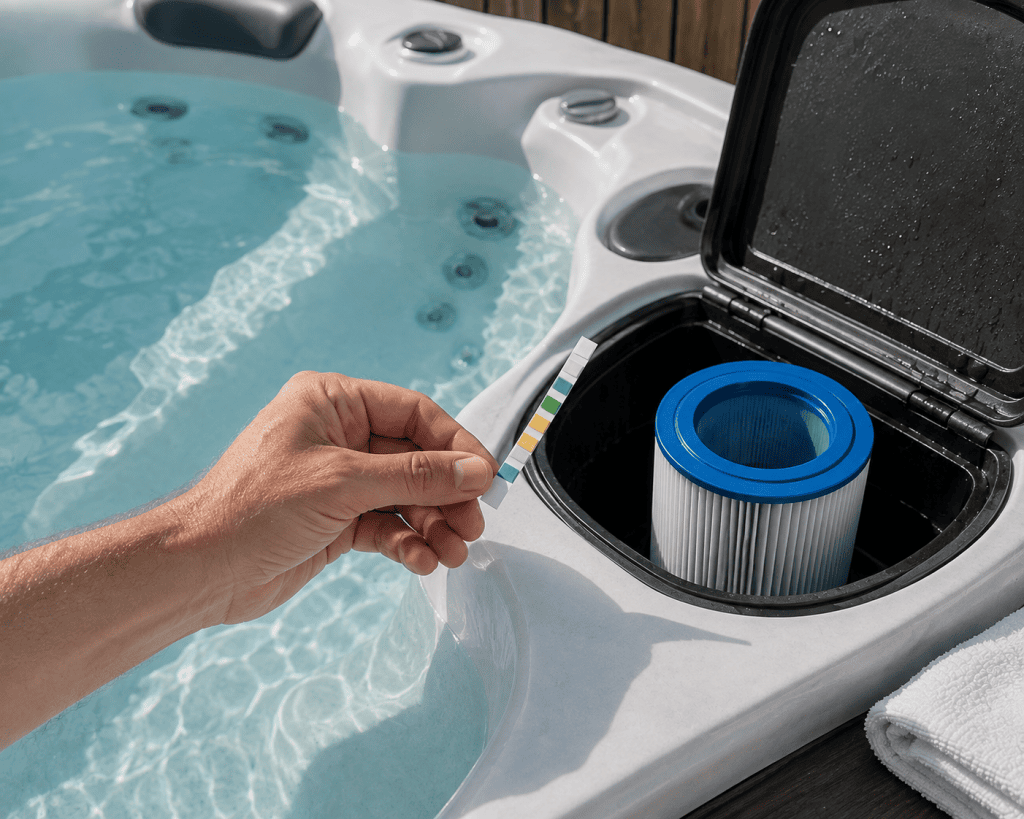
- Test water 2–3 times weekly. Check pH and sanitizer levels with strips before each soak, not after.
- Rinse the filter every 1–2 weeks. A garden hose rinse is usually enough; save the deep soak-clean for monthly.
- Shock the water weekly. Even with steady sanitizer levels, a weekly shock breaks down organic buildup that test strips won’t catch.
- Wipe the waterline every 2 weeks. This is where the fingernail test matters — catching slick residue before it becomes visible scum.
- Drain and refill every 3–4 months.
If leaves or grit have settled on the floor between cleans, a hot tub vacuum can lift them out without draining the tub.
Building this into a fixed calendar reminder — rather than waiting for visible signs — is the single biggest difference between owners who deal with algae and rash complaints and owners who stick to a hot tub cleaning schedule from day one.
Pros and Cons of a Strict Cleaning Schedule
Committing to a tighter hot tub cleaning schedule changes things in practice versus in theory — here’s what that trade-off actually looks like.
Pros:
- Fewer chemical spikes, since problems get caught early rather than treated after the fact
- Longer equipment lifespan — pumps and heaters work harder in dirty water
- Lower risk of skin and respiratory irritation from bacteria buildup
Cons:
- Time cost adds up — even at 15 minutes a session, it’s a genuine weekly commitment
- A con most cleaning guides skip: over-testing can lead to over-correcting chemical levels, which causes its own irritation and wastes product. Test consistently, but resist the urge to add chemicals after every single reading.
Cleaning Frequency: Chlorine vs Saltwater vs Bromine
A hot tub cleaning schedule looks noticeably different depending on which sanitizer system you’re running, as the table below shows.
| Factor | Chlorine | Saltwater | Bromine |
|---|---|---|---|
| Testing frequency | 2–3x weekly | 1–2x weekly | 2–3x weekly |
| Full refill interval | 3–4 months | 4–6 months | 3–4 months |
| Monthly chemical cost | $20–$35 | $10–$20 (after setup) | $25–$40 |
| Post-soak skin feel | Can feel drying with heavy use | Noticeably softer, less residue | Gentler than chlorine for sensitive skin |
That last row is the one most comparisons skip entirely, but it’s often the deciding factor for owners who soak daily rather than occasionally.
Should you switch to saltwater to clean less often? A saltwater system reduces manual chemical dosing but still needs regular testing and salt cell maintenance. It changes the type of hot tub cleaning schedule more than it eliminates the need for one.
Helpful Gear
- Hot tub water test strips — the fastest way to catch pH and sanitizer drift before it becomes a visible problem.
- Non-chlorine shock treatment — breaks down organic buildup weekly without the strong chlorine smell some owners want to avoid.
- Filter cartridge cleaner spray — cuts down the time needed for a deep filter clean between full soaks.
FAQ
Is it worth keeping to a strict hot tub cleaning schedule if I only use it once or twice a week? Yes, though you can stretch some intervals. Light use still needs weekly testing, since chemical levels drift even without bathers, but the filter rinse and full refill can move to the longer end of the range.
What happens if I skip my hot tub cleaning schedule for a month? Bacteria and biofilm build up quickly in warm, still water. Expect cloudy water, a musty smell, and a real chance of skin or eye irritation on the next use — none of which happens overnight, but all of which happens faster than people expect.
How do I know it’s time for a full drain, not just a top-up? If shock treatment stops clearing cloudiness within 24 hours, or the water has a persistent odor even after fresh chemicals, that’s the water telling you a top-up won’t fix it. If you’re still building out your hot tub cleaning schedule for the first time, err toward the shorter interval until you’ve tracked a full season of use.
One rule worth remembering: if you wouldn’t want to put your face near the water, it needs attention before your next soak.
Summary Snapshot
- Test 2–3x weekly, rinse filter every 1–2 weeks, drain every 3–4 months
- Budget roughly $20–$40 a month in chemicals
- The waterline slick test catches problems before cloudy water does
- Skipping a month risks bacteria buildup and skin irritation, per CDC guidance on hot tub water treatment

The Bottom Line
If there’s one number to remember, it’s this: test twice weekly, rinse the filter every two weeks, and drain every three to four months as a starting point, then adjust for how heavily the tub actually gets used.
Getting your hot tub cleaning schedule right isn’t about chasing perfection — it’s about catching problems while they’re still small and cheap to fix. The CDC’s guidance on home hot tub and pool water treatment and testing backs up regular testing as the front line against bacteria growth, and undermaintained water is a recognized cause of hot tub rash for owners who let their maintenance routine slip.
If you’re planning ongoing maintenance, it’s worth reading how Saltwater vs Chlorine Hot Tub Maintenance: The Honest Comparison breaks down which sanitizer system fits your routine best before you settle into one long-term.
Browse Hot Tub Picks →
View Hot Tub Guides →
Related reading: Saltwater vs Chlorine Hot Tub Maintenance: The Honest Comparison | Are Hot Tub Covers Necessary? An Honest Look at What You Actually Need | Water Testing Kits Explained: What Every Hot Tub Owner Actually Needs to Know | Steam Generator Water Supply Requirements: The Honest Installation Guide