
Hot Tub Permit: 7 Things Most Owners Find Out Too Late
If you’re shopping for a hot tub, “do you need a hot tub permit” is probably one of those questions you Googled at 11pm after realizing nobody at the showroom mentioned it. Smart move. Because the answer isn’t a clean yes or no — and skipping this step can cost you thousands in fines, forced removals, or failed home sales down the road.
The short version: in most U.S. jurisdictions, yes — you’ll need at least one permit, and often two or three depending on your setup. But the specifics vary wildly by city, county, and even neighborhood.
Heads up: Some links in this post are affiliate links. If you buy something through them, we may earn a small commission at no extra cost to you. We only recommend gear we’d actually use.
Quick Snapshot
- Most hot tubs require a permit — electrical and sometimes structural
- Portable vs. in-ground matters a lot: in-ground almost always triggers a building permit
- HOA rules can be stricter than local codes — check both
- Average permit cost: $50–$500 depending on your city
- Skipping permits can void your homeowner’s insurance and cause problems when you sell
- Timeline: Permit approval typically takes 1–6 weeks

Table of Contents
- Why the Permit Question Actually Matters
- What Types of Permits Are Usually Required
- Portable vs. In-Ground: Does It Change Things?
- How Much Do Hot Tub Permits Cost?
- HOA Rules vs. Local Codes — Two Different Fights
- The Installation Process and Permit Timing
- What Happens If You Skip the Permit
- Maintenance Implications After Installation
- Pros and Cons of Getting Permitted
- How This Compares: Permit Requirements by Hot Tub Type
- Helpful Gear for Your Hot Tub Setup
- FAQ
- Final Verdict
Why the Permit Question Actually Matters
Here’s the thing most hot tub dealers won’t tell you at the point of sale: getting a hot tub installed without the right permits isn’t just a technicality. It can genuinely derail your home sale years later, get your homeowner’s insurance claim denied, or force you to rip out a pad you just paid a contractor to pour.
The permit question is really about three intersecting systems: electrical safety codes, structural load requirements, and local zoning rules. Each one operates independently, and you may need sign-off from more than one department before a single nail gets hammered.
The U.S. has no single national standard for hot tub permits. Every state delegates to counties and municipalities. That’s why your neighbor in the next town over might have breezed through the process while your city wants engineering drawings just to approve a plug-in spa.
What Types of Permits Are Usually Required
When people ask “do you need a permit for a hot tub,” they’re often thinking of one permit — the building permit. But there are typically up to three separate permit categories to think about:
1. Electrical Permit This is the most commonly required permit and applies to almost every hot tub except true plug-and-play 120V portables. Most full-size hot tubs run on a dedicated 240V, 50–60 amp circuit. Installing that circuit requires a licensed electrician and almost always requires an electrical permit with inspection.
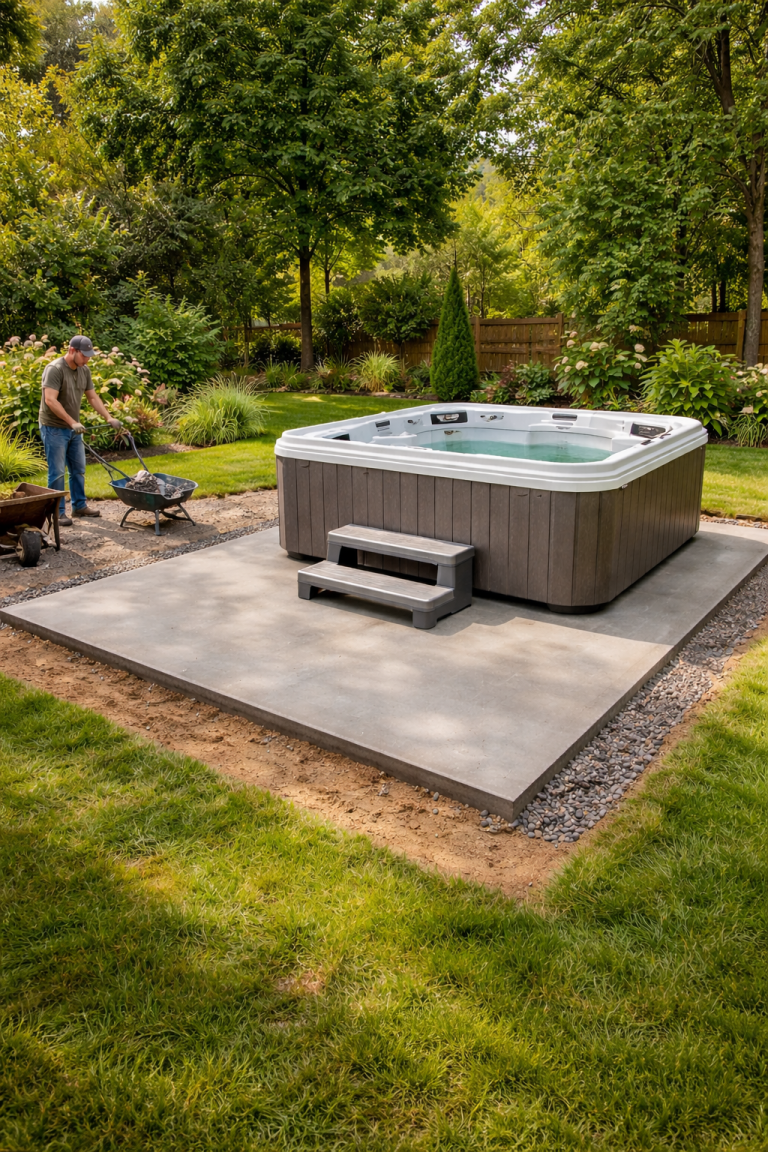
2. Building/Structural Permit Required when the hot tub is permanently installed, built into a deck, or sits on a new concrete pad. Some jurisdictions require this even for a portable unit on an existing patio if any new structure is involved.
3. Zoning/Land Use Permit Less common, but required in some municipalities if the hot tub changes how you’re using your outdoor space. This can also involve setback requirements — rules about how far the tub must sit from property lines, fences, or the main structure.
What counts as “permanent”? Generally, if the hot tub is hardwired, built-in, or requires a new foundation, it’s considered permanent by code. Freestanding portables with a standard 120V plug often fall below the permit threshold — but not always.
How Much Do Hot Tub Permits Actually Cost?
Let’s talk real numbers, because vague ranges don’t help when you’re budgeting.
Most homeowners pay between $50 and $500 for hot tub-related permits, with the electrical permit being the most common single cost. In lower cost-of-living areas, electrical permits for a straightforward 240V circuit run $50–$150. In larger metros like Los Angeles, Seattle, or New York suburbs, the same permit can run $200–$400.The hot tub permit cost is usually the smallest line item in the whole installation budget
If you’re adding a building permit on top of that — say, because you’re building a new deck to support the tub — that fee can climb to $500–$1,500 depending on the project scope.
Add in the electrician’s labor (typically $800–$2,500 for the full panel-to-tub circuit) and the permit fee starts to look like the smallest line item on the invoice.
What does a hot tub permit actually cost? In most U.S. cities, a hot tub electrical permit runs $50–$500. Building permits for in-ground or deck-integrated tubs can add $200–$1,500 more. The total permit cost is usually a small fraction of overall installation costs but skipping it can multiply your expenses significantly down the road.
Portable vs. In-Ground Hot Tubs: Does It Change the Permit Situation?
Yes — significantly.
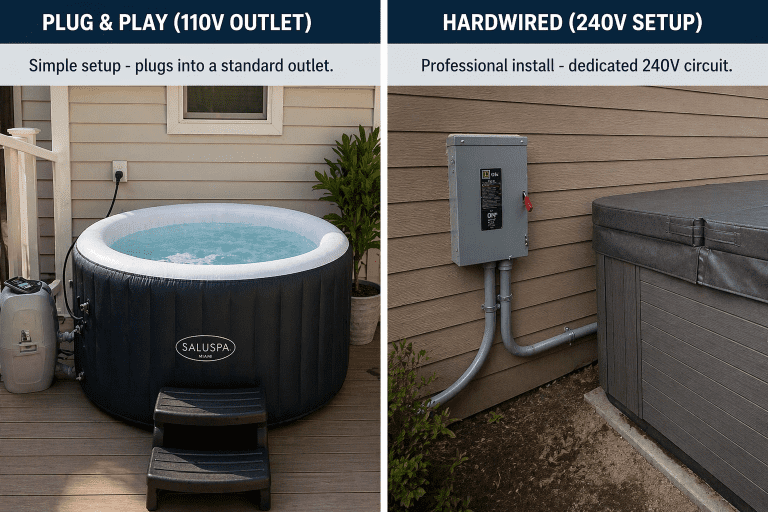
Portable/Plug-In Hot Tubs (120V) True plug-in hot tubs that run on standard 120V outlets typically don’t require any permits in most jurisdictions. You plug them in, fill them up, and you’re done. The tradeoff is performance — 120V tubs heat slowly, have fewer jets, and aren’t the full-power experience most buyers are after. Whether a hot tub permit applies to your specific setup depends almost entirely on the voltage and how it connects to your electrical panel.
Portable 240V Hot Tubs (Most Common Type) This is the category that confuses people most. These tubs look portable — they’re freestanding and can technically be moved — but they require a dedicated 240V hardwired circuit. That circuit installation almost always triggers an electrical permit. The tub itself might not require a building permit, but the electrical work almost certainly will.
In-Ground or Built-In Hot Tubs These follow the same permit pathway as a swimming pool in most jurisdictions. You’re looking at a building permit, likely a structural engineering review, electrical permit, possibly a fence or barrier permit (child safety codes apply), and in some cases a zoning variance if your property doesn’t have standard dimensions.
According to the National Electrical Code (NEC), all hot tubs require GFCI protection and must be installed at specific distances from water — and the NEC also specifies that 240V installations require licensed electrician work, which is the trigger point for most electrical permit requirements.
HOA Rules vs. Local Codes — Two Separate Conversations
If you live in a neighborhood with a homeowner’s association, you’re navigating two different rule sets that don’t always align.Even if your local authority doesn’t require a hot tub permit, your HOA rules may impose stricter conditions.
Local building codes set the floor — the minimum safety standards the government requires. HOA rules can be more restrictive than local codes and have nothing to do with safety. Your HOA might ban hot tubs entirely, restrict them to enclosed areas, require privacy screening, or mandate specific colors and cover types.
The practical order of operations: check your HOA CC&Rs first, then contact your local building department. Getting a city permit doesn’t override HOA restrictions, and violating HOA rules can result in fines, forced removal, and legal headaches that make a city permit look like a minor inconvenience.
The Installation Process and Permit Timing
Here’s how permit timing typically plays out in a real installation:
- Site assessment — contractor or electrician evaluates placement, electrical panel capacity
- Permit application — submitted to city/county building department; can often be done online
- Waiting period — typically 1–6 weeks depending on jurisdiction
- Installation — happens after permit is approved (or in some cases simultaneously with a “permit pending” arrangement)
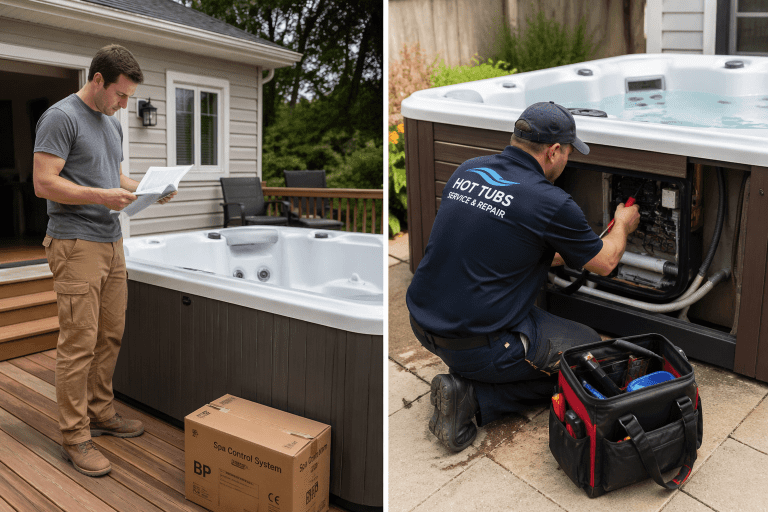
- Inspection — required for electrical work in almost all jurisdictions; inspector signs off before you energize the tub
- Certificate of completion — some cities issue this; keep it with your home records
Don’t let contractors skip step 5. An uninspected electrical installation can void your homeowner’s insurance policy’s coverage for any related incident Starting the hot tub permit process early prevents delays that push your installation back by weeks.”.
What Happens If You Skip the Permit
This is where the real cost lives. People skip permits to save time or avoid fees — and it usually works out fine right up until it doesn’t. Skipping the hot tub permit process creates financial and legal exposure that most owners don’t discover until it’s too late.
Home sale complications: When you sell your home, buyers’ agents and inspectors routinely check permit records. An unpermitted hot tub installation — especially one with an unpermitted electrical circuit — can kill a deal or force a significant price concession.
Insurance denial: If an unpermitted electrical circuit causes a fire, flood, or injury, your homeowner’s insurer has legal grounds to deny the claim. That’s a catastrophic outcome from a $150 permit fee.
Code enforcement: Neighbor complaints, contractor reports, or routine inspections can trigger code enforcement. You may be ordered to bring the installation into compliance (including demolition and rebuild) at your own expense.
Resale value: Unpermitted work lowers your home’s appraised value. Even if you sell without an issue, appraisers can flag unpermitted structures and adjustments get made.
Maintenance Considerations After Installation
Getting properly permitted has a downstream effect on maintenance that most people don’t think about. A properly permitted hot tub installation gives you documented proof that the electrical work was inspected and approved.
A permitted, inspected electrical install means a licensed electrician verified your GFCI protection, bonding, and circuit sizing. That’s not just paperwork — it means the installation is actually safer and less likely to develop electrical problems that cause component failures in the tub itself.
Beyond electrical, regular hot tub maintenance involves water chemistry, filter cleaning, and cover care. According to Healthline, hot tubs with properly maintained water chemistry are also cleaner and safer to use — and that begins with a correctly wired, safely installed unit.
Pros and Cons of Pulling the Permit
Pros
- Protects your home sale down the road
- Keeps homeowner’s insurance coverage intact
- Ensures electrical safety through independent inspection
- Adds documented value to your property
- Peace of mind — the thing was done right
The case for pulling a hot tub permit is straightforward — the protection it provides far outweighs the cost and paperwork.
Cons
- Takes time — 1–6 weeks of waiting
- Costs money — $50–$500 in fees
- May trigger additional requirements you’d rather not deal with
- Requires a licensed electrician (which you should use anyway)
Comparison: Permit Requirements by Hot Tub Type
| Hot Tub Type | Electrical Permit | Building Permit | HOA Check Needed |
|---|---|---|---|
| 120V Plug-In Portable | Rarely | No | Yes |
| 240V Freestanding Portable | Almost Always | Sometimes | Yes |
| Deck-Integrated Hot Tub | Yes | Yes | Yes |
| In-Ground Hot Tub/Spa | Yes | Yes | Yes |
| Swim Spa | Yes | Usually | Yes |

Helpful Gear for Your Hot Tub Setup
Once you’re through the permit process, a few accessories make a real difference in daily use and maintenance:
1. GFCI Outlet Tester Useful for verifying your GFCI protection is functioning before every season. Simple plug-in device, widely available, and worth having regardless.
2. Hot Tub Test Strips (7 in-1) Water chemistry is the ongoing maintenance task most new owners underestimate. High-quality test strips check pH, alkalinity, chlorine, bromine, and hardness in one dip.
3. Waterproof Hot Tub Cover Cap Protects your insulating cover from UV and weather, extending its life significantly and keeping heat retention high.
FAQ
Do you need a permit for a portable hot tub? It depends on the voltage. True 120V plug-in hot tubs typically don’t require a permit in most U.S. jurisdictions because no permanent electrical work is involved. However, 240V freestanding hot tubs — which most full-size portables are — require a dedicated hardwired circuit, and that circuit installation almost always requires an electrical permit. Check with your local building department before assuming you’re in the clear.
Does an HOA override local building permits for hot tubs? They operate independently. A city building permit gives you permission to install under local safety codes, but your HOA has its own rules in your CC&Rs. Your HOA can prohibit a hot tub that is otherwise completely legal under city code. Always verify both sets of rules before purchasing.
What happens if I sell my house with an unpermitted hot tub? An unpermitted hot tub — especially one with unpermitted electrical work — can complicate or kill a home sale. Buyers’ inspectors routinely check permit records. You may need to disclose it, retroactively permit it, or negotiate a price reduction. In some cases, you may be required to remove it entirely.
The simple rule: If your hot tub requires any hardwired electrical work — which most full-size hot tubs do — you need an electrical permit. When in doubt, a 10-minute call to your local building department will give you a definitive answer for your specific address.
Summary Snapshot
- Most hot tubs require at least an electrical permit
- In-ground and deck-integrated tubs typically need a building permit too
- Permit costs range from $50–$500 in most U.S. cities
- HOA rules and local codes are separate — check both
- Skipping permits risks insurance denial, sale complications, and code enforcement
- 120V true plug-in portables often don’t need permits — but verify locally
![hot tub permit checklist homeowner guide USA]](https://sunriseandvitalize.com/wp-content/uploads/2026/04/Untitled-design-17-1024x576.png)
Final Verdict
The question “do you need a permit for a hot tub” sounds bureaucratic and boring, but it’s actually one of the most financially consequential questions in the whole hot tub buying process. The answer in most cases is yes — particularly for any 240V installation. Permit fees are modest. The consequences of skipping them are not.Getting your hot tub permit sorted before installation is one of the simplest ways to protect your investment long term.
Do the 10-minute call to your local building department. Get your electrician to pull the permit. Keep the paperwork. Future you — especially the version of you trying to sell this house in eight years — will be genuinely grateful.
If you’re already working through the permit process, the electrical side needs equal attention — hot tub electrical requirements covers exactly what a 240V dedicated circuit involves and what it costs.