Can You Pour Water on Infrared Panels? The Honest Answer
Pour water on infrared panels and you’re not creating steam — you’re exposing electrical heating components to water, which can damage the panel. It’s an easy habit to carry over if you’ve spent years with a traditional heater, where water is the entire point of the ritual.
If you’ve spent years using a traditional sauna, reaching for water can become automatic. Infrared cabins work differently, though: the heating panels are electrical components, not sauna rocks designed to receive water. That simple difference is why it’s worth knowing the rule before habit takes over.
This post contains affiliate links. If you buy through them, Sunrise & Vitalize may earn a small commission at no extra cost to you.
Quick Snapshot
- Traditional sauna rocks: designed for water, produces löyly (steam)
- Infrared panels: sealed electrical heating elements, not designed for direct water contact
- Potential repair cost: varies by sauna brand, heater type, parts availability and labour.
- Safe cleaning: dry or barely-damp microfiber wipe-down only, never a soaked cloth or direct spray
Table of Contents
- Why You Should Never Pour Water on Infrared Panels
- What Happens If an Infrared Panel Is Damaged?
- What Repair Can Involve
- The Honest Way to Clean Infrared Panels Safely
- Pros and Cons of Infrared vs Water-Based Heat
- Infrared Panels vs Traditional Rocks: Side-by-Side
- FAQ
- Final Verdict
Why You Should Never Pour Water on Infrared Panels
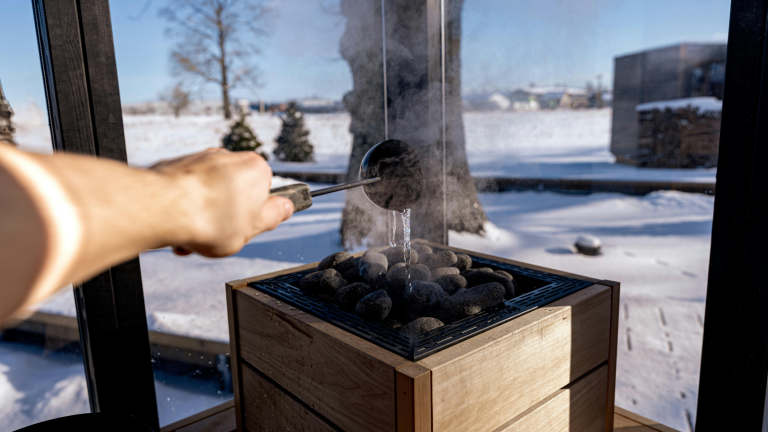
The confusion is understandable. In a traditional sauna, you pour water on the rocks and get an instant wall of heat — that’s the whole ritual. Adding water to the rocks, or any sudden increase in heat stimulus, produces an immediate spike in perceived heat that the body reads as a new load, and the sweating response follows almost instantly. Anyone who’s used a traditional cabin for years builds that motion into muscle memory without ever thinking about it.
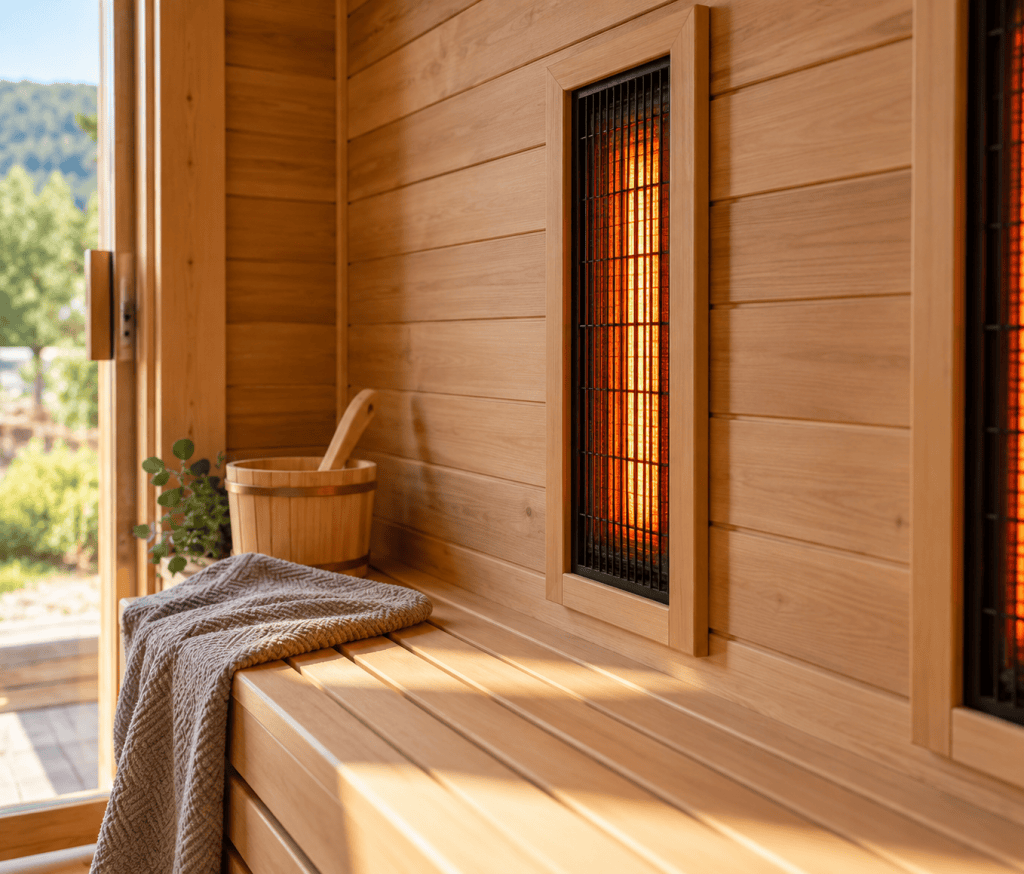
Infrared panels are built for something else entirely. When you pour water on infrared panels, you’re introducing moisture to electrical heating components that aren’t designed for it. Manufacturer safety guidance specifically warns against throwing water onto infrared panels because it can damage them. There’s no rock bed designed for pouring water over, as there is with a traditional sauna heater.
Is it ever safe to pour water on infrared panels? No. Even a small amount can seep into seams in the housing, and once moisture reaches the internal wiring, you’re looking at a tripped circuit at best and a fried panel at worst. The housing is sealed against dust and light splashes during normal cleaning, not against a deliberate pour the way rocks are.
The smell is often the first sign something’s gone wrong. A faint, slightly burnt electrical scent after a splash near a panel is worth taking seriously immediately, even if the unit still seems to be running normally.
What Happens If an Infrared Panel Is Damaged?
If water damages an infrared heating panel, the repair will depend on the sauna’s design and manufacturer. Some units use replaceable heating panels, while others may require manufacturer or dealer servicing. Rather than assuming a fixed repair price, check the warranty and service information for your specific model before arranging any work.
Does spilling a drink near an infrared panel cause the same risk? Yes. Any liquid reaching the panel housing carries the same danger as when you pour water on infrared panels directly — the risk comes from moisture reaching the internal wiring, not from what the liquid happens to be. A splash of water, tea, or anything else sitting near the panel deserves the same immediate attention.
After significant water exposure, don’t assume the sauna is safe to use simply because the panel still turns on. Switch the unit off and follow the manufacturer’s guidance for your specific model. If there is any sign of electrical damage, such as unusual smells, tripping circuits or inconsistent heating, contact the manufacturer or a qualified professional before using it again.
What Repair Can Involve
Repair requirements vary considerably between infrared sauna designs. Some manufacturers provide replacement heating panels and model-specific instructions, while other units may require manufacturer or dealer servicing. If a panel has been exposed to significant water or stops working correctly, check the manufacturer’s instructions and contact its service department before attempting a repair.
The Honest Way to Clean Infrared Panels Safely
A dry or barely-damp microfiber cloth, wrung out until it’s not dripping, is enough to wipe down the surface after a session. Never spray a cleaning solution directly onto the panel — spray it onto the cloth first, then wipe. Done this way, cleaning takes under a minute and carries none of the risk that comes with choosing to pour water on infrared panels directly.
Can steam or humidity from a nearby shower damage infrared panels? Normal room humidity is different from pouring or spraying water directly onto a heating panel, but installation requirements vary between manufacturers. Follow your sauna manufacturer’s guidance on location, ventilation and moisture exposure, particularly if the cabin is installed near a bathroom or shower.
Pros and Cons of Infrared vs Water-Based Heat
One limitation worth understanding before you buy is that the trade-off for infrared’s efficiency is zero tolerance for moisture — a rule that simply doesn’t exist for traditional rocks, and one more reason people default to old habit and pour water on infrared panels without stopping to think about what kind of unit they’re actually standing in front of.
Pros of infrared panels:
- Can have lower running costs than some traditional sauna heaters, depending on the model, power rating and how it is used.
- Typically requires less time to warm the cabin than a traditional sauna, although warm-up time varies by model and room size.
- No water reservoir or rock maintenance required
Cons of infrared panels:
- Not designed for direct water contact, which changes how you clean and use the cabin day to day
- Standard infrared-only cabins don’t provide traditional steam or löyly.
- Panel repairs can require manufacturer-specific parts or servicing
Infrared Panels vs Traditional Rocks: Side-by-Side
The biggest practical difference between traditional and infrared setups is how they produce heat. Traditional sauna heaters use heated rocks that may be designed for water, while infrared panels provide heat without a water-and-rock system.
| Feature | Infrared Panels | Traditional Sauna Rocks |
|---|---|---|
| Water use | Do not pour water directly on panels | Water can be poured on sauna rocks where the heater manufacturer permits it |
| Heat delivery | Infrared energy warms the body and surfaces | Heater warms the sauna air and rocks |
| Steam/löyly | No traditional löyly | Can produce löyly |
| Maintenance | Follow manufacturer cleaning instructions | Rocks require periodic inspection and replacement |
| Water precautions | Keep direct water away from electrical panels | Follow heater instructions for safe water use |
Helpful Gear
- Microfiber cleaning cloths – gentle enough for panel surfaces without scratching the housing or leaving lint behind.
- Non-abrasive wood-safe cleaner – for the surrounding panelling, applied to a cloth rather than sprayed directly near the heating elements.
FAQ
Is it worth switching to infrared if I’ll miss the steam ritual?
It depends what you’re actually after. If pouring water and feeling the heat spike is central to why you use a sauna, infrared won’t replicate that, since you can’t pour water on infrared panels to get the same effect no matter how you approach it. If you mainly want heat and sweat without the ritual attached to it, infrared works well and the trade-off is worth it for a lot of people.
Do infrared saunas ever use water at all?
Standard infrared-only saunas don’t use the traditional water-and-rock system. Infrared panels produce heat without water, so you shouldn’t pour or spray water onto them. Some hybrid sauna models combine infrared heating with other systems, so always follow the manufacturer’s instructions for your specific model.
What should I do if water accidentally gets on a panel?
Switch the sauna off and wipe away any visible moisture with a dry cloth. Don’t use the sauna again until the panel is completely dry, and follow the manufacturer’s instructions for your specific model. If a significant amount of water reached the panel, the breaker trips, or you notice unusual smells, sounds or heating behaviour, contact the manufacturer or a qualified professional before using it again.
Summary Snapshot
- Traditional sauna rocks can be designed for water; infrared panels are not.
- Direct water contact can damage infrared heating components and may require manufacturer or dealer servicing.
- Clean infrared panels according to the manufacturer’s instructions, typically using a dry or lightly damp cloth rather than pouring or spraying water.
- If significant water reaches a panel, switch the sauna off and follow the manufacturer’s guidance. If you notice tripping circuits, unusual smells, sounds or heating behaviour, contact the manufacturer or a qualified professional before using it again.

Final Verdict
The answer is simple: don’t pour water on infrared panels.
Traditional sauna heaters and infrared saunas create heat in different ways. Sauna rocks may be designed to receive water and produce löyly, while infrared panels are electrical heating components and should be kept away from direct water.
If you enjoy the steam ritual of a traditional sauna, infrared won’t recreate that experience. Its appeal is different: direct infrared heat without the need for heated rocks or added water.
For everyday care, follow the cleaning and moisture instructions supplied by your sauna manufacturer. If a significant amount of water reaches a panel, switch the sauna off and check the guidance for your specific model. If the breaker trips or you notice unusual smells, sounds or heating behaviour, contact the manufacturer or a qualified professional before using it again.
Water belongs on sauna rocks designed for it — not on infrared heating panels.
If you’re considering an infrared sauna, our guides to Infrared Sauna 240V: Do You Actually Need It? and Infrared Sauna Electricity Usage: The Real Numbers Before You Buy cover the electrical and running-cost questions specifically for infrared models.