Best Home Steam Generators: What Actually Works in 2026
The best home steam generators aren’t the ones with the biggest kW number on the box — they’re the ones matched properly to your room, your household’s water hardness, and how often you’ll realistically use them. I’ve spent years in and out of steam rooms, home and commercial, and the gap between “looks good in the spec sheet” and “actually delivers a proper steam session” is bigger than most buyers expect.
If you’ve only ever used a commercial steam room at a gym, a home unit is a different animal — smaller volume, faster heat-up, but far less forgiving of a badly sealed room.
This post contains affiliate links. If you buy through them, I may earn a small commission at no extra cost to you.
Quick Snapshot
- Best home steam generators typically run $800–$3,500 for the unit alone, before installation
- A properly sized generator will bring a small home steam room to full steam in 10–15 minutes
- Enclosure sealing matters more than raw kW output for actual performance
- Running one 3–4 times a week costs roughly $15–$30 a month in electricity and water, depending on local rates
Table of Contents
- What a Home Steam Generator Actually Does
- Choosing the Best Home Steam Generators for Your Space
- Cost Reality
- Installation Friction
- Maintenance
- Pros and Cons
- How Steam Generators Compare
- FAQ
- Final Verdict
What a Home Steam Generator Actually Does
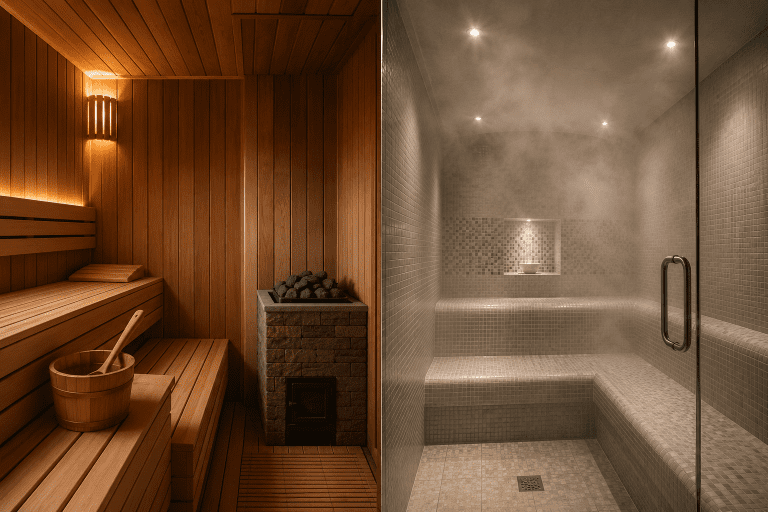
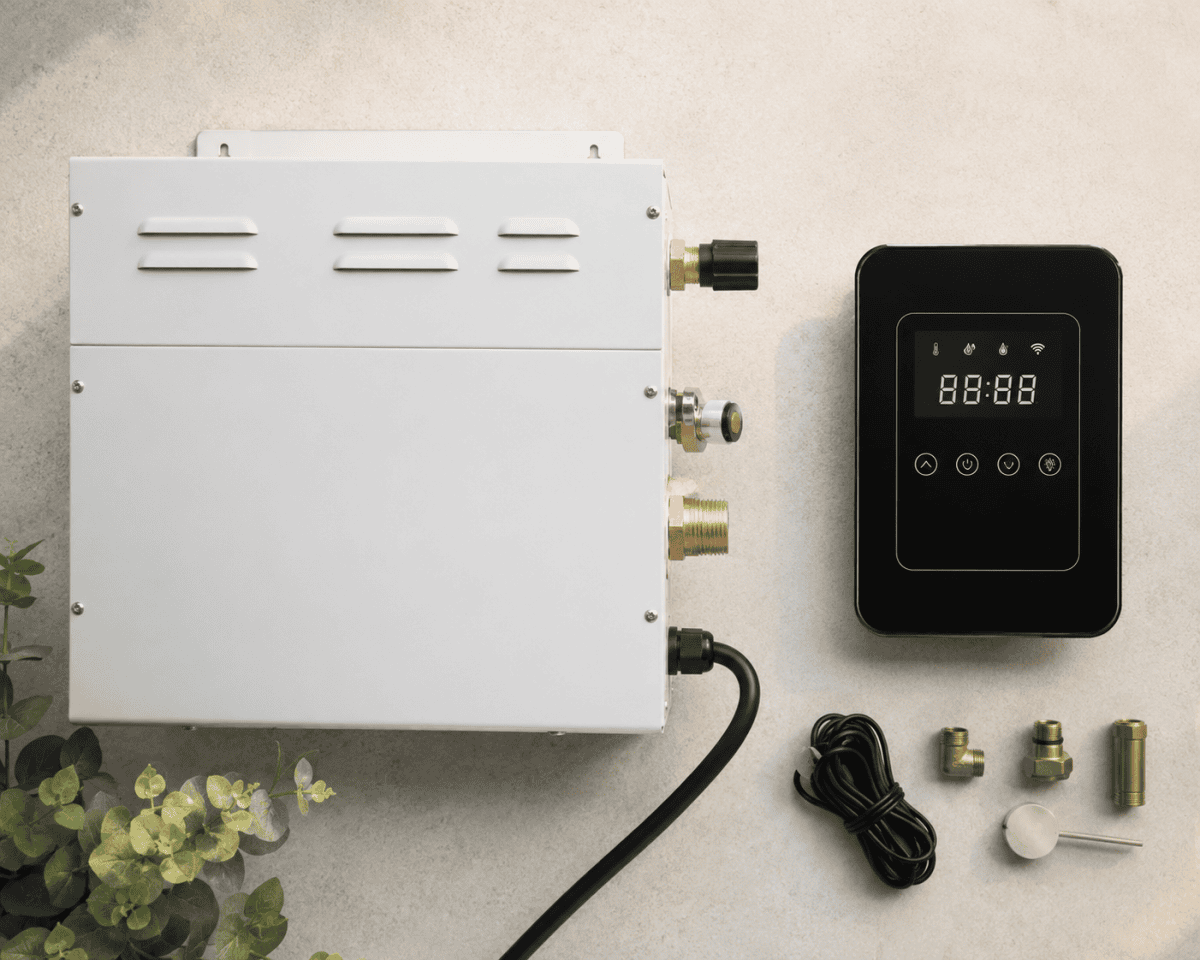
A steam generator boils a small reservoir of water and pumps the resulting steam into a sealed room through a single outlet, usually low on the wall. Unlike a sauna heater, which heats the air directly, a generator heats water elsewhere — a closet, a basement space, sometimes outside the room entirely — and delivers steam through insulated piping.
That distinction matters when you’re comparing the best home steam generators, because the generator itself is only half the system. The room has to be built to hold moisture and heat without leaking either one out through gaps most people never think to check.
I’ve used a steam room regularly for years, and it’s genuinely my favourite of the four categories I cover here — not just relaxing, but actively energising in a way a hot bath never quite matches.
A few years back people started asking what moisturiser I’d been using — my skin just looked better. I wasn’t using anything different; it was purely the steam. That’s when it clicked that the skin effect wellness sites mention is real, not just marketing copy. It’s also why, when people ask me about the best home steam generators, I always start with the room itself rather than the spec sheet. Steam Room for Stress Relief covers that side in more depth if you want the wellness case for it.
Regular heat exposure like this is also linked to temporary drops in blood pressure and improved circulation, according to Cleveland Clinic — one reason a session with one of the best home steam generators tends to leave you feeling loose rather than just clean.
Choosing the Best Home Steam Generators for Your Space
Sizing is measured in kW against cubic footage, not square footage — ceiling height changes the number more than most buyers expect. A small shower-stall conversion (around 40–60 cubic feet) usually needs 3–6 kW. A dedicated steam room in the 100–150 cubic foot range typically needs 9–12 kW.
How much steam generator do I actually need for a home shower stall? For a standard shower enclosure, a 4.5–6 kW generator is usually enough to reach full steam within 10–15 minutes, assuming the enclosure is properly sealed with a domed or sloped ceiling.
Oversizing wastes money and electricity. Undersizing means a generator that runs constantly and still never quite gets the room to full density — which is the single most common complaint I see from first-time buyers who guessed at the size instead of calculating it.
Cost Reality
Unit price for the best home steam generators in the residential range runs $800 on the low end for a basic shower-stall unit, up to $3,500 for a larger, app-controlled system with aromatherapy and multiple output settings. That’s before installation labour, which typically adds $1,000–$3,000 depending on how much new plumbing and electrical work the job needs.
Running costs are the part most product pages skip entirely. Based on typical residential electricity rates, a steam generator used 3–4 times a week for 20–30 minute sessions usually adds somewhere in the range of $15–$30 a month to a utility bill — water use included. That figure will shift with local electricity rates and how efficiently the room holds heat, so treat it as a starting estimate rather than a fixed number. Electric resistance heating — which is how these units generate steam — converts nearly all incoming energy into heat at the point of use, even if the total bill still depends on local rates.
Installation Friction
This is where most steam generator content stops short. The generator unit itself is a relatively simple install for a qualified electrician and plumber — dedicated circuit, water line, drain connection. The room is the hard part, and it’s what actually separates the best home steam generators from ones that never perform as advertised.
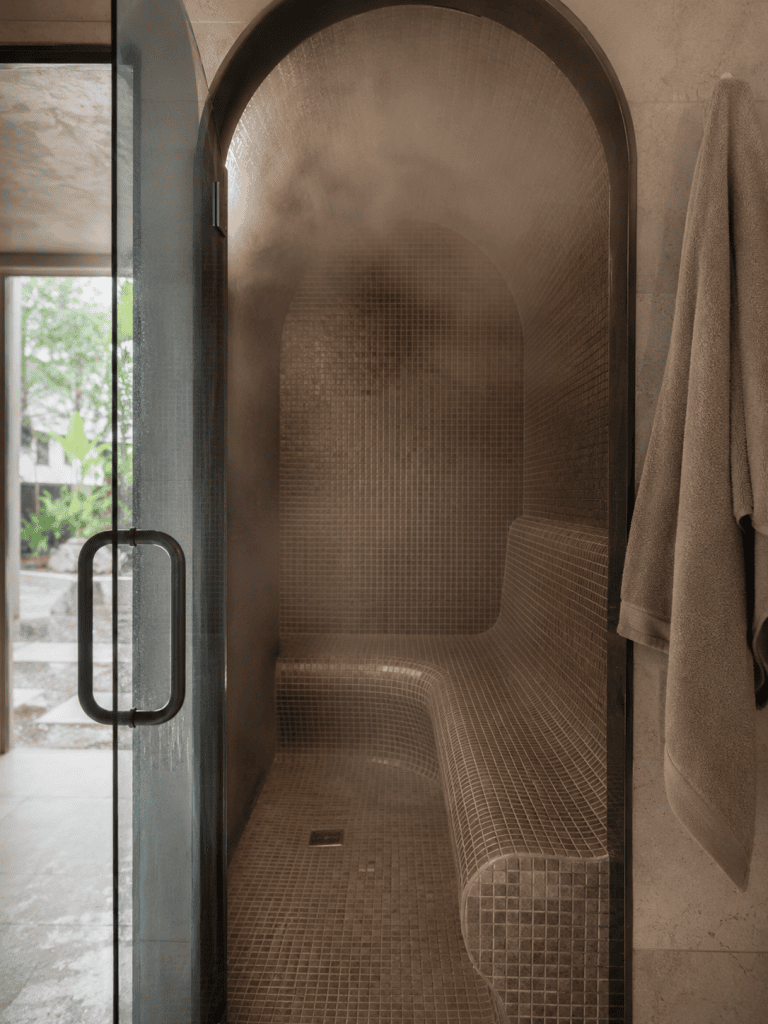
A steam room enclosure needs to be genuinely close to airtight. Every seam, every penetration for lighting or a bench bracket, has to be sealed properly or steam finds its way out and the room never builds proper density. The ceiling should be sloped or domed so condensation runs down the walls instead of dripping on your head mid-session.The enclosure also needs adequate drainage. In many home steam showers the existing shower drain is sufficient if the shower is designed correctly, but larger dedicated steam rooms may require additional drainage depending on local building requirements.
None of that shows up on a spec sheet. It’s the difference between a steam room that works and one that technically has a generator attached to it but never quite performs.
Maintenance
Steam generators need periodic descaling — how often depends entirely on your local water hardness. Hard water areas can need this every few months; soft water areas might stretch to once a year. Skipping it is the single most common reason a generator’s heating element fails early.
Beyond descaling, maintenance on the best home steam generators is fairly light: check the water inlet valve for mineral buildup, inspect the drain line isn’t blocked, and wipe down the steam outlet after use to stop mineral deposits building up around it.
Pros and Cons
Weighing the pros and cons of the best home steam generators mostly comes down to how much you value fast heat-up against the ongoing sealing and descaling work.
Pros:
- Faster heat-up than most sauna setups — full steam in 10–15 minutes
- Lower surface temperatures than a sauna, which some people find more comfortable for longer sessions
- Can be retrofitted into an existing shower enclosure in some cases
Cons:
- The enclosure itself, not the generator, is usually where budgets and timelines blow out — sealing and drainage work gets underestimated constantly
- Hard water areas will need more frequent descaling than most buyers plan for going in
- Session length is genuinely limited by humidity tolerance, not heat tolerance — some people tap out at 10 minutes regardless of temperature
How Steam Generators Compare
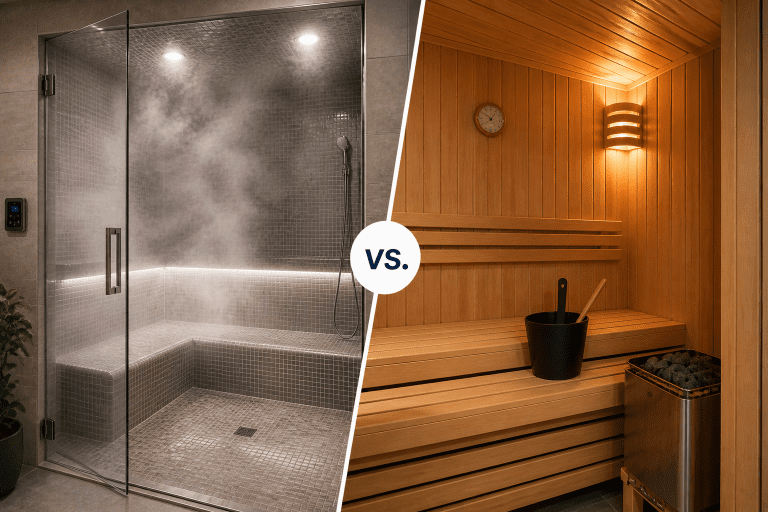
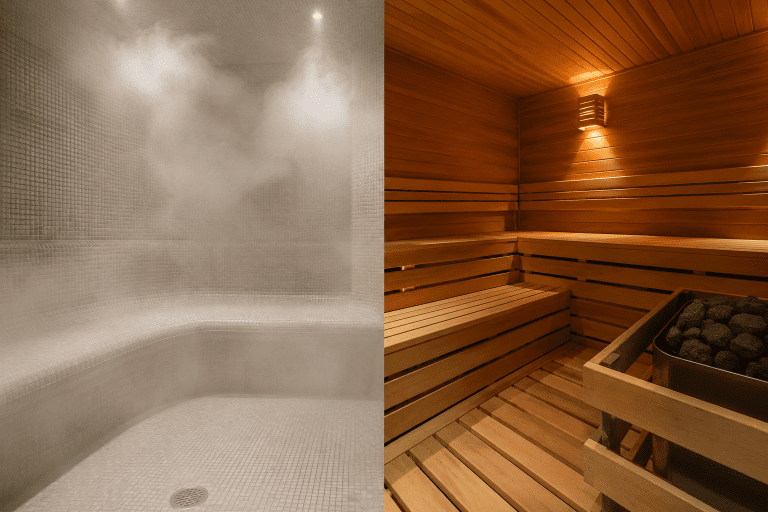
Here’s how the best home steam generators stack up against a traditional sauna on the factors that actually matter day to day.
| Factor | Steam Generator | Traditional Sauna |
|---|---|---|
| Heat-up time | 10–15 minutes | 20–40 minutes |
| Surface temperature | 110–120°F, high humidity | 150–195°F, low humidity |
| Post-session feeling | Energised, skin noticeably softer | Deep relaxation, more of a “purging” feeling |
| Typical unit cost | $800–$3,500 | $1,500–$5,000 |
| Installation complexity | High — room sealing is critical | Moderate — ventilation is the main factor |
That post-session difference is worth taking seriously when you’re choosing between the two. A hot bath with salts can produce something similar in the short term — boxers use that trick to drop water weight before a weigh-in — but it’s a dehydration effect, not a real substitute. A steam room, used consistently, does something closer to actually building an effect over time rather than borrowing against your body for one evening.
FAQ
Will I actually use a home steam generator, or will it end up unused after a few months? That comes down almost entirely to how easy you’ve made it to use. If the control panel lets you pre-heat remotely and the room is genuinely comfortable to get to, consistent use is realistic. If it’s a hassle to start or the room takes 30+ minutes to build steam, it becomes the same as an unused treadmill.
Do home steam generators use a lot of water? Less than most people assume — typically a few gallons per session, since the reservoir is small and mostly recirculated as steam rather than continuously drained.
Can I install a steam generator in an existing shower? Sometimes, if the enclosure can be sealed properly and has adequate drainage — but a shower isn’t automatically steam-room ready, and that’s worth checking with an installer before buying any of the best home steam generators on your shortlist.
If the room can’t be sealed properly, even the best home steam generators won’t perform the way the spec sheet suggests.
Summary Snapshot
- Size by cubic footage, not square footage
- Budget for the enclosure and sealing work, not just the unit price
- Expect $15–$30/month in running costs for regular use
- Descaling frequency depends on local water hardness

Final Verdict
The best home steam generators on paper all look fairly similar — kW rating, tank size, a few control options. What actually separates a good home steam setup from a disappointing one is almost never the generator itself. It’s whether the room around it was built to hold the steam it produces.
Get the enclosure right — sealed, sloped ceiling, proper drain — and even a mid-range generator will deliver a genuinely good session. Get it wrong, and even the most expensive unit on the market will struggle to ever build real density in the room.
Curious how steam compares to dry heat? Cost to Install a Hot Tub in 2026 covers the installation-cost side of home wellness equipment more broadly, and Steam Room for Stress Relief goes deeper on why consistent steam use matters beyond the physical effects.