Steam Room vs Sauna Weight Loss: What Actually Moves the Needle
Steam room vs sauna weight loss is one of those comparisons that sounds straightforward until you actually spend real time in both — and realise the answer depends on what you mean by “weight loss” in the first place.
I’ve used both regularly for years. The steam room is genuinely my favourite of the four categories I use (sauna, steam, hot tub, ice plunge), and the sauna is a close second. I have opinions about both that most wellness articles don’t get into because they’re written by people who haven’t actually sweated through a full session and tracked what happened afterward.
Let me be straight with you before we go any further — this post contains affiliate links. If you buy something through one of them, I earn a small commission at no extra cost to you. It helps keep this site going.
Quick Snapshot
- Both steam rooms and saunas cause temporary water weight loss through sweat — not fat loss
- Saunas run hotter and typically produce more intense sweat sessions
- Steam rooms add humidity, which some find easier on the lungs for longer sessions
- Neither is a fat-loss tool on its own — but both support recovery, which supports consistent training
- The honest answer: neither wins clearly for weight loss, but for overall body results, pairing either with cold exposure changes everything
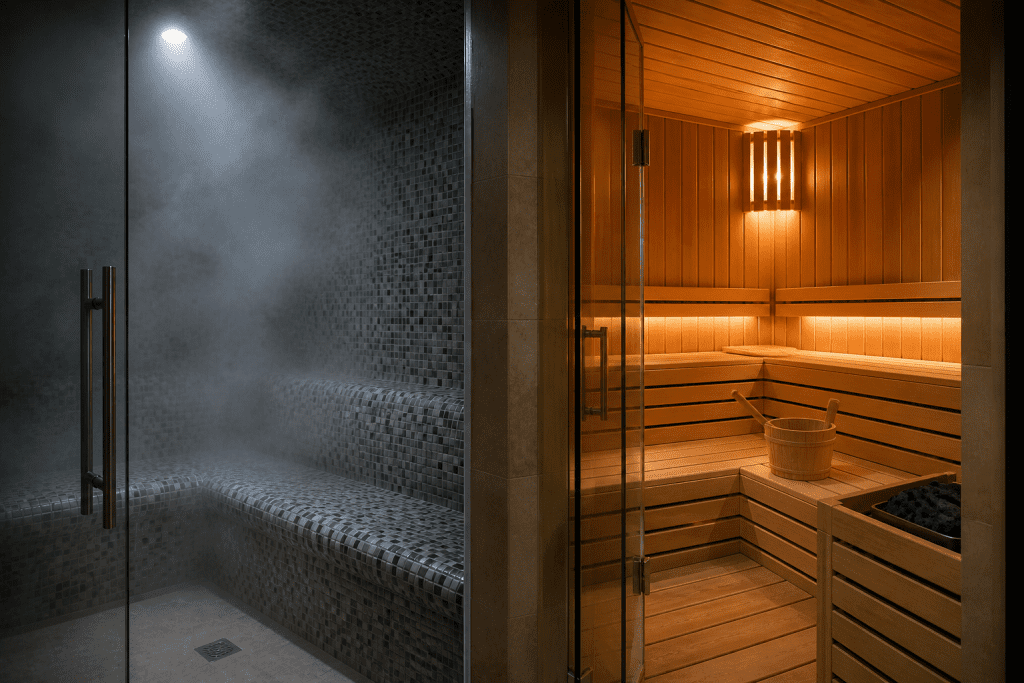
Table of Contents
- What’s Actually Happening to Your Body in Each
- The Weight Loss Reality Check
- Cost Differences
- Installation Friction
- Maintenance
- Pros and Cons
- Head-to-Head Comparison
- Comparison Table
- Helpful Gear
- FAQ
- Final Verdict
Steam Room vs Sauna Weight Loss: What’s Actually Happening to Your Body in Each
The steam room vs sauna weight loss debate starts with understanding what each environment actually does to your body — because they’re not doing the same thing, even though both make you sweat.
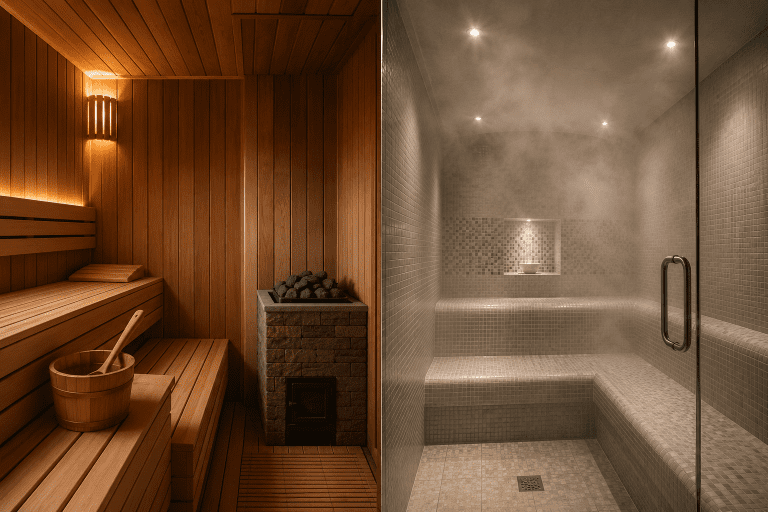
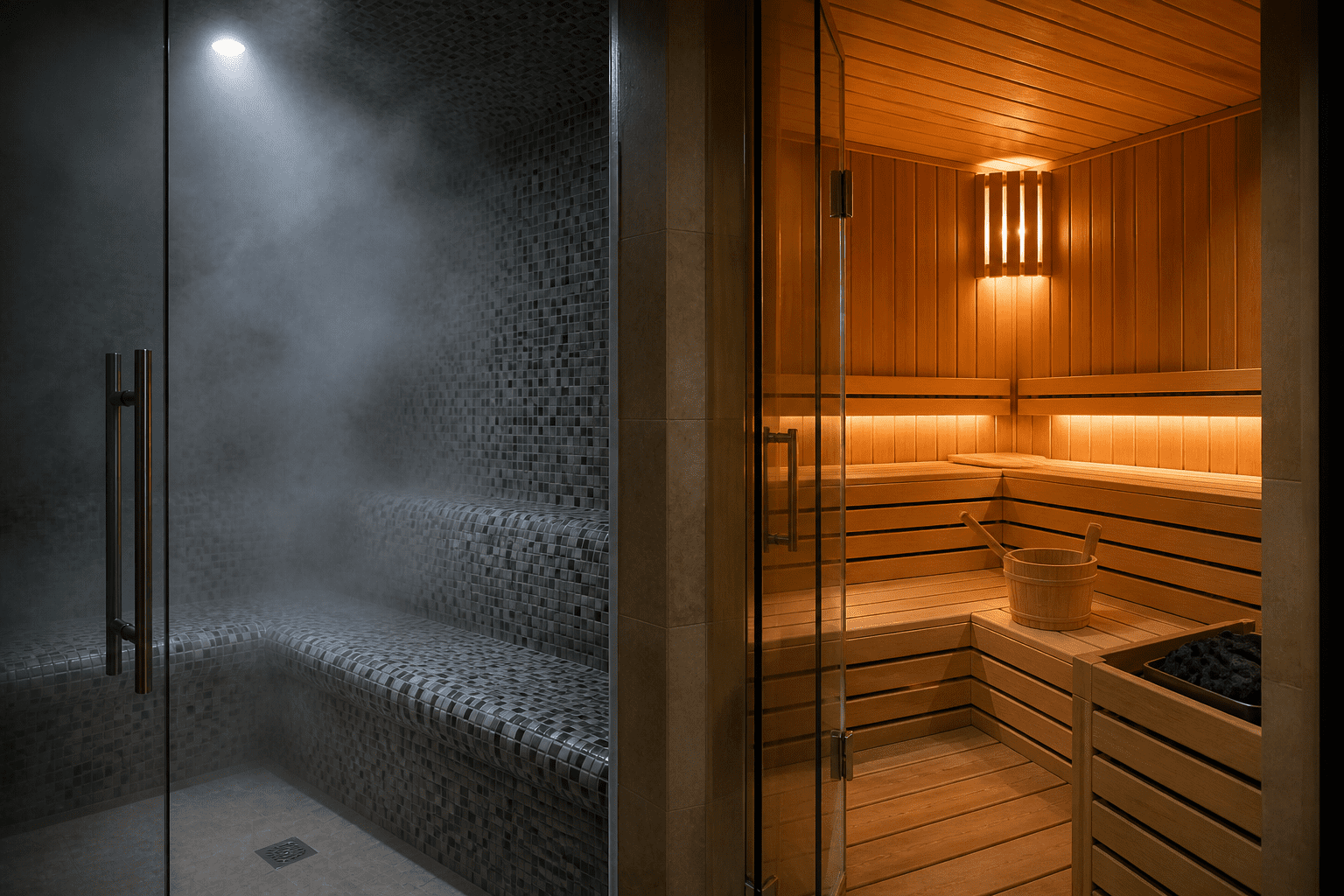
A sauna runs dry heat, typically between 150°F and 195°F. Your core temperature rises, your heart rate climbs, and your body sweats hard to try to cool you down. The cardiovascular response is real — your heart is working. That effort burns some calories, though not at the dramatic level the wellness marketing world implies.
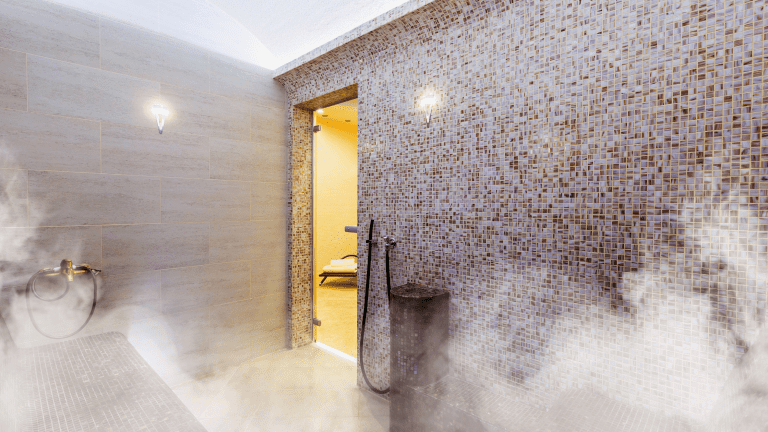
A steam room sits around 110°F to 120°F, but with 100% humidity. It feels different in a way that’s hard to explain until you’ve experienced both. The heat is less aggressive, but the humidity means your sweat doesn’t evaporate — so your body keeps producing it. You’re not necessarily working harder, but you’re sweating more visibly.
According to Healthline’s review of steam room benefits, heat exposure in both environments can support cardiovascular function and circulation — which is the physiological mechanism behind why both feel productive, even if the calorie math is modest.
The sauna, in my experience, produces a more intense, almost purging feeling — like you’ve genuinely cooked something out of yourself. The steam room is different. I come out of a steam session feeling actively energised, not just relaxed. That distinction matters when you’re thinking about what supports a training lifestyle.
The Weight Loss Reality Check
Here’s the honest version of steam room vs sauna weight loss that most content skips: the number on the scale after either session reflects water loss, not fat loss.
You can drop one to two pounds during a 20-minute sauna session. Step on the scale, see a lower number, feel good. Drink water, and that weight returns within a couple of hours. This is not fat loss. It’s fluid loss.
The legitimate connection to weight loss is indirect. Both environments support recovery, reduce muscle soreness, and help you maintain the consistency that actually drives body composition change. If using a steam room or sauna three times a week means you show up to your workouts less sore and more motivated, that has a real downstream effect on your results.
I’ve noticed this over years of consistent use — the steam room vs sauna weight loss question isn’t really about the session itself. It’s about whether heat exposure helps you stay consistent. And it does, at least for me. People have commented unprompted on visible changes in how I look, and I attribute that to the combined habit, not any single session.
Cost Differences
The steam room vs sauna weight loss conversation shifts when you factor in the cost of actually owning one of these things, because the price gap is significant.
A quality home infrared sauna starts around $1,500 to $3,000 for a one-to-two person unit. Traditional Finnish saunas with a proper heater run higher — $3,000 to $8,000 installed depending on size and whether you’re building a dedicated room. Running costs on a home sauna add $30 to $80 per month to your electricity bill depending on frequency and unit size.
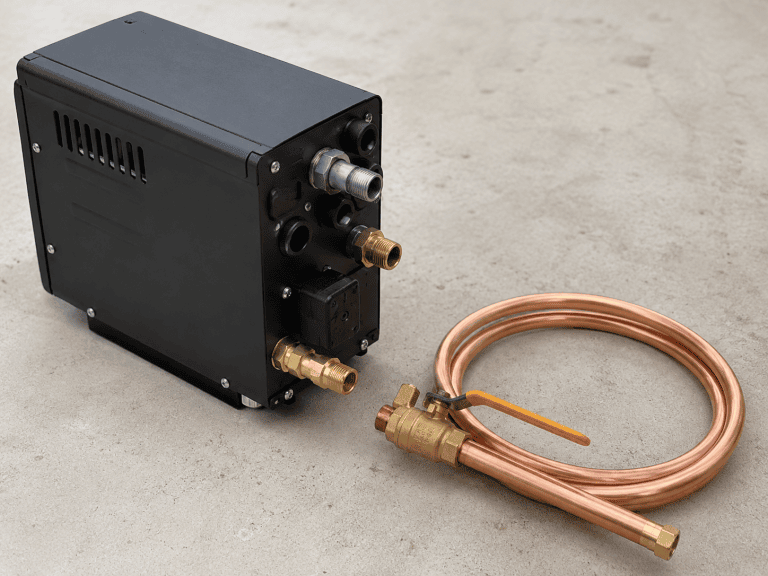
A home steam generator — the unit that turns a tiled shower enclosure into a steam room — runs $500 to $1,500 for the generator itself. But the enclosure build-out, waterproofing, and tile work can push total costs to $5,000 to $15,000 if you’re doing a proper steam shower conversion. Ongoing running costs are lower than a sauna per session, but the upfront investment is often higher once construction is factored in.
For gym members using both, neither costs extra. If steam room vs sauna weight loss is a question you’re asking from a gym context, use whichever you have access to and stop overthinking it.
Installation Friction
Installing a sauna is more achievable than most people expect. A prefabricated infrared sauna arrives flat-packed, plugs into a standard 240V outlet in most cases, and can be assembled in a spare room or garage in a few hours. No specialist construction required.
A steam room is more involved. The steam generator itself installs in a mechanical space, but the room needs to be fully waterproofed, properly sealed, and tiled correctly to handle consistent moisture exposure. Poor waterproofing leads to mould problems behind walls — a real issue that adds remediation costs later.
The steam room vs sauna weight loss comparison gets more complicated when you realise that installation difficulty often determines which one people actually use consistently. A sauna that takes 30 minutes to heat up and lives in your garage gets used regularly. A steam room that requires a building project gets delayed indefinitely.
Check permit requirements in your area before either project. Electrical work, structural changes, and plumbing connections may all require permits depending on your local authority. Nolo’s home improvement permit guide is a good starting point for understanding what typically triggers a permit requirement.
Maintenance
Saunas are relatively low maintenance. Wipe down the wooden benches after sessions, ventilate the room between uses, and replace the heater rocks every few years. The wood itself may need occasional sanding and oiling. Monthly time commitment is minimal.
Steam rooms require more attention. The constant moisture environment creates ideal conditions for mould and bacteria if the room isn’t cleaned and dried consistently. Grout lines, corners, and the ceiling are the common problem areas. You need a proper squeegee routine after every session, a mould-resistant cleaner weekly, and the generator’s water supply needs descaling periodically depending on your local water hardness.
The steam room vs sauna weight loss question has a maintenance footnote: if the higher upkeep of a steam room means you skip sessions, you’re not getting the recovery and consistency benefits that drive real results. Honest self-assessment about how much maintenance you’ll actually do matters here.
Pros and Cons
The steam room vs sauna weight loss comparison benefits from a direct rundown before we go further.
Steam Room The humidity makes longer sessions feel more manageable for some people — the heat doesn’t hit as aggressively. Skin benefits are visible and real. The energised post-session feeling I get from steam is genuinely different from a sauna. On the downside: harder to install properly, more maintenance, and the wet environment is less forgiving of neglect.
Sauna Produces a more intense heat response. Easier to install as a home unit. Lower ongoing maintenance. The purging, deeply relaxed feeling after a hard sauna is something the steam room doesn’t fully replicate. Downside: the dry heat can be uncomfortable for people with respiratory sensitivities, and cheaper units don’t hold temperature well.
Head-to-Head Comparison
When you look at steam room vs sauna weight loss directly, the honest comparison comes down to three things: calorie burn during the session, recovery quality, and what you’ll actually use consistently.
Calorie burn in a sauna session edges slightly higher because the body works harder to regulate temperature in dry extreme heat. Some estimates put a 20-minute sauna session at 100 to 150 calories — similar to a brisk walk. Steam rooms in the same time frame are slightly lower, though the research isn’t conclusive.
Recovery quality is arguably more important. Both environments reduce delayed onset muscle soreness, improve circulation, and help you bounce back faster between training sessions. If the steam room vs sauna weight loss comparison is really a recovery comparison in disguise, both deliver, and the winner is whichever one you’ll use consistently.
The combination approach is where results actually compound. Pairing either a steam room or sauna with cold exposure — ice plunge or cold shower — produces a physiological response that’s more powerful than heat alone. [CROSS-LINK: ice plunge benefits] — the contrast between heat and cold is where the real training recovery effect lives, and I’d argue it’s the most underrated factor in the whole steam room vs sauna weight loss conversation.
Comparison Table
| Factor | Steam Room | Sauna |
|---|---|---|
| Heat type | Wet, 110–120°F | Dry, 150–195°F |
| Sweat volume | High (visible) | High (evaporates faster) |
| Calorie burn (est.) | 80–120 per 20 min | 100–150 per 20 min |
| Installation cost | $5,000–$15,000+ | $1,500–$8,000 |
| Maintenance | High | Low–Medium |
| Skin benefits | Very strong | Moderate |
| Respiratory comfort | Better for sensitive users | Can feel harsh |
| Home install ease | Complex | Relatively easy |

Helpful Gear
These are products worth having if you’re using either a sauna or steam room seriously.
Sauna thermometer and hygrometer combo — Knowing your actual temperature and humidity makes a noticeable difference in how you time sessions.
Microfibre sauna towel set — Fast-drying, purpose-built for the heat environment. Much better than standard bath towels for regular use.
FAQ
Does a steam room burn more calories than a sauna? The evidence slightly favours saunas for calorie burn per session due to the more intense heat response. A 20-minute sauna session may burn 100 to 150 calories compared to 80 to 120 in a steam room. Neither figure is dramatic, and both reflect a modest cardiovascular effort rather than significant fat burning. The steam room vs sauna weight loss difference in calorie terms is small enough that other factors — consistency, recovery quality, personal preference — matter far more.
Can you lose real weight using a sauna or steam room regularly? Directly, no — not in the sense of fat loss. Both produce water weight loss that reverses once you rehydrate. Indirectly, yes — consistent use supports recovery, reduces soreness, and helps maintain the training habits that drive actual body composition change. The steam room vs sauna weight loss question is better reframed as: which environment helps me train more consistently?
Which is better for skin — steam room or sauna? Steam rooms have a clear edge here. The humidity opens pores, hydrates the skin’s surface, and produces visible improvements in skin texture with consistent use. I’ve had people ask what moisturiser I’ve been using after a run of regular steam sessions — no moisturiser involved, just steam. Saunas improve circulation which benefits skin, but the direct hydration effect of a steam room is more pronounced.
Simple rule: If you want easier installation and intense heat, use a sauna. If you want better skin results and a gentler environment, use a steam room. For steam room vs sauna weight loss specifically — use whichever one you’ll actually show up to consistently.
Summary Snapshot
- Both sauna and steam room produce temporary water weight loss, not fat loss
- Saunas edge ahead on calorie burn per session — modestly
- Steam rooms win on skin benefits and respiratory comfort
- Neither replaces training — both support recovery that makes training more consistent
- The real steam room vs sauna weight loss result comes from long-term habit, not individual sessions
- Pairing either with cold exposure produces better recovery outcomes than heat alone

Final Verdict
The steam room vs sauna weight loss question doesn’t have a clean winner — and any article that tells you otherwise is oversimplifying.
Both environments produce genuine physiological benefits. Both support the recovery and consistency that actually drive body composition change over time. The sauna edges ahead on raw calorie burn during the session. The steam room edges ahead on skin effects and accessibility for people who find aggressive dry heat uncomfortable. For the steam room vs sauna weight loss comparison to mean anything practical, it has to come back to what you’ll use regularly — because the session you skip gives you nothing.
My honest take: if you’re choosing one for home installation, a prefabricated infrared sauna is less friction to install and maintain, and you’ll use it more often because of that. If you have gym access to both, alternate them. And if you can pair either with a cold shower or ice plunge, do that — the contrast effect on recovery is what actually changes how you feel and how your body responds over weeks and months.
That’s where the real result lives. Not in one session of either. In the consistent, compound habit of heat, cold, and training together.
If you want to take recovery further, the benefits of ice plunging after heat exposure are worth understanding.