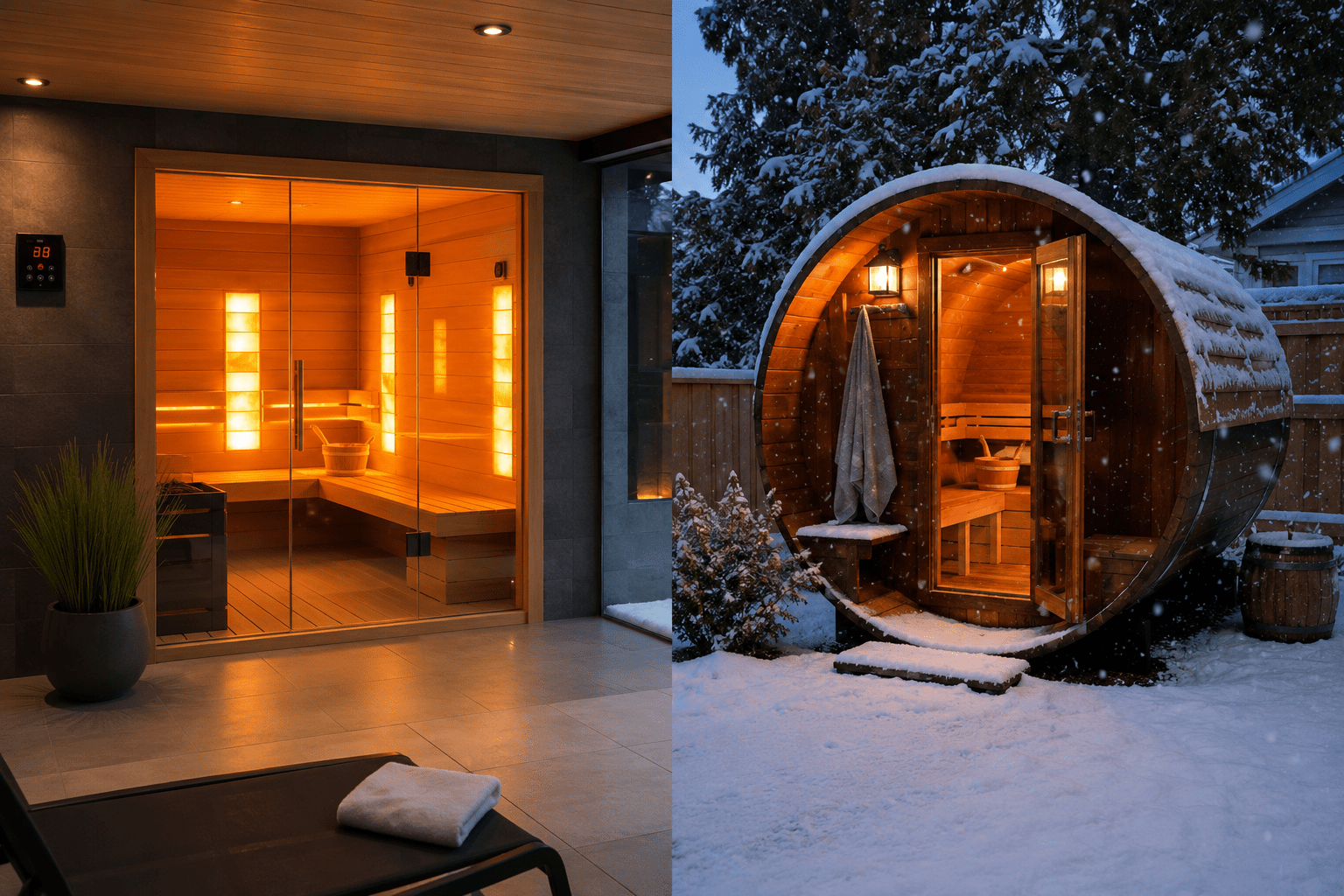
Which Heats Faster: Indoor or Outdoor Sauna? The Honest Answer
Indoor vs outdoor sauna heating time is one of the first questions people ask when they’re deciding where to put a sauna — and the answer matters more than most buying guides let on. It’s not a simple win for either side. The honest answer depends on four variables most articles ignore entirely.
That said, there’s a clear pattern once you look at the real data — and a few things that genuinely surprised me when I started using both regularly.
Affiliate disclosure: Some links in this post are affiliate links. If you buy through them, I earn a small commission at no extra cost to you. I only link to product types I’d actually recommend.
Quick Snapshot
- Indoor saunas typically heat to 160–185°F in 20–30 minutes
- Outdoor saunas in cold climates can take 30–45+ minutes
- Insulation quality is the single biggest variable — not location
- Barrel saunas heat faster than cube-shaped outdoor builds of the same volume
- Electric heaters heat faster and more consistently than wood-burning in all conditions
- Ambient temperature outside your sauna affects heating time significantly
- A well-insulated outdoor sauna in mild weather heats as fast as most indoors
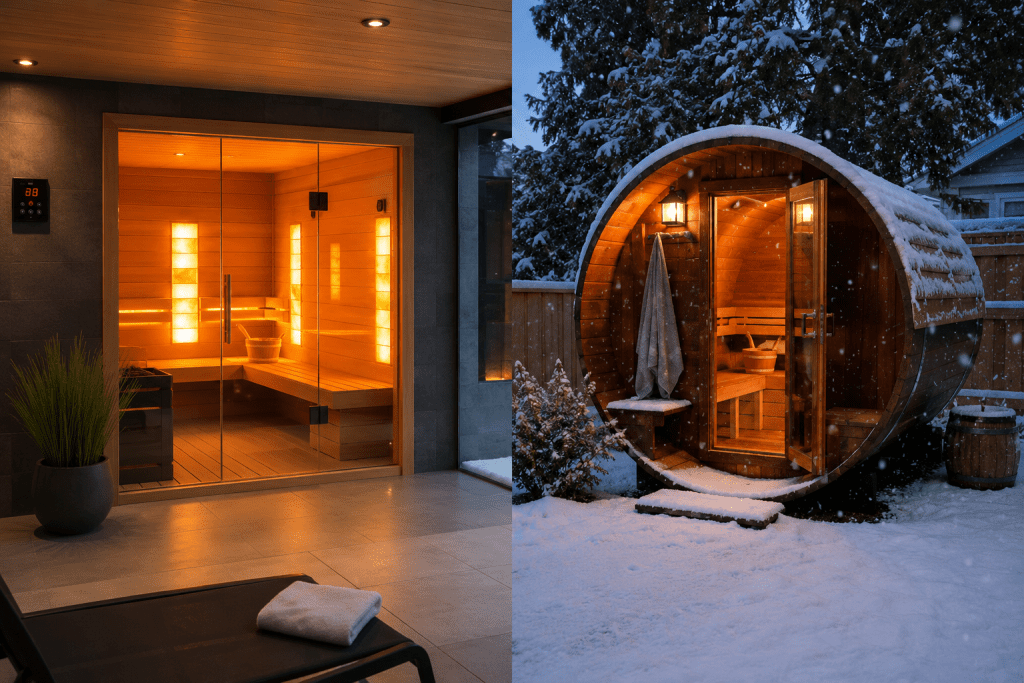
Table of Contents
- Why Heating Time Actually Matters
- How Indoor Saunas Heat Up
- How Outdoor Saunas Heat Up
- The Real Variables: What Controls Heating Time
- 7 Honest Factors That Separate Indoor and Outdoor Performance
- Cost Reality: What Faster Heating Costs You Monthly
- Installation Friction That Affects Heat-Up Performance
- Maintenance and Heat Retention Over Time
- Pros and Cons
- Head-to-Head Comparison
- Comparison Table
- Helpful Gear
- FAQ
- Final Verdict
Indoor vs Outdoor Sauna Heating Time : Why it Actually Matters
Heating time is a proxy for something more important: whether you’ll actually use the thing. Indoor vs outdoor sauna heating time affects that calculation from day one.
The other factor nobody mentions: waiting while it heats is frustrating in a way that waiting for a shower to warm up isn’t. The anticipation is different. You’re already thinking about the session. Every extra minute of preheat costs you something real.
How Indoor Saunas Heat Up
When comparing indoor vs outdoor sauna heating time, indoor saunas have one structural advantage: they sit inside a temperature-controlled space.: they sit inside a temperature-controlled space. The ambient temperature inside a house is typically 65–72°F year-round. That means the heater is only fighting a fixed, moderate temperature gap every single time.
A standard 4-person indoor sauna with a 6kW electric heater typically reaches 160–185°F in 20–30 minutes under normal conditions. The walls aren’t losing heat to wind, cold air infiltration, or seasonal temperature swings.
What drives indoor heat-up speed? The main variables are heater output (kW), sauna volume (cubic feet), and insulation quality. A 6kW heater in a 200 cubic foot indoor sauna will outperform a 6kW heater in a 300 cubic foot room — that’s just physics. The heater-to-volume ratio matters more than almost anything else.
How Outdoor Saunas Heat Up
Outdoor saunas face a variable the indoor version never does: ambient temperature that changes with the season. In Minnesota in January, an outdoor sauna might be heating against -10°F. In July in Texas, the same unit has almost no temperature gap to overcome. That’s not a minor difference — it can add 15–25 minutes to winter heat-up times.
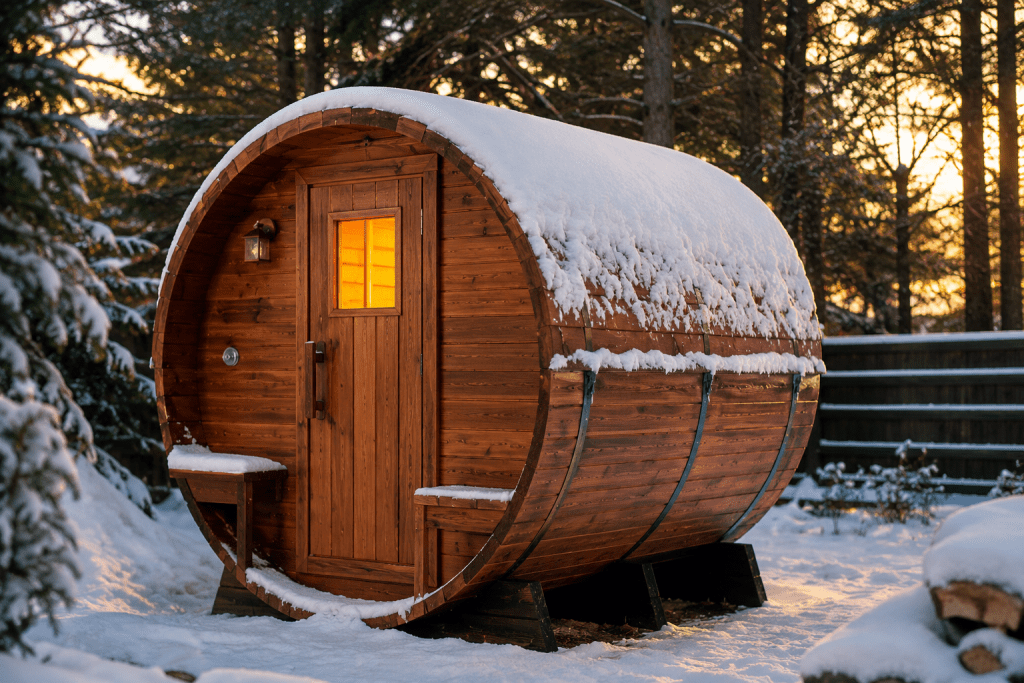
Barrel saunas, which are common outdoors, have one underrated advantage: their cylindrical shape reduces dead airspace. Heat rises and circulates more efficiently than in a rectangular cabin of similar volume. A well-built barrel sauna with good cedar insulation heats faster than an equivalent square footage cabin — often by 10–15 minutes.
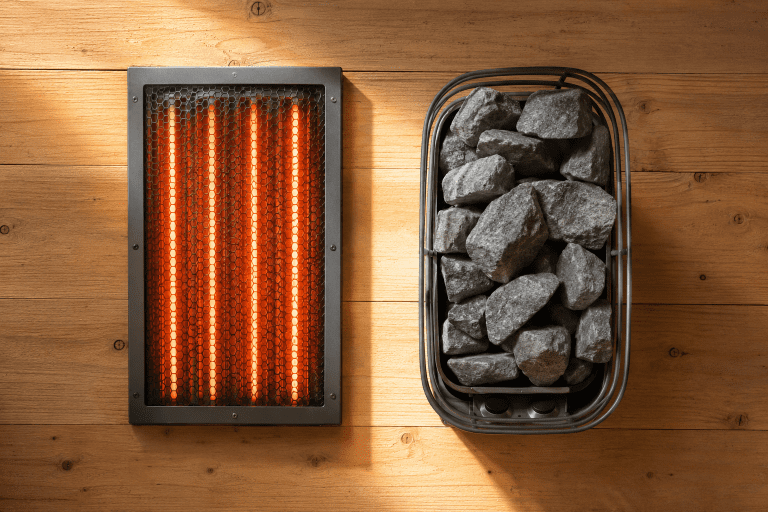
Wood-burning heaters are a different story entirely. They produce intense radiant heat, and a lot of serious sauna users swear by the experience — there’s something about that heat that electric can’t replicate. But they take longer to reach temperature, require active tending, and their output varies based on wood quality and fire management. Not a weakness exactly, but not fast.
The Real Variables: What Controls Heating Time
Indoor vs outdoor sauna heating time is mostly a question of four things: heater output relative to room volume, insulation quality of the walls and ceiling, ambient temperature outside the structure, and door seal quality.
Insulation is the most overlooked variable. A poorly insulated outdoor sauna in moderate weather performs worse than a well-insulated outdoor sauna in cold weather. R-value in the walls and ceiling matters far more than whether the sauna is indoors or outside. Many kit saunas — indoor and outdoor — cut corners on ceiling insulation specifically, and you pay for that every single session.
Does location actually matter? Location matters mainly because of ambient temperature exposure. A properly insulated outdoor sauna in a mild climate heats at essentially the same rate as a comparable indoor unit. The insulation variable and the heater-to-volume ratio are the real drivers. Climate is the multiplier.
7 Honest Factors That Separate Indoor and Outdoor Performance
1. Ambient temperature consistency Indoor units operate in a stable environment. Outdoor saunas deal with seasonal variation — faster in summer, slower in winter, sometimes significantly.
2. Heater type Electric heaters are faster and more predictable regardless of location. Wood-burning heaters are slower but produce a different heat quality that many users prefer. If heat-up speed is your priority, electric wins every time.
3. Insulation quality This is the single biggest performance variable in either setting. Cheap insulation in an indoor sauna can actually make it heat slower than a well-built outdoor barrel sauna. Most factory kit saunas underinsulate the ceiling.
4. Volume and shape Barrel saunas heat faster per cubic foot than rectangular designs. A compact 2-person barrel outdoors often heats faster than a spacious 4-person rectangular indoor cabin.
5. Door and sealing quality A poorly sealed door is a significant heat leak. This affects outdoor saunas more because cold air infiltration adds real load to the heater.
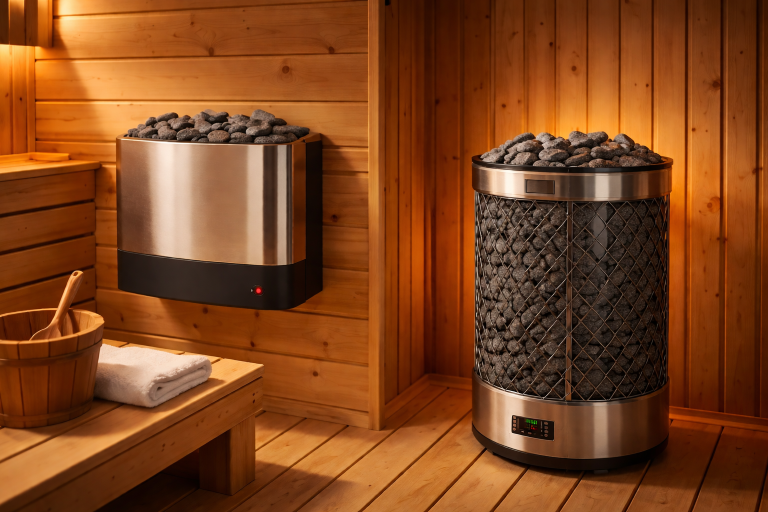
6. Heater output (kW) The industry rule is roughly 1kW per 50 cubic feet of sauna space, but that’s a floor, not a ceiling. Going slightly oversized on heater output is one of the most practical decisions you can make — especially outdoors.
7. Preheating habits Turning a sauna on via a timer or app before you’re ready to use it eliminates the perception of waiting entirely. This works for both types, but the timer offset required is larger for outdoor units in winter.
Cost Reality: What Faster Heating Costs You Monthly
Faster heating means more kWh consumed per session — but the relationship isn’t linear. A sauna that heats in 20 minutes and holds temperature well uses less electricity overall than one that heats in 40 minutes and loses heat through poor insulation.
Indoor vs outdoor sauna heating time directly affects your monthly running costs. The average 6kW indoor sauna costs roughly $1.50–$2.50 per session in electricity depending on local rates. An outdoor sauna in cold climates with similar output can cost $2.50–$4.50 per session if insulation is poor, because the heater cycles more frequently to maintain temperature during the session.
According to the Cleveland Clinic, regular sauna use is associated with measurable cardiovascular benefits — but those benefits come from consistency, not occasional use. Cost per session matters because it determines how often you actually use the thing over years, not weeks.
The wood-burning outdoor option inverts this entirely if you have access to cheap or free wood. Operating cost can drop to near-zero, but time investment and effort go up.
Installation Friction That Affects Heat-Up Performance
How a sauna is installed directly affects indoor vs outdoor sauna heating time in ways the product listing won’t mention. An indoor sauna positioned against an exterior wall or near a cold basement transfers heat to that surface — adding load to the heater and slowing heat-up.
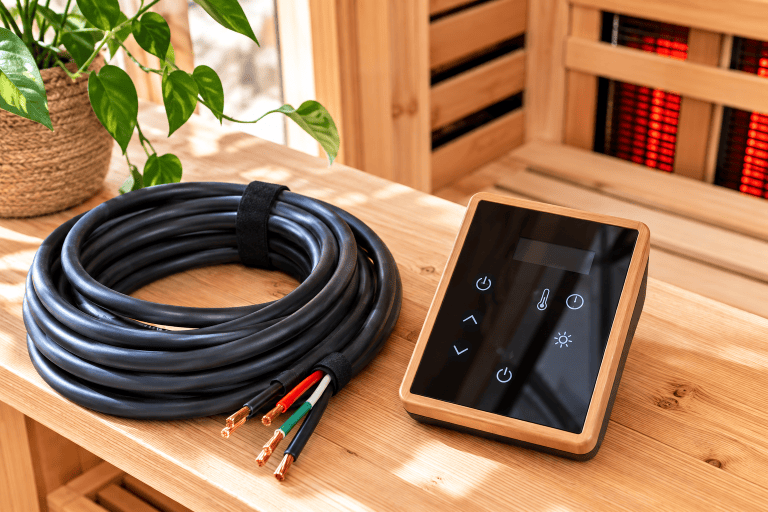
Outdoor saunas require a dedicated electrical circuit for electric models — typically 240V, 40–60 amp depending on heater size. Undersizing that circuit doesn’t just create a safety issue; it limits heater output and directly extends heat-up time. A permit is usually required for this work — the Nolo guide on home permits is worth checking before you start, since electrical work for sauna installations typically requires one in most jurisdictions.
Foundation matters for outdoor builds too. A sauna sitting on a poorly drained base develops moisture issues that compromise insulation over time — and degraded insulation means slower heating and longer sessions before you reach target temperature.
Maintenance and Heat Retention Over Time
A sauna that heats quickly on day one doesn’t necessarily heat quickly after two years of use if maintenance is neglected. Heat retention is a maintenance issue as much as a design issue.
For outdoor units, the cedar or wood exterior weathers. That’s aesthetic mostly, but if sealant around door frames fails, drafts develop. A draft you can’t see can add 5–10 minutes to your heat-up time without any obvious explanation.
For indoor saunas, the risk is moisture damage to insulation if the vapour barrier was poorly installed. Condensation builds up in the wall cavities over time and gradually degrades thermal performance. Neither problem is dramatic — both are slow and invisible until you notice the sauna just feels like it takes longer to heat than it used to.
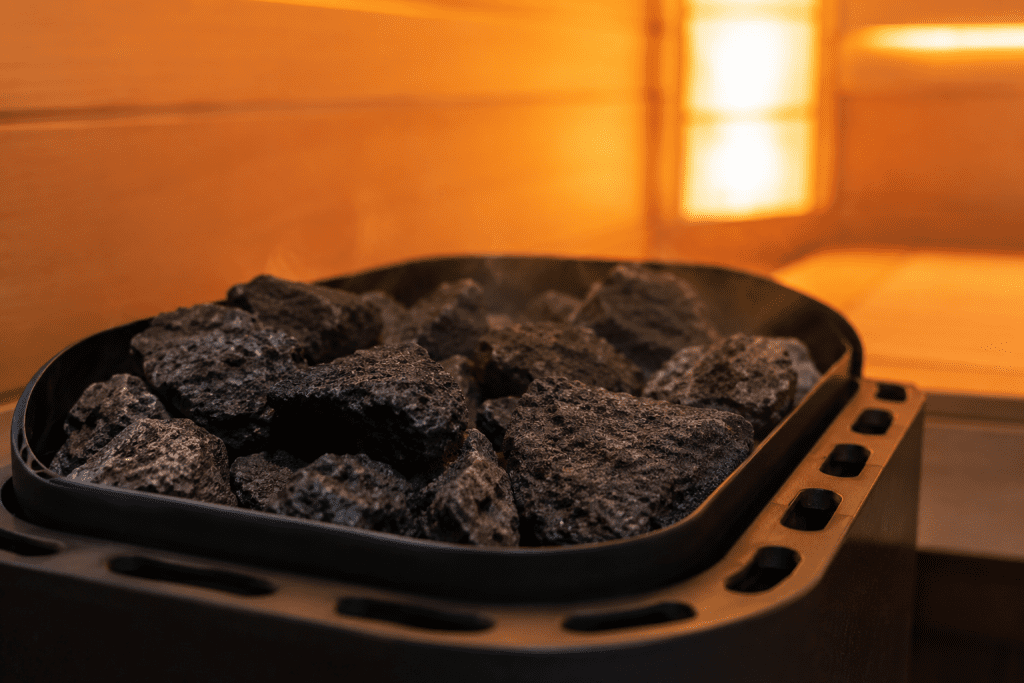
Cleaning the heater stones annually and checking door gaskets is a 20-minute job that maintains the heat-up performance you paid for.
Pros and Cons
Indoor sauna Pros: Consistent heat-up time year-round regardless of season. No exposure to weather during preheating. Easier electrical access. Indoor vs outdoor sauna heating time favours the indoor unit in cold climates specifically. More accessible for quick weekday sessions. Cons: Requires interior space. Steam and humidity need proper ventilation. Installation can involve more structural work in existing rooms.
Outdoor sauna Pros: Separate dedicated wellness space — psychologically different experience. Barrel design heats faster per cubic foot than most indoor options. Natural wood smell and outdoor setting adds to the ritual. Easier to ventilate naturally. Cons: Heat-up time increases in winter. More exposed to weather-related wear. Electrical run to a separate structure adds installation cost.
Indoor vs Outdoor Sauna Heating Time: Head-to-Head
In direct terms: a comparable indoor and outdoor sauna with identical heater output, identical insulation quality, and identical volume will heat to the same temperature in approximately the same time in mild weather. The indoor version gains an advantage as ambient outdoor temperature drops below roughly 40°F.
That gap is real and measurable. Indoor vs outdoor sauna heating time diverges most sharply in winter climates — northern states, high elevation, anywhere with sustained cold winters. In the south or in mild coastal climates, the difference largely disappears.
The barrel sauna counterargument is worth taking seriously: the cylindrical geometry means less cubic feet to heat for the same bench space. A well-built 2-person barrel sauna in most US climates heats in 25–35 minutes even outdoors, which is competitive with most indoor options.
For those interested in hot tub installation tips, the electrical and permitting requirements overlap significantly — the same licensed electrician can often handle both jobs at once.
Comparison Table
| Factor | Indoor Sauna | Outdoor Sauna |
|---|---|---|
| Typical heat-up time | 20–30 min | 25–45 min (climate-dependent) |
| Consistency year-round | High | Variable |
| Winter performance | Strong | Moderate–Good (insulation dependent) |
| Best heater type for speed | Electric | Electric |
| Volume efficiency | Rectangular | Barrel wins |
| Running cost | Lower on average | Higher in cold climates |
| Installation complexity | Moderate | Moderate–High |
| Experience quality | Practical | Ritualistic |
Helpful Gear
Sauna thermometer and hygrometer combo — A dual-display unit that reads both temperature and humidity inside the sauna at the same time. Lets you track actual heat-up progress accurately rather than guessing.
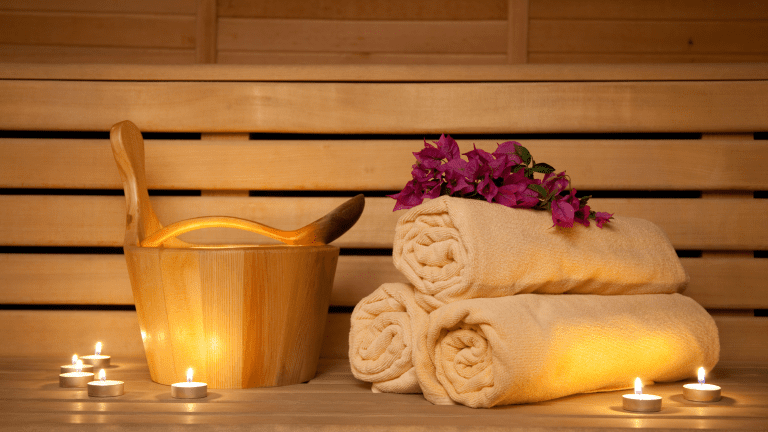
Sauna Bucket and Ladle Set-A wooden bucket and matching ladle used to pour water over the heater stones to create steam bursts during a session. The ritual is a core part of the traditional sauna experience and the quality of the wood makes a noticeable difference over time.
Sauna Sand Timer-A heat-resistant wooden hourglass that mounts to the sauna wall and tracks session time without a phone or battery. Keeps you focused on the session rather than checking a screen.
FAQ
How long does it take an outdoor sauna to heat up in winter? In cold climates below 20°F, a well-insulated outdoor electric sauna typically takes 35–50 minutes to reach 160–180°F. A poorly insulated unit can take over an hour. Heater output relative to room volume is the main factor — undersized heaters struggle disproportionately in cold ambient conditions. A wood-burning heater takes longer to reach temperature regardless of season.
Does a barrel sauna heat faster than a cabin sauna? Yes, in most cases. The cylindrical shape reduces dead air volume relative to bench space, which means the heater reaches target temperature faster per cubic foot. A compact 2-person barrel sauna outdoors typically heats in 25–35 minutes with an appropriately sized electric heater — faster than most rectangular indoor cabins of the same bench capacity.
What’s the most important thing to check if my sauna is heating slowly? Check the door seal first. A worn or missing gasket causes continuous heat loss that compounds throughout the entire preheat period. After that, check heater output relative to room volume — many kit saunas are undersized from the factory. Both are fixable. If you have an older unit, the ceiling insulation is worth inspecting too.
Simple Rule
If you’re in a cold-winter climate and want reliable fast heat-up every day, indoor wins on consistency. If you’re in a mild climate or willing to invest in proper insulation, an outdoor barrel sauna competes on equal terms and offers a better overall experience.
Summary Snapshot
- Indoor saunas heat faster in cold climates — the ambient temperature advantage is real
- Barrel saunas partially offset that advantage through better geometry
- Insulation quality matters more than indoor/outdoor location in mild climates
- Electric heaters outperform wood-burning for pure heat-up speed
- Door seal and ceiling insulation are the most common causes of slow heating in existing saunas
- Heater-to-volume ratio is the single most important spec to check before buying
Final Verdict
There’s no universal winner here. Indoor vs outdoor sauna heating time comes down to climate, insulation quality, heater sizing, and how you use the space. In a cold-winter state, an indoor sauna will heat faster and more consistently — that’s a real, practical advantage. In a mild climate, a well-built outdoor barrel sauna with proper electric heating competes directly and often wins on experience.
What I’d actually tell someone: don’t buy based on heat-up speed alone. Buy the sauna you’ll actually use regularly — because the heat-up time difference matters far less than whether the space feels worth getting into. After years of regular use across both, the sessions that genuinely feel restorative — that particular sense of purging intensity and deep relaxation — come from consistency, not from shaving ten minutes off the preheat.The data on indoor vs outdoor sauna heating time is clear in cold climates — indoor wins on consistency.
For more on making the most of your sauna investment, the rest of the Indoor vs Outdoor Saunas series covers positioning, running costs, and long-term performance in detail. If you’re also weighing up how steam and heat compare as a daily wellness practice, Steam Room Health Benefits is worth your time.