Must-Have Hot Tub Accessories: What Actually Makes a Difference
Must-have hot tub accessories should cover three practical needs first: water care, a suitable cover and safe access. After that, the useful extras depend on your tub, your space and what already comes with it.
I’ve spent enough time in hot tubs to know the difference. And honestly? The right accessories aren’t about luxury — they’re about making the whole experience less annoying to maintain and more enjoyable to actually use.
Affiliate disclosure: As an Amazon Associate, Sunrise & Vitalize earns from qualifying purchases. If you buy through an affiliate link, we may earn a small commission at no extra cost to you.
Quick Snapshot
- Prioritize water testing, approved treatment products, a suitable cover and safe access.
- A cover lifter is useful when lifting and storing your cover is difficult.
- Check compatibility before buying steps, pillows or mounting hardware.
- Buy missing essentials first; some may already come with your tub.
- Cold-contrast equipment is optional and needs a separate safety assessment.
Table of Contents
- What “must-have” actually means
- Cost reality
- Installation and setup friction
- Maintenance accessories
- Pros and cons
- How these compare
- Comparison table
- Helpful gear
- FAQ
- Final verdict
What “Must-Have Hot Tub Accessories”Actually Means
The phrase must-have hot tub accessories gets thrown around a lot, usually in a way that means “here are 40 things to buy.” That’s not what this is. Here, “must-have” means something needed for safe use or proper care; convenience and comfort extras come afterward.
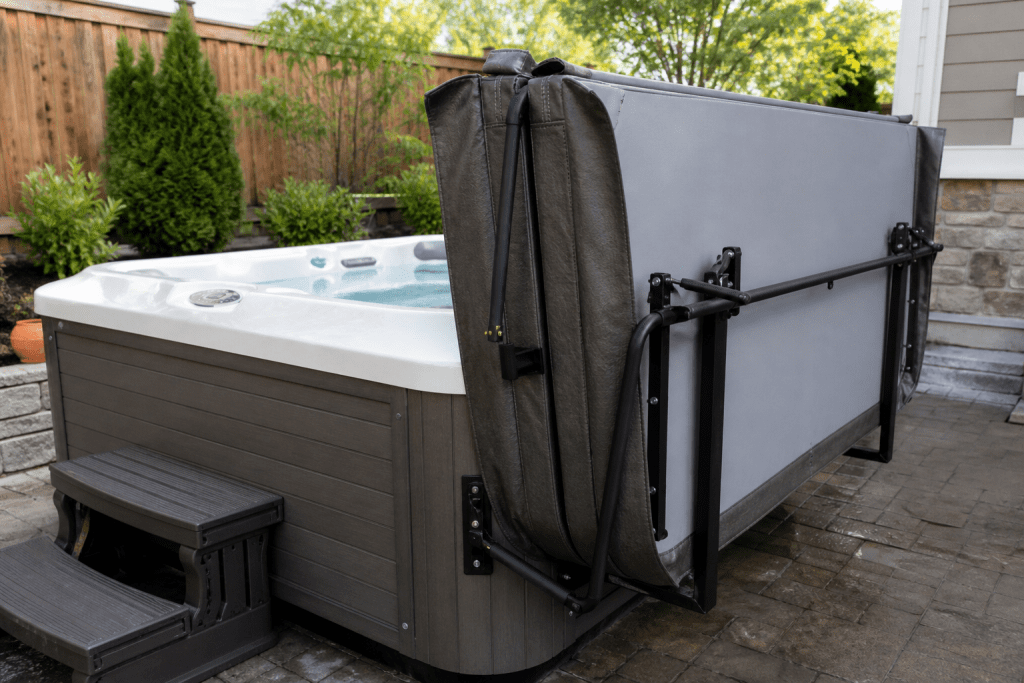
There are a few categories that genuinely earn that label. Covers and cover lifters top the list — a decent cover does more for heat retention, chemical efficiency, and debris control than almost any other single purchase. A compatible lifter can make a heavy cover easier to handle, but not every tub needs one.
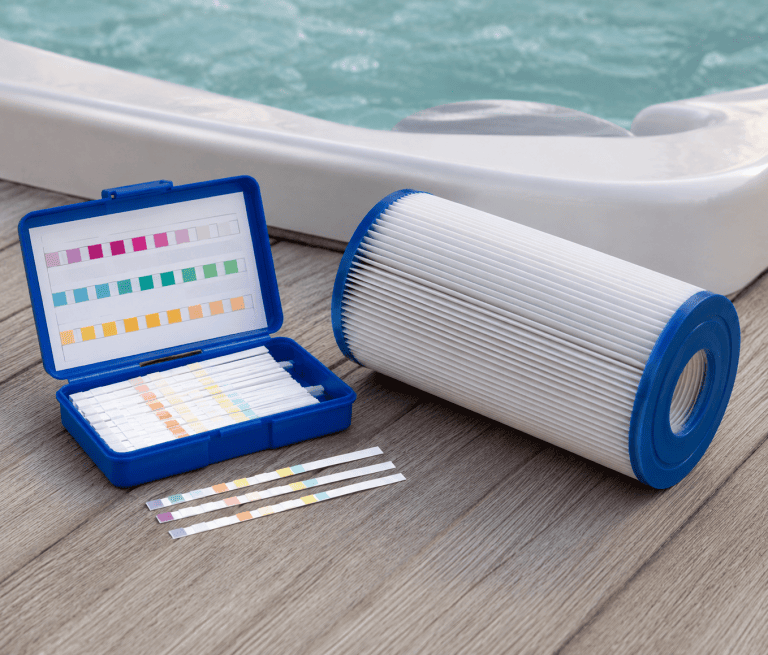
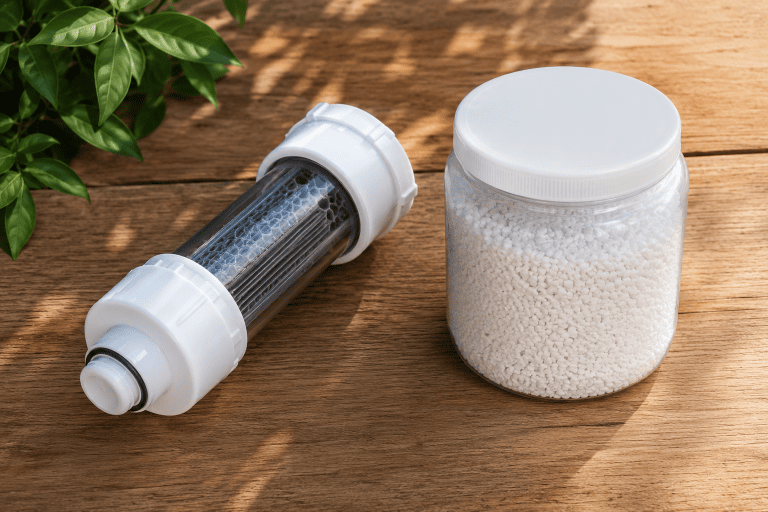
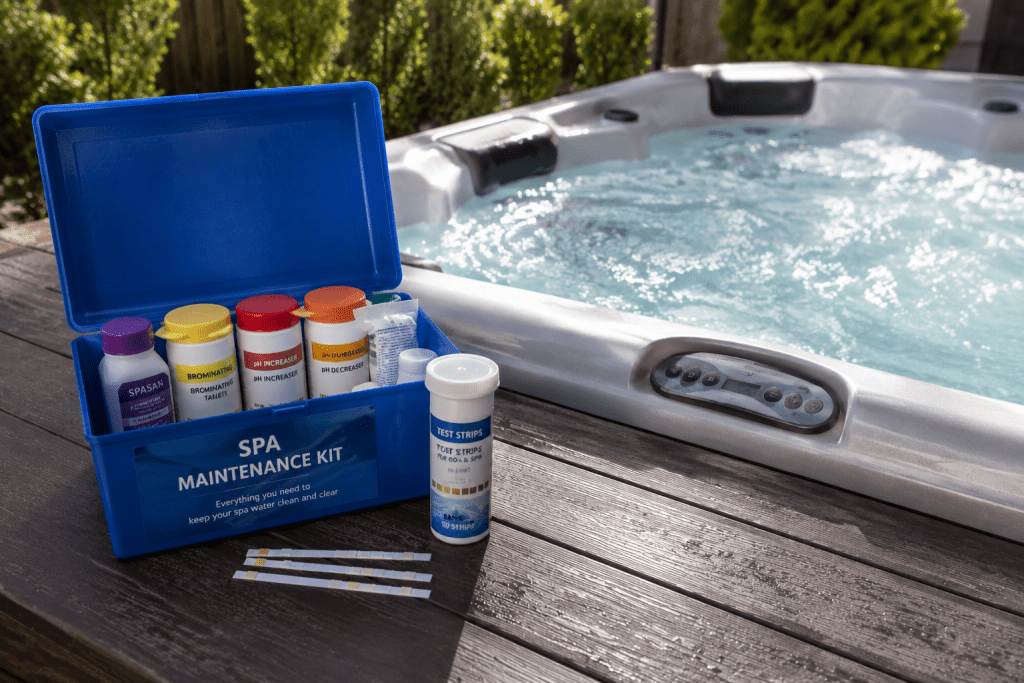
Water testing and an approved treatment routine are essential. Choose products that match your tub’s sanitation system and follow their labels and the spa manufacturer’s instructions. A floating dispenser or shock product is appropriate only where that system calls for it. The CDC explains why regular disinfectant and pH testing matter; clear-looking water alone does not prove it is safe.
Safe entry and exit matter more than comfort extras. Depending on the tub’s height and surroundings, suitable steps, a handrail or a non-slip surface may help. Pillows are optional; check that they fit your model.
For a closer look at safer entry and exit options, see our Hot Tub Steps and Handrails guide, including step styles, grip and handrail considerations.
One thing I noticed that most guides skip entirely: where you actually sit matters enormously. The jets are designed to hit specific muscle groups from specific positions — mainly legs and lower back. Most people sit wherever feels natural at first and wonder why the jets seem underwhelming. Moving around and finding the seat position where the jets actually land on your lower lumbar is a small thing that changes the whole session.
Cost Reality
These are approximate planning ranges, not current quotes. Prices vary by model and compatibility, and your tub may already include some essentials.
For cover lifters, compare fit, mounting requirements, clearance and ease of operation rather than assuming a more expensive mechanism will last longer.
A basic chemical starter kit — test strips, sanitizer suited to your system, and any shock or pH-adjustment products required by its instructions — runs $40–$80. Treatment products need replenishing, so include them in your ongoing budget. The must-have hot tub accessories in the chemical category aren’t all one-time purchases.
Steps range from $50–$150 for decent non-slip models. Spa pillows are $15–$40 each. A floating thermometer is under $15 and surprisingly useful if your tub’s built-in display ever drifts.
Treat $200–$500 as an illustrative budget for several missing accessories, not a required spend. It excludes a replacement cover, professional installation and recurring water-treatment costs.
Installation and Setup Friction
Most must-have hot tub accessories involve almost no installation in the traditional sense. That’s part of why they get overlooked — they’re not exciting to set up.
Cover lifters may mount to the cabinet, use an under-spa base or require another approved mounting arrangement. Check the tub and cover dimensions, opening clearance and mounting instructions before buying. Don’t drill into the cabinet unless the manufacturer permits it.
Use dispensers only with an approved sanitation system. Position steps on a stable, level surface and secure them as instructed. Check pillow fittings against your tub model.
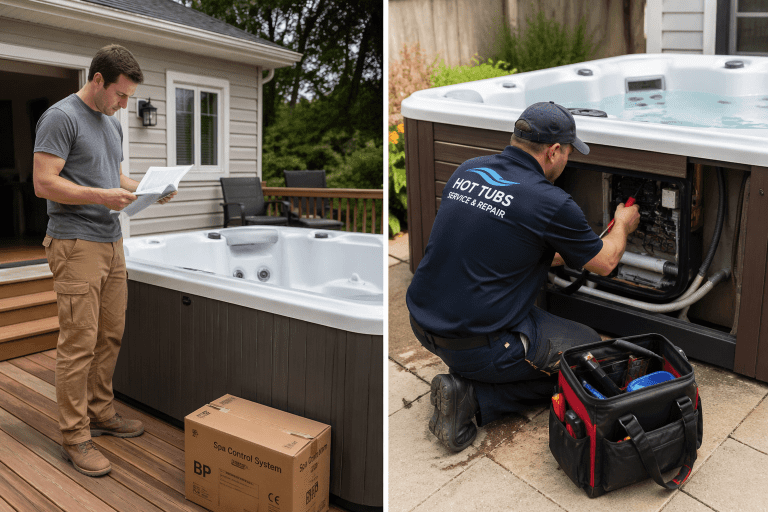
For electrical accessories, use equipment approved for your spa and installation location. Have a qualified electrician assess anything that connects to the tub’s wiring; a permit check alone does not establish safety. Our hot tub electrical requirements guide covers the wider installation considerations.
Maintenance Accessories
Use a suitable water-testing kit regularly rather than relying on a weekly check. For chlorine-treated pools and hot tubs, the CDC recommends checking chlorine and pH at least twice daily, and more often with heavier use. Follow your spa’s instructions for its sanitation system. Our hot tub water-testing guide explains the testing options.
Cloudy water needs investigation, not just clarifier. Check sanitizer, water balance and filtration before using the tub. Wrinkled fingers do not diagnose a chemistry problem; if you notice eye or skin irritation, leave the water and check its condition.
Use spa-approved surface and filter cleaners according to their instructions. Follow your filter’s cleaning schedule and replace it based on condition and manufacturer guidance. A floating oil absorber can collect oils, but it does not scrub away mineral scale or replace sanitizing and cleaning.
Pros and Cons
Pros of investing in the right accessories:
A well-fitting cover helps retain heat and keep debris out. Proper water care and compatible cleaning tools support equipment maintenance. A lifter can reduce cover-handling effort, while suitable steps and handrails can improve access. The value depends on the problem each accessory solves; quick financial payback is not guaranteed.
Cons and honest trade-offs:
The downside is that must-have hot tub accessories require ongoing spend and ongoing attention. Chemical kits aren’t a one-time purchase. Cover lifters eventually wear. The accessories that make a hot tub genuinely functional are also the ones that add to the total cost of ownership in ways that aren’t always visible at the point of purchase.
Comparison: Budget vs. Quality Accessories
The comparison that actually matters when thinking about must-have hot tub accessories isn’t brand versus brand — it’s budget versus quality tier.
Price alone does not establish quality or safety. For testing products, check what they measure, their expiry date and the instructions. For lifters and steps, check compatibility, mounting, stability, load limits and warranty. Choose the product that meets your needs rather than assuming either the cheapest or most expensive option is best.
Comparison Table
| Accessory | What matters before buying | Priority |
|---|---|---|
| Cover | Correct fit, condition and secure fastening | Essential |
| Cover lifter | Compatibility, mounting and opening clearance | Useful if handling is difficult |
| Water-testing kit | Relevant measurements, instructions and expiry | Essential |
| Treatment products | Compatibility with the sanitation system | Essential |
| Steps or handrail | Stable installation, grip and load rating | Depends on access |
| Headrest pillow | Model fit and material compatibility | Optional |
| Thermometer | Suitable range and readable display | Optional extra check |
| Cleaning products | Approved for the shell or filter | As required |
Helpful Gear
These are worth checking if you’re building out your setup. Verify on Amazon before purchasing — ratings and availability change.
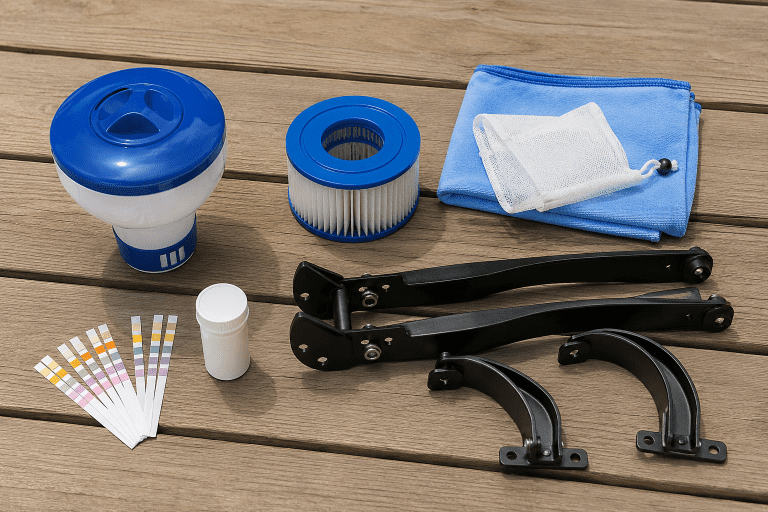
Cover lifter — Check this pivot-mount model’s tub compatibility, mounting requirements and opening clearance before buying.
Spa test strips — Check that the measurements suit your sanitation system. Follow the instructions and expiry date; a DPD kit provides more accurate chlorine testing.
Floating oil-absorbing sponge — An optional aid for collecting surface oils. It does not remove mineral scale or replace water treatment and cleaning.
FAQ
What are the most essential hot tub accessories for new owners? Start with a suitable water-testing kit, treatment products approved for your sanitation system, a secure cover and safe entry and exit. Add a compatible cover lifter if handling the cover is difficult, and suitable steps or a handrail where access requires them. Check what already comes with your tub before buying extras.
Do must-have hot tub accessories vary by tub size? Yes. Cover lifters depend on the cover, tub dimensions, mounting arrangement and available clearance. Chemical doses depend on water volume and product instructions. Pillows, steps and mats also need compatibility and suitability checks; they are not universally interchangeable.
How often should I replace hot tub accessories? Follow the manufacturer’s instructions and inspect condition regularly. Replace damaged, unstable or deteriorating accessories promptly. Filter replacement depends on the filter and its condition, not one universal timetable. Check test-product expiry dates and storage instructions. Our hot tub filter replacement guide covers filters separately.
Simple rule: If an accessory is needed for safe use or proper water care, it’s a must-have. If it only adds comfort or looks good, it’s optional.
Summary Snapshot
- Water testing, approved treatment, a suitable cover and safe access come first.
- Choose lifters and steps by fit and function, not price alone.
- Comfort extras are optional.
- Check what your tub already includes before spending.
- Allow for recurring treatment and maintenance costs.
Final Verdict
Start with the accessories needed to maintain your water, cover the tub securely and get in and out safely. Add a compatible lifter if cover handling is difficult, then consider comfort extras that solve a specific problem.
The must-have hot tub accessories that genuinely matter are unglamorous but functional: water treatment, a cover solution that works reliably, safe entry/exit, and the basic maintenance tools that keep your water clean and your equipment running. Get those right first. Everything else — lighting, audio, aromatherapy — is upside once the foundation is solid.
For longer-term buying considerations, see our hot tub accessories for long-term ownership guide. If you also practice cold immersion, assess the heart risks of cold exposure separately before combining it with hot-tub use.