Best Hot Tub Accessories for Long-Term Ownership: The Honest Comparison
Choosing hot tub accessories for long-term ownership means checking more than the purchase price. Look at compatibility, replacement parts, recurring supplies, mounting requirements and how easily each item can be maintained.
This guide focuses on those longer-term buying decisions. For the initial essentials, see our must-have hot tub accessories guide.
As an Amazon Associate, Sunrise & Vitalize earns from qualifying purchases. If you buy through an affiliate link, we may earn a small commission at no extra cost to you.
Quick Snapshot
- Prioritize suitable water-testing equipment, approved treatment products, a well-fitting cover and safe access.
- Check replacement parts, consumables and warranty terms before buying.
- Match cover lifters to the tub, cover, mounting arrangement and available clearance.
- A floating chemical dispenser is suitable only if your spa manufacturer and treatment system permit it.
- Compare complete costs rather than assuming every accessory will save money.
- Add comfort extras when they solve a problem you actually encounter.
Table of Contents
- What Makes a Hot Tub Accessory Worth Buying?
- The Real Cost of Hot Tub Accessories
- Installation and Setup Friction
- Maintenance Accessories
- Pros and Cons of a Full Accessory Setup
- Essential vs. Useful vs. Check Carefully
- Comparison Table
- Helpful Gear
- FAQs
- Simple Rule
- Summary Snapshot
- Final Verdict
What Makes a Hot Tub Accessory Worth Buying?
A hot tub accessory earns its place if it protects the tub, reduces ongoing effort or improves the session experience consistently. The useful question is whether you will still have a reason to use it after the novelty wears off.
Before buying, check whether your tub already includes the item and whether replacement parts or supplies are available. A low purchase price is less useful if a worn bracket, missing fitting or proprietary consumable makes the whole accessory unusable.
For hot tub accessories for long-term ownership, separate routine supplies from durable equipment. Strips and treatment products need replenishing. A lifter or set of steps needs suitable construction, installation and inspection. Neither category becomes maintenance-free because it costs more.
The Real Cost of Hot Tub Accessories
There is no single accessory budget that suits every hot tub. A setup missing an insulated cover or safe steps has different needs from one that only needs fresh testing supplies.
Compare current prices for compatible products. Include mounting hardware, installation, replacement reagents or strips, approved treatment products and any replacement parts. Keep recurring supplies separate from purchases such as a cover lifter.
- Testing equipment: check the measurements included, expiry dates, replacement supplies and any calibration requirements.
- Cover lifters: include the correct mounting kit and confirm that the spa and cover are compatible.
- Steps and handrails: include any approved anchoring or installation work.
- Comfort accessories: check fit and replacement availability before paying for a bundle.
Buy missing essentials first. Evaluate optional items by their fit and usefulness rather than an assumed payback period or a fixed number of weekly sessions.
Installation and Setup Friction
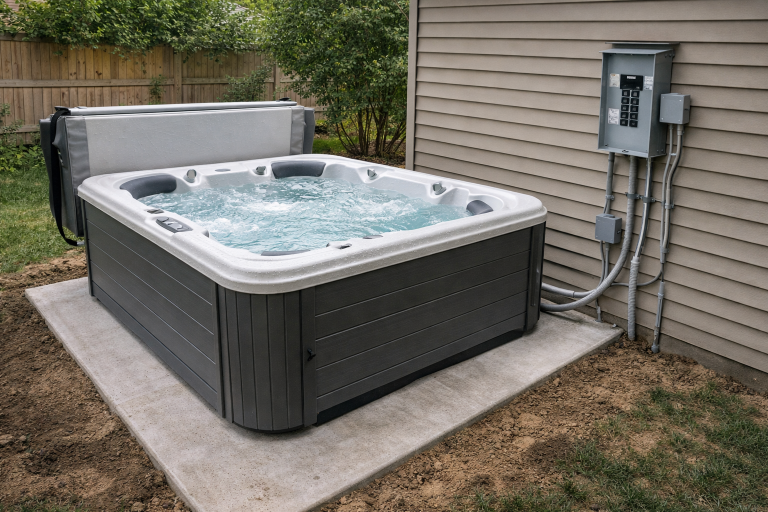
Some accessories need little setup, but cover lifters may attach to the cabinet, use an under-spa base or require another approved mounting arrangement. Check compatibility, clearances and installation instructions before buying. Do not drill into the cabinet unless the spa manufacturer permits it.
Place suitable steps on a stable, level surface and secure them as instructed. Adjustable feet do not automatically make an unsuitable surface safe. Keep the entry route clear and consider whether a suitable handrail is needed.
Follow the instructions for each accessory. For anything connecting to the spa’s wiring, use manufacturer-approved equipment and a qualified electrician. A product being marketed for hot tubs does not establish that it is suitable for your model or installation.
Maintenance Accessories
Regular testing and an approved treatment routine help manage water quality and protect equipment. CDC’s home testing guidance recommends checking chlorine and pH at least twice daily, and more often during heavy use. Follow your spa’s instructions for its sanitation system.
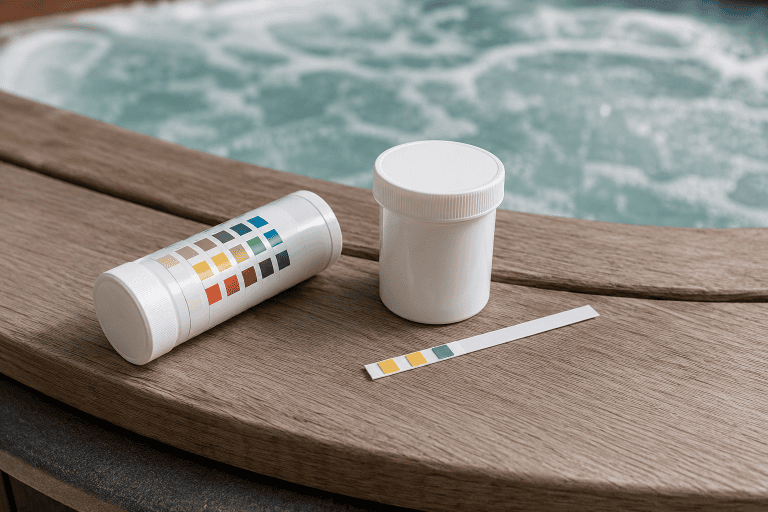
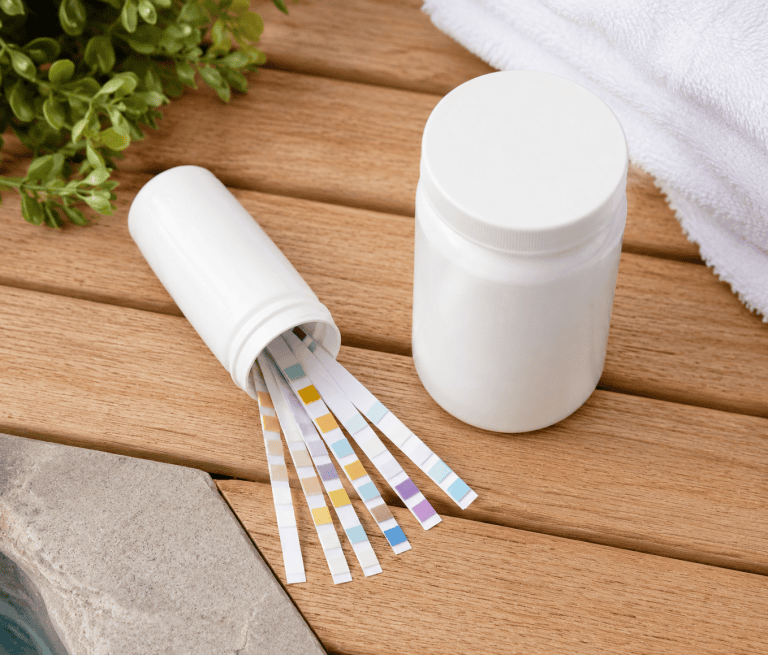
Our hot tub water testing kit guide explains strips, liquid kits and digital readers. Choose tests that measure the sanitizer you use and the water-balance parameters your spa requires; clear-looking water alone does not establish safe conditions.
A floating dispenser is not a universal maintenance essential. Use one only where the spa manufacturer and treatment instructions permit it. It does not replace testing or guarantee steady sanitizer levels. Hot Spring specifically advises against floaters because concentrated chemicals can damage the shell.
A compatible floating thermal blanket may help reduce evaporation beneath the insulated cover. Check manufacturer approval and suitability for spa temperatures and chemicals. Do not assume a particular percentage saving or one-season payback, and never treat a floating blanket as a safety cover.
Follow the spa and accessory instructions for cleaning and inspection. Replace worn parts when their condition or the manufacturer’s guidance calls for it, rather than relying on an advertised service life.
Pros and Cons of a Full Accessory Setup
Advantages:
- Suitable testing and treatment supplies support regular water care.
- A compatible lifter can make cover handling easier.
- Replacement parts may let you repair an accessory rather than discard it.
- Steps or a handrail suited to the installation can support easier entry and exit.
Trade-offs:
- A bundle may include products your spa does not permit or items you already have.
- A cheaper accessory can become costly if replacement fittings or consumables are unavailable.
- Mounting, clearance and compatibility need checking before purchase.
- Extra equipment adds cleaning, storage and inspection tasks.
Wrinkled fingers do not diagnose a water-chemistry problem. If your eyes or skin become irritated, leave the water and investigate its condition rather than assuming excess chlorine is the cause.
Essential vs. Useful vs. Check Carefully
Essential: Suitable testing equipment, approved treatment products, a suitable cover and safe access appropriate to the installation. Check what the tub already includes.
Useful when needed: A compatible cover lifter, steps or handrail, approved thermal blanket, fitted pillows and a stable side table. Prioritize the items that address your access, maintenance and comfort needs.
Check carefully before buying: Electrical add-ons, chemical dispensers, mounting hardware and accessories with unclear compatibility or replacement support. Novelty items are optional rather than a maintenance priority.
For hot tub accessories for long-term ownership, compare what an item does for your actual setup. There is no requirement to buy everything in a category, and optional items do not become essential because they appear in a package.
Comparison Table
| Accessory | Check Before Buying | Long-Term Upkeep |
|---|---|---|
| Testing equipment | Sanitizer compatibility and measurement range | Replace expired strips or reagents; maintain instruments |
| Chemical dispenser | Spa and treatment-system approval | Inspect condition and continue regular testing |
| Thermal blanket | Manufacturer approval, fit and spa suitability | Inspect for deterioration |
| Cover lifter | Cover compatibility, mounting and clearance | Inspect fixings and moving parts as instructed |
| Steps or handrail | Stable placement, load rating and suitable mounting | Check stability, grip and connections |
| Pillows or side table | Fit, secure positioning and material suitability | Clean and inspect according to instructions |
| Cleaning tools | Compatibility with the shell and filter | Clean and replace worn parts |
Helpful Gear
Hot tub test strips — Choose strips that measure your sanitizer and the required water-balance parameters. Follow the container’s sampling and reading times; testing does not by itself prove water is pathogen-free.
Floating spa chemical dispenser — Consider only if your spa manufacturer and treatment system permit this dispenser and the intended tablets. Continue testing and follow the chemical instructions.
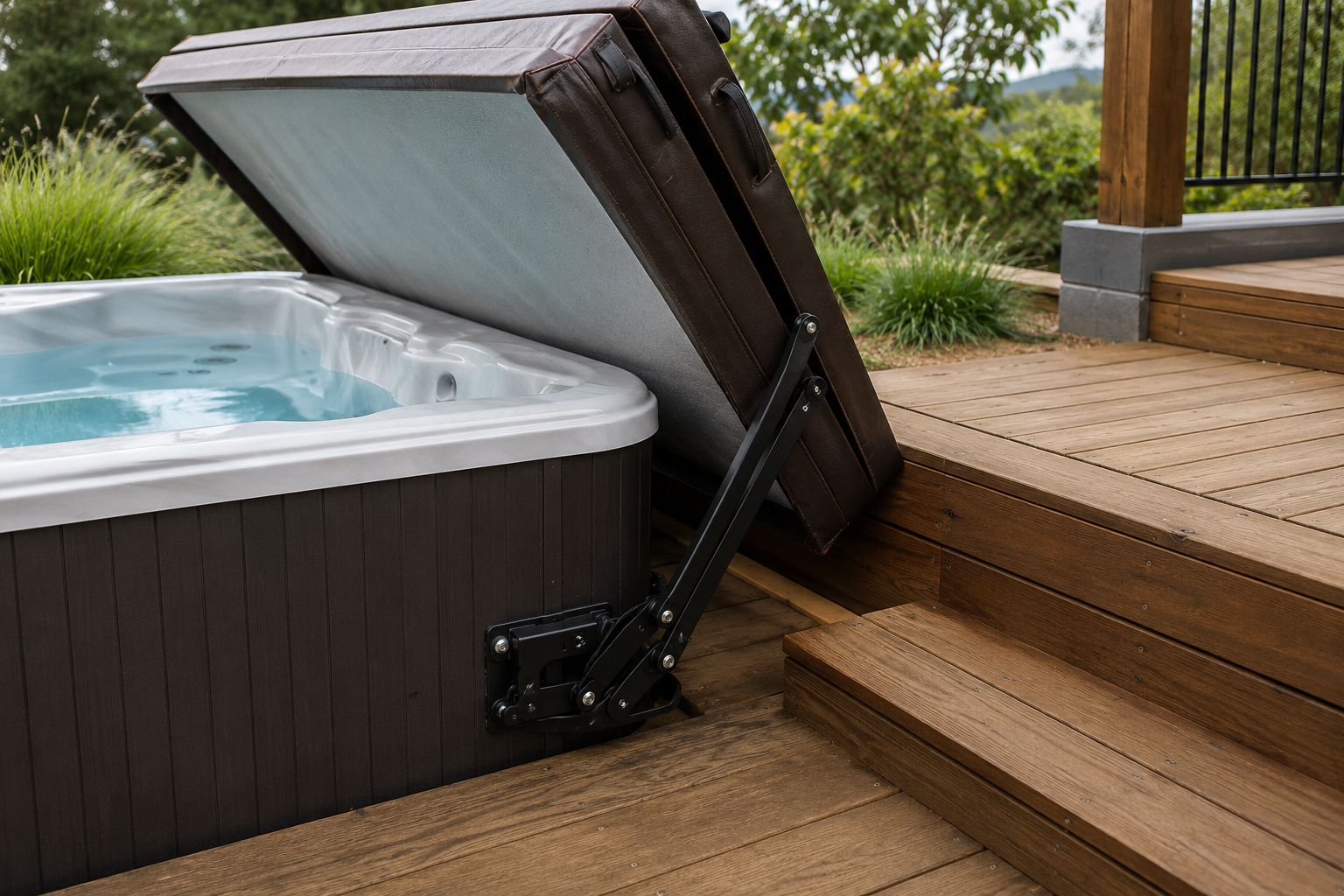
Spa cover lifter — Check the exact cover dimensions, spa compatibility, mounting arrangement and opening clearance. Do not assume a universal load capacity or fit.
FAQs
Is it worth buying accessories if I only use the hot tub twice a week?
Yes, if they meet a maintenance, cover-handling or access need. Water care continues between sessions. Choose compatible equipment and follow the spa’s maintenance instructions rather than buying a fixed accessory bundle.
What’s the difference between a thermal blanket and a hard cover?
A thermal blanket floats on the water; an insulated cover closes over the tub. They serve different roles. Use a floating blanket only if suitable for your spa, and do not treat it as a substitute for the specified insulated or safety cover.
Will I actually use these accessories or will they end up in the garage?
Start with missing water-care and access essentials. For optional items, identify the problem before buying: difficult cover handling, nowhere suitable to put a towel or a pillow that no longer fits. If an accessory does not solve a recurring problem, wait until you have a clearer reason to buy it.
Is a premium accessory always better for long-term ownership?
No. Check compatibility, warranty exclusions, replacement parts and maintenance requirements. A higher price does not guarantee a longer life, and a well-supported compatible item may be more useful than an expensive one with no replacement fittings.
Simple Rule
Buy suitable water-care, cover-management and access equipment first. Add comfort items when they solve a real problem, and check that you can maintain or repair them.
Summary Snapshot
- Buy compatible equipment and approved treatment supplies.
- Check replacement parts and recurring costs.
- Match cover-handling and access accessories to your installation.
- Use a chemical floater only where permitted.
- Treat energy savings and product lifespan as model- and condition-dependent.

Final Verdict
The best long-term accessory purchase is one that fits your spa, solves a recurring problem and can be maintained. Start with water care, cover management and safe access, then add comfort items as needed.
Compare the complete cost, including supplies and replacement parts. No accessory bundle guarantees a particular spa lifespan or financial return.
Before adding fragrance to your water, check whether spa aromatherapy products are safe for your specific hot tub. For wider setup planning, browse our Hot Tub Installation Tips.