How Long Is Too Long? Finding Your Safe Ice Plunge Duration
Ice plunge duration is one of the most misunderstood variables in cold exposure — and getting it wrong doesn’t just limit your results, it can genuinely hurt you. Most people either bail out after 45 seconds because it feels unbearable, or they push through for 10+ minutes because they saw someone online do it. Neither extreme is smart. There’s an actual window that works, and it’s narrower than most content admits.
This isn’t theory. The difference between a cold shower and a full plunge is not a matter of degree — it’s a completely different physiological event. I’ve done both consistently, and the plunge hits in a way nothing else does. Understanding how long to stay in is the difference between getting that payoff and just suffering through it for no real gain.
Quick heads up: some links in this post are affiliate links. If you buy through them, I may earn a small commission at no extra cost to you. I only recommend gear I’d actually use.
Quick Snapshot
- Safe ice plunge duration for beginners: 1–3 minutes
- Experienced users: 3–5 minutes is a reasonable ceiling for most
- Water temperature matters as much as time — colder water means shorter sessions
- Warning signs you’ve stayed too long: shivering you can’t control, numbness, disorientation
- The benefits plateau well before the risks escalate — longer isn’t better
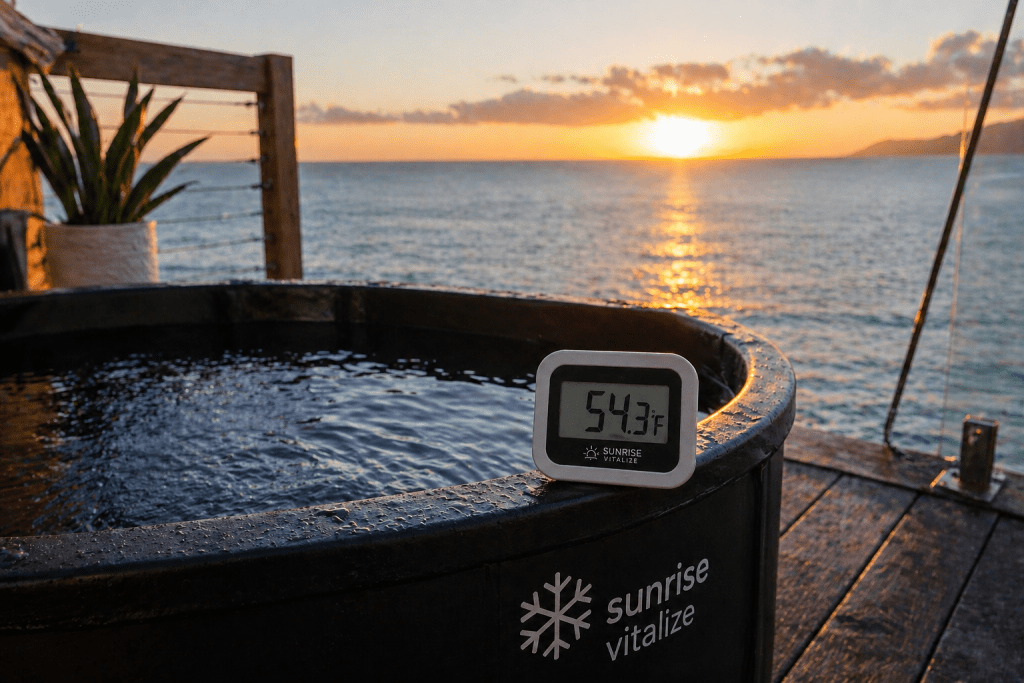
Table of Contents
- What Ice Plunge Duration Actually Means
- The Temperature Factor
- Cost and Session Frequency
- Setup and Installation Considerations
- Maintenance and Water Temperature Consistency
- Pros and Cons of Shorter vs Longer Sessions
- Short vs Long Duration: How They Compare
- Comparison Table
- Helpful Gear
- FAQ
- Final Verdict
What Ice Plunge Duration Actually Means
Ice plunge duration isn’t just a timer on your phone. It’s the total time your body is submerged in cold water — and every second counts differently depending on water temperature, your acclimatisation level, and what you did before getting in. A two-minute plunge at 50°F feels very different to two minutes at 39°F. That distinction matters and most beginner guides completely ignore it.
For people new to cold exposure, the research and practical consensus points to 1–3 minutes as the safe starting range. That’s not a comfort zone suggestion — it’s where the physiological benefit actually occurs. The cold shock response, the norepinephrine spike, the circulation response — all of that happens in the first couple of minutes. Staying in longer doesn’t compound those effects linearly.
What’s the ideal ice plunge duration for beginners? For most beginners, 1 to 2 minutes is the right starting point. The body’s primary stress and adaptation response happens within the first minute of cold water immersion. Extending that to 3 minutes is reasonable as you adapt, but gains don’t scale proportionally beyond that. Start short and build deliberately.
The honest truth is that the ice plunge duration question is really a safety question disguised as a performance question. Most people asking how long they should stay in are actually asking how long they can stay in without it becoming dangerous — and those two answers aren’t always the same.
The Temperature Factor
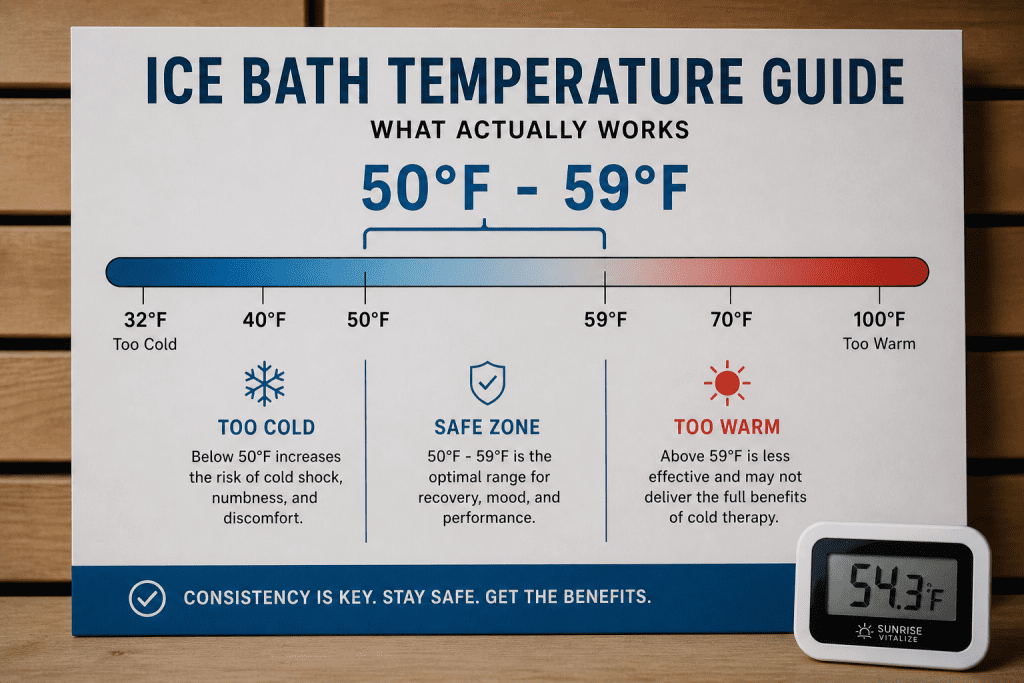
Water temperature is the variable that changes everything about ice plunge duration. At 50–55°F (10–13°C), the body adjusts relatively quickly and most people can manage 3–5 minutes comfortably after a few weeks of practice. Drop that to 38–42°F (3–6°C) and 90 seconds becomes a meaningful session.
Colder water accelerates cold shock, vasoconstriction, and the onset of hypothermia risk. The CDC’s guidance on cold stress makes clear that cold water immersion at low temperatures can cause incapacitation faster than most people expect — within minutes in extreme cases. This is why ice plunge duration should always be set relative to water temperature, not just personal willpower.
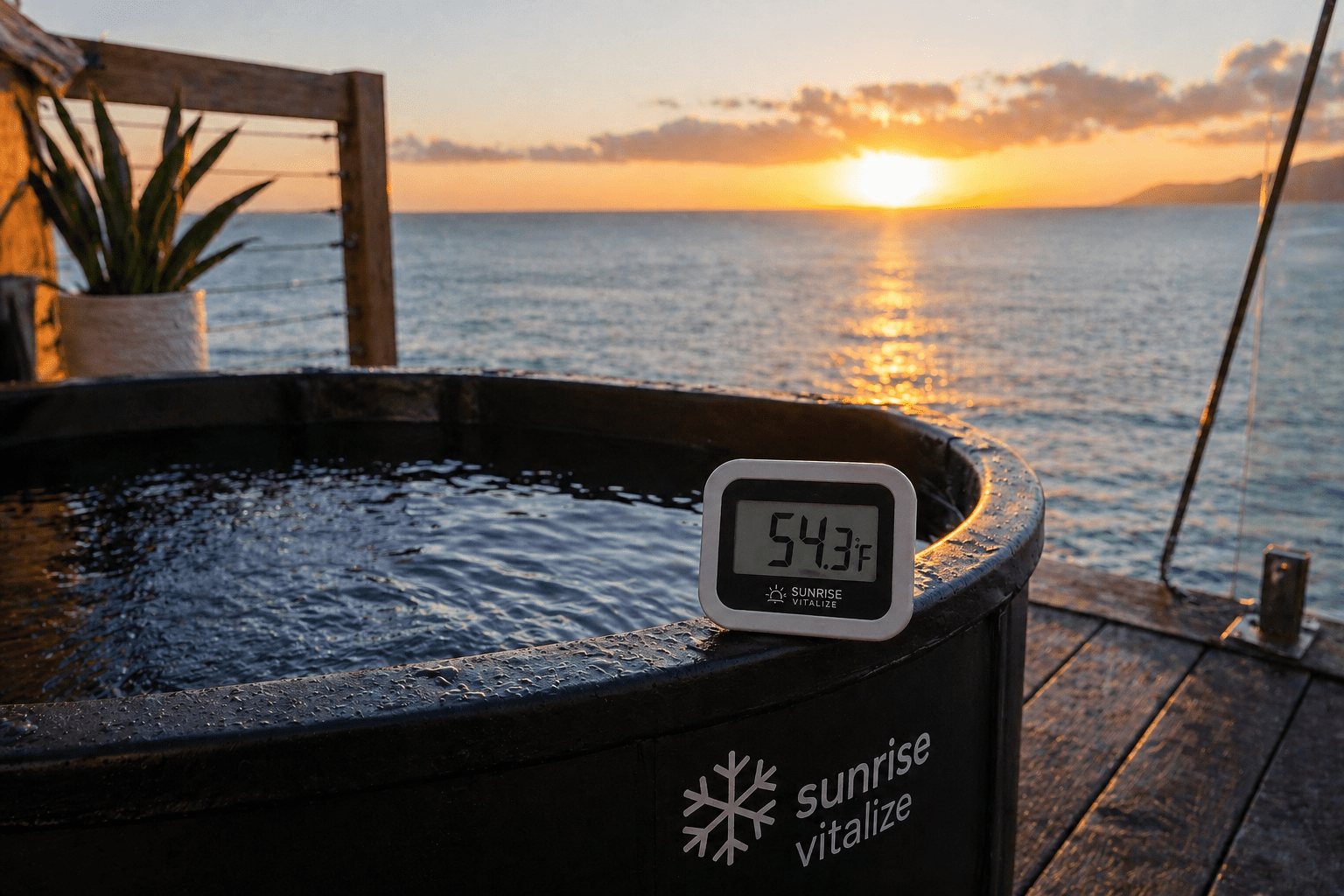
A thermometer in your plunge tank isn’t optional if you’re being serious about this. The water temperature you think you’re in and the actual temperature can differ more than you’d expect, especially if your chiller unit is older or your ice-to-water ratio is inconsistent.
Cost and Session Frequency
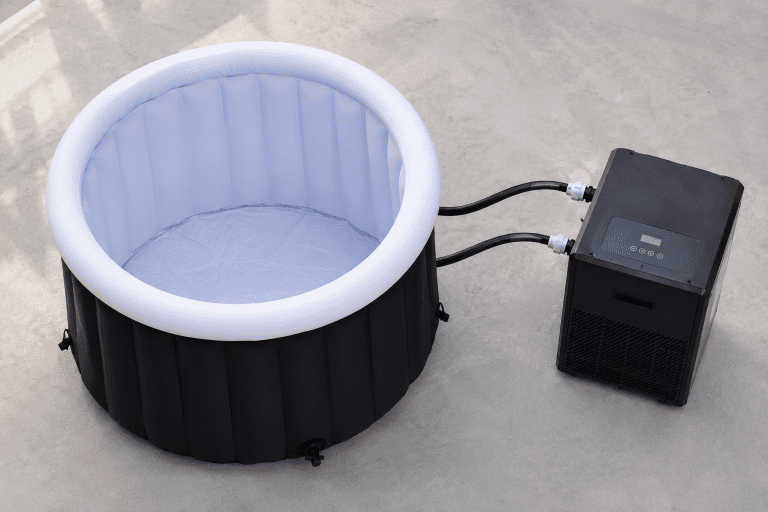
The financial side of cold plunging is usually framed around equipment cost — and that’s a real consideration. A quality cold plunge tub with a chiller runs anywhere from $1,500 on the budget end to $5,000+ for a temperature-controlled unit that holds a reliable reading. But the less discussed cost factor is what ice plunge duration means for energy bills when you’re running a chiller.
A chiller working to maintain 40°F in a warm garage or outdoor space runs nearly continuously. Session frequency and duration both affect that load. Short, effective sessions — knowing your optimal ice plunge duration and sticking to it — are actually better for your equipment lifespan and running costs, not just your safety.
For people using ice-based setups rather than electric chillers, there’s also a direct cost in ice volume. Longer sessions mean more ice per session. Understanding what a productive ice plunge duration actually is prevents over-investing in sessions that don’t add benefit.
Setup and Installation Considerations
Ice plunge duration starts being determined before you ever get in the water. The setup of your plunge space affects how consistently you can maintain the right water temperature — which directly shapes how long any given session is productive and safe.
Outdoor setups in direct sun will see water temperatures rise faster, meaning your ice plunge duration window is affected by time of day. A unit in a shaded, climate-controlled space — even a garage — holds temperature more consistently and gives you a more predictable session every time.
Does the location of your plunge tub affect how long you should stay in? Yes, directly. Outdoor tubs in warm climates or direct sunlight lose their target temperature faster, which means early in a session the water may be colder than optimal, and later in the same session it may have warmed significantly. Tracking water temperature at the start and end of your session is the only way to know what your ice plunge duration was actually exposing you to.
Drainage and access also matter. If getting in and out of your plunge tub is awkward or physically difficult, you’ll stay in longer than intended simply because exiting takes effort. Setup should make exits easy — especially for solo sessions where no one’s watching the clock.
Maintenance and Water Temperature Consistency
Water chemistry and temperature maintenance directly affect every session. Sanitised, properly balanced water at a consistent target temperature gives you a repeatable baseline — which means your ice plunge duration data actually means something across sessions.
Unbalanced water can cause skin irritation that cuts sessions short unexpectedly. Temperature drift between sessions — if your chiller isn’t calibrated or your lid isn’t insulating properly — means your ice plunge duration one day is genuinely a different stimulus to the next day, even if your timer reads the same. Consistency in maintenance is what makes consistency in training possible.
Check water temperature before every session. It takes ten seconds and it changes the entire quality of what you’re doing.
Pros and Cons of Longer vs Shorter Sessions
Shorter sessions (1–3 minutes)
Pros: Lower risk, still captures the primary physiological benefit, easier to maintain consistency, appropriate for beginners and cold temperatures.
Cons: Requires discipline to get in at all when you know you’re getting out quickly — the psychological resistance to cold exposure is real even when the duration is short.
Longer sessions (4–6 minutes)
Pros: Appropriate for experienced users at milder temperatures (50°F+), can deepen the mental endurance aspect of cold training.
Cons: Risk increases meaningfully beyond 5 minutes at lower temperatures. The ice plunge duration benefit curve flattens well before this point — you’re adding risk without adding proportional physiological return.
Beyond 6 minutes in cold water at typical plunge temperatures, the risk-to-reward calculation shifts against you. The people you see doing 10-minute plunges online are usually doing it in water that’s warmer than the title suggests, or they’ve built tolerance across years — not weeks.
Short vs Long Duration: How They Compare
The debate around ice plunge duration usually comes down to this: is more always better? The answer is clearly no, and it’s worth being direct about it.
Short, consistent sessions produce better overall adaptation than occasional long sessions. The body responds to cold exposure as a repeated stimulus — frequency and reliability matter more than duration per session. Three minutes every day will produce more consistent results than ten minutes once a week.
The other factor is recovery. Longer sessions create more physiological stress. Ice plunge duration beyond five minutes at genuinely cold temperatures produces a recovery demand that can interfere with training if you’re cold plunging post-workout. I’d rather get out after three minutes feeling fantastic than stay in for eight and spend the next hour trying to warm back up. The natural high from a well-timed plunge lasts hours — that’s the actual goal.
If you’re pairing your cold plunge with heat exposure — and you should be, because the contrast effect is where the real payoff lives — shorter, sharper plunge sessions work better in rotation. steam room health benefits for context on how heat and cold contrast work together.
Comparison Table
| Session Length | Temperature Range | Experience Level | Risk Level | Benefit Return |
|---|---|---|---|---|
| 30–60 seconds | Any | Complete beginner | Low | Good — initial shock response |
| 1–3 minutes | 38–55°F | Beginner to intermediate | Low–Moderate | High — primary adaptation window |
| 3–5 minutes | 45–55°F | Intermediate | Moderate | Moderate — diminishing returns begin |
| 5–6 minutes | 50°F+ only | Experienced | Moderate–High | Low additional gain |
| 7+ minutes | Any | Not recommended for most | High | Risk exceeds benefit |
Helpful Gear
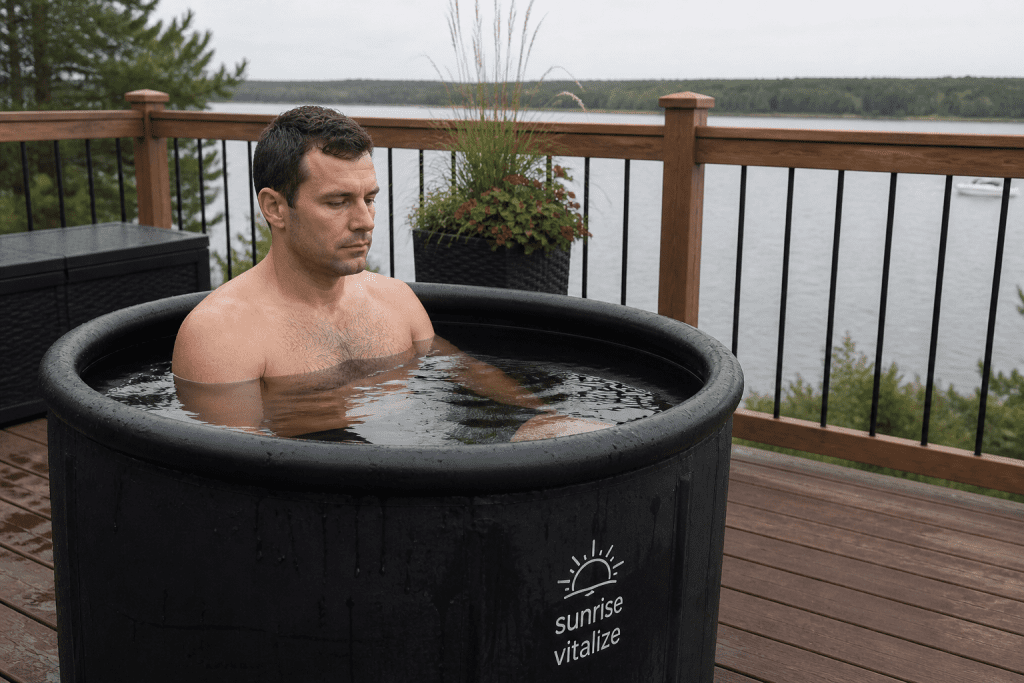
Tracking your ice plunge duration and water temperature properly makes every session safer and more productive. These are worth having.
Digital waterproof thermometer —A reliable read before every session removes guesswork about what you’re actually getting in to.
Insulated plunge tub lid — Reduces temperature drift between sessions significantly. Check ratings carefully — quality varies.
FAQ
How long should a beginner stay in an ice plunge?
One to two minutes is the right starting point for most beginners. This range captures the cold shock and circulation response without pushing into unnecessary risk. Build slowly — adding 30 seconds per week as your body adapts is a reasonable progression. Ice plunge duration should always be guided by how you feel, not how long someone else stayed in.
What happens if you stay in an ice plunge too long?
Extended ice plunge duration beyond safe limits leads to progressive hypothermia. Early signs include uncontrollable shivering, numbness in extremities, and difficulty thinking clearly. These aren’t discomfort signals to push through — they’re exit signals. Cold water removes body heat far faster than cold air, and the window between “uncomfortable but fine” and “genuinely unsafe” is shorter than most people realise.
Does longer ice plunge duration mean more benefits?
No. The primary physiological benefits of cold immersion — norepinephrine release, vasoconstriction and dilation response, reduced inflammation markers — occur within the first 1–3 minutes of a properly cold session. Extending ice plunge duration beyond that doesn’t compound those benefits linearly. Consistency across sessions produces more adaptation than duration within any single session.
The simple rule: Get in cold, stay for 1–3 minutes to start, exit before shivering becomes uncontrollable, and repeat consistently. That’s it.
Summary Snapshot
- Ideal ice plunge duration for beginners: 1–3 minutes
- Experienced users at milder temps: up to 5 minutes maximum
- Temperature determines duration — colder water means shorter sessions
- Benefits plateau early; risk increases late
- Consistency across sessions beats duration in any single session
- Always check water temperature before getting in
Final Verdict
Ice plunge duration is where most people get cold exposure wrong — either cutting sessions short because no one told them that 90 seconds is actually enough, or pushing past the point where benefit turns into risk because more always seems better. It isn’t.
The research, the practical experience, and honest observation all point to the same window: 1–3 minutes for beginners, up to 5 minutes for experienced users at moderate temperatures. The ice plunge duration that produces that sustained elevated feeling — the one that lasts hours after a good session — is almost always at the shorter end of what people think they need. For more on how ice plunge safety factors connect, the ice plunge safety guide covers the wider picture worth reading alongside this.
Get the temperature right. Get in consistently. Get out on time. That combination produces results. Staying in longer doesn’t.