Do Cold Plunges Improve Sleep? What the Research Actually Shows
Do cold plunges improve sleep? That’s one of the most common questions people ask when they first stumble into the world of cold water therapy — usually after watching someone dunk themselves in an icy tub at 6am looking suspiciously calm and refreshed.
And honestly? It’s a fair question. Sleep affects everything. If cold plunging can genuinely move the needle on sleep quality, that’s a compelling reason to seriously consider it.
Quick heads-up: Some links in this post are affiliate links. If you buy something through them, we earn a small commission at no extra cost to you. We only mention products we’d actually use.
Quick Snapshot
- Cold plunges may improve sleep by lowering core body temperature, reducing cortisol, and calming the nervous system
- The optimal window appears to be afternoon or early evening — not right before bed
- Benefits are most reported around sleep onset speed and deeper, more restorative rest
- Session length of 2–5 minutes in water between 50–59°F seems to be the sweet spot most people reference
- Cold plunging isn’t a sleep fix on its own — it works best as part of a broader recovery routine
- Not everyone responds the same way; some people find evening plunges too stimulating
Table of Contents
- What’s Actually Happening When You Get Cold
- Do Cold Plunges Improve Sleep — What the Evidence Says
- The Timing Problem: When You Plunge Matters
- How Much Does This Cost?
- Getting Set Up: Installation and Logistics
- Maintenance You’ll Actually Have to Do
- Pros and Cons
- Cold Plunge vs. Other Sleep Interventions
- Comparison Table
- Helpful Gear
- Frequently Asked Questions
- Final Verdict
What’s Actually Happening When You Get Cold
To understand why cold plunges might improve sleep, you need to understand what cold water actually does to your body — because it’s not magic, it’s physiology.
When you step into cold water (roughly 50–59°F), your body immediately triggers a stress response. Heart rate jumps. Blood rushes away from your extremities. Your sympathetic nervous system — the “fight or flight” system — fires up hard. For the first 30–60 seconds, your body is in a mild state of alarm.
But here’s where it gets interesting. After that initial shock, something shifts. With practice and controlled breathing, many people find their body moves into a calmer, more regulated state. The parasympathetic nervous system — “rest and digest” — starts to take over. Norepinephrine spikes, endorphins rise, and cortisol can decrease over the hours that follow a session.
That cortisol piece is important. Cortisol is your primary stress hormone, and chronically elevated cortisol in the evening is one of the most common physiological barriers to falling asleep easily. Anything that legitimately blunts cortisol in the second half of your day is going to be interesting from a sleep perspective.
There’s also a core body temperature angle. Your body needs to drop its core temperature by roughly 1–2°F to initiate sleep. Cold water immersion creates a rebound warming effect — your body cools, then works to rewarm itself. That rebound warming, and subsequent natural cooling, may help cue the body toward sleep more effectively if the timing is right.
Do Cold Plunges Improve Sleep — What the Evidence Says
Do cold plunges improve sleep in a meaningful, measurable way?
The honest answer is: the evidence is promising but not conclusive. Cold water immersion has been shown in multiple studies to reduce muscle soreness, lower inflammation markers, and reduce perceived stress. All of these indirectly support better sleep. Healthline’s overview of cold water therapy notes that it may support circulation, reduce inflammation, and positively affect mood — all factors that contribute to sleep quality (https://www.healthline.com/health/cold-water-therapy).
What’s less established is whether cold plunging directly and consistently improves sleep architecture — meaning the time spent in specific sleep stages like REM or deep slow-wave sleep. Most of the compelling anecdotal evidence comes from biohackers, athletes, and wellness practitioners who report falling asleep faster and waking feeling more rested. That’s valuable signal, but it’s self-reported.
What does seem more consistent across research and practitioner experience:
Cold plunging reduces delayed onset muscle soreness (DOMS). Sore muscles are a surprisingly common reason people sleep poorly, especially after hard training. If you’re less physically uncomfortable, you sleep better — simple as that.
It reduces perceived stress and anxiety. The mental clarity many people report after a cold plunge isn’t just placebo. The spike in norepinephrine that follows cold immersion can produce a mood-lifting, almost meditative calm in the hours after. Less anxious going into bed tends to mean better sleep.
It may help regulate the evening cortisol curve. A well-timed cold plunge in the afternoon or early evening appears, anecdotally and in some research contexts, to support a healthier cortisol decline through the evening — which is exactly what your body needs to shift into sleep mode.
The Timing Problem: When You Plunge Matters
This is where a lot of people go wrong with cold plunges and sleep.
The instinct is to cold plunge right before bed — you feel calm afterward, your muscles are relaxed, it seems logical. But for many people, plunging within 1–2 hours of sleep is actually counterproductive. The initial sympathetic nervous system activation can linger, especially in people who are more sensitive to adrenaline, leaving you alert and wired when you want to be winding down.
The window that most practitioners recommend: mid-afternoon to early evening. Somewhere between 2pm and 6pm tends to give the body enough time to move through the stress-response phase, ride the norepinephrine wave, and then naturally cool and calm into the evening.
If you plunge in the morning, that’s fine for energy and mood — but you probably won’t notice much direct sleep benefit. The cortisol effects are too distant from sleep onset by the time your head hits the pillow.
One practical note: this is individual. Some people plunge at 7pm and sleep like logs. Others find anything past 5pm too stimulating. Pay attention to your own response over several weeks rather than rigidly following anyone else’s schedule.
Cost Reality
If you’re thinking about adding cold plunging to your routine for sleep benefits, it helps to know what you’re actually getting into financially.
Entry-level options start cheap. A chest freezer conversion — where you take a regular freezer chest and fill it with water, sometimes with a small pump — can cost as little as $300–500 total. It’s DIY, it’s not pretty, but it works. Many dedicated cold plunge enthusiasts start exactly here.
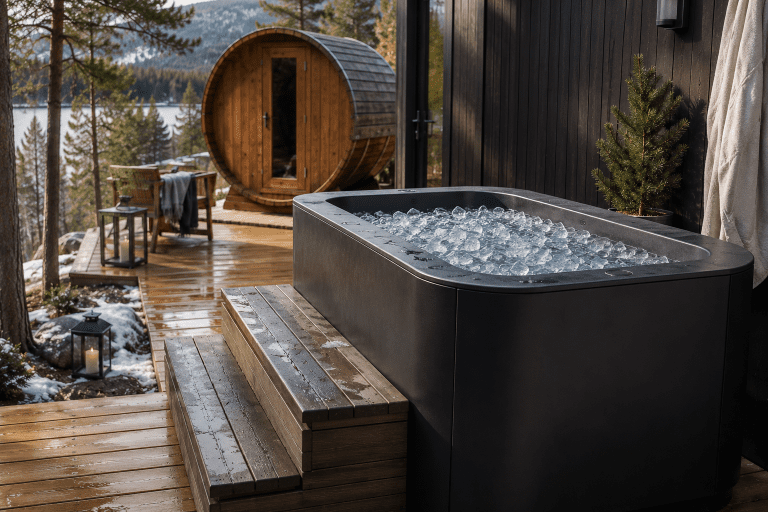
Dedicated cold plunge tubs without a chiller system run from about $200 on the very low end (basic tubs designed for ice water) to $800–1,200 for purpose-built inflatable or hard-sided tubs. The limitation is that without a chiller, you need to add ice each session.
Chiller-equipped systems are where the investment gets real. A quality cold plunge with an integrated chiller that maintains consistent water temperature runs from roughly $2,500 to $6,000+. Brands like Plunge, Ice Barrel, and various commercial-grade units live in this range. The appeal is consistency — you dial in 52°F, and it stays there without ice runs.
High-end custom or commercial-quality units can reach $10,000–15,000, but those are genuinely outlier purchases for most home users.
For sleep specifically: the temperature consistency of a chiller-equipped system does appear to matter. Being able to reliably hit the same cold exposure stimulus session to session helps you accurately track your response rather than getting varying results from inconsistent temperatures.
Installation Friction
For most home users, installation friction is lower than you’d expect — unless you’re going high-end.
Basic tubs and chest freezer setups: almost no friction. You need a dedicated space (outdoors is common, garages work well), access to a hose, and for chest freezers, a standard 120V outlet. Drainage is the main practical consideration — where does the water go when you empty it?
Chiller-equipped units: most plug into a standard 120V outlet (15–20 amps), though some higher-powered units require a dedicated 20-amp circuit. This is worth confirming before you buy. Your electrician can advise, or reference Energy.gov’s guidance on dedicated circuit requirements (https://www.energy.gov/energysaver/electric-resistance-heating).
Permits: for a freestanding tub on a deck or in a garage, you typically don’t need one. If you’re doing any structural work — building a dedicated enclosure, running new electrical — check your local requirements. USA.gov’s home improvement guidance is a useful starting point (https://www.usa.gov/home-improvement).
Outdoor placement considerations: if you live somewhere that freezes in winter, you need to think about protecting your unit or draining it seasonally. Most chiller units aren’t designed to function in sub-freezing ambient temperatures.
Maintenance
Maintenance is the part of cold plunge ownership that often surprises people.
Water sanitation is the core ongoing task. Cold water at low temperatures suppresses bacterial growth better than warm water, but it doesn’t eliminate it. You still need a sanitation approach — typically one of: bromine tablets (preferred over chlorine for lower temperatures), an ozone system, UV filtration, or more frequent complete water changes.
For a basic tub without a filtration system: most people do a full water change every 1–2 weeks, sometimes more frequently in warm weather or with heavy use. This is a manual process that takes 15–20 minutes.
For chiller-equipped units with filtration: many have ozone or UV built-in, which extends the time between changes significantly. Some users go 4–8 weeks between full changes with proper chemical balance.
Water chemistry testing: a basic test strip kit is all you need. Aim for pH between 7.2–7.6 and maintain appropriate sanitizer levels. This takes about five minutes every few days.
Filter maintenance: if your unit has a filter, rinse it weekly and replace it per manufacturer guidance (typically every 3–6 months).
The honest time commitment for a well-maintained home cold plunge: about 20–30 minutes per week, with a larger effort every 4–8 weeks for full water changes and deep cleaning.
Pros and Cons
Pros of Cold Plunging for Sleep
- May reduce cortisol in the hours after a session, supporting better evening wind-down
- Reduces muscle soreness and physical discomfort that disrupts sleep
- The calm, meditative state many people experience can be a useful transition ritual
- Consistent cold exposure appears to improve stress resilience over time — and lower baseline stress means better sleep
- Home setup means it’s available whenever timing is optimal for your schedule
Cons of Cold Plunging for Sleep
- Timing sensitivity: plunging too late in the evening can be stimulating rather than calming
- The benefits are largely indirect — cold plunging isn’t a direct sleep medication
- Consistent water maintenance is an ongoing time commitment
- Initial investment is meaningful, particularly for chiller-equipped units
- Cold shock is physically stressful — people with cardiovascular conditions should consult a doctor before starting
Cold Plunge vs. Other Sleep Interventions
How does cold plunging stack up against other popular sleep interventions?
Magnesium supplementation is inexpensive and well-supported for improving sleep onset and quality — particularly for people who are deficient. It’s complementary to cold plunging, not competitive.
Sauna use shows some of the strongest evidence for directly improving slow-wave (deep) sleep. The warming-then-cooling effect post-sauna is well-documented as a sleep primer. Interestingly, pairing sauna with a cold plunge in a contrast therapy protocol — alternating heat and cold — is something many practitioners swear by. [CROSS-LINK: guide to contrast therapy with sauna and cold plunge]
Blue light blocking and sleep hygiene fundamentals remain the baseline. No cold plunge overcomes a consistently disrupted sleep environment.
Sleep tracking devices (Oura Ring, WHOOP, etc.) can help you actually measure whether cold plunging is changing your sleep metrics — rather than relying purely on perception.
Weighted blankets improve sleep for many people, particularly those with anxiety. Like cold plunging, the mechanism likely involves nervous system regulation.
The honest comparison: cold plunging is one useful tool in a sleep optimization toolkit. It’s not a replacement for sleep hygiene fundamentals, but for people who already have the basics covered and want to go further, it can be a genuinely meaningful addition.
Comparison Table
| Intervention | Estimated Cost | Time Commitment | Evidence Strength for Sleep | Works Best For |
|---|---|---|---|---|
| Cold Plunge (basic tub) | $200–800 | 5–10 min/session | Moderate (mostly indirect) | Stress reduction, muscle recovery |
| Cold Plunge (chiller unit) | $2,500–6,000+ | 5–10 min/session | Moderate (mostly indirect) | Consistent cold exposure, serious users |
| Sauna (home unit) | $1,500–8,000 | 15–20 min/session | Moderate-Strong | Direct sleep onset improvement |
| Magnesium supplement | $15–30/month | 2 min/day | Strong (for deficient individuals) | Sleep onset, staying asleep |
| Weighted blanket | $50–200 | Ongoing | Moderate | Anxiety-related sleep issues |
| Sleep hygiene protocol | Free | Ongoing | Strong | Everyone — baseline foundation |
Helpful Gear
If you’re setting up a home cold plunge practice, a few items make the experience significantly better.
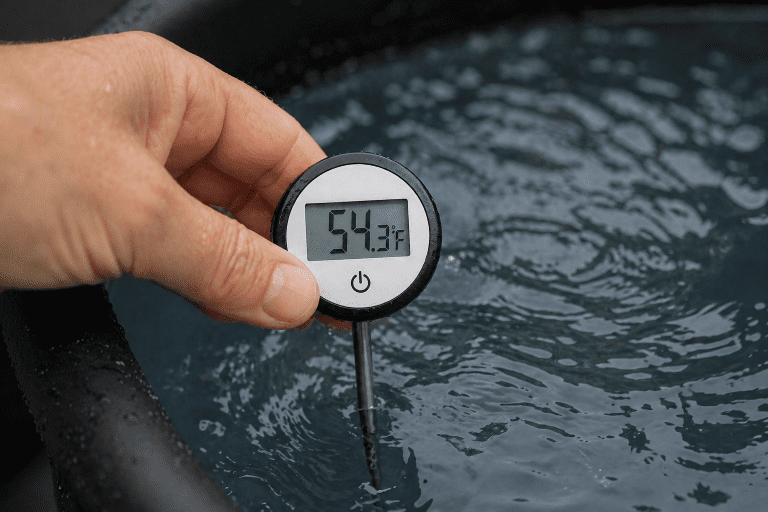
Plunge Thermometer / Digital Water Look for units with a clear display and quick read time. Knowing your exact water temperature matters for tracking your protocol consistently. Ready sentence: A reliable digital thermometer takes the guesswork out of your cold plunge temperature and helps you track your routine accurately.
SUN CUBE Surf Poncho Changing Robe keeps you warm immediately post-plunge — throwing it on the moment you step out helps your body rewarm naturally without losing heat too quickly.
Frequently Asked Questions
How long before bed should I do a cold plunge for better sleep? Most practitioners recommend completing your cold plunge at least 2–3 hours before bed. This gives your body time to move through the initial sympathetic activation phase and settle into the calmer parasympathetic state that supports sleep onset. Plunging right before bed can feel relaxing in the moment but may keep some people mentally alert longer than they’d like.
Do cold plunges improve sleep immediately or does it take time? Some people report improved sleep onset on the very first night they try cold plunging, while others need several weeks of consistent practice before noticing reliable changes. The stress-resilience and cortisol-regulation benefits that most directly affect sleep quality tend to build gradually with repeated exposure — so giving it 3–4 weeks of consistent use is a fair trial period before drawing conclusions.
Is cold plunging safe for everyone as a sleep aid? Cold water immersion carries real physical stress. People with cardiovascular conditions, high blood pressure, Raynaud’s disease, or who are pregnant should consult a physician before starting a cold plunge practice. The CDC has useful guidance on cold water immersion risks and hypothermia warning signs for anyone who wants to understand the safety parameters more fully (https://www.cdc.gov/niosh/cold-stress/about/related-illness.html).
Simple rule: If your evenings feel wired and your sleep feels shallow, try moving your cold plunge to early afternoon for two weeks and see if anything changes before assuming cold plunging doesn’t work for you.
Summary Snapshot
- Cold plunges likely improve sleep indirectly through cortisol reduction, stress regulation, and muscle recovery — not by acting as a direct sedative
- Timing matters: early-to-mid afternoon appears to be the most effective window for sleep benefits
- Budget from $300 (DIY) to $6,000+ (chiller unit); most serious users land between $1,500–3,500
- Maintenance is real but manageable: 20–30 minutes per week for most setups
- Pair with sauna for contrast therapy to potentially amplify recovery and sleep benefits
- Track your sleep with a wearable device to know if it’s actually working for you
Final Verdict
Do cold plunges improve sleep? The answer is a qualified yes — for the right people, at the right time, as part of a considered routine.
The mechanism isn’t magic. Cold plunging works on sleep by reducing physical discomfort, calming post-stress cortisol, and — for many people — providing a ritual moment of mental reset that translates into a calmer evening. Those are real benefits. They’re just indirect ones.
If you already have sleep hygiene basics covered and you’re looking for something that adds a genuine edge to your recovery and mental regulation, cold plunging is one of the more interesting tools available. It’s particularly compelling if you’re also dealing with training load, physical stress, or high-anxiety work periods where cortisol management matters.
If you’re brand new to cold plunging and hoping it’ll fix a serious sleep disorder on its own — it won’t. Start with the fundamentals, add cold plunging as an amplifier, and track the results honestly.
For anyone ready to find the right setup — whether that’s a simple entry-level tub or a full chiller unit — our cold plunge picks are a solid place to start:
Related Reading: If you’re exploring how cold exposure affects your body and mind, the science goes deeper than most people expect — our guide to ice bath mental health breaks down exactly what cold water does to your brain beyond the physical recovery benefits. For a broader look at what the research actually supports, Proven Benefits of Cold Plunge Therapy covers what’s well-established and what’s still being studied. And if you’re combining cold with heat therapy, Steam Room Benefits: What Really Happens to Your Body is worth reading alongside this one.