6kw vs 8kw Sauna Heater: Critical Sizing Mistakes
6kW vs 8kW sauna heater — this is the comparison that trips up more first-time sauna buyers than almost any other decision in the whole setup process.
You’d think it’d be simple. Bigger number, bigger sauna. Done. But if it were that clean, nobody would be googling it at midnight wondering if they made a mistake on their order.
Quick heads up: This post contains affiliate links. If you click through and buy something, we may earn a small commission — at no extra cost to you. We only recommend gear we’d actually use.
⚡ Quick Snapshot
- 6kW is the right choice for most home saunas up to around 270 cubic feet
- 8kW suits larger rooms, rooms with poor insulation, or outdoor builds
- Both run on 240V dedicated circuits — electrical costs are similar
- Oversizing your heater leads to scorching, uneven heat, and wasted energy
- Undersizing leads to a sauna that never quite gets there — frustrating and inefficient
- Finnish tradition: size your heater to your room volume, not to “go bigger to be safe”
Table of Contents
- What the Wattage Actually Means
- Cost Reality: What You’ll Actually Pay
- Installation Friction: What to Know Before You Buy
- Maintenance: What Ongoing Ownership Looks Like
- Pros and Cons of Each
- Side-by-Side Comparison
- Comparison Table
- Helpful Gear
- FAQ
- Final Verdict
What the Wattage Actually Means: 6kW vs 8kW Sauna Heater Explained
Wattage in a sauna heater isn’t a proxy for quality — it’s a proxy for room volume. That’s the single most important thing to internalize before you spend a dollar.
A kilowatt of sauna heater output roughly handles about 45 cubic feet of properly insulated sauna space. That’s a general rule of thumb that holds up well for traditional Finnish-style sauna rooms built with standard tongue-and-groove wood paneling, a well-fitted door, and a ceiling height of around 7 feet.
So if your sauna room is 6 feet by 8 feet by 7 feet — that’s 336 cubic feet — you’re looking at roughly 7.5kW as an ideal match. Most people in that scenario round up to an 8kW unit. If your room is smaller, say 5 feet by 7 feet by 7 feet (245 cubic feet), a 6kW unit hits the mark almost perfectly.
The problem is that people assume more wattage equals better performance. It doesn’t. An 8kW heater in a compact sauna room will blast temperature to uncomfortable levels before the room has time to properly equilibrate. The bench-level heat becomes aggressive, the air dries out too fast, and the stones — if it’s a rock heater — don’t get the gradual, even heat absorption that generates good löyly (the steam thrown when you ladle water over the rocks).
The reverse is equally frustrating. A 6kW heater in a large or poorly insulated room will run continuously, struggle to maintain target temperature, and drive up your electricity costs without ever delivering the experience you’re after.
How do I calculate the right sauna heater size? Multiply your sauna’s length × width × height to get cubic footage. Divide that number by 45. The result is the approximate kW output your heater needs. Add 10–20% if your room has poor insulation, exterior-facing walls, or a glass door.
Cost Reality: What You’ll Actually Pay
The price gap between 6kW and 8kW heaters is smaller than most people expect. A quality Finnish-made 6kW unit — brands like Harvia, HUUM, or Finnleo — typically runs between $400 and $700. Step up to 8kW from the same manufacturers and you’re usually looking at $550 to $900. That’s a $100–$200 difference at most tiers.When comparing a 6kW vs 8kW sauna heater, the price gap is smaller than most expect.
Where costs diverge more meaningfully is on the electrical side. Both units require a dedicated 240V circuit. A 6kW heater draws about 25 amps, which means a standard 30-amp double-pole breaker handles it comfortably. An 8kW heater draws around 33 amps, often requiring a 40-amp breaker and slightly heavier gauge wire (8-gauge vs 10-gauge). If your panel is already crowded or your sauna is far from your electrical panel, that extra wire run and the larger breaker can add $200–$400 to your electrician’s bill.
Running costs are similar but not identical. A 6kW heater running for one hour draws 6 kilowatt-hours of electricity. At the national average rate of around $0.16 per kWh, that’s roughly $0.96 per session. An 8kW unit in the same hour burns $1.28. Over 200 sessions a year, that’s about $64 extra annually for the 8kW — not a make-or-break number, but worth knowing.
Installation Friction: What to Know Before You Buy
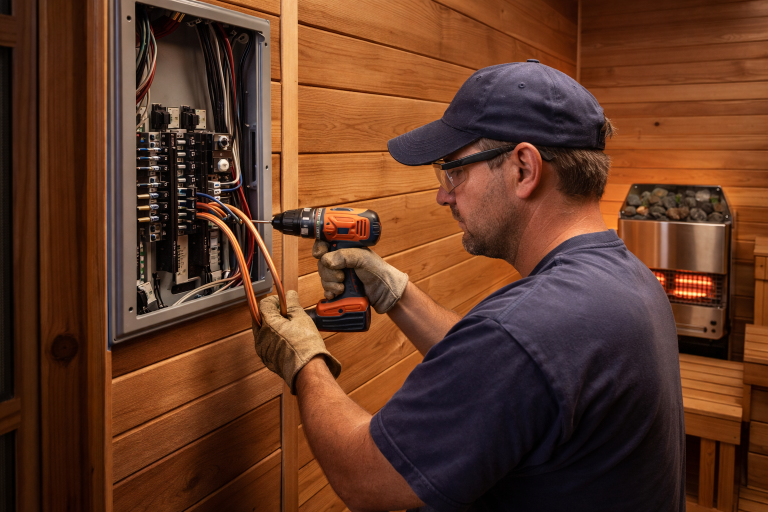
Neither unit is a plug-and-play installation, and both require licensed electrician work in virtually every U.S. jurisdiction. That said, the 8kW introduces a few more variables. According to Energy.gov. electric resistance heaters like sauna units require dedicated circuits to operate safely and effciently.
For the 6kW, most residential panels can accommodate a new 30-amp, 240V double-pole breaker without drama. If you’re in a newer home with a 200-amp main panel and reasonable available capacity, this is often a half-day job for an electrician.The 6kW vs 8kW sauna heater choice also affects your electrical requirements significantly.
The 8kW heater’s higher amperage draw means heavier wire, a 40-amp breaker, and in some cases a subpanel if your main panel is maxed out. If you’re installing in a detached garage or outbuilding, the run from your main panel adds cost on either unit — but the 8kW’s wire gauge requirement bumps material costs noticeably.
Permits are required in most states for 240V sauna installations. Check with your local improvement guidance for how your state handles permits for sauna and spa electrical work. Skipping a permit isn’t worth the risk — insurance complications during a claim can be severe, and resale disclosures create headaches.
One thing many buyers miss: heater placement matters as much as wattage. Most manufacturers require the heater to be positioned so the top of the unit sits at least 12 inches below the ceiling and is centered on a wall for even heat distribution. An 8kW unit that’s improperly placed will still underperform — placement and sizing work together.
Maintenance: What Ongoing Ownership Looks Like
Both wattages share identical maintenance requirements — the kW output doesn’t change how you maintain the unit.
Sauna stones need inspection every 12–18 months. Stones crack, crumble, and lose their ability to hold and release heat evenly over time. Check for fractures and replace any stones that have become brittle or powdery. Use purpose-made sauna stones — not landscaping rocks, which can contain trapped moisture and shatter under heat.
The heating elements themselves in quality units are built to last 15–20 years with minimal intervention. What kills them early is mineral buildup from excessive water ladling directly onto the elements rather than the rocks, and from operating the heater without stones — never run a stone heater empty.
The thermostat and control unit benefit from a quick visual inspection every season — look for any discoloration or burning smells on first startup after a long dormant period.
Ventilation is often overlooked in sauna maintenance. Both 6kW and 8kW units generate substantial air movement. Your intake vent (usually near the floor by the heater) and exhaust vent (near the ceiling on the opposite wall) should be cleared of dust and debris annually. A clogged sauna ventilation system creates humid stagnation, accelerates wood degradation, and makes sessions feel suffocating rather than cleansing.
Pros and Cons
6kW Sauna Heater
Pros:
- Correctly sized for small to medium home saunas up to around 270 cubic feet
- Lower amperage draw — 30-amp circuit in most cases
- Easier and cheaper to wire, especially in older homes
- More even, controlled heat in appropriately sized rooms
- Lower upfront cost with nearly identical running costs to the 8kW
Cons:
- Will underperform in rooms larger than 300 cubic feet
- Not suitable for outdoor saunas or poorly insulated rooms without adjustments
- May struggle in cold climates if the sauna is in an uninsulated garage or outbuilding
8kW Sauna Heater
Pros:
- Correctly sized for medium to large sauna rooms (270–360+ cubic feet)
- Handles outdoor and poorly insulated builds more reliably
- Reaches target temperature faster in larger spaces
- Better suited to glass doors, exterior walls, or vaulted ceilings
Cons:
- Wrong choice for compact rooms — creates uncomfortable, uneven heat
- Requires 40-amp breaker and heavier gauge wire
- Slightly higher purchase price and running cost
- More complex installation in homes with limited panel capacity
Which One Fits Your Situation: 6kW vs 8kW Sauna Heater Compared
Here are the real-world scenarios where each wattage is the correct match:
Go 6kW if: Your sauna room is a standard 2-person indoor cabin (roughly 4×5 feet or 5×6 feet), it’s well-insulated, it’s interior to your home, and you’re not dealing with cold winters blasting through the walls. Most prefab home sauna kits in this size range ship with a 6kW heater for exactly this reason — it’s the matched size.
Go 8kW if: You’re building or buying a 3–4 person sauna room, you have an outdoor sauna cabin in a cold climate, your room has a glass wall or door on an exterior side, or you’ve built a custom room with higher ceilings or exposed beam construction that increases the effective cubic footage.
Outdoor sauna sizing has a few extra variables beyond room volume alone. Our outdoor sauna heater sizing guide explains how climate, insulation, construction and exposed surfaces can affect heater requirements.
The insulation wildcard: A poorly insulated room can shift your ideal heater wattage by a full 2kW. A room that would normally take a 6kW unit — but has single-pane glass, an uninsulated floor, or an exterior wall with no vapor barrier — may genuinely need an 8kW to compensate. This is why two people with identical room dimensions sometimes land on different heater sizes.
Once you’ve checked the required power, compare wall-mounted vs floor sauna heaters to see which mounting style fits your layout.
Comparison Table
| Feature | 6kW Sauna Heater | 8kW Sauna Heater |
|---|---|---|
| Ideal room size | Up to ~270 cu ft | 270–360+ cu ft |
| Circuit requirement | 30-amp, 240V | 40-amp, 240V |
| Wire gauge | 10-gauge | 8-gauge |
| Typical price range | $400–$700 | $550–$900 |
| Cost per 1-hr session | ~$0.96 | ~$1.28 |
| Best for | Indoor, well-insulated | Outdoor, larger, cold climate |
| Preheat time (avg) | 30–45 min | 25–40 min (larger rooms) |
| Maintenance difference | None | None |
| Oversize risk | Not typically | Yes, in small rooms |
Helpful Gear
If you’re shopping for a heater or accessories, these are the types of products worth looking up. Owner verifies specific models on Amazon before this section goes live.
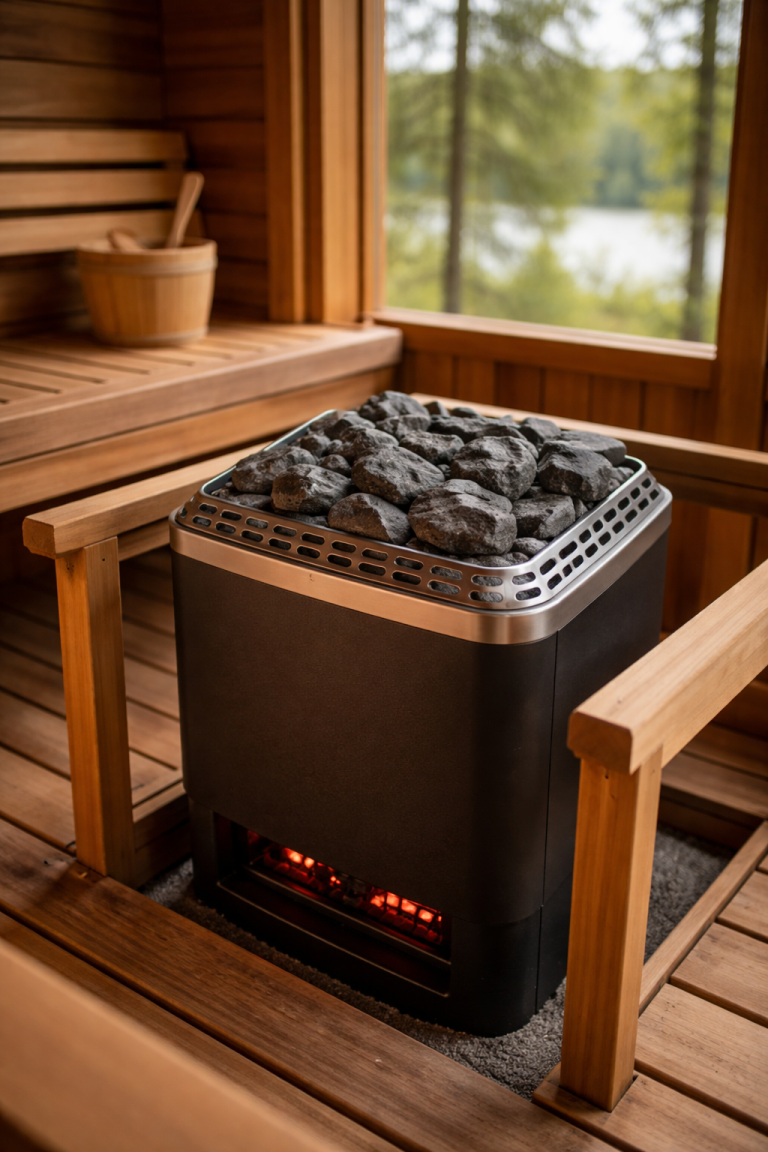
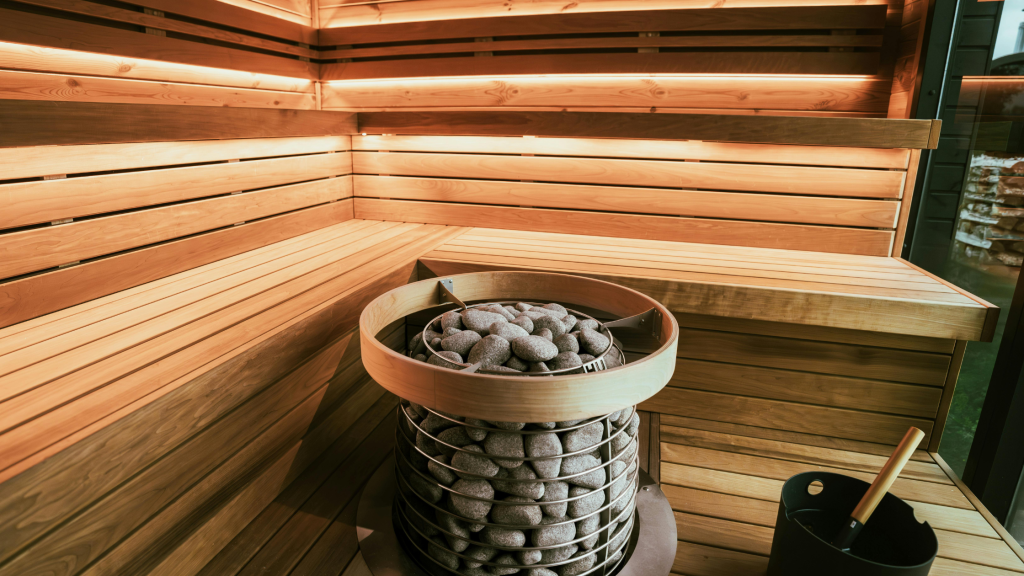
1. Sauna Heater Available in both 6kW and 9kW. If your room falls in the 9kw range, the 9kw give you the headroom you need without overspending .Straightforward controls, solid build quality, common in home installs across the US.
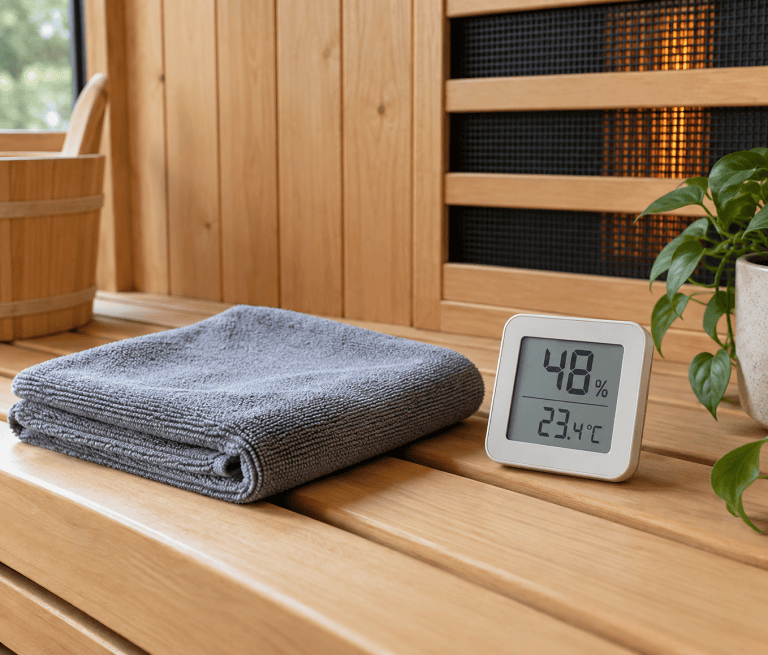
2. Sauna Thermometer and Hygrometer Combo Useful for confirming your heater is actually performing — a lot of sauna troubleshooting starts here. Wooden-frame versions hold up better in the heat.
3. The sauna place Sauna Stones — 25 lb Bag Purpose-made sauna stones, not landscaping rock. Worth replacing every couple of years.
FAQ
What happens if I put an 8kW heater in a small sauna room? An oversized heater in a small sauna will push temperatures too high too fast, making the room uncomfortable and difficult to control. The thermostat cycles on and off erratically rather than maintaining steady heat, and the stones don’t develop the gradual, even temperature that generates good steam. In small rooms, bigger wattage creates problems rather than solving them.
Do 6kW and 8kW sauna heaters both need a dedicated circuit? Yes, both require a dedicated 240V circuit — they cannot share a circuit with other appliances. The difference is amperage: 6kW typically needs a 30-amp breaker and 10-gauge wire, while 8kW requires a 40-amp breaker and 8-gauge wire. Either way, this is a licensed electrician job in all U.S. states.
How long does it take a 6kW vs 8kW heater to preheat? In their correctly matched rooms, both reach sauna temperature (around 160–190°F) in roughly 30–45 minutes. The 8kW may hit temperature faster in raw terms, but only because it’s handling a larger air volume. In a small room, an 8kW heater reaches temperature almost violently fast — which is not an advantage in practice.
Simple rule: Simple rule for 6kW vs 8kW sauna heater selection: size to room volume first, climate second.
6kw vs 8kw Sauna Heater :Summary Snapshot
- 6kW: Best for compact, well-insulated indoor saunas up to around 270 cubic feet
- 8kW: Best for larger rooms, outdoor builds, or cold-climate installations
- Both require 240V dedicated circuits — licensed electrician required
- Maintenance is identical for both — rocks, elements, and ventilation
- Running cost difference is roughly $64/year based on 200 sessions
- Oversizing is a real problem — Finnish sauna tradition prizes even, controlled heat
Final Verdict
The math on this one is fairly straightforward. Calculate your room volume, factor in your insulation situation, and buy to match — not to exceed.
A 6kW heater in a correctly sized room performs just as well as an 8kW in a larger one. There’s no performance advantage to oversizing, and the common instinct to “go bigger to be safe” tends to create problems rather than solve them.The 6kW vs 8kW sauna heater decision comes down to one thing: room volume.
If your room is under 270 cubic feet and well-insulated, 6kW is the right call. If you’re dealing with a larger space, an outdoor build, or a cold climate, 8kW makes sense. Everything in between comes down to the specific numbers in your room.
Regular sauna use can support cardiovascular health and recovery — but only when each session is consistent. A correctly sized heater helps make that reliability possible over time.