What Is the Best Outdoor Sauna Heater?
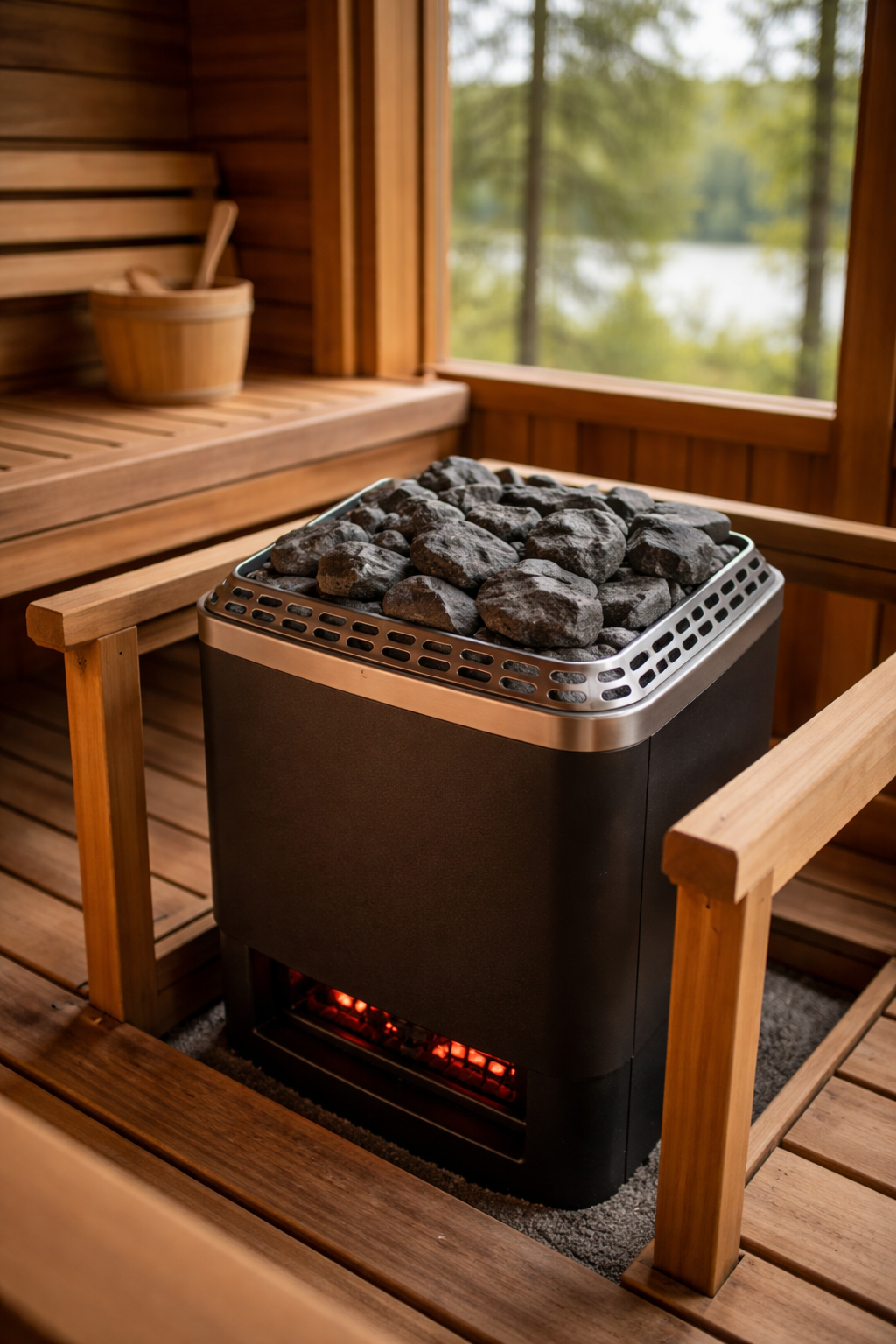
For most backyard saunas, the best outdoor sauna heater is a correctly sized electric model approved for installation inside your enclosed sauna cabin. Wood-burning is worth considering for off-grid use or if you enjoy tending a fire. Gas is a specialist option that needs a suitable sauna heater and professional installation. Start with your room size, available utilities and the manufacturer’s requirements.
As an Amazon Associate, Sunrise & Vitalize earns from qualifying purchases. If you buy through an affiliate link, we may earn a small commission at no extra cost to you.
Quick Snapshot
- Electric is a practical choice for convenience and regular use.
- Wood-burning suits suitable off-grid cabins and people who enjoy tending a fire.
- Gas is a specialist option requiring model-specific fuel, electrical and exhaust checks.
- Choose heater capacity using the manufacturer’s room-volume range and sizing instructions.
- An enclosed outdoor sauna cabin differs from an installation exposed to weather.
- Include electrical work, chimney installation or gas connections in your budget.
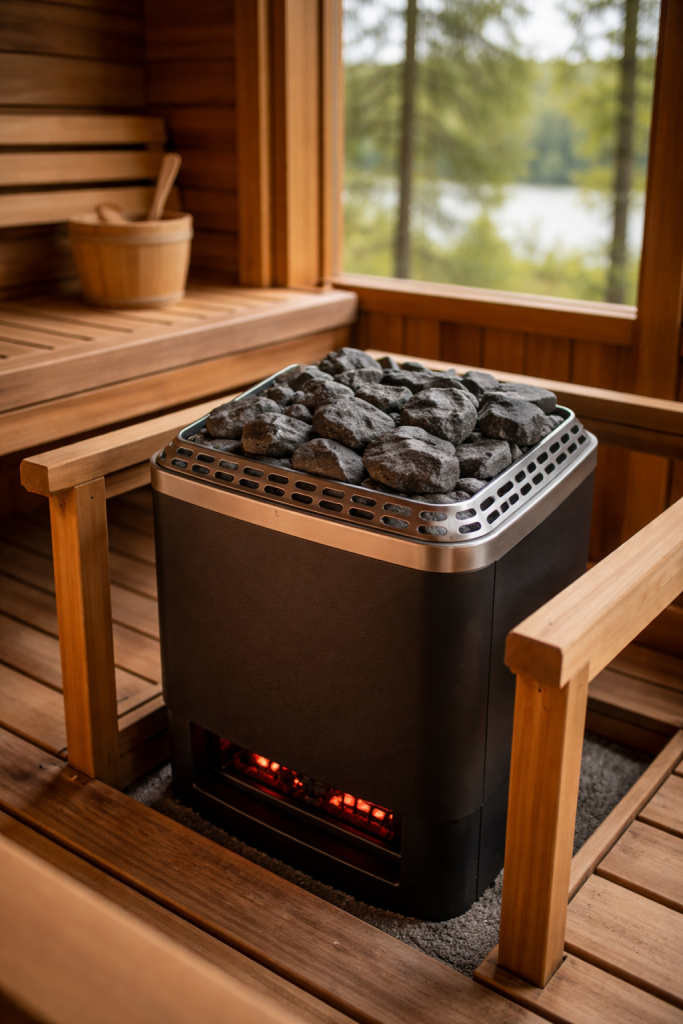
Table of Contents
- The Core Question: What Type of Heater Actually Fits Your Outdoor Sauna?
- What Does an Outdoor Sauna Heater Actually Cost?
- Installation: What Nobody Tells You Before You Buy
- Maintenance Reality Check
- Pros and Cons by Heater Type
- How the Main Heater Types Compare
- Comparison Table
- Helpful Gear for Outdoor Sauna Owners
- FAQ
- Final Verdict
- Browse Our Sauna Picks
The Core Question: What Type of Heater Actually Fits Your Outdoor Sauna?
The best heater for outdoor saunas isn’t a single product — it’s a category that matches your specific situation. There are three main types worth seriously considering: electric, wood-burning, and propane/gas. Each has a distinct personality, and picking the wrong one creates friction every single time you use your sauna.
What is the best type of heater for an outdoor sauna?
For most backyard saunas, a correctly sized electric heater is the practical choice: easy to control and low maintenance. Wood-burning suits off-grid cabins and people who enjoy tending a fire. Gas is a specialist option requiring a purpose-built sauna heater and professional installation. Check the model’s electrical requirements before considering it for off-grid use.
Let’s break all three down properly.
Electric Outdoor Sauna Heaters
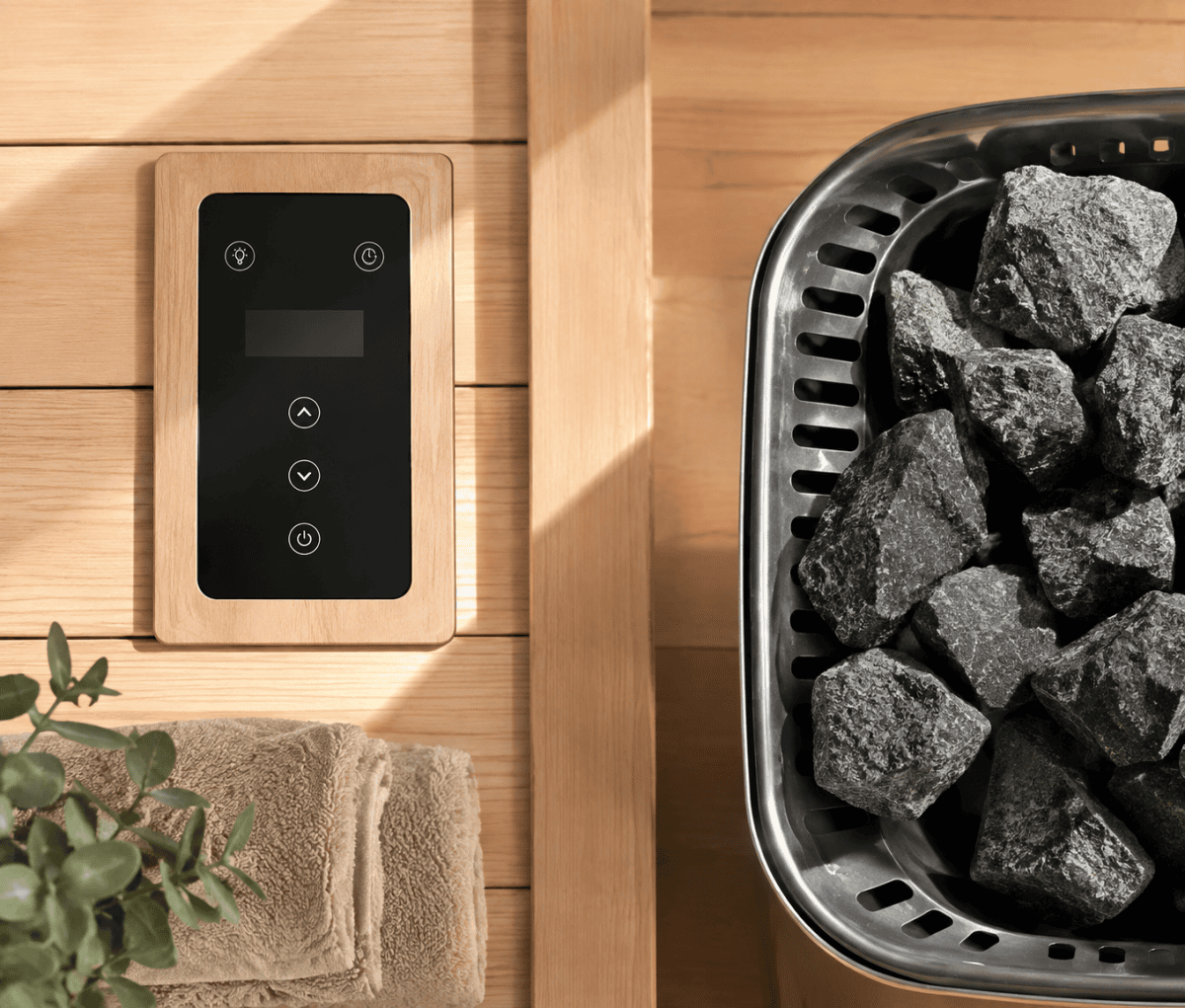
Electric heaters are what most new outdoor sauna owners default to — and honestly, for good reason. They’re predictable. You dial in your temperature, set a timer, and your sauna heats up according to the heater’s output, room construction and starting temperature.
Choose the heater using the manufacturer’s recommended room-volume range. Measure the sauna’s interior length, width and height, then account for glass, uninsulated surfaces, construction and local climate as the manufacturer directs. Outdoor placement does not automatically mean adding 20–25% or choosing the next size up. Our outdoor sauna sizing guide explains the factors to check.
Most full-size electric sauna heaters need a dedicated 240V circuit, although some small models use 120V. Have a licensed electrician confirm the chosen heater’s supply requirements, your panel capacity and the cable route. Include that work in your budget before buying.
Top electric brands for outdoor saunas include Harvia, Finnleo, HUUM, and Vevor (budget). Harvia and HUUM are Finnish-made, which matters — Finnish manufacturers have been engineering sauna heaters for generations and it shows in the build quality and thermal efficiency.
Wood-Burning Outdoor Sauna Heaters
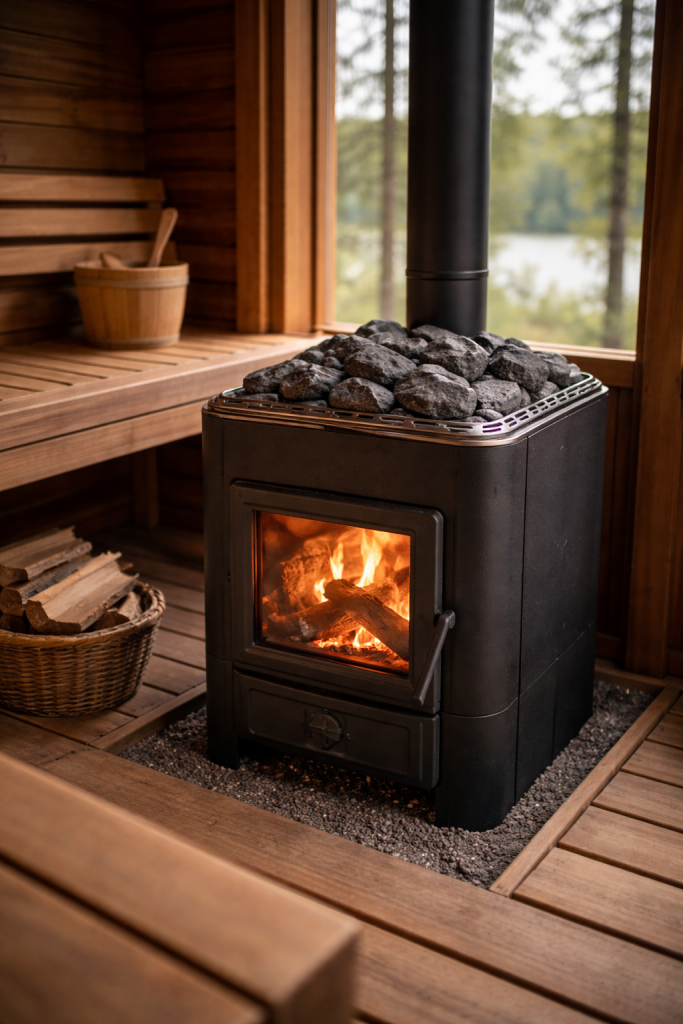
Wood-burning appeals to people who enjoy the fire, the atmosphere and the hands-on routine. Steam quality depends on the heater design, stone load, ventilation and how water is added; wood-burning does not automatically produce softer steam than electric.
Wood-burning heaters also don’t need electricity, which makes them the go-to for off-grid saunas, cabins, or any structure that’s too far from your panel to run wire economically.
The trade-off is real though. You need to source, store, and split firewood. You need a properly installed chimney that exits the roof safely — this isn’t a DIY job unless you genuinely know what you’re doing. Allow time to light the fire and heat the room; warm-up depends on the stove, fuel, sauna construction and starting temperature, and you need to manage the fire while you’re in there.
For many people, that process is the whole point. For others, it’s a dealbreaker.
Harvia, Kuuma and IKI offer wood-burning sauna heaters. Choose the specific stove by its approved room-volume range and required clearances. Harvia’s M3 is specified for rooms of 6–13 cubic meters, so it should not be presented as a general recommendation for larger saunas.
Propane and Gas Outdoor Sauna Heaters
Gas-fired sauna heaters are a specialist option. Use a purpose-built sauna heater approved for the intended installation, rather than a portable propane or general room heater.
Have a qualified installer confirm the fuel supply, combustion-air requirements, flue or exhaust arrangement, clearances and local permits. An existing propane tank does not by itself establish that the connection is suitable.
Check the specific model’s electrical requirements before describing it as an off-grid option.
What Does an Outdoor Sauna Heater Actually Cost?
Let’s get specific, because the range is genuinely wide.
Compare complete installed quotes, not just the heater price. Electric installations may also require controls, stones, a dedicated circuit, permits, trenching or panel work. Wood-burning installations need an appropriate chimney system, clearances and any required heat protection.
Gas sauna heaters can cost substantially more than basic electric models. At the time of checking, Scandia listed its 40K BTU gas heater from $3,800 and its 80K BTU model from $6,200, before installation. Confirm current pricing before budgeting.
Check what each package includes, the warranty and availability of replacement parts. Price alone does not establish how long a heater will last.
Installation: What Nobody Tells You Before You Buy
The most common mistake outdoor sauna heater buyers make is treating the heater purchase and the installation as separate problems to solve later. They’re not. Your heater choice determines your installation requirements, and your installation realities should inform your heater choice.
For electric heaters: Have a licensed electrician check the heater manual, your panel capacity and the cable route before purchase. Circuit, breaker, conductor and disconnect requirements depend on the specific model and applicable code. Ask for a complete quote, including any trenching, permits or panel work.
For wood-burning heaters: The chimney path is everything. Ideally, your chimney runs straight up through the roof — any offset or horizontal run reduces draft and increases creosote risk. Make sure your outdoor sauna structure can support the weight of a proper chimney system. And if your sauna is near trees, check local fire codes about clearance requirements — some counties restrict wood-burning appliances in outbuildings within certain distances of structures or vegetation.
For gas heaters: Use a qualified installer to follow the sauna heater’s approved fuel, combustion-air and exhaust requirements. Room ventilation alone is not a substitute for the specified flue or venting system.
For ongoing checks after installation, see our sauna heater maintenance guide.
Maintenance Reality Check
One question people rarely ask before buying: how much ongoing effort does this heater require?
Inspect and restack the sauna stones according to the heater manual, removing debris and replacing damaged stones. Harvia recommends changing stones annually when a family sauna is used about twice a week. Keep airflow through the stone compartment clear, and use only stones of the type and size approved for your heater. Follow the manufacturer’s instructions for fragrances.
Harvia’s stone-maintenance guidance explains how crumbling stones can restrict airflow.
Wood-burning heaters require active maintenance. The chimney should be cleaned annually — more often if you’re using the sauna regularly or if your wood produces more creosote (softer woods like pine produce more than hardwoods like oak or birch). The fire grate and ash pan need cleaning after every few uses. Inspect the door gaskets and chimney connections seasonally.
Propane heaters sit in the middle. The burner and heat exchanger should be inspected annually, and your gas connections should be checked for leaks regularly. Less work than wood, more than electric.
Pros and Cons by Heater Type
Electric
- Pros: Easy to control, low ongoing maintenance, no combustion exhaust to manage, wide product selection
- Cons: Electrical work can add significant cost; requires a suitable power supply; power outage means no sauna
Wood-Burning
- Pros: Traditional fire-tending experience, no electrical supply required for the stove, useful for suitable off-grid cabins
- Cons: Hands-on startup and variable warm-up time.
Propane/Gas
- Pros: No firewood handling; a possible alternative where a suitable gas supply and approved installation are available
- Cons: Fewer product options, ongoing fuel cost, strict ventilation requirements, propane price volatility
How the Main Heater Types Compare
Electric vs. Wood-Burning: Which is better for an outdoor sauna?
Electric wins on convenience, control, and maintenance. Wood-burning appeals for its atmosphere, fire-tending ritual and independence from the electrical grid. For most suburban outdoor saunas, electric is the practical choice. For remote cabins or those who want the traditional Finnish experience, wood-burning is worth the extra work.
A longer cable route can increase electrical installation costs, particularly where trenching or larger conductors are needed. Compare actual installed quotes before deciding that wood-burning or gas will be cheaper.
It also depends on how often you’ll use the sauna. Daily users often prefer electric for the effortless startup. Weekend-warrior users who want the ritual of building a fire typically gravitate toward wood-burning.
Comparison Table
| Feature | Electric | Wood-burning | Gas |
|---|---|---|---|
| Startup | Timer and controls | Light and tend a fire | Model-specific controls |
| Heat-up time | Depends on heater and room | Depends on stove, fuel and room | Depends on heater and room |
| Electrical supply | Required | Usually unnecessary for the stove | Check the model |
| Exhaust system | No combustion flue; room ventilation required | Approved chimney required | Manufacturer-specified flue or venting required |
| Main maintenance | Stones and electrical components | Stones, ash and chimney | Stones, burner and gas system |
| Budget check | Heater, controls and electrical work | Stove, chimney and installation | Heater, fuel connection and exhaust |
| Best fit | Convenience and regular use | Fire-tending preference or off-grid use | Specialist installations |
Helpful Gear for Outdoor Sauna Owners
Once your heater is sorted, a few accessories make a real difference in the outdoor sauna experience.
Sauna Thermometer and Hygrometer Combo — Know exactly what’s happening inside your sauna. Look for units rated to 250°F with a hygrometer to track humidity.
Birch Sauna Whisk — A traditional accessory for gentle whisking during a sauna session. It is optional rather than necessary heater equipment.
Sauna Rocks Replacement Set — Replacement stones: use only the type and size your heater manufacturer approves.
FAQ
How many kW do I need for an outdoor sauna heater?
Calculate the interior room volume, then follow the chosen heater manufacturer’s sizing instructions. A 6 × 8 × 7-foot room contains 336 cubic feet, but its dimensions alone do not establish the correct wattage. Insulation, glass and exposed surfaces also matter. Stay within the model’s approved room range rather than automatically oversizing.
Can I use an indoor sauna heater outside?
A heater approved for an enclosed sauna room may be suitable inside a weatherproof outdoor sauna cabin. That is different from exposing the heater to rain or installing it in an open shelter. Confirm the exact model’s permitted installation conditions, clearances and electrical requirements with the manufacturer and your electrician.
How long do outdoor sauna heaters last?
Lifespan varies with the model, installation, usage, maintenance and protection from weather. Check the warranty and availability of replacement elements or other parts. A general brand name or price bracket cannot establish a reliable lifespan.
The simple rule: Match your heater type to your infrastructure reality first, your experience preference second — then buy the best quality you can afford within that category.
Summary Snapshot
- Electric heaters are a practical choice for convenience and regular use.
- Wood-burning suits suitable off-grid cabins and people who enjoy tending a fire.
- Size the heater using the manufacturer’s room-volume range and guidance for your sauna’s construction and conditions.
- Compare complete installed quotes, including electrical work, chimney installation or gas connections as applicable.
- Gas requires a purpose-built sauna heater and professional checks of fuel, electrical and exhaust requirements.
Final Verdict
The best heater for outdoor saunas is the one that matches how you actually live — not the one with the best spec sheet.
If you have suitable electrical access and want straightforward startup, electric is a practical choice. Choose a model approved for your sauna, follow its sizing instructions, and have a licensed electrician confirm the supply and installation requirements.
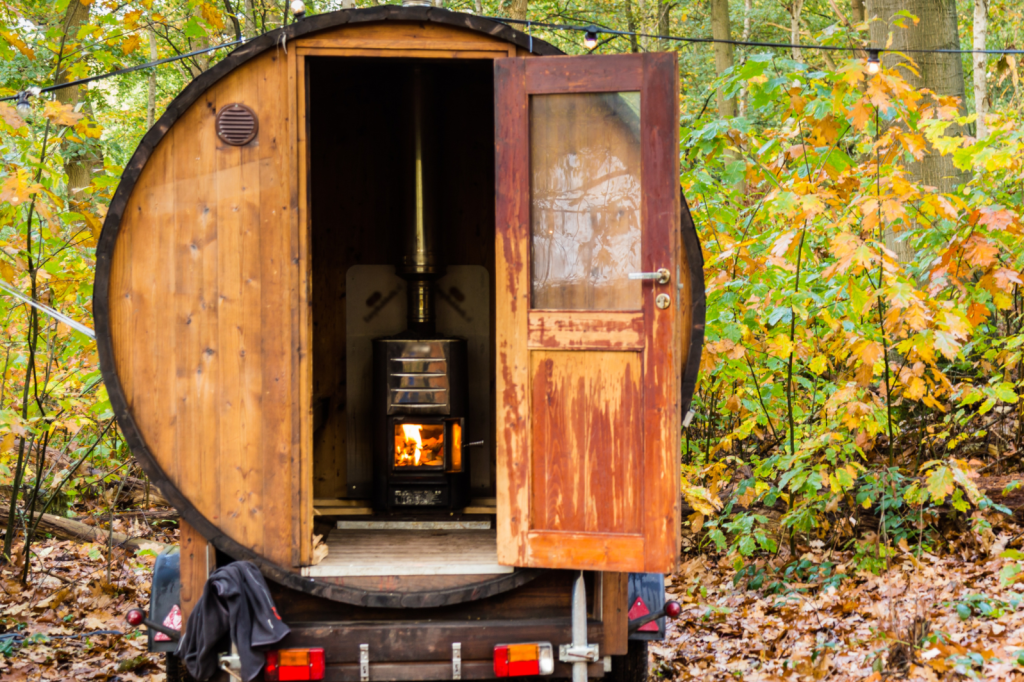
Wood-burning is worth considering for a suitable off-grid cabin or if you enjoy tending a fire. Choose a stove approved for your room and plan for a correctly installed chimney and required clearances.
If you prefer gas, get a quote from a qualified gas installer and check the model’s electrical requirements too.
Prioritize a model approved for your room, a solid warranty and available replacement parts over the lowest price.
For heater sizing, 6kW vs 8kW sauna heater walks through the output differences that matter most — especially for outdoor builds.
If you’re also looking at the full installation picture, sauna heater 240V wiring covers the electrical requirements for outdoor setups in detail.