Is 6kW or 8kW Better for a 4 Person Sauna?
When compairing 6kW vs 8kW sauna heater both can work for a four-person sauna — but the right choice depends on your room size, insulation quality, and how fast you want to heat up.
Most people buying their first home sauna underestimate how much the heater wattage actually changes the experience. Get it wrong and you’re either waiting forty minutes for a lukewarm room, or running a heater that’s technically more than you need.
Quick Snapshot
- A 4-person sauna typically runs between 200–400 cubic feet of interior volume
- 6kW heaters are well-suited to smaller 4-person rooms with solid insulation
- 8kW heaters are better for larger rooms, outdoor builds, or rooms with higher ceilings
- Standard rule: roughly 1kW per 50 cubic feet, adjusted for insulation and material
- The 6kW vs 8kW Sauna heater heat up difference is 10-20 minutes .
- Both require a dedicated 240V electrical circuit
Heads up: Some links in this post are affiliate links, which means we may earn a small commission if you buy something — at no extra cost to you. We only recommend gear we’d actually use ourselves.
Table of Contents
- What 6kW and 8kW Actually Mean for Your Sauna
- Cost Reality
- Installation Friction
- Maintenance
- Pros and Cons
- 6kW vs 8kW: Direct Comparison
- Comparison Table
- Helpful Gear
- FAQ
- Simple Rule
- Summary Snapshot
- Final Verdict
Is 6kW or 8kW Better for a 4 Person Sauna?
Kilowatt rating tells you how much electrical power a heater draws and how aggressively it can raise the temperature in your room. It’s not just a brand spec number — it has a direct relationship with how quickly your sauna reaches temperature, how well it holds heat once it gets there, and whether it can compensate for room design weaknesses.
For a 4-person sauna, the interior volume is the starting point. A standard 4-person room might measure something like 5 feet by 6 feet with a 7-foot ceiling — that’s roughly 210 cubic feet. But some 4-person saunas stretch to 6 by 8, pushing closer to 340 cubic feet. That range matters more than the “4-person” label on the box.
The commonly used sizing guideline in the industry is approximately 1 kilowatt per 50 cubic feet of sauna space. That gives you a baseline range of 4–7kW for a typical 4-person room. So where do 6kW and 8kW sit?The 6kW vs 8kW sauna heater decision starts with your room’s cubic footage.
A 6kW unit comfortably covers a 4-person sauna up to around 280–300 cubic feet, assuming the room has good insulation, a tight door seal, and no glass walls or concrete floors working against heat retention. At this size, a 6kW heater will bring the room to 160–180°F in roughly 30–40 minutes.
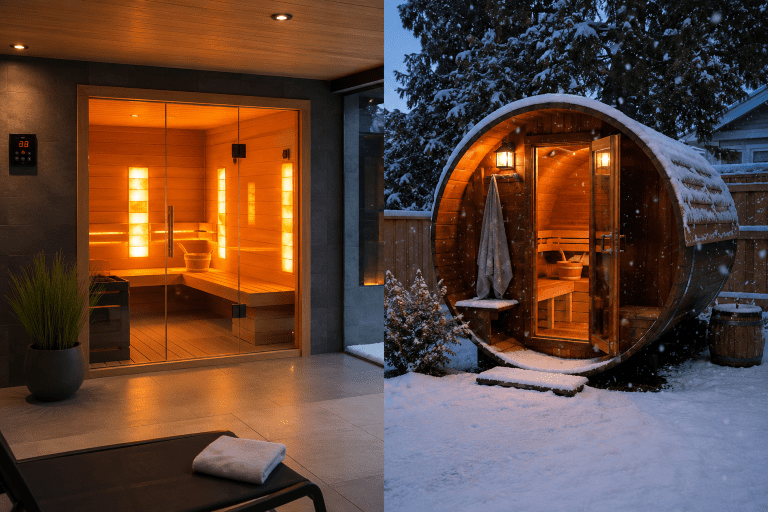
An 8kW unit gives you more headroom. It’s the better choice if your sauna has a larger footprint, higher ceilings above 7 feet, is built outdoors in a colder climate, or has an open glass design that leaks heat faster than a traditional cedar-lined room. At 8kW, you’re typically looking at 20–30 minutes to temperature in an average 4-person setup — and the room tends to hold heat more consistently during use.
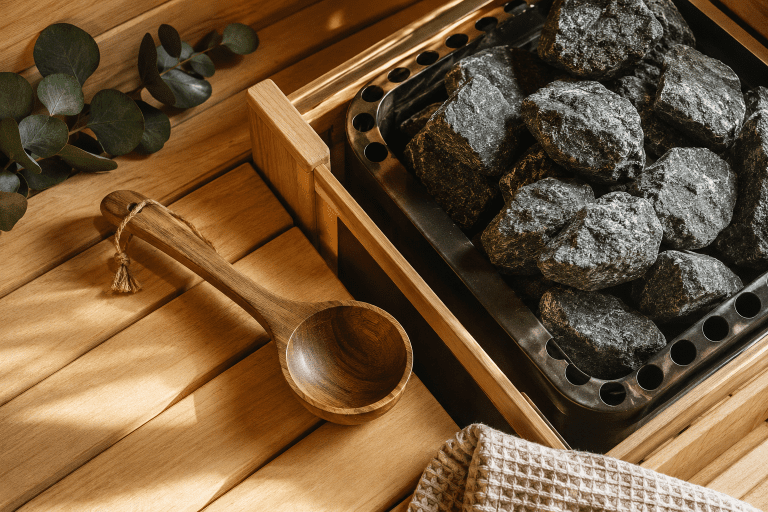
The other dimension people miss: rock capacity. A larger heater usually supports more sauna stones, which means more thermal mass and more steam capacity when you pour water. If you’re a serious löyly person — someone who genuinely uses the steam ritual as part of their sauna practice — an 8kW unit’s larger rock basket tends to produce a smoother, denser steam response.
Neither wattage is wrong for a 4-person sauna. The question is whether your specific room leans toward the lower or upper end of that volume range, and what kind of build quality you’re working with.
Cost Reality
Sauna heaters in the 6kW range typically run between $400 and $900 for a quality residential unit, depending on brand, country of origin (Finnish brands command a premium), and whether it’s a digital or dial control. Units from brands like Harvia, HUUM, and Finnleo in this range are solidly built and widely available in the U.S.
Moving up to 8kW adds roughly $150–$300 to the purchase price for comparable build quality. You’re looking at $600–$1,200 for a well-reviewed 8kW unit. The cost jump is real but not dramatic — the bigger cost factor is often the electrical work, not the heater itself.
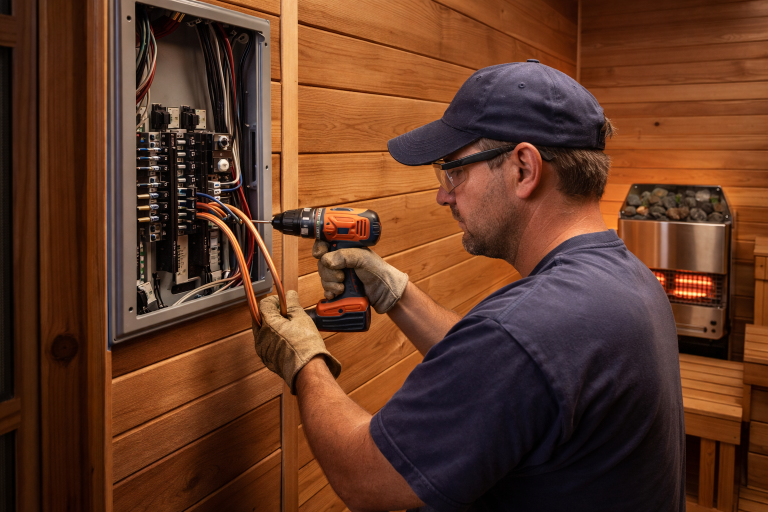
Both 6kW vs 8kW Sauna heater options require a dedicated 240V circuit. If your sauna is being installed in a space that doesn’t already have 240V access, you’re looking at an electrician visit that typically runs $300–$700 depending on distance from the panel, local labor rates, and whether any panel upgrades are needed.
The 8kW unit draws more current — typically around 33 amps versus 25 amps for a 6kW — which can influence which breaker and wire gauge your electrician needs to run. In most cases it’s not a deal-breaker, but it’s worth getting a quote before you commit.
On the ongoing operating cost side, the difference is real but modest. Running an 8kW heater for one hour costs roughly $0.20–$0.40 more than a 6kW session, depending on your electricity rate. For a household using the sauna three to four times per week, the annual difference in electricity cost between the two is typically $30–$80.
Installation Friction
Both heater sizes install in roughly the same way: mount to the sauna wall or floor, connect to the 240V feed, attach the rocks, and run the control wiring. If you’re buying a pre-built sauna kit, the manufacturer will typically spec which heater size comes with the unit or is recommended for their room dimensions.
Where things get more complicated is retrofitting. If you’re adding a heater to an existing room or upgrading from a smaller unit, the 8kW heater’s higher amperage draw may require upgrading your circuit — which adds cost and scheduling with an electrician.Where things get more complicated is retrofitting. If you’re adding a heater to an existing room or upgrading from a smaller unit, the 8kW heater’s higher amperage draw may require upgrading your circuit — which adds cost and scheduling with an electrician.When retrofitting, the 6kW vs 8kW sauna heater choice affects which circuit upgrade you’ll need.
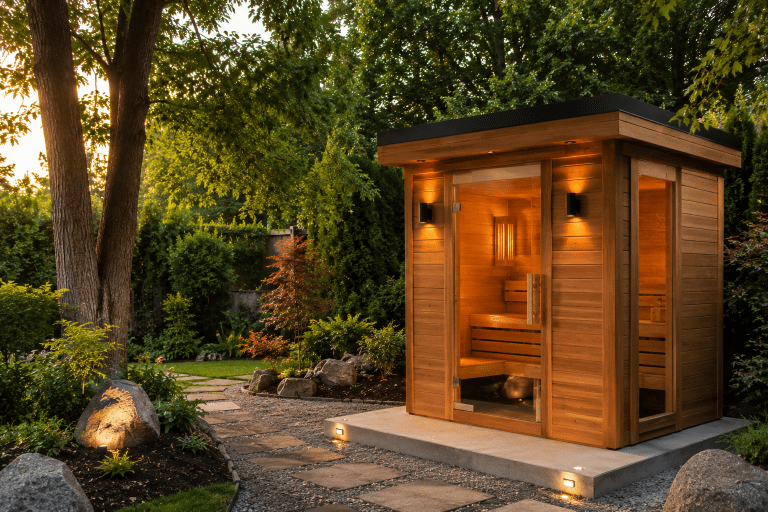
Outdoor saunas add another consideration. Cold ambient temperatures mean the room loses heat faster through walls and the door. An 8kW heater is frequently the right call in outdoor builds in colder U.S. climates — not because the room is larger, but because the thermal load is higher. Installers in the upper Midwest and mountain states commonly recommend going one step up in wattage for outdoor saunas compared to what a pure volume calculation would suggest.If you’re also weighing outdoor placement options, similar electrical planning applies to other heat therapy setups — like hot tubs. You can explore typical costs here: Cost to Install a Hot Tub in 2026.
The physical heater size also scales up with wattage. An 8kW unit is larger and heavier, which can occasionally be a factor in tightly built rooms. Check the floor space footprint before ordering — some 8kW heaters have a footprint that meaningfully reduces seating area in a compact 4-person room.
Maintenance
Sauna heaters are low-maintenance by nature, but there are a few things to stay on top of regardless of which wattage you choose.This applies equally whichever 6kW vs 8kW sauna heater you choose.
Sauna rocks need periodic inspection. Rocks exposed to repeated heating and water-pouring cycles develop cracks over time. Cracked rocks should be replaced — they can fracture during use and damage the heating element below. Inspect rocks once a year and replace any that show obvious fracturing. The rock volume in an 8kW heater is larger, so the annual replacement cost is marginally higher.
Heating elements in quality units last 10–20 years under normal use. Corrosion from hard water steam is the most common cause of element failure. Using filtered water for your löyly bucket reduces this significantly. Elements can be replaced independently without buying a new heater.
Keep the area around the heater clear of debris, and periodically check that electrical connections haven’t loosened — especially in outdoor installations where temperature cycling can work fittings loose over time. This is a once-a-year check, not a monthly task.
Both 6kW and 8kW heaters from reputable brands have parts availability that typically spans 10+ years from the purchase date, which matters for long-term ownership confidence.
Pros and Cons
6kW
Pros: Lower purchase price, lower ongoing electricity draw, adequate for well-insulated 4-person rooms at the smaller end of the size range, slightly smaller physical footprint in the room.
Cons: May underperform in larger 4-person rooms, outdoor builds, or rooms with design features that increase heat loss. Smaller rock capacity limits steam intensity.
8kW
Pros: More headroom for larger or less-insulated rooms, faster heat-up times, larger rock capacity for steam enthusiasts, better suited for outdoor saunas in cold climates.
Cons: Higher purchase price, higher electrical draw (may require heavier-gauge wiring), larger physical size can crowd a compact room.
6kW vs 8kW: Direct Comparison
The most important framing here is that this isn’t a quality comparison — it’s a sizing question. A 6kW heater isn’t inferior to an 8kW one. It’s just calibrated for a different load.The 6kW vs 8kW sauna heater comparison isn’t about quality — it’s purely a sizing question.
The cases where 8kW genuinely wins over 6kW for a 4-person setup are specific: room volume over 300 cubic feet, outdoor placement in a cold climate, ceiling height above 7 feet, and glass-heavy or poorly insulated room designs. In these scenarios, a 6kW heater will technically heat the room but may struggle to reach or maintain optimal temperatures during a full session.
The cases where 6kW is entirely sufficient: a well-built indoor 4-person room under 280 cubic feet with standard cedar construction, a tightly sealed door, and no major thermal liabilities. In this scenario, paying for 8kW adds cost without adding meaningful benefit.Most buyers find the 6kW vs 8kW sauna heater decision becomes straightforward once they calculate their room volume.
Comparison Table
| Feature | 6kW Heater | 8kW Heater |
|---|---|---|
| Typical price range | $400–$900 | $600–$1,200 |
| Best room size | Up to ~280 cu ft | Up to ~400 cu ft |
| Heat-up time (avg 4-person room) | 30–40 min | 20–30 min |
| Circuit requirement | 240V / ~25A | 240V / ~33A |
| Hourly running cost (avg) | ~$0.50–$0.80 | ~$0.70–$1.10 |
| Rock capacity | Moderate | Higher |
| Best for | Indoor, insulated rooms | Outdoor, larger, or glass rooms |
| Maintenance complexity | Low | Low |
Helpful Gear
If you’re sorting out your sauna setup beyond just the heater, a few items make a real difference in the day-to-day experience:
Sauna thermometer and hygrometer combo — Knowing your actual temperature and humidity levels takes the guesswork out of your sessions and helps you benchmark heater performance after installation. A quality dual-display unit that reads in both Fahrenheit and Celsius runs around $20–$40.
Sauna bucket and ladle set — If you’re going with an 8kW heater specifically for the steam experience, the bucket and ladle matter more than people think. Stainless or Nordic-style wooden sets hold heat better and feel significantly better in a quality sauna. Expect to pay $30–$80 for something worth owning.
Pre-cut sauna rocks — If you’re replacing rocks or filling an 8kW heater’s larger basket, purpose-cut sauna stones are safer and more thermally stable than improvised alternatives. A standard 20-lb bag runs $25–$50.
FAQ
Can I use a 6kW heater in a 4-person outdoor sauna?
You can, but it’s generally not recommended in climates with cold winters. Outdoor saunas lose heat through walls and the door much faster than indoor rooms, which effectively increases the functional load on the heater. Most sauna builders in cold-weather states recommend going to 8kW — or even 9kW — for outdoor 4-person builds to ensure reliable performance when ambient temperatures are low.
Does a higher kW heater use more electricity even at lower settings?
Yes and no. Most digital sauna heaters modulate output, so when running at a lower setting they draw less power. But the wattage rating determines the maximum draw and the wiring requirements, regardless of your typical operating setting. If you install an 8kW heater and routinely run it at 70% output, you’re not drawing full 8kW — but you still need the electrical infrastructure to support full capacity.
Is there a safety difference between 6kW and 8kW?
Not inherently. Both require professional electrical installation on a dedicated 240V circuit, and both should carry UL or ETL listing for U.S. installation. The safety considerations are the same: proper mounting, correct rock placement, adequate ventilation, and never covering the unit. The 8kW unit produces more heat, which means proper ventilation and clearance distances matter slightly more — but these are baked into any reputable manufacturer’s installation guide.
Simple Rule
If your 4-person sauna room is indoors, under 280 cubic feet, and well-insulated, 6kW is enough — go to 8kW when the room is larger, outdoor, or has design features that work against heat retention.That’s the 6kW vs 8kW sauna heater decision in one sentence.
Summary Snapshot
- 6kW works well for compact, well-insulated indoor 4-person saunas
- 8kW is the better choice for larger rooms, outdoor builds, higher ceilings, and glass-heavy designs
- Both require 240V dedicated circuits — 8kW requires a slightly higher amperage run
- Price difference is $150–$300 at comparable quality tiers
- Annual electricity cost difference is roughly $30–$80 for typical usage
- Steam enthusiasts tend to prefer 8kW for the larger rock capacity
Final Verdict
For a 4-person sauna, the 6kW vs 8kW question comes down to one thing: does your room have any thermal liabilities? If the answer is no — standard indoor cedar construction, tight door, ceiling at 7 feet or under, indoor placement in a conditioned space — a 6kW heater will do the job well and cost less upfront and over time.That’s the 6kW vs 8kW sauna heater decision in practical terms.
If the answer is yes — outdoor location, larger footprint, glass panels, high ceilings, or a climate that drops well below freezing — then the 8kW heater isn’t an indulgence, it’s the practical choice. You’re not overpaying for power; you’re buying the margin that keeps the room at temperature when conditions work against you.
The cost difference between the two tiers is real but rarely the deciding factor. The electrical work costs the same either way. The operating cost difference over a year is minor. What actually matters is whether your heater can reliably do the job your room asks of it — and buying too small is a much more frustrating mistake than buying slightly more capacity than you need.
If you’re on the fence, measure your room’s cubic footage, account for any outdoor exposure or insulation concerns, and let the math decide for you. Most 4-person rooms land squarely in 6kW territory. Rooms with any of the complicating factors above belong in the 8kW camp.
You might also find these helpful: