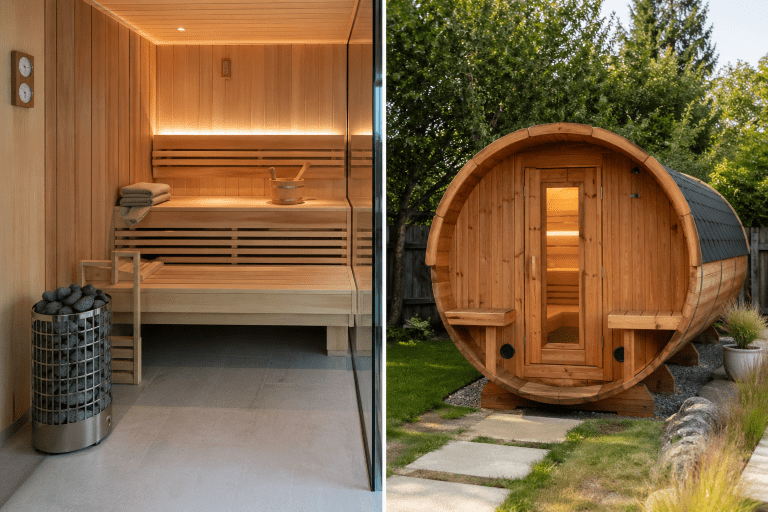
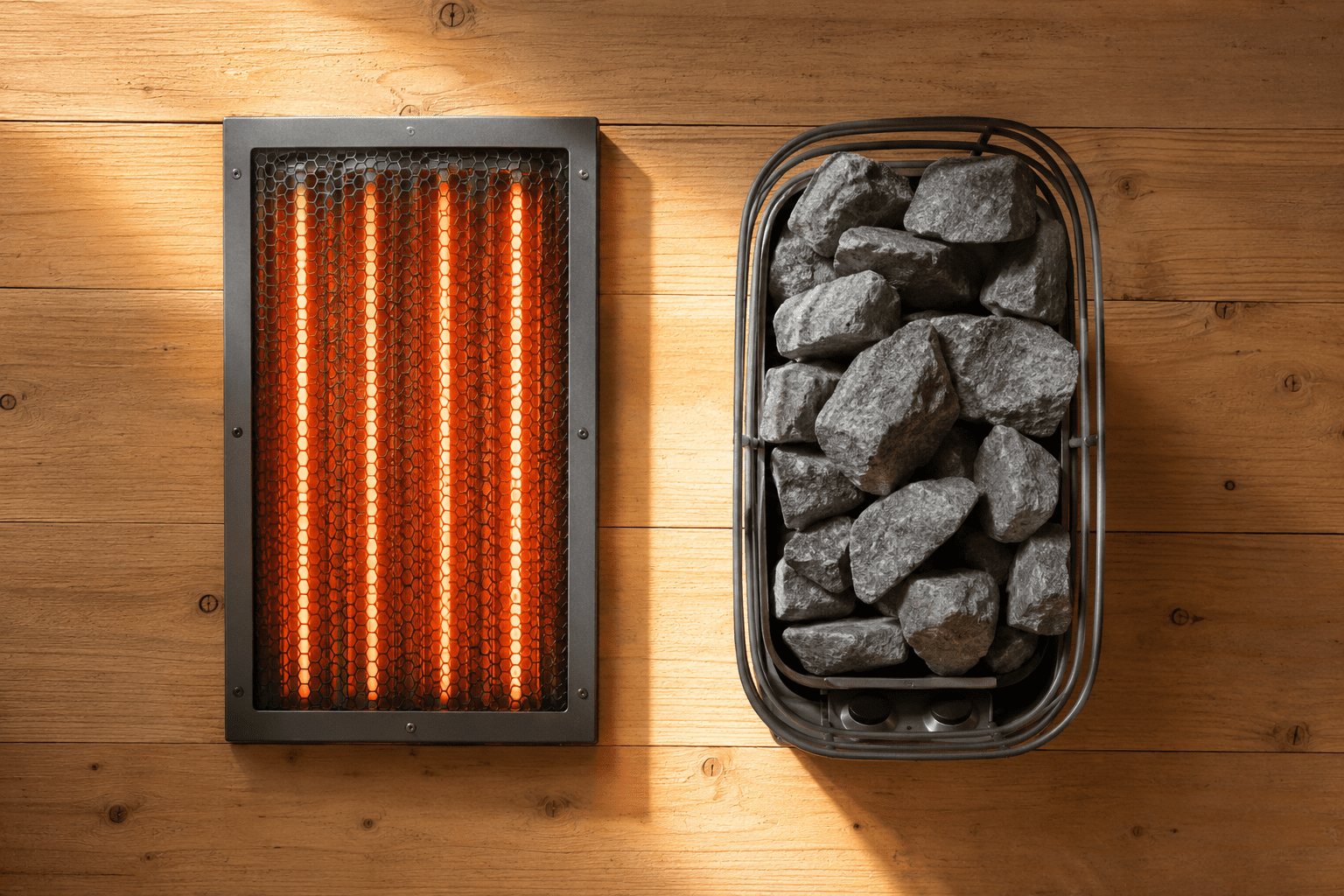
Infrared vs Traditional Sauna Differences: The Honest Breakdown
The infrared vs traditional sauna differences matter more than most buyers realise — and most comparison articles get them backwards. They focus on temperature numbers and miss what actually changes your experience: how each type delivers heat to your body, how that feels in practice, and which one fits your real life rather than your wishlist.
I’ve used both regularly for years. They are genuinely different experiences — not just variations on the same thing with a different thermostat setting.
Heads up: This post contains affiliate links. If you buy through them I earn a small commission at no extra cost to you — it helps keep this site running.
Quick Snapshot
- Infrared saunas heat your body directly using light waves; traditional saunas heat the air around you
- Traditional saunas run at 160–195°F; infrared typically runs at 120–150°F
- Infrared sessions: typically 20–40 minutes; traditional sessions: 10–20 minutes per round
- Entry cost: infrared typically $1,500–$7,000; traditional typically $2,000–$10,000+
- Infrared requires standard 120V or 240V outlet; traditional usually needs dedicated 240V wiring
- Traditional sauna produces authentic steam with löyly (if rocks present); infrared does not
- Maintenance is lighter on infrared — no rocks, no water, no steam management
- Neither is universally better — the right choice depends on your goals, space, and how you actually use it
Table of Contents
- How Each Type Actually Works
- The Real Temperature Difference
- What 7 Key Differences Actually Mean for You
- Cost Reality: What You’re Actually Paying
- Installation: Which Is Harder to Set Up
- Maintenance: The Honest Picture
- Pros and Cons
- Head-to-Head Comparison
- Helpful Gear
- FAQs
- Final Verdict
How Each Type Actually Works
The core infrared vs traditional sauna differences start with physics. A traditional sauna heats the air — you walk into a room running at 160–195°F and your body heats up by being surrounded by hot air. The rocks, if present, allow you to add water and produce steam, which raises humidity and intensifies the perceived heat. That’s the classic Finnish experience.
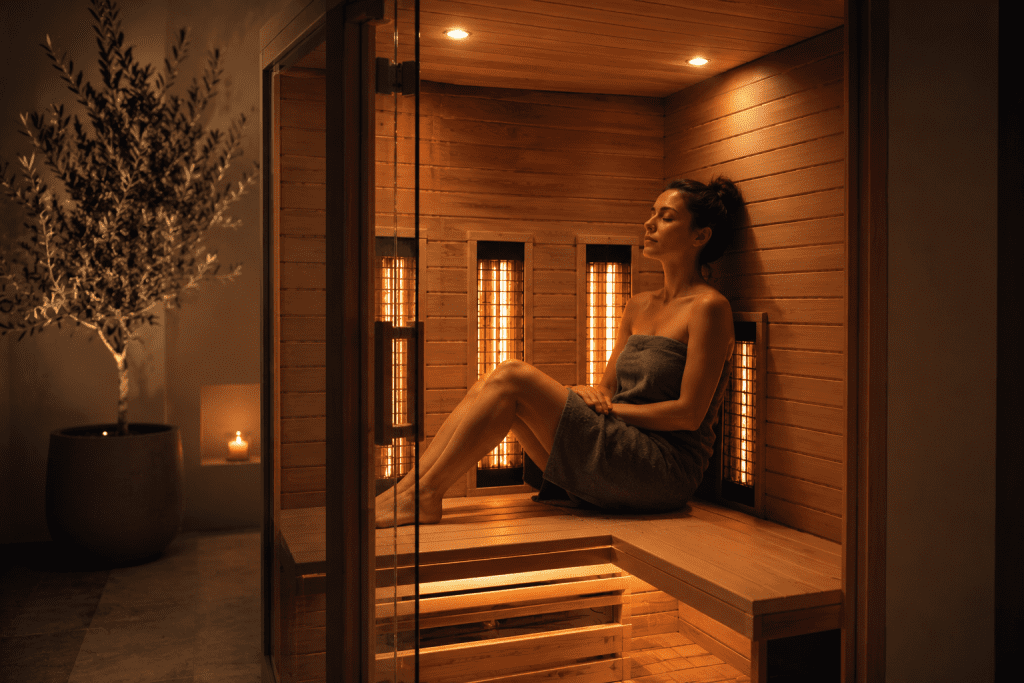
An infrared sauna works completely differently. The heating elements emit infrared light waves that penetrate directly into your body tissue — typically 1–2 inches deep — without needing to heat the surrounding air to the same degree. The cabin temperature stays lower at 120–150°F, but the effect on your body is direct rather than ambient.
According to the Cleveland clinic infrared saunas use light to create heat and can cause your body to sweat at lower air temperatures than a traditional sauna — making the experience more tolerable for people who find intense heat difficult to sustain. That difference in mechanism is the foundation of every other point in this post.
Understanding the infrared vs traditional sauna differences at the mechanism level matters because it explains why people who’ve tried both describe them as genuinely different experiences — not just different intensities of the same thing. The differences aren’t just specs on a comparison table. They produce a different sensation, a different session rhythm, and different practical demands on your space and budget.
The Real Temperature Difference
Temperature is where most articles lead, but the numbers alone are misleading. A traditional sauna at 185°F and an infrared cabin at 135°F aren’t just 50 degrees apart — they feel completely different because heat delivery works differently in each case.
In a traditional sauna, you’re surrounded by intensely hot air. Humidity matters as much as temperature — low humidity makes 185°F more bearable than it sounds; higher humidity from steam makes even 160°F feel far more intense. Your body adjusts to the ambient heat, which is why experienced users can sit comfortably at temperatures that drive beginners straight to the door.
In an infrared cabin, the air itself feels warmer than a normal room but not overwhelming. The sweating response comes from body tissue absorbing infrared energy directly rather than reacting to surrounding hot air. Understanding this is key to reading the infrared vs traditional sauna differences honestly — lower air temperature doesn’t mean a weaker session. It means the heat is working through a different mechanism entirely.
What 7 Key Differences Actually Mean for You
The infrared vs traditional sauna differences break down into practical factors that affect your day-to-day experience, not just your buying decision.
What’s the core difference in how heat is delivered?
Traditional saunas heat the ambient air to high temperatures; infrared saunas emit light waves that heat body tissue directly. The result is a lower air temperature in infrared with a comparably intense physiological response — elevated heart rate, heavy sweating, and genuine relaxation — just achieved through a different route.
1. Session length
Traditional sauna sessions run shorter per round — typically 10–20 minutes — because the ambient heat is more intense. Infrared sessions typically run 20–40 minutes because the lower air temperature is more tolerable over time. If you want a quick, intense session, traditional fits that rhythm. If you prefer a longer, lower-intensity sweat, infrared suits you better.
2. Sweating profile
Most users report sweating more heavily across a full infrared session, partly because they can sustain it longer without needing to exit. Traditional sauna produces intense, rapid sweating driven by the high ambient temperature. Neither produces a better outcome — they’re different responses to different heat mechanisms.
3. Humidity and steam
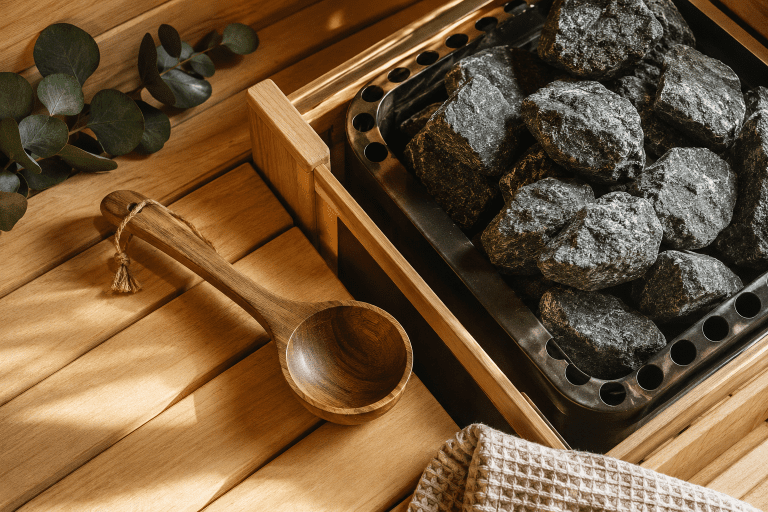
Traditional saunas with rock heaters allow löyly — the practice of pouring water over rocks to produce steam bursts that intensify the heat experience. This is a significant part of the authentic Finnish sauna ritual and produces a sensory element infrared simply cannot replicate. Infrared saunas are always dry — no steam option, no humidity variation.
4. The post-session feeling
This is the infrared vs traditional sauna difference most comparison articles skip entirely. Traditional sauna produces a feeling I’d describe as thoroughly purged — a heavier, more complete physical reset, especially after a hard training session. Infrared feels lighter — energised rather than wrung out. Neither is better. It depends entirely on what you want the session to produce.
5. Startup time
Traditional saunas take 30–45 minutes to reach operating temperature. Infrared typically reaches usable temperature in 10–15 minutes. For spontaneous sessions built around your schedule rather than planned in advance, infrared wins clearly.
6. Space and portability
Both are available in compact 1–2 person sizes. Traditional saunas need to handle sustained high heat, which affects material and construction requirements. Infrared cabins are generally lighter and easier to move if your setup changes.
7. Social experience
Traditional saunas support group sessions more naturally — the ambient heat environment works for multiple people without changing the physics or the experience. Infrared cabins feel more like a solo or paired experience by design, with heat delivery that’s more individualised.
Cost Reality: What You’re Actually Paying
The infrared vs traditional sauna differences in price are real but not as simple as “infrared is cheaper.”
Entry-level infrared cabins from recognised brands typically start at $1,500–$2,500 for a 1–2 person unit. Mid-range options with better panel quality and fuller spectrum output run $3,000–$5,000. High-end infrared from premium brands can reach $7,000 or more.
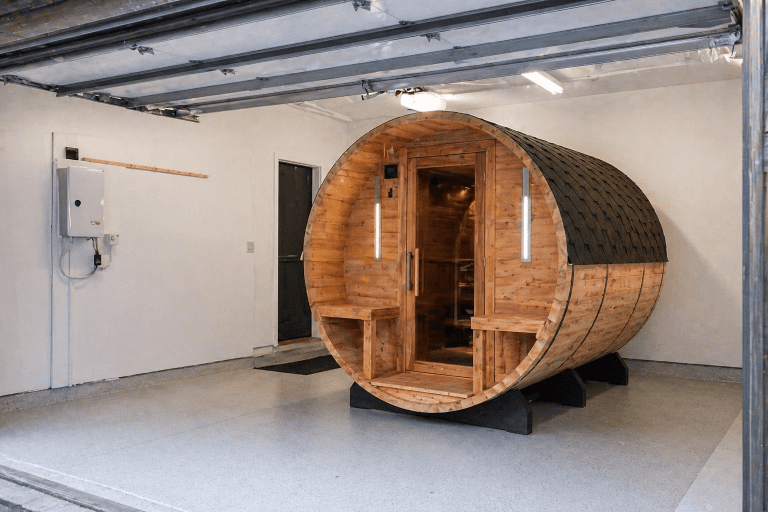
Traditional home saunas have a wider spread. A pre-built barrel sauna or modular indoor unit starts at $2,000–$4,000 for basic models. A properly built indoor traditional sauna with quality rock heater, proper benching, and correct insulation typically runs $4,000–$10,000 depending on size and installation complexity. Custom builds with premium wood and professional installation push well past that.
The hidden cost factor is electrical installation. Infrared units at 120V can plug into an existing outlet — zero added electrical cost. Models requiring 240V need a dedicated circuit, which typically adds $200–$500 for a straightforward run. Traditional saunas almost universally require dedicated 240V wiring and often a larger amperage circuit, adding $300–$800 or more depending on your panel and distance. That’s a real cost difference that rarely appears in headline price comparisons.
Running costs also differ. Traditional saunas consume more power per session because of the higher temperature demand and longer preheat time. Infrared draws less and reaches temperature faster. Over a year of regular use the gap isn’t dramatic, but it’s consistent.
Installation: Which Is Harder to Set Up
If you’re making an indoor installation decision, the infrared vs traditional sauna differences in setup complexity matter significantly.
Infrared cabins are typically modular — panels slot together with interior connectors, minimal tools required. A 2-person unit can be assembled and running in 2–4 hours for a competent DIYer. The electrical requirement for 120V models is zero beyond a standard outlet.
Traditional saunas require more preparation: proper insulation to handle sustained high temperatures, suitable flooring — concrete, tile, or treated wood, never standard carpet or laminate — and a heavier-duty electrical supply. The room needs to handle sustained heat without damage to surrounding materials. If you’re converting an existing space, the prep work often costs as much as the sauna unit itself.
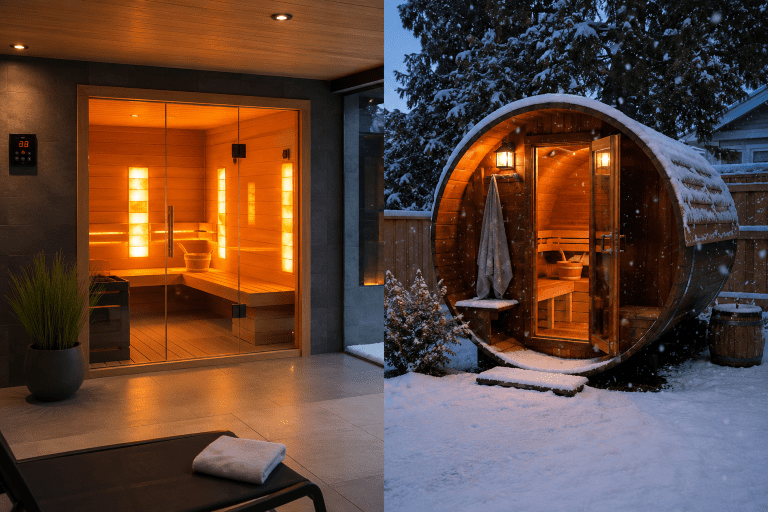
Outdoor traditional saunas have a simpler installation path — purpose-built barrel saunas and cabin units are designed to sit outside with minimal prep. But electrical supply still needs to reach them, and depending on your property layout, that run can be significant. Before starting either project, check local permit requirements — electrical work and outbuilding installations often require permits depending on your jurisdiction, and getting this wrong creates problems at resale.
Maintenance: The Honest Picture
The infrared vs traditional sauna differences in ongoing maintenance favour infrared clearly, and by more than most buyers expect.
Traditional saunas require rock inspection and periodic replacement — rocks degrade, crack, and lose heat retention over time. The interior wood needs treatment or sanding to prevent deterioration from repeated heat and sweat exposure. If you’re using steam with löyly, moisture management becomes an active consideration — ventilation and drainage matter, and neglecting them shortens the sauna’s lifespan.
Infrared cabins have virtually no maintenance beyond wiping down the interior after sessions. No rocks. No water. No steam. The heating elements last for years without attention. The wood interior absorbs sweat the same as traditional, so wiping down remains necessary — but there’s no additional system to manage.
One traditional sauna maintenance detail most articles don’t mention: bench surface condition. The bench gets hot enough to burn through thin shorts if you’re not paying attention — a sauna mat isn’t optional luxury, it’s the difference between a relaxing session and spending the rest of the day thinking about your backside. Infrared benches run at much lower temperatures and don’t produce the same surface heat issue.
Pros and Cons
Infrared Sauna
Pros:
- Lower air temperature makes sessions more accessible, especially for beginners or those sensitive to intense heat
- Faster warmup — typically 10–15 minutes versus 30–45 for traditional
- Lower running costs per session
- Simpler installation, especially for 120V plug-in models
- Near-zero ongoing maintenance
- More tolerable for longer sessions
Cons:
- Cannot produce steam or replicate the löyly experience — this is a genuine loss for people who value the ritual
- Post-session feeling is lighter — lacks the thorough-purge quality of traditional sauna after an intense session
- Infrared panel quality varies significantly between brands — cheaper units often produce inconsistent heat distribution with cold spots inside the cabin, something almost never mentioned in marketing but which comes up consistently in owner reviews once people have lived with the unit
Traditional Sauna
Pros:
- Authentic Finnish sauna experience with full steam capability
- More intense, immersive heat
- Stronger post-session physical reset
- More established research base for health benefits
- Better suited to group sessions
Cons:
- 30–45 minute warmup makes spontaneous sessions harder to sustain as a habit
- Higher installation and electrical cost
- Ongoing maintenance of rocks, wood, and ventilation
- Less accessible for heat-sensitive users or beginners
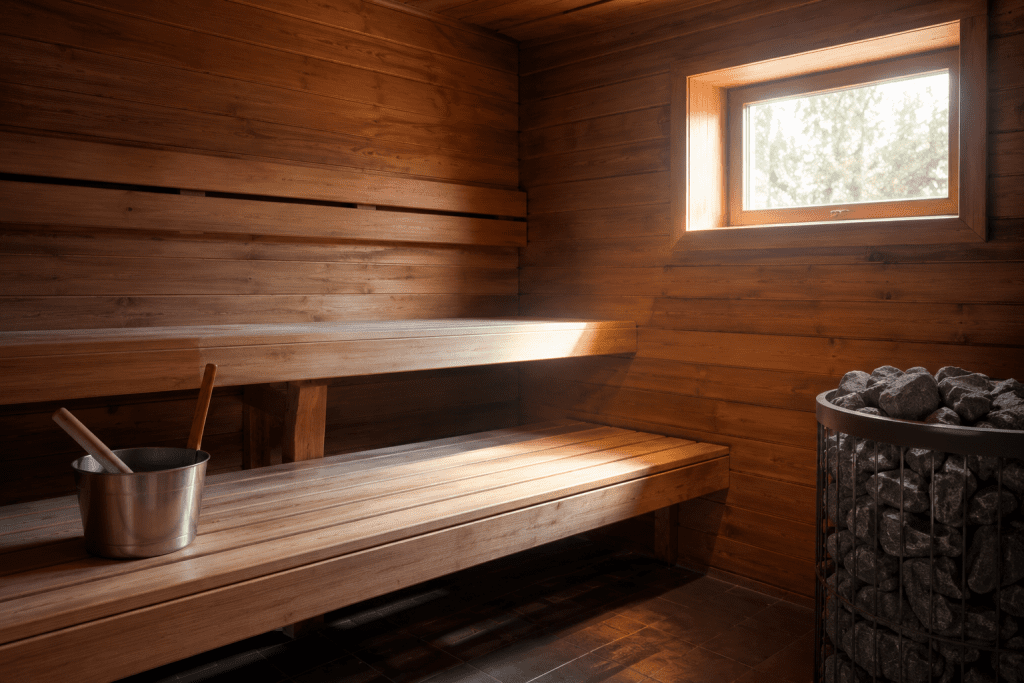
The infrared vs traditional sauna differences side by side:
| Feature | Infrared Sauna | Traditional Sauna |
|---|---|---|
| Heat mechanism | Direct body tissue via light waves | Ambient air heating |
| Operating temperature | 120–150°F | 160–195°F |
| Warmup time | 10–15 minutes | 30–45 minutes |
| Session length | 20–40 minutes | 10–20 minutes per round |
| Steam capability | No | Yes (with rock heater) |
| Post-session feeling | Lighter, energised | Heavier, purged |
| Entry cost | $1,500–$7,000 | $2,000–$10,000+ |
| Electrical requirement | 120V or 240V | 240V dedicated circuit |
| Maintenance demand | Very low | Moderate |
| Social use | Better solo or paired | Better for groups |
| Panel/heater quality variance | High — significant differences between brands | More standardised across brands |
The post-session feeling row is the one most buyers don’t think to ask about before purchasing — and it’s one of the clearest infrared vs traditional sauna differences in actual practice. If you want to feel thoroughly reset after a session, traditional tends to deliver that more reliably. If you want to sweat well and feel energised rather than drained, infrared lands differently.
If you’re also comparing heat therapy across different modalities, Steam vs Sauna covers similar ground from a different angle and is worth reading alongside this post.
Helpful Gear
- Sauna mat — protects you from bench surface heat in traditional saunas and keeps the interior cleaner in both; more essential than most first-time buyers realise
- Sauna towel set — oversized towels designed for sauna use; thicker than standard bath towels and sized to lay across benches properly
- Infrared thermometer — useful for verifying actual cabin temperature in infrared units, where panel placement can create variation across the space
FAQs
Is infrared sauna actually effective, or is it a lower-intensity alternative?
Infrared is genuinely effective — the mechanism differs from traditional but the physiological response is real. Elevated heart rate, heavy sweating, and measurable relaxation all occur at lower air temperatures because the heat is working directly on body tissue rather than through ambient air. The infrared vs traditional sauna differences don’t make one a lesser version of the other. The research base for traditional sauna is more established, but infrared has a growing and credible body of evidence behind it.
Will I actually use a home sauna regularly, or will it end up unused?
Honest answer: the biggest predictor of regular use is session friction. A traditional sauna with a 40-minute warmup gets skipped more often than an infrared cabin ready in 15 minutes. If your lifestyle suits spontaneous, shorter sessions, infrared sustains the habit better. If you’re planning dedicated longer sessions — running multiple heat rounds with cold contrast between them, where the cold between rounds makes the next heat round hit harder — traditional produces a more rewarding experience for that rhythm and the 40-minute preheat becomes part of the ritual rather than a barrier.
What’s the right choice if the authentic sauna experience matters to me?
If löyly — the steam burst, the humidity spike, the Finnish ritual — is part of what you want, traditional is the only option. Infrared cannot replicate it. If what you want is sweating, recovery, and relaxation without the ceremony, infrared delivers that with significantly less complexity. Knowing which experience you’re actually buying is the most useful question to answer before spending anything.
Is there a single rule for choosing between them?
If you want authentic steam and intense immersive heat, choose traditional. If you want accessible, low-friction sessions with less setup and maintenance overhead, choose infrared. Both work — they’re different tools built for overlapping but not identical purposes.
Summary Snapshot
- Infrared heats body tissue directly; traditional heats ambient air — the mechanism difference drives everything else
- Traditional runs hotter (160–195°F); infrared lower (120–150°F) — but sweating response is comparable across a full session
- Traditional saunas support steam; infrared does not
- Infrared wins on warmup time, installation simplicity, and maintenance
- Traditional wins on intensity, post-session effect, and authentic experience
- Budget: infrared typically $1,500–$7,000; traditional typically $2,000–$10,000+
- The right choice depends on your session goals, space, and how often you’ll realistically use it
Final Verdict
The infrared vs traditional sauna differences are real enough that choosing the wrong type is a meaningful mistake — not a minor inconvenience you’ll adjust to. They produce different experiences, suit different habits, and make different demands on your space, budget, and time.
If you want the classic sauna experience — intense ambient heat, the option to add steam, the heavier post-session reset — traditional is worth the extra installation complexity and cost. The experience justifies it for people who will use it that way consistently.
If you want something ready in 15 minutes, requiring minimal electrical work, that fits into a spontaneous routine without planning a session 45 minutes in advance, infrared is the more sustainable choice for most home users. The infrared vs traditional sauna differences in accessibility are the core reason infrared has grown as fast as it has — it removes the friction that stops people using a traditional sauna as often as they planned to when they bought it.
The infrared vs traditional sauna differences come down to this: traditional gives you more intensity and authenticity; infrared gives you more usability and accessibility. Neither is objectively better. One is better for your specific situation — and knowing which before you buy is the whole point of this post.
More from the Sauna Cluster
Understanding how indoor and outdoor saunas compare changes the installation question significantly — Indoor vs Outdoor Saunas covers that decision in full. And if you’re weighing heater options for a traditional build, Best Sauna Heaters is the practical follow-up worth reading before committing to a unit.